Author: Roderick
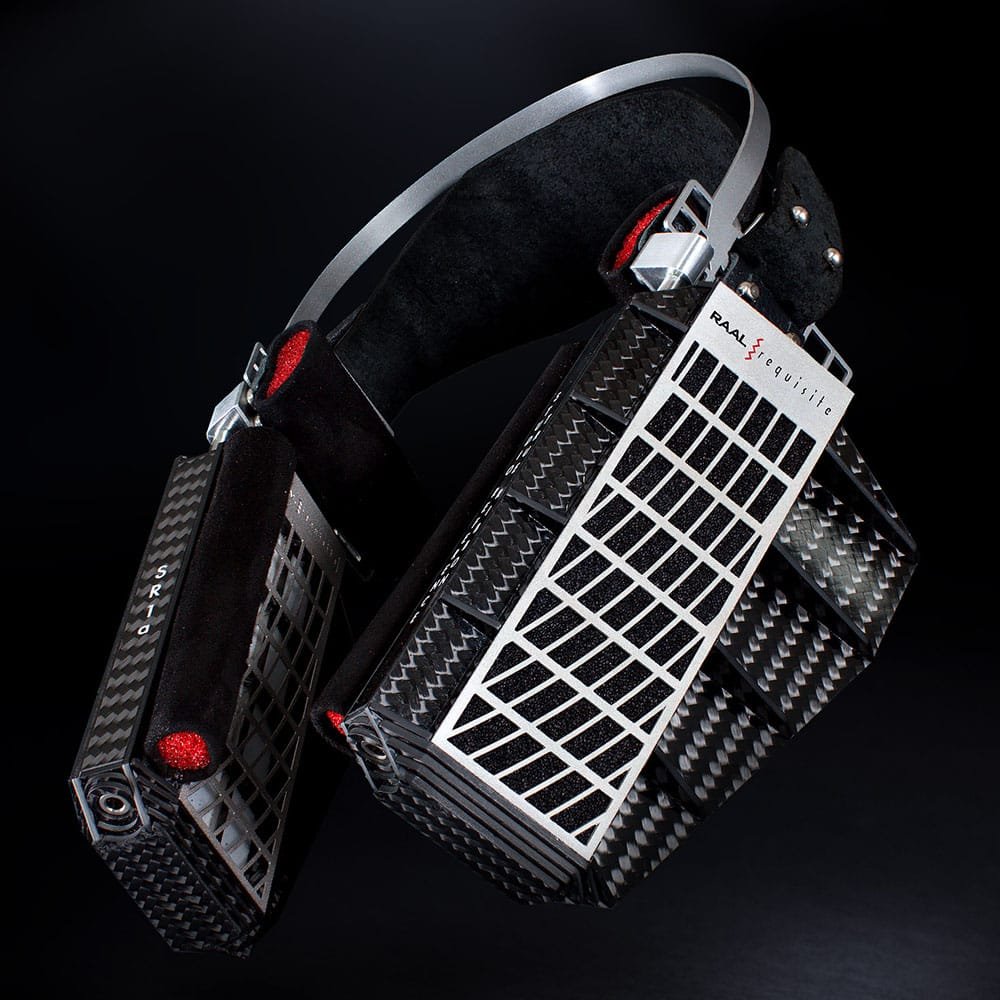
Table of Contents:
Information:
- Release year: 2018
- Country of Manufacture: Serbia
- Price: ~3500 € (+ at least 400 euros for a separate adapter box/amplifier)
- Structure: open, "over-ear"
- Ribbon driver: 19×100 mm
- Impedance: 0.2 ohms
- Sensitivity: n/a
- Weight: 426 g without cable
- Connection type: 2x 3,5 mm
- Cable: 2-meter cable with 4-pin XLR female connector
- Warranty: 5 years for the first owner
Review sample: Self-purchased product
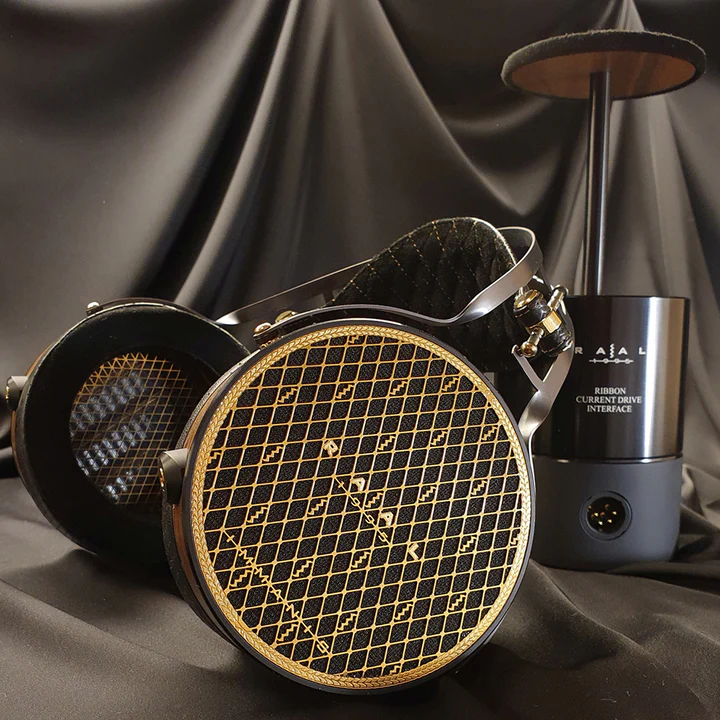
Serbian RAAL-requisite (hereinafter RAAL) may be familiar to speaker enthusiasts for its ribbon tweeters. However, since 2018, it has also been a headphone manufacturer, having released the SR-1a, which, to my knowledge, was the world's first headphone implemented with a ribbon driver. What also makes it unique is its structure, which does not sit around the ears in the traditional way, but places the drivers in front of the ears just like speakers – hence the name ”Ear Field Monitor”. RAAL recently replaced the SR-1a model with the new SR-1b, in which the internal wiring is made of silver instead of copper, and the appearance of the frame has been changed to match the manufacturer's more affordable CA-1 headphone model. Apparently, RAAL did not find anything else to improve during the four years.
Many consider the SR-1a to be one of the best headphones in the world, but some also find it self-consciously peculiar – the stranger the product, the higher the selling price often rises (in this case, to about 3500 euros). In my opinion, however, the SR-1a is not just a curiosity, but one of the most significant headphone releases of recent years in terms of its technology.
The scarcity of headphones containing ribbon technology is understandable, as it is difficult to convert a driver originally developed for reproducing only treble into a full-range reproducer. When reproducing high frequencies, the driver's excursion is small, but to reproduce the entire frequency range, it would need to move more. The exceptionally low impedance of ribbon drivers and the consequent need for a special amplifier also hinder their widespread adoption. The SR-1a's impedance is a negligible 0.2 ohms, so the headphones cannot be listened to with ordinary amplifiers without an adapter box sold by the manufacturer. This adds about 400 euros to the total purchase price.
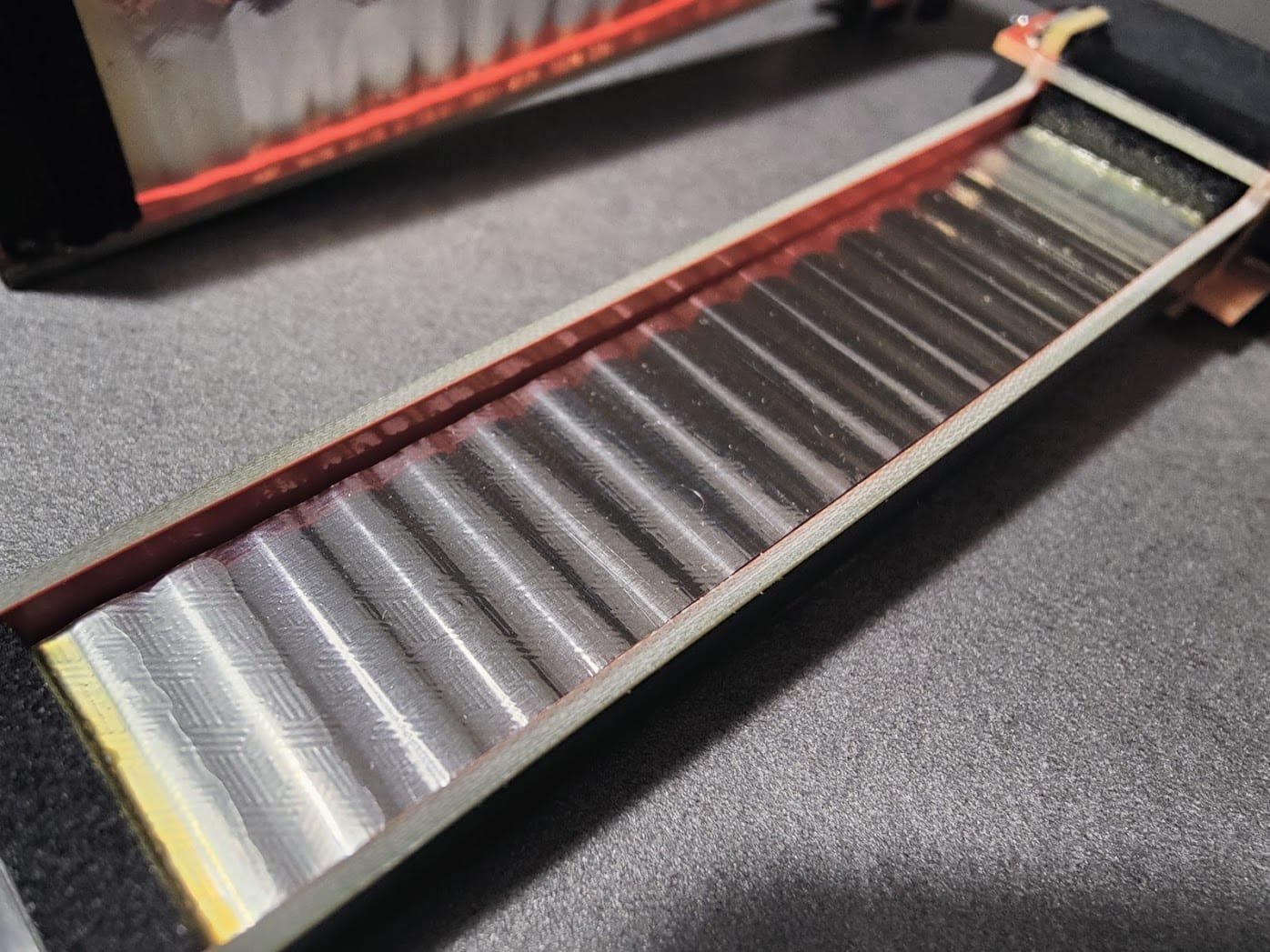
Not many manufacturers would even start designing headphones from such unfavorable starting points. However, the biggest technological leaps are achieved when someone is brave enough to try something completely new. The SR-1a ultimately solves many problems that limit the performance of other driver types used in headphones.
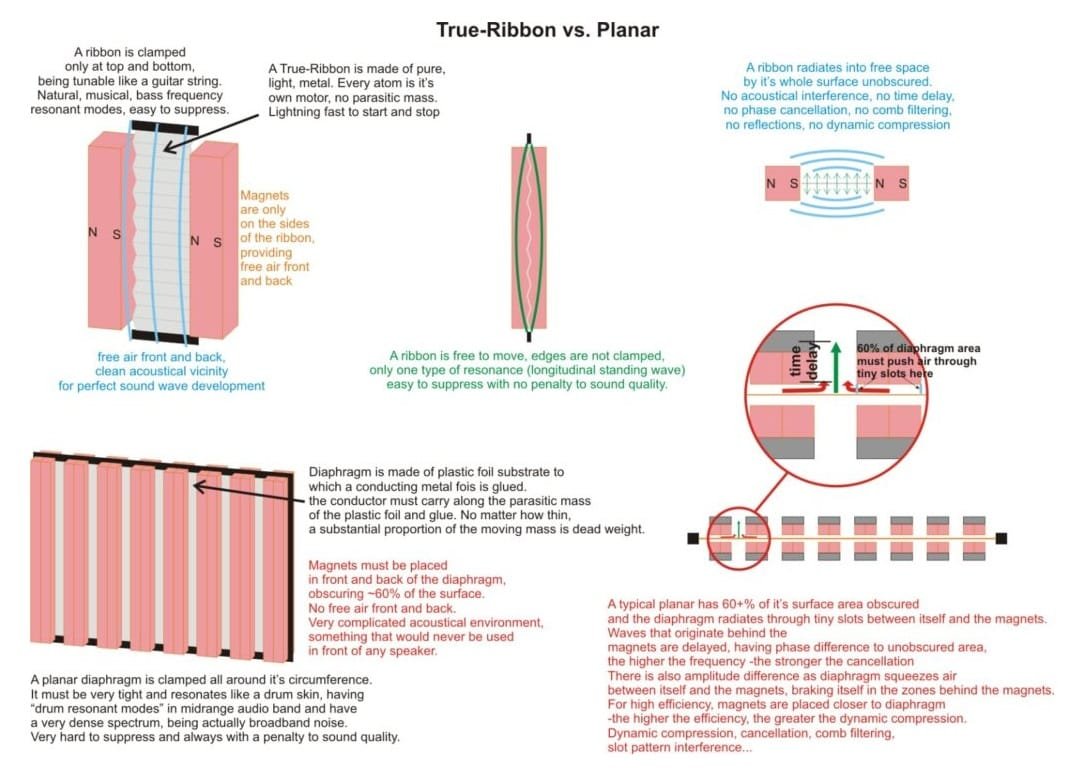
- The ribbon driver is completely open from front and back. For comparison, up to 60% of the diaphragm of planar drivers used in headphones is covered by magnets. In electrostatic headphones, the sound, in turn, is ”squeezed” through a perforated plate covering the diaphragm, i.e., the stator.
- The diaphragm of electrostatic and planar headphones, tightened at its edges, has a limited range of motion and is susceptible to unwanted resonances. The ribbon driver is attached only at its top and bottom edges.
- A large part of the mass of planar headphone diaphragms is wasted weight from the built-in voice coil. The ribbon driver, in contrast, consists of a single strip of metal.
- A traditional dynamic cone driver is slow because it has to drag along a heavy voice coil and its mounts. In addition, the structure is always almost closed at the back due to the large magnet. Due to its physical limitations, such a driver can never be as fast and open as a ribbon driver.
Amplifiers: how to use ribbon headphones
When the SR-1a was released, it came with an adapter box that connected the headphones to the speaker outputs of an amplifier intended for speakers. The manufacturer's recommended amplifier power with the first-generation adapter box was 100 watts into an 8-ohm load. You read that right: a 100-watt recommendation for headphone listening. The SR-1a certainly doesn't actually need all of this power, but a powerful amplifier is necessary in any case, because the resistor box, which acts as an impedance matcher, ”eats” most of the offered power. The box has a built-in equalizer that compensates for the bass deficiency caused by the open structure.
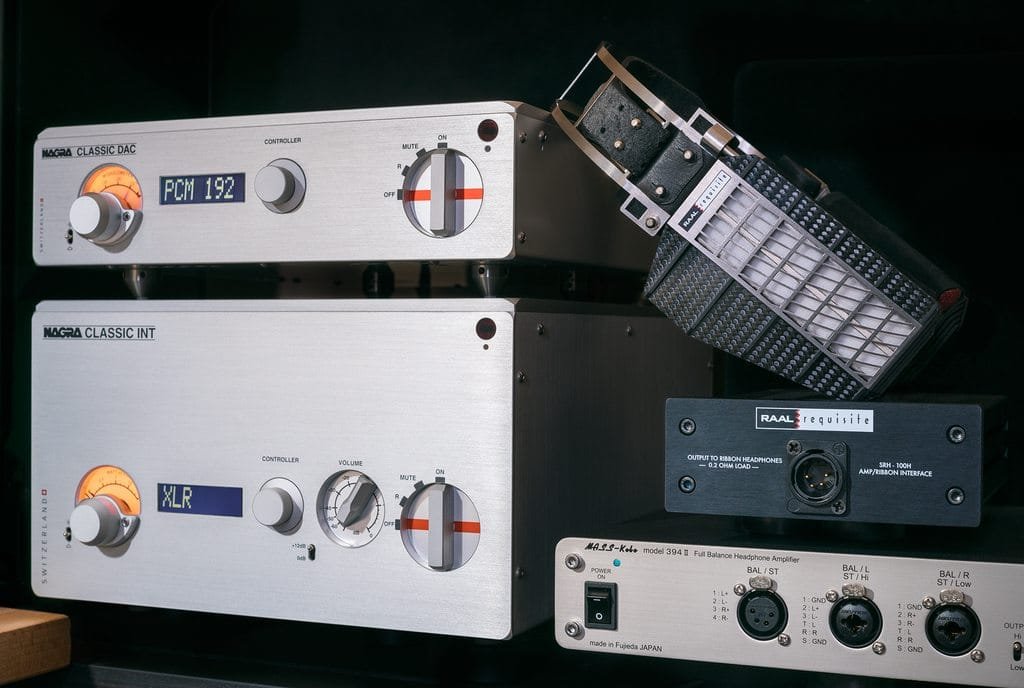
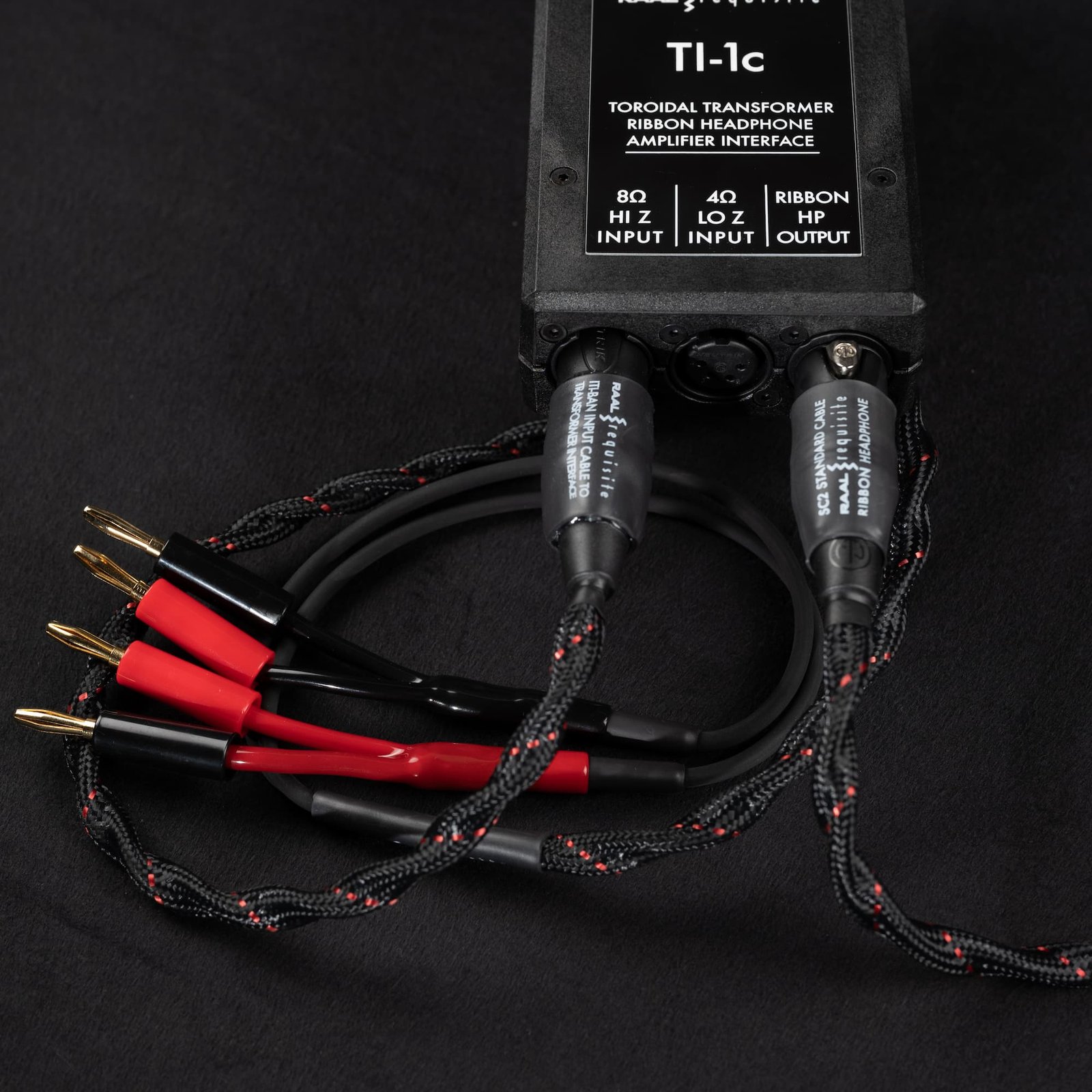
Nowadays, the SR-1a (and SR-1b) are supplied with a new type of transformer box, making it possible to use the headphones with lower-power amplifiers as well. The TI-1b version of the box is suitable for headphone amplifiers with an output power of 2-6 watts. The amplifier is connected to the adapter box via its headphone output with a 4-pin XLR connector. The TI-1c version, on the other hand, is designed for approximately 3-watt tube amplifiers, which are connected with banana plugs. However, RAAL does not recommend this box for OTL tube amplifiers; it is better suited for push-pull and SET-type amplifiers.
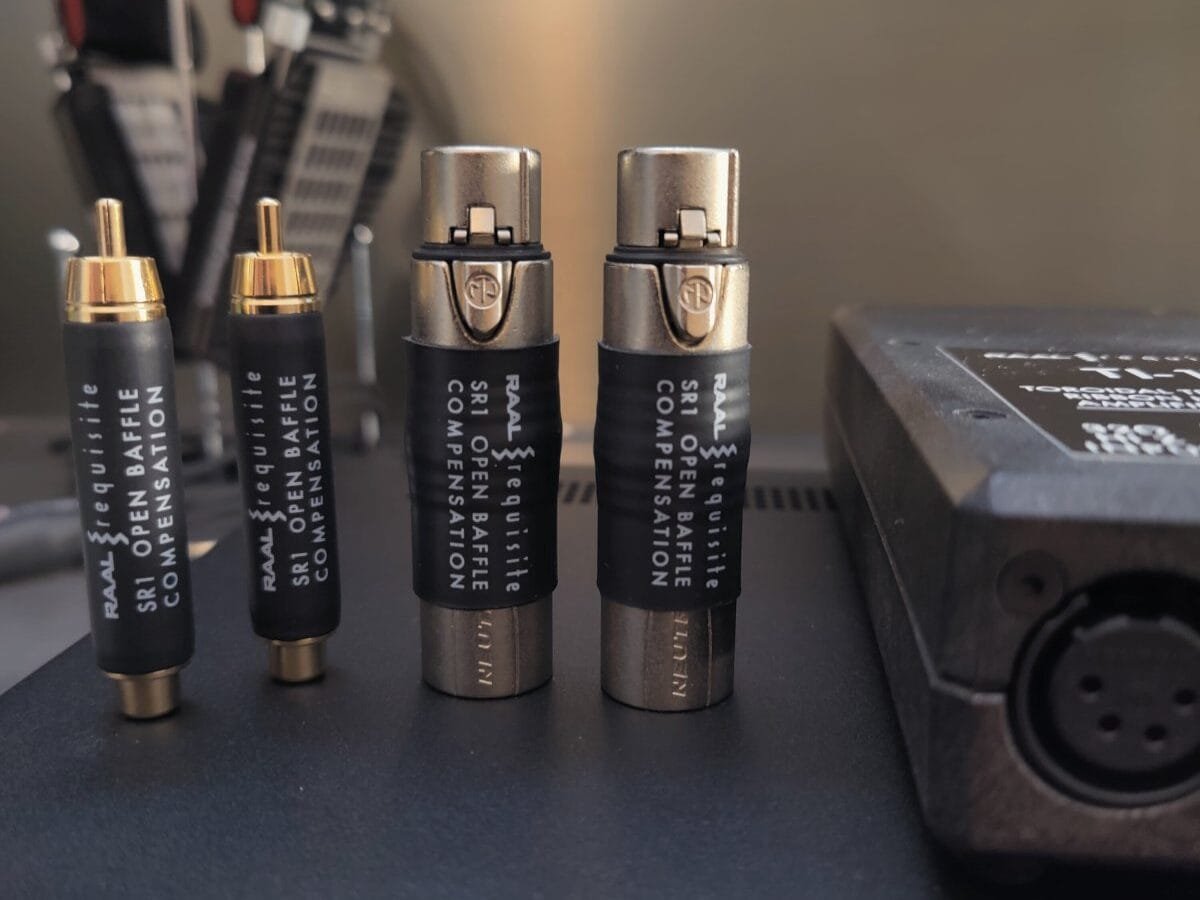
In the first-generation adapter box, bass frequency correction was built into the device. In the TI-1b and TI-1c, the necessary equalization is handled by additional OBC modules (Oopen-Bbaffle Ccompensation). OBC sticks are RCA or XLR extensions that are added between the DAC and amplifier in use, i.e., to the amplifier's input connections. According to RAAL, 2 watts into a 32-ohm load would be sufficient amplifier power for the headphones when using the TI-1b transformer box, but I myself have found such amplifiers insufficient. Of my own amplifiers, only the Ferrum Audio OOR (8W @ 60 ohm) was able to reproduce the SR-1a cleanly enough at higher volumes. However, I listen to headphones at a slightly higher volume than the average user, so for most, an amplifier with less power than the OOR will also be perfectly sufficient.
If fiddling with transformer boxes and OBC sticks doesn't appeal, there are also a few amplifiers specifically designed for the SR-1a. The most affordable option is the Schiit Audio Jotunheim R, priced at around 700 euros, which I have actually used the most with the SR-1a. In my opinion, it is possible to achieve better sound with the TI-1b and a good headphone amplifier than with the Jotunheim R, but the ease of use of the Jotunheim is appealing. My own Jotunheim R is equipped with a Multibit DAC, making the device a very handy all-in-one, to which another amplifier for other types of headphones can be connected via a passive output. Schiit Audio's DAC is also perfectly adequate, although I have most often used Soekris's DAC2541. Differences between D/A converters are often exaggerated a bit too much, but now, if ever, quality matters. The SR-1a is indeed the most resolving headphone I have heard, so the weaknesses and strengths of the peripheral equipment become clearer than usual.
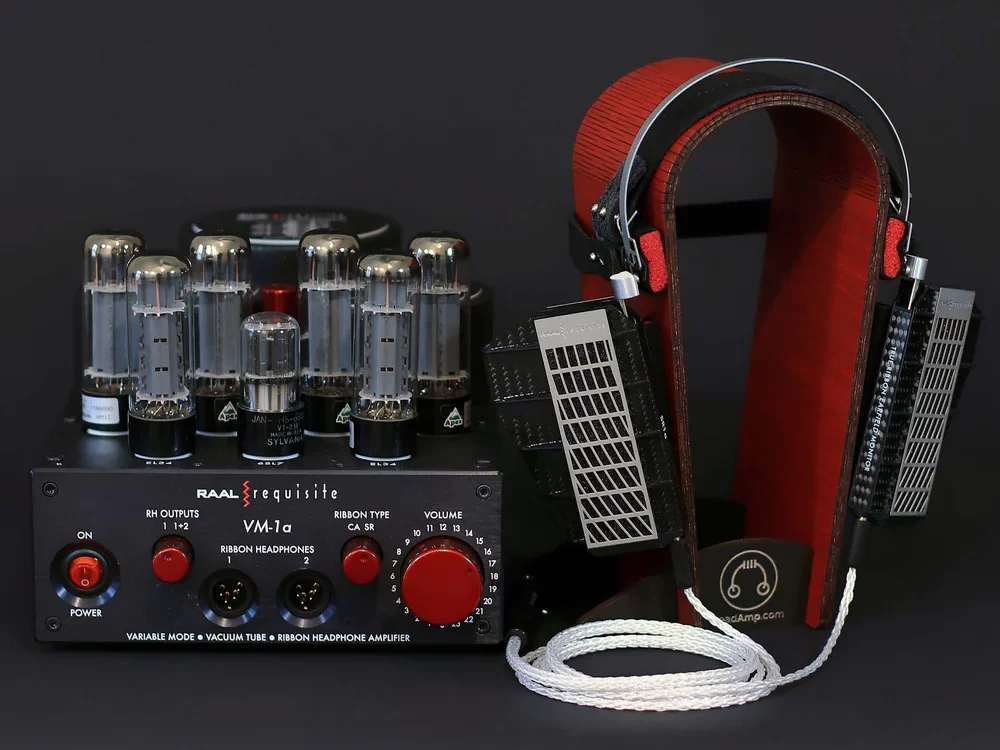
The biggest problem with the Jotunheim R is that it is no longer manufactured. RAAL also previously had a few of its own amplifiers for sale, but they too have been discontinued. However, similar devices are now available from SAEQ, which already manufactured RAAL's amplifiers. Among the discontinued devices, it is worth mentioning the HSA-1b, which could be used to listen to regular headphones in addition to ribbon headphones, and the tube-based VM-1a, which cost about 7000 euros new. If that device ever came across used at a suitable price, it might be difficult for me to resist the temptation.
Headphone structure and comfort
Exceptional drivers and the need for a powerful amplifier are not the only special features of the SR-1a. Those familiar with STAX electrostatic headphones surely know the term ”ear-speaker”. I myself have never understood why STAX calls its headphones ear-speakers, as despite their openness, they are quite ordinary headphones whose pads close tightly around the ears. The RAAL SR-1a, on the other hand, is a true ear-speaker because its earcups ”float” in front of the ears without enclosing them. Such a structure is certainly not a new invention, as a similar AKG K1000 was released already in 1989. Of course, the AKG model has not been available new for years, so the closest relative to the SR-1a is probably MySphere 3, whose design team includes some of the same people who were developing the K1000 over 30 years ago.

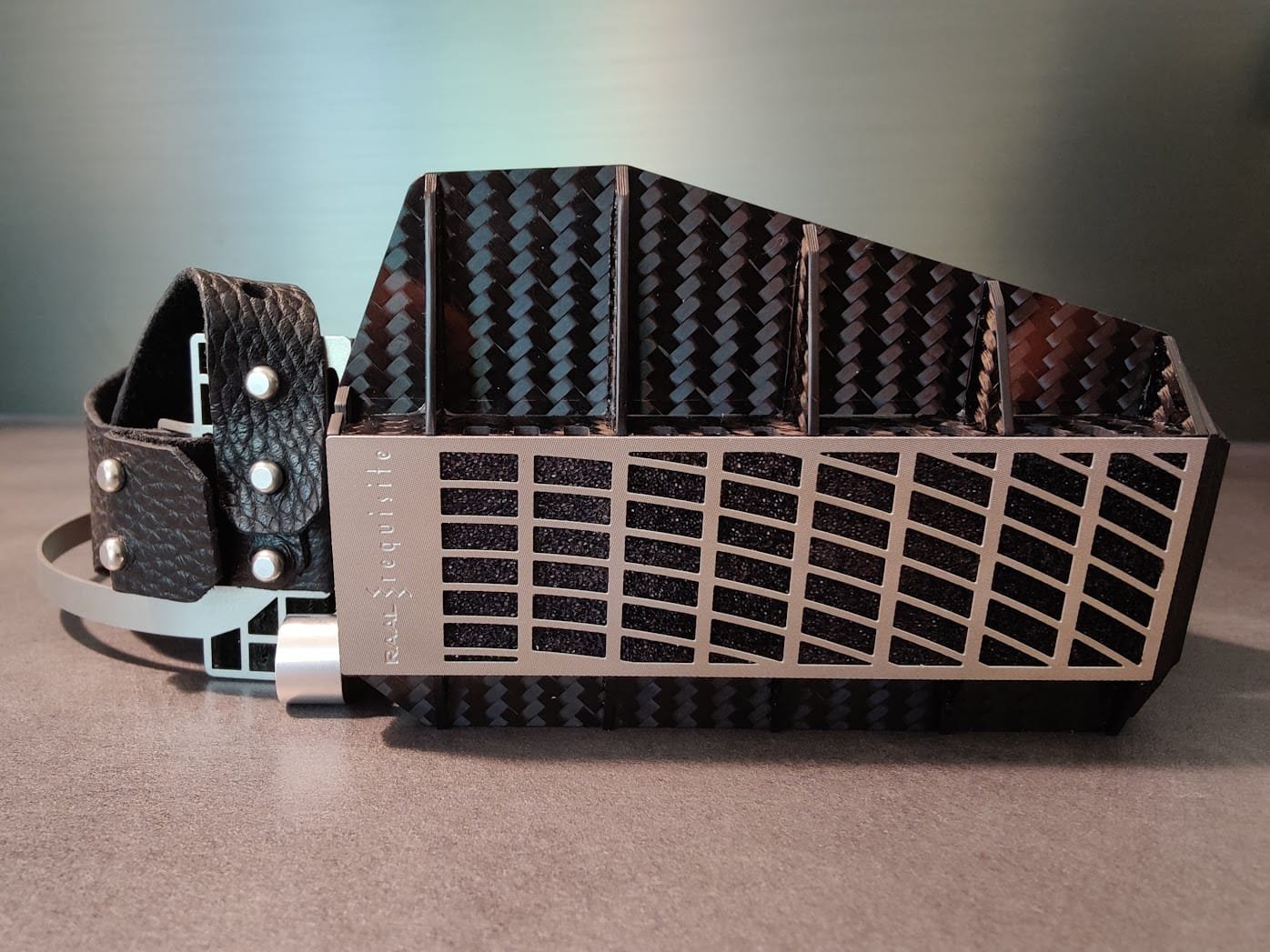
The SR-1a's headband mechanism allows the angle of the cups/drivers to be adjusted to one's own liking. When opening the drivers, the soundstage expands, but the low frequencies weaken quite a bit. Since the headphones always have relatively little bass, I have used them so that the drivers come as close to the ears as possible. Moving the headphones forward or backward on the head also clearly affects the sound quality. The position where comfort and sound quality meet in the best possible way may not be found instantly, so a quick test can give a rather wrong impression of the headphones.
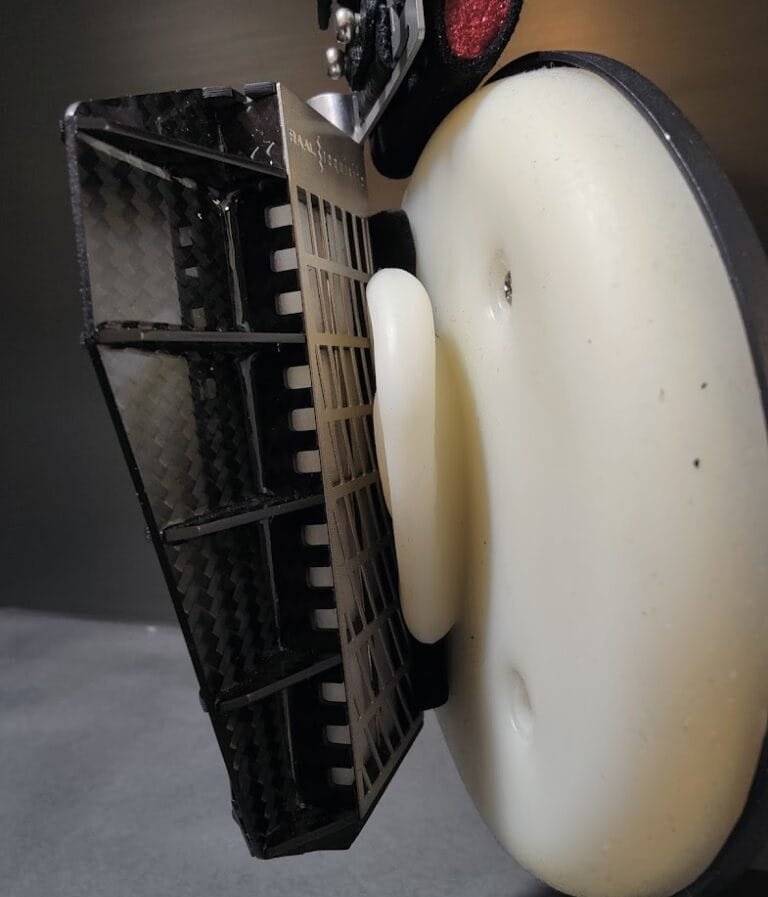
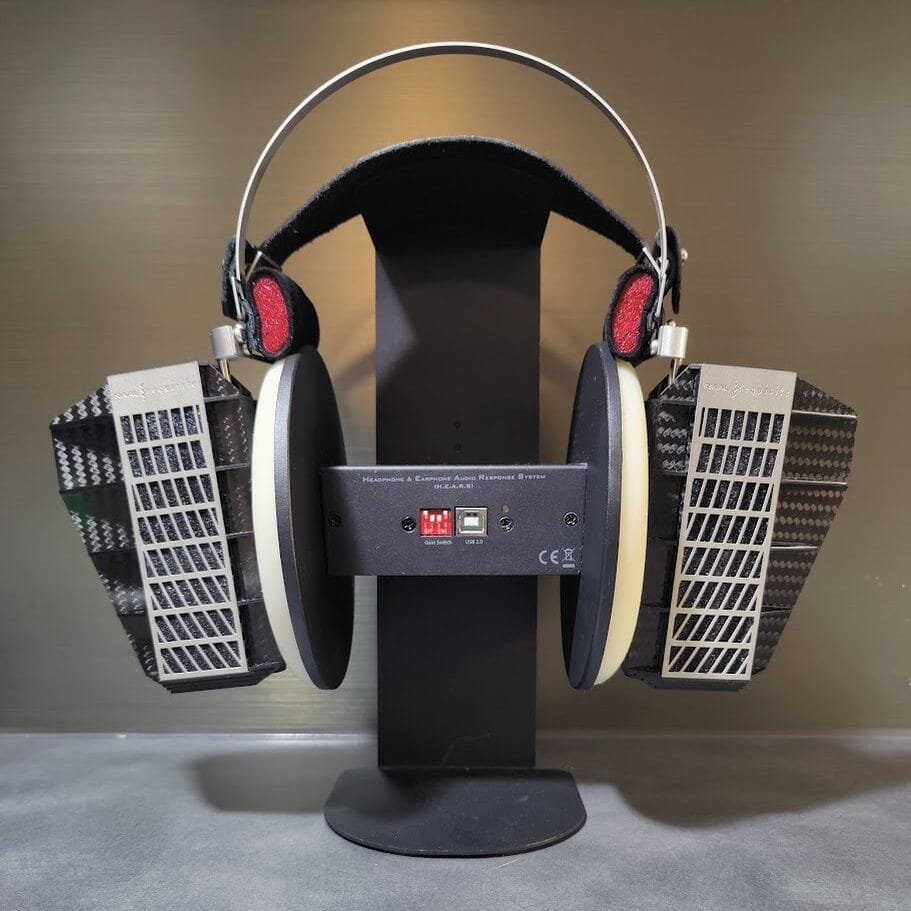
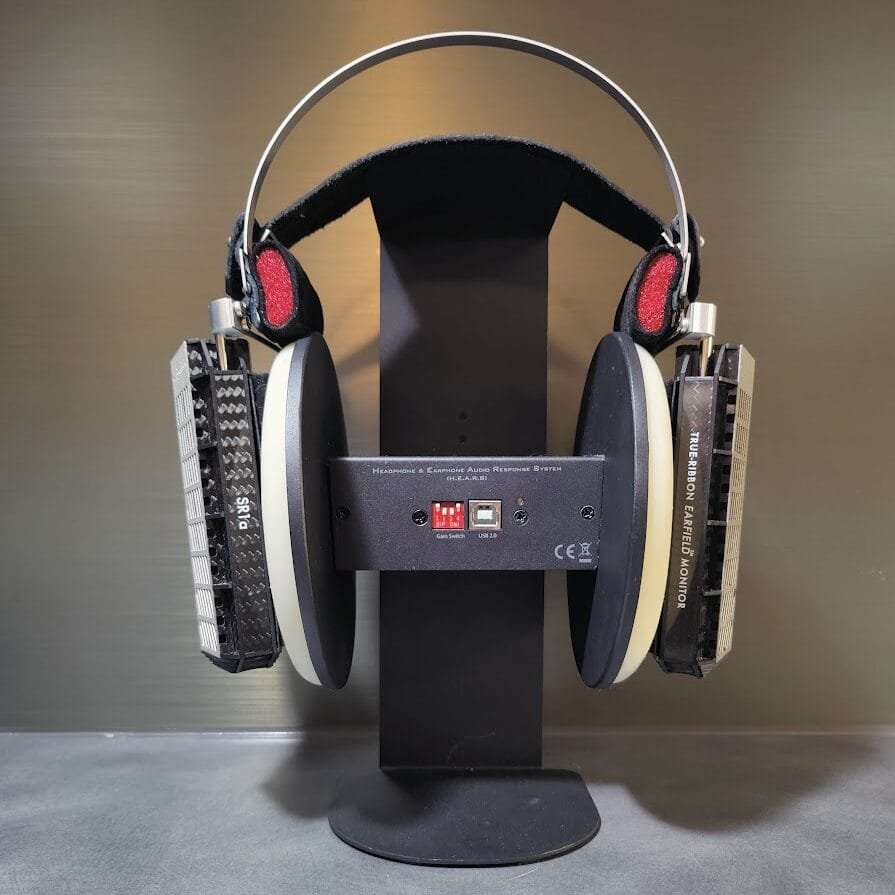
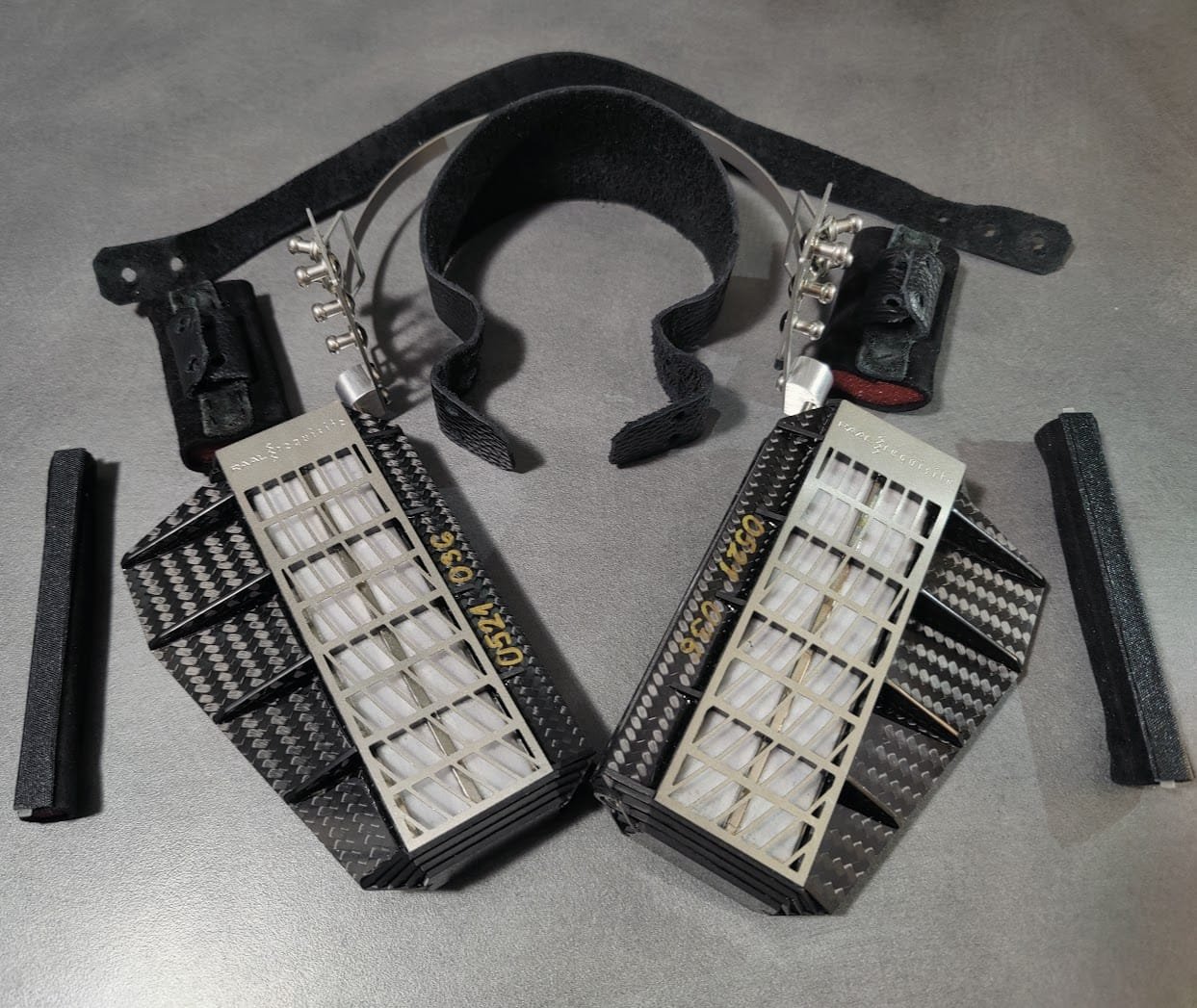
The SR-1a is thus open both in the traditional sense behind the driver and behind the ears. A narrow vertical pad is installed on the front edge of the cups, against which the headphones rest on the front of the ears. Other small pads containing red foam are placed above the ears. The structure works, but in my opinion, an even more interesting solution would have been one where the headband was completely rigid, similar to Abyss's AB1266 headphones. In that case, the cups and drivers could remain completely detached from the listener's head. The SR-1a even has a leather strap that rests on the back of the head, which would prevent the headphones from slipping off. However, since RAAL's chosen structure causes the headphones to press against the head, this strap becomes quite unnecessary. Many have even removed it completely.
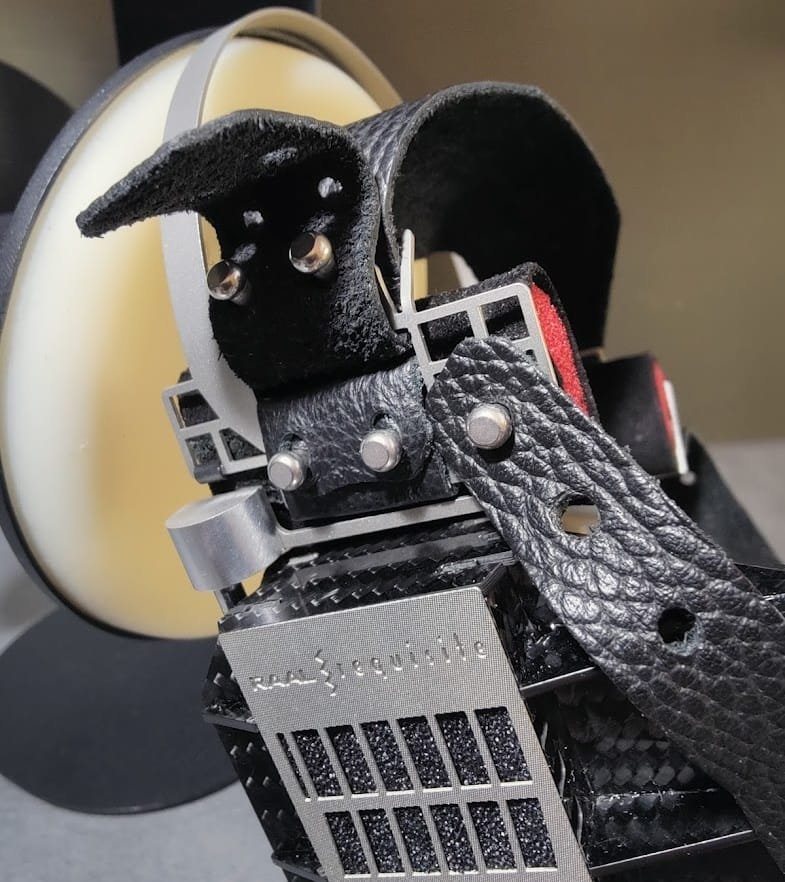
Using the headphones requires getting used to them, but once they are well adjusted on the head, the comfort is quite good. However, I know that the headphones do not fit everyone comfortably despite hard trying and effort. Due to their exceptional structure, the headphones also cannot be used in a lying position. The clamping force is average on my scale, and it can be adjusted by bending the metal headband if desired. The headphones weigh 425 grams, which is probably not too much for most users.
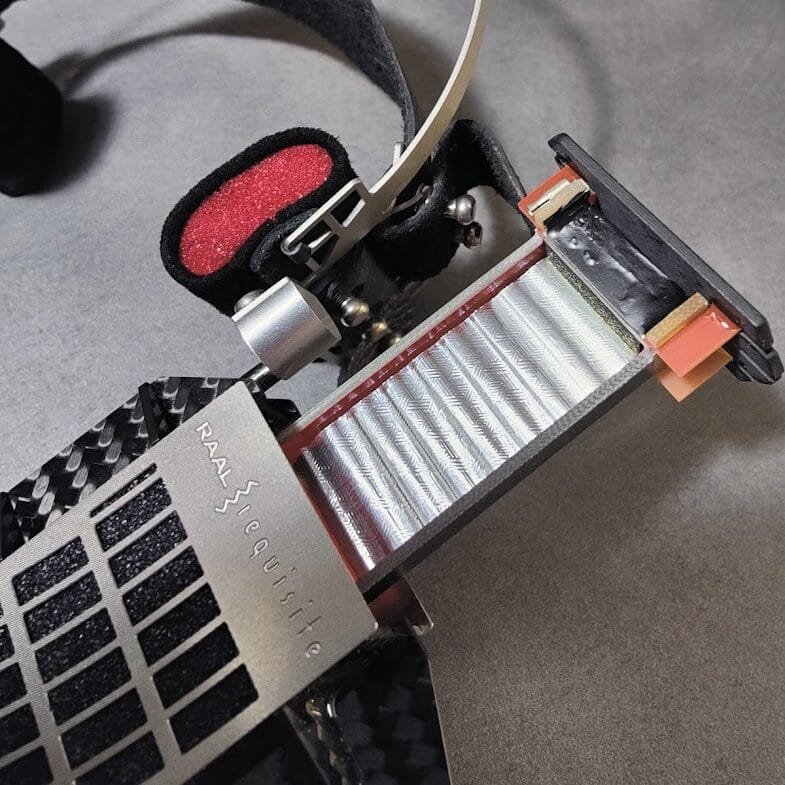
Overall, comfort is at least reasonable, but there is some room for improvement in the build quality. The carbon fiber casing is fine in itself, but the finish of the parts is quite rough. The leather parts, in my opinion, are not as refined as one might expect in this price range. The headphones generally feel quite homemade, so they could easily be mistaken for a prototype that is not yet quite ready for sale. However, there is also much good in the design: the SR-1a seems durable and all parts are easily replaceable.
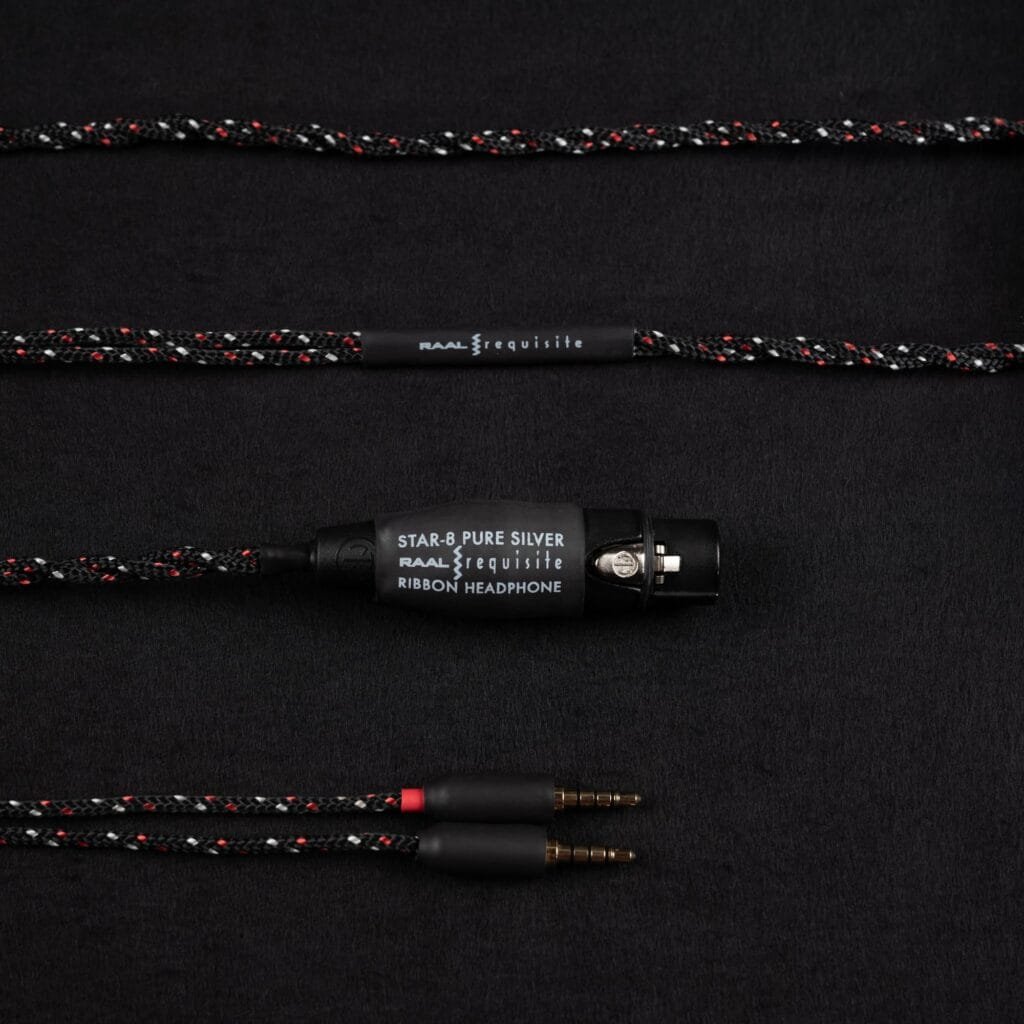
The headphones' two-meter standard cable does its job, even if its appearance is quite ordinary. However, the rubber coating is pleasantly flexible, and it does not produce noise when the cable rubs against clothes, for example. The cable attaches to the cups with 3.5-millimeter connectors, and its other end has a 4-pin XLR female connector instead of a conventional male connector, which ensures that the SR-1a cannot accidentally be connected to a standard headphone amplifier.
The manufacturer sells a separate upgrade cable called Star-8, which, when made of silver, costs about 1000 euros. I am quite skeptical about expensive cables, but with the headphones' impedance being 0.2 ohms, the cable's properties have more significance than usual. Thus, in this context, an upgrade cable might even have some merit. The SR-1a is, in general, one of the few headphones whose frequency response could be altered with the help of a cable.
Sound quality
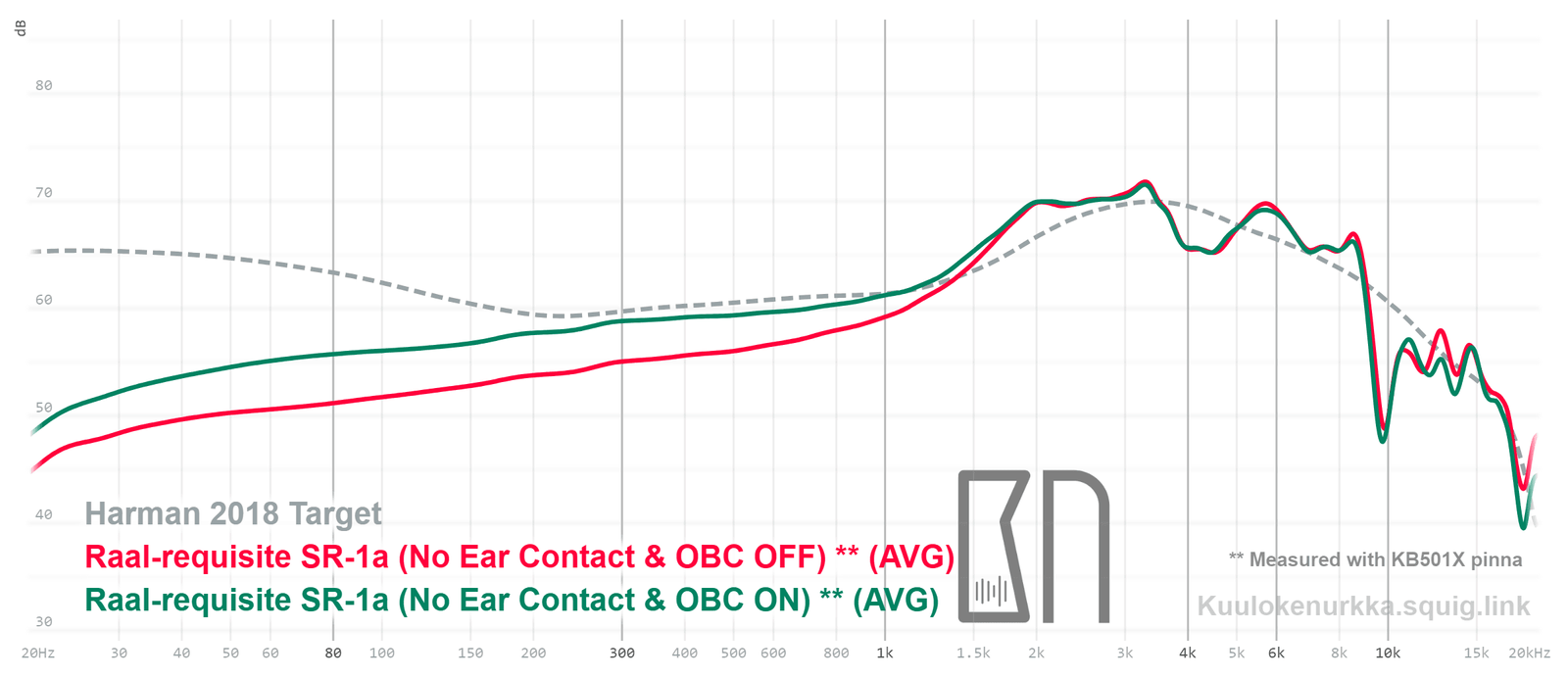
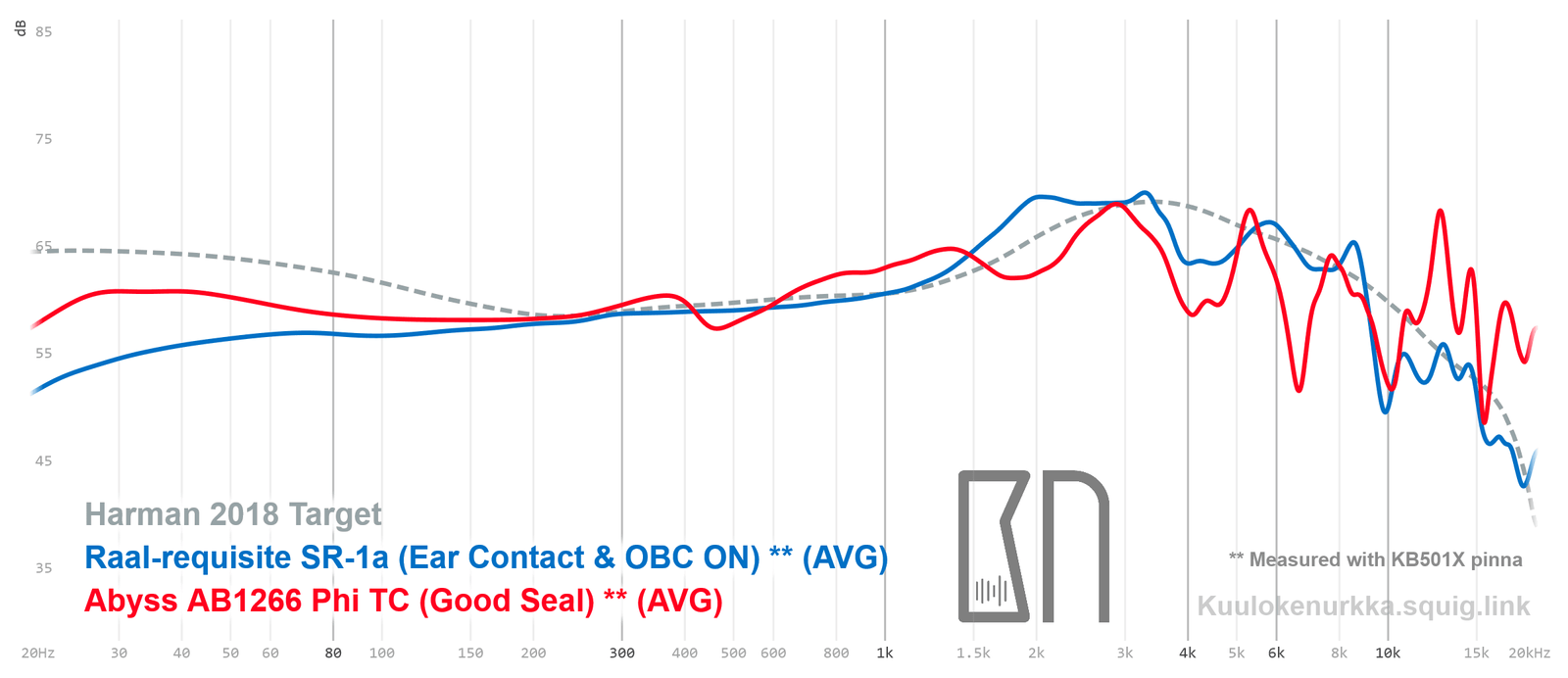
Our frequency response measurements have been made with a clone IEC-60318-4 coupler and KB501X pinnae. The Harman target curve from 2018 is used as a reference point and generalization of the headphone response that would sound good to most people. For more information on the measurements and their accuracy, see Headphone Measurements-page. The frequency response of the SR-1a can also be compared with other measured headphones. Squiglink .
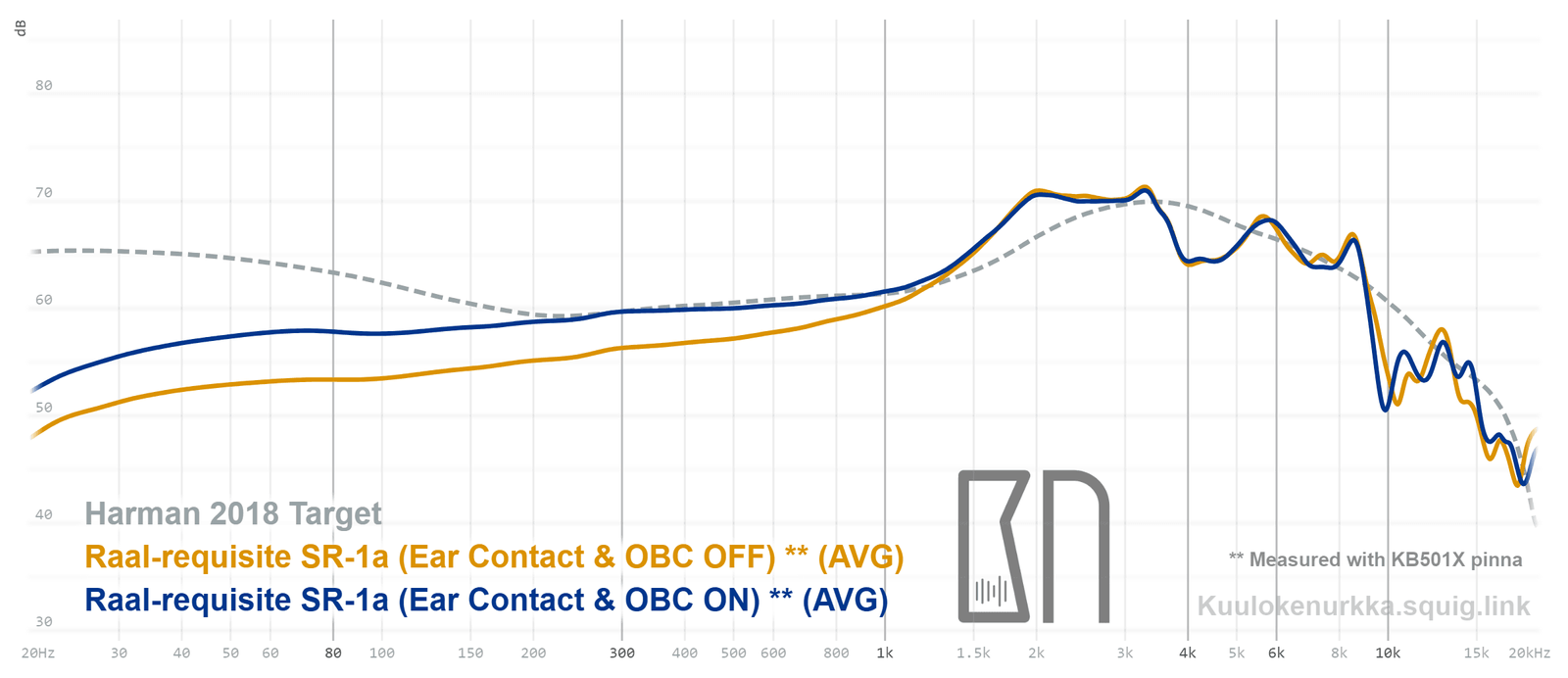
The chosen distance and angle of the drivers relative to the ear significantly affect the sound quality of the SR-1a. Likewise, using or not using OBC adapters directly determines the strength of the low frequencies in the headphones. My listening observations are primarily based on listening with the Schiit Audio Jotunheim R, with the drivers turned as close to my ears as possible. From a frequency response perspective, my most common listening method closely matches the blue line in the first graph of the following measurement results, as the internal equalization of the Jotunheim R mimics the effect of the OBC adapters.
Frequency response (drivers close to ears & OBC adapters vs. no OBC adapters):
Frequency response (drivers further from ears & OBC adapters vs. no OBC adapters):
Bass:
As the frequency response measurements show, bass reproduction is the biggest weakness of these headphones, even with OBC adapters. The SR-1a cannot compete in the ”reach” of sub-bass even with slightly older dynamic headphone models, let alone planars. However, the quality of bass reproduction from 80 hertz upwards is amazing. The headphones reveal the structure of low frequencies in a way I have never heard before. It feels as if many other headphones have withheld some of the notes contained in the music.
The impact of the bass is likewise top-notch, as the headphones release all energy quickly. In my previous experience, bass reproduction is generally more impactful the larger the driver is and the more air it can move. For example, while the Focal Utopia is capable of truly explosive reproduction due to its driver's wide excursion, the 40-millimeter diameter of the diaphragm somewhat limits its performance. Planar headphones with large drivers, on the other hand, do not necessarily move air at all, but rather seem to vibrate in place.
The RAAL-requisite ribbon driver is only about 2 centimeters wide, but it is 10 centimeters high. The ”loose” structure of this driver type gives the diaphragm more room to move compared to planar headphones, and the driver is also not stretched taut, as in electrostatic headphones. The ribbon driver is thus large in surface area and capable of moving over a very wide range. Even though the SR-1a does not have traditional earcups, it can send a pressure wave towards my ears that I can feel on my skin.
If this starts to sound too good to be true, unfortunately, it somewhat is. The bass of the headphones does hit with force, but after reaching its peak, the impact fades too quickly. The reproduction is very fast in its transients, and the open design does not create any reverberation or resonances, so the listening experience is a bit peculiar. The situation is not improved by the very high distortion at the lowest frequencies, which makes the SR-1a almost unlistenable with music that would require high-quality sub-bass. Depending on preferences, the bass reproduction of these headphones is either almost the best in the world or completely unclassifiable.
Mid-range:
In terms of mid-range, RAAL's headphones are energetic and clear. Those who appreciate warm and full reproduction will hardly like it, especially when the reproduction has a Grado-like rudeness at 2 kHz. In terms of aggressiveness, the SR-1a falls somewhere between traditional Grado and open Focal models. The frequency balance is generally quite good, but depending on the recording, the reproduction may be quite thin or even piercing. I believe that many would want to correct the situation with equalization. On the other hand, the purity of the reproduction is dazzling, so with suitable music, the SR-1a's mid-range is pretty much the best I've heard.
Treble:
In terms of high frequencies, the SR-1a is even more clearly the best headphone I've heard. Treble is reproduced airily, similar to electrostatics, but the sound lacks the excessive lightness and delicacy typical of them at the very highest frequencies. Even the best planars I've heard do not reach the level of accuracy of the SR-1a, while dynamic headphones invariably sound somewhat grainy. The superiority of RAAL's headphones compared to all other headphone models I've heard is most evident where the upper mid-frequencies and lower treble meet. For example, the SR-1a reproduces the highest frequencies of a piano and xylophone with unprecedented realism.
Timbre:
I have usually considered headphones with a natural timbre to have a slightly soft reproduction. For example, Sennheiser HD 600 & HD 650, ZMF Aeolus, and JVC HA-MX100Z are headphones whose sound feels truly natural and uncolored (even if there might be some coloration in the frequency response). In my experience, natural timbre includes a certain amount of delay, which is inherent to ”slow” dynamic drivers. ”Fast” electrostatics and planars, on the other hand, usually sound even a bit plastic.
Along with bass reproduction, my biggest concern with the SR-1a beforehand was that I assumed it would sound somewhat unnatural and wrong. It was surprising to find that the headphones hardly sound like anything at all. In my opinion, the SR-1a is the first headphone that completely lacks a characteristic sound that would detract from the naturalness of its timbre. While there would certainly be room for improvement in the frequency response, I still perceive the timbre as completely uncolored.
Audio description:
Conventional headphones disperse sound sideways, whereas the SR-1A plays more in front of me – there is more depth than width in the soundstage. If someone likes the overemphasized stereo separation of regular headphones, the SR-1a might be a small disappointment. For those accustomed to large speakers, it might also sound too narrow. However, I believe it will appeal to those who want their headphones to sound like small monitor speakers. I personally like the presentation of these headphones – or at least my ears do, as the SR-1a is the least fatiguing headphone I have ever listened to. When I switch from it to regular headphones, music crammed into two separate channels even sounds a bit fatiguing and disjointed.
I experience the soundstage with regular headphones as bubble-like. The size of this bubble determines how widely sounds can spread. RAAL's headphones are special in that they don't seem to create such a bubble at all; instead, sounds move as far as they want. Only the Abyss AB-1266 series headphones offer me a somewhat similar experience, but the SR-1a goes even further. The presentation is magnificent and feels realistic. Conventional headphones sound more or less like a simulation because the bubble I mentioned is always perceptible, even when its boundaries are not truly tested.
The SR-1a quite successfully frees the listener from the limitations of traditional headphone listening in terms of soundstage. This might be due to the fact that both ears hear part of the sound reproduced on the other side of the head. The situation is similar with the Abyss AB-1266, which also sits partially off the ears. We have written more about the soundstage in headphone listening Grell OAE1 Signature in connection with the review of the headphones.
Dynamics:
Although no one truly knows what the macro-dynamics of headphones consist of, I have noticed a few things that contribute to it. The drivers” ability to react quickly to the signal is probably the most obvious characteristic. The SR-1a sounds really ”fast" to me, and this subjective observation is also supported by some Superbestaudiofriends measurements I found on the website.
Macro-dynamics are also influenced by reasonable bass reproduction and the driver's ability to move air and create sound pressure. I also believe that vibrations caused by the headphone's structure on the skin can make the reproduction feel dynamic. The large drivers of the SR-1a make my body hair vibrate, but the reproduction still remains too ethereal due to its fully open design and light bass response. If it were a conventionally structured headphone with more bass, we might be talking about one of the most dynamic headphones on the market. Now, the result is acceptable, but for those seeking dynamic ”slam,” the SR-1a is likely a disappointment. However, the dynamics of the midrange and treble are first-class, so that compensates for the situation quite well.
Resolution and sound transparency:
Resolution and tonal transparency are entirely subjective experiences. For me, these play a significant role when evaluating whether headphones are ultimately worth their price. Although price and quality do not always correlate precisely with tonal transparency, paying more usually tends to get you better. In this sense, the SR-1a is easily worth its price, I would even say affordable. This might sound crazy, as the headphones are indeed quite expensive.
The SR-1a does not add reflections or extra reverberations to the reproduction, so things that were previously lost in the background ”noise” are easily found. With the SR-1a, I often notice movements of sounds or even entire sounds that I hadn't noticed before. In analytical listening, I can delve deeper into the recording than with any other headphone I've tested. Every listening session offers something new.
On the other hand, the SR-1a is even somewhat challenging to listen to because it reveals poor recordings perhaps too effectively. When moving from a good recording to a bad one, realism breaks down badly, and it's difficult to enjoy the music because I find myself mostly thinking about the recording's flaws. In fact, even mediocre recordings are somewhat problematic. With well-recorded music, however, the headphones are astonishingly realistic. As a specific example, the No-Man: School Yard Ghosts album sounds incredibly good, as does most of Dire Straits' output. At its best, the music sounds so perfect that I have only experienced similar emotional states at the beginning of my hobby, when I first got to listen to good headphones.
Jotunheim R vs. TI-1b: how I feel I get the most out of the headphones
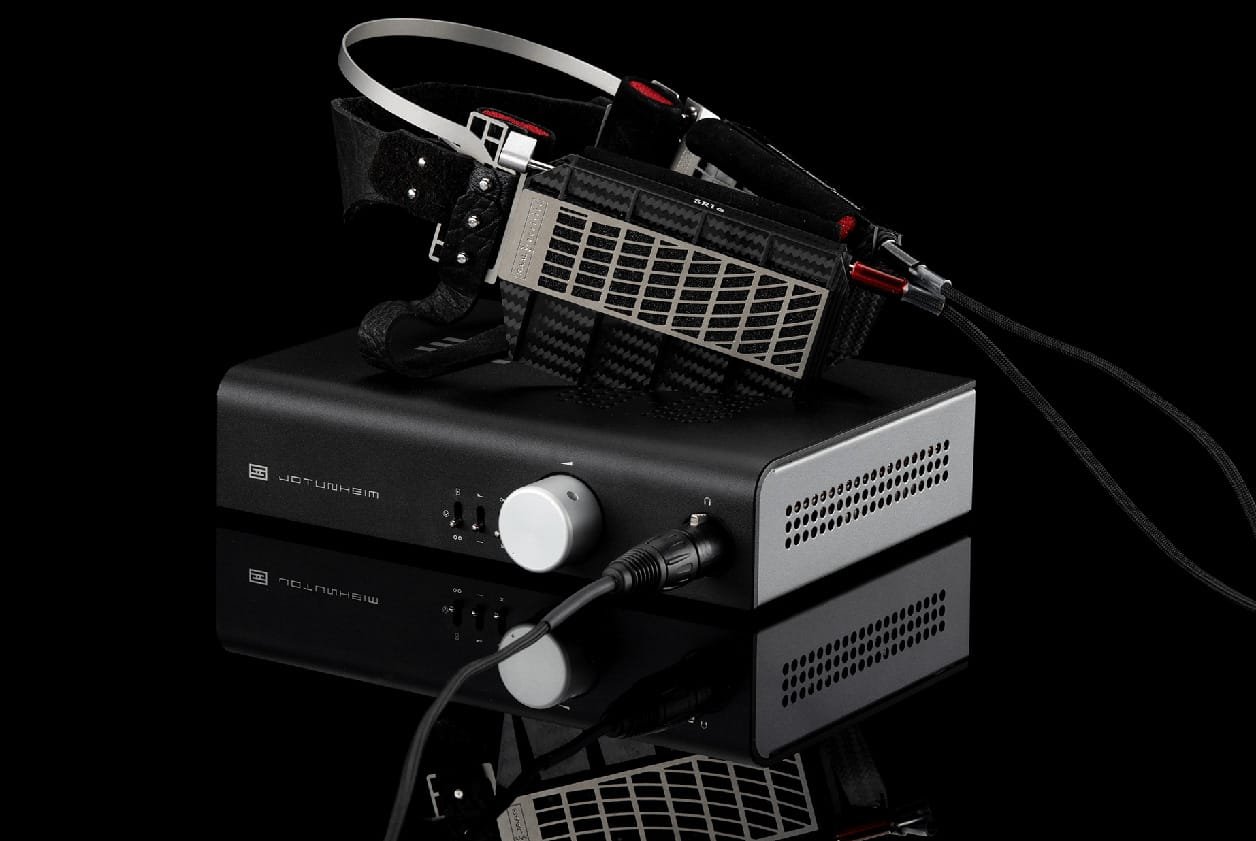
My favorite combination with the SR-1a is quite peculiar. I think the headphones sound best with the TI-1b transformer box and the Ferrum Audio OOR amplifier, but without the OBC adapters. When the OBC adapters are not in use, the low frequencies of the headphones must be equalized manually. The OOR itself doesn't fully do justice to the SR-1a, so it must be set to the role of a power amplifier, while a high-quality tube amplifier is added to color the sound – in my case, the Trafomatic Audio Experience Head One.
Let's take a moment to talk about equalization. Those who have read my articles may have noticed that I don't really talk about equalization or share my settings. In fact, I usually don't even use an equalizer, because part of the richness of the hobby is that all headphones sound different. In the case of the SR-1a, however, equalization is worth the effort and, without OBC adapters, even necessary. I like to slightly boost the headphones' mid-bass and completely cut out the very lowest frequencies between 10–40 hertz. The excessively high distortion of the ribbon drivers at low frequencies would otherwise reflect across the entire frequency band, even if not much is happening at the lowest frequencies. At higher bass frequencies, however, the headphones can tolerate some bass boost. I, in turn, slightly calm down the mid-range around 2 kHz. This alone makes the sound more robust in its own way.
How does the tube amplifier I mentioned fit into the picture then? Mostly, these are my own preferences. I can't explain exactly what tubes do to the sound, but almost always the result is more pleasant than with transistor amplifiers. In this case, the SR-1a's soundstage feels even larger, and the Experience Head One's fierce dynamics enhance the impact of the listening experience. The role of the Ferrum Audio OOR remains primarily to amplify the signal, which, of course, is fundamentally the amplifier's main task.
When I only have Jotunheim R, I prefer to use it without the device's internal EQ function. For some reason, hardware-based equalizers don't sound as good to my ears as the adjustments I make with Equalizer APO software, even if they are very similar to the changes brought about by OBC adapters and Jotunheim R.
Transducer first
Hi-fi enthusiasts can be divided into several different categories based on their hobby philosophy. One such classification goes roughly like this:
- Source First: The most important part of the listening chain is the sound source, i.e., a D/A converter or perhaps a turntable.
- Amp First: The belief that the most important thing is high-quality amplification of the audio signal.
- Transducer First: Headphones/speakers determine sound quality more than the sound source or amplifier.
I won't argue about which approach is ultimately correct, as good arguments have been heard from every camp. I myself have always belonged to the Transducer First camp. Usually, it's enough for me that the DAC works and the amplifier has enough power. However, it matters more whether I have SR-1a, Hifiman Susvara, or Flare Audio Reference R1. I am also an extremely lazy enthusiast. Although the SR-1a is easy to equalize, I might not bother adjusting with Equalizer APO. If, on the other hand, the devices are not already connected, I don't always feel like assembling the Experience Head One + OOR + TI-1b combination, but rather prefer to use Jotunheim R with a Soekris DAC. In the end, I decided to sell both the Trafomatic Audio tube amplifier and the Ferrum Audio OOR.
Having delved deeper into headphone hi-fi, I less often consider the price-quality ratio of products. If I did, I probably wouldn't need any other headphones than SASH Tres SE, which corresponds to about 90 percent of the sound quality of the best headphone systems I've heard. However, it turned out that pondering the price-quality ratio led me to sell some of my better amplifiers and my best D/A converter, the iFi Pro iDSD. Although the SR-1a benefits from better equipment, it doesn't need them. Headphones with Jotunheim R, even without an expensive DAC, sound better to my ears than the Hifiman Susvara, which has tens of thousands worth of top-tier electronics loaded in front of it. For the first time, I feel my setup is at such a high level that instead of dreaming of upgrades, I can cut back on other equipment, because there's even room to compromise downwards on the final result.
Comparisons to other headphones
RAAL-requisite SR-1a vs. Focal Utopia (2017)
Prices: 3500 € vs. 4000 € (production discontinued in 2022)
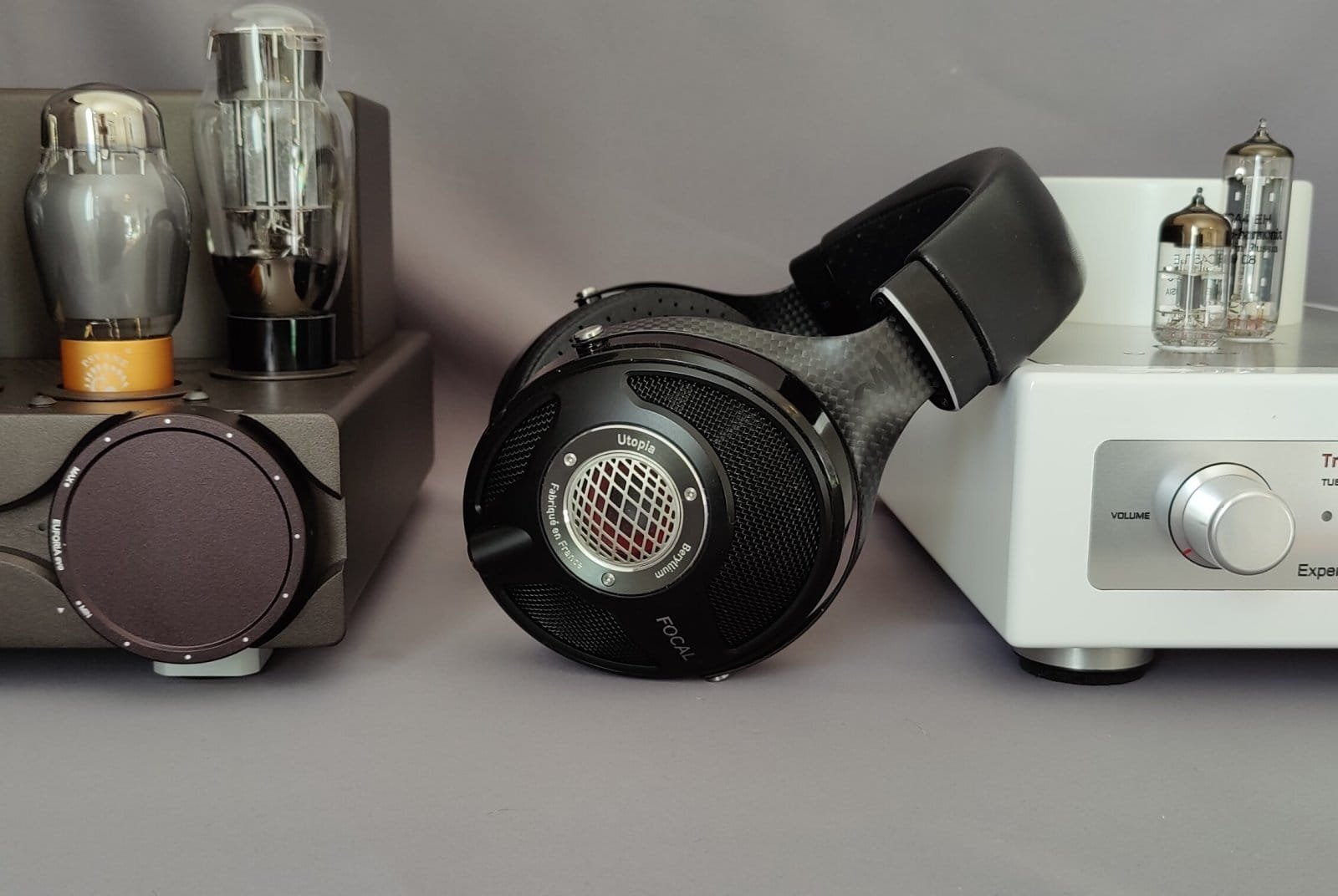
The original Focal Utopia is a very familiar case to me, as before my more permanent transition to listening to planar headphones, it was the king of my headphone collection. I still appreciate the Utopia, of course, but nowadays it only occasionally visits me as a reference for other high-end headphones, such as RAAL's SR-1a. You can find my comprehensive review of the Utopia in the following link takaa.
Frequency responses:
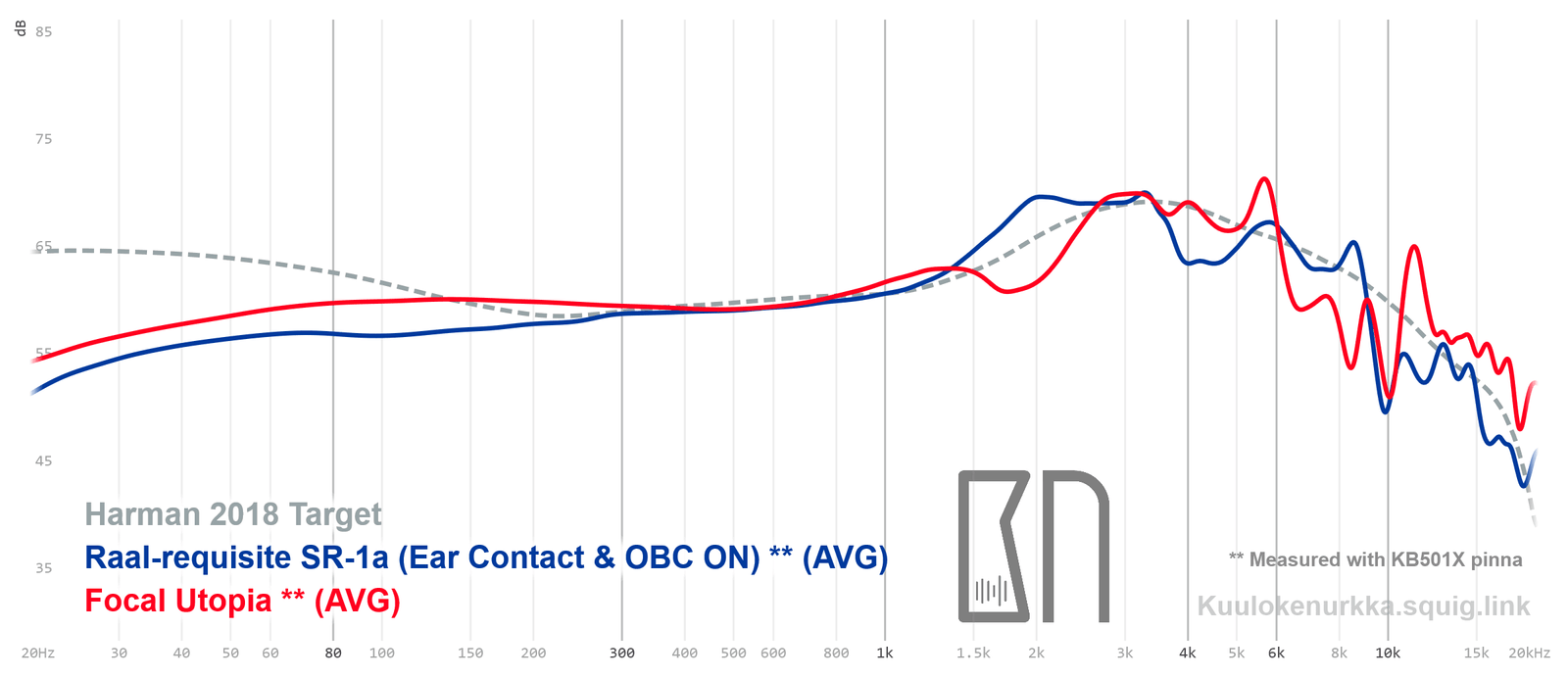
Bass:
The SR-1a's bass reproduction is clearly lighter than the Utopia's, even though many feel that the Focal model would also benefit from more robust low frequencies. I certainly cannot characterize the SR-1a's low frequencies as neutral; it is clearly a light-sounding headphone. What the SR-1a loses in quantity, it compensates for in quality. The Utopia's bass reproduction is exceptionally precise for a dynamic headphone model, but compared to RAAL's ribbon drivers, its bass is almost monotonous thumping. The SR-1a is more precise, faster, and layered in its reproduction. Overall, the Utopia is still more successful because it reproduces bass without distortion even at fairly high volumes. As a result, the Utopia allows for enjoyment of all kinds of music, unlike the SR-1a, whose more restrained bass reproduction doesn't sound fun even with typical pop music, let alone various EDM genres.
Central votes:
The Utopia and SR-1a are quite similar types of headphones in terms of their mid-range. Neither headphone is designed for those seeking a full-bodied or otherwise colored reproduction; rather, the target audience can be considered listeners who appreciate an unadorned and realistic presentation. The mid-range takes center stage in the reproduction of both headphones, perhaps more so than with many other headphones on average. For those accustomed to a more relaxed sound, both the Utopia and SR-1a might sound overly aggressive.
To my taste, the RAAL model ultimately suits me clearly better, mainly because it is ”technically” a superior headphone to the Utopia. The SR-1a's reproduction is more transparent and the timbre more natural. I could describe the Utopia's mid-range as uncolored in almost any other comparison situation, but alongside the SR-1a, it's difficult. The Utopia also occasionally sounds a bit stark and metallic, especially if paired with an unsuitable amplifier.
Treble:
In terms of high frequencies, the duo also resembles each other a lot. There are, of course, clear differences observable in the measured frequency responses, such as the most striking 6 kHz emphasis of the Utopia. However, my own ears do not particularly register this. Those who appreciate high-quality high frequencies will likely enjoy both headphones, but the SR-1a once again takes the precision of reproduction to the next level. It is, above all, more nuanced in its high frequencies.
Audio description:
In traditional headphones like the Utopia, due to their structure, there is a somewhat overemphasized separation of the right and left channels compared to loudspeakers. However, the Utopia is surprisingly good at reproducing sound locations and movement, including in depth. With weaker headphones, for example, the movement of sounds approaching from the front might go unnoticed. With the Utopia, however, this succeeds, even if the volume doesn't change much. While this is impressive in its own way, the Utopia does not reach the level of the SR-1a. The RAAL model's ability to create a non-headphone-like and credible sense of depth is astonishing time and again.
Other observations:
I'll repeat myself, but in my opinion, the SR-1a is ”technically” the better headphone of the two. Its superiority is audible especially in its uncolored nature, better separation, and more precise soundstage. The Utopia can only challenge the SR-1a with its dynamics and more robust bass reproduction. Part of the better dynamics is also explained by the more impactful bass, as I believe the mid-range dynamics are at a better level in the RAAL model.
Throughout the comparison, I even found it a bit difficult to listen to the Utopia, because my attention was so strongly drawn to the headphones' overemphasized stereo separation. It felt as if I was listening to two drivers right at my ears – and even with a delay in the reproduced sound. The SR-1a's speed and effortlessness had probably spoiled my ears. If I could manage to stay away from it for a couple of days, my ears would get used to the Utopia again, and I would consider it an excellent headphone as before.
RAAL-requisite SR-1a vs. Hifiman Susvara
Prices: 3500 € vs. 7000 €
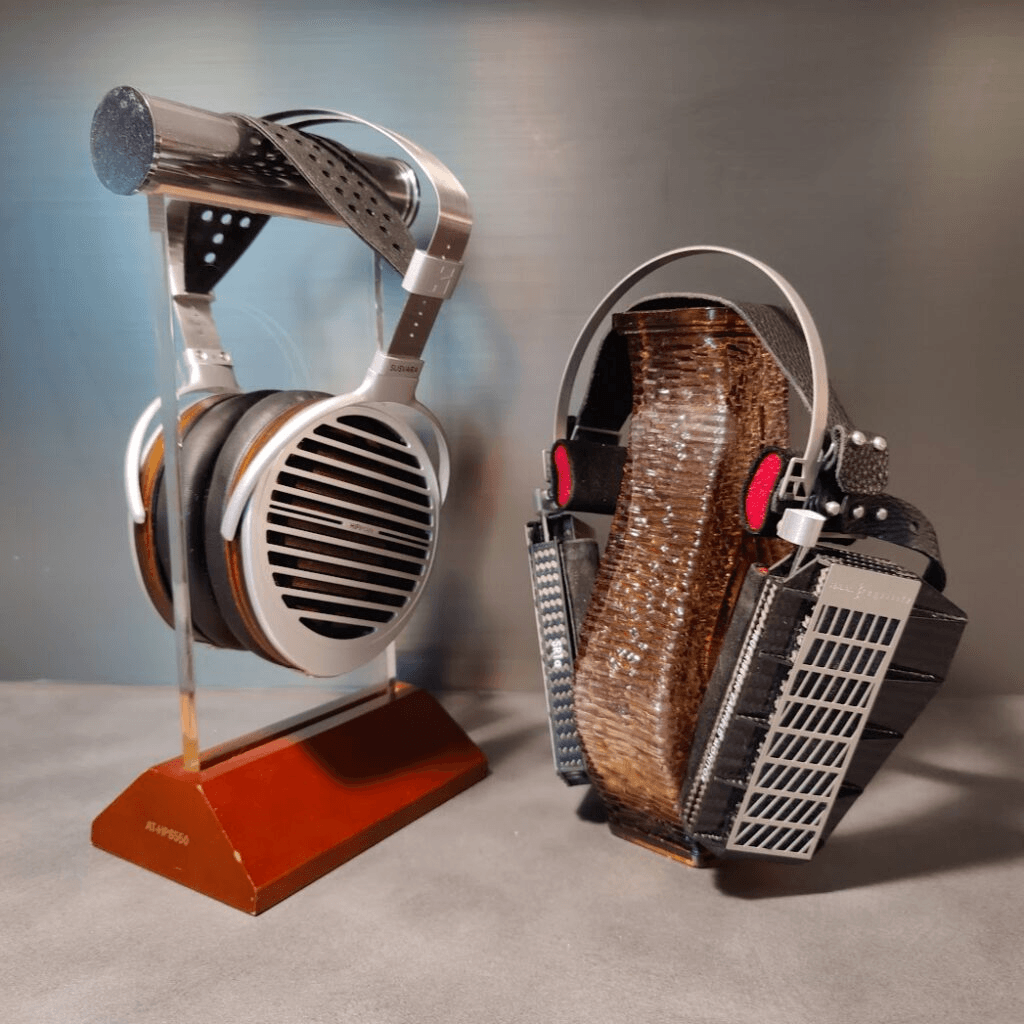
Hifiman Susvara is generally considered one of the world's best headphones. In the higher price ranges, it is a similar benchmark as the Sennheiser HD 800 once was among headphones a few thousand cheaper. The Susvara is the culmination of Hifiman's typical airy and resolving presentation. Its best asset, however, in my opinion, is a clear, yet in a good way slightly colored mid-range. The Susvara is thus a perfect example that a headphone with top-tier resolution can also be ”musical.” You can read my more comprehensive thoughts on headphones in my previous review.
Frequency responses:
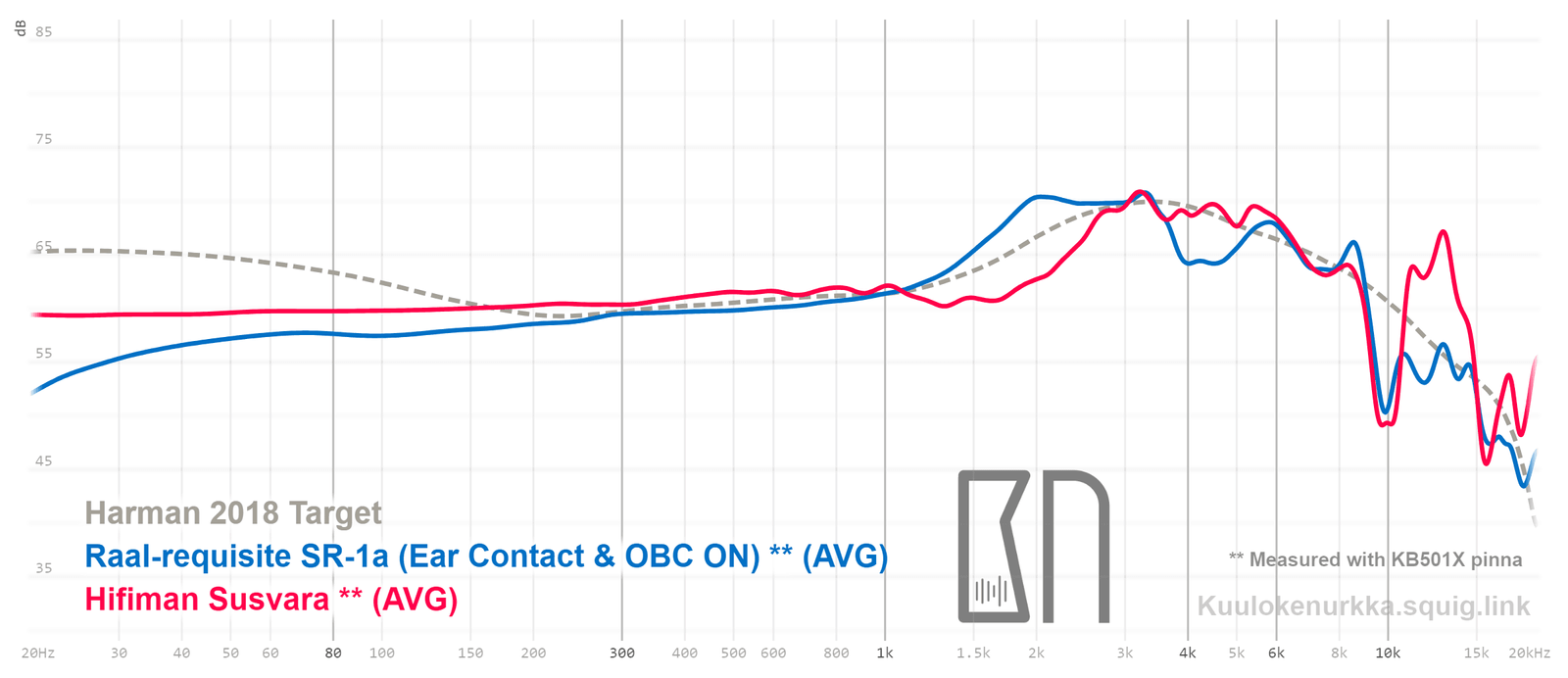
Bass:
Bass reproduction is not the Susvara's strongest suit, but in this area, the SR-1a is easily beaten. Although the Susvara's bass reproduction is quite subdued, it at least reproduces the very lowest frequencies. I also don't recall ever getting the Susvara's bass to distort, other than by playing the headphones with an underpowered amplifier. However, when there is hardly any sub-bass in the music, the SR-1a sounds more nuanced than the Susvara. Bass patterns and changes in their intensity are reproduced more precisely with the RAAL model. The SR-1a also surpasses the Susvara in impact and sense of physicality. I must remind you, however, that this only applies to the upper bass frequencies. As soon as there is information below 60 hertz in the music, the situation clearly turns in favor of the Hifiman model.
Central votes:
Susvara is still the best headphone I've heard for reproducing vocal performances. Actually, it would be even more apt to describe it as the headphone with the most pleasant mid-range. The SR-1a, namely, sounds more authentic, but cannot achieve as touching a performance. In my opinion, Susvara is at its best with melancholic and ”beautiful” music. The RAAL model, on the other hand, excels in realism of reproduction and mid-frequency dynamics. The scale of versatile vocal performances comes out more comprehensively than with Susvara, which smooths and polishes the edge off even performances that should have punch. When it comes to reproducing different instruments, I almost always lean towards the SR-1a, although Susvara also always sounds excellent, of course.
Treble:
Susvara is one of the few headphones whose treble reproduction is at least roughly on the same level as the SR-1a. However, it does not possess the RAAL model's dynamism with fast-hitting sounds, nor does the treble have the ultimate clarity. Susvara sounds a bit smoothed out and simplifies the structure of sounds. In listening, the differences mainly manifest in that it's easy to not listen to Susvara's treble. With the SR-1a, on the other hand, I cannot listen for many minutes without admiring its treble reproduction.
Audio description:
Susvara's soundstage size matches the SR-1a, and the placement of sounds in the lateral direction is likewise roughly equally precise. In terms of height and depth, however, the SR-1a is the more impressive of the two. As good as Susvara is, with it individual sounds are just sounds in a good headphone's soundstage, whereas with the SR-1a, sounds feel like they are located in the same space as me. The more authentic impression is further enhanced by the RAAL model's way of reproducing sound movements more pronouncedly than Susvara.
Dynamics:
In terms of dynamics, the SR-1a is more impactful and exciting than Susvara. Especially the mid-range and treble sound punchier with the SR-1a when the music demands it. The speed of reproduction enables an impact and edginess that Susvara cannot fully achieve.
Resolution and sound transparency:
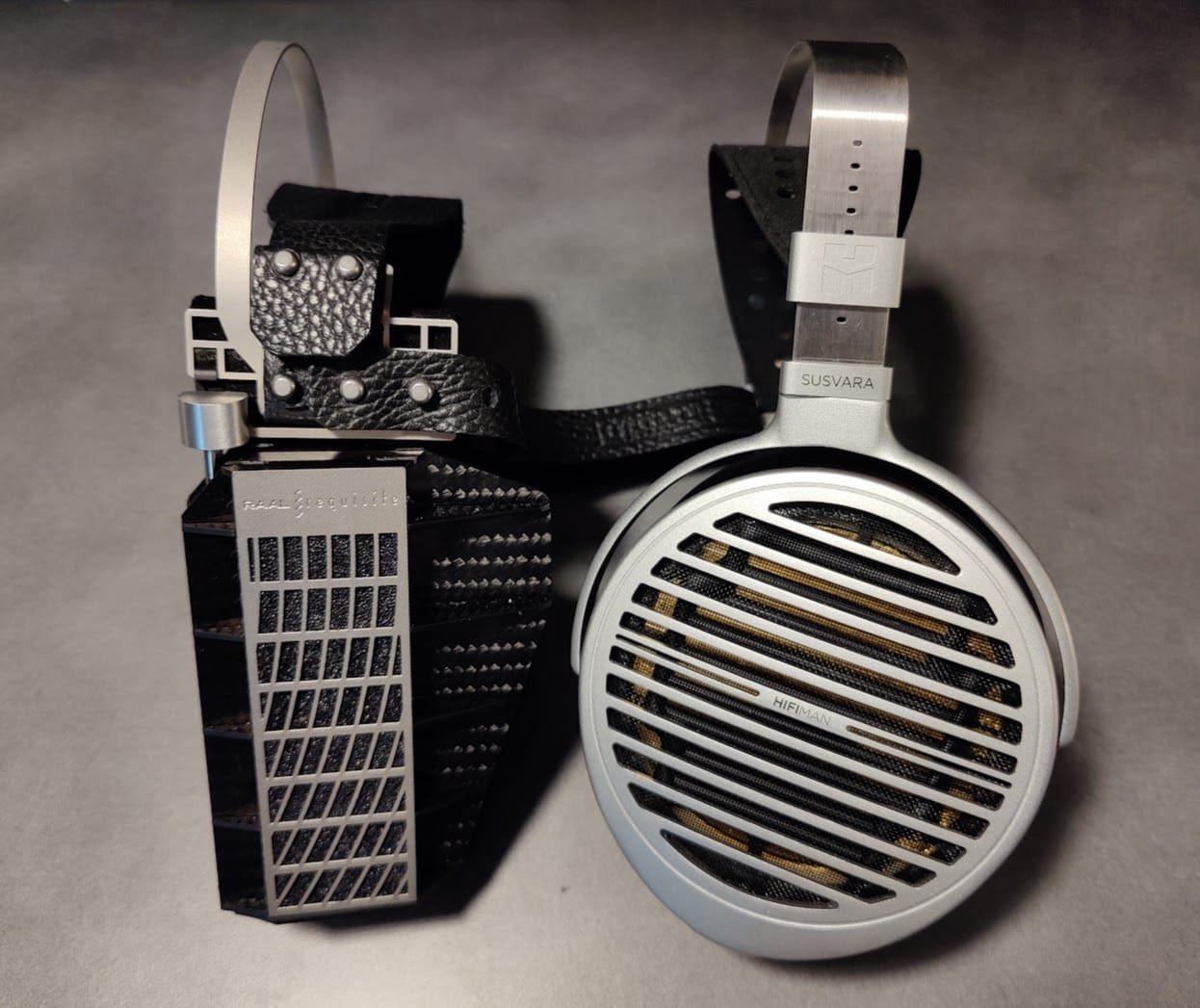
The jump from Susvara to SR-1a is almost as big as from Hifiman Sundara to Hifiman Arya or Sennheiser HD 600 to Sennheiser HD 800. Compared to RAAL's headphones, Susvara sounds distinctly blurrier. Sounds seem to emerge somewhat from the middle of a fog, and therefore there's a slight delay, as it were, in the presentation before the sound fully emerges. Even after that, a ”fog” frames the sound. The SR-1a, on the other hand, puts everything on the table immediately: sound appears from nowhere in an instant. As I noted earlier, transparent reproduction usually costs more. However, the SR-1a, which is half the price of Susvara, wins this comparison five-nil. When evaluating sheer detail retrieval, the difference is almost as great. Although Susvara is truly open in its construction, as a headphone with a traditional structure, it is somewhat like a closed model compared to the SR-1a's structure. The presence of cups and pads around the ears is clearly noticeable in Susvara. The cleaner-sounding SR-1a, in turn, is capable of bringing out sounds from music that would never be noticed with Susvara.
RAAL-requisite SR-1a vs. Abyss AB1266 Phi TC
Prices: 3500 € vs. 6800 €
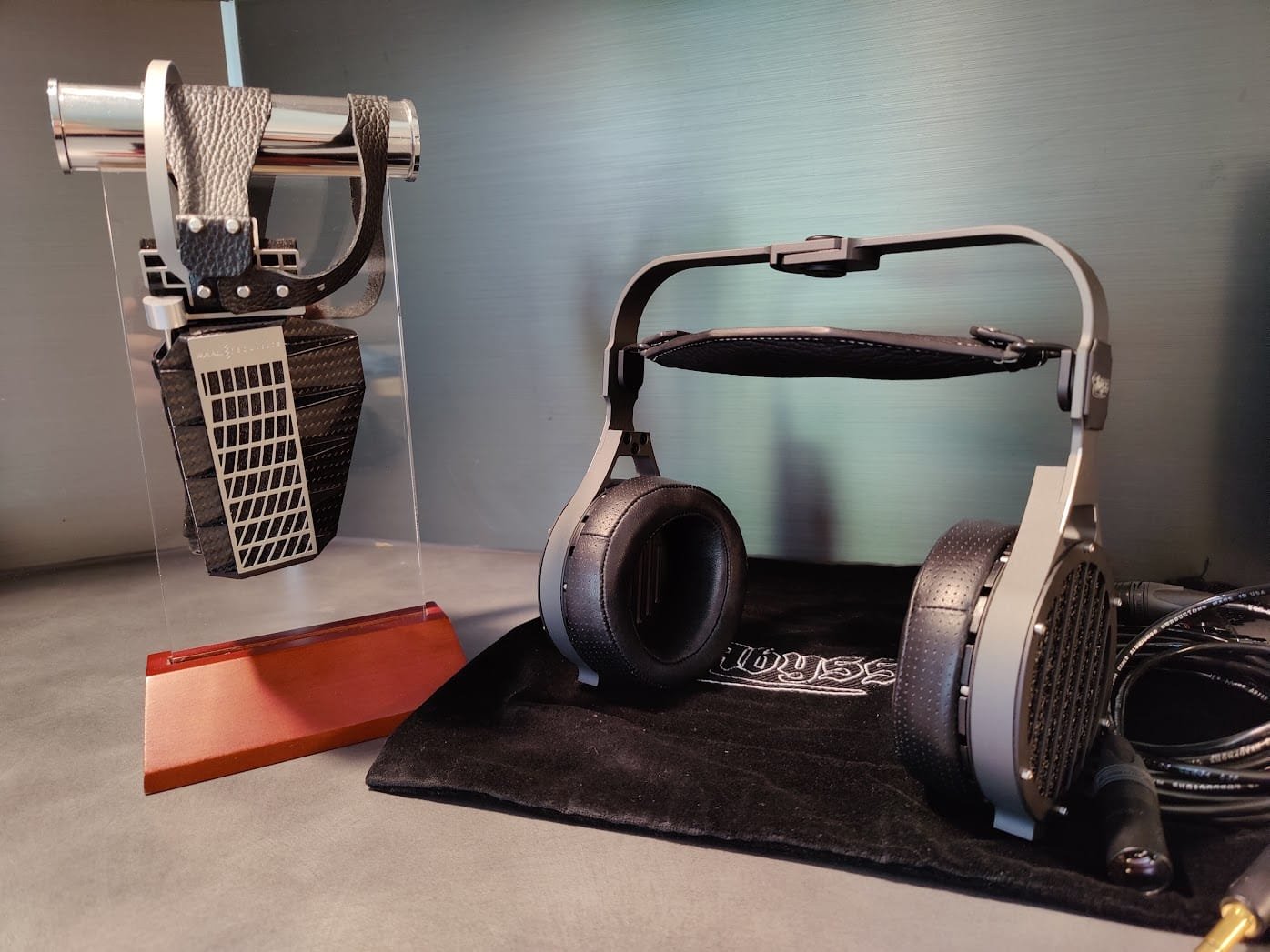
The Abyss AB1266 Phi TC is largely the most entertaining headphone I've heard. The combination of fierce dynamics and first-class resolution is truly effective. However, the headphones' frequency response is quite peculiar and uneven, so I cannot recommend them without reservation. You can read my more detailed thoughts on the headphones review.
Frequency responses:
Bass:
The low-frequency reproduction is not comparable between the two at all, as music craving bass sounds distinctly lighter and thinner with the SR-1a. Emphasized upper-mid frequencies further highlight the lack of body. The accuracy of reproduction is at least at a better level compared to the phase-erroneous AB1266. However, if I could replace the SR-1a's bass with the Abyss model's bass, I would do it without hesitation. The AB1266 is interesting in that its sub-bass can be boosted by breaking the seal of the pads around the ears – the entire headband structure is actually designed around this adjustment possibility.
Central votes:
The AB1266's mid-range sounds excellent, provided the chosen music aligns with the headphones' peculiar frequency response. For example, violins and electric guitars sound superb. With the SR-1a, the violin sometimes reproduces a bit too aggressively, but on average, the headphones are clearly more pleasant than the Abyss model and, above all, more realistic and accurate. The AB1266's colored reproduction has its place, but too often its uneven frequency response causes irritation.
Treble:
Although I am quite satisfied with the AB1266's treble, it doesn't truly impress with its excellence in the same way as the SR-1a. I don't consider the nearly 7000 euro Abyss model a disappointment, but as I have surely repeated ad nauseam, RAAL's headphones are superior in their treble to all other headphone models I have heard.
Audio description:
With the SR-1a, the sense of space is conveyed more authentically than with the AB1266, whose echo-like sound makes music reproduce as grand, but less faithful to the recordings. If the SR-1a's drivers are opened further from the ears, its soundstage is roughly as deep as the AB1266, but narrower. In this case, however, the amount of bass decreases too much. If, on the other hand, the drivers come close to the ears, the SR-1a's soundstage shrinks, making the AB1266 sound larger, with the exception of height. One could certainly state that the Abyss model has a larger soundstage on average.
In soundstage precision, RAAL's headphones make a slightly greater impression due to their better sense of height. Because sounds also overlap nicely in the vertical direction, the soundstage feels easier to follow. For those who prefer intimate reproduction, the SR-1a is likewise better, because turning the drivers close to the ears enables a truly present presentation where one feels like being in the middle of the stage. Although the Abyss model's wearing position can also be modified more than with conventional headphones, it is still not as adaptable as the SR-1a.
Dynamics:
If the SR-1a's low frequencies were reproduced more robustly, it might even be able to challenge the AB1266. The RAAL model's mid-range dynamics are excellent, and the exceptionally ”fast” sound enables a punchiness that no other headphone I've heard has been able to achieve. However, since macro-dynamics are strongly tied to the headphones' ability to convey a sense of physicality, the SR-1a cannot beat the Abyss model, which is still the best headphone I've heard in terms of dynamics.
Resolution and sound transparency:
In my review of the AB1266 Phi TC, I wrote that I found it to have better resolution and be less veiled than the Hifiman Susvara. With this in mind, it might sound wild that the SR-1a clearly surpasses it. The RAAL model blurs the line between authentic and recorded sound, whereas with the Abyss model, this immersion is not as strong.
Final thoughts
The RAAL-requisite SR-1a is in many ways a flawed headphone, so it's easy for me to understand those who don't like it. The headphones' mid-range may require equalization, and it's not possible to get very credible bass reproduction even by boosting it. The light and easily distorting bass can even be seen as an unforgivable weakness considering the headphones' high price. Of course, worse has been heard, for example Yamaha YH-5000SE:n bass reproduction distorts even more easily.
Using the SR-1a also requires quite a bit of learning compared to other headphones. It's not just about the exceptional design and unusual amplifier requirements, but also about getting used to the sound. Initially, I didn't like the SR-1a very much myself, so I wouldn't call it a beginner's headphone. One needs to appreciate its subtleties, as they are not necessarily the most obvious. With some music genres, the SR-1a never sounds particularly good, no matter what the user does. Due to its peculiarities and weaknesses, the SR-1a also does not make it onto the Headphone Corner's wall of fame, as Hifiman Susvara and Focal Utopia are easier to recommend to a wider audience.
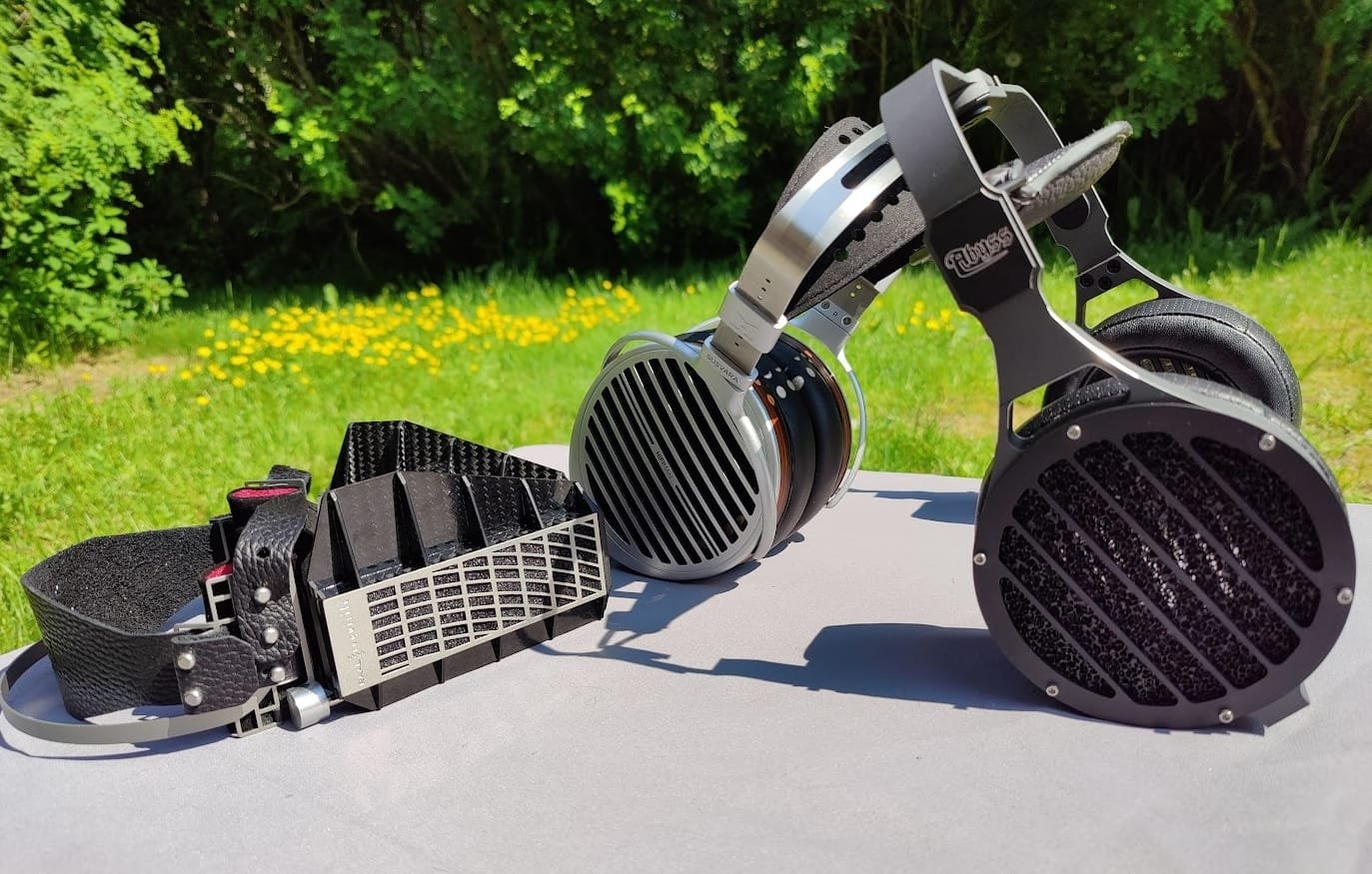
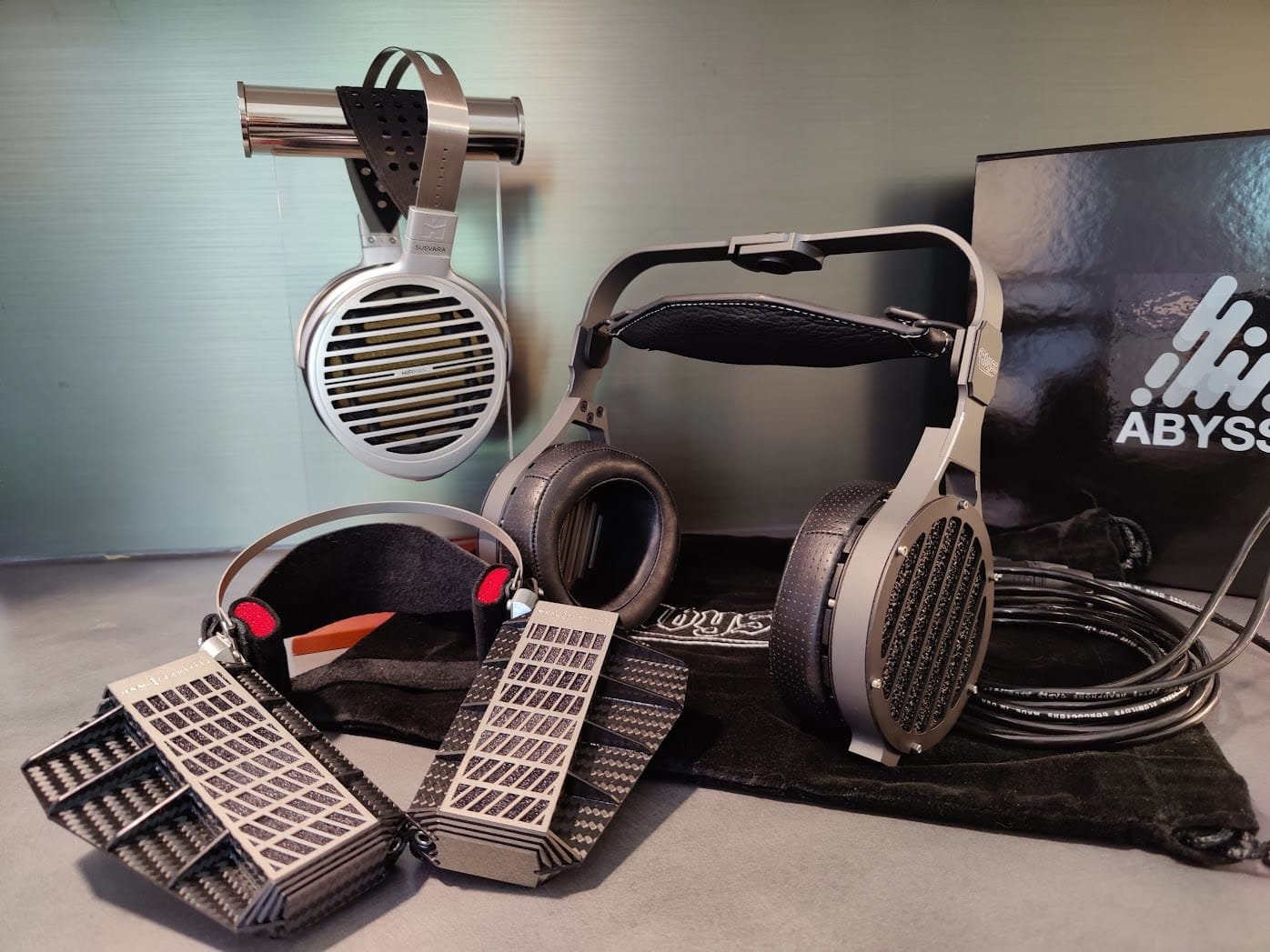
Despite everything, the SR-1a completely revamped my headphone collection. To my taste, it is so good that I sold both the Susvara and the AB1266 Phi TC. I could no longer justify owning them after realizing that the significantly more affordable SR-1a is a better reference headphone when evaluating the ”technical” performance of other high-end headphones.
My decision to sell these other high-end headphones ultimately proved correct, as during over a year of ownership, the SR-1a has become much more than just a tool for me. These headphones are also my choice when I want to enjoy music without analyzing sound quality. I also no longer feel a constant need to upgrade my listening equipment or search for the next better headphone. So, has my own End-Game been achieved? Perhaps – at least until the temptation to acquire the recently released RAAL 1995 Immanis grows too great. For now, the hefty 8000 euro price tag has been enough to keep my buying pants in the closet.
Pros and cons:
+ Best headphones I've heard in terms of resolution and transparency of reproduction
+ Deep and precise soundstage, which can be adjusted by changing the headphones' position
+ Very natural timbre
+ Excellent midrange and high-frequency dynamics
+ Exceptionally high-quality treble
+ Reproduction is effortless despite its clarity
+ Benefits from high-quality equipment, but also sounds excellent with a more affordable listening chain
+ All parts easily replaceable by the user and spare parts pricing is reasonable
+/– Midrange sounds very clean, but might benefit from a bit more body behind it
–/+ The headphones are expensive, but the price is not entirely unreasonable given the performance
– Very little bass, especially at the lowest frequencies
– Low frequencies distort easily at higher volumes
– Unusual design requires getting used to, and even then might not suit everyone
– Using the headphones requires a separate adapter box
– The build and, with reservations, also the appearance do not match the high price
– No special accessories
 EN
EN  FI
FI
Doesn't a tube amplifier add harmonic distortion to music, i.e., extra multiples of the fundamental frequency? People then experience this sound as warmth and richness, even though it actually distorts the original signal.
You seem to have already answered yourself, but I would clarify a couple of things. There are different types of tube amplifiers and tubes, so the distortion profiles and experiences also differ. Distortion can remain very small with a certain type of design, and the sound is not necessarily always warm, but something entirely different. There are also very neutral tube amplifiers that sound like transistor amplifiers. I wanted to mention all this, in case you thought that tubes would always automatically lead to a large amount of distortion.