Author: Sword of Damocles
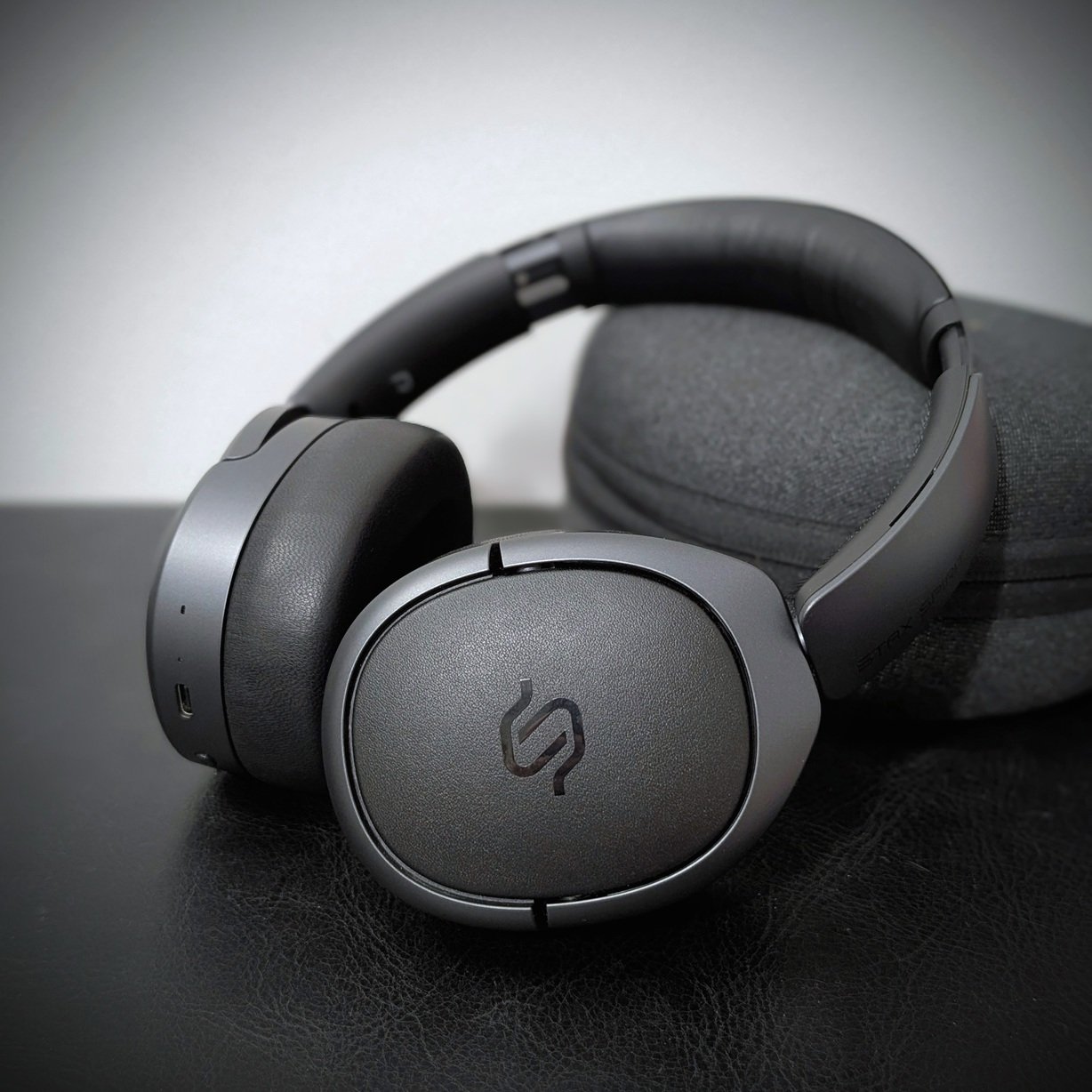
Table of Contents:
Information:
- Release year: 2024
- Country of Origin: China
- Price: 499 €
- Available in Finland: No
- Type: Closed, over-ear
- 50 x 60 mm planar drivers (diaphragm thickness 2μm & 2nd Gen EqualMass conductors)
- Audio connections: Bluetooth 5.4 (Snapdragon Sound), USB-C and 3.5 mm
- Bluetooth codecs: LDAC, AptX Lossless, AptX Adaptive, AptX HD, AptX, LHDC, AAC and SBC
- Charging port: USB-C
- Battery life: up to 80 h
- Charging time: ? (Supports fast charging: 15 minutes for 13 hours of use)
- Noise cancellation: No
- Weight: 347 g (with other ear pads 383 g)
- Features: Multipoint, Google Fast Pair and mobile app with equalizer
- Accessories: Carrying case, extra ear pads, USB-C to USB-A cable, 3.5 mm headphone cable, 6.35 mm adapter and plastic tool for removing pads
- Warranty: 12 months (24 months when purchased from EU area)
Review unit acquisition method: Borrowed from a hobbyist
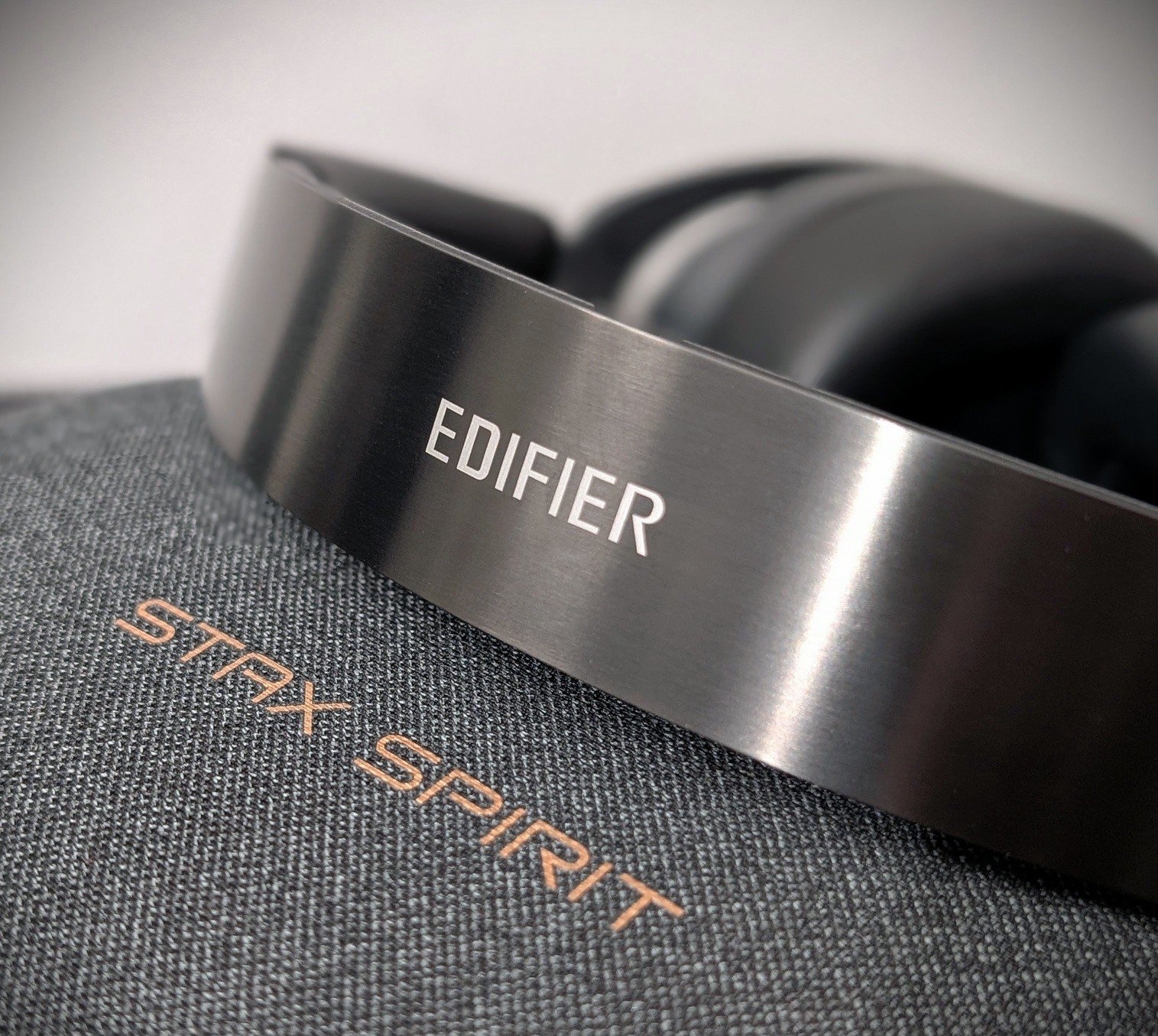
Priced at around 500 euros Edifier STAX Spirit S5 is, like its predecessor S3, one of the few closed-back planar headphones that can be listened to wirelessly. Noise cancellation is not included in the headphones, but in terms of sound quality, the Chinese manufacturer has collaborated with Audeze (drivers) and, based on the name, also with STAX (reportedly tuning).
With the STAX Spirit S3, the collaboration was based on Edifier owning both STAX and a smaller stake in Audeze. However, the STAX Spirit S5 was released in 2024, about a year after Sony had acquired Audeze entirely, including the shares previously owned by Edifier. For this reason, the S5 could no longer use Audeze technologies, such as the Fluxor magnetic structure and Fazor waveguides, but Edifier had continued to independently develop and manufacture its planar drivers. The lessons learned from the Americans, of course, still influenced this.
What makes Edifier's headphones interesting is primarily the scarcity of wireless planar headphones, as among other closed-back models, only comes to mind Audeze Maxwell's (Penrose and Mobius are no longer for sale) and Sony Pulse Elite (also Audeze drivers), while Hifiman sells a few open-back models. Thus, the STAX Spirit S5 slides into a unique market niche, although at the same time, due to the lack of noise cancellation, the product's practicality can be somewhat questioned. On the other hand, there isn't really an oversupply of good-sounding wireless headphones on the market, so could the Edifier model be one?
Testing the headphones became possible when a kind enthusiast offered them to Kuulokenurkka for loan. We thank them for this!
Packaging and accessories
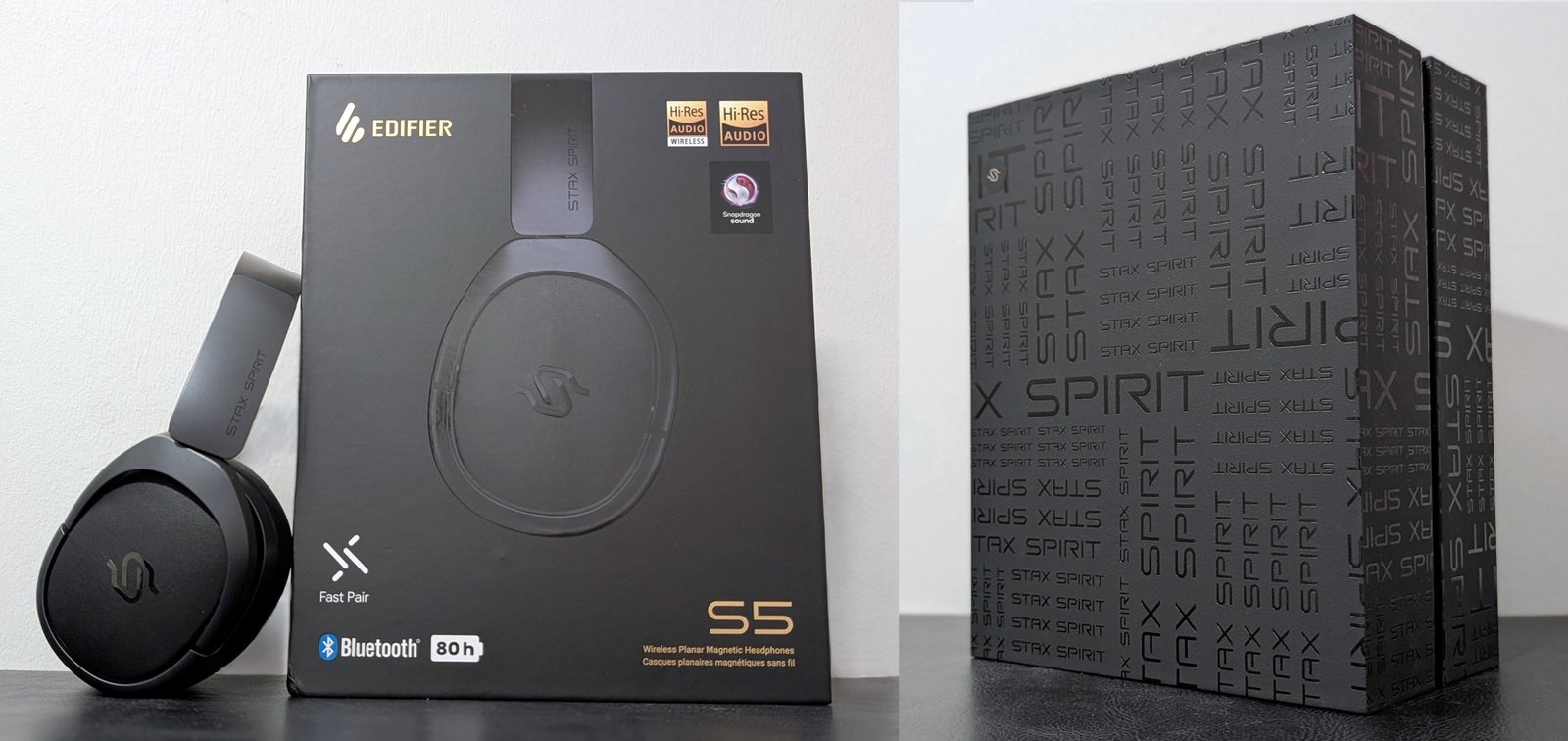
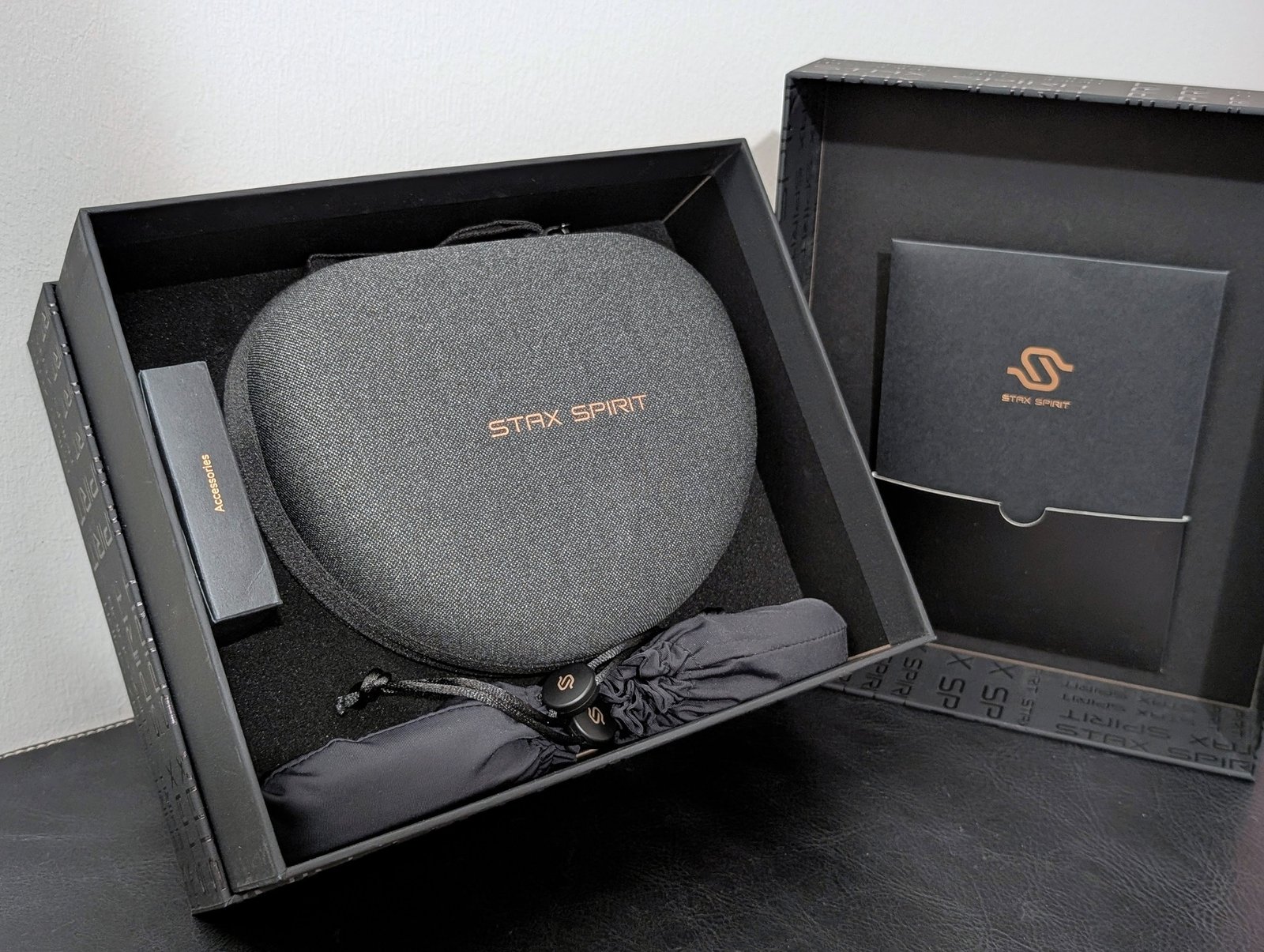
Based on the sturdy cardboard box, Edifier wants the first impression to be as high-quality as possible, which it definitely is compared to the manufacturer's more affordable headphone series. The ”text bombardment” of the inner box reminds me of Asus and its gaming-branded product lines – those who have seen these will surely recognize the similarity.
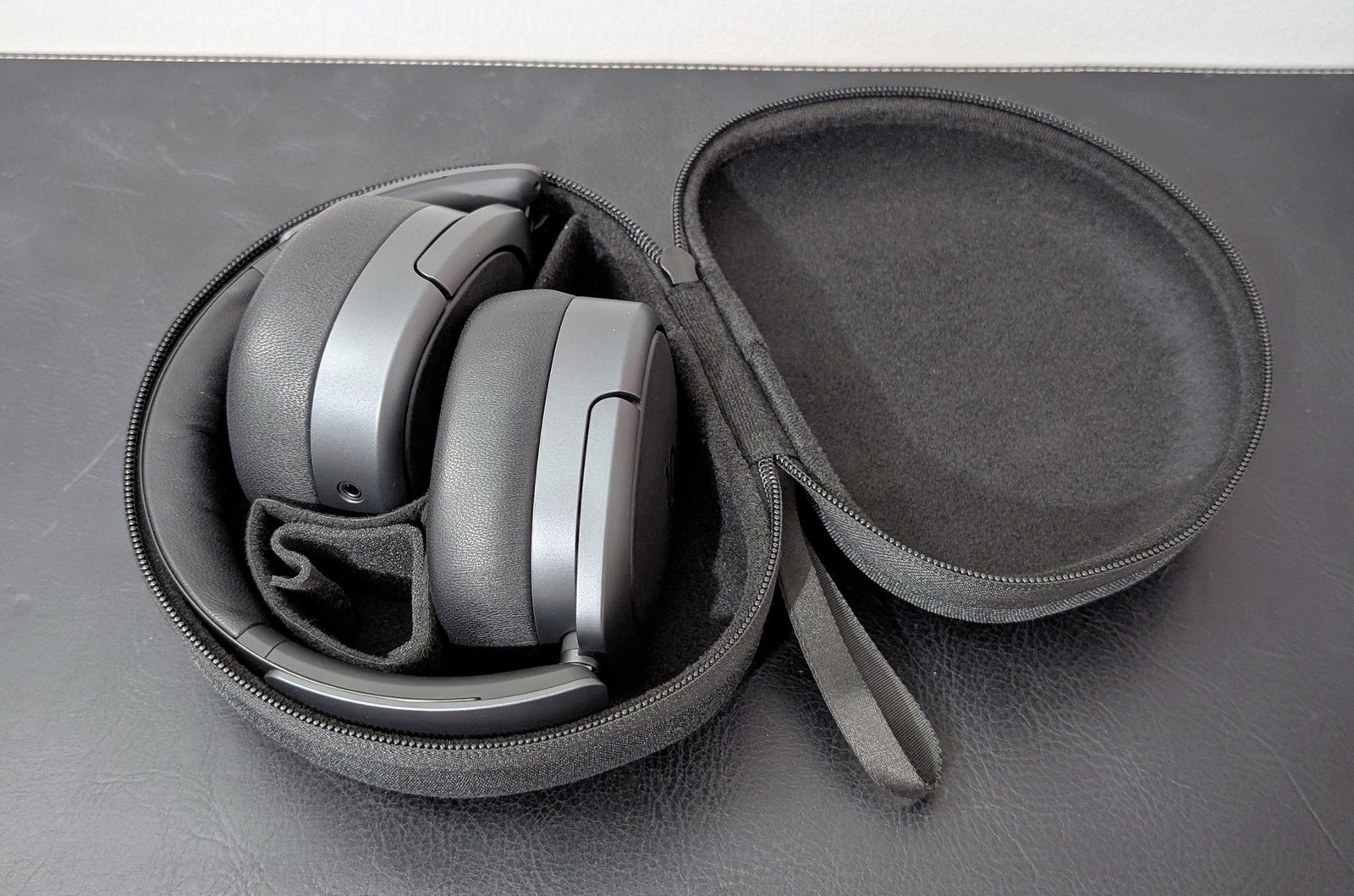
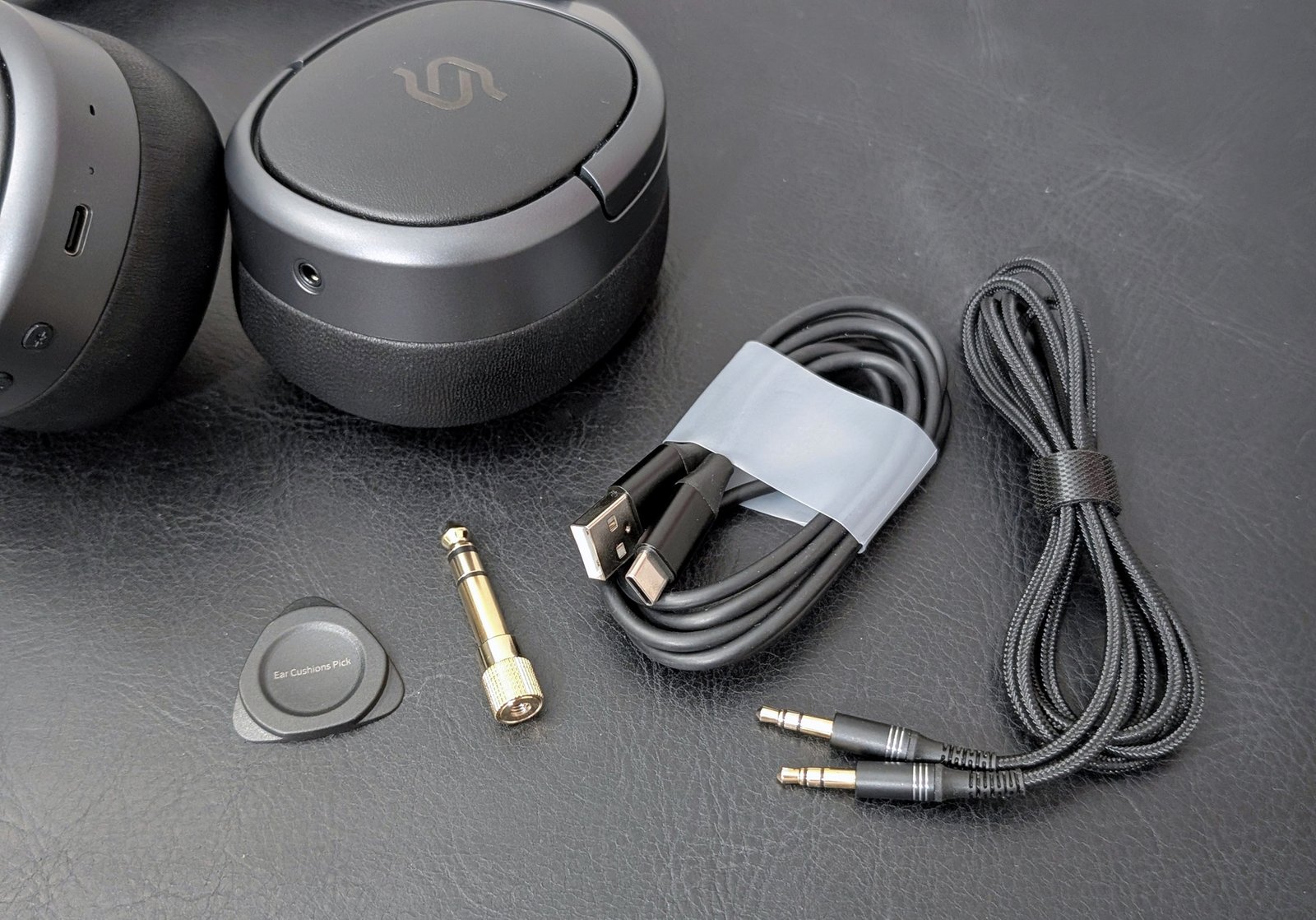
The STAX Spirit S5's accessories include a spherical carrying case, a pair of cables, a 6.35 mm adapter, and a second set of ear pads that change both the feel and sound quality. The presentation is stylish, and the pads are individually packed in their own fabric pouches. I also like the look of the case, but it could have been made flatter and more practical if the headphones were placed horizontally inside, like most other headphone models.
The rubber-coated USB cable feels quite ordinary with its metal connectors, while the headphone cable is more flexible and, with its fabric sheath, feels more premium. Listening to the headphones is possible with both cables, even though it is primarily a wireless product due to its Bluetooth connection and high-quality codecs.
Build and comfort
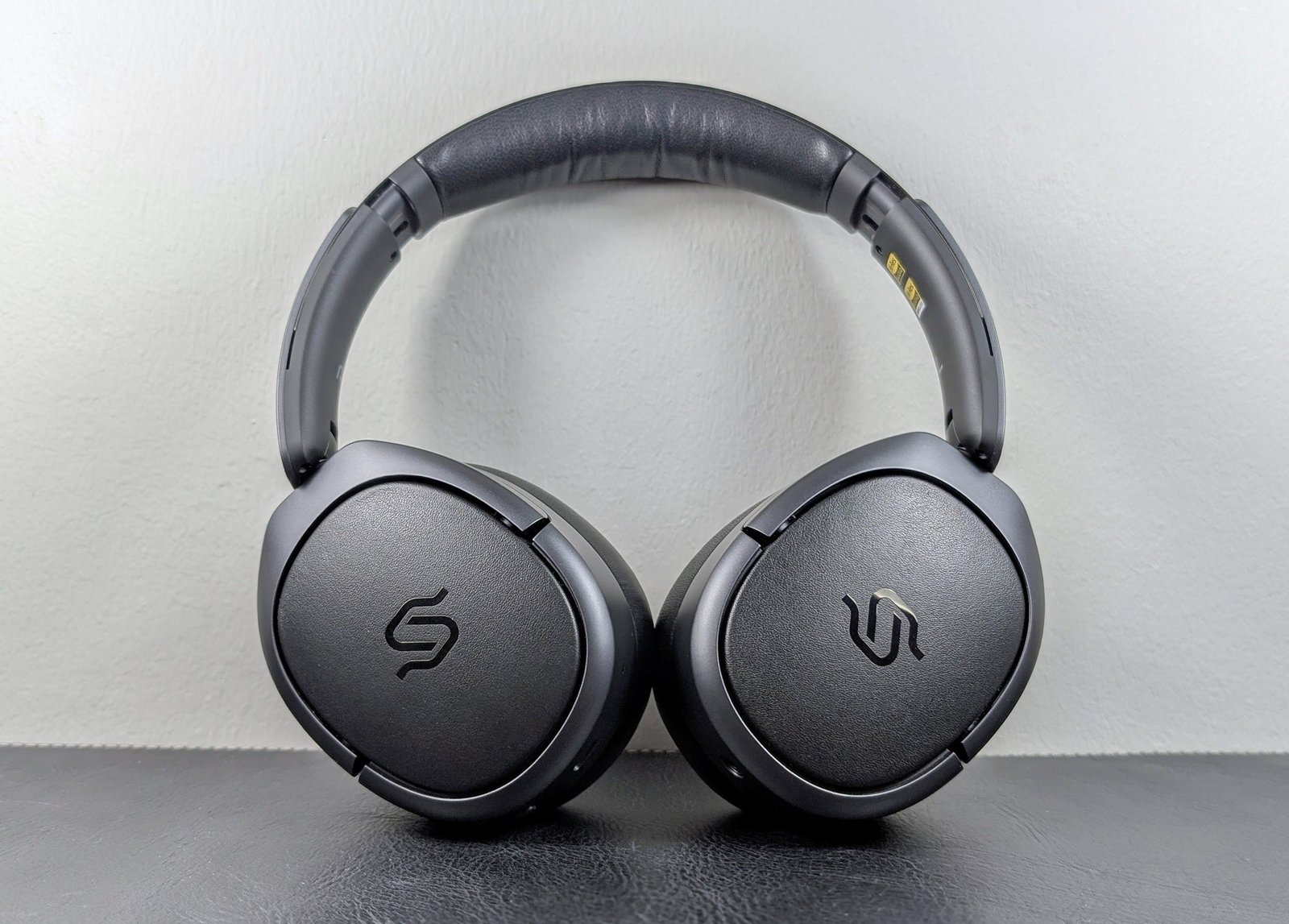
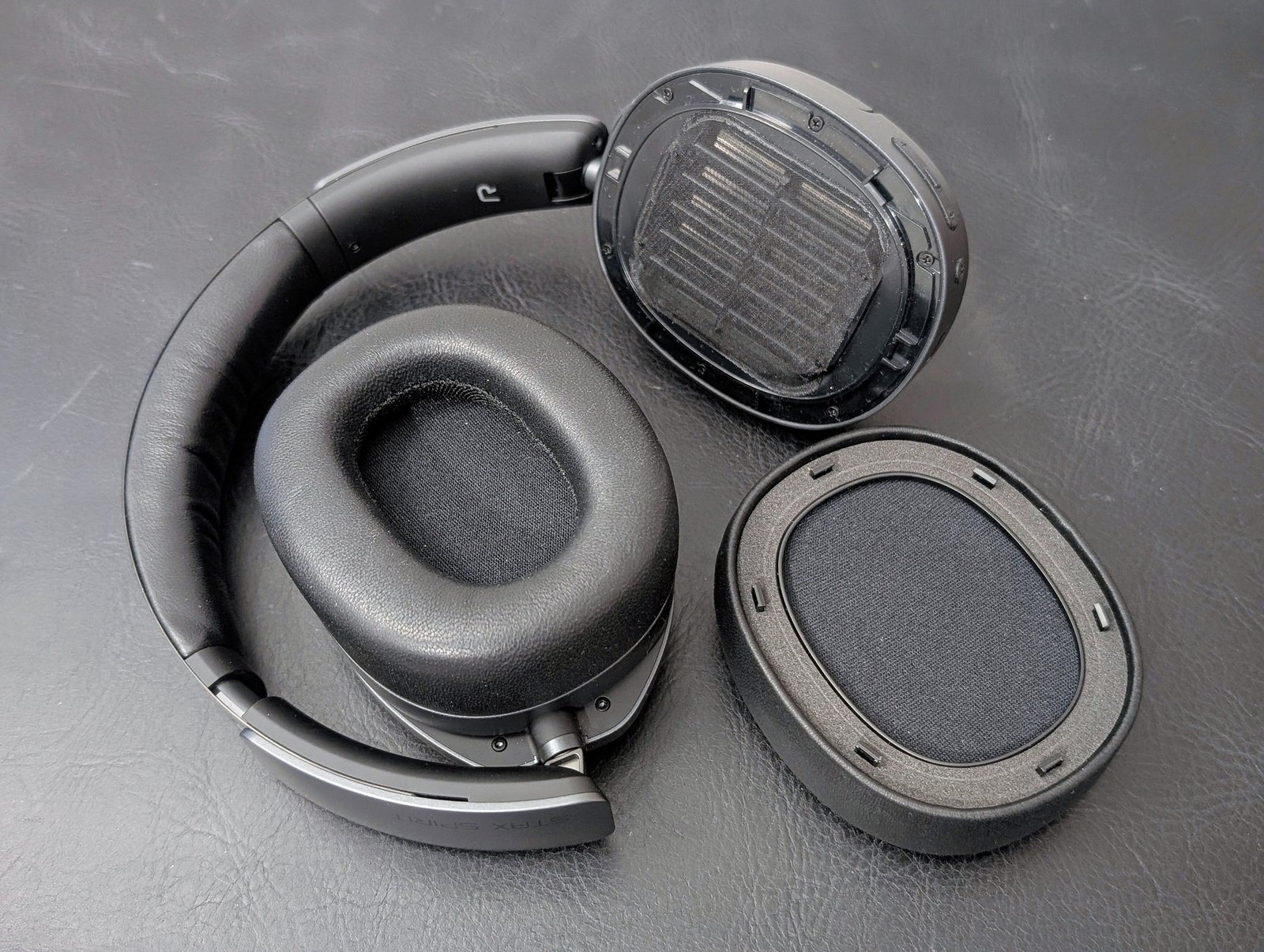
The basic structure of the STAX Spirit S3 was borrowed from Audeze LCD-1 headphones, while the S5 model is based on Edifier's own WH950NB-noise-cancelling headphones. The outer surface of the cups, however, is now made of genuine cowhide instead of a leather-imitating plastic texture, while the headband pad and factory-installed ear pads are covered with lambskin. The second set of included ear pads, on the other hand, contain a layer of cooling gel and have a sports fabric-type surface. Most will surely end up switching to these based on comfort and sound quality, but the leather pads block ambient sounds slightly more effectively. The pads attach with plastic clips, and to facilitate their removal, Edifier provides a plastic tool.
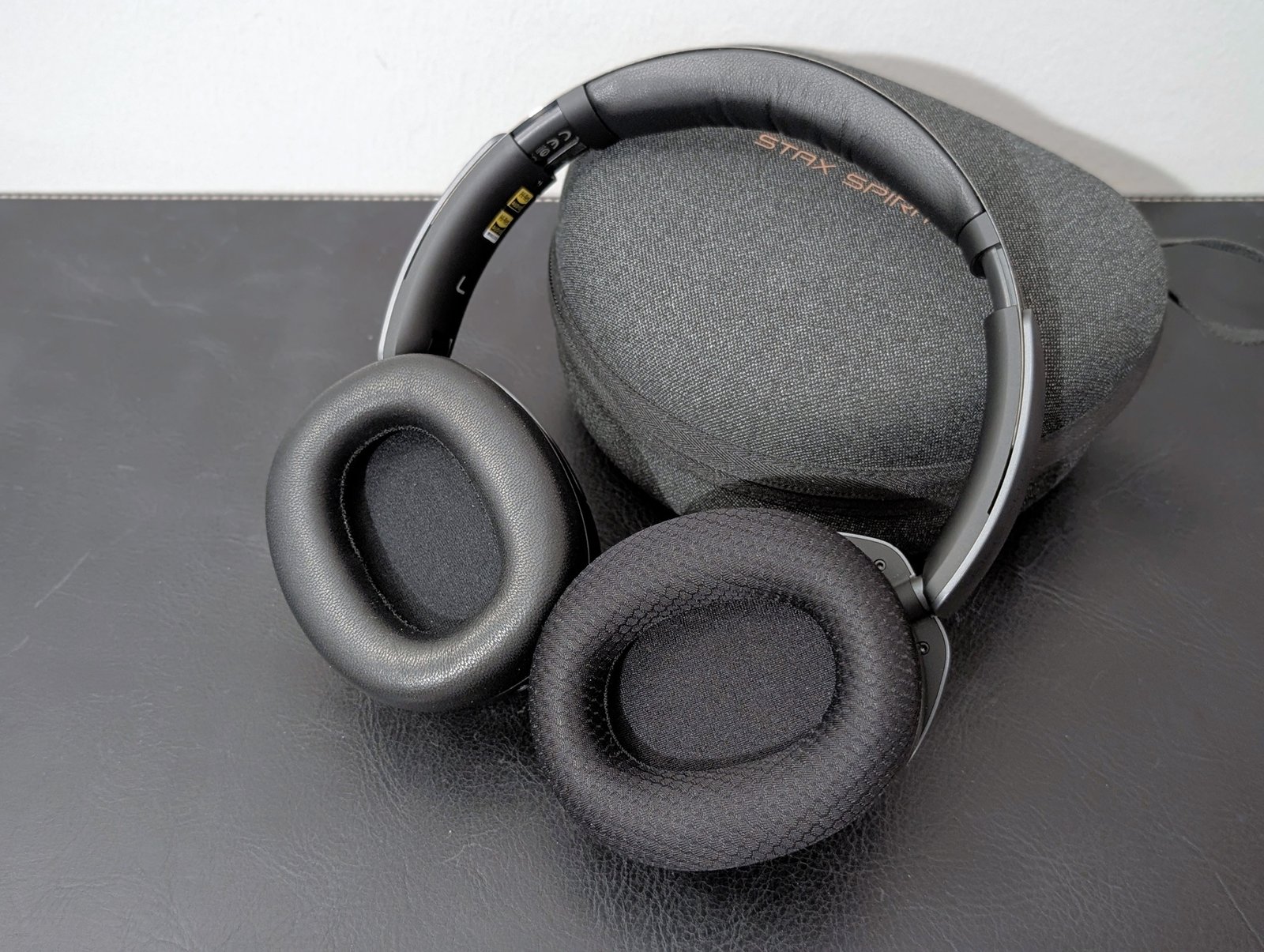
Due to their planar drivers, the STAX Spirit S5 weighs about 50 grams more than the WH950NB by default (347 vs. 300 g). However, the cooling gel pads increase the weight to 383 grams, making the headphones feel surprisingly substantial in both hands and on the head for their sleek size. On the other hand, compared to the half-kilogram Audeze Maxwell, they are still in a perfectly reasonable weight class. Many are also likely accustomed to the Apple AirPods Max, which weighs the same as the STAX Spirit S5 with its cooling gel pads.
I considered the WH950NB to be a very high-quality ~200 euro headphone, so the frame borrowed from it for the STAX Spirit S5 serves its purpose well, both mechanically and in terms of materials. Thanks to the smooth plastic and leather parts, the headphones feel good in the hands. In my opinion, they also look really stylish, for example, compared to the equally black Sennheiser HDB 630: compared. Perhaps the quality impression is slightly disturbed by the knowledge that the WH950NB, which has a similar basic structure, can now be bought for under 100 euros at its cheapest. The leather surfaces alone do not elevate the STAX Spirit S5 to a new level; for example, the rather cheap-feeling rubber buttons could have been updated at the same time. However, they still work and are superior to the unreliable touch functions of many other headphones.
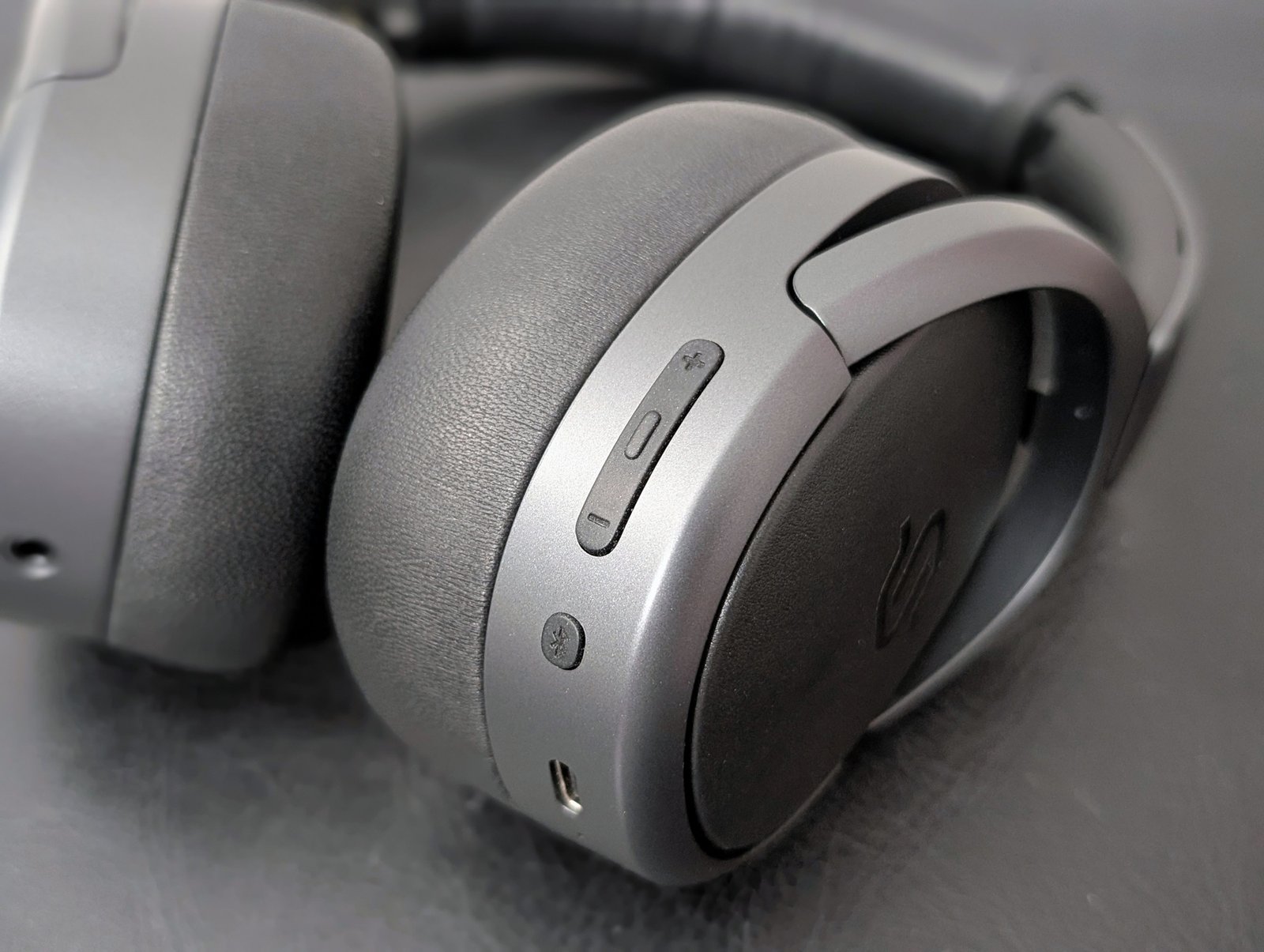
Most importantly, the fit of the STAX Spirit S5 is spot on. The wide steel arch allows for even pressure against the head, and the cups settle into the correct position on my ears thanks to their successful range of motion. Although the ear pads are not the most spacious in terms of dimensions (6.5 x 4.0 x 2.5 cm), they are sufficient for most. Instead, I would consider the narrow headband pad, whose soft foam almost completely flattens during use, to be the biggest weakness. I feel more pressure than usual on the top of my head, though fortunately it doesn't turn into pain. In an ideal situation, such heavy headphones would benefit from a wider and better-padded headband.
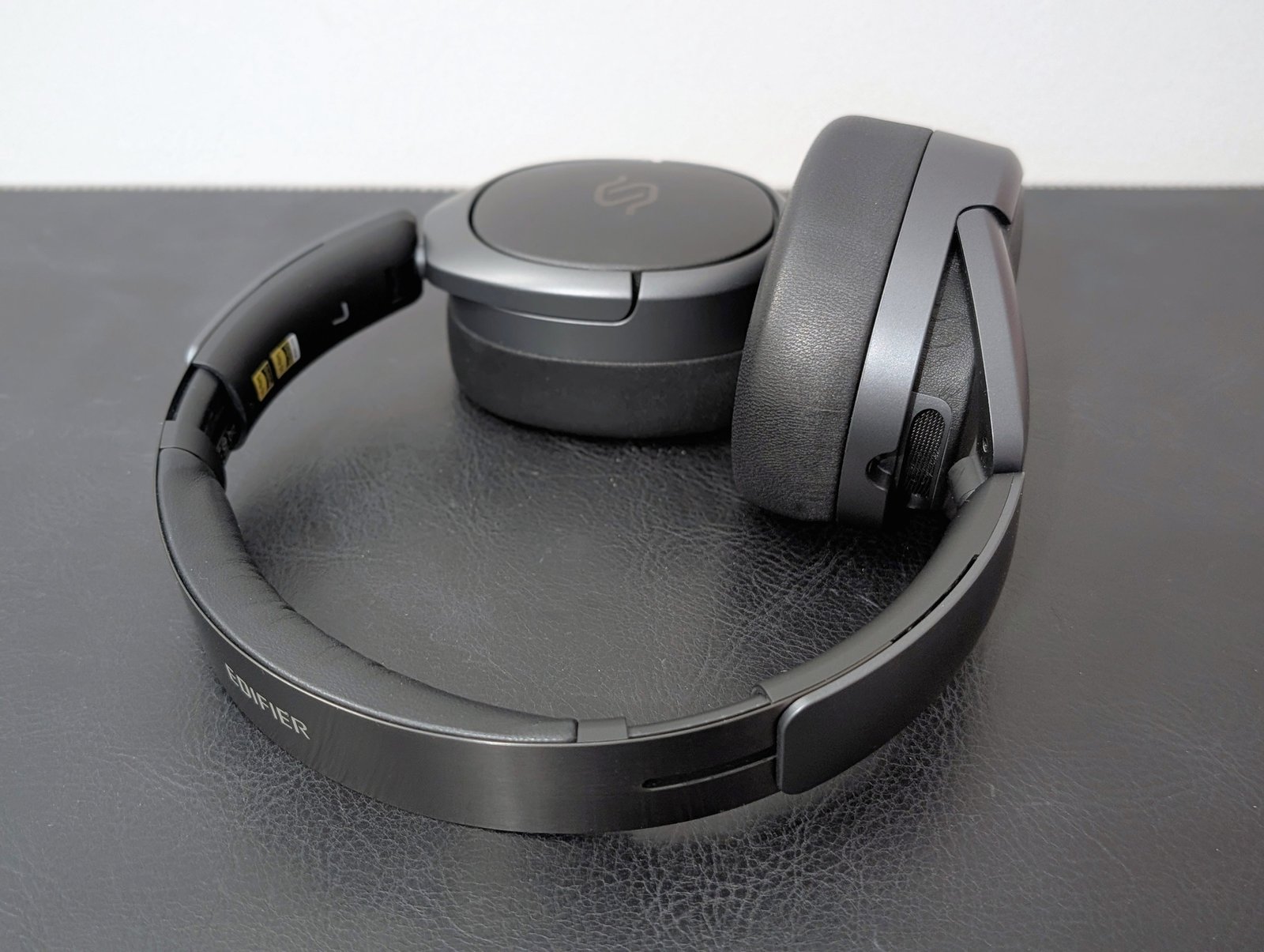
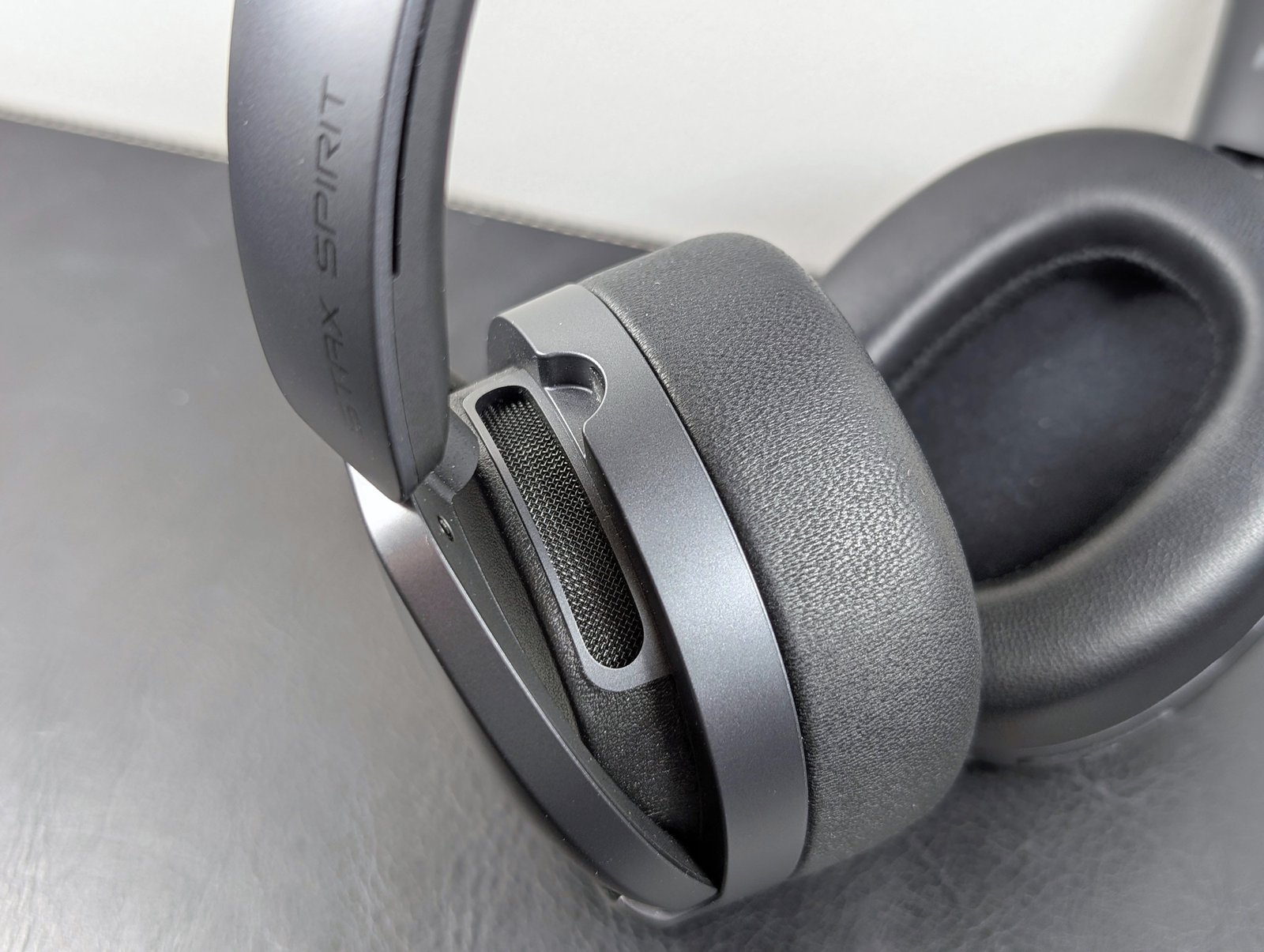
With planar headphones, despite the closed design, the amount of sound leakage outwards is a bit concerning, as these drivers produce sound waves strongly in both directions. Because a large air vent has been opened at the top edge of the STAX Spirit S5's cups, people in the same room may hear vocals and treble, unless listening occurs at a fairly moderate volume. The headphones also don't isolate much ambient noise, so in my opinion, they shouldn't be acquired for mobile use, but rather to enjoy wireless freedom at home, for example.
Bluetooth technology and other uses
Edifier's headphones exceptionally support all the most common Bluetooth codecs on the market, with the exception of LC3. This means simultaneous support for both LDAC and the entire AptX family, including the lossless Lossless codec and the Adaptive option. LHDC, AAC, and SBC are also mentioned on the list, so Edifier has managed to squeeze a considerable codec selection out of the Qualcomm Snapdragon Sound-based chip. With Bluetooth version 5.4 being relatively new, wireless connections can hardly get any better than this, unless someone values the missing Bluetooth LE support the most. Multipoint and Google Fast Pair, however, are normally supported and work correctly. The connection has not cut out with my Google Pixel 9 phone or the Sennheiser BTD 700 Bluetooth transmitter.
In addition to a Bluetooth connection, the STAX Spirit S5 can also be listened to via a USB cable (max 96 kHz / 24 bit) and an AUX-type headphone cable with the power on. Fully passive listening, however, is not possible, as Edifier has emphasized the functionality of its defined DSP profile in all use cases. The active nature of the headphones doesn't particularly bother me, as there isn't the slightest hiss or other extraneous noise from the electronics. I wouldn't even guess the power was on.
I have primarily listened to the STAX Spirit S5 with the Sennheiser BTD 700 Bluetooth transmitter, with which AptX Lossless works flawlessly. Gaming would also be possible with this transmitter, as in Low Latency mode, the delay remains an imperceptible 30 milliseconds. By default, the delay is noticeable when watching videos, even if the headphones are set to game mode via their app. In wired use, delay is, of course, always eliminated. The volume in wireless use adjusts smoothly to my needs, and I haven't noticed excessively large jumps in either direction.
Battery life
The headphones are promised an operating time of up to 80 hours, as no power is consumed for running the noise cancellation function. On the other hand, the battery must also be larger than that of the WH950NB headphone model, as its battery life with noise cancellation off is a slightly more moderate 55 hours. Edifier does not state an exact charging time, but with a 15-minute quick charge, the STAX Spirit S5's operating time should already increase by 13 hours. If someone, like with the Audeze Maxwell, desires a long continuous operating time, the Edifier model makes it possible.
Application and additional features
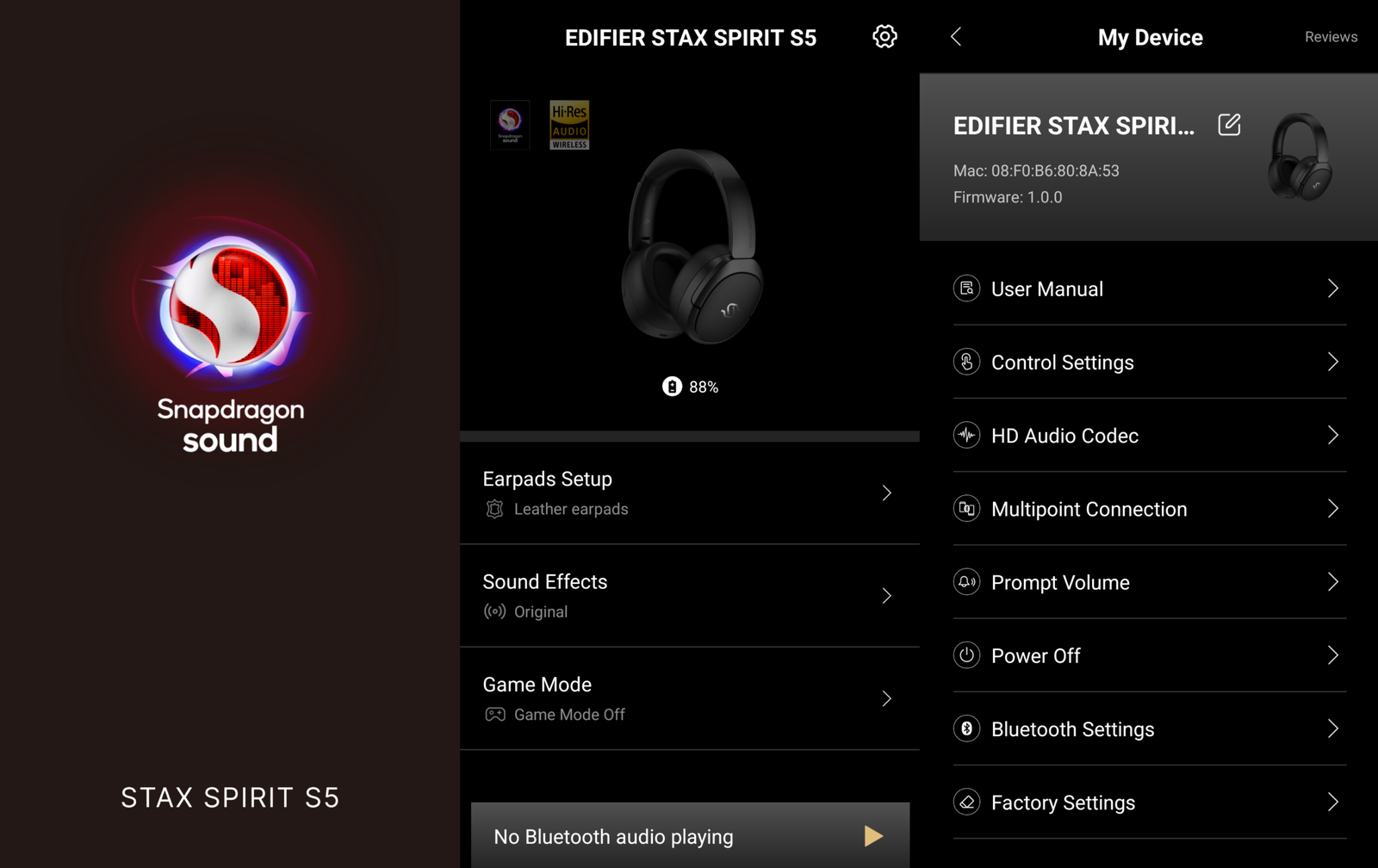
A mobile application called Connex can be installed for the headphones, which is primarily useful for fine-tuning the sound. Right at the beginning, it's advisable to activate the LDAC codec, because otherwise, AptX HD will be selected as the best codec on most Android phones. The Multipoint feature also needs to be separately enabled if it's going to be used – although this excludes the highest quality Bluetooth codecs.
Edifier has interestingly defined a separate sound profile for both ear pad types, which the other available sound modes (Original, Dynamic, Monitor) further modify in their own direction. Nothing prevents choosing a setting designed for leather pads when using cool-gel pads or vice versa; in total, the STAX Spirit S5 already includes 12 different sonic variations. The possibilities expand even further in Customized mode, because with all the equalizer sliders at zero, the sound does not resemble any other sound mode, but this in itself is already its own starting point, from which four additional different sound options are derived, considering the different ear pads and their settings.
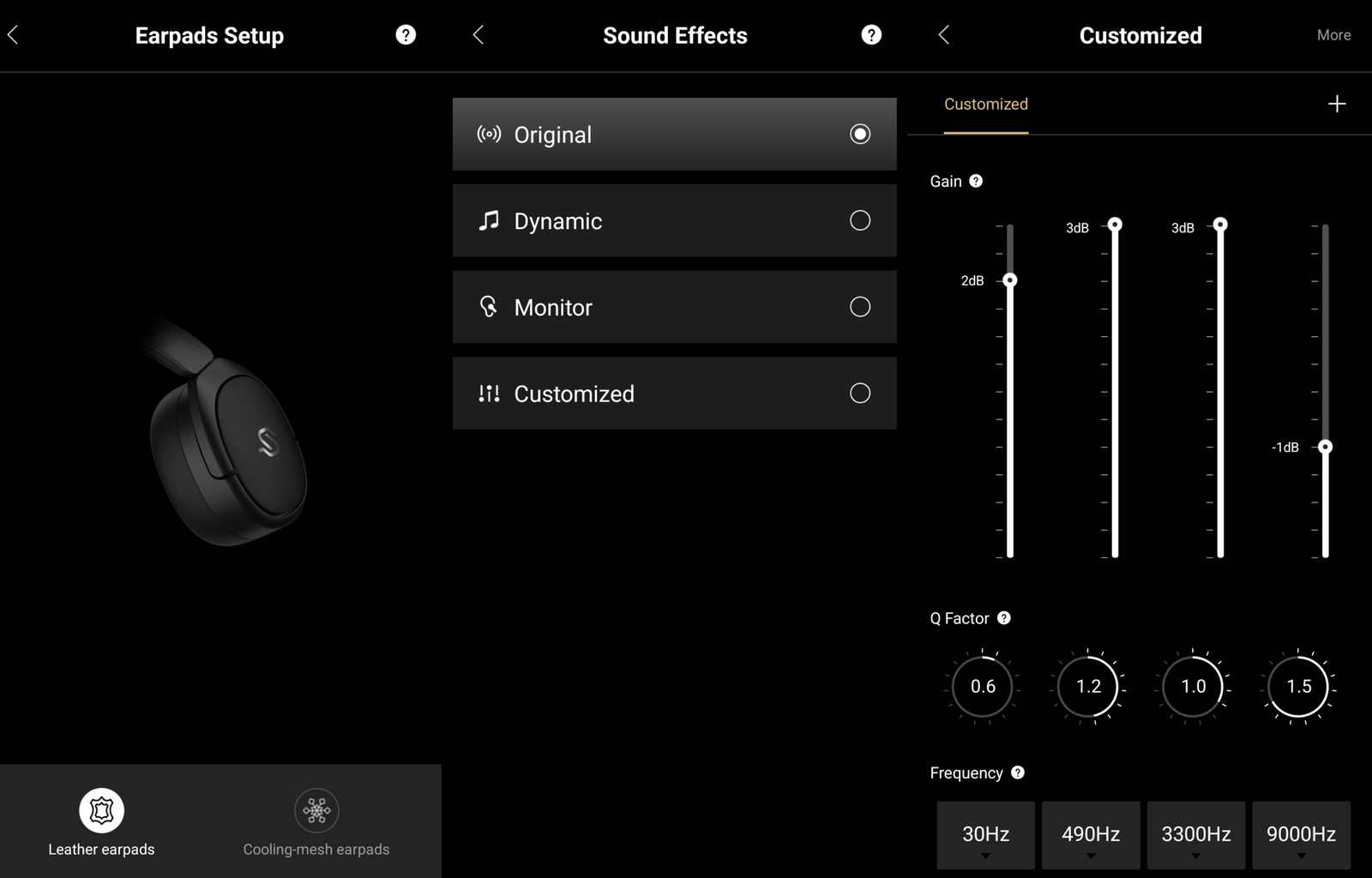
Unfortunately, the manufacturer's equalizer, like that of the WH950NB headphones, is only 4-band. Instead of the number of sliders, however, I am more bothered by the very limited adjustment range of 3 decibels in both directions, whereas with the WH950NB, negative changes could be made up to 9 decibels. Annoyingly, the tool is also still only partially parametric: for each of the four sliders, a frequency can be selected from a certain range, meaning that correcting two problems located in the same frequency range is not possible. The Q-value can be selected from 0.5–2.0. Such an equalizer is, of course, better than nothing, but nowadays even 50-euro JBLs include more versatile software.
Microphone sound quality
The headphones' microphone seems to produce basically good sound, so with slightly newer Qualcomm technology, it should outperform the manufacturer's older WH950NB model. However, I did not test the microphone in a noisier environment at this time, as I consider the sound quality of the headphones to be more significant in such a product.
Headphone sound quality
In summary, listening to the STAX Spirit S5 is possible both wirelessly and with two different cables. The frequency response remains the same between usage modes, because the headphones' power and thus DSP correction must always be on. Sound can, however, be fine-tuned by changing pads and sound profiles, as well as by some equalization.
Edifier states the diaphragm thickness of the STAX Spirit S5 model to be 2 microns, and also that slightly more effort has been put into the uniformity of the magnetic field compared to the S3 model. In this context, the manufacturer speaks of 2nd Gen EqualMass conductors. From the outside, the drivers still look quite similar to Audeze's drivers of the same size class (LCD-1 and Mobius/Penrose), with the exception of a support bar running through the center of the magnetic structure, but Edifier must have abandoned the Fazor waveguides, which are still found in the S3 model. The Chinese manufacturer is now on its own.
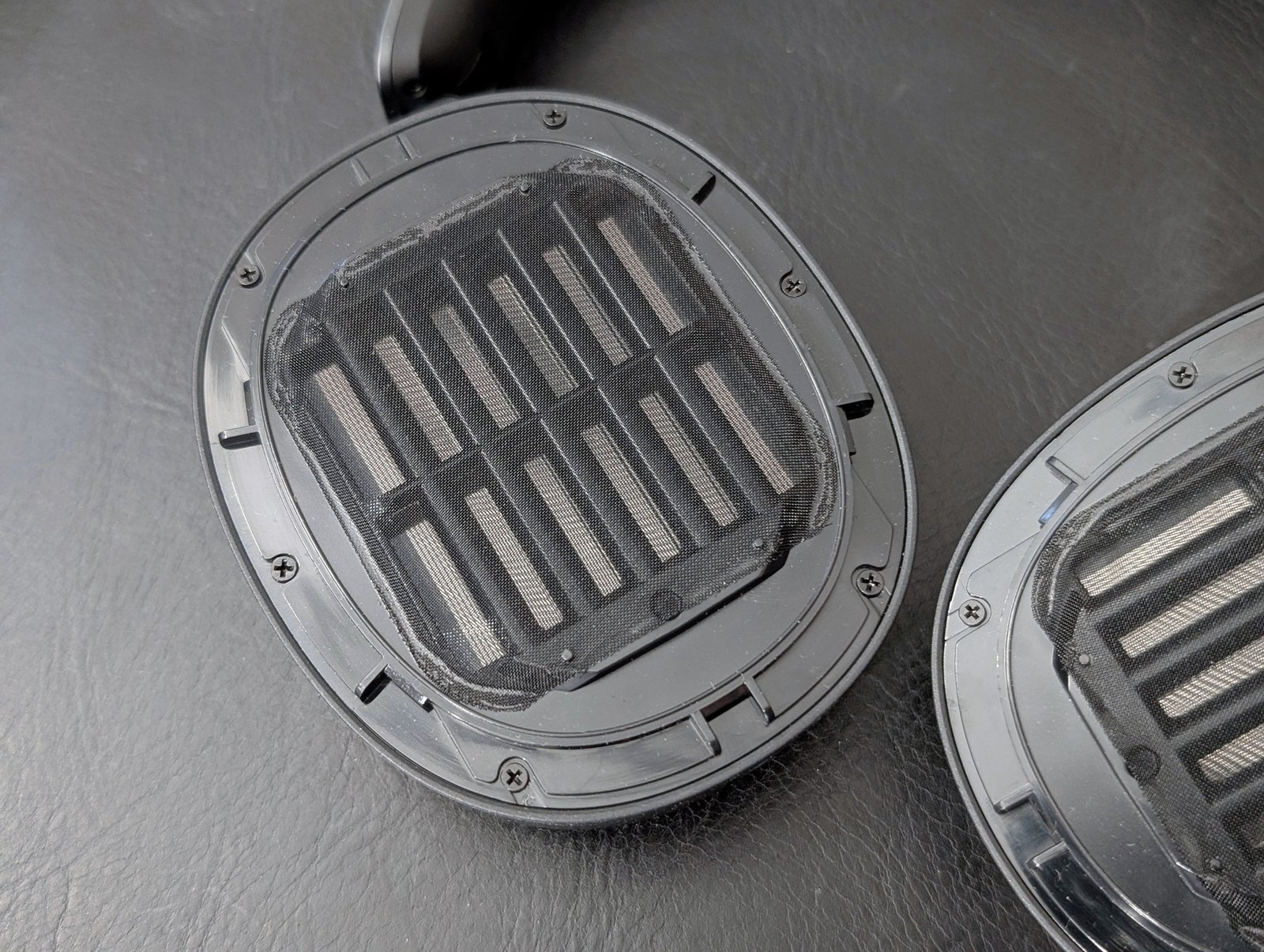
In terms of sound settings, the headphones are quite a mess, but I still managed to measure almost all the different options. Some may like the sound produced by the leather earpads, but for over 90 percent of people, I would recommend switching to the cooling gel earpads, because with them the STAX Spirit S5 simply sounds better.
Measurements
Our frequency response measurements have been made with a clone IEC-60318-4 coupler and KB501X pinnae. The Harman target curve from 2018 is used as a reference point and generalization of the headphone response that would sound good to most people. For more information on the measurements and their accuracy, see Headphone Measurements-page. The frequency response of the STAX Spirit S5 is also comparable with other measured headphones Squiglink .
Frequency response with default settings:
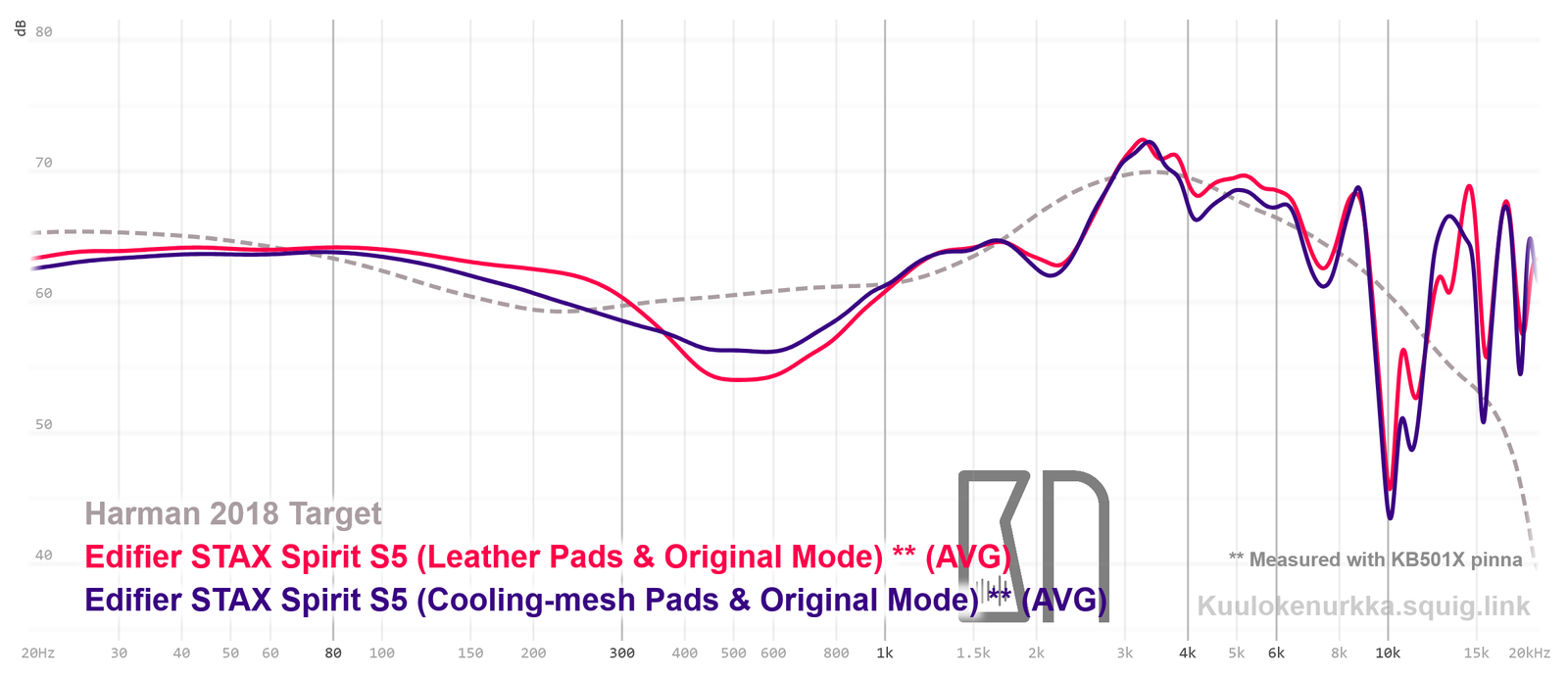
The frequency response could be assumed to be relatively flat in headphones designed with sound quality first, especially when DSP correction has been utilized in tuning. However, the STAX Spirit S5 does not behave this way; instead, it reproduces the midrange astonishingly unevenly. A deep dip is visible and audible in the response at the important range of 400–800 hertz for natural reproduction. Correspondingly, the area around 1.5 kilohertz is emphasized, so a hollow and slightly aggressive reproduction style is to be expected. With leather earpads, there is also a sound-bloating upper bass emphasis and a brighter treble than the Harman curve. I recommend changing the earpads, as it alleviates the worst problems.
With the cooling gel earpads, the treble, as measured with my own equipment, settles at a fairly natural level, with the exception of the loudly reproduced 12–20 kilohertz range. The bass also roughly follows the Harman curve, so the solidity and depth of the reproduction are more than adequate. Especially the upper bass between 150–300 hertz remains better controlled than with leather earpads, and the midrange dip does not go as deep. On the other hand, the Original sound mode still does not produce a flat sound, and there would be plenty of room for improvement in the wavy midrange.
During the measurement, I did not observe much frequency variation caused by headphone placement, except for the very highest treble. Closed-back headphones can always sound somewhat different to different people, but the placement of the STAX Spirit S5 on the ears should not cause huge differences in sound.
Other sound modes:
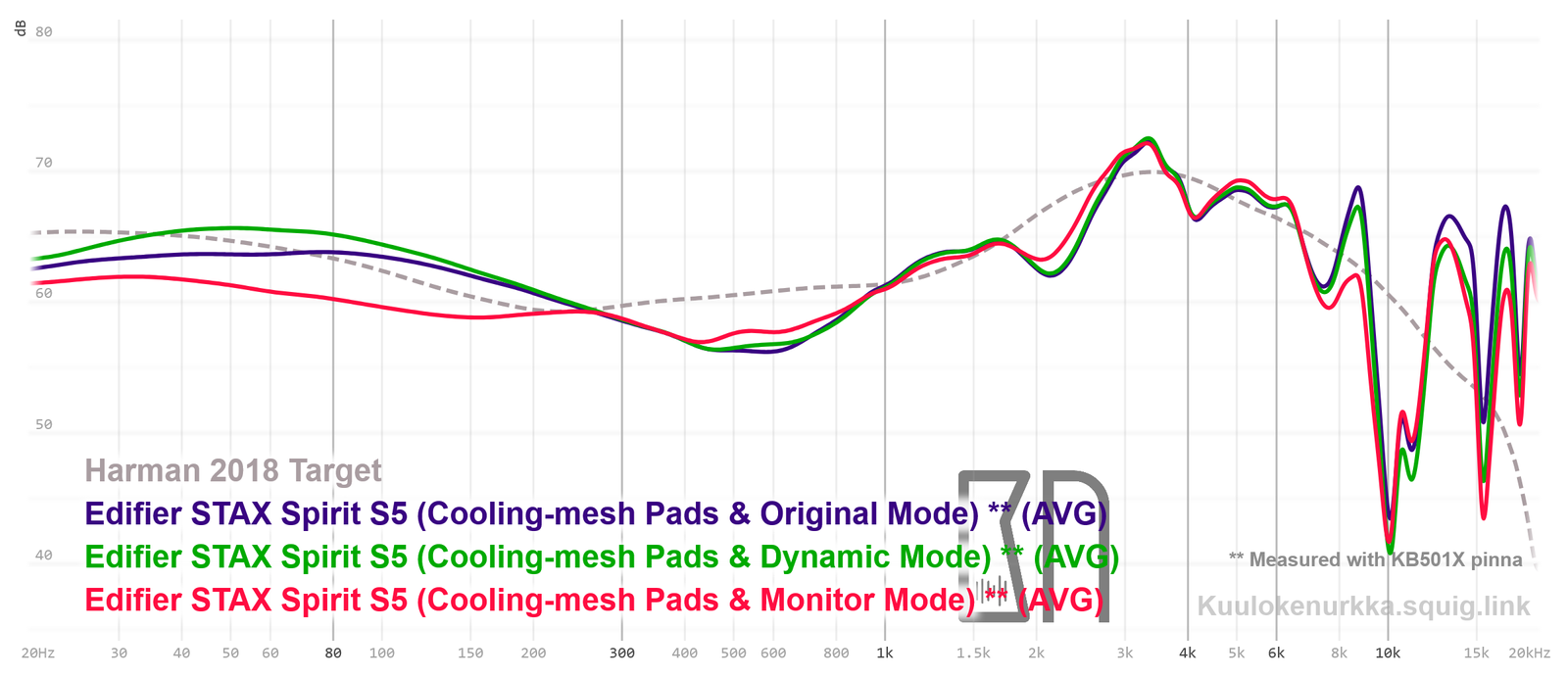
Of the two other sound modes, Dynamic slightly boosts the sub-bass between 20–100 hertz and calms the treble above 10 kilohertz. The change is rather small but in principle positively harmless if someone desires more punch in the reproduction and finds the treble of the Original profile fatiguing.
The Monitor mode, on the other hand, is probably intended for some kind of analytical listening, as it ”removes” bass and thus relatively boosts the high frequencies. However, the manufacturer has probably found the brightness to be too harsh, as it has simultaneously decided to lower the treble between 7–9 kilohertz. Since the midrange dip remains unfilled in this case as well, the STAX Spirit S5 sounds light and thin in Monitor mode. With leather earpads, however, the 200–300 hertz range strangely pushes forward in the crossover between bass and midrange.
Equalization:
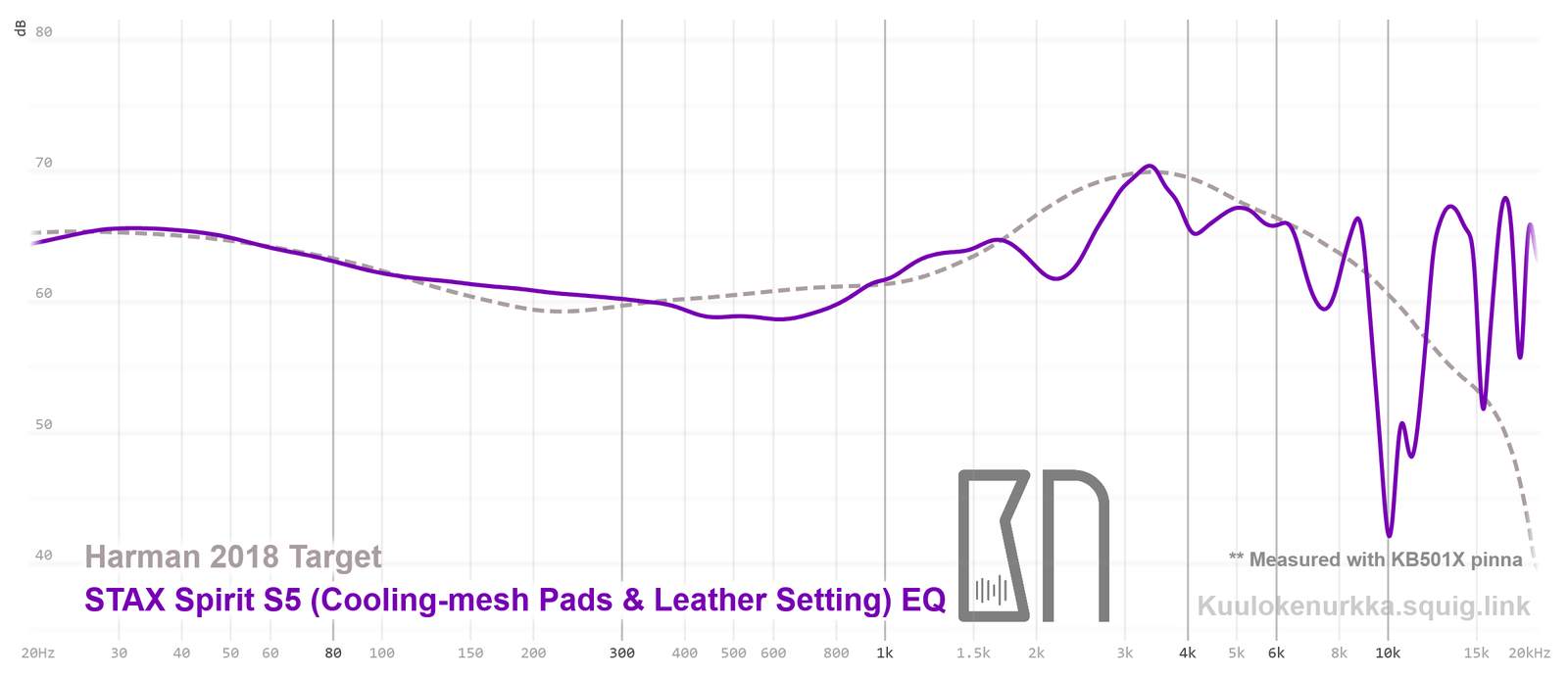
The ready-made sound profiles and sound modes do not offer particularly good options, so from a sound quality perspective, the STAX Spirit S5 practically demands equalization. I achieved the best result by attaching the cooling gel earpads to the headphones and simultaneously selecting the sound profile intended for leather earpads from the app. This may seem contradictory, but the combination fills the midrange dip the most, which the equalizer's modest 3-decibel adjustment range alone would not be sufficient for.
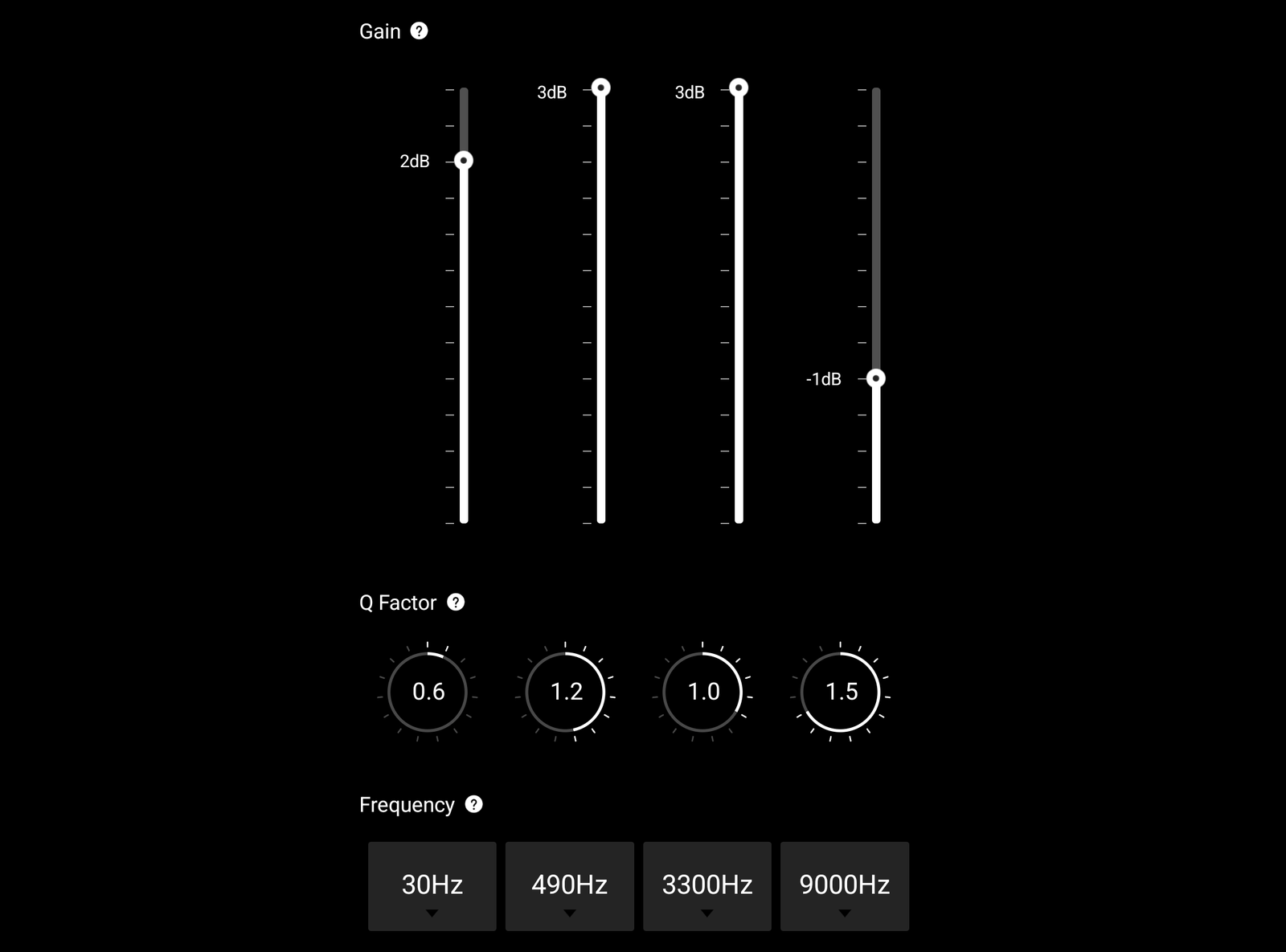
With my adjustments, the STAX Spirit S5 becomes a more balanced and better headphone, where the main point of concern is the occasional harshness of the uppermost treble. Unfortunately, the scale of Edifier's equalizer ends at 10 kilohertz. Furthermore, after boosting the 500 hertz range, energy cannot be added at 2.5 kilohertz, nor can the 1.5 kilohertz range be calmed, because the tool foolishly allows only one change between 200–3000 hertz. Therefore, one must fix the worst of the midrange problems and live with the rest, unless fine-tuning is done through another application.
Sound observations
I primarily evaluated the sound quality using cool-gel earpads, both with default settings and with equalization. My listening was mainly wireless with LDAC and AptX Lossless codecs..
I quickly abandoned the idea of listening to the STAX Spirit S5 with leather earpads, because despite the powerful bass and at its best entertaining sound, the unnatural hollowness of the midrange and the piercingly sharp treble quickly became irritating. With these earpads, the headphones, so to speak, do not make the cut, even though the Dynamic sound mode somewhat evens out the reproduction by further increasing the bass and calming the treble. The lack of midrange is often so obvious that I don't understand Edifier's design choices. Perhaps Audeze's departure from the picture led to problems. Since the STAX Spirit S3 does not suffer from similar issues, the S5 model, despite its higher price, takes a step back in sound quality compared to it.
Switching to cool-gel earpads, however, immediately helps. The bass lightens slightly (Original sound mode), but the more natural midrange and smoother treble are worth it. In Dynamic mode, the reproduction would gain more punch, and the treble would become even more proportionate, so after a short period of getting used to them, many would surely be quite satisfied with the STAX Spirit S5 as a whole. Without hearing balanced headphones, the unnatural characteristics are not the most obvious, at least in my opinion.
Ultimately, however, I still find the midrange too weak in its body, which leads to the upper frequencies being overrepresented. This, of course, depends somewhat on the music listened to, as sometimes the presentation even feels quite normal, in which case the physically impactful bass and the energy of the sound remain entertaining. Even the airy treble is not fundamentally flawed, unless it happens to sound raw, as often tends to happen with poorly produced music. The reproduction is typically separating, fast, and precise for planar headphones, but a somewhat unpleasant timbre detracts from the overall result. Considering the closed design, I perceive the soundstage as slightly more spacious than usual, which is partly influenced by the distant midrange and the significantly boosted airiness above 10 kilohertz.
To truly enjoy listening and for the headphones to feel inviting, equalization is necessary. When the ”errors” are only a couple of decibels in magnitude, I can better focus on the strengths of the STAX Spirit S5. Firstly, it reproduces bass in a fun, dynamically and physically impactful way by planar headphone standards, without any complaints about accuracy. Deep rumbles and impacts are felt, not just heard.
With a more natural frequency balance, sound separation becomes more precise, and because the uppermost treble inevitably remains emphasized, the presentation feels effortlessly detailed. Midrange colorations, to an appropriate extent, support this clarity of presentation. The sound is also generally lively in style, and I don't get the impression that the drivers have been dampened too much or that the headphones' internal amplifier wouldn't be able to reproduce them well enough. So, I like what I hear.
On the other hand, I don't perceive much depth in the soundstage; it feels wide mainly in the horizontal direction. For example, a vocalist floats slightly in space instead of me perceiving a human-sized entity listening. However, there's no real drawback to this, especially since the reproduction feels larger compared to most noise-canceling headphones and closed-back headphones with dynamic drivers. The STAX Spirit S5 thus appears to be a headphone larger than its size, which has its own charm. In the context of planar headphones, some might use the term ”wall of sound”.
After equalization done in the Edifier app, the most noticeable characteristic for me personally remains the somewhat harsh treble from 12 kilohertz upwards. Often I don't notice this, but sometimes I encounter songs that sound quite rough and irritating due to the emphasis. For this reason, I ultimately consider this feature a weakness, even though at its best it adds airiness and detail to the music. The Audeze Maxwell reproduces the highest frequencies in a similarly ”wild” manner with older firmware versions, so let's move on to examine which of the wireless headphones implemented with similar drivers would be a better purchase.
Comparison: STAX Spirit S5 vs. Audeze Maxwell
Prices: 500 € vs. 400 € (at the time of writing, cheapest at 380 € vs. 300 €)
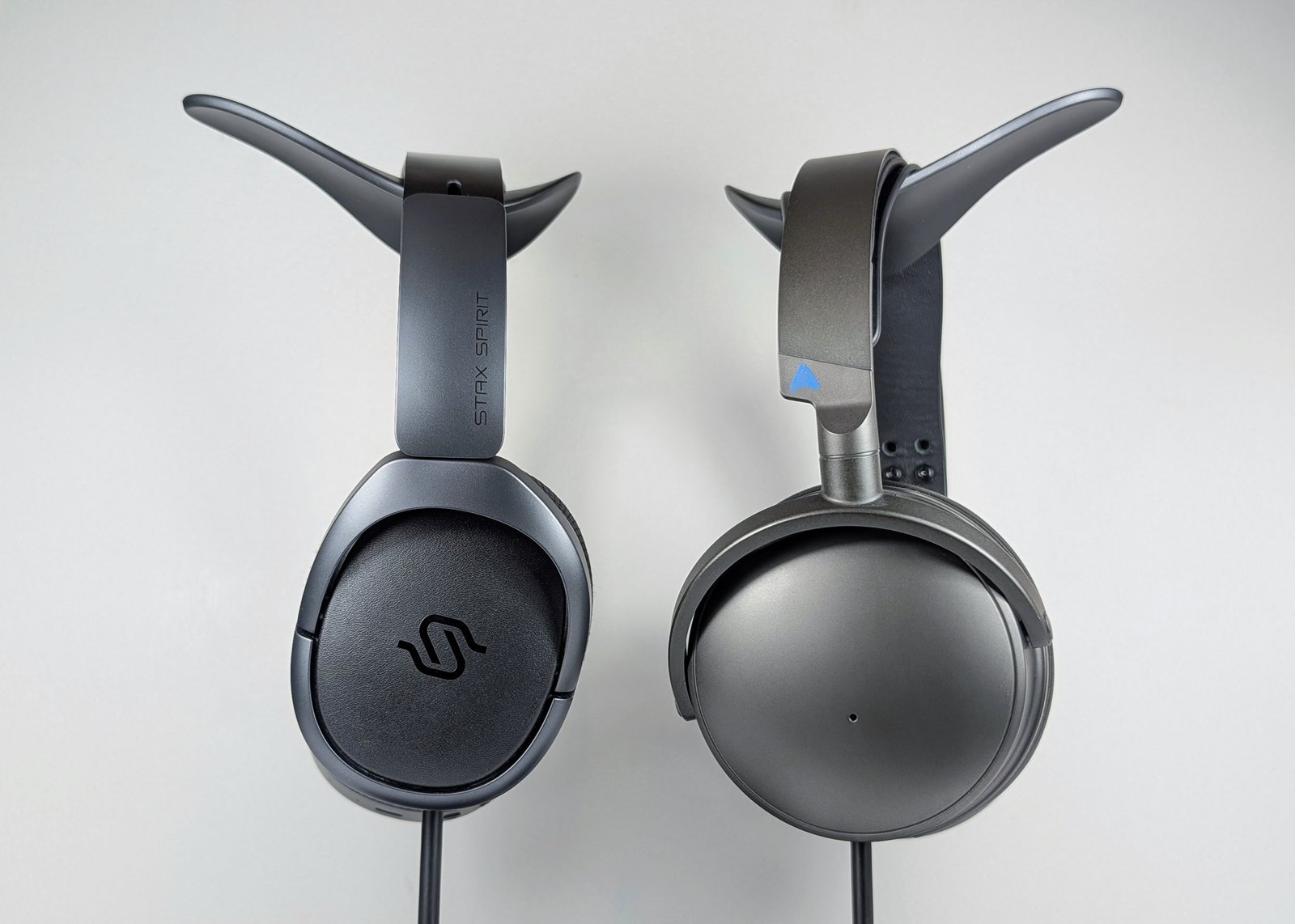
today the companies compete with each other. Audeze, however, is wholly owned by Japanese Sony, while Edifier mentions its owned STAX in its product name. Confusing…
Edifier and Audeze became competitors in the same planar headphone product category due to corporate acquisitions, even though the Maxwell is primarily marketed for gaming. However, since Audeze's headphones are also excellent for music listening and cost about 100 euros less, the STAX Spirit S5 should come close for me to recommend it over the Maxwell.
Structurally, the duo is in any case aimed at different uses, with Maxwell emphasizing durability and the STAX Spirit S5 a more mobile lifestyle, including the accompanying case. Audeze's headphones, weighing half a kilo, are truly robust and simple in their mechanical design. Edifier's creation is not among the lightest either, but it is clearly more practical with its foldable and slimmer structure. Since Maxwell 2 weighs even more, those tired of this craze could very well turn their attention to the STAX Spirit S5 when looking for wireless planar headphones – this, of course, provided there is no need for Maxwell's boom microphone or gaming features.
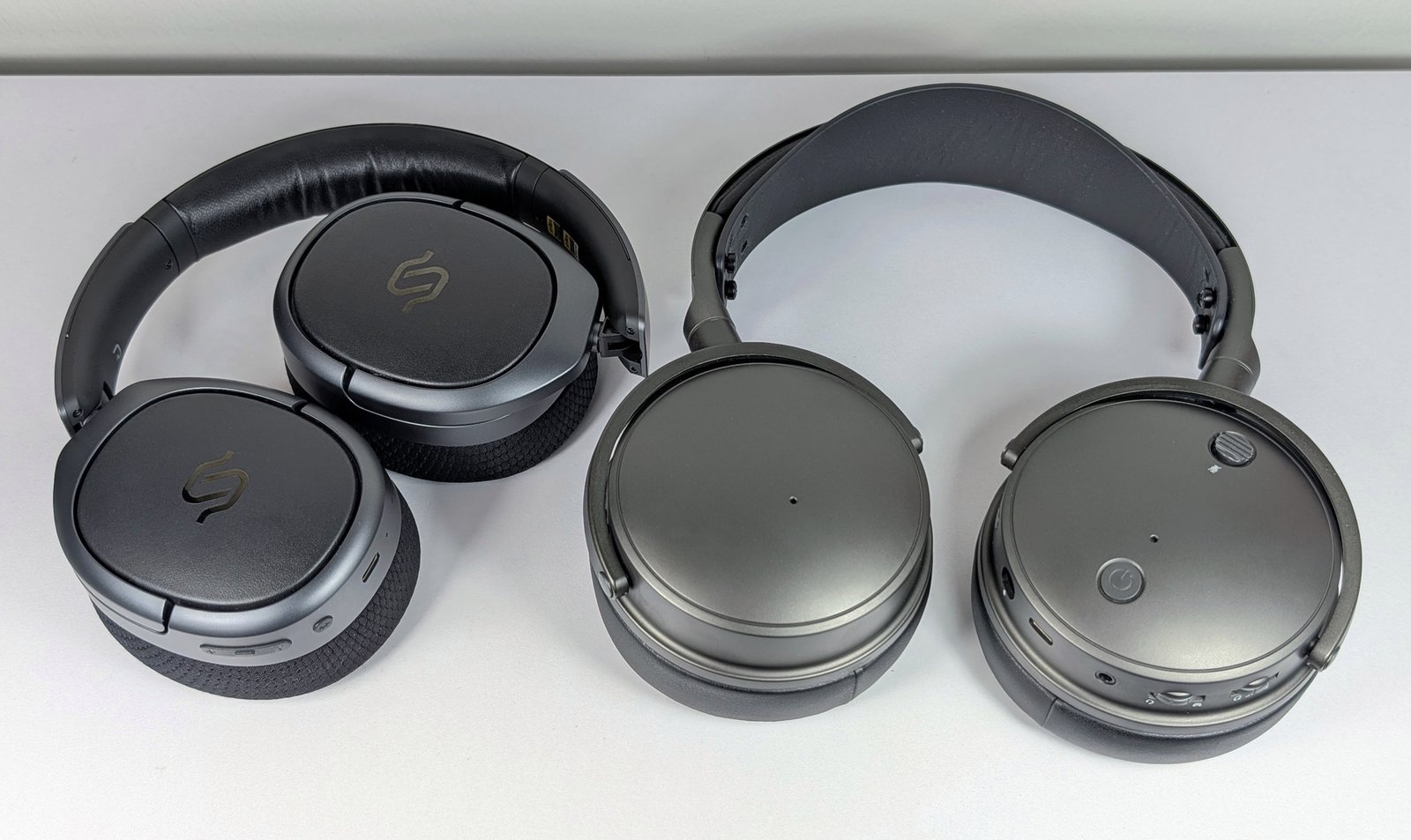
During use, I pay most attention to the fact that Maxwell weighs significantly more, but still feels slightly more comfortable in the long run thanks to its better headband. Its sweaty faux leather earpads could be replaced with cold gel earpads like those of the STAX Spirit S5, but such must be purchased separately. I successfully use fabric earpads made by Dekoni, even though they lose all bass without heavy equalization. However, with Audeze's 10-channel equalizer, I can restore the sound quality to its proper level. Edifier's 4-channel equalizer feels very limited in comparison, despite its parametric nature.
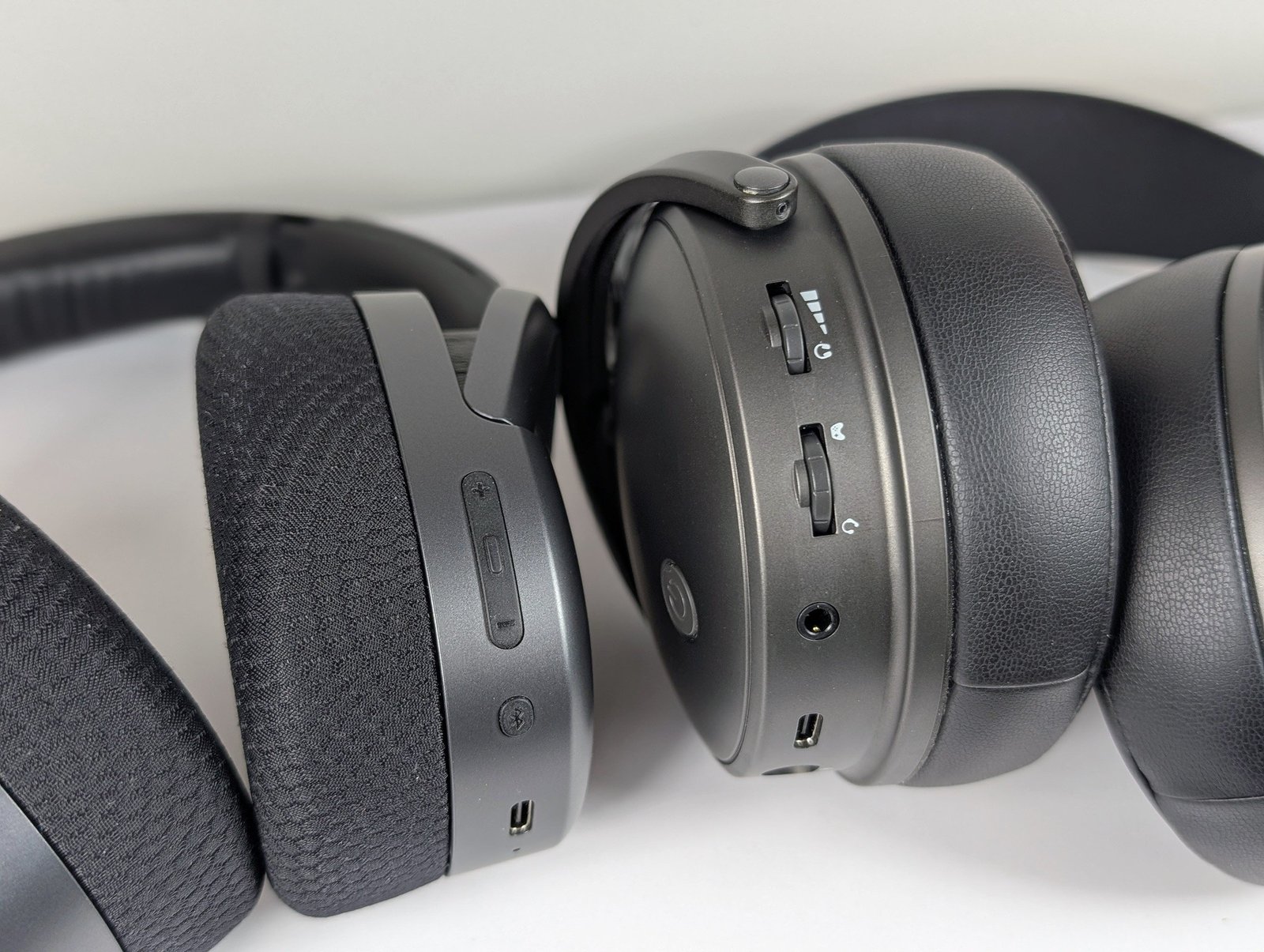
The STAX Spirit S5 is a more versatile product in terms of its Bluetooth codecs, while Maxwell is also capable of lossless wireless playback with its separate USB transmitter. The battery life in both headphones is also very long, and there is no background noise from them. To be precise, the background of the playback is even darker in the STAX Spirit S5. Otherwise, the differences at a technical level remain small.
Frequency responses with corrections:
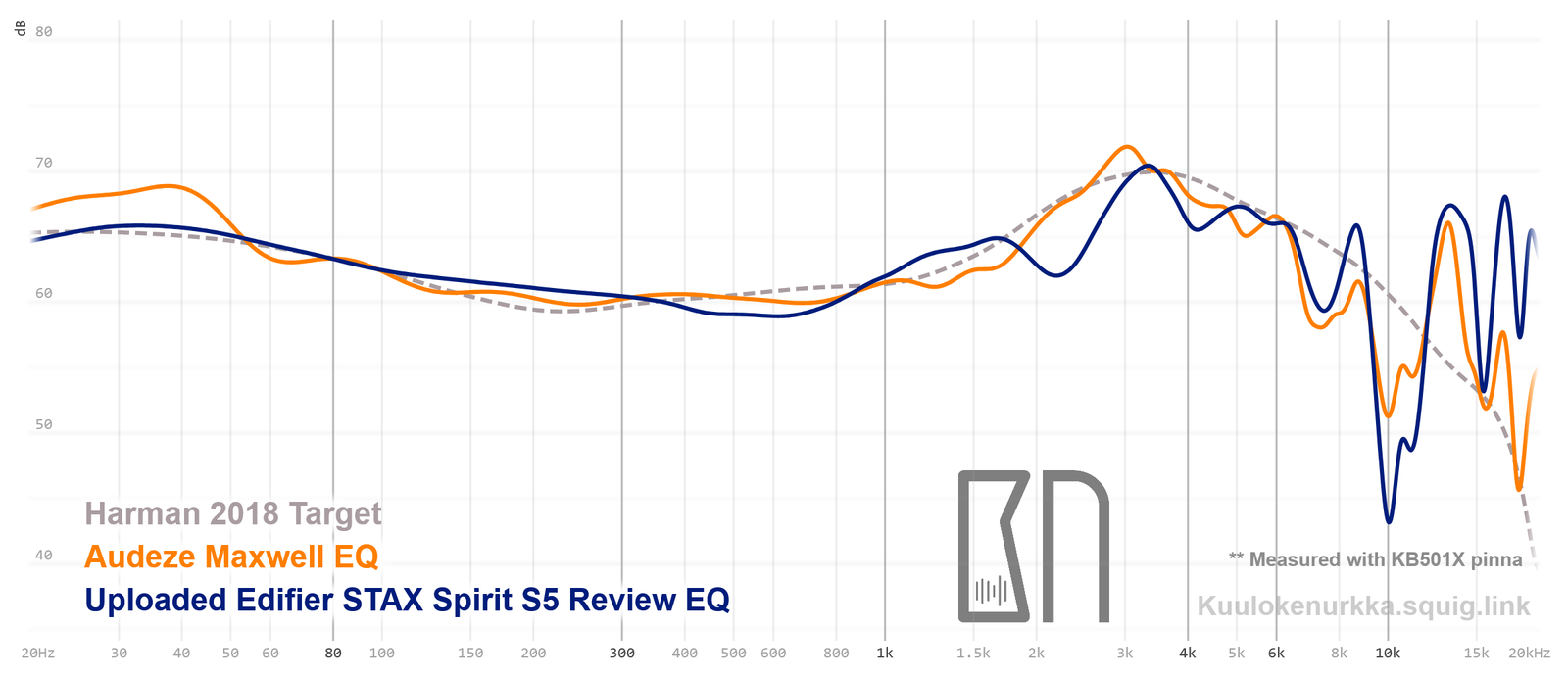
Maxwell would take a clear victory if I were to compare sound quality with the headphones' default settings. Therefore, I am not doing that, but have listened to both, equalized in the way I deemed best. The settings for STAX Spirit S5 can be found higher up in this article, and Maxwell's settings in my written review. It should also be mentioned for confirmation that during the comparison, the Edifier model had cold gel earpads attached, and Maxwell had Audeze's standard earpads. I listened to the former with a Sennheiser BTD 700 transmitter using the AptX Lossless codec, and the latter also losslessly with a USB transmitter based on the headphones' network connection.
Even when equalized, the STAX Spirit S5 lags somewhat behind Maxwell's linear and balanced sound, especially in the midrange. The Audeze model thus immediately sounds more natural and smoother, if this is important. For example, vocal performances are reproduced more present and authentic, and the treble does not splash as conspicuously. As a certain advantage of the Edifier model, I would count a certain liveliness, because the punchiness of the upper midrange and the sparkle of the highest treble bring out certain nuances more energetically. Perhaps for this reason, the presentation feels somewhat more defined, even though at the same time many midrange details remain more subdued than with Maxwell.
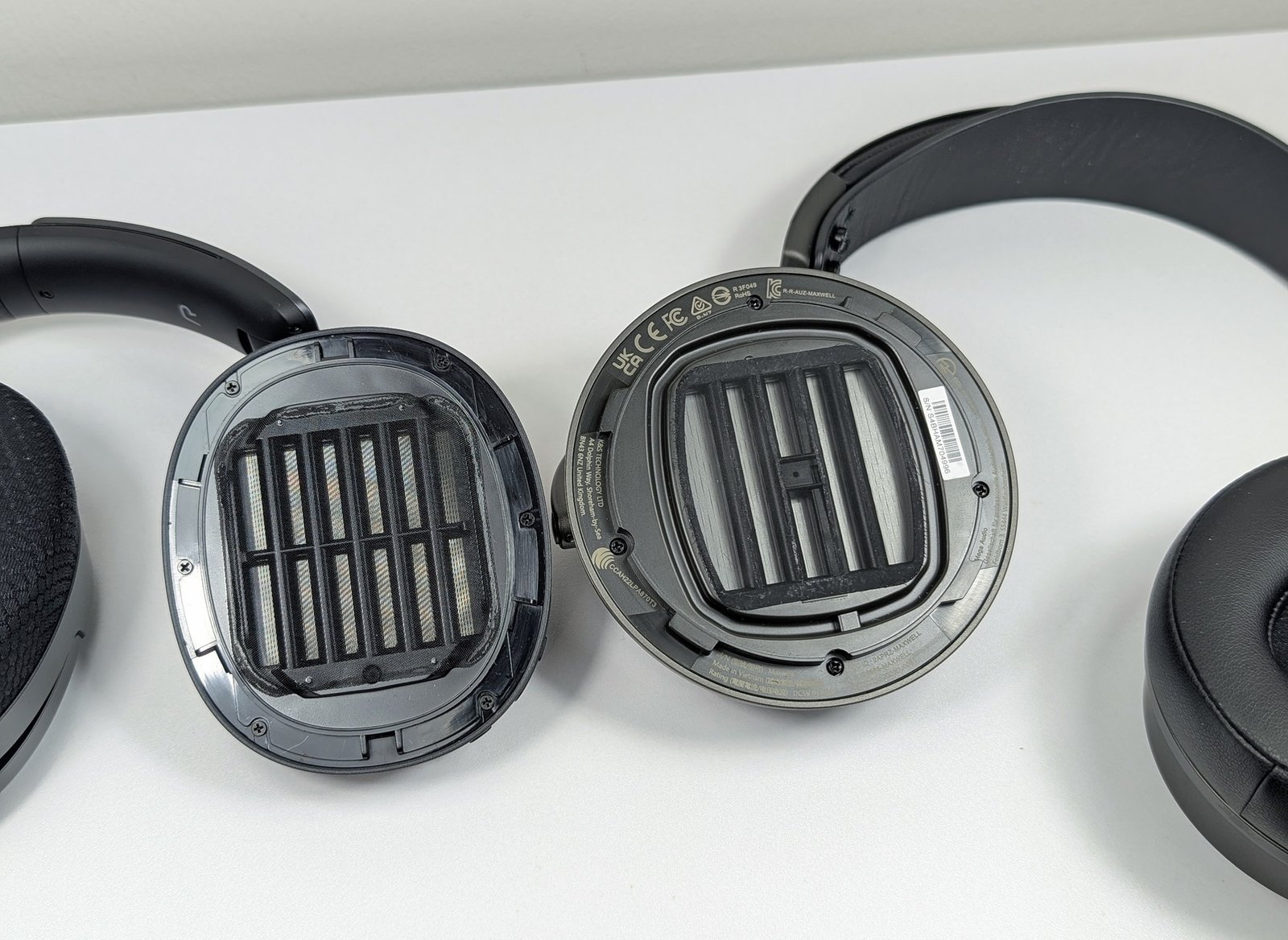
Although I have adjusted Maxwell's sub-bass to be slightly stronger, the STAX Spirit S5 kicks almost as hard, if not slightly more dynamically. In terms of soundstage, the Audeze model can sound deeper forward, while Edifier's headphones feel more spacious in their separation. I perceive a slight haziness in Maxwell, so the STAX Spirit S5, at least with the AptX Lossless codec, has a small advantage in playback purity and background darkness.
Both headphones thus have advantages, but with Maxwell, I ultimately never have to think about the headphones themselves, because nothing strange pops out of the playback. The STAX Spirit S5's timbre, on the other hand, is not always the most credible, and the treble sometimes splashes quite roughly. Due to this fundamental difference, I immerse myself better in listening to the Audeze model, and I must declare it the winner of the two. Maxwell also costs less, and Audeze has already managed to tune it to be really good. However, if someone wants smaller and lighter planar headphones wirelessly, and is willing to spend more time adjusting them, I consider the STAX Spirit S5 a quite viable option.
Summary
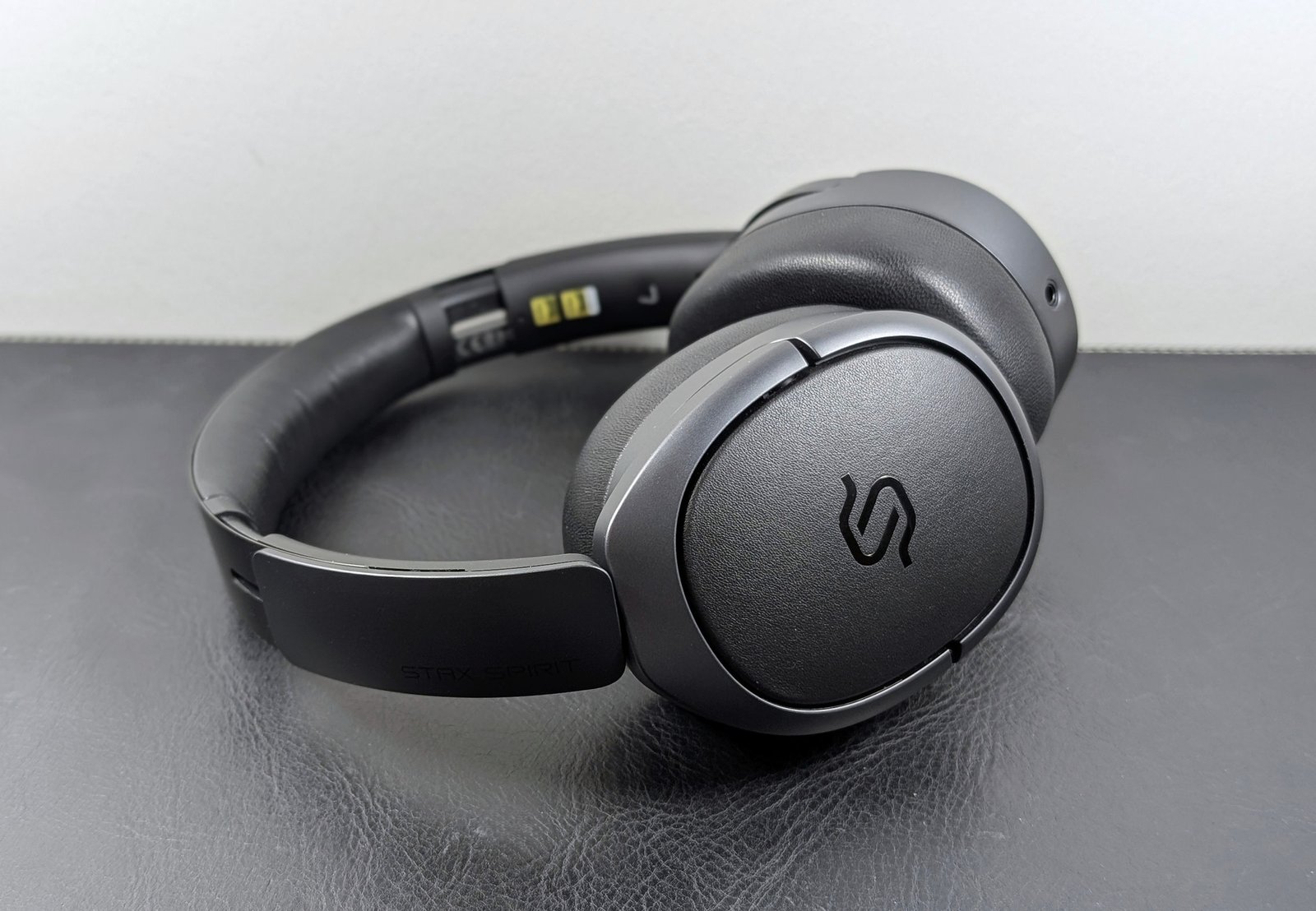
The STAX Spirit S5 is not an absolute perfect performance overall, although I think it has many good qualities. Technically, wireless headphones aiming for good sound quality should be implemented exactly like this: maximizing the quality and versatility of Bluetooth connections and minimizing background noise. Edifier also deserves praise for its long battery life and the second pair of earpads included in the package. There is also no major complaint about the structure of the headphones, apart from the narrow headband; it is likely, like its predecessor STAX Spirit S3, the most practical wireless closed-back planar headphone on the market. Of course, there aren't many of these.
In the realm of sound quality, the manufacturer has, however, been lost, especially with the factory settings. Changing the earpads already helps, and various sound profiles are available, but even they do not fully correct the inconsistencies that, I believe, people accustomed to high-quality sound would notice. The equalizer added to the mobile application, with its limitations, does not particularly impress compared to the more versatile tools of other manufacturers. Of course, many still seem to have been quite satisfied with the STAX Spirit S5.
Although with suitable settings, Edifier's headphones can sound very good, generally speaking, I would rather recommend acquiring proper noise-cancelling headphones (suggestions On our wall of fame). They are more practical and lighter. Secondly, the problem with noise-cancelling headphones is most often primarily too much bass, which is easier to correct than straightening out the STAX Spirit S5's unnatural midrange. From a sound quality perspective, Audeze Maxwell and Edifier's own STAX Spirit S3 could also be good alternatives to the S5 model, although in other respects they are less practical products. I will therefore wait for a version update from Edifier, in case a possible next STAX Spirit would fit all the pieces together optimally.
Trivia: Asians consciously avoid the number four in product names and other areas of life, because the word ”death” is pronounced either completely or almost identically in many languages. This phenomenon is called tetraphobia.
Pros and cons:
+ Fairly good sound quality with a suitable setting combination
+ Dynamic and punchy bass by planar headphone standards
+ Very comprehensive Bluetooth codec support
+ No background noise at all
+ Long battery life
+ Stylish appearance
+ Consistent fit
+ Comes with a second pair of (better) ear pads
– Sound quality with default settings and ear pads (hollow midrange and harsh treble)
– Poor equalizer
– Unnecessarily narrow and lightly padded headband
– No noise-cancelling function
– Awkwardly shaped case
– Not sold in Finland
– High price (especially RRP) compared to Audeze headphones
No special mentions this time.
 EN
EN  FI
FI
I would recommend if still possible, wearing these headphones for a month on the leather pads to see if the hollowness in the mid range and harshness in the highs subsides after the leather conforms to the shape of your head,
I’ve recommended with many people that loan my S5 unit that they move the drivers forward to enjoy all the Stax has to offer.
While harman is a gold standard these days, I urge you to forget about it with these headphones. The W shame in the tuning has blown any harman reference headphone expectations away in my case, personal preference prevails over these recognised curves. (with exception of an odd IEM due to monsterous sub bass).
Where I find the Stax shine, is the detail, actively set your mind to start looking for elements in recordings you won’t hear with the recessed high frequencies of the harman curves. The Stax present audio in a completely unique way, although very bold not referencing these to harman curve, i believe its has paid off.
Both my Stax S2 and S5 had a long period of adjustment (mentally more so) but the leather does need time to bed in to form a great seal before you start noticing all the benefits.