Author: Sword of Damocles
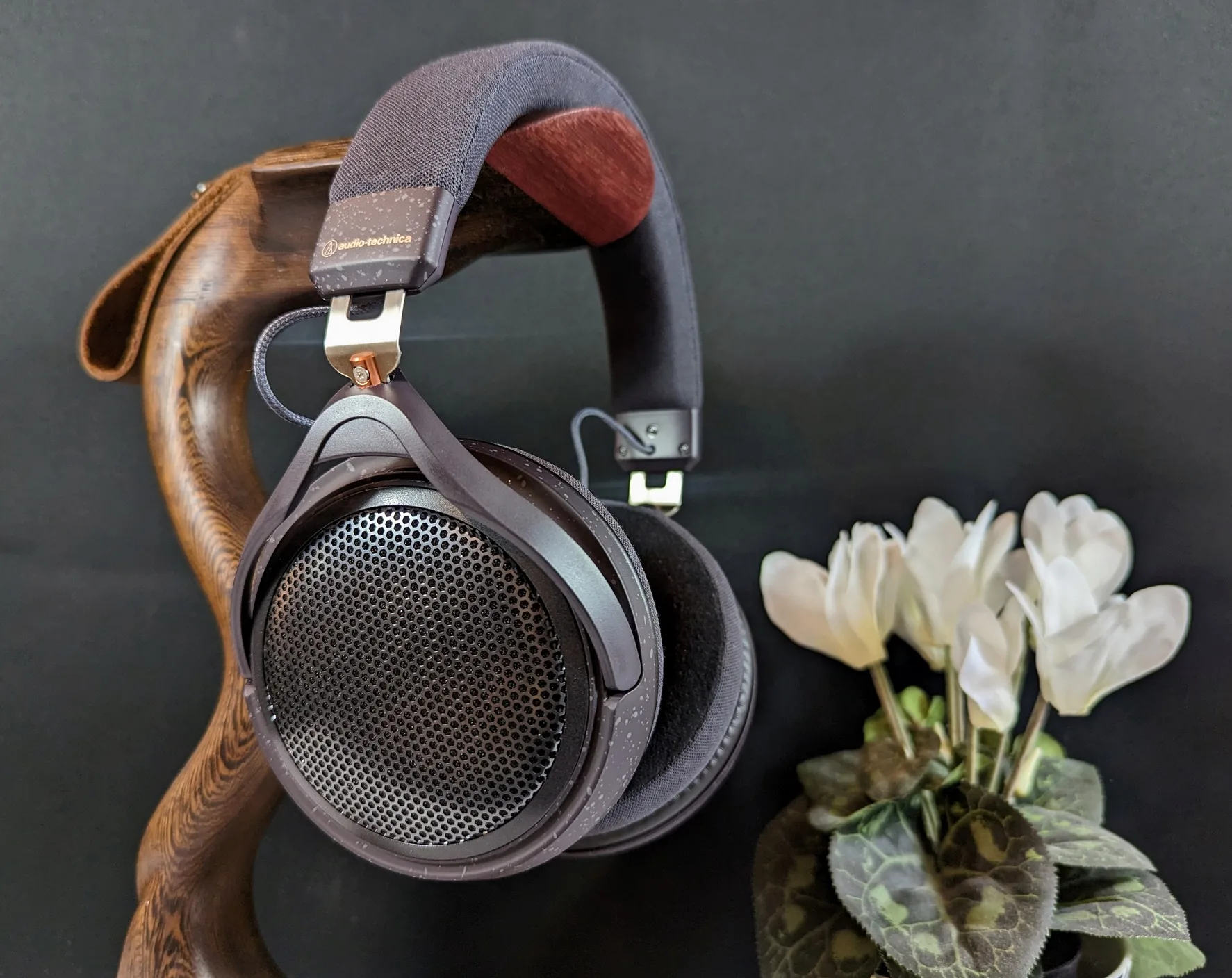
Table of Contents:
Information:
- Release year: 2022
- Country of Origin: China
- Price: 19,800 yen in Japan (approx. 150-160 euros delivered to Finland)
- Type: open, over-ear
- Dynamic 53 mm driver
- Audio connections: Bluetooth 5.0 and headphone jack (3.5 mm)
- Bluetooth codecs: LDAC, AAC and SBC
- Sensitivity: 100 dB/mW
- Impedance: 48 ohms
- Weight: 220 g
- Battery life: Up to 20 hours (varies by usage)
- Charging time: 1.5 hours (supports fast charging: 2.5 hours of use in 10 minutes)
- Charging port: USB-C
- Features: built-in microphone and versatile phone app, including equalizer and support for 360 Reality Audio
- Accessories: 30 cm long USB charging cable and 2 meter headphone cable (3.5 mm AUX)
Review sample: Self-purchased product
Few open Bluetooth headphones
Bluetooth headphones have become mainstream in recent years because they fit our hectic lifestyles, and using them is easy for most. Headphones do not need a cable or a separate amplifier, they usually have a noise-cancelling function, and with the development of codecs, the sound quality is now quite decent. Most Bluetooth models are also quite light and compact, making them attractive options for regular use and portability. However, almost all such headphones are closed-back in design, so those who prefer open-back models cannot enjoy the benefits of wirelessness.
According to my own calculations, there are currently only three more commonly known open-back Bluetooth models on the market: Hifiman Ananda BT, previously reviewed in Kuulokenurkka Hifiman Deva Pro (separate Bluetooth module) and Grado GW100(X). In addition, some of the wireless RS headphone systems sold by Sennheiser are, to my understanding, open-back in design, but due to the separate transmitter, I do not consider these headphones to belong to the same category. The scarcity of open-back Bluetooth models is certainly influenced by a lack of consumer demand. Furthermore, it is difficult to fit electronics and a battery into an open-back design without negatively affecting sound quality. Some problem areas can, of course, be remedied with DSP correction.
This time I will be discussing Audio Technica's ATH-HL7BT headphones, which are the fourth and most affordable open-back Bluetooth model I know of. Most people have probably not even heard of these headphones, as they are sold only in Japan, and no one has published an English review of them so far. However, the HL7BT can be ordered to Finland relatively easily from Amazon Japan (link to product listing) through. The final price of my order was about 155 euros, but the price may vary 10–20 euros upwards depending on the day.
The headphones are a kind of corona-era product, as the manufacturer has designed them for effortless home use and long listening sessions. Thanks to the built-in microphone, the HL7BT is well suited for remote learning and remote meetings, among other things. Due to the open design, longer-term use is not sweaty like with closed models. When using the headphones, it is also possible to notice, for example, a small child at home at the same time, or a courier or food delivery person arriving at the front door.
Product packaging
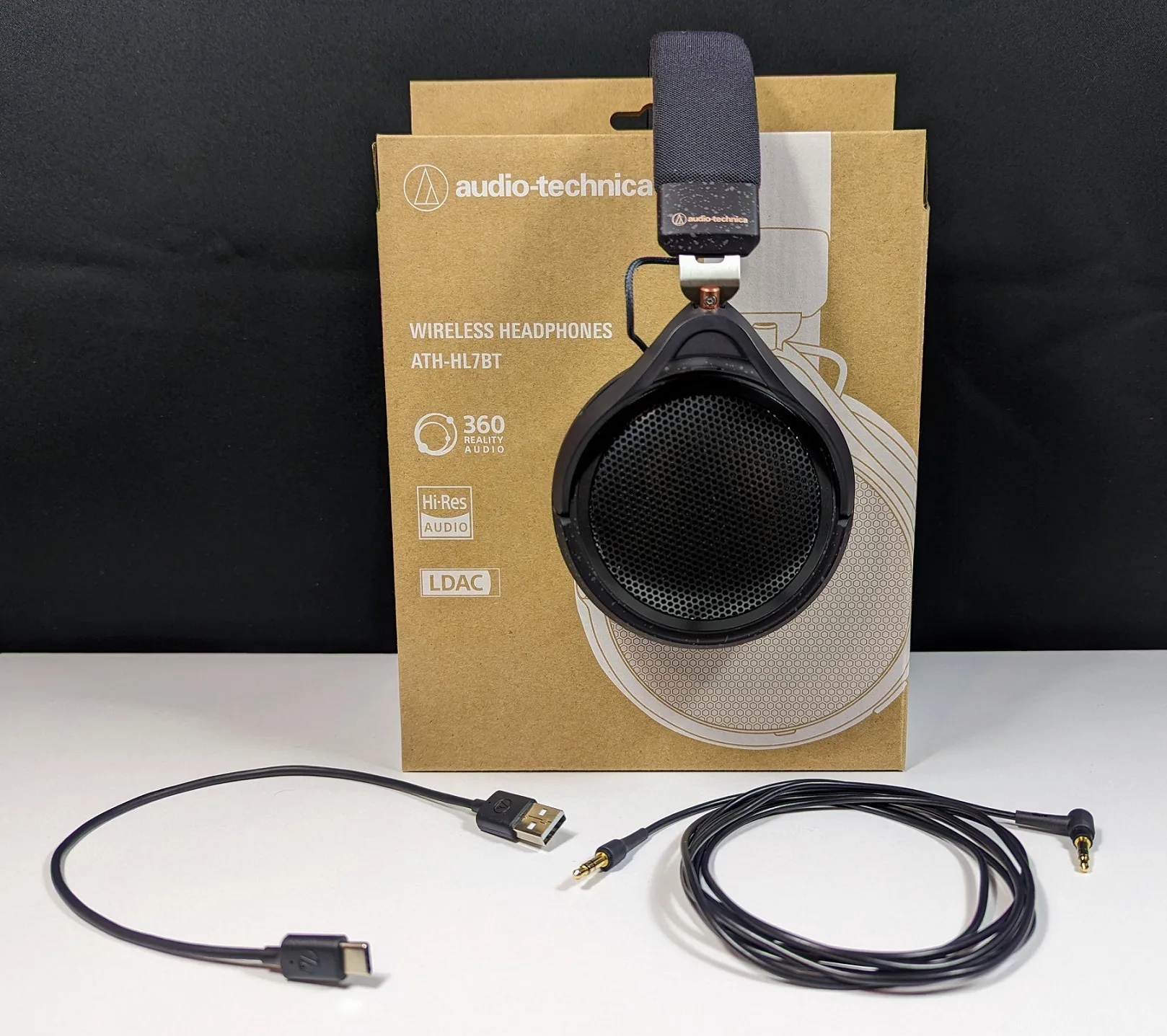
The HL7BT is delivered in a minimalist and environmentally friendly cardboard box without any frills. In addition to the headphones, the box only contains instructions for use, a short USB-C charging cable, and a rather long (2m) 3.5 mm headphone cable with a 90-degree angled connector at one end. However, nothing else is needed for use.
Structure and comfort
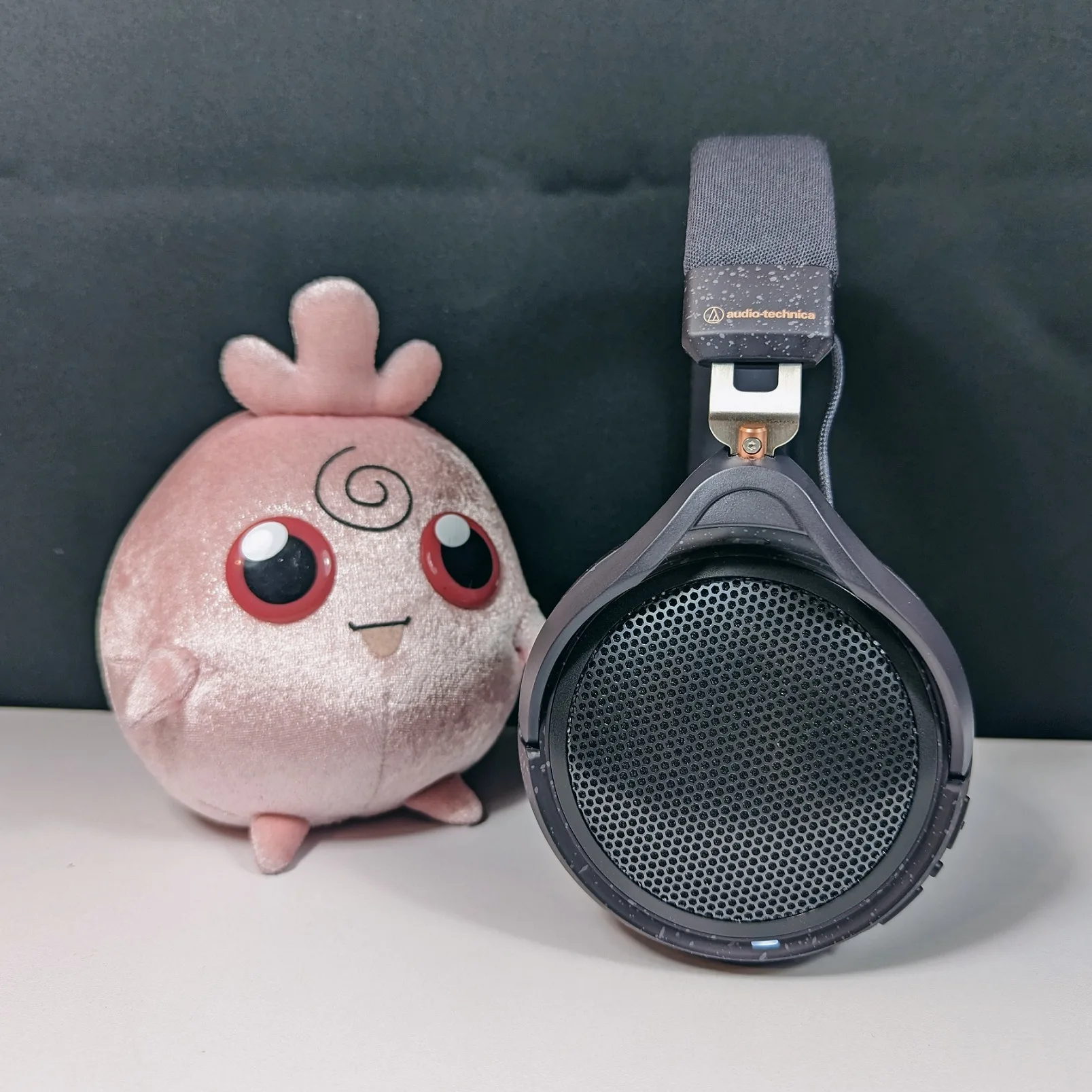
The HL7BT has a unique appearance, as it differs completely from other Audio Technica headphones, and I have not seen a similar headband structure before in any other context. For some reason, the blue-grey coloring reminds me of old Toyota Corollas. The style also combines splash patterns, copper-colored details, and honeycomb grilles made of shimmering metal – quite a jumble, but in a fun way, very Japanese-looking.
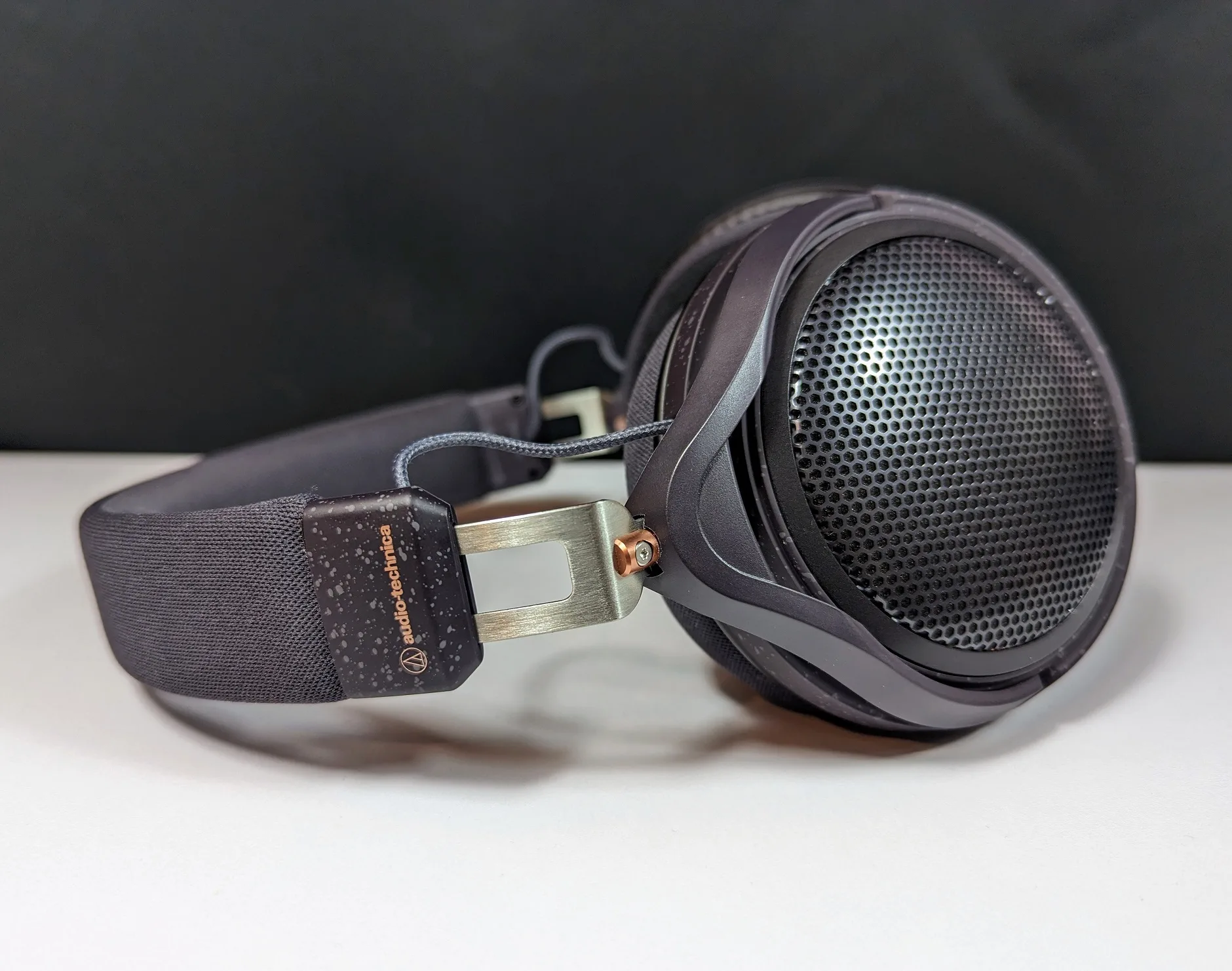
The outer shell of the headphones is made of plastic, so they feel quite delicate when held in the hands. However, metal has been used in appropriate places, such as the hinge that allows horizontal swivel movement and the height adjustment, so the structure appears reasonably durable.
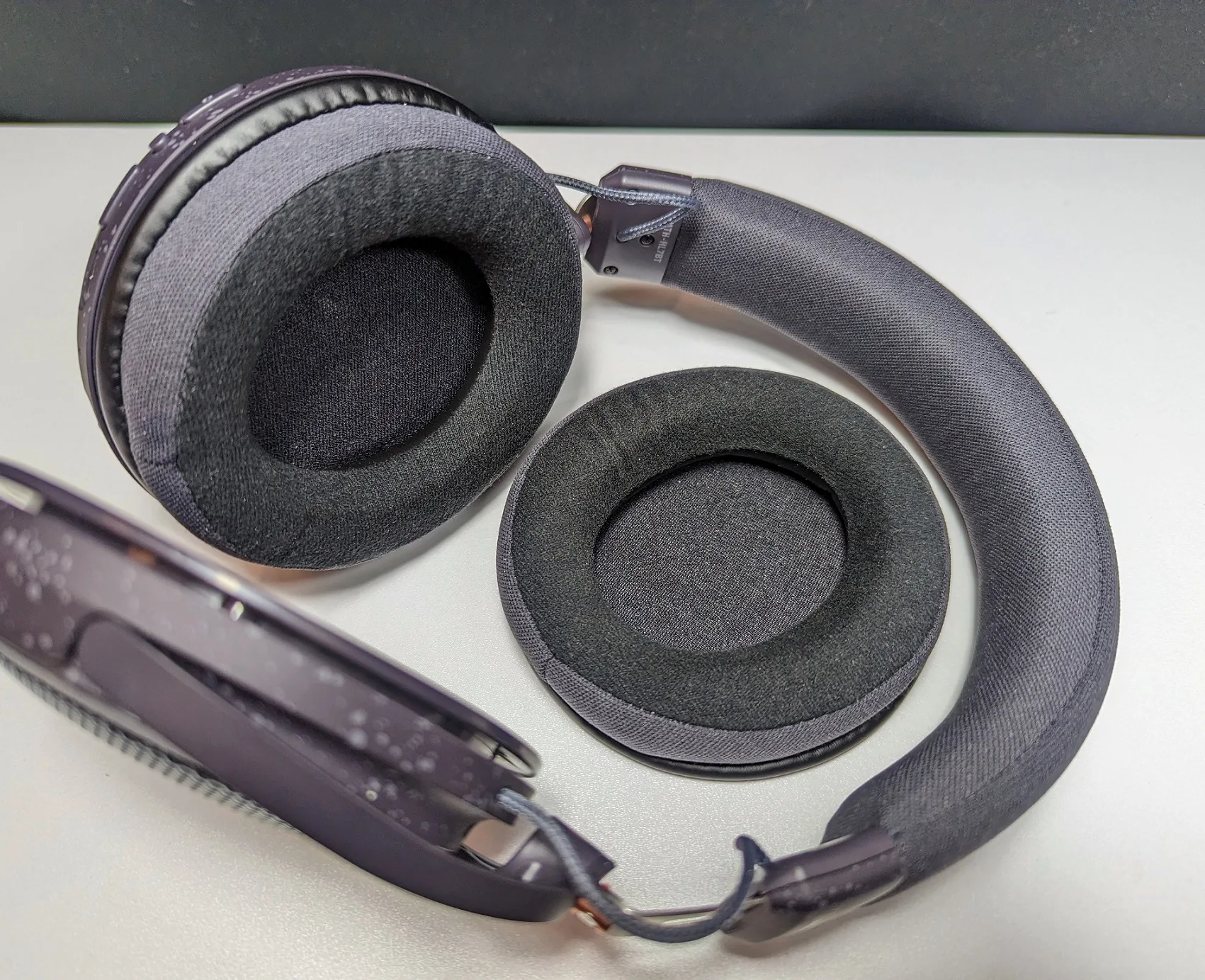
The design clearly emphasizes light weight and comfort, as the HL7BT is one of the most comfortable headphones I have ever used. It weighs only 220 grams, the clamping force is almost non-existent, and the fabric earpads feel comfortable. Despite this, the fit is head-conforming enough for me that the headphones do not easily fall off my head. Using the HL7BT works well, for example, when lying on your back on the sofa against a pillow. The headphones do not start to press on the head or ears, even after several hours of use.
Earpads:
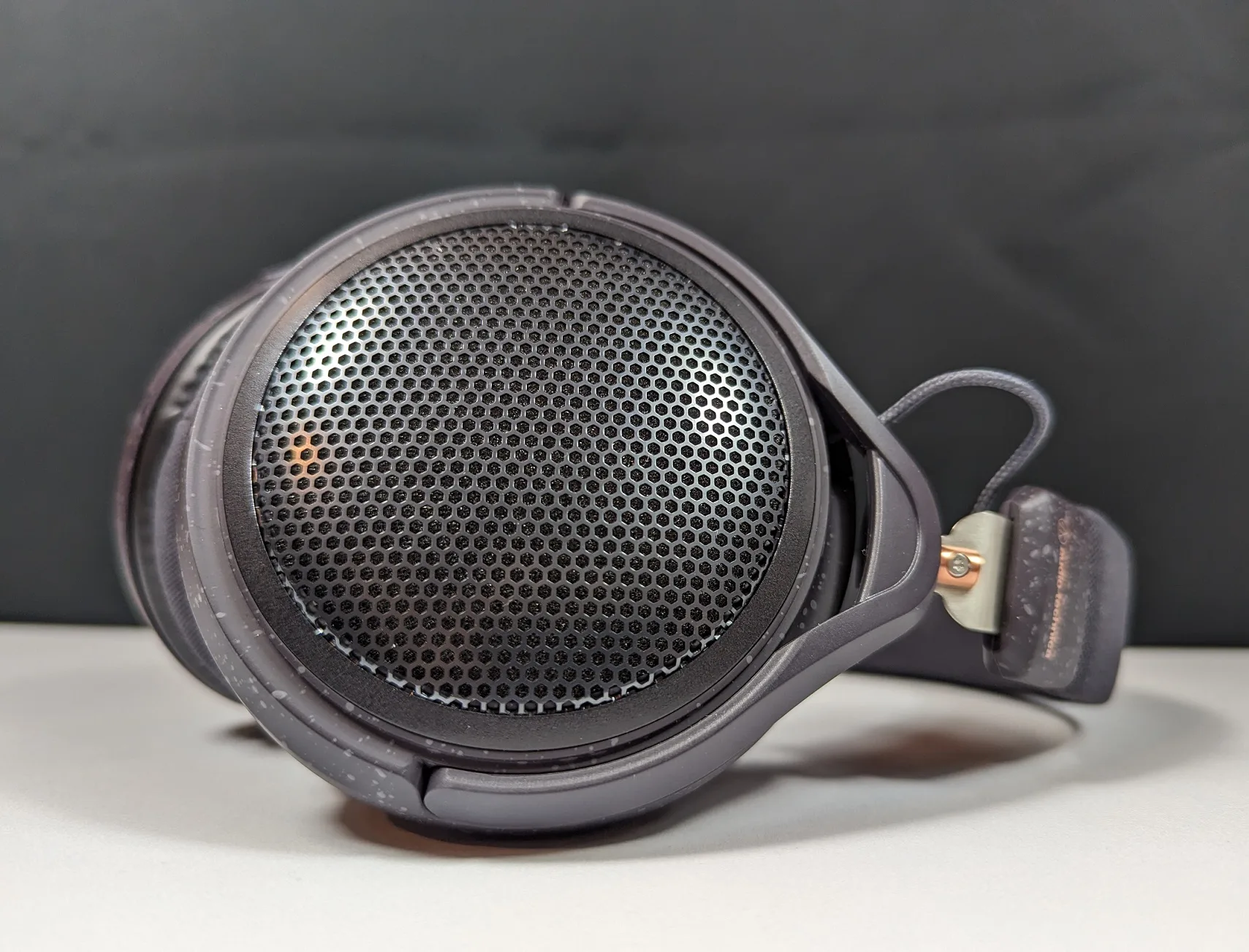
The underside of the headband is padded with a pleasant-feeling and sufficiently thick layer of memory foam. The ear cushions, on the other hand, are made of two different foams: the area around the driver at the base of the cushion is firmer foam, and the part that comes against the head is more conventional, but very soft foam. Despite the small size of the headphones, there is plenty of room for the ears inside the cushions. For my own ears, however, the ear opening could be slightly larger, as my ears brush against the top and bottom of the cushion. Thanks to the light clamping force, however, this is not bothersome.
The ear cushions are easy to remove and attach, so other cushion models with a diameter of 95 millimeters could also be tried with the headphones. Audio Technica replacement cushions would probably have to be ordered directly from the manufacturer in Japan.
Controlling the headphones:
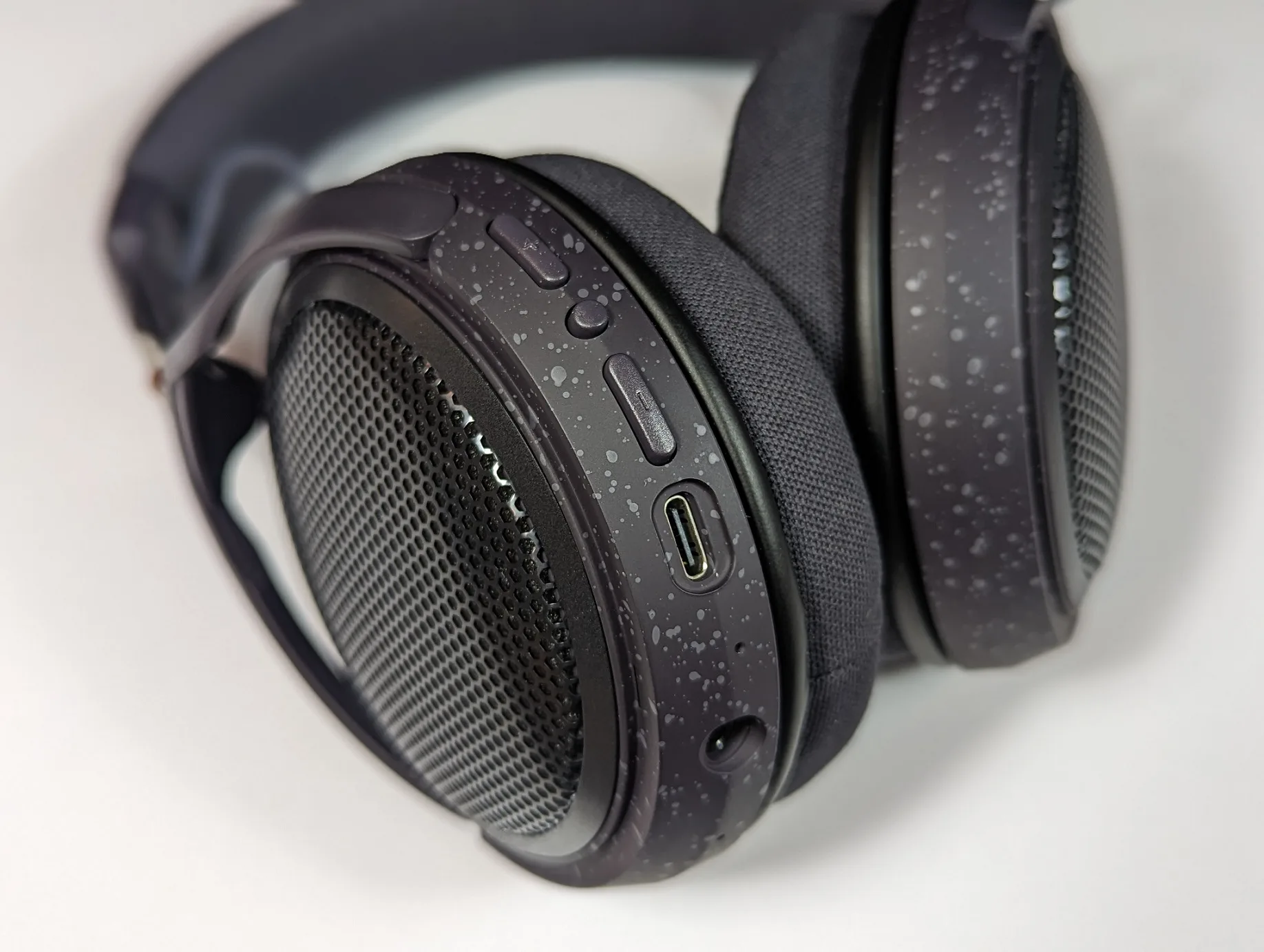
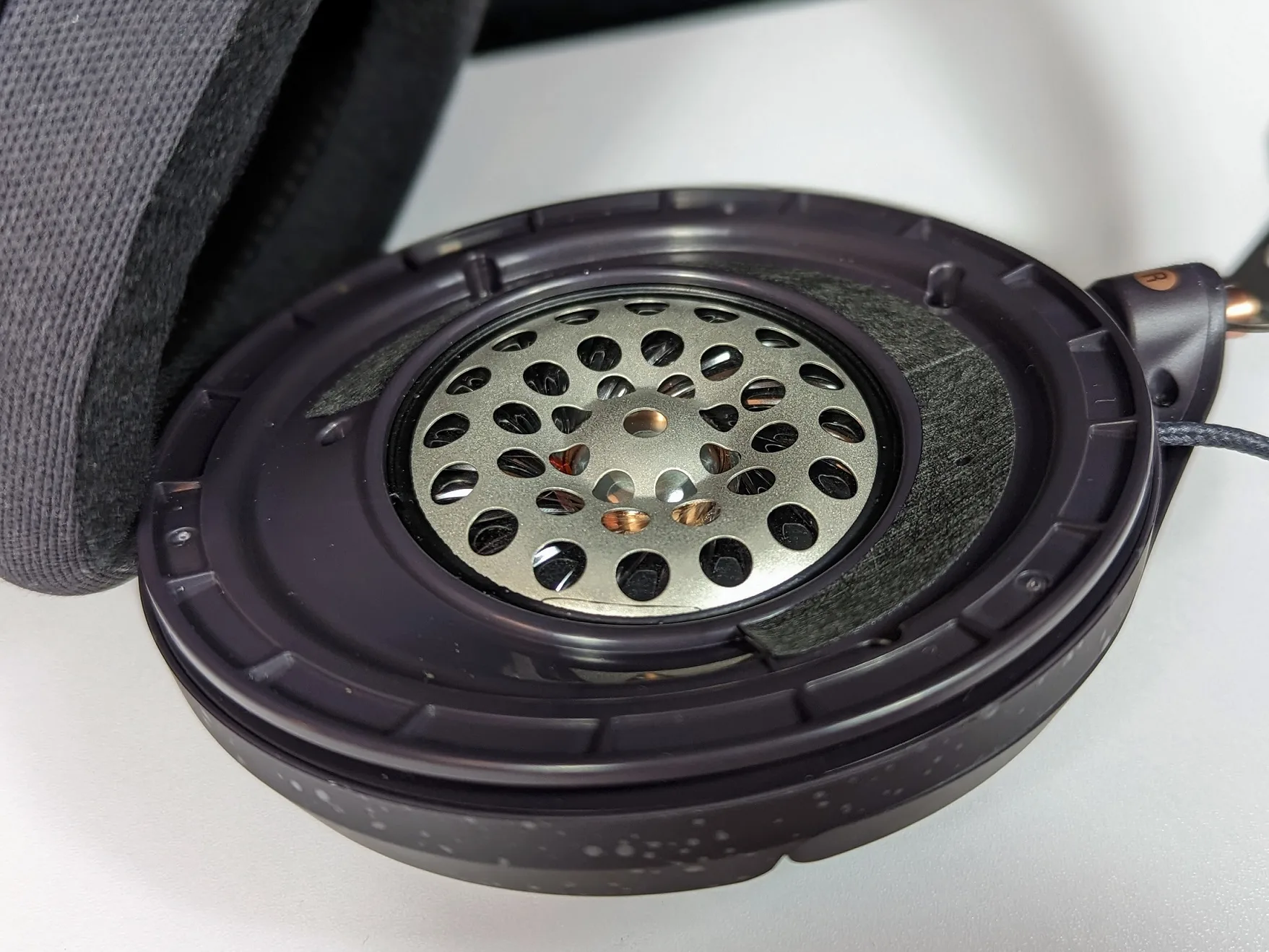
The electronics and battery have been completely fitted inside the cups – most of it is likely located in the left cup, as all buttons and connectors are placed on its lower part. The headphones are controlled by three buttons, which are clear to the touch and easily recognizable. The central round button is used as a power button, pause function, and for answering calls. In addition, double-clicking the button activates voice control via Siri or Google Assistant.
Volume controls can be used to skip tracks forwards and backwards when the buttons are held down for a moment. On the side of the left earcup there is a linear notification LED, and the headphones also announce various functions in English with a female voice. The HL7BT model is thus made directly suitable for international markets.
Features and phone app
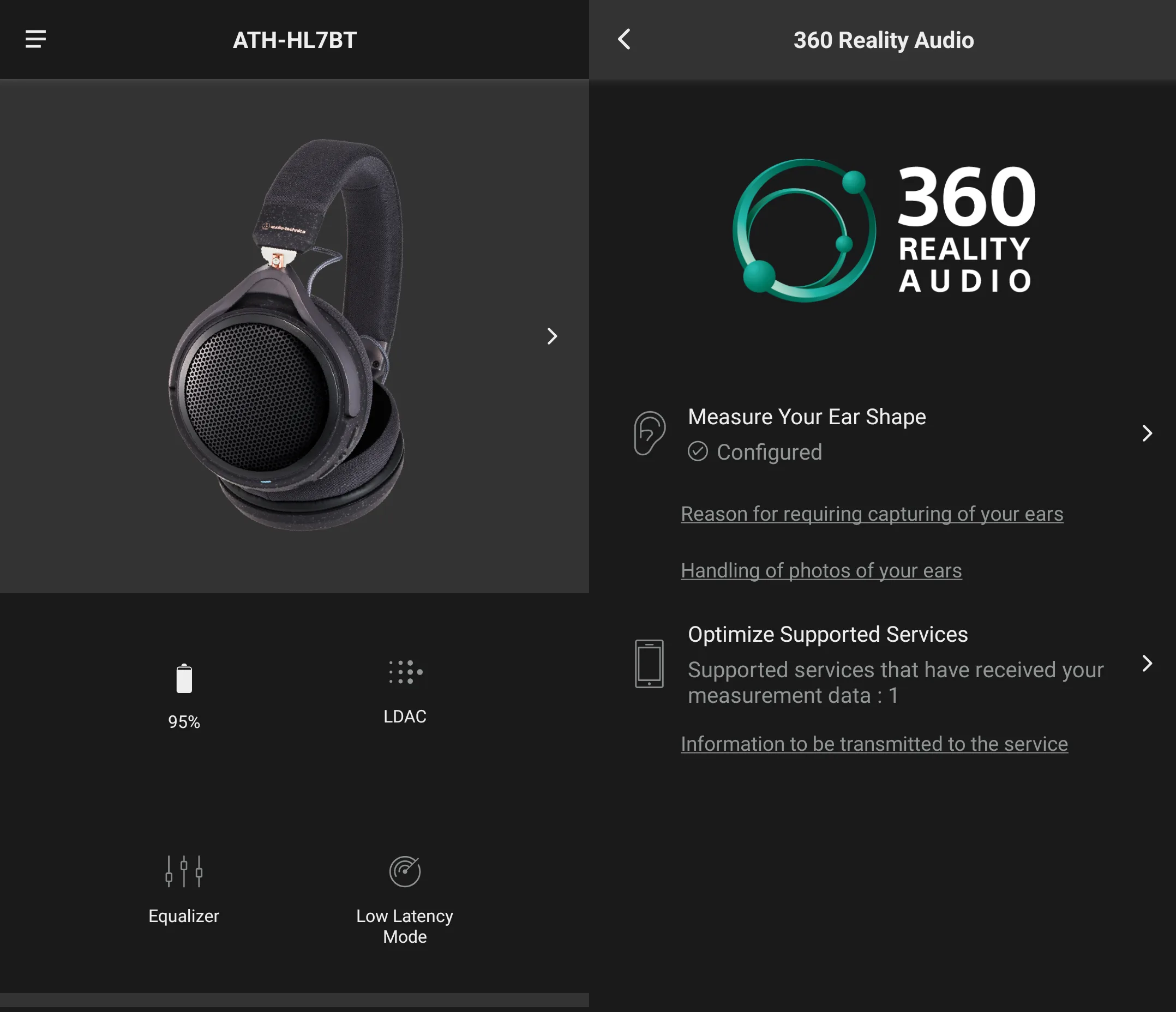
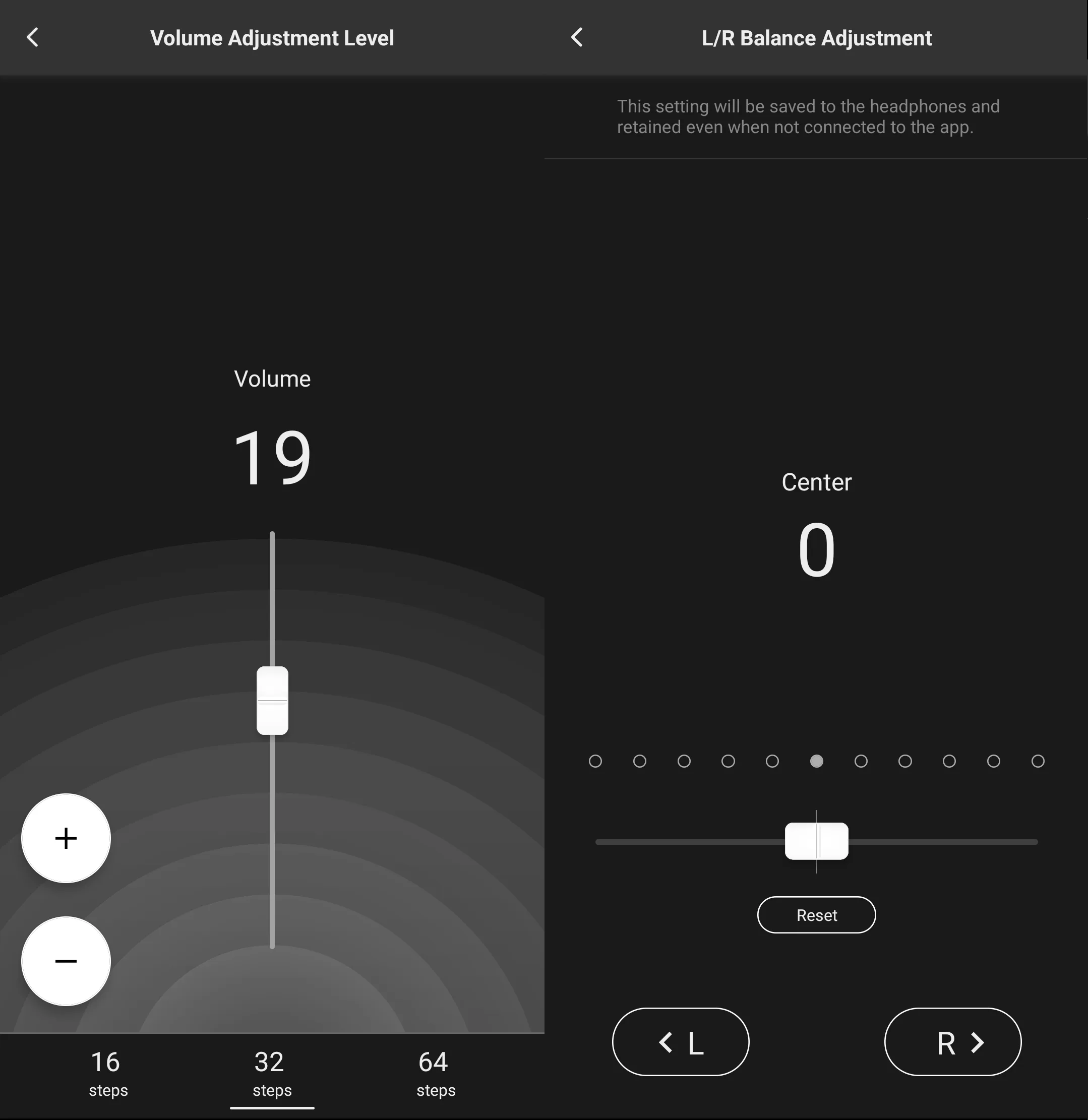
The HL7BT is a modern headphone in terms of features, as one would expect from a new product. The headphones support the best possible LDAC Bluetooth codec (I have not noticed any dropouts) and the 360 Reality Audio format (customized for oneself using photos taken of the ears) when listened to via streaming services. Through the manufacturer's Connect phone application (the application language is English), several other interesting features are available, such as a versatile equalizer, a Low Latency mode offering low delay (cannot be used simultaneously with the LDAC codec), and the ability to adjust the channel balance between the right and left sides.
The most revolutionary setting, in my opinion, is the one that allows changing the volume control operation to 16, 32, or 64 steps. Usually, Bluetooth devices only have a 16-step adjustment by default, which inevitably leads to large jumps in volume. For me, the optimal volume would often be between two steps, so I have to listen to the headphones either too loud or too quiet. With the HL7BT, however, I can fine-tune the volume perfectly with my Android phone. I would like to personally thank Audio Technica's app development team.
The HL7BT is almost perfect in terms of usability for Bluetooth headphones. The headphones also have a basic good built-in microphone, so they can be used for making calls or participating in Teams meetings. Thanks to the open-back design, one's own voice sounds ”normal,” making speaking feel more natural than when using closed-back headphones.
Equalizer:
The equalizer found in the phone application is considerably more versatile than average, as it can be used as either graphic or parametric. Both offer four manufacturer-defined sound profiles, and in addition, an almost unlimited number of custom profiles can be saved separately for each. Interestingly, profiles can also be shared with others as QR codes. Adjustments made in the application are saved to the headphones, after which the equalization is active on all different Bluetooth listening devices.
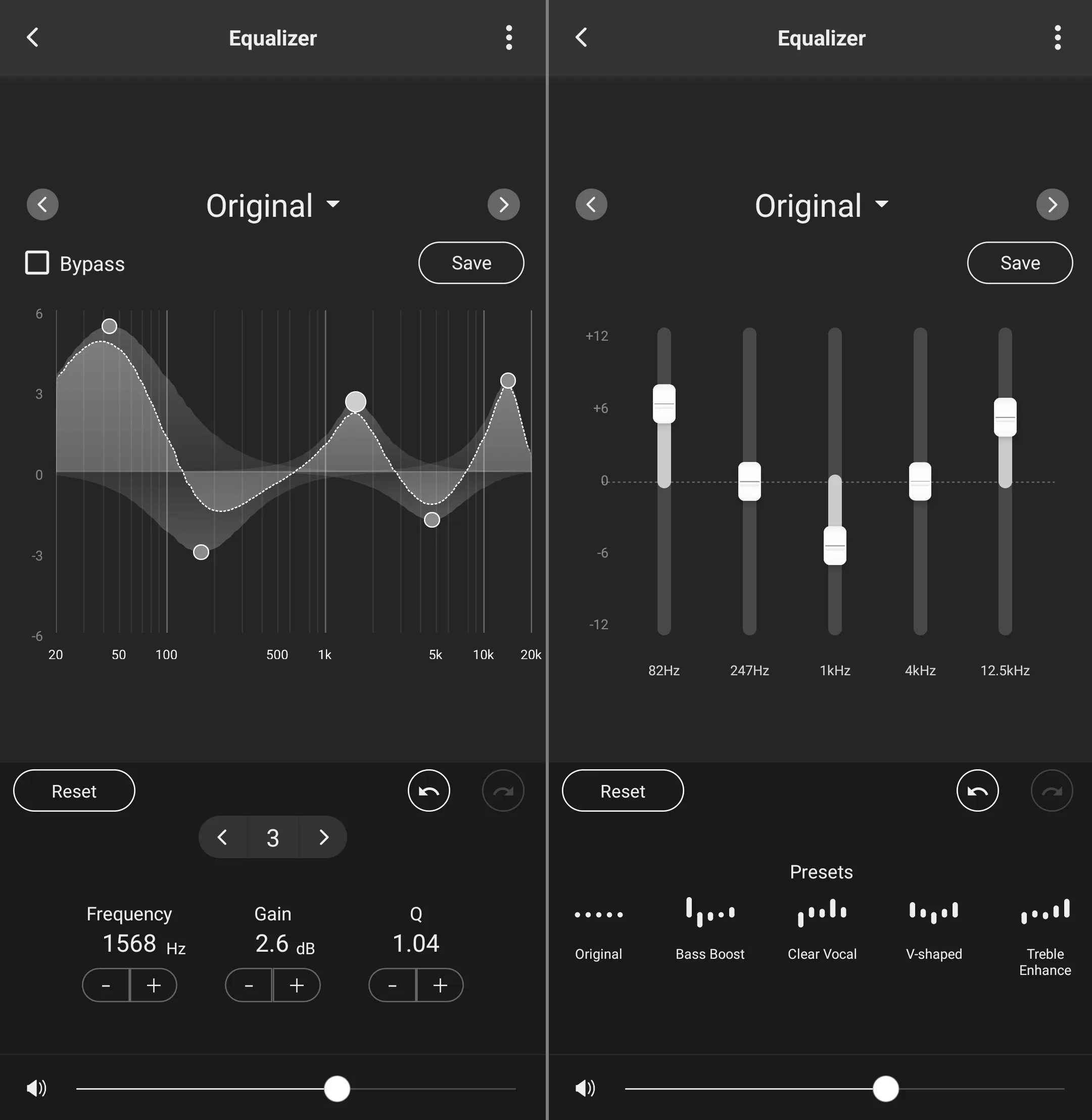
The parametric EQ option allows for fairly free adjustment of a 5-band correction in terms of both frequencies and Q-values. The screen also shows a clear illustration of how the made adjustments change the frequency response. The only limitation I see is that an individual band can be adjusted by a maximum of only 6 decibels up or down. On the other hand, the HL7BT's internal amplifier might run out of power when making larger adjustments. As a convenient additional feature, changes made to the sound can be easily compared with the original state by pressing the Bypass button, which temporarily disables the equalization.
The graphic EQ option is easier to use for beginners, but the frequencies or Q-values of the five-band control are not adjustable at all, nor is there an illustrative image of the adjustments' effect on the frequency response. On the positive side, however, there is more adjustment range than in the parametric control, as each frequency can be increased or decreased by 12 decibels. The graphic control might therefore be better in some cases if the adjustments target preferred frequency ranges.
There is also generally one drawback associated with using the equalizer, as activating it limits the audio signal's sampling rate to 48 kHz. In my opinion, the change is audible compared to the maximum sampling rate. On the other hand, after equalization, the result might still be better and more pleasing depending on how each person perceives the HL7BT's sound with default settings.
Battery life
Since the headphones' structure had to be kept as open as possible, it is not a big surprise that the battery size and thus its duration remain somewhat modest by current standards. The manufacturer promises a maximum battery life of 20 hours, but the actual duration varies depending on usage. For example, listening loudly with the LDAC codec consumes the battery faster than Audio Technica's calculations. Like many other new headphones, however, the HL7BT supports fast charging, so a 10-minute charge provides an additional 2.5 hours of listening time. When the battery runs out, the headphones can be used passively without power with a headphone cable.
Sound quality
The HL7BT can be listened to either via Bluetooth or with a 3.5 mm headphone cable. I was truly surprised to find that the frequency response is completely identical in both ways. This means that Audio Technica has tuned the headphones' sound entirely mechanically, and they do not utilize DSP correction at all. The manufacturer has had to invest in physical design, as considering the electronics and battery inside the headphones, both cups must be structurally identical for the right and left sides to sound the same. This has also been successful, as the channel balance of the pair I measured is quite good.
The positive aspect of all this is that, unlike many other Bluetooth headphones, listening with a cable is a completely viable option when the battery runs out, or even as the primary mode of headphone use. The HL7BT can be perceived as both wireless and wired. The headphones also do not become unusable or sound worse if their battery wears out or the electronics break down after years of use. On the negative side, the manufacturer has left some of the HL7BT's potential untapped, as it would have been possible to fine-tune the frequency response even further with DSP correction. However, I personally value mechanical tuning over DSP correction, as it has likely ensured that the structure does not have weaknesses that significantly distort the sound.
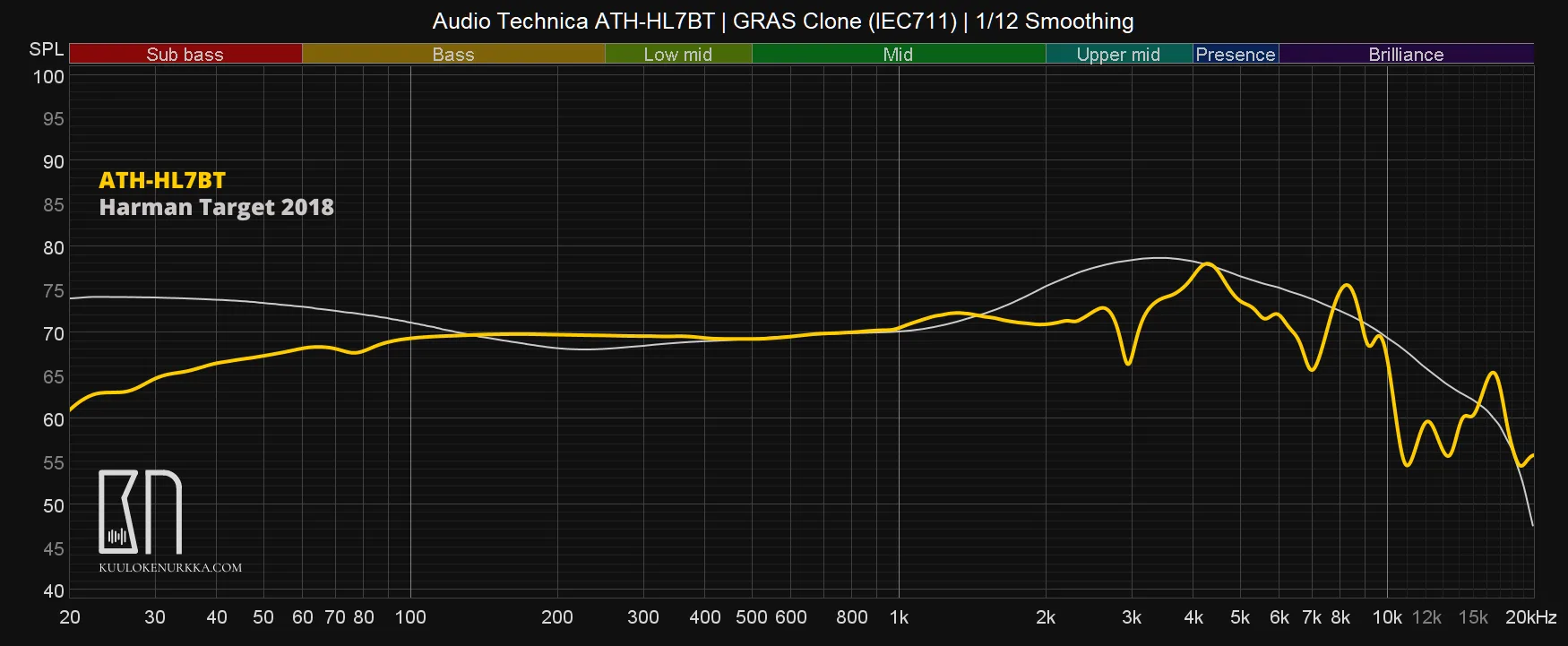
I have measured the headphones' frequency response with an IEC711-standard compliant measuring device, about which more can be read Headphone Measurements-page.
Frequency response:
The frequency response can be compared with other headphones comparison tool tool
What I like about the sound:
The HL7BT is relaxed and easy to listen to, which I think suits its intended purpose well. There is nothing in the sound that jumps out. Especially the somewhat subdued upper midrange frequencies make the reproduction calm, but the energy in the presence area and a slightly snappy treble (a bit of extra splash, e.g., in cymbal hits) still keep the overall result sufficiently interesting and present so that listening is not boring. The presentation manages to be both warmly soft and openly light in tone. Thanks to the open design, the soundstage naturally spreads around me, even if the listening experience is not otherwise particularly memorable.
Many sounds, such as a vocalist, are placed slightly further back in the soundstage, but fortunately they don't get lost there; instead, they just sound calmer and softer than usual. The headphones' upper midrange frequencies would probably sound distant if the bass reproduction wasn't light at the same time. As such, I think the different frequency areas work well together. The HL7BT in a way resembles Sennheiser's HD600 model, where the most energetic part of the midrange would have been moved further back in the overall sound. Because of this, the lower parts of the midrange are more prominent in the HL7BT's reproduction, so I perceive a pleasant warmth in the sound.
It is surprisingly easy to detect and pick out individual sounds from the whole with these headphones, because there is spatial separation in the reproduction. I believe this is largely due to the open design, as similarly priced closed-back headphones constantly feel somewhat overloaded, causing the sound to pack more easily into a single heap in the middle of the soundstage. As such, the HL7BT feels like a good headphone, especially compared to closed-back Bluetooth alternatives. This is the headphones' clearest strength, even though it is aimed at a completely different use than headphones equipped with noise-cancelling functionality.
The HL7BT is excellently suited for long and relaxed listening sessions, as if it were designed to be listened to while doing other things. The result is not particularly good for more critical listening, but headphones with an unfatiguing sound have their own purpose.
What I don't like about the sound:
Although the headphones clearly have their good points, the sound could have been implemented better in a few areas without the presentation style changing too much in a different direction. Among the negative aspects, light bass reproduction comes to mind first. Audio Technica could have DSP-corrected the sub-bass to be more linear than it currently is, but for one reason or another, they left it undone. The bass does have a pleasant fullness in the upper frequencies, but the headphones lack physicality and punch when listening to bass-heavy music. The result resembles Sennheiser's HD600 series, whose bass reproduction has nothing to tell future generations.
Another disturbing feature is that the HL7BT's treble suddenly drops after 10 kHz, which makes the sound somewhat compressed and veiled. The reproduction lacks airiness and continuity. For example, drum cymbal hits sound energetic, but the sounds remain blunt because the airy shimmer is largely missing. Although the headphones are very relaxed to listen to, they drain a lot of the vitality that music should have. The detail of the sound also remains partially incomplete as a result, and the soundstage is not as magnificent and open-feeling as it can be at its best in open-back headphones. However, when listening to music more casually, it would still be possible to learn to live with the issue.
The third thing I mention may not even be audible, but it is quite clearly visible even in the slightly rounded frequency response. The structure of the HL7BT causes a reflection in the sound, which results in partial phase cancellation, i.e., a sound attenuation at approximately 3 kHz. Since I cannot say that I can distinguish a narrow-band attenuation when listening to the headphones, it may well be that it appears to this extent only to the ears of the measuring equipment. In any case, the electronics placed behind the drivers are not an optimal combination with an open design, as vibration is also visible around 2 kHz in the unrounded frequency response. However, there is no significant practical harm from this; I merely brought it up as an interesting fact that I was able to ascertain with my current measuring equipment.
Otherwise, I don't have much to complain about the HL7BT in the 100–200 euro price range, as it performs acceptably by most metrics. For example, the dynamics remain quite subdued, which is likely mainly a result of the soft and light tuning. Also, using a Bluetooth connection inevitably drops some sound quality, so I can't ultimately identify clear characteristics related to the driver used in the headphones. This is probably a good thing, as is typical with Audio Technica headphones.
Is the sound quality better when listening with a cable?
When listening with a cable, a higher quality audio signal can be fed to the headphones compared to a Bluetooth connection. The end result can also be influenced by device choices, as the compact D/A converter and amplifier inside the HL7BT are not in use. As an interesting alternative, for example, a device from iFi's Zen series, such as Zen DAC V2, could suit the headphones well, as the XBass feature would amplify the light bass reproduction. The HL7BT's stated sensitivity is 100 dB/mW and impedance is 48 ohms, making it a relatively easy load for amplifiers when listening with a cable.
I tested the headphones with an affordable Topping DX1 combo device. The sound quality was overall slightly better than with a Bluetooth connection. The biggest change was that the soundstage opened up better in every direction, as individual sounds sounded less strained and the overall presentation less congested – I observe very similar changes with Focal Bathys headphones when switching from Bluetooth to a USB cable.
In the case of the HL7BT, for example, drum cymbals sounded more natural and less dull. Part of the lack of airiness in the high frequencies I experienced is likely due to less separation in the sound with a Bluetooth connection (or due to the headphones' internal electronics). When listening with a cable, the dynamics also seemed sharper and more engaging. This partially compensates for the headphones' weaknesses, so I no longer have much bad to say about the HL7BT. The full, calm, and spacious presentation is well suited for longer listening sessions, for which the manufacturer intended the headphones.
Equalization
Equalizing the HL7BT is not entirely necessary in my opinion, but it makes the sound more powerful and lively. When listening with a Bluetooth connection, I have added both sub-bass and the highest treble to the headphones. Boosting the upper mid-frequencies is also appropriate at the same time to make the sound less soft. These changes are most precisely handled with a parametric equalizer. The HL7BT is a truly unique product, as I don't know of another open-back headphone model that can be equalized in such a way that the settings are permanently saved to the headphones.
My settings in the Connect app:
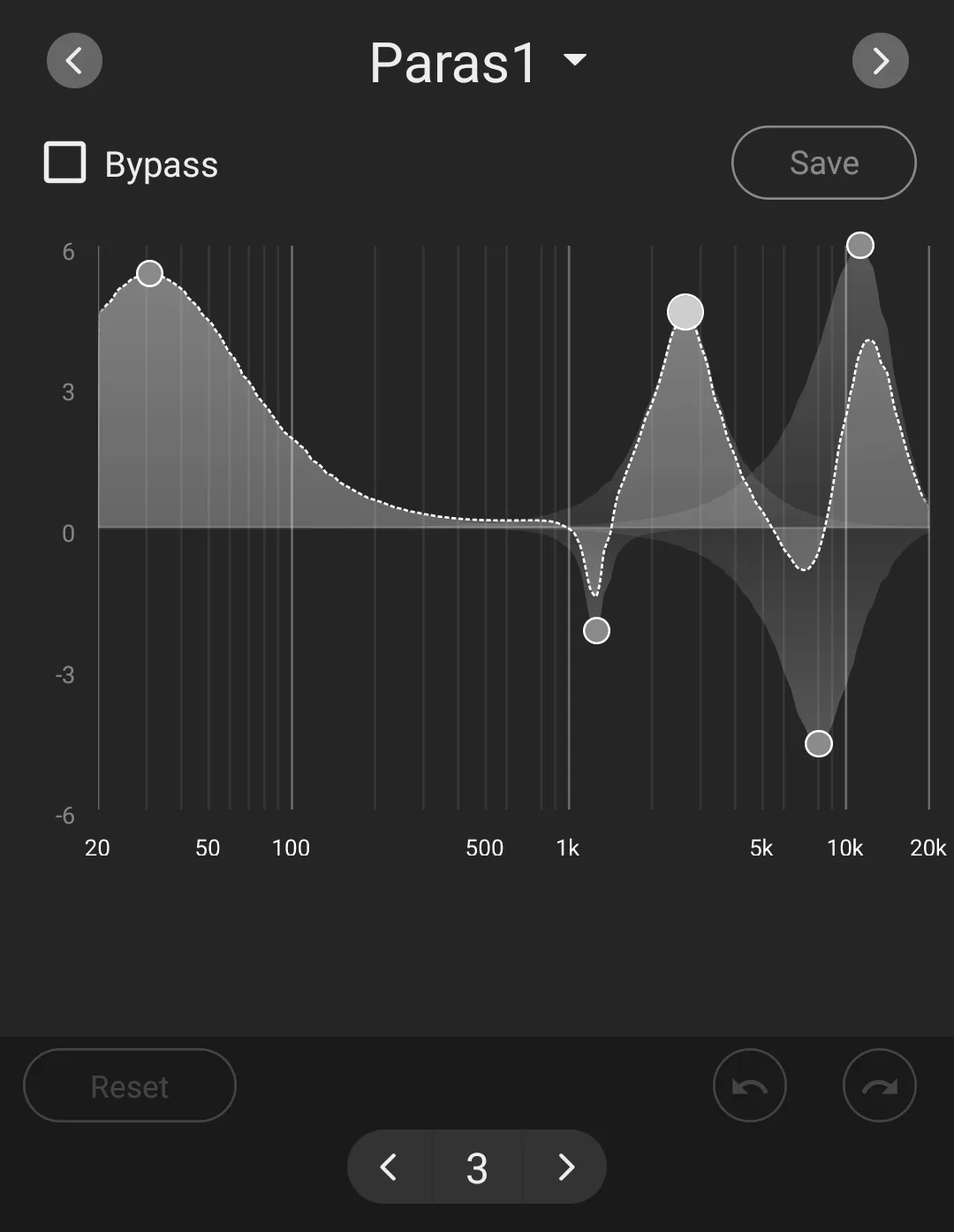
- 31 Hz / +5.4 dB / Q 0.47
- 1250 Hz / -2.2 dB / Q 4.32
- 2637 Hz / +4.6 dB / Q 1.41
- 8000 Hz / -4.6 dB / Q 1.04
- 11175 Hz / +6.0 dB / Q 0.82
Frequency response according to settings:
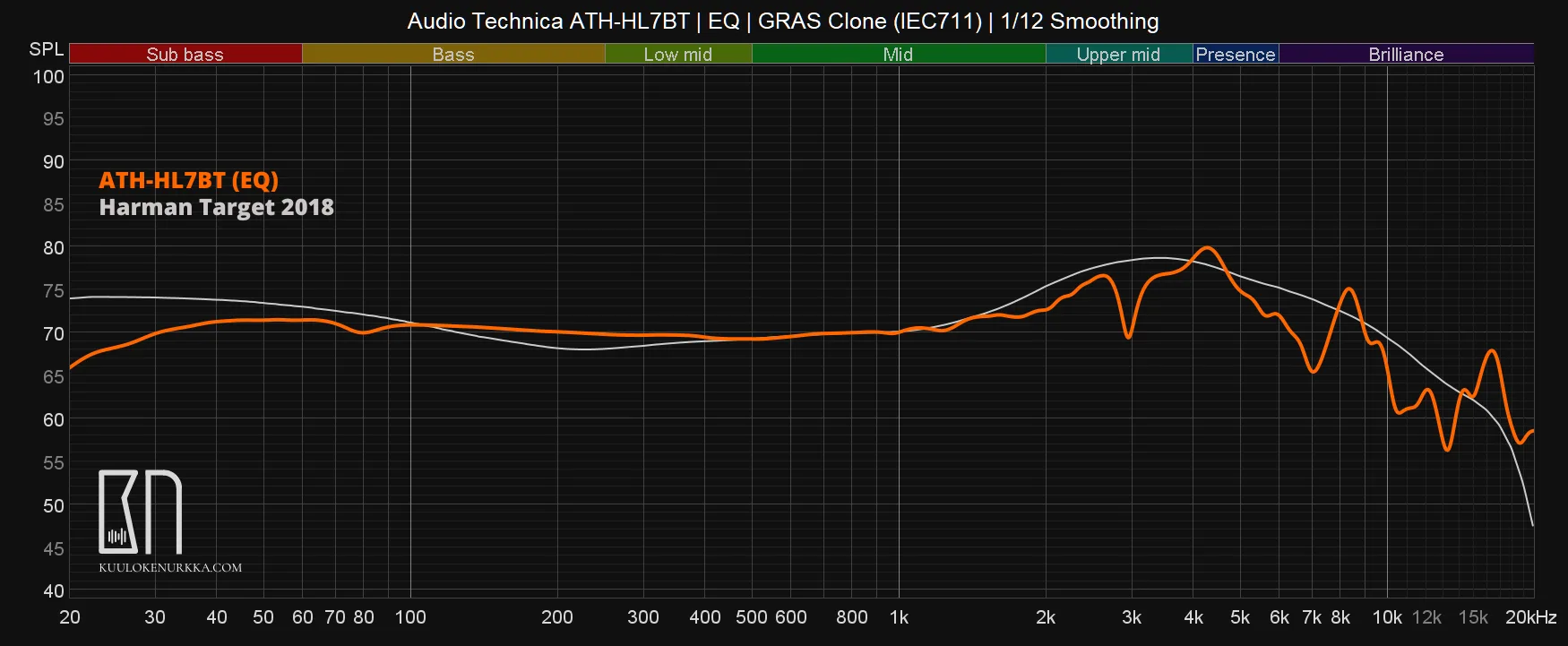
After filling the largest dips in the frequency response, the HL7BT sounds like a more expensive product. Bass reproduction extending almost to 30 hertz without attenuation, built into an open dynamic headphone, is a rare treat. The significant strengthening of the bass reproduction and the improved airiness of the upper treble make the sound deeper and more realistic. The added energy in the mid-frequencies, in turn, brings more crispness and life to many instruments and vocal performances. Listening to the HL7BT is fun, but it still partially retains its relaxed character, which makes it possible to continue using it for background music, for example, while working.
Changes also do good for the soundstage, which becomes surprisingly precise and immersive with a more energetic frequency response – the open design and large drivers tilted towards the ear hardly hinder this achievement. It's impossible to achieve similar natural openness with closed Bluetooth headphones. With the HL7BT, the only regrettable thing is that equalization is not available when listening with a cable. The headphones turn themselves off immediately when connected to an amplifier with a cable. However, I'm not particularly surprised that the electronics of an affordable product don't bend to everything.
Summary
Audio Technica's HL7BT is a specialty for which, to my knowledge, there is no direct competitor in the headphone market. The headphones have only been sold in Japan so far, but in my opinion, there could be international demand for them as well. I myself found them purely by chance while browsing Japan's Amazon headphone selection. From there, it's easy to order the headphones to Finland if someone is interested in them.
The HL7BT is not designed for use in the city or noisy environments, but at home or in other quieter surroundings, they are extremely convenient and versatile. Usability and comfort have generally been refined to near perfection. Apart from the somewhat modest battery life, I couldn't find anything else to complain about the headphones, even if they cost more. The relaxed sound also suits the intended purpose well, although I think the treble could be airier by default and the bass slightly more powerful. Fortunately, comprehensive equalization options are available for adjusting the sound.
With suitable adjustments, the sound quality, thanks to its open design, surpasses all closed noise-cancelling headphones under 500 euros that I've heard, provided I don't want to listen to the strongest possible bass. On the other hand, the Hifiman Deva Pro, which functions as an open Bluetooth headphone with a separate module, sounds better than the HL7BT with its default settings. However, the Hifiman model costs 250–300 euros more, and it is nowhere near as good in terms of comfort, battery life, or features. Similarly, neither the Grado GW100X nor the Hifiman Ananda BT include many additional features, so I would dare to declare the HL7BT the most versatile open Bluetooth headphone on the market, despite its affordable price. It remains to be seen what plans Audio Technica has for this product category in the future, and whether the HL7BT will ever be released outside of Japan.
Pros and cons:
+ Relaxed sound suits the headphones' intended purpose
+ Soundstage is natural thanks to the open design
+ Frequency response is the same when listening via Bluetooth and with a cable
+ It's possible to make the sound excellent with the phone app's equalizer
+ Excellent comfort
+ Near-perfect usability
+ Phone app offering useful features
+ Includes a microphone
+ Affordable price
– Bass reproduction is quite weak
– Treble lacks airiness
– The manufacturer has not utilized DSP correction in tuning
– Mediocre battery life by current standards
– Sold only in Japan
– No carrying case or pouch is included
-/+ The reflection of the structure causes a partial phase cancellation in the mid-frequencies (the 3 kHz frequency is attenuated), which may not necessarily be audible or distinguishable when listening to headphones
 EN
EN  FI
FI
Incredibly good headphones for their price and fit my head excellently, at least.
I stumbled upon these specifically through this site, so thanks for that. 🙂
Very nice that you like the headphones! 🙂 They are quite a rarity, as are open Bluetooth headphones as a product category in general.
How much adjustment range does the headband of these headphones have, i.e., are they suitable for large/tall heads, or are they sized for a more moderate Asian-sized head?
The headband can be moved exactly 3.5 centimeters in each direction. For me, in the maximum position, the upper edge of the ear pads comes 0.5-1 centimeter below the top of my earlobe. For example, Bose QuietComfort SE sits in roughly the same position on the ears in its maximum setting, so the adjustment range of the ATH-HL7BT is likely at a normal level, and certainly not particularly scarce.
Your suggeted EQ is very great. Thank you!