Author: Roderick
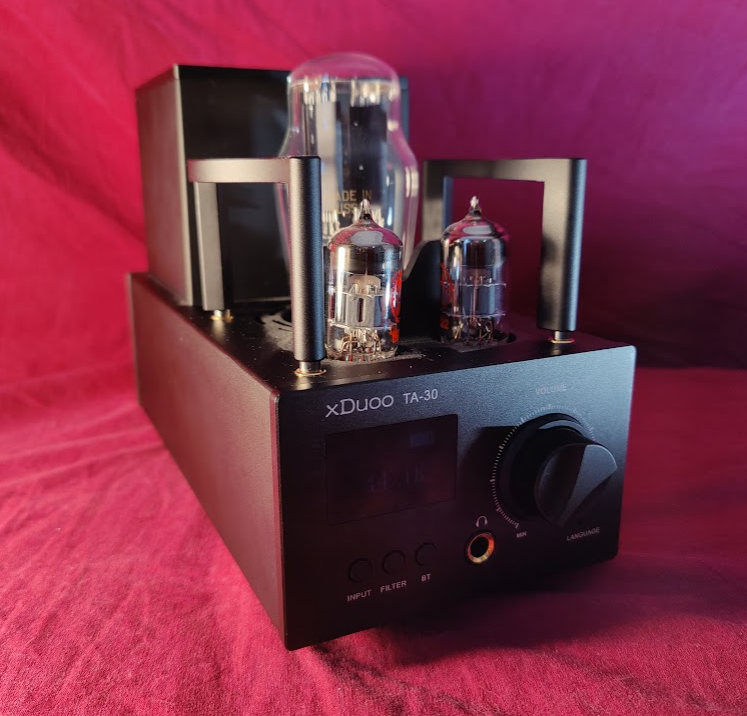
Table of Contents:
Information:
- Release Year: 2020
- Country of Origin: China
- Price: ~650 € (RRP 709 USD)
- Type: DAC & headphone amplifier (tube hybrid)
- DAC chip: ESS Sabre ES9038Q2M
- USB implementation: XMOS XU208
- SPDIF implementation: AK4118
- Input connections: RCA, USB-B, Optical, Coaxial and Bluetooth
- Output connections: RCA
- Headphone connector: 6.35 mm
- Bluetooth 5.0: supported codecs SBC, AAC, aptX, aptX HD, aptX LL and LDAC
- Headphone connector: 6.35 mm
- Tubes: 1x 5Z3P & 2x ECC82
- Maximum output power: 3 W @ 32 ohm
- Output impedance: Not specified (presumably low)
- THD: 0.5% @ 1 kHz
- External dimensions: 29 x 11 x 17 cm
- Weight: 3 kg
- Included: USB data cable, power cable and headphone jack adapter (3.5 mm -> 6.35 mm)
- Warranty: 1-2 years?
Review sample: Self-purchased product
Xduoo is one of the most well-known Chinese headphone amplifier manufacturers. Its domestic competitors, such as Topping, SMSL, and Sabaj, strive to stand out by manufacturing devices that perform as well as possible in device measurements. Xduoo's product range also includes devices implemented with transistors and classified as excellent based on measurement results, but the manufacturer has not, however, started competing solely on measurement results. Instead, Xduoo has made itself known with its comprehensive selection of tube and tube hybrid amplifiers, as well as combination devices containing a D/A converter and a headphone amplifier.
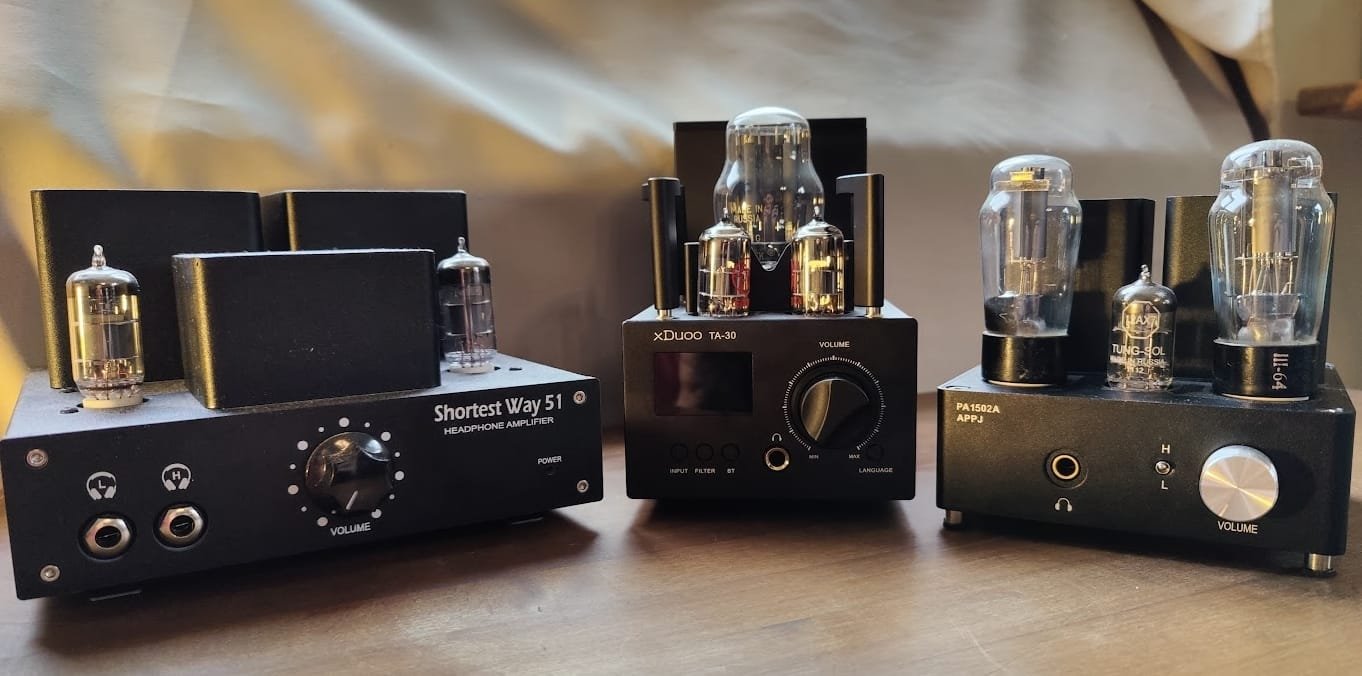
The one I tested TA-30 is a combination device that, with its price of about 600 euros, ranks as the manufacturer's top model. Xduoo misleadingly markets the amplifier as a tube amplifier, even though in reality the device's power amplification is implemented with transistors – I myself bought the amplifier believing it would be fully tube-operated. The TA-30's specialty is the 5Z3P rectifier tube that converts alternating current to direct current, as I can't readily think of another hybrid amplifier that would use a tube instead of diodes. Because of this, it was easy to mistakenly believe the device was fully tube-operated.
Features and device use
Setting up the Xduoo was quite effortless in a couple of minutes, as no separate drivers needed to be installed for the D/A converter. The ability to remove the support arches protecting the tubes made attaching the tubes easier.
The small tubes are JJ Electronic's ECC82 model. JJ Electronic tubes are generally considered quite high quality. The large 5Z3P tube, on the other hand, is Chinese-made, and I don't have more specific information about the manufacturer. I cannot visually assess the quality of the tubes, but when listening, the Chinese standard tube did not sound any different from the Sovtek 5U4G I tested in the amplifier. However, due to the time and delay involved in changing tubes, assessing sound quality differences is always quite unreliable.
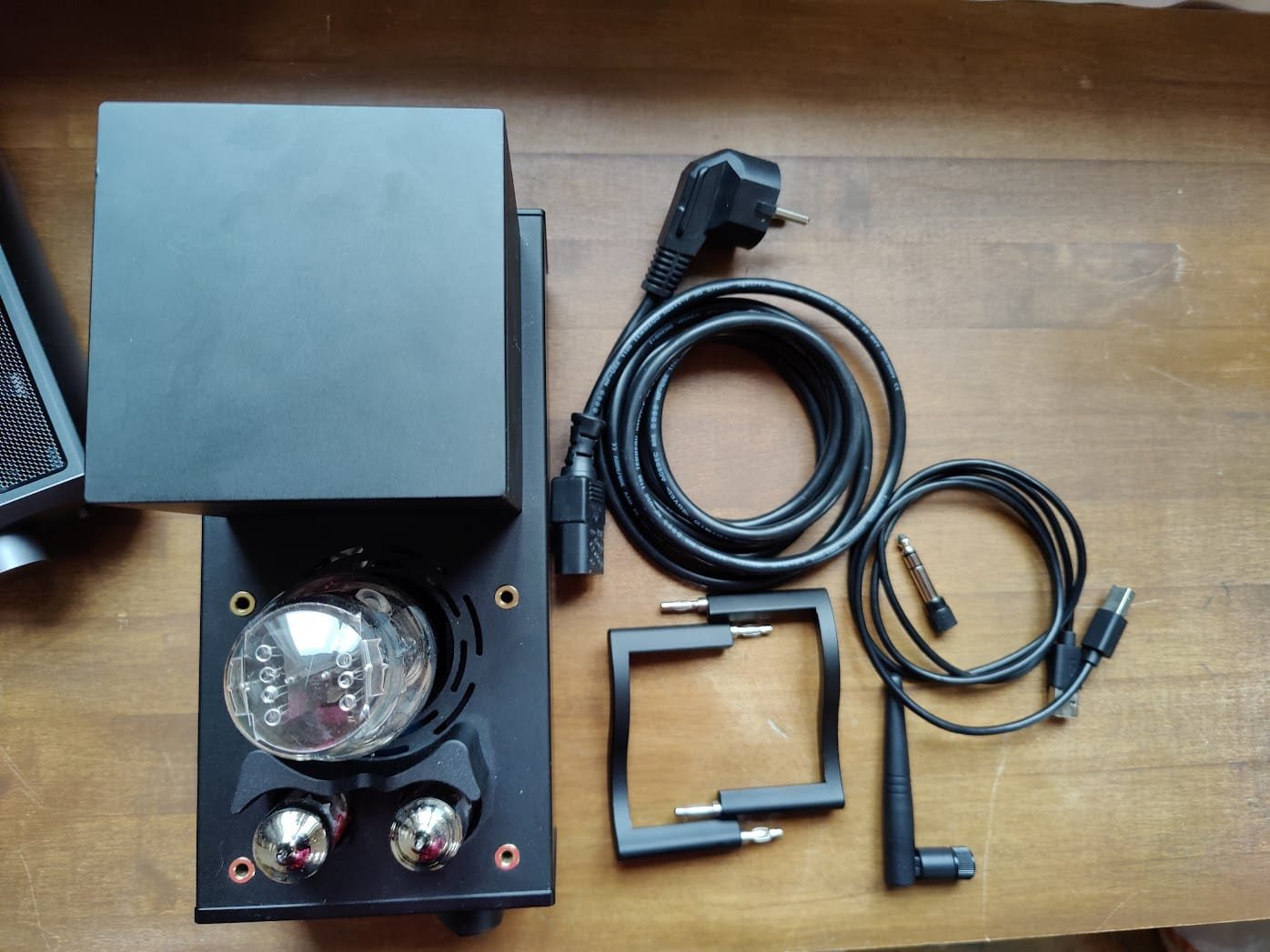
During the first startup, my attention was drawn to the amplifier's rather strong hum, which reminded me of a noisy fluorescent tube. Fortunately, once the temperature stabilized, the rectifier tube quieted down to almost silent.
After the hum quieted down, I noticed how quickly the device's chassis heats up. Many have found the TA-30 to run unnecessarily hot – the device indeed heats up quite a bit, but no more than, for example, the Monolith Liquid Platinum. Still, the operating temperature should be taken into account, as I would not, for example, place the amplifier near a sunny window. During summer heatwaves, I would also consider if using a cooler-running device would be smarter. It's somewhat surprising that there are no ventilation holes on the side or underneath the amplifier. In my opinion, well-designed ones would liven up the device's somewhat dull and blocky appearance.
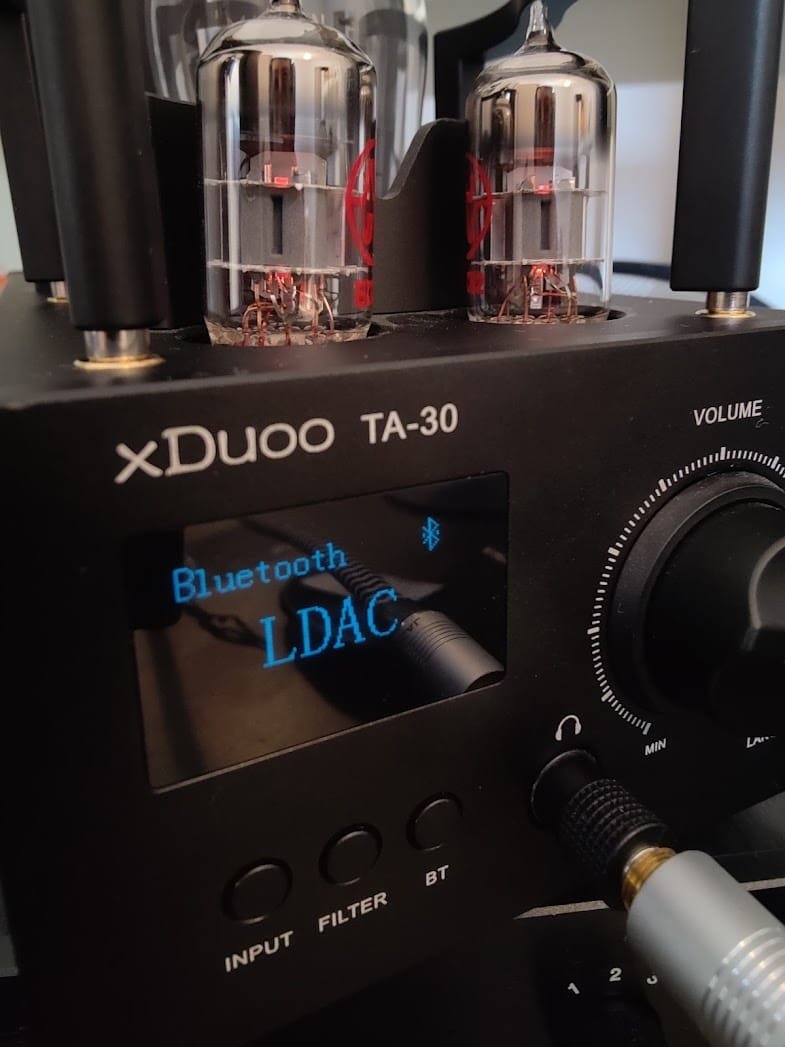
The front edge of the device features a display and all necessary switches. Four buttons are used to change the audio input and the DAC section's filter, in addition to handling Bluetooth pairing and device language selection. I found the DAC filters to be a rather useless feature, as the audible differences I perceived between them were so small that after a short while, I wouldn't be able to name the filter I was currently using. I did not test the device's Bluetooth connection very thoroughly, but during a brief trial, everything worked without issues.
The amplifier only has a 6.35 mm connector for headphones, for which a 3.5 mm headphone cable adapter is supplied in the sales package. The adapter is a nice accessory, but it would be better if the amplifier had more fixed connectors. Although the TA-30 is not balanced in its construction (this would likely make it more expensive and larger), balanced connectors would diversify the device's usability. Balanced connectors are found in the more affordable TA-20 model, so their absence from the TA-30 is somewhat surprising.
The potentiometer of the amplifier I bought used had been previously replaced with a better one, so I didn't get to try how the original volume control works. Based on what I've read, the potentiometer has been described as having a rather poor adjustment range: with headphones requiring little power, the volume is already very high at the potentiometer's lowest settings, making fine-tuning impossible. In a powerful amplifier like the TA-30, the lack of a gain control is a big minus in my book. The absence of a remote control is also somewhat disappointing.
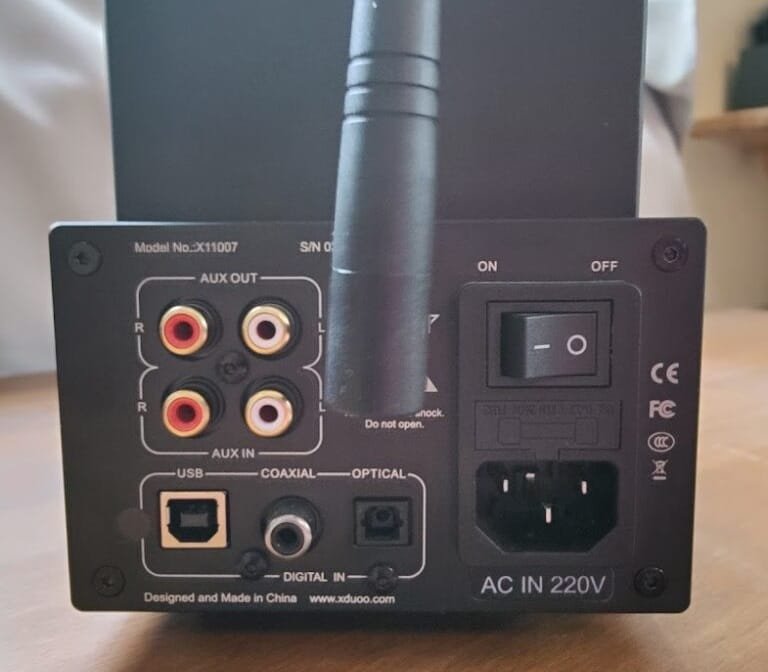
The device has USB-B, Coaxial, Optical, and Bluetooth as digital audio inputs. Those seeking more exotic connectors will have to resort to adapters or a separate D/A converter, which could be connected to the TA-30 with RCA connectors. The device also has an RCA output, if the D/A converter is to be used with another amplifier – using the TA-30 as a preamplifier is not possible.
Listening experience
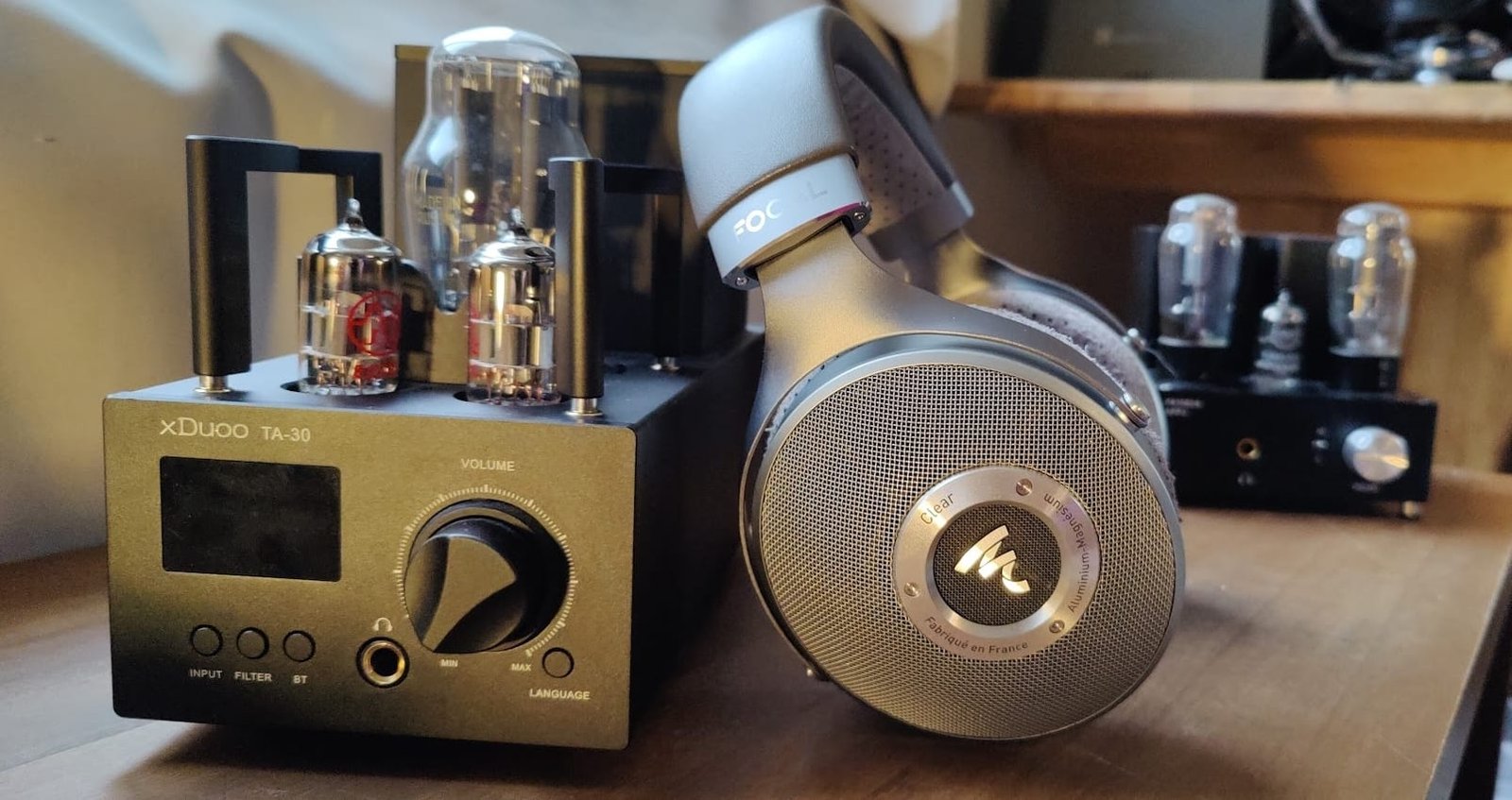
Xduoo TA-30 as a combination device
The device did not make an immediate impression on me at first, because it softens the sound quite a lot. Unfortunately, this is a type of softness that I do not seek from tube amplifiers. In my opinion, a good tube amplifier sounds clean and uncolored, and softness arises from the effortlessness, naturalness, and ease of the sound. However, the Xduoo TA-30 has a slightly muddy and dragging sound. The amplifier even sounds slow, and due to its presentation style, it cannot bring out small details of sounds in the way I would like. This becomes more apparent the better headphones I listen to with the device. For example, compared to the exciting Monolith Liquid Platinum, the TA-30 even sounds quite dull. I apologize for the vague adjectives I used, which are not really possible to avoid when describing subjective experiences.
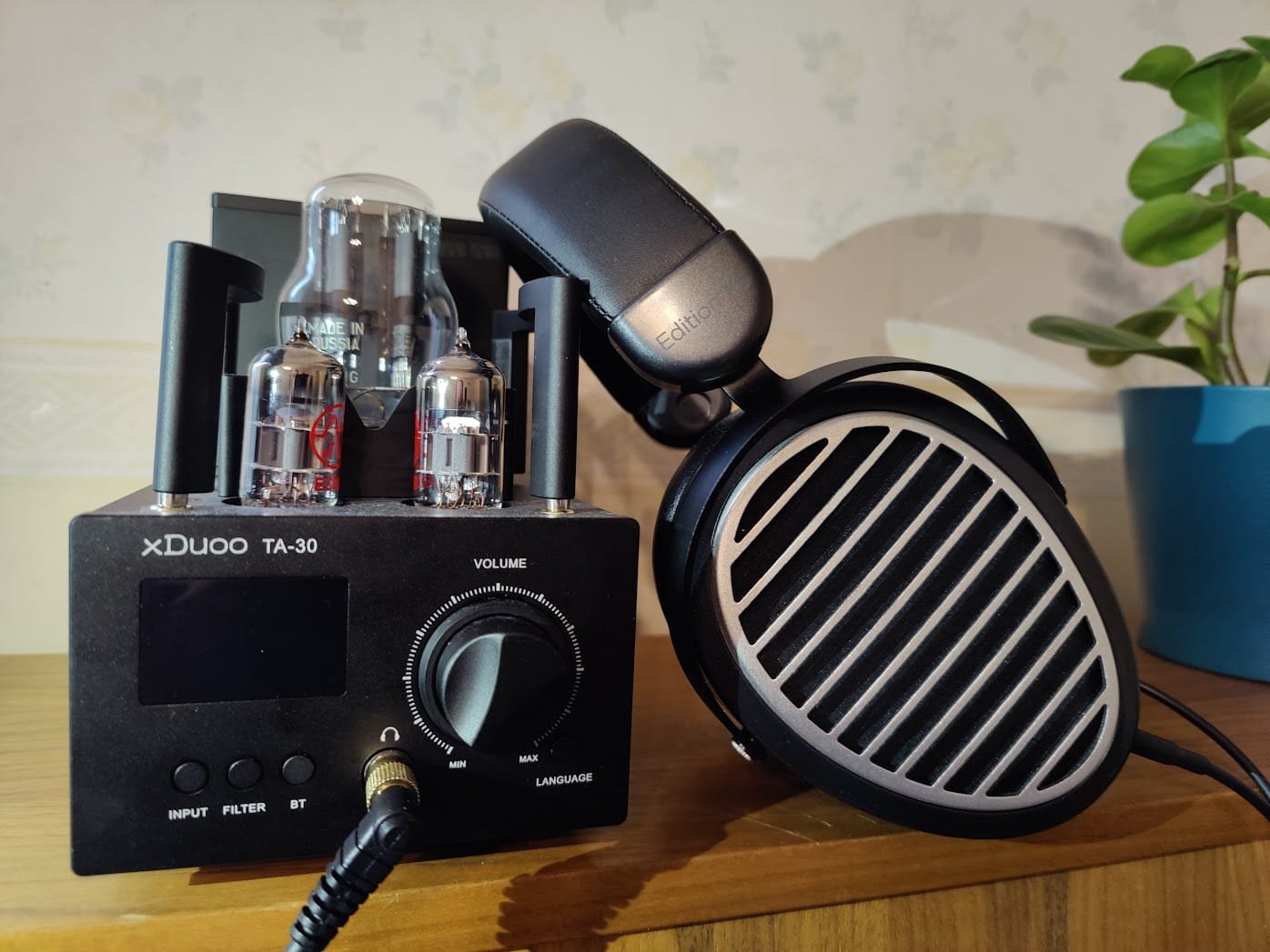
My perception changed in a more positive direction after I had tested several different headphones with the amplifier. At its best, the TA-30 sounds truly exciting and makes even slightly flat headphones sound very dynamic. The device seems to be exceptionally sensitive to synergy regarding what kind of headphones are listened to with it. For example, the energetic Focal Clear sounds more sluggish than usual, but to a dynamically bland Hifiman Edition XS: the TA-30 strangely breathes new life. The end result seems to vary wildly for one reason or another.
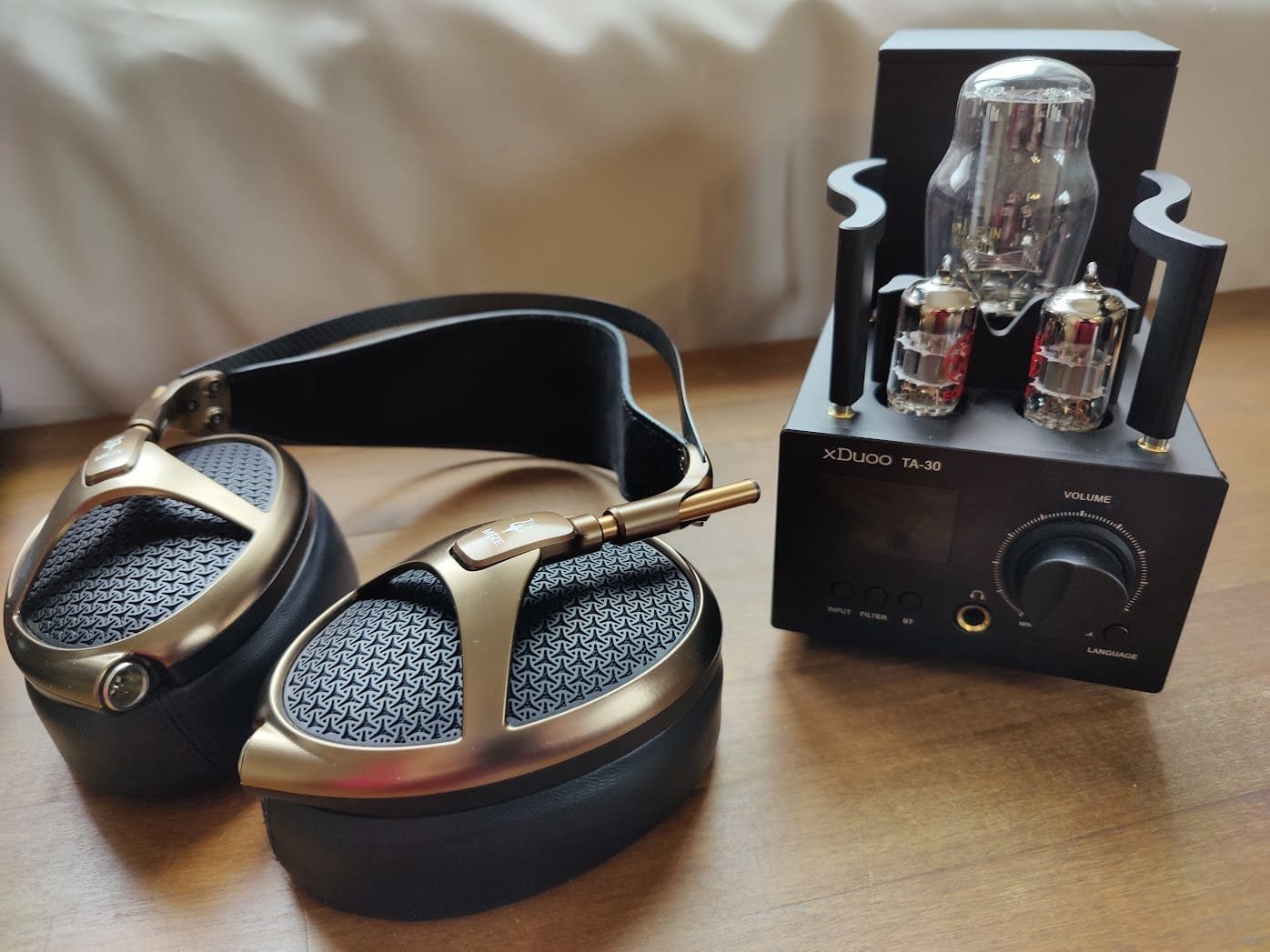
When the device is paired with suitable headphones, the listening experience is quite engaging. The soundstage created by the TA-30 is truly large in every direction, which particularly benefited the Focal Clear among the headphones I tested. If someone finds the Clear's small soundstage and slightly bright sound problematic, the TA-30 could be a good device choice. However, one must be willing to compromise on the detail and dynamics of the reproduction.
In addition to the soundstage, another clear strength of the TA-30 is its ability to reproduce vocals wonderfully. Because the device ”blurs” background sounds, the most central sounds stand out even more in the overall presentation. The presentation style resembles a situation where a vocalist stands in a bright spotlight while everything else is covered in a slight haze. The most essential things can be heard clearly, but ”extra” sounds disappear into the fog.
Because only the most central part of the music is perceived, it tends to sound ”better” than usual. I would guess that some people starting headphone hobbies or listening with headphones out of necessity might find headphone listening tiring because more sounds are heard than, for example, with a typical home theater system. For such a target group, the TA-30 could be a good solution because it does not bombard the listener with less essential sounds.
In addition to the soundstage and captivating vocal reproduction, the TA-30's efficiency must also be counted as a strength. According to some reviews, the device effortlessly drives any headphones, including Hifiman HE-6 and Abyss AB-1266. In terms of volume, this is largely true, but in my opinion, these headphone models are largely wasted on an amplifier like the TA-30, which cannot bring out the headphones' impact and resolution. When listening at high volume, there is also hardly any headroom left for Hifiman and Abyss.
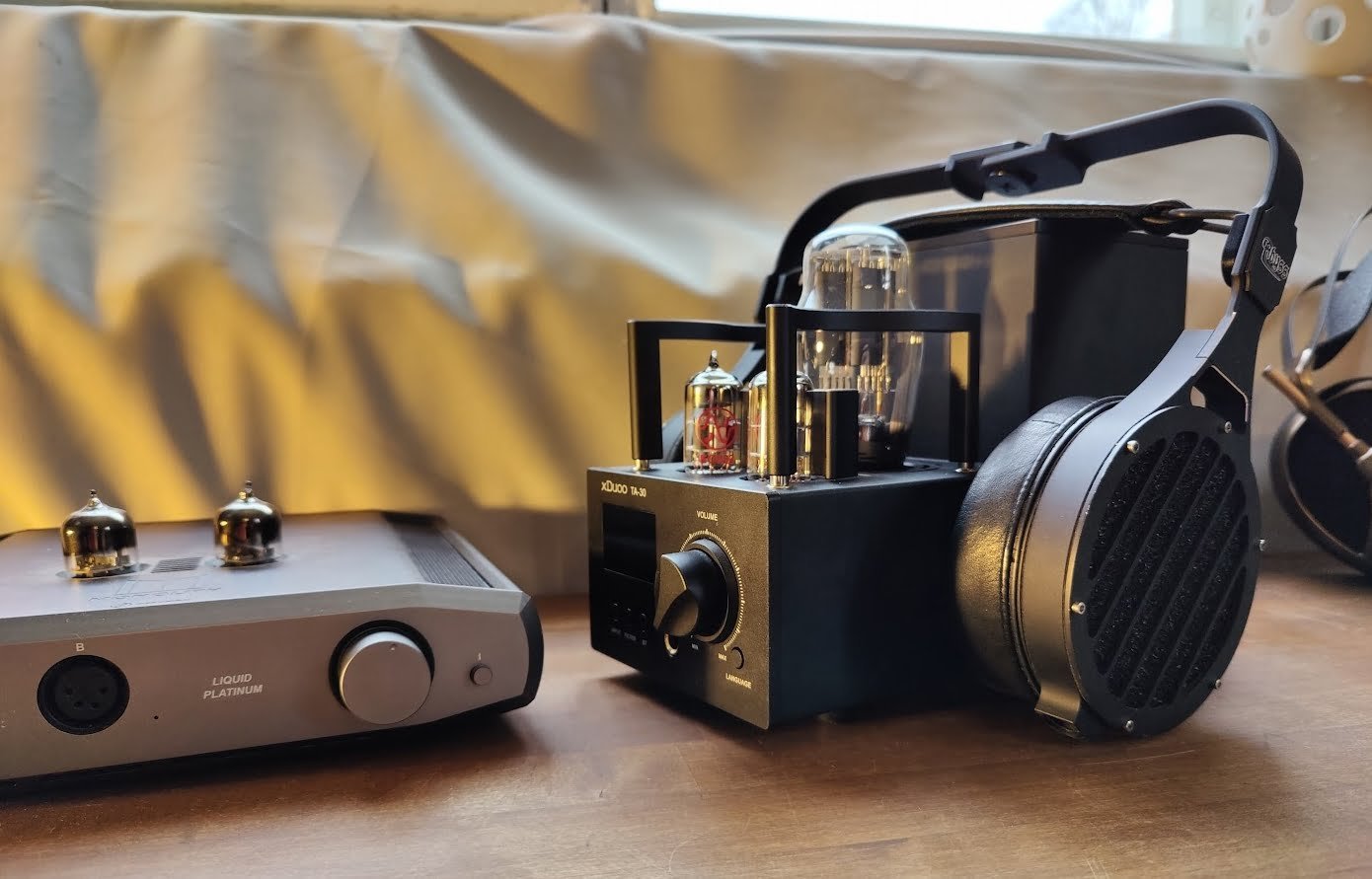
How much does the DAC affect the TA-30's sound?
The TA-30's D/A converter seems to have been designed with the amplifier's characteristics in mind: the airy sound balances the amplifier section's soft sound well. To get a better understanding of the D/A converter's capabilities, I tested the TA-30's amplifier with DACs from other manufacturers. The comparison devices were Topping E30, Soncoz SGD1 and Schiit Audio Yggdrasil A1.
TA-30 vs. Soncoz SGD1
With a slightly bright sound, the Soncoz sounded very similar to Xduoo's own D/A converter. I didn't hear a difference between the devices that I could confidently say was real, and not just a product of my imagination. However, this is not a big surprise, as both devices use the same ESS9038Q2M DAC chip.
TA-30 vs. Schiit Audio Yggdrasil and Topping E30
More surprising was how poorly the TA-30 paired with the Schiit Audio Yggdrasil. This pairing highlighted the TA-30's weaknesses, and I didn't notice any positive changes in the sound. The reproduction was thick, sluggish, and lacking in detail. The bass reproduction felt slightly more robust, but still muddy. The experiment is a good indication that system synergy is more important for the end result than how expensive the devices in the setup are. On the other hand, the cheapest DAC I tested, the Topping E30, made the music sound lifeless and forced, and additionally, the TA-30's at its best vast soundstage collapsed into a wall in front of my nose. Although the Yggdrasil didn't work with the TA-30, it still managed to keep the listening interesting. The E30&TA-30 combo, however, I didn't feel like listening to any more.
Use as a DAC only
The TA-30 also works surprisingly well as a standalone D/A converter. In my opinion, the Topping L30 II amplifier sounds clearly better with the Xduoo than with Topping's own E30, which makes the amplifier sound oppressive, flat, lifeless, and almost claustrophobic. With the TA-30's own DAC, the sound instead has dynamics and air – the music flows pleasantly forward.
In addition to the general pleasantness of listening, a big difference is audible in the soundstage, which is clearly larger when using the Xduoo's DAC than with the Topping E30. Furthermore, the midrange, especially with female vocals, is reproduced more naturally and less stridently than with the E30. Although these are entirely subjective observations and largely matters of preference, in my opinion, the TA-30 as a DAC is clearly better than the Topping E30. Based on this, it can be concluded that the DAC built by Xduoo itself is easily worth at least 150 euros in terms of sound. The TA-30 could very well serve as a sound-coloring amplifier, and its D/A converter could be paired with, for example, a Topping L30 II for situations where a more neutral reproduction is desired.
Summary
My final opinion on the Xduoo TA-30 is quite contradictory. At its best, the device sounds incredibly good with headphones that benefit from its colored sound. Conversely, at its worst, the TA-30 makes headphones sound muddy. The target audience for the device remains somewhat unclear to me, as the TA-30 is expensive for a beginner, while someone spending more money on audio often owns headphones whose resolution might be bottlenecked by the Xduoo's detail-blurring sound. Due to the lack of gain control, the TA-30 is also not very suitable for sensitive headphones.
On the more positive side, the device's D/A converter is excellent for its price, so it's possible to build a fairly versatile system around the TA-30. The TA-30 is a good device overall, but only if the synergy with headphones is right, and if there is a general need for a powerful amplifier and a quality DAC. Otherwise, in my opinion, the device does not offer full value for money, especially when, with worse luck, poor system synergy ruins the listening experience.
Pros and cons:
+ Very large soundstage
+ The amplifier makes vocals sound exceptionally good
+ Capable D/A converter
+ The amplifier has enough power for almost any headphones
+ The rectifier tube makes the device unique
+/- The device cannot be used as a preamplifier, but considering the price, the features are quite comprehensive otherwise
+/- Variable sound quality and synergy sensitivity: some headphones sound more impactful and dynamic than usual, while others are bloated and slow
+/- Virtakytkin sijaitsee hankalasti laitteen takareunassa, mutta se on esimerkiksi lapsiperheessä hyväkin asia
+/- Laitteen ulkonäkö on varsin tylsä. Putkivahvistimet ovat parhaimmillaan komeita sisustuselementtejä, mutta pelkistetyllä tyylillä on toki omat faninsa
– Vahvistin ”sumentaa” ääntä, joten erottelukykyisimmät kuulokkeet eivät pääse oikeuksiinsa
– Vahvistin lämpenee melko paljon, mikä voi olla ongelma kuumissa olosuhteissa
– No remote control.
– Ei balansoituja liitäntöjä
– Ei gain-säätöä
 EN
EN  FI
FI