Author: Sword of Damocles
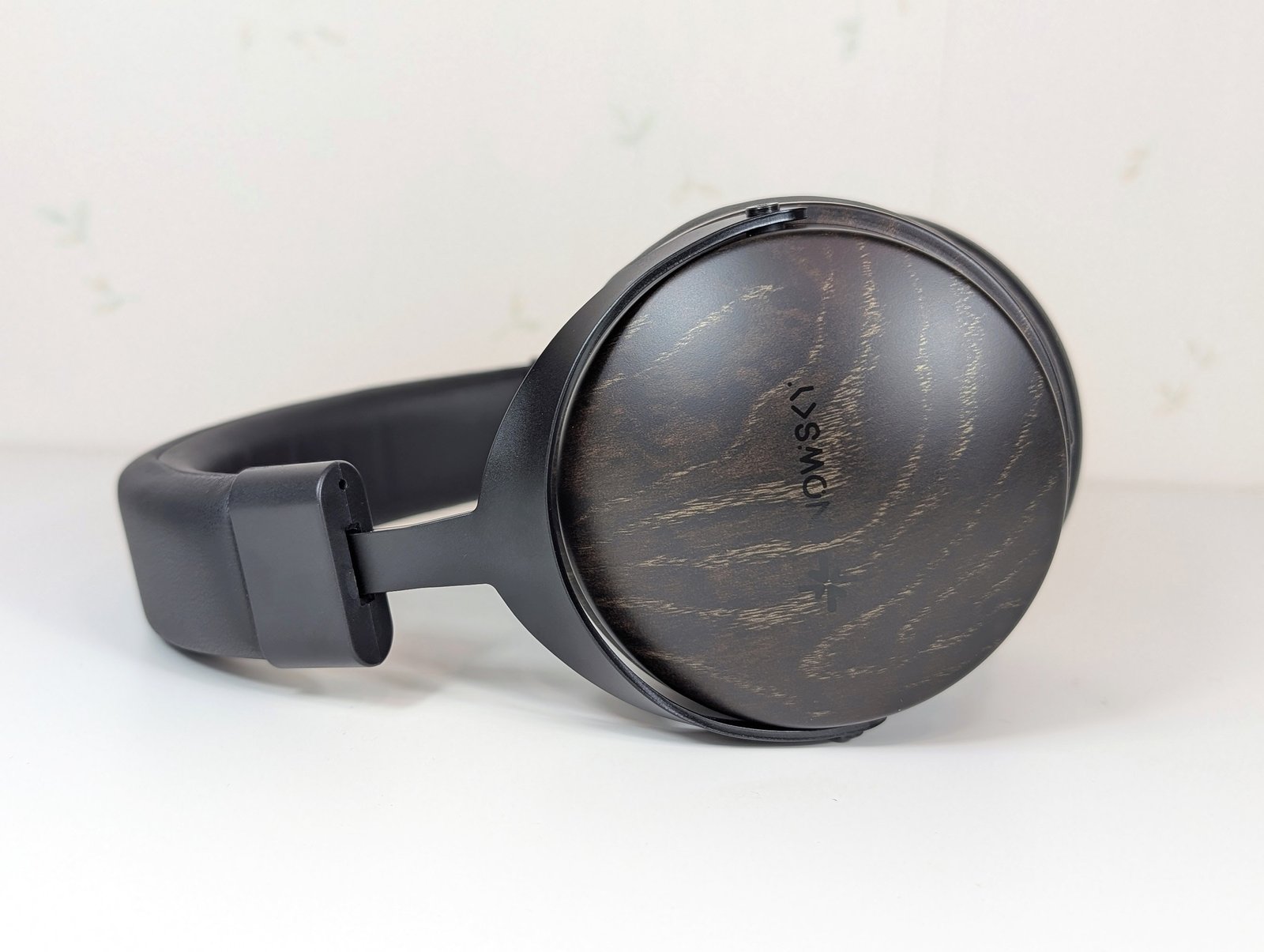
Table of Contents:
Information:
- Release year: 2026
- Country of Origin: China
- Colour options: Black and apricot
- Price: $40–50 USD (approx. $30 USD in China, around €50 imported to Finland including taxes)
- Available in Finland: No
- Type: Closed, over-ear
- 50 mm dynamic drivers (Japanese Carbon Black diaphragms)
- Impedance: 24 Ohms
- Sensitivity: 101 dB/mW
- Weight: 280 g
- Connection type: 2x 3,5 mm
- Cable (with inline microphone): Length 1.5 m | Connector 3.5 mm
- Accessories: Storage pouch
- Warranty: 1 year
Review sample: self-purchased product
Chinese manufacturer FiiO might be familiar to many of us, as its products have been sold in Finland for quite some time now. Some may have also noticed the sub-brand name Jade Audio (my brain always misreads the logo as dadeaudo) on a few headphone models. For its absolute budget lineup—priced under 100 euros—the company uses its Snowsky brand name instead.
In recent years, FiiO has carved out a reputation for releasing increasingly capable gear at progressively lower prices. These sub-brands seem to aid this strategy, allowing for a faster release cadence without cluttering the main brand portfolio or rendering predecessor models obsolete too quickly. In practice, however, the manufacturer's lineup has expanded so heavily that keeping track of it all is becoming a genuine challenge.
Our review subject this time around, Snowsky Nature, caught my eye primarily due to its low price point. I was curious to find out what kind of closed-back headphone you can get for around 50 euros, and whether it could serve as a ultra-budget alternative to FiiO's own FT1model (which ranges anywhere between 130 and 200 euros). At least for now, the Nature is only available through AliExpress, which likely keeps the retail price as low as possible. On the Chinese domestic market, the headphones sell for under 30 euros, but by the time they eventually land on European retailers' shelves, the price could easily climb to somewhere between 60 and 100 euros. Prices for products like this are rarely set in stone. That said, I'm approaching the Nature as a 50-euro headphone, as that's what it costs in FiiO's official AliExpress store including VAT.
Packaging and accessories
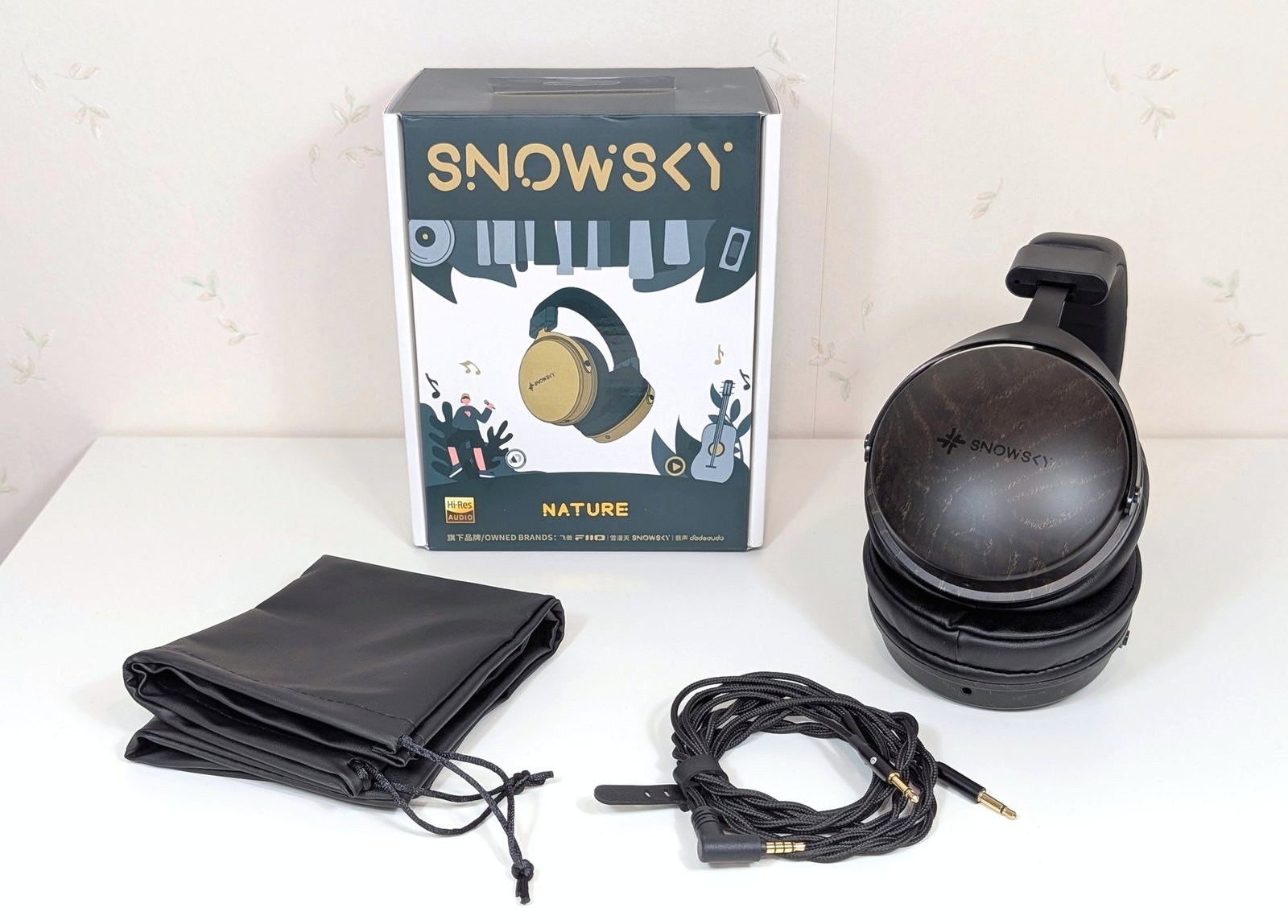
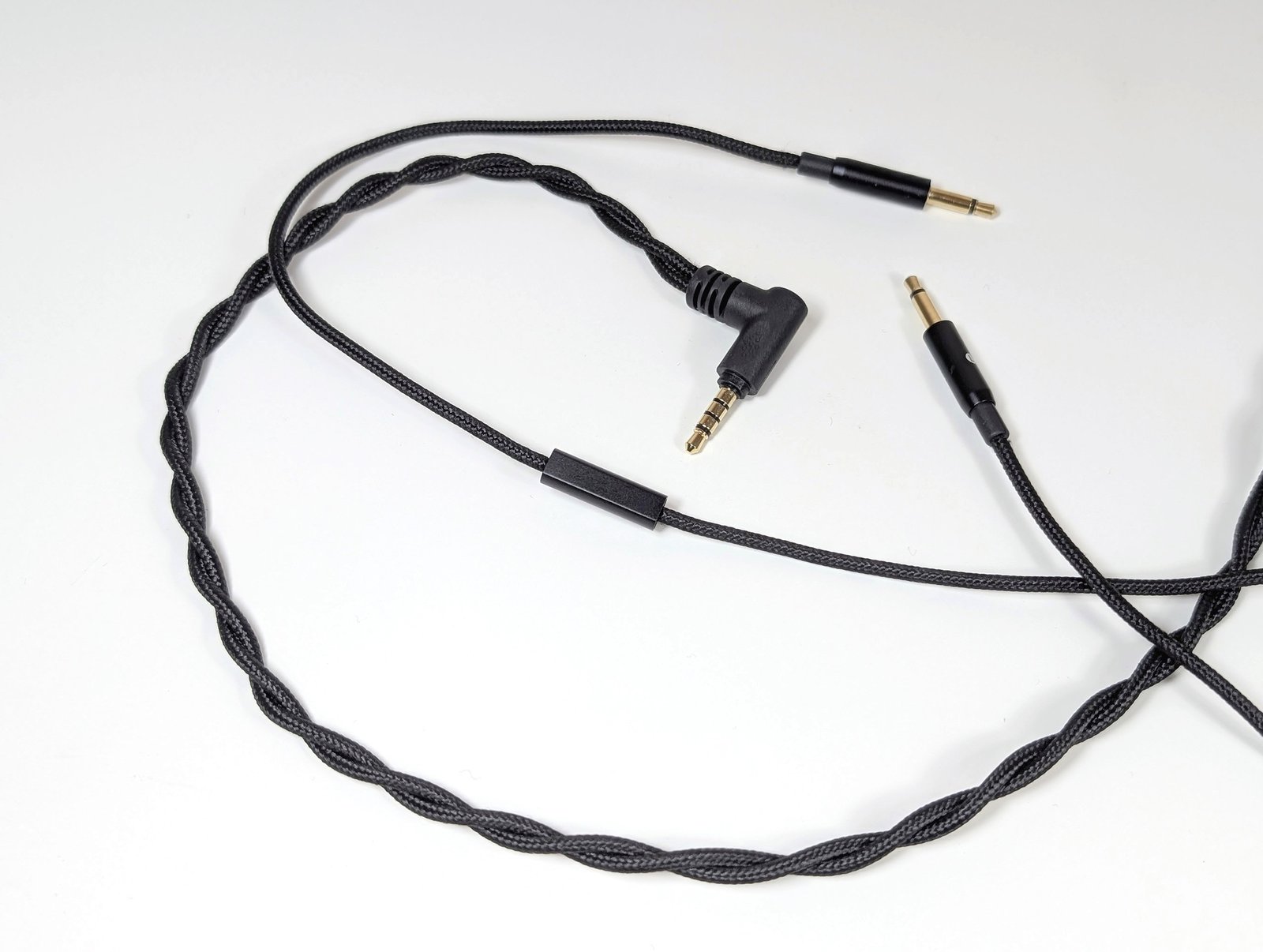
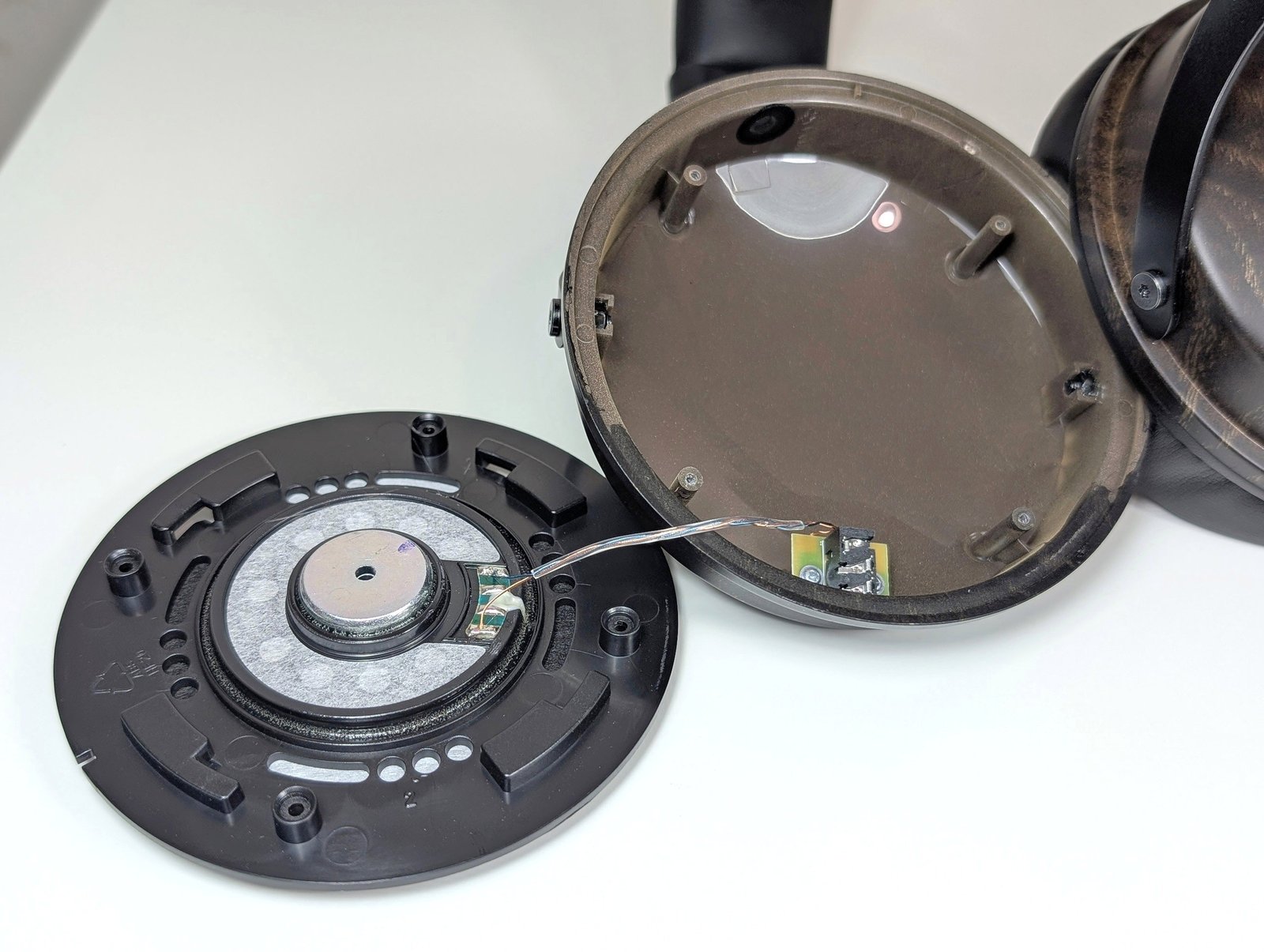
The Nature fits into a compact cardboard box, which also houses a 1.5-meter cable, the necessary documentation, and a vinyl pouch for storage. The cable features a small inline microphone, so it has a 3.5 mm TRRS plug. The connection to the earcups is made with dual 3.5 mm jacks, meaning balanced cables are fully compatible with the Nature. The biggest drawback of the stock fabric-braided cable is its microphonics, which are further exacerbated by the headphones' un-damped cups. A plain rubber cable might have ultimately been a more practical choice from the manufacturer, even if the current braid admittedly looks great.
Build and comfort
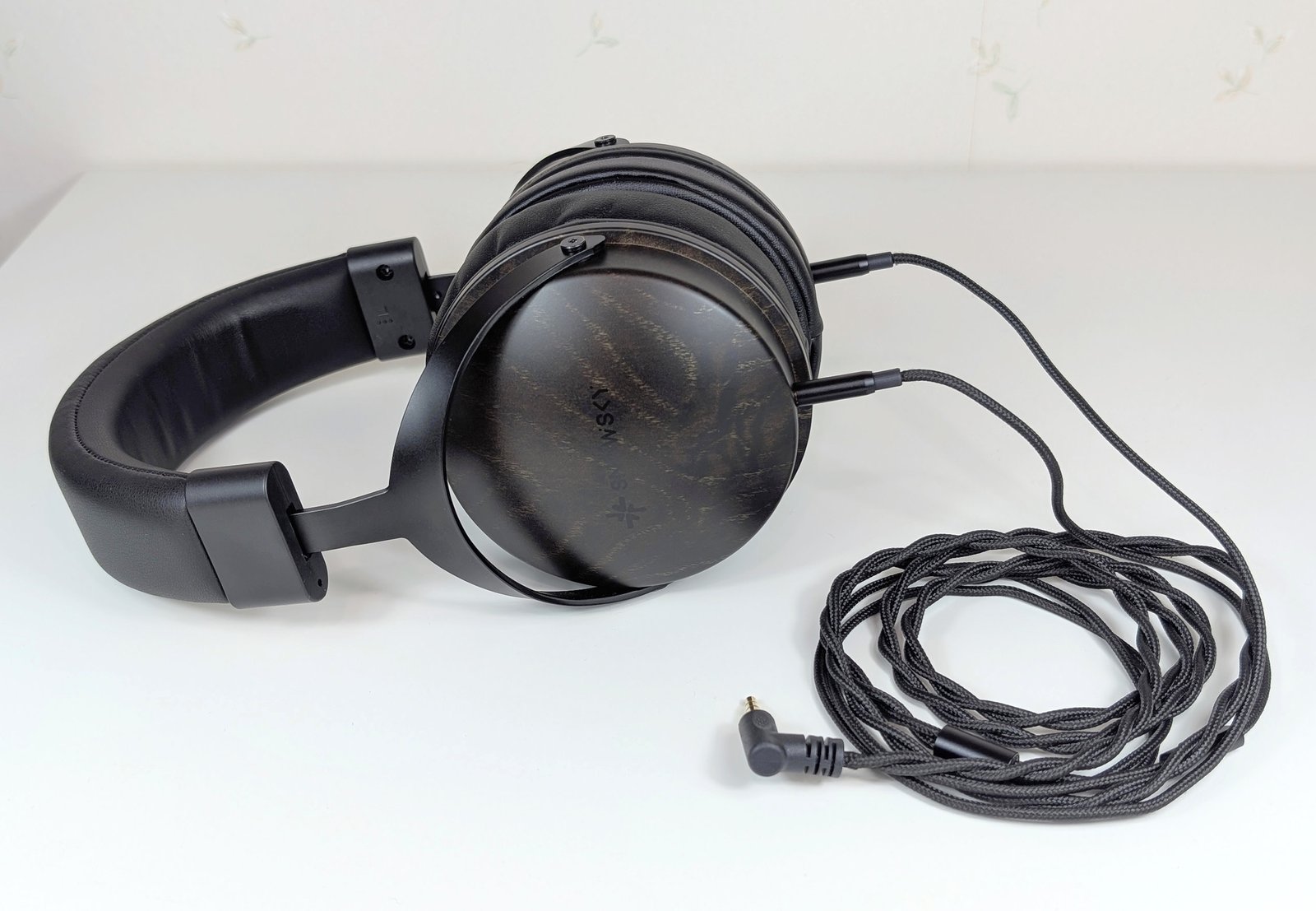
The construction of the Nature almost entirely mirrors older Beyerdynamic studio headphones (e.g., the DT 770 Pro), so I’d expect it to be durable and very familiar to many. When designing a budget headphone like this, simplicity is key: the manufacturer didn't need to sink huge sums into structural engineering, leaving more of the budget to refine the sound quality.

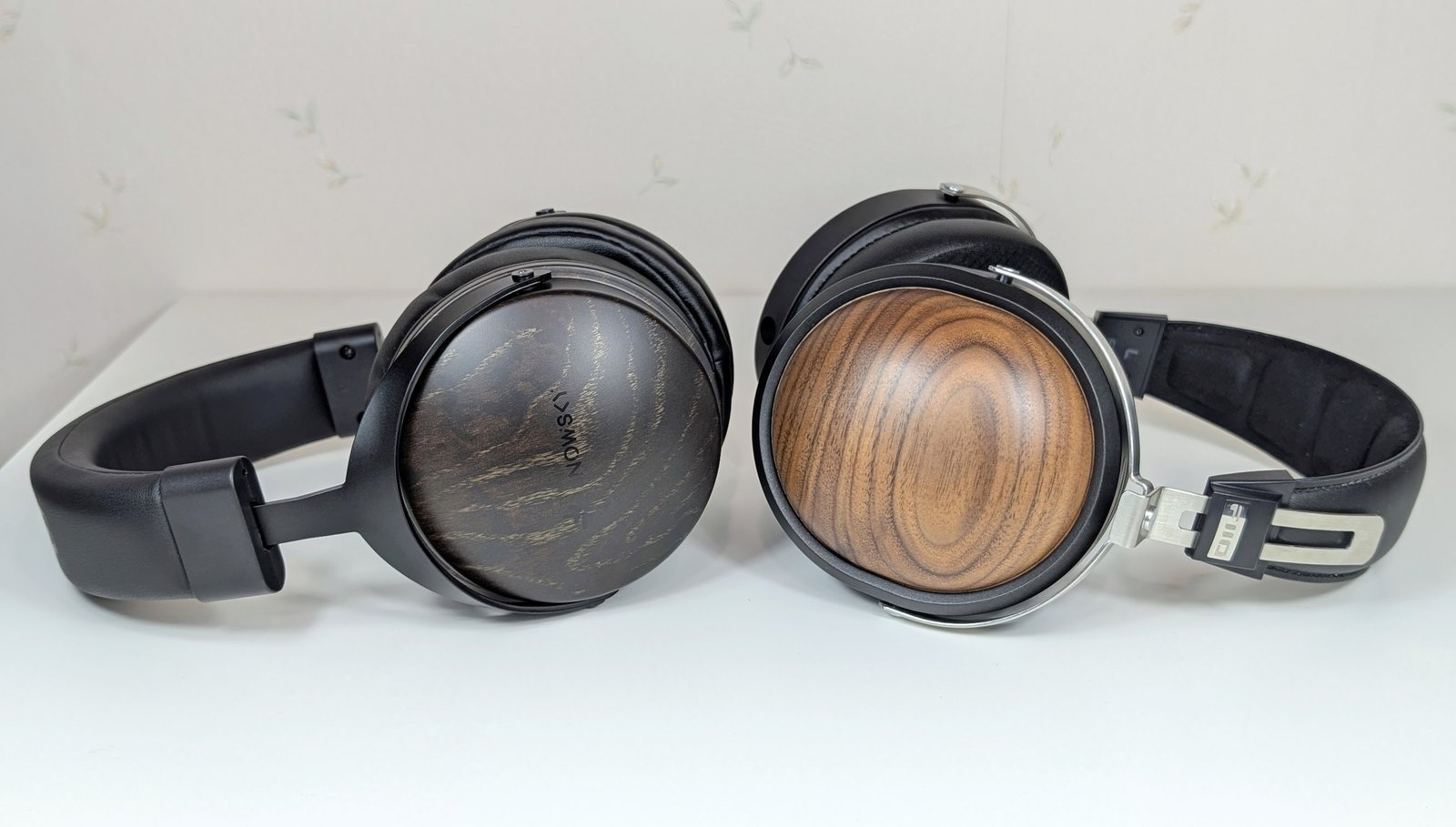
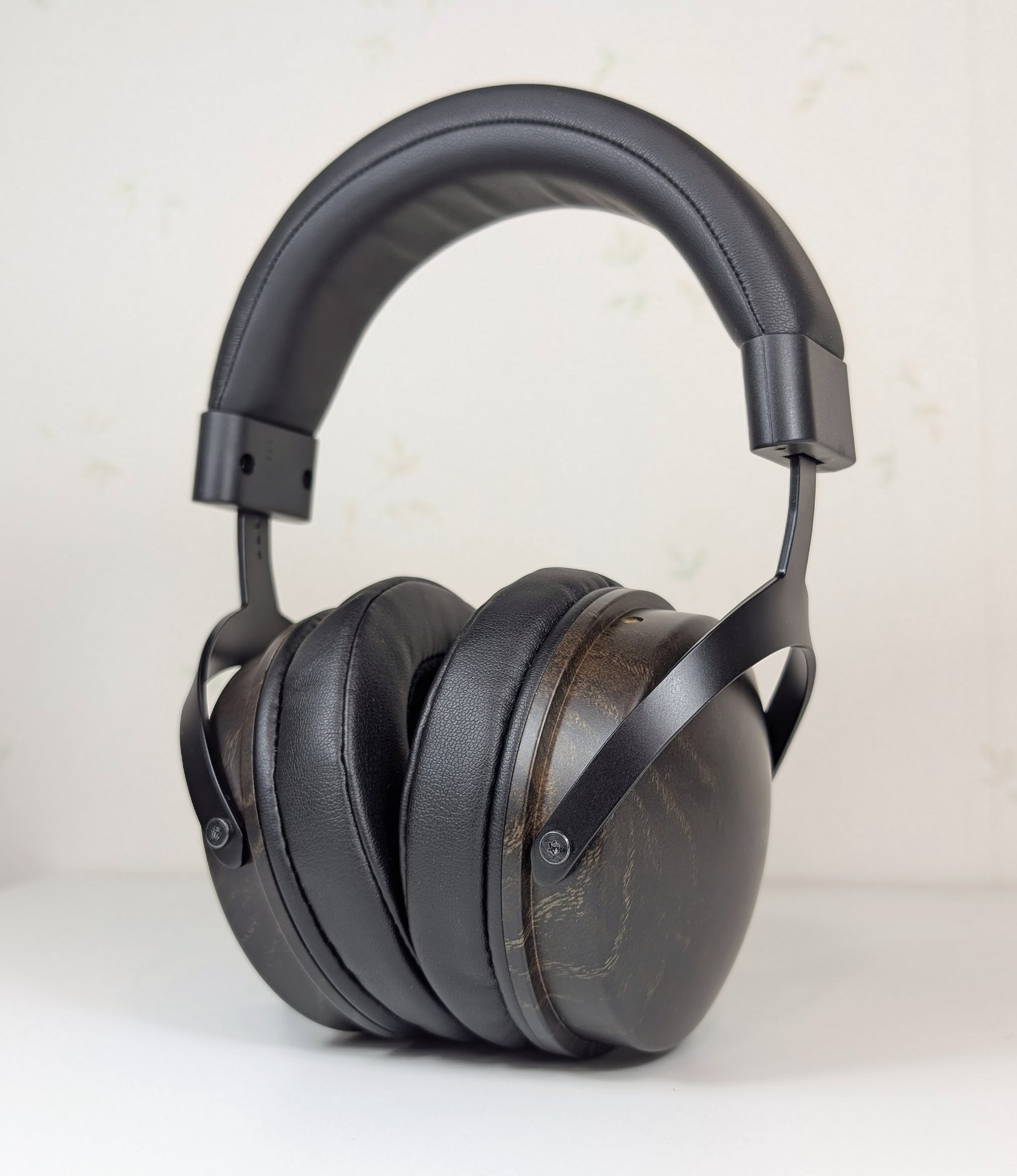
On the other hand, the Nature still feels remarkably well-finished given its low price point, with the edges of its metal yokes smoothed down better than on the FiiO-branded FT1. The round plastic cups have also received an unusual treatment, as they are hydro-dipped to look like wood. I find the approach equal parts clever and a little silly: the manufacturer manages to make the headphones stand out without tricking anyone, but why on earth should the cups look like wood if they aren't? Nobody expects genuine wooden earcups when buying headphones this cheap anyway.

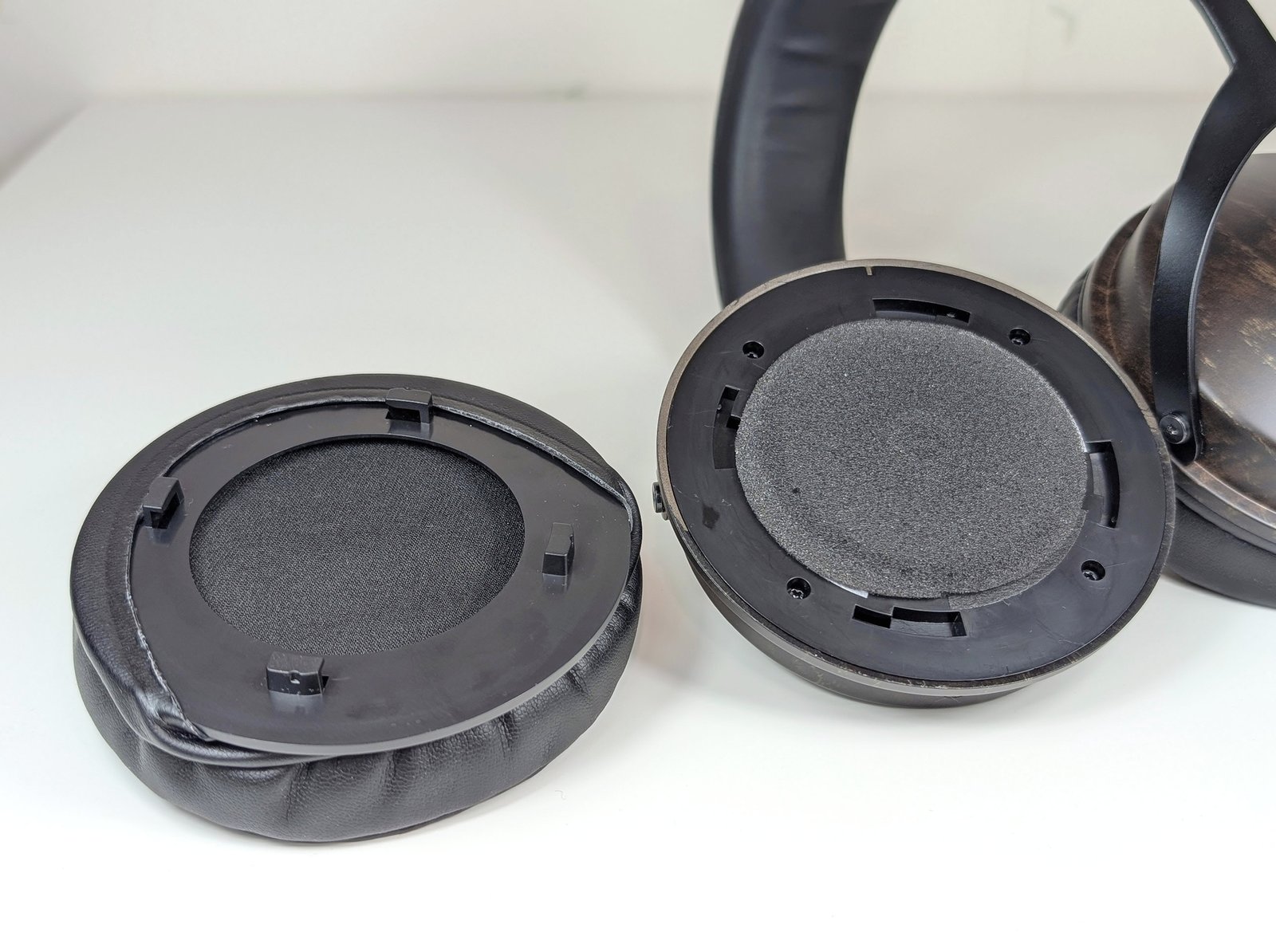
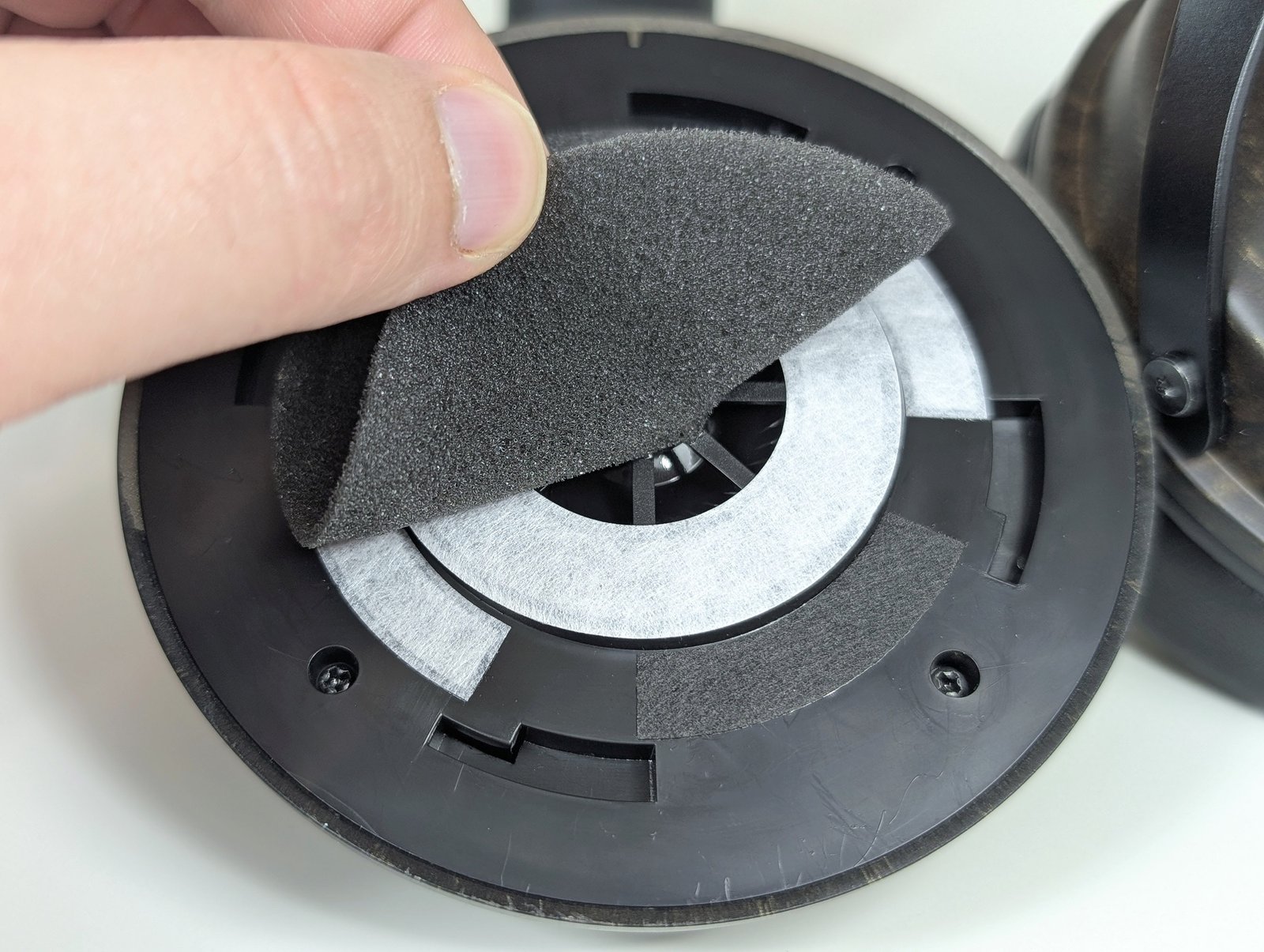
In terms of comfort, the Nature is great for me, barring its somewhat thin earpads. It weighs just 280 grams, and its headband is well-padded. The clamp force is also spot-on by my standards, and I can dial in a good fit using the stepped height adjustment. I also love the marshmallow-like softness of the earpads—something I've previously encountered mainly on the Focal Hadenys. The only thing that really disrupts long listening sessions with the Nature is the drivers pressing against my pinnae, as the pad depth (2 cm) falls just a bit short for my needs. Fortunately, there's at least a foam disk covering the drivers to cushion the contact reasonably well.
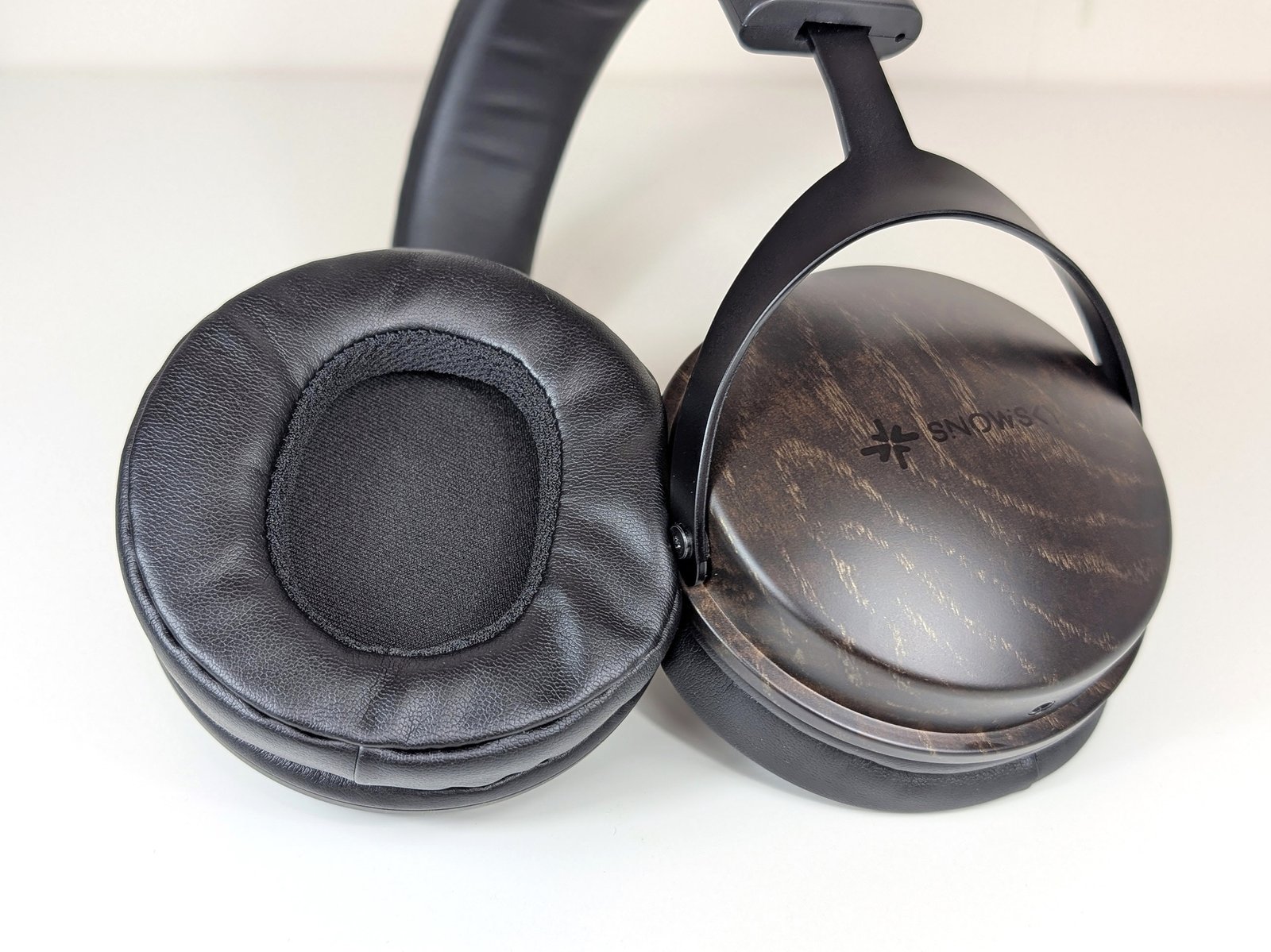
The earpads detach with a counter-clockwise twist. Since the mounting ring isn't glued to the base of the pad, swapping in alternative 100 mm pads would be a breeze. Upgrading to a slightly thicker pair, for instance, would likely make the Nature even more comfortable. In its stock configuration, I wouldn't recommend the headphones to anyone with larger ears, but I'd expect them to be comfortable for anyone whose ears don't protrude too far from the side of their head.
Closed-back headphones are always expected to deliver solid noise isolation, and the Nature provides a fairly typical level of it. For instance, the FiiO FT1 isolates environmental noise roughly as well, as neither model features the densest earpads. In this regard, step-up options like the Sennheiser HD 620S or the Meze 99 Classic V2 offer better passive isolation, though they naturally cost significantly more.
Sound quality
Impedance measurements and amping requirements
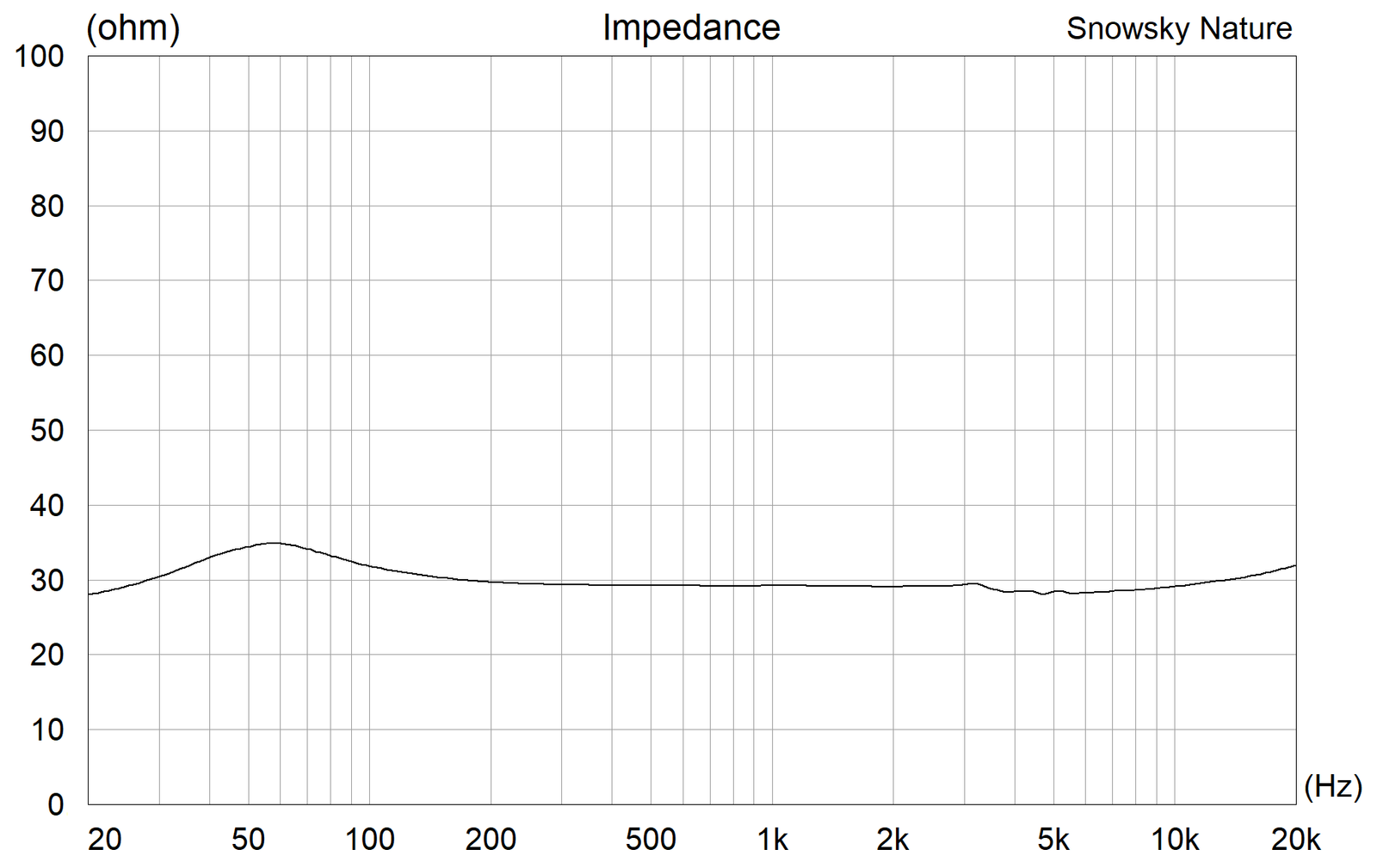
The manufacturer rates the Nature's impedance at 24 ohms, which according to my own measurements is about 5 ohms lower than actual. However, since we don't know the specific testing methodology behind their figure, such a minor discrepancy has no real practical significance anyway. The headphones' impedance curve also doesn't spike significantly in the bass frequencies, ensuring the frequency response remains largely unchanged even when paired with an amplifier whose output impedance exceeds the currently standard sub-1 ohm level. With a sensitivity slightly surpassing 100 dB/mW, the Nature can easily be driven by low-powered amplifiers and anything above that.
Headphone Measurements
The headphone frequency response measurements were performed with equipment compliant with the IEC711 standard and KB501X model silicone ears. The graphs use the Harman target curve (2018 version), optimized for this equipment, as a reference. This curve is a generalization, based on scientific research, of what kind of frequency response would sound good to most people and correspond to balanced loudspeakers in a well-acoustically treated room.
The Harman research was conducted with silicone ears that ”hear” sound slightly differently than the ear types sold today. For this reason, the target curve used by Kuulokenurkka is based on the diffuse field response according to the KB501X ears” own HRTF transfer function, to which, however, the core findings of the Harman research have been adapted using filters. In practice, the result still corresponds to the ideal frequency balance indicated by the Harman research, but as the equipment used by Kuulokenurkka would ”hear" it based on its characteristic acoustics. Thus, it is possible to make more precise observations of the headphones' frequency response between 2–20 kilohertz than when using the pure Harman 2018 curve as a reference.
More information about the measurement equipment can be found on the Headphone Measurements. The Nature's frequency response can also be compared against other measured headphones on Squiglink .
Frequency response:
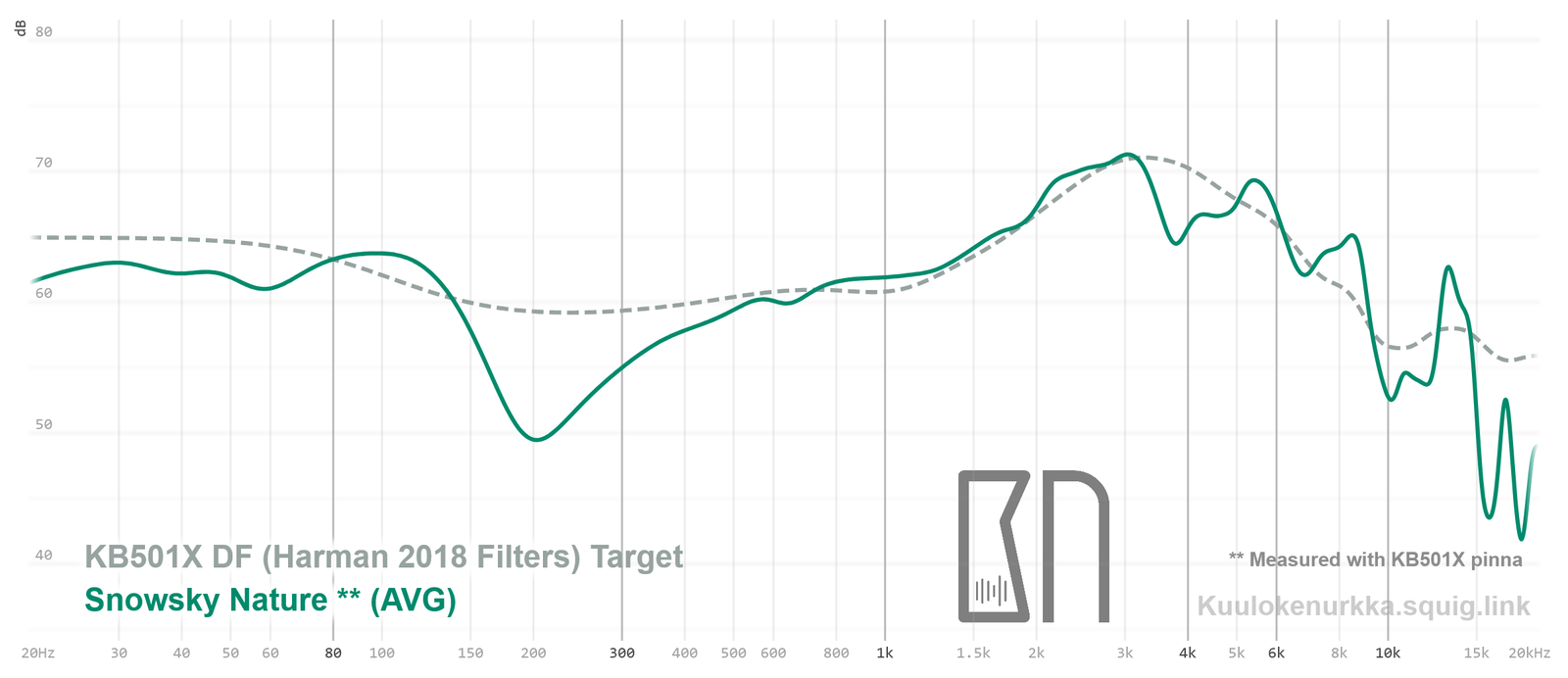
The development team behind the Nature was clearly on the right track, though they did run into one glaring pitfall along the way. On a positive note, the frequency response from 500 Hz upward looks remarkably good for a 50-euro headphone. However, the region between the bass and lower midrange is rendered thin, which comes down to the closed-cup design. While similar headphones often exhibit at least a minor dip around 200 Hz, on the Nature it's noticeably deeper than usual (around 10 dB). As a result, the body of the sound feels lightweight and the presentation comes across as lean. On the flip side, if someone dislikes closed-back headphones with a punchy upper-bass bump and wants something lighter, the Nature is an interesting alternative. Its bass stays strictly in its own lane and extends all the way down to 20 Hz.
Based on my findings, it would be possible to fill in that low-frequency scoop by placing airflow-restricting dampening material over the bass ports. However, this would require ordering pre-made tuning filters from Chinese storefronts, as I couldn't smooth out the dip with DIY methods without the Nature losing virtually all of its sub-bass in the process. None of the aftermarket earpads I tried (including various ZMF models and the FiiO FT1 pads) improved the situation either; in fact, they introduced severe peaks and valleys to the treble. For that reason, I’d simply resort to EQ if the lightweight midrange bothers you. It’s clearly a structural compromise meant to keep the lowest frequencies playing at an appropriate level.
Nature vs. FT1:
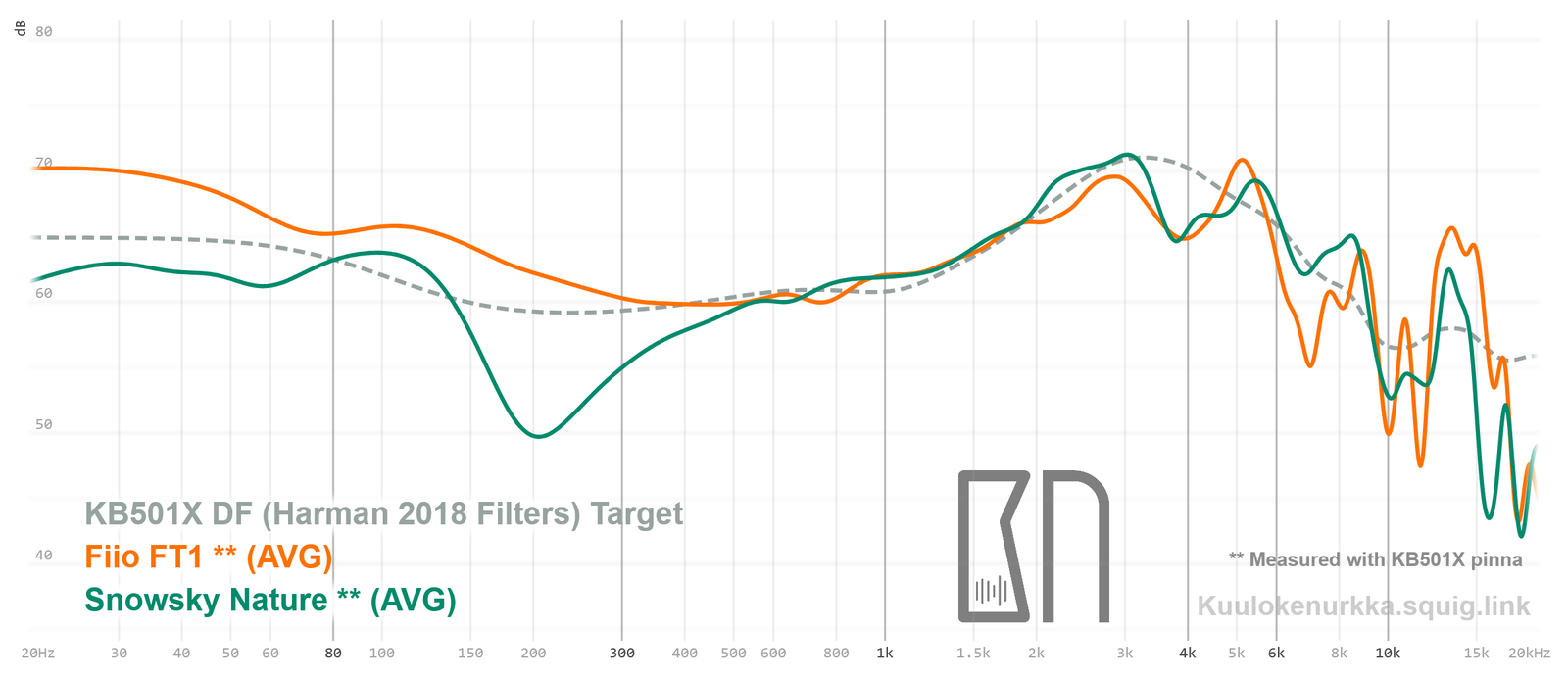
The Nature's peculiar bass tuning becomes glaringly obvious when placed side by side with FiiO’s own FT1 model. While the two remain highly comparable throughout the treble, from 500 Hz downward the FT1 fully justifies its higher price tag, provided its slightly bass-heavy presentation isn't a dealbreaker. Somewhat surprisingly, the Nature's treble actually measures smoother on my rig, though high frequencies can ultimately sound quite different to each of us. It’s also worth noting that the manufacturer has placed a generous layer of acoustic foam in front of the Nature's drivers to keep the treble in check. The FT1’s drivers, by contrast, are more exposed, leaving room for modding potential. As a rule of thumb, less front dampening also benefits overall clarity.
Sound observations
The expectations of a natural sound raised by the headphone's "Nature" moniker aren't quite realized, as the dip in the lower midrange leaves the overall presentation leaning thin and slightly lifeless. At the same time, this deficit relatively heightens the prominence of the treble, making the sound feel rather bright and even a bit fatiguing over longer sessions.
In my case, slight peaks around 2 kHz and 5 kHz add an extra bite to vocal performances. There's a subtle sense of added static or breathy harshness to the sound, as certain frequencies are rendered with overly boosted presence. That said, I still consider the Nature's high frequencies a strong effort when evaluated in isolation—the distracting traits would simply be far less noticeable if the lower midrange were presented more naturally. By comparison, the treble on the FiiO FT1 comes across as more sibilant to my ears, given its stronger emphasis on air and the uppermost frequencies.
As such, the Nature sounds energetic and clear, but instruments lack weight and power. Still, you do get used to the leaner presentation after a while, especially if you aren't swapping between other headphones in the middle of a session. Even on first listen, I didn't find the sound particularly offensive, even if it was somewhat lighter and more aggressive than what I'm accustomed to. I don't mean to overstate the Nature's shortcomings; for its budget price tag, it turns in a solid enough performance. Spending more will get you something like the FT1, which sounds better and boasts a more impressive soundstage.
The bass ultimately proves to be the most pleasant surprise on the Nature: measurements don't do it full justice, as the sub-bass comes through with a satisfying physical kick and impressive clarity. There is none of the muddy congestion typical of closed-back headphones, as the low end stays completely isolated from the midrange. The experience is mainly held back by the slight treble emphasis, which prevents me from turning up the volume enough to fully enjoy the bass slam.
If I were using the Nature on a regular basis, I would absolutely employ equalisation. For testing purposes, I EQ'd out all the flaws I perceived in the headphones, which yielded a balanced and high-quality sound. The soundstage also opened up nicely once the high frequencies were no longer quite so in-your-face. At its best, the Nature could indeed be a compelling alternative to more expensive models, provided the buyer is open to applying parametric EQ.
Here is my custom EQ:
1. Low Shelf: 80 Hz | +2.5 dB | Q 1.2
2. Peak: 120 Hz | -6 dB | Q 1.4
3. Peak: 200 Hz | +11 dB | Q 1.4
4. Peak: 800 Hz | -1 dB | Q 2
5. Peak: 2200 Hz | -1.5 dB | Q 1.2
6. Peak: 4000 Hz | +3 dB | Q 2
7. Peak: 5200 Hz | -3 dB | Q 4
8. Peak: 7800 Hz | -1 dB | Q 2
9. Peak: 17000 Hz | +2 dB | Q 1.2
Summary
Given that it's difficult to get much more in this product category on a 50-euro budget, the Snowsky Nature largely met my expectations. I particularly like the functional Beyerdynamic-style build, even if I do wish the earpads were slightly thicker. The fake-wood plastic cups are also a bit quirky, but at least they leave an impression.
In terms of sound quality, the Nature isn't extraordinary, but it isn't bad either. I'd highlight the treble, which despite being slightly fatiguing is more refined than usual—budget headphones typically feature far harsher high frequencies. The Nature can also be commended for its lack of bloated bass, even though the recessed lower midrange stands as its single biggest weakness. It's a structural compromise, used to get the subbass level high enough. Closed-back headphones always exhibit some quirk or another, so on the Nature these flaws remain acceptable and easily remedied with EQ.
Ultimately, the Nature's biggest hurdle is the current market landscape. While I like the headphones, I don't see them becoming a massive sales hit. The culprit is the abundance of great in-ear monitors that have squeezed products like the Nature into a tight corner in recent years. When you can get brilliantly tuned budget IEMs for as little as 20 euros, it becomes hard to argue why anyone should pay more for a full-sized closed-back model with a rougher frequency response. Granted, in-ears aren't for everyone and not everyone enjoys wearing them. Over-ear cups offer their own distinct listening experience—and on those terms, the Nature serves as a solid option among today's budget headphone offerings.
Pros and cons:
+ Decent factory tuning for the price, particularly through the high frequencies
+ Zero bass bloat
+ Functional, durable-feeling build
+ Good overall comfort, even with shallow earpads
+ Easy to drive with basic source gear
+ Low price
– Thin and weak low mids
– Mildly fatiguing treble
– Earpads could be deeper
– Microphonic stock cable
– Limited availability outside of Chinese stores
 EN
EN  FI
FI
Mihin erinomaisiin 20e nappeihin viittaat?
Esimerkiksi Moondropin Chu-sarja, Truthear Gate ja Tangzu Waner. Kieltämättä esimerkit olisi voinut mainita jo tekstissäkin.