Author: Sword of Damocles
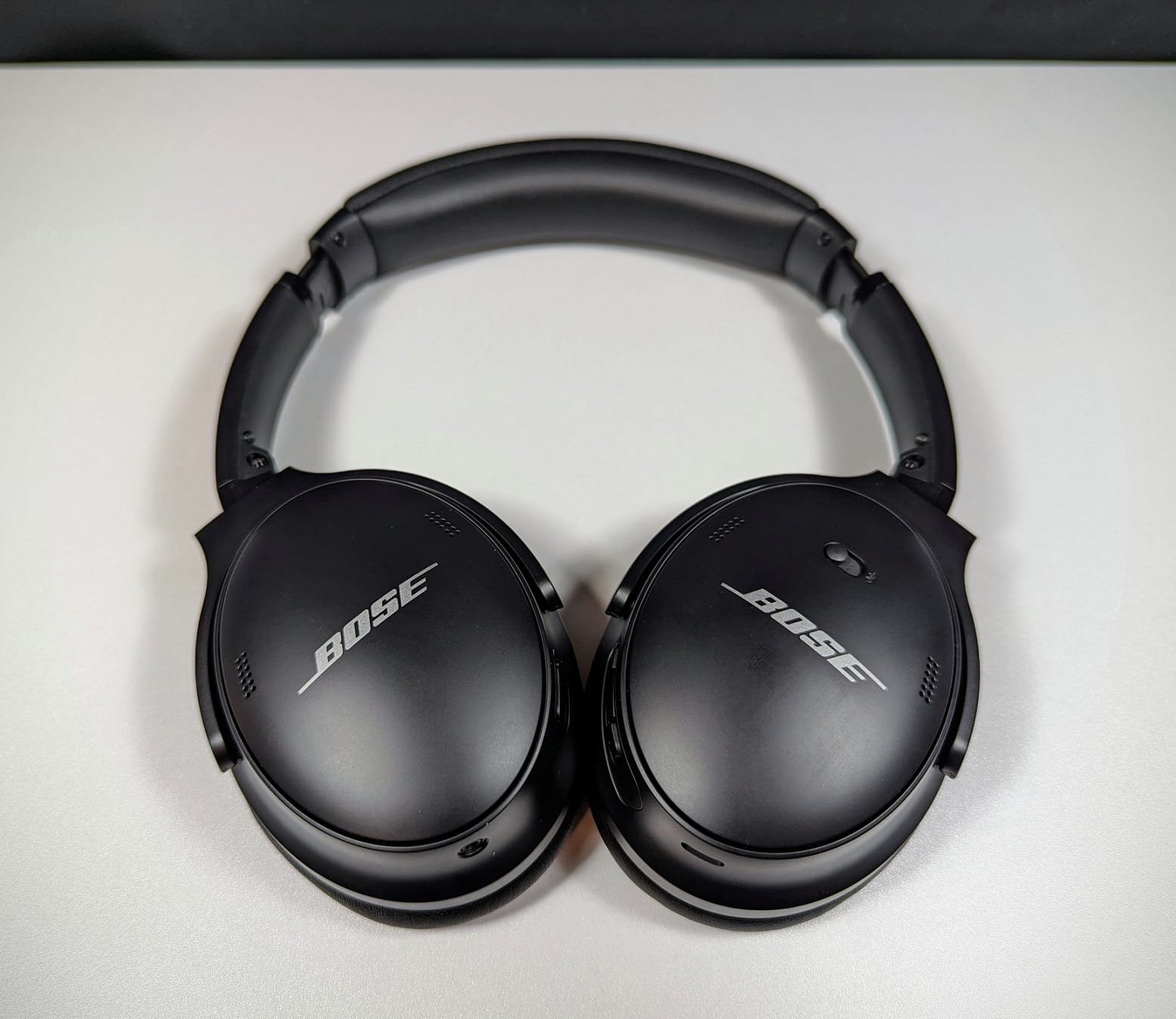
Table of Contents:
Information:
- Release year: 2022
- Country of manufacture: Thailand
- Price: 350 € (sold for as low as 200 euros)
- Color options: Black
- Type: Closed, over-ear
- Dynamic driver
- Audio connections: Bluetooth 5.1 and headphone jack (2.5 mm)
- Bluetooth codecs: SBC and AAC
- Weight: 235 g
- Battery life: up to 24 hours
- Charging time: 2.5 hours (supports fast charging: 2.5 hours of use in 15 minutes)
- Charging port: USB-C
- Noise-cancelling function and transparency mode (neither adjustable)
- Includes a phone app with an equalizer
- Accessories: Soft protective pouch, USB charging cable (30 cm) and headphone cable (3.5 mm – 2.5 mm)
Review sample: Self-purchased product
American Bose is known for its QuietComfort noise-cancelling headphones, which compete with Sony's WH-1000X series, especially in noise-cancellation effectiveness and brand fashionability. Headphones from both manufacturers require paying a bit of a ”brand premium,” even if a more critical segment of consumers doesn't consider their sound quality particularly good. Since I have already found Sony's WH-1000XM5's and -XM4's sound quality to be poor relative to their selling price, I wanted to give Bose a chance to surprise me next.
I bought the latest QuietComfort SE (QC SE) model for testing, which cost 200 euros during Bose's own online store sale (link to product page). The recommended price for the headphones appears to be 350 euros, but in Finland, the price hovers around 300 euros. The headphones were released without much announcement in autumn 2022, and they should not differ significantly in features from the QuietComfort 45 model released a year earlier. The main differences are that the QC SE comes with a soft fabric pouch instead of a sturdier carrying case, and the headphones are only available in black. The QC SE is recognized in the Bose phone app and connected devices as QC 45, which would suggest that they are the same headphones sold under a different name. All observations I made in the review are therefore likely also applicable to the QuietComfort 45.
Shopping experience and product packaging
Since I ordered the headphones from the manufacturer's own online store, I can also comment on the purchasing experience this time, which was very pleasant. First, Bose's website is clearly implemented in Finnish, making ordering easy for most. Free shipping was offered for the headphones, and it would also be possible to return them free of charge within a 90-day trial period (full refund without deductions). The manufacturer's terms are almost the fairest I have ever encountered.
The headphones were sent from Brussels, Belgium. Tracking the package was easy because Bose provided a link in an email that led directly to their UPS tracking on their own website. When the headphones arrived, the manufacturer also sent an automated email with customer service information readily available, should any problems arise with the product. Opening the cardboard box was, in addition, made extremely easy, as it could be done by tearing off a single cardboard strip. The headphones were packed very neatly, and the same standard continued inside the product packaging. I was left with a strong impression that Bose cares about both the product it sells and its customers.
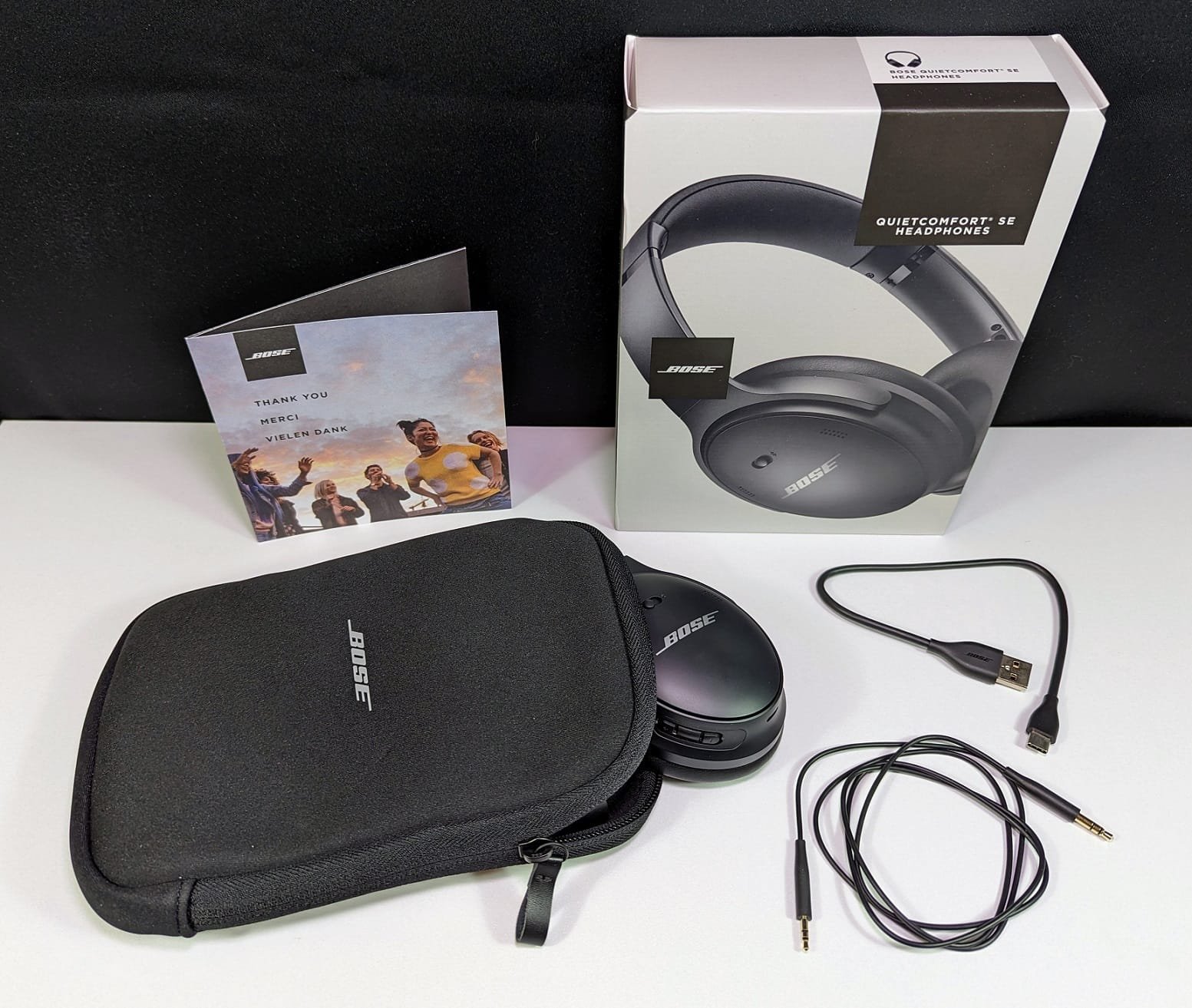
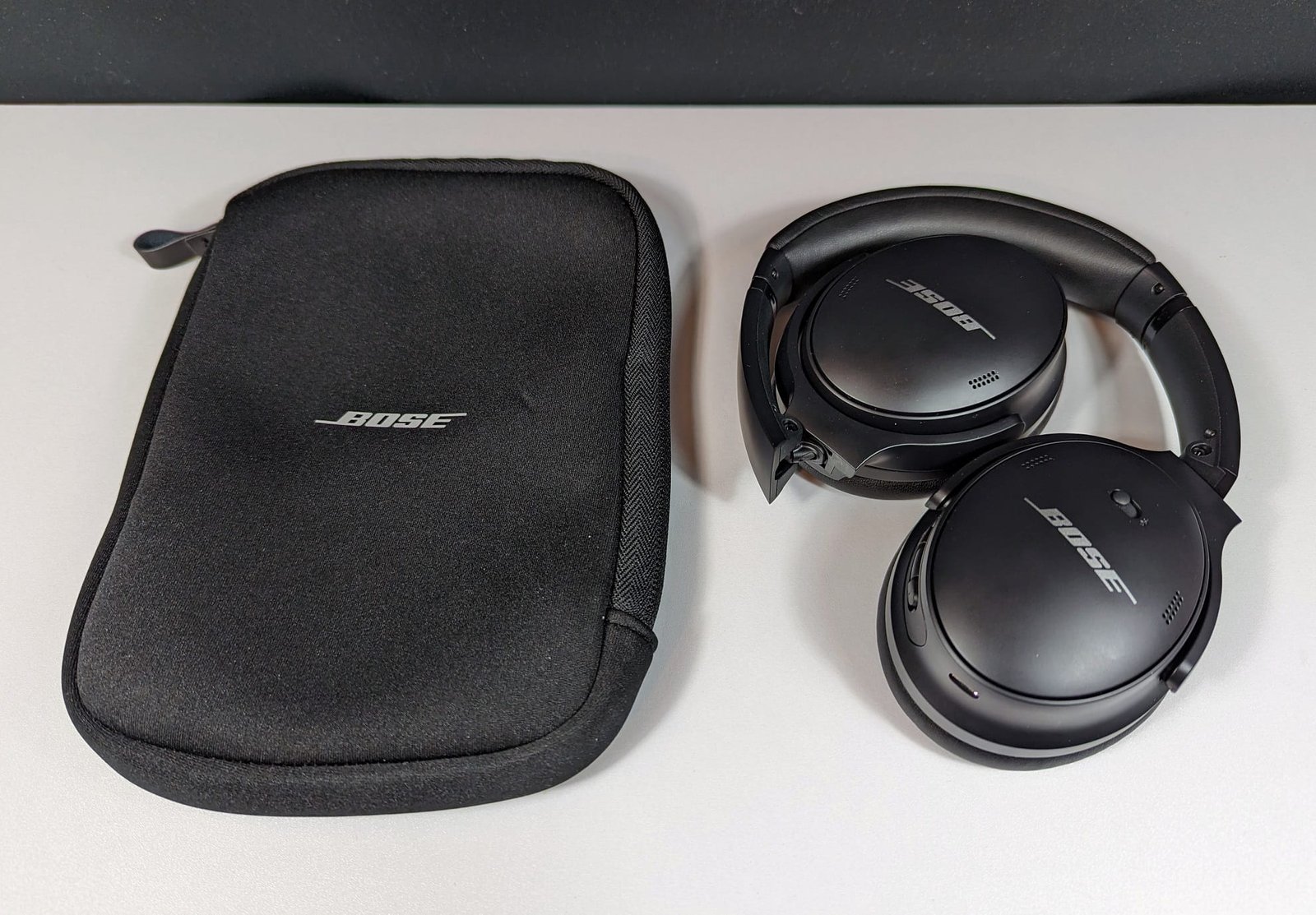
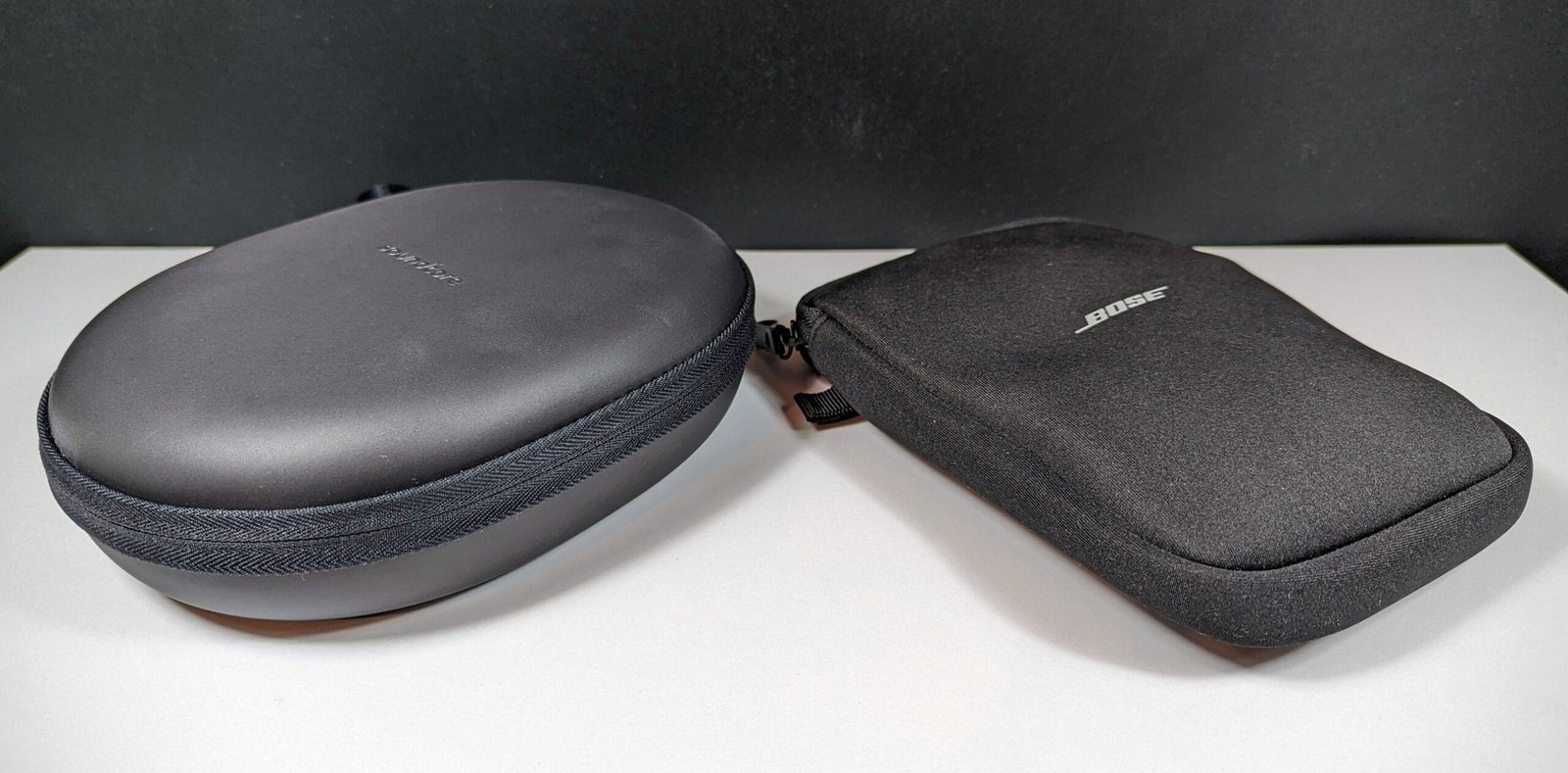
The product packaging itself doesn't contain anything extraordinary. Inside the flat box, you'll find instruction leaflets and the headphones with their accessories packed in a soft fabric pouch. Foam strips have been placed inside the pouch for additional protection of the headphones. I hadn't previously held QuietComfort series headphones in my hands, so I was surprised by how little space they take up when folded. I've also found the fabric pouch really convenient because it takes up practically no space when empty. Unless the headphones are meant to be crammed into a tighter space in a bag or backpack, I believe the pouch offers sufficient protection during transport.
Structure and comfort
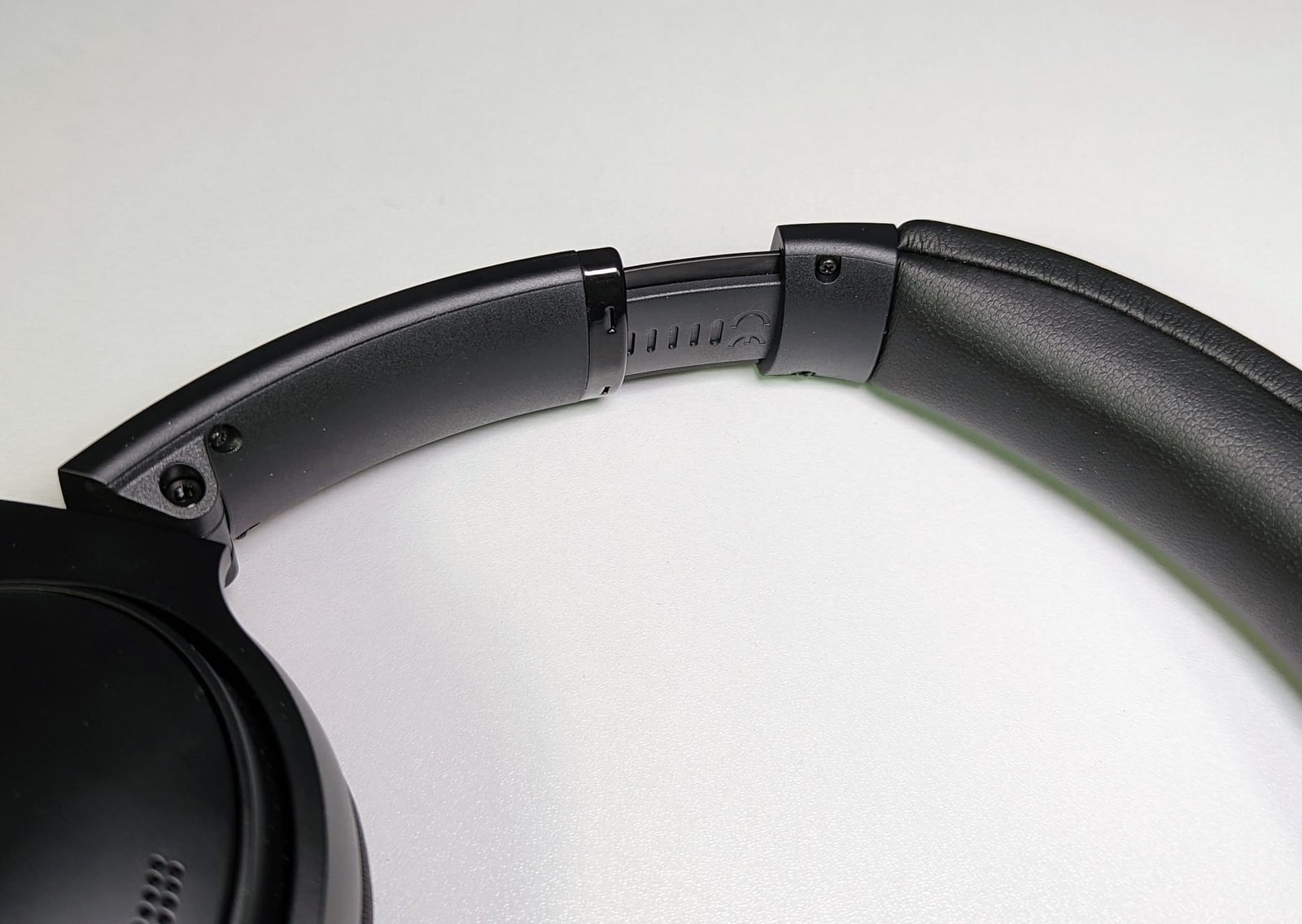
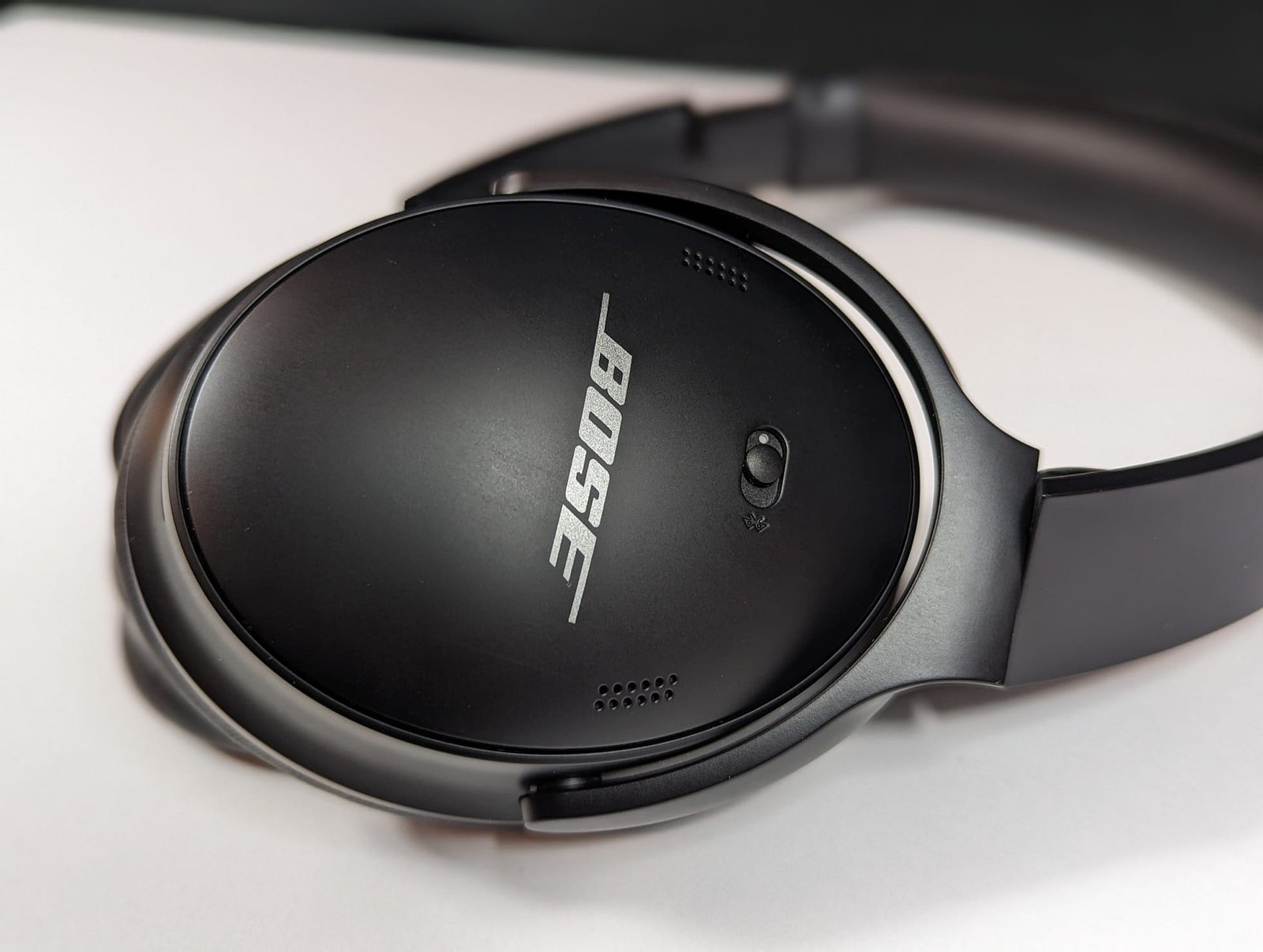
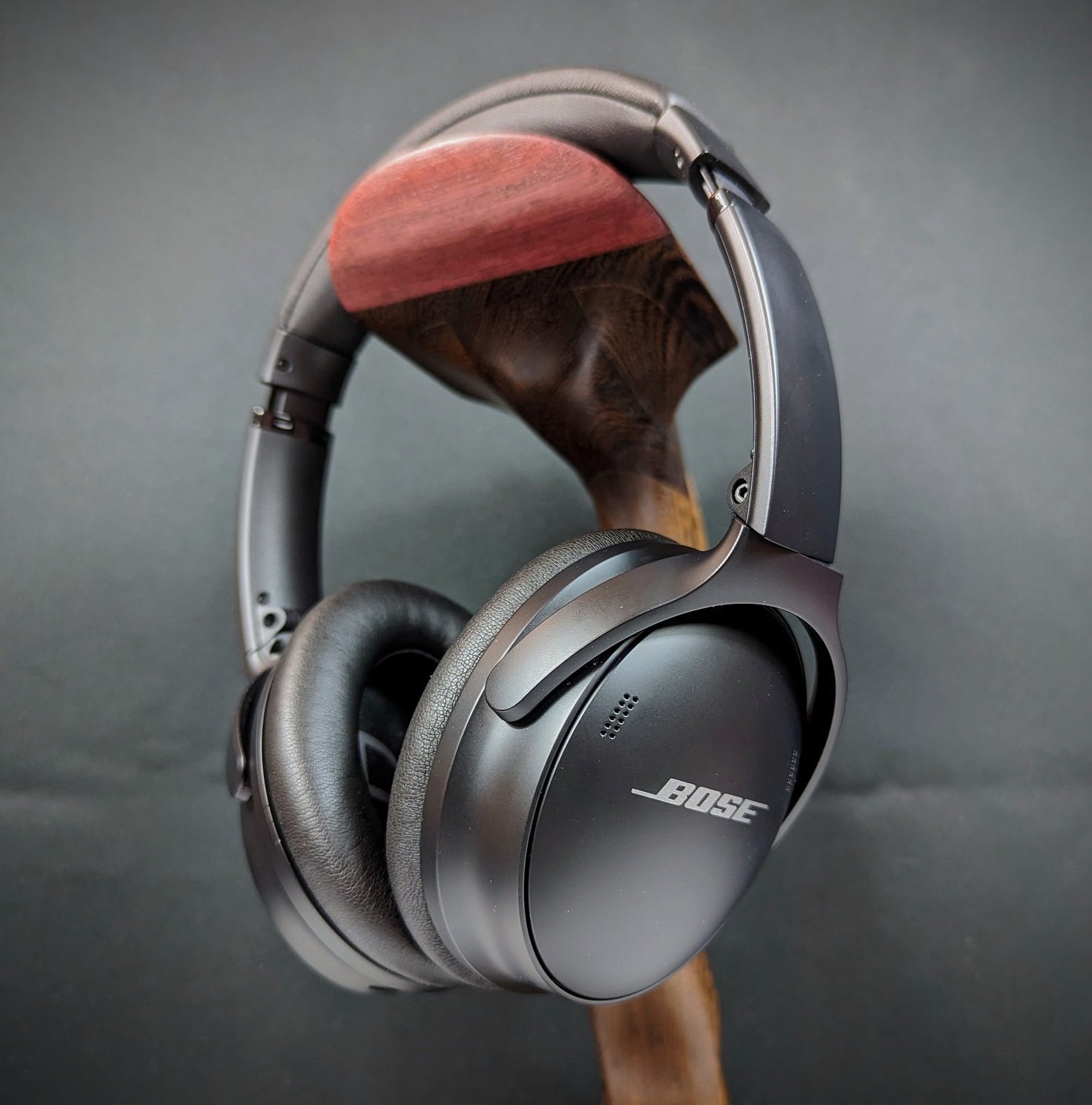
The QuietComfort SE is small, lightweight (weighing 235 grams), and extremely comfortable for an over-ear headphone. The headphones are made of plastic, which feels high-quality, with the exception of a metal plate running inside the headband. There is no creaking or rattling when twisting the structure. The fit of the plastic parts is also pleasantly firm, making the headphones feel sturdy in hand. I find the QC SE's appearance to be basically stylish and, despite the large Bose logos, unobtrusive.
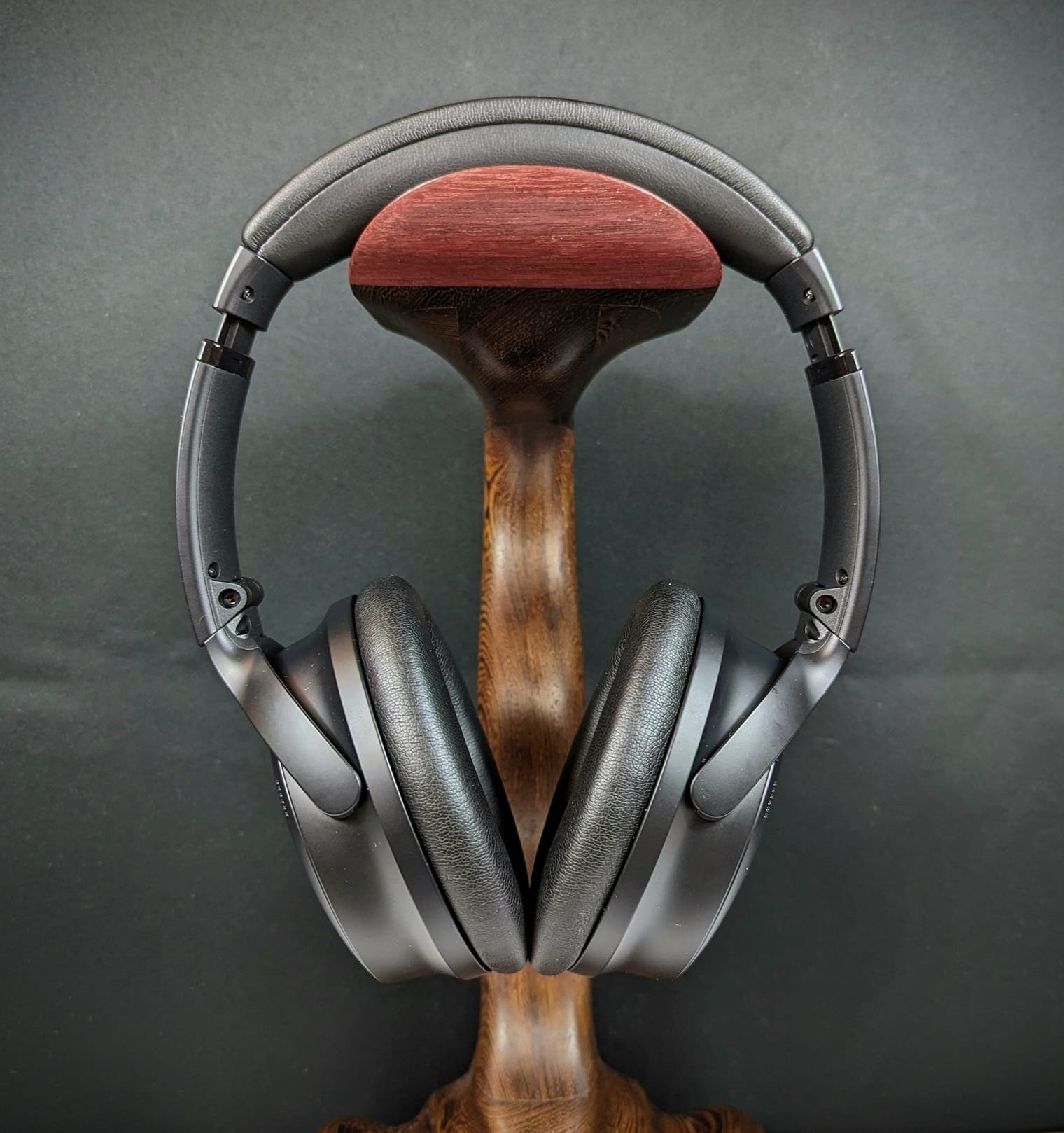
The adjustment possibilities of the headphones are good, so the fit is excellent for me. The selected height clicks firmly into place, and there's enough adjustment range even for larger heads. The clamping force of the headband is exceptionally even. The QC SE presses my head pleasantly lightly, but it still doesn't fall off when tilting or shaking my head more vigorously. Unlike many other noise-cancelling headphones, the earcups turn horizontally forward, which is convenient when placing the headphones on a table. This solution has clearly been intentional, as the earcups, which remain diagonally upright, are reciprocally suitable for wearing the headphones around the neck.
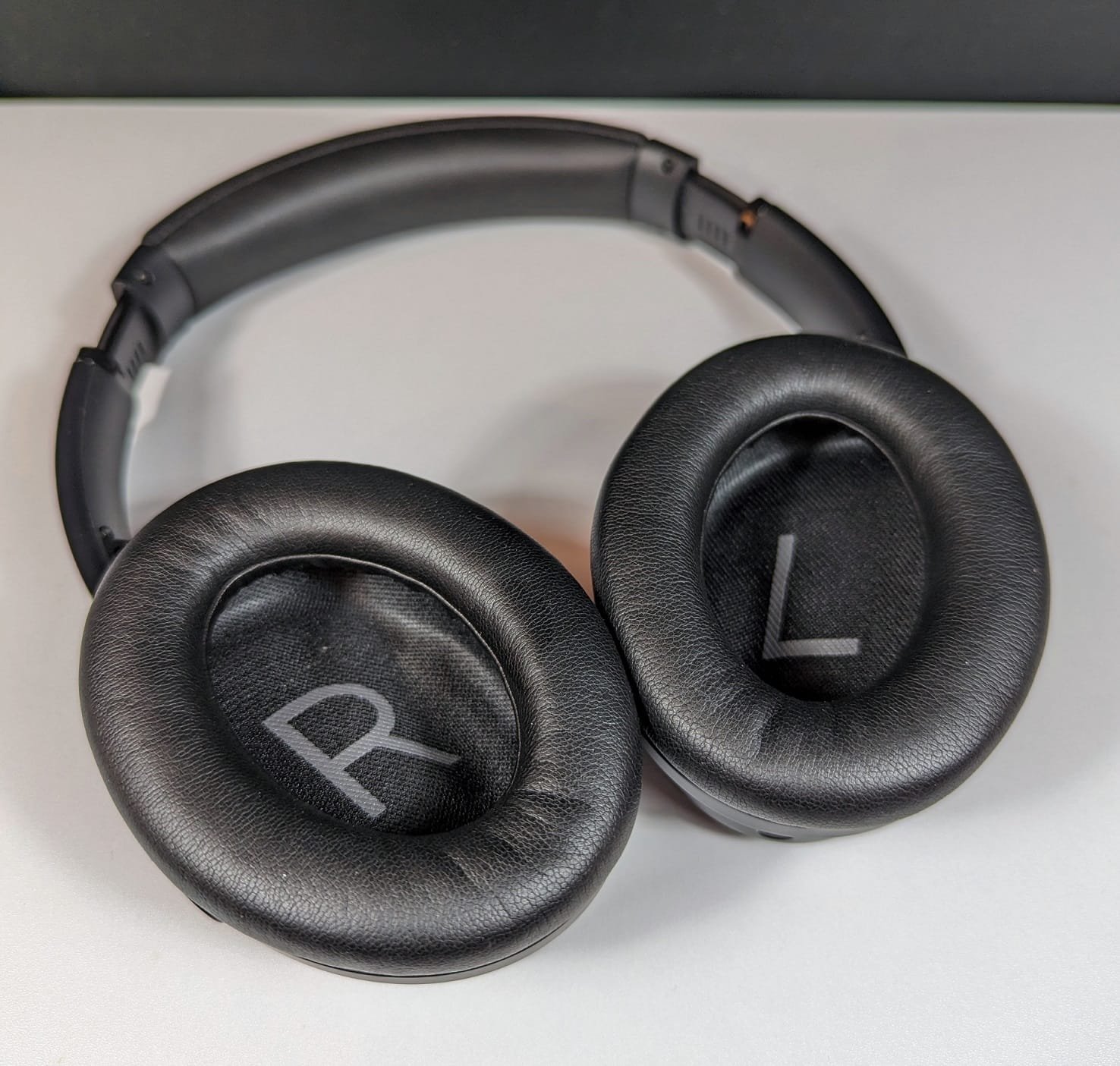
User comfort is also excellent regarding the faux leather-covered ear cushions. The soft ear cushions feel really pleasant, and the headband has more foam than usual. My ears fit inside the cushions with ease, as there is almost 3 centimeters of depth at the back of the ear. For comparison, Sony's noise-cancelling headphones press against my earlobes, so Bose has invested more in user comfort – the word "comfort" in the product name is entirely accurate.
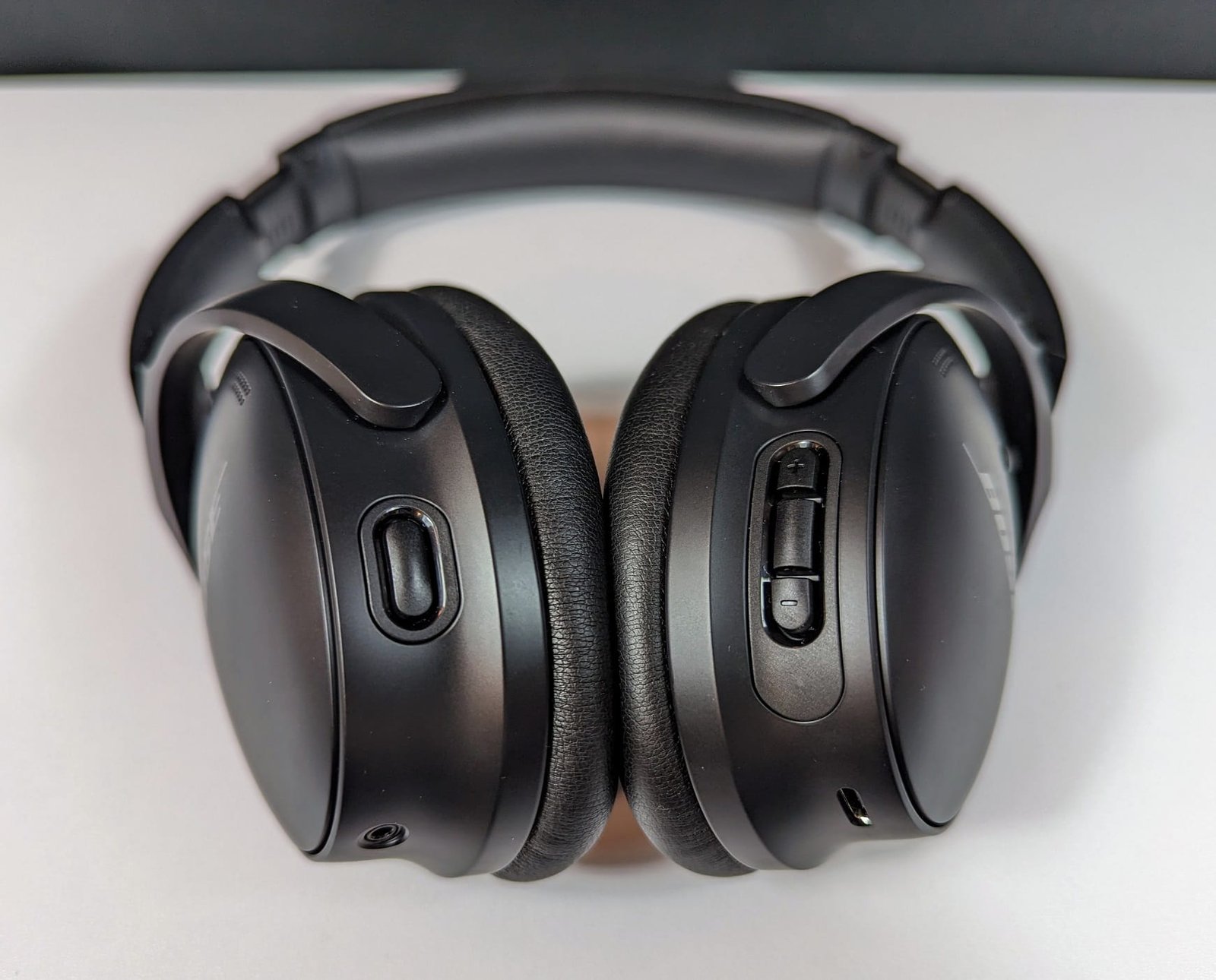
The QC SE model is controlled by large physical buttons, which would likely be possible to use even with gloves on. Behind the left earcup, there is a button controlling the noise-cancelling mode, while behind the right earcup, there is volume control and a third button for pausing music, skipping between tracks, and answering calls. The power button is implemented as a slider located on the side of the right earcup, which is faster to use than pressing a single button down for several seconds. The position of the slider also makes it easy to check if the headphones have been left on (the QC SE can also be set to turn off automatically after a certain period).
There is no ear sensor inside the earcups that would pause playback when the headphones are removed from the head. Compared to, for example, Sony's XM4 model, there are no other more special additional features, so Bose's headphones feel somewhat stripped down and dated in the same price range. The manufacturer's newer design, the Noise Cancelling Headphones 700 model, would be an improvement in that regard compared to the QuietComfort series.
Features and phone app
The QC SE also feels somewhat outdated in terms of its technology and features. Apart from the newer Bluetooth version (5.1) and USB-C charging connector, the headphones are very largely identical to the QC 35 model released in 2016. The QC SE's Bluetooth codec support is downright laughable for headphones released in 2022 costing over 300 euros, as only SBC and AAC are supported. Better AptX and LDAC codecs can now be found in products costing as little as 100 euros, so Bose has stuck in the past. The manufacturer probably realizes this itself, as it does not mention Bluetooth codecs at all in the product specifications. For example, the AptX codec would reduce latency, so I would hope it would be supported. On the other hand, SBC and AAC work flawlessly without interruption in any situation, and their power consumption is relatively low. I did not find anything exceptional in the range of the Bluetooth connection or in connecting to devices; everything worked excellently.
Bose has developed a phone application called Bose Music for its headphones, which includes a few settings and a rudimentary 3-band equalizer. At the time of the QC 45 model's release at the end of 2021, the app did not yet have an equalizer, but it has since been added. Although the adjustment possibilities are still limited, this has been an important step forward for Bose, as we will see in connection with sound quality.
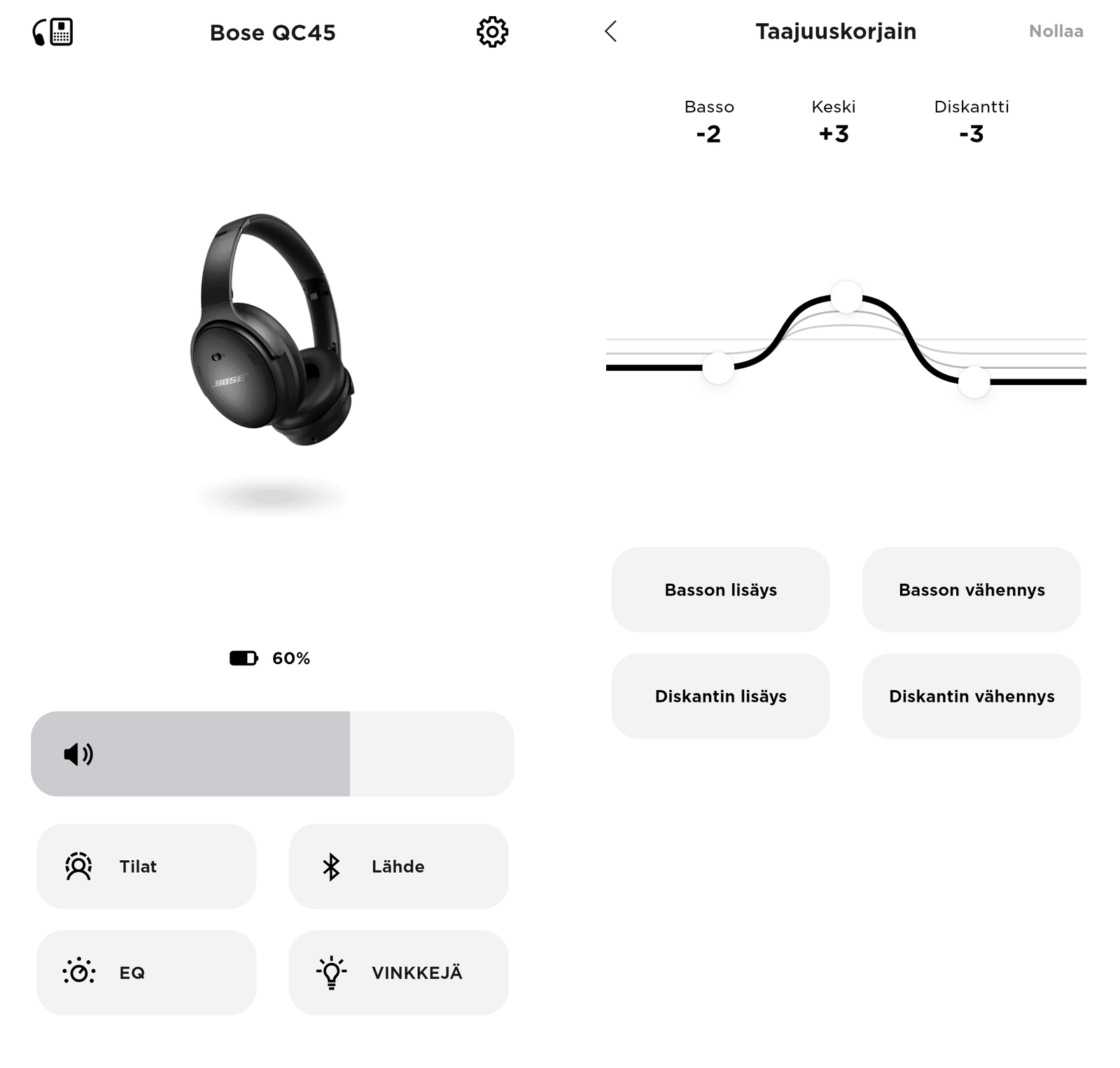
The app itself would still need development, as it operates quite slowly, and it also disconnects from the headphones after a few minutes. This is frustrating, as when fine-tuning the equalizer after a moment of listening, the app sometimes needs to be shut down and restarted. The equalizer may also then show settings differently compared to the configurations I thought I had made last time. The intensity of noise cancellation or transparency mode is not adjustable at all through the app, so the equalizer remains the only useful additional feature. Sony, competing with Bose, clearly takes the win in terms of headphone features.
Battery life
According to the manufacturer, the headphones' battery lasts a maximum of 24 hours, which is a rather modest figure compared to many competitors. The promised 2.5-hour charging time is also quite long by current standards. Fortunately, a 15-minute charge still provides several more hours of use, and battery life does not otherwise become a major limiting factor for use. If someone wants to charge their headphones as infrequently as possible, attention should be paid, for example, to the Sennheiser Momentum 4, which offers nearly triple the battery life.
Active Noise Cancellation (ANC)
From somewhat outdated technology, we move on to the headphones' active noise cancellation function, which is exceptionally effective – QuietComfort is, in my opinion, a perfect name for the headphones, as both aspects hold true. The QC SE reliably dampens all frequency ranges, competing quite evenly with the Sony noise-cancelling headphones I've heard. I would still say Sony's XM4 and XM5 models are slightly more effective noise cancellers, but Bose gets so close that the difference has no practical significance.
For some, however, it may be significant that the QC SE model has clearly audible background hiss, which is hardly noticeable at all in Sony headphones. This is unfortunate, but fortunately, the hiss is constant and thus even quite soothing. Compared to slightly more affordable noise-cancelling headphones, the hiss of the Soundcore Space Q45, which I reviewed earlier, is stronger and sharper. The Valco VMK20 also hisses considerably louder.
I tested the headphones by listening to both an airplane interior soundscape and cafe noise from speakers at approximately 85 decibels. The Bose QC SE attenuated noise significantly more effectively than the Soundcore Space Q45, Edifier WH950NB (review coming soon), and the 800-euro Focal Bathys (review coming right after this article) that I tested at the same time. The QC SE was the only headphone that truly provided silence when worn.
Nevertheless, the noise cancellation function cannot be called particularly versatile, as it is not adjustable or switchable off at all. However, the headphones have a traditional transparency mode, which makes it possible to hear ambient sounds, for example, when walking in the city with headphones on or talking to someone else. Bose calls this Aware mode, while other manufacturers use terms such as ”Transparency” and ”Ambient sound.” There is nothing unique about Bose's implementation, as the headphones still attenuate low frequencies and slightly emphasize high frequencies in transparency mode.
Microphone sound quality
Bose's Bluetooth headphones have been criticized over the years for poor microphones or at least their poorly optimized software. Improvements may have come with software updates, for example, compared to the release time of the QC 45 model, but based on the samples I listened to, the sound remains quite quiet. Making calls and participating in remote meetings is possible with the headphones, but the sound quality of one's own speech may not impress anyone.
Headphone sound quality
Headphone frequency response measurements have been performed with equipment compliant with the IEC711 standard. The graphs use the Harman target curve (2018 version), based on scientific research, as a reference, which is a generalization of what kind of frequency response sound would sound good to most people. More information about my measurements and their accuracy can be found Headphone Measurements-page. The frequency response of the QC SE model can also be compared with other headphones I have measured comparison tool .
The headphones can be listened to either via Bluetooth connection or with a headphone cable with the power off. The latter option lacks DSP correction, so it is mainly intended for situations where the battery has run out or needs to be saved. Unfortunately, a standard 3.5 mm AUX cable does not fit the headphones, as the bottom of the cup has a smaller 2.5 mm connector. However, Bose supplies a suitable cable with the headphones.
When listening with the cable with the power off, the headphones are quite suitable for consuming media content and other basic use, but due to uneven mid-frequencies and a peculiar ”bass hump,” music sounds strange. The situation could still be worse, as, for example, within the 50–200 euro price range, there are clearly worse-tuned wired headphones.
Frequency response with headphone cable, power off:

When the headphones are listened to via Bluetooth connection, the sound settings according to Bose's DSP correction are available, for better or worse.
Frequency response via Bluetooth connection (ANC ON):
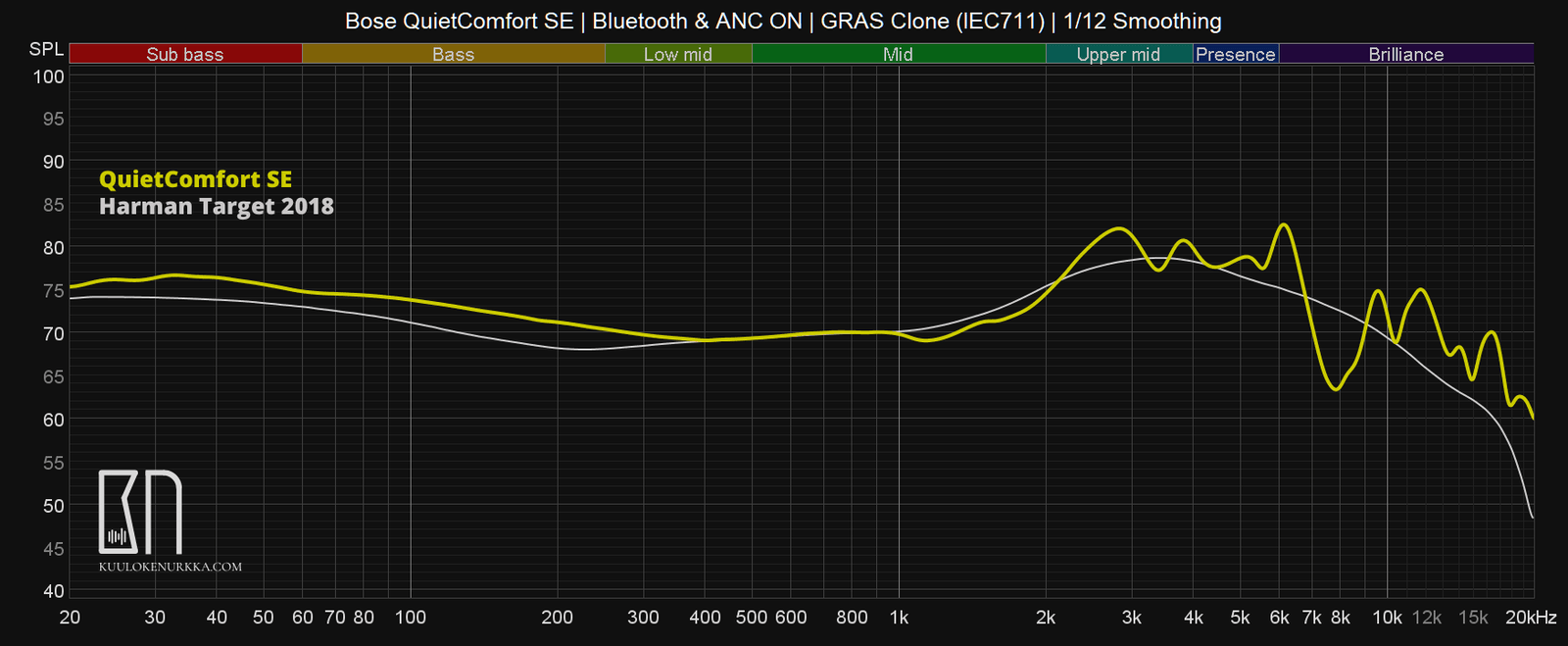
Most noise-cancelling headphones sold today are very bass-heavy in sound, as consumers are thought to want as much bass as possible, regardless of the fact that good bass reproduction requires other frequencies to support it. Bose's approach, however, is completely different, as it has made the QuietComfort SE a strongly treble-oriented headphone. I actually expected this, as the QC 45 model (presumably the same headphone) has also been described as bright-sounding. Especially the highest treble frequencies from 9 kHz upwards are significantly emphasized.
When listening to Bose headphones, my attention is drawn too much to the hiss, rustle, jingle, and clatter originating from the high frequencies. For example, drum cymbals sound irritating. Additionally, singers' voices and speech have sibilance, meaning too many hissing s and t sounds. The end result is unnaturally sharpened, so I consider sound clarity and detail only partial strengths. The QC SE is by no means the most irritating bright-sounding headphone I've heard, but its frequency balance falls far short of optimal.
If the treble didn't draw too much attention to itself, the bass reproduction and mid-frequencies would actually be balanced and correct. Glimpses of this can be heard in tracks that contain only a few high frequencies, but at least as often, the headphones require a small equalization to be balanced with all kinds of music.
Many have described the bass reproduction of Bose headphones as light, which clearly isn't because there isn't enough bass. Its quantity exceeds Harman's target curve ”requirements,” bleeding somewhat into the mid-frequencies between 200–300 Hz. Bass music sounds robust and at the same time quite soft. Despite this, the QC SE is, in my opinion, a pleasant exception among all noise-cancelling headphones with more boomy and muddy-sounding bass. The reason for the perceived light bass reproduction is likely previous experiences with, for example, Sony headphones, whose bass feels powerful because it buries other aspects of the music. On the other hand, the emphasized treble prevents the QC SE from sounding like a bass-heavy headphone, which it could otherwise be with its current amount of bass.
Frequency response compared to Sony's WH-1000XM3 model:
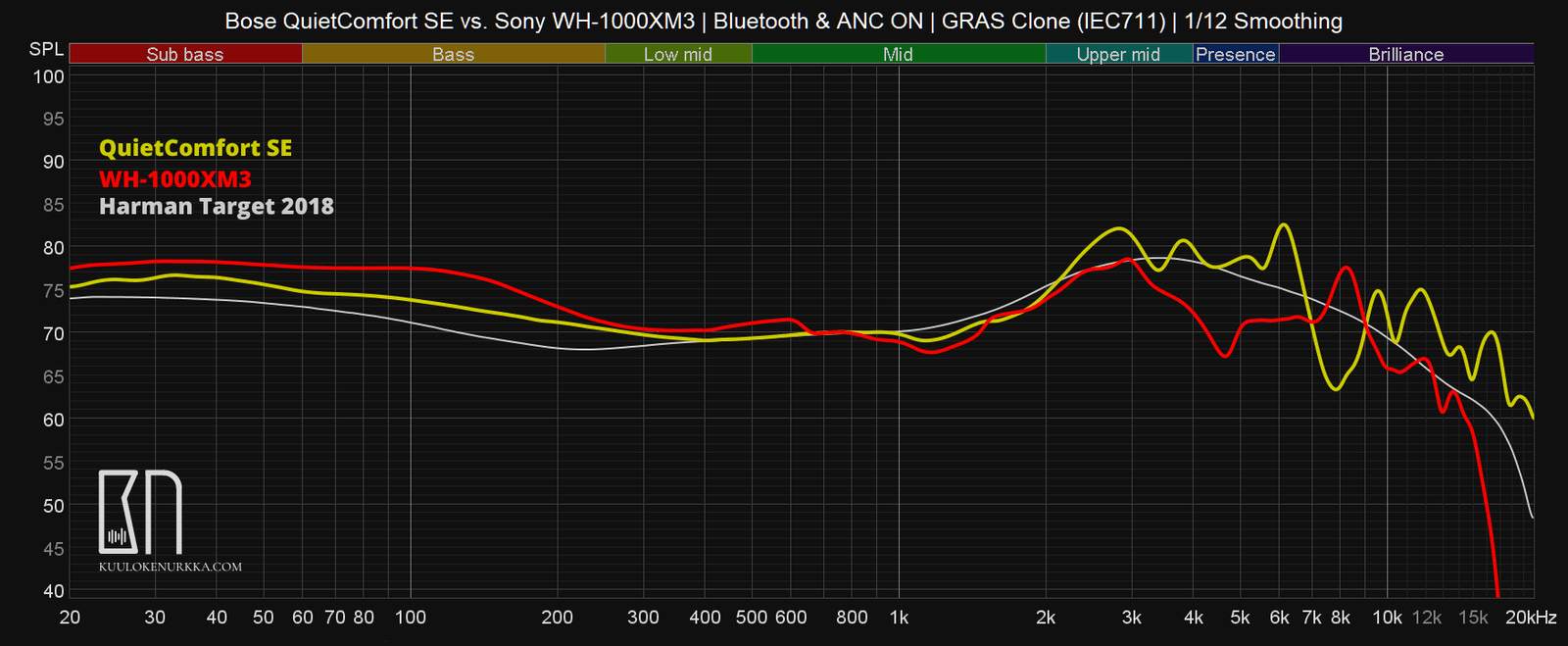
In my opinion, there's no point in considering the sound further at this stage, as a small equalization produces a better and more balanced result, making it more sensible to examine other characteristics.
Equalization
Bose's equalizer contains 3 controls that can be used to change the level of bass, mid-frequencies, and high frequencies. Each of these controls affects a fairly wide frequency range, so for example, the most necessary action, reducing high frequencies, also attenuates mid-frequencies at the same time. For this reason, an optimal result requires using all three controls. By listening to the headphones and measuring the frequency response, I found the following settings to be most suitable for most situations:
- Bass: -2
- Mid-frequencies: +3
- High frequencies: -3
If someone wants a fuller bass reproduction, it's easy to achieve by raising the bass control. I personally found the bass to sound tighter and higher quality after a small reduction. Thanks to the effective noise-cancelling function, the headphones don't actually need this more emphasized bass even in a noisier listening environment.
Frequency response after my equalization:
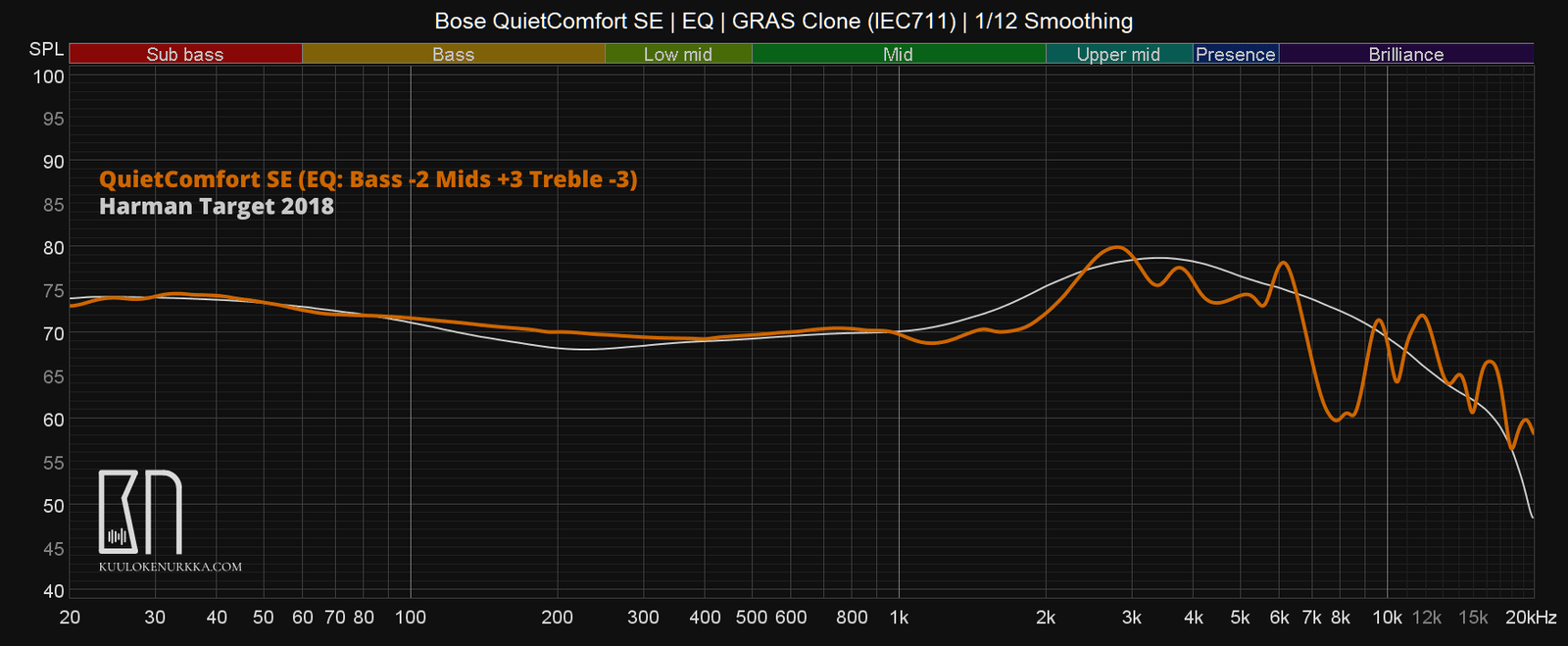
After the changes, the QuietComfort SE sounds really good and balanced, and there are no major weaknesses in the frequency response, apart from the dip around 8 kHz (which may be partly due to my measurement equipment). There is still a slight unevenness in the treble, but it is not disturbing. The reproduction is admirably clear, energetic, and airy, never overdoing it like with Bose's default settings. After adjustment, a slight attenuation forms in the mid-frequencies between 1–2 kHz, which, in my opinion, suitably widens the soundstage in a similar way to many Hifiman planar headphones. For example, the vocalist doesn't come completely in your face but pleasantly stays a little further away. This seems to suit closed-back headphones well, whose soundstage otherwise easily feels cramped and overloaded.
Thanks to an energetic frequency response, the headphones” sound is quite detailed and distinct, yet soft and rounded compared to good wired headphones. This could be due, at least in part, to low-quality Bluetooth codecs, as for example, the Soundcore Space Q45 and Edifier WH950NB, which use the better LDAC codec, sound slightly more precise in their overall sound. However, there are small differences in the frequency responses of all these models after equalization, so the differences between codecs may well be smaller than I assumed. In any case, Bose's QC SE does not feel obviously different from my counterparts equipped with better codecs and ”High Res" labels.
Considering the intended use of the headphones, the rounded sound is even pleasant to listen to in the long run. I have no complaints about the sound quality anymore; the QC SE is the most balanced noise-cancelling headphone I have heard to date in terms of frequency response. Since the frequency response follows Harman's target curve, I believe the sound will also please most others.
Comparison to other headphones
Of the noise-cancelling headphones I've tried previously, the 400-euro priced DALI IO-6 was a positive surprise in terms of sound quality, but the headphones had a weak noise-cancelling function and strong one-sided hiss. Sony's WH-1000XM4 and WH-1000XM5still have a slightly more effective noise-cancelling function than Bose's QC SE, but the equalized Bose sounds more balanced to my taste than the equalized Sonys – this is largely due to the fact that the upper bass emphasis of Sony's headphones cannot be completely removed. The comfort of use is also better for me in the Bose model thanks to deeper ear cushions, and for example, the more modern-looking structure of the XM5 model does not feel any more convincing due to its looseness. With the XM4 model, the QuietComfort SE is quite on par in terms of structure.
Speaking of structure and material choices, the Sennheiser Momentum 3 Wireless, which contains metal and genuine leather, was excellent, even though the headphones weighed more than average. The Momentum 3 also sounded excellent, but its noise-cancelling function barely outperformed the 80-euro priced Soundcore Life Q30. Also, the Valco VMK20I tested had a fairly good (though original) sound, but a strongly hissing and weak noise cancellation, as well as poor fit, would leave something to be desired compared to the Bose model.
Bose's QC SE does not compete with most current headphones in terms of extra features or battery life, but everyday usability (small size, clear controls, and effective noise cancellation) and comfort (light weight and clamping force, as well as comfortable cushions) are, in my opinion, top-notch. The sound quality, when equalized, is at least as good as that of most competitors' products.
In addition to the QC SE, I currently own the Soundcore Space Q45sold for 150 euros and the new Edifier WH950NB model costing about 180 euros (not yet widely available). I will write a separate review of the Edifier model, so I will compare the Bose model to it a bit later. The QC SE may also end up as a comparison for Valco's new VMK25 in the near future. This time, however, I will focus more specifically only on the Soundcore model I reviewed earlier.
Bose QuietComfort SE vs. Soundcore Space Q45
Prices: 350 € (cheapest 200 €) vs. 150 € (cheapest 120 €)
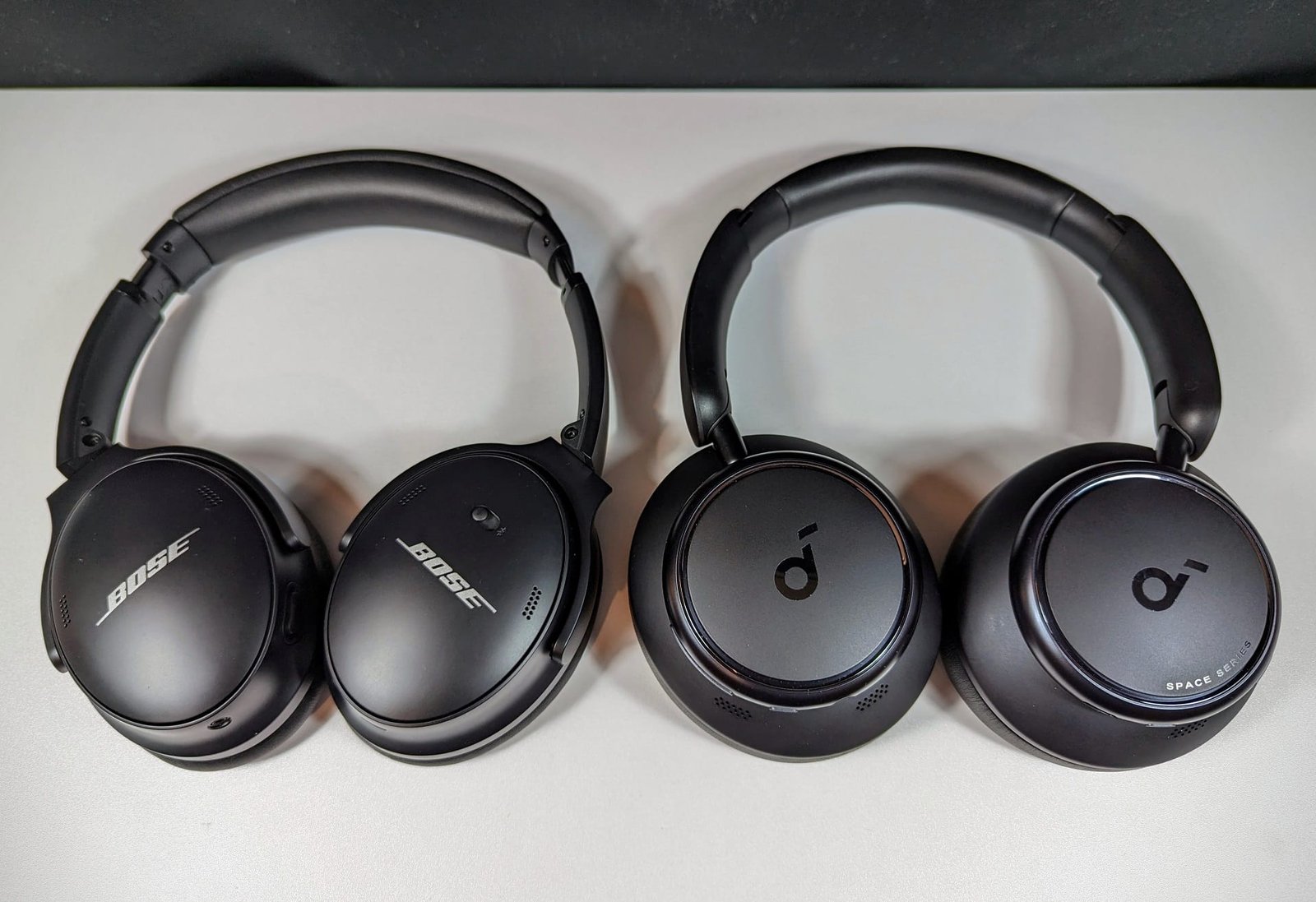
For its 150-euro price, the Soundcore Space Q45 offers modern technology, good battery life, a fairly high-quality build, and competent noise cancellation. After equalization, the sound quality is also excellent, which also applies to the Bose model.
Differences in structure and features:
The Space Q45 is slightly larger in physical size and contains more metal, so it weighs 60 grams more compared to the Bose model. The Space Q45 looks more stylish in my opinion, but due to stronger clamping force and harder cushions, wearing the QC SE is significantly more comfortable. The Bose model also feels slightly sturdier in terms of structure, as the different parts of the Space Q45 connect more loosely. There is unlikely to be a major difference in long-term durability. The QuietComfort SE is easier to get used to in terms of general usability, as its physical buttons are larger and easier to discern.
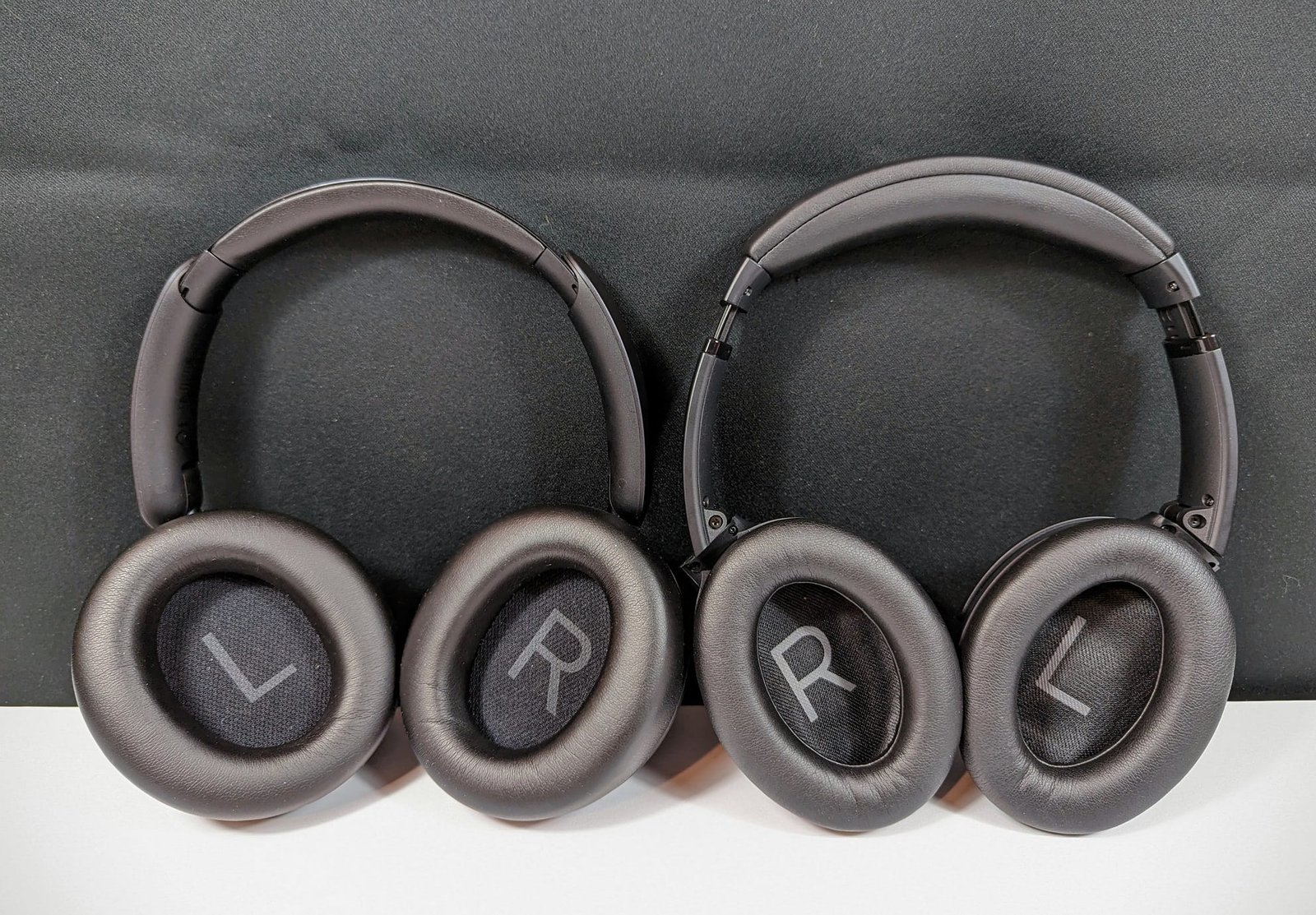
Space Q45 takes a clear win in adjustability, as in addition to the noise cancellation function, the sound can also be adjusted more extensively. Soundcore's app includes an 8-channel equalizer, whereas Bose's app only offers 3 channels. Space Q45 supports a newer Bluetooth version and a higher-quality LDAC codec. The microphone sound quality is also better, and the battery lasts about twice as long compared to the QC SE model. With the noise cancellation function turned off, the difference in battery life further increases in favor of the Soundcore model.
Bose QuietComfort SE is still better as noise-cancelling headphones because it suppresses noise significantly more effectively and comprehensively, even in higher frequency ranges. Background noise is also fainter than in Space Q45, so the end result is even quieter thanks to that. One could say that Space Q45 successfully quiets noise, whereas QC SE completely suppresses a very large part of it. When considering the recommended prices of the headphones, the Space Q45, which is 200 euros cheaper, performs excellently against Bose in my opinion. That's why I also consider the Soundcore model's noise cancellation function to be good.
Differences in sound:
With default settings (listened via Bluetooth with noise cancellation on), I find QuietComfort SE to sound better because it has smoother and more natural mid-frequencies when the over-emphasized treble doesn't jump out. Space Q45 sounds thin, hollow, and aggressive at the same time. Its treble is more unnatural and considerably more jarring to my ears. One wouldn't want to listen to Space Q45 as is for long, whereas QC SE, despite its bright sound, is at least tolerable without equalization.
Headphone frequency responses with default settings and noise cancellation on:
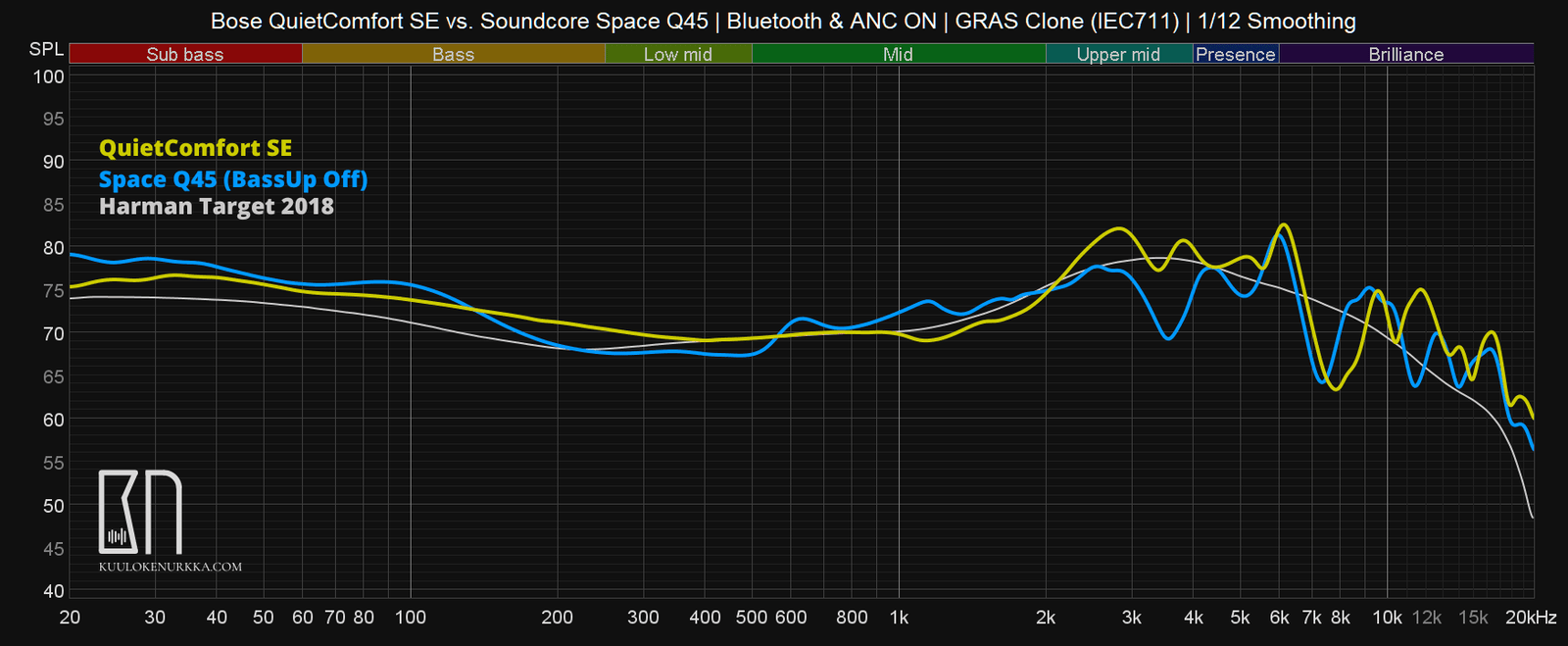
Thanks to its smoother and more energetic frequency response, QC SE sounds more detailed than Space Q45. The situation remains similar even after equalization, although it is possible to get the Soundcore model to sound quite similar. However, its sound remains calmer than the Bose model due to a dip located between 3–4 kHz. Space Q45 has a slightly larger soundstage and its overall sound feels less compressed (the sound opens up better, so for example, drumstick hits sound like there's more information available), but ultimately, I prefer QuietComfort SE slightly more due to the evenness of its frequency response. Equalizing the Bose model is also easier because there are fewer problems with the sound in its initial state.
Concluding remarks:
Both headphones I compared are good for their price and have their own strengths. Although buying the Soundcore Space Q45 arguably offers more value for money in the form of more modern technology and more extensively adjustable sound, the QuietComfort SE is a stronger package overall. Especially better comfort and noise cancellation function, as well as general ease of use, make the Bose model a higher quality product, so I can forgive its weaker battery life. Since the QC SE will likely continue to be sold for 200 euros, the Space Q45 is not even significantly cheaper at its price of 120–150 euros.
Summary
Bose managed to surprise me very positively with its QuietComfort SE model, as I had previously been reluctant towards the manufacturer's headphones. The comfort and general usability of the QC SE are essentially at a perfect level. The headphones also fit into a small space, and their noise cancellation function is very effective.
The sound quality, by default, is problematic in a different way than many competitors' products due to its excessive brightness, but with simple equalization, the situation clearly turns better and more balanced. If I had to choose noise-cancelling headphones for myself, for example, between Bose's QC SE and the latest Sony models, I would choose Bose, even though it does not include the latest technology. In my opinion, especially when sold for 200 euros, the QC SE is one of the most sensible noise-cancelling headphones available, considering all different aspects. Apparently, a new headphone model is coming from Bose during 2023, so a headphone like the QC SE, updated for today's standards in terms of Bluetooth connectivity and battery life, would already go a long way in the current market situation.
Pros and cons:
+ Excellent comfort
+ Usage is easy and smooth
+ Functional design
+ Very effective noise cancellation function
+ Better sound quality than Sony headphones
+ With equalization, flat frequency response and good sound
+ Good value for money, especially when bought for 200 euros
+ Pleasant shopping experience in Bose's online store
– The sound is far too bright by default
– Mediocre battery life
– Mediocre microphone sound quality
– No support for modern Bluetooth codecs
– The phone application works slowly
– Hardly any adjustments or additional features
– There is some background noise in the noise-cancelling function
 EN
EN  FI
FI