Author: Sword of Damocles
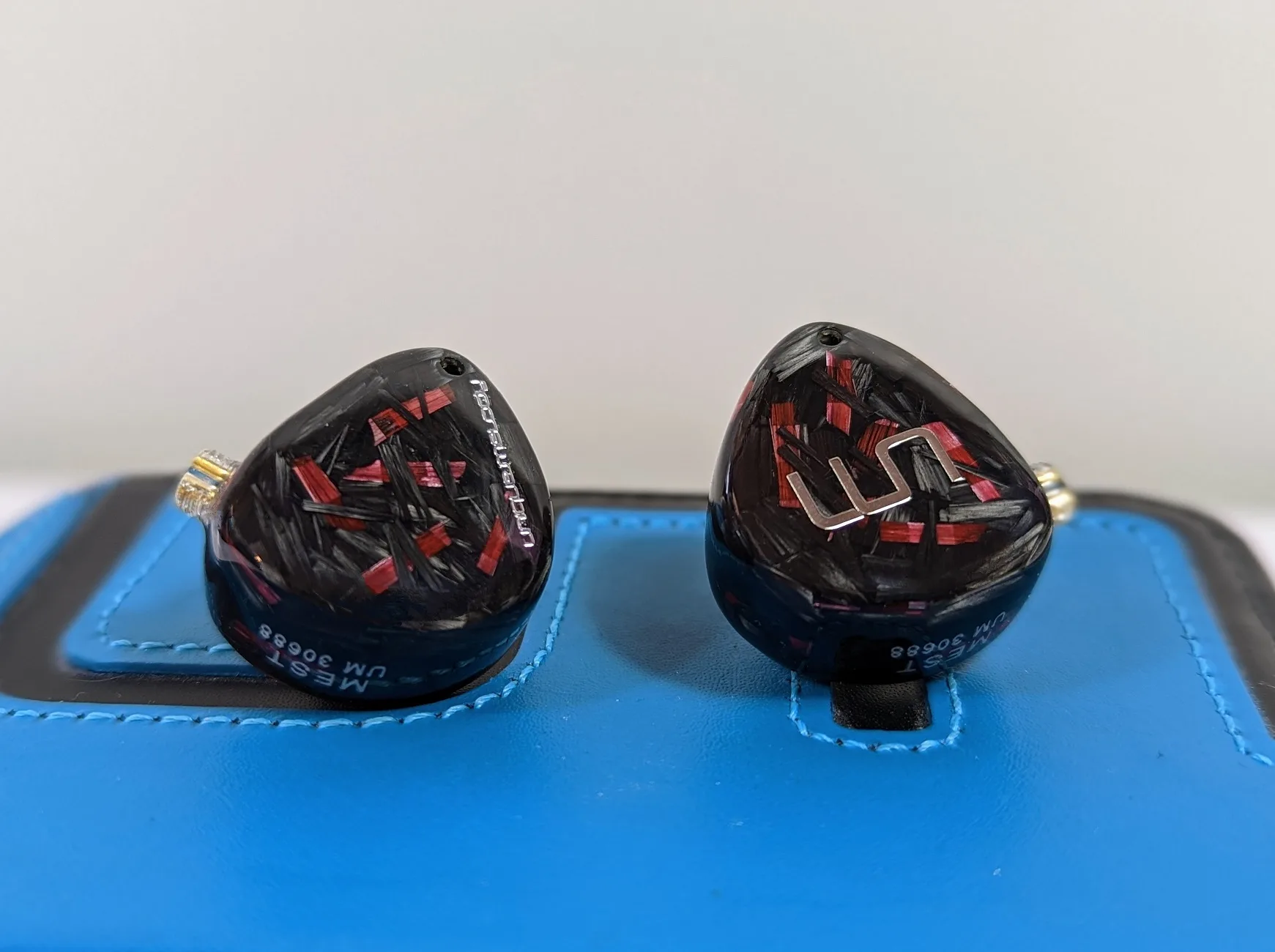
Table of Contents:
Information:
- Release Year: 2020
- Price: 1399 USD (now replaced by the mk2 model)
- Structure: closed, in-ear
- Driver type: 1 x dynamic, 4 x balanced armature, 2 x electrostatic, 1 x bone conduction
- Impedance: 14 ohm
- Sensitivity: 118 dB / mW
- Connector type: 2 x 2-pin
- Cable: 1.2 meter cable with a 4.4 mm connector
- Included: blue leather case and ear tips (S, M, L)
Review unit acquisition method: Borrowed from a hobbyist
This time I'm reviewing the Unique Melody Mest in-ear headphones, which, like the 64Audio U12t, I borrowed from a fellow enthusiast (I can't thank them enough!). The Mest cost about 1400 dollars in 2020, but nowadays an improved version of the headphones is sold mk2 version, which costs 100 dollars more.
At the time of its release, the Mest seemed to be a really hyped product that many were excited about. This was at least partly due to the headphones' unusual driver combination, which includes a bone conduction driver in addition to three more traditional driver types. The excitement was certainly also fueled by the fact that, true to the manufacturer's name, the Mest has a quite unique sound.
It was nice to finally test the headphones now that the attention they received has somewhat subsided. The 64Audio U12t, which I previously found excellent, provides good perspective in this article as a headphone about one-third more expensive, on what the Mest does differently.
Packaging and accessories
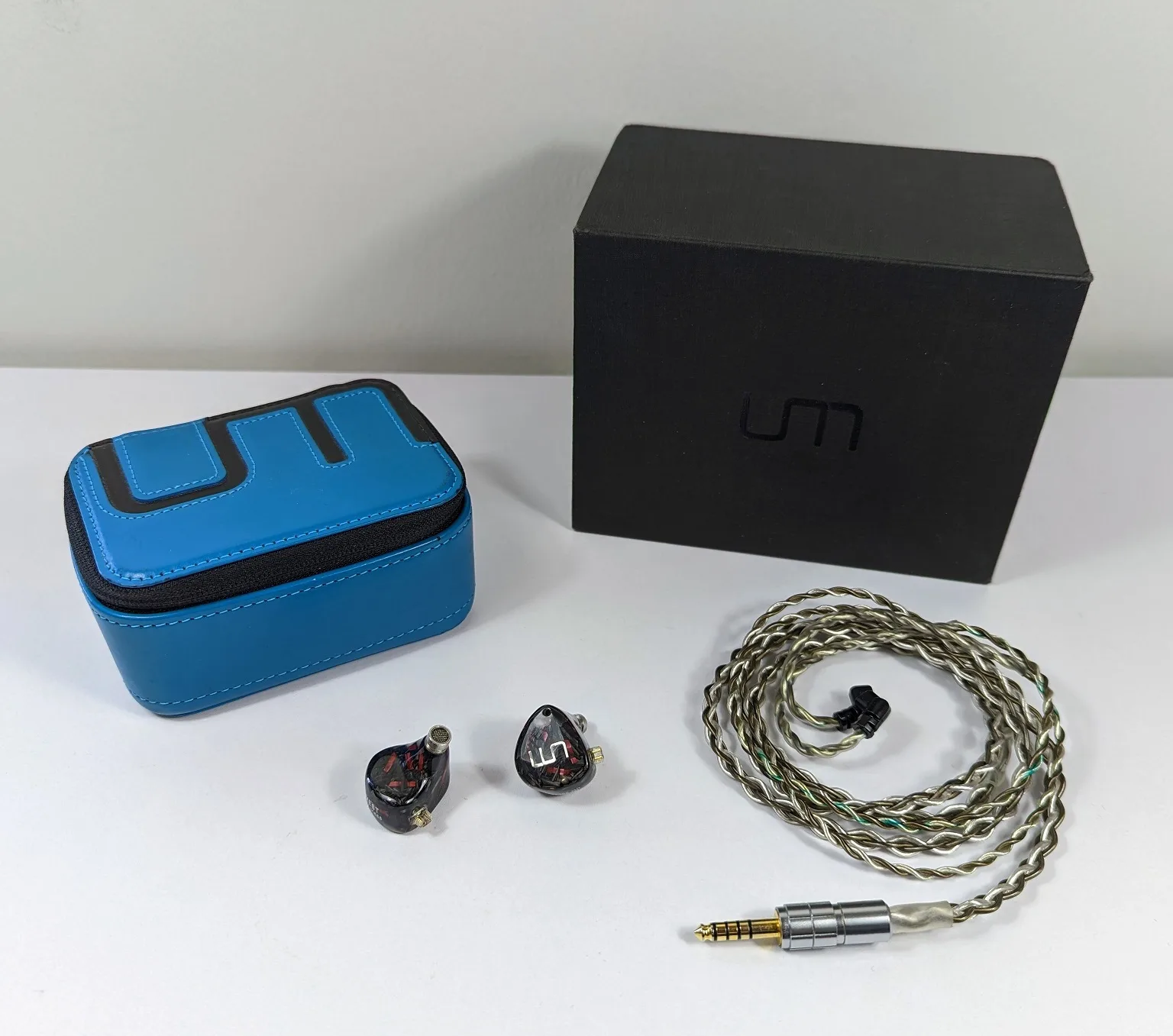
The headphones are delivered in a neatly sized black cardboard box, the lid of which stays closed with a magnet. Inside the box is a blue carrying case, which appears to be made of genuine leather. Accessories include ear tips of various sizes and a warranty card indicating the serial number. Naturally, the package also includes a cable, as headphones require one.
Structure and comfort
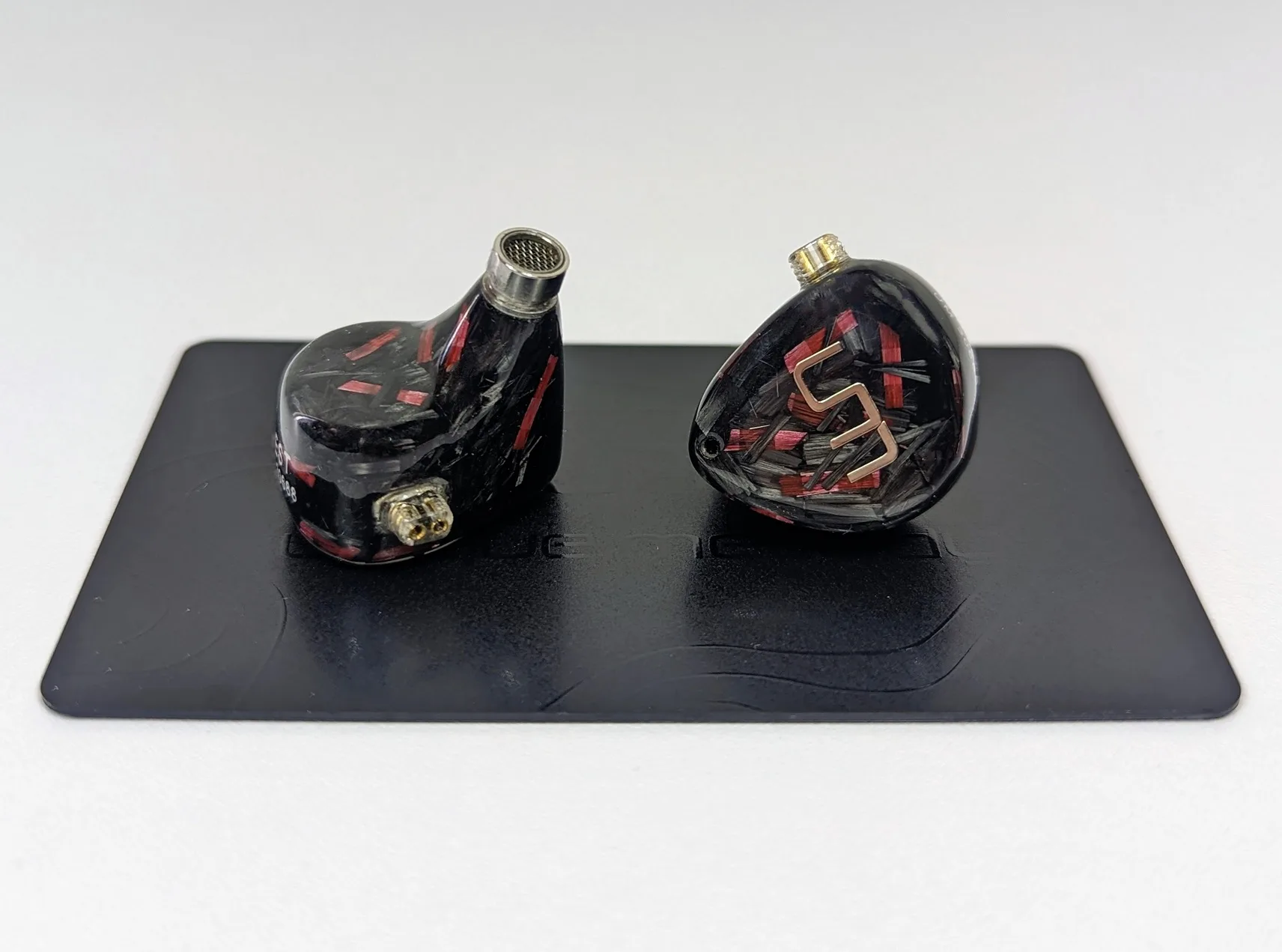
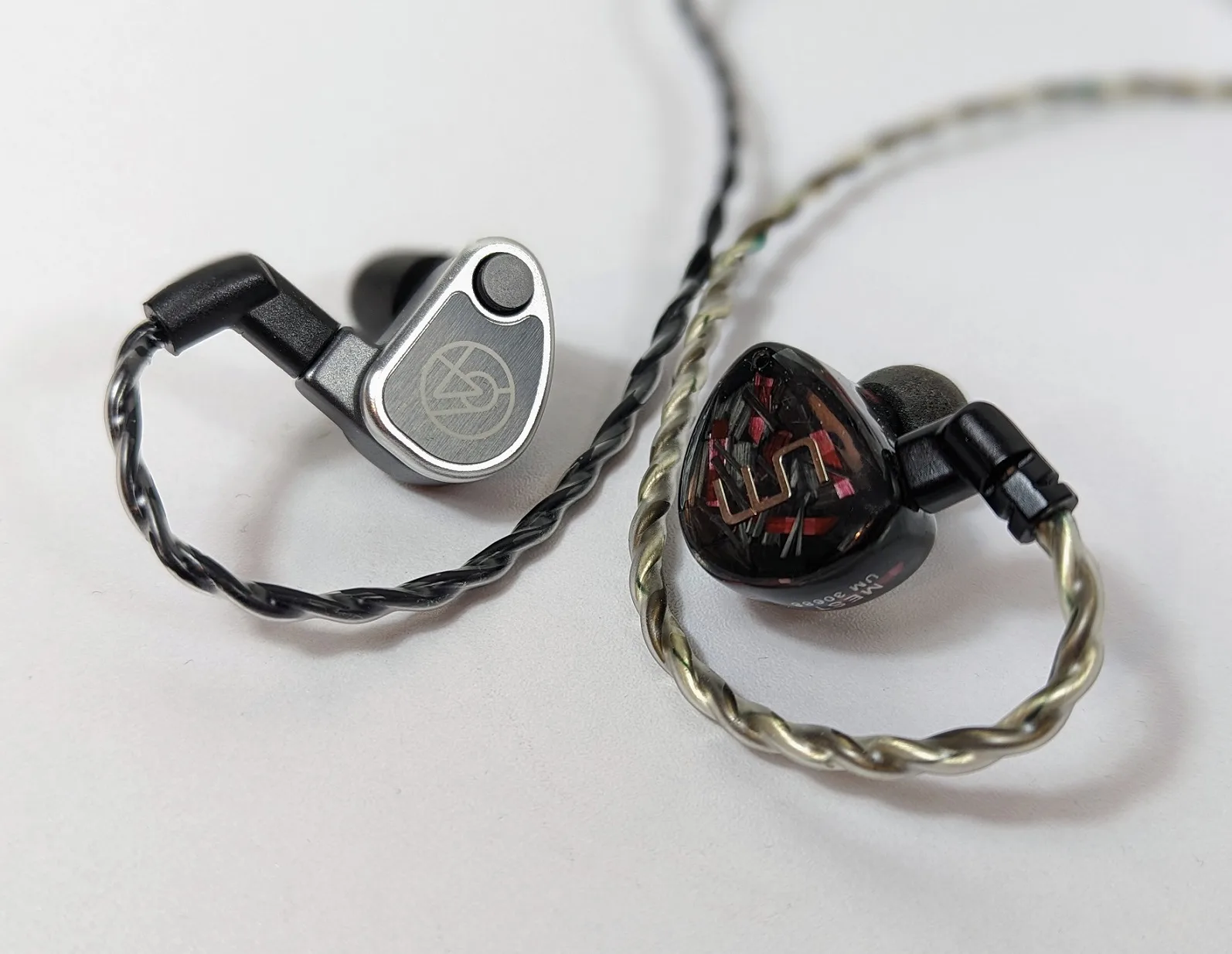
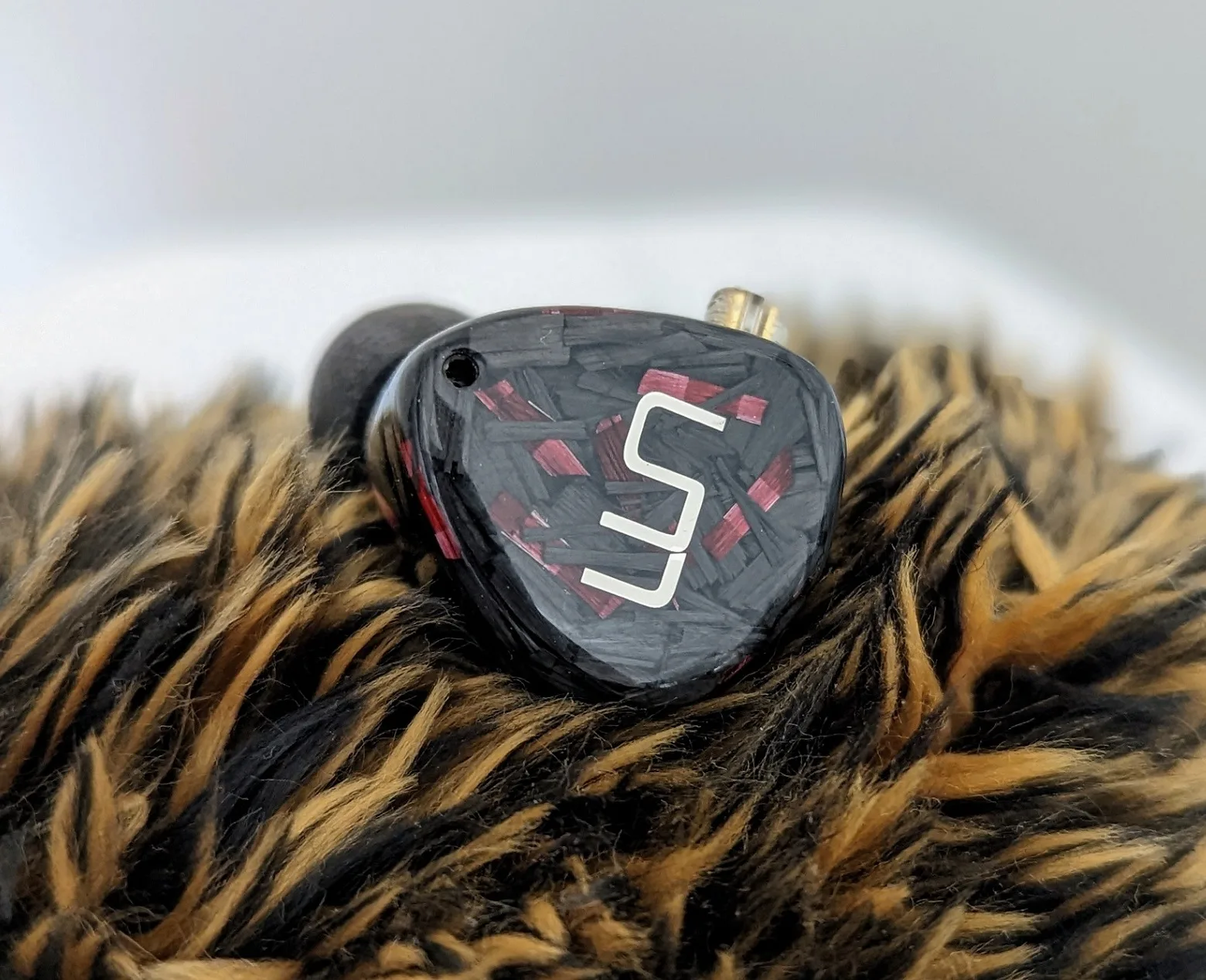
The Mest's rather large body is made of carbon fiber, with red-dyed fibers as decoration. One earpiece has UM written in metallic letters, and the other has Uniquemelody. From a distance, I find the headphones' appearance subtly stylish, while up close, the carbon fiber material has a fascinating depth. The overall impression of quality is excellent.
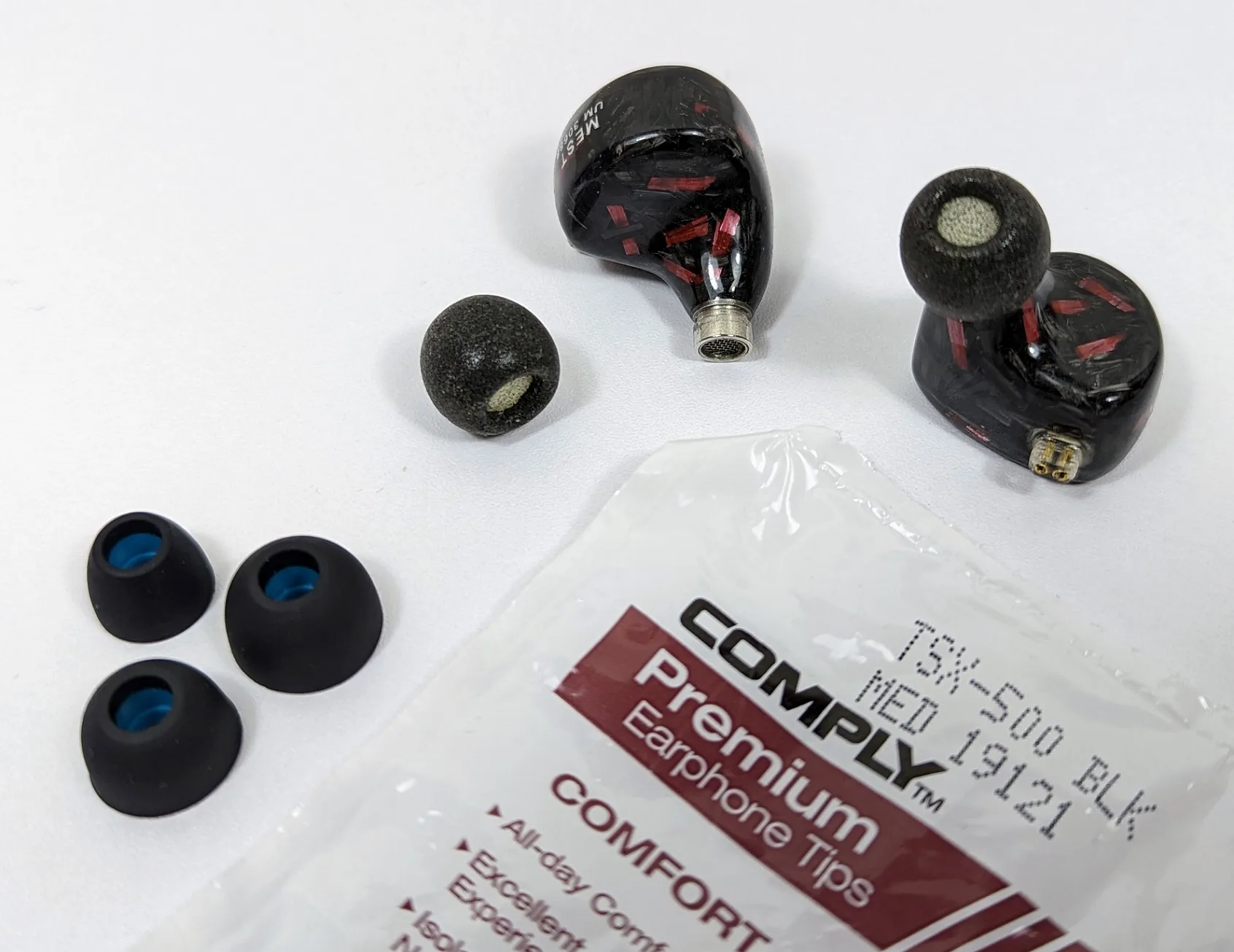
In my opinion, the comfort of in-ear headphones primarily depends on the ear tips, so using the Mest with suitable tips has been comfortable. Despite their bulky body, the headphones do not uncomfortably press against my earlobes, which is a good thing, as the Mest sounds best when pressed as tightly as possible against the ear. I believe this is easiest to achieve with foam ear tips, so I have used Comply tips, which I understand are now included in the mk2 version's retail package.
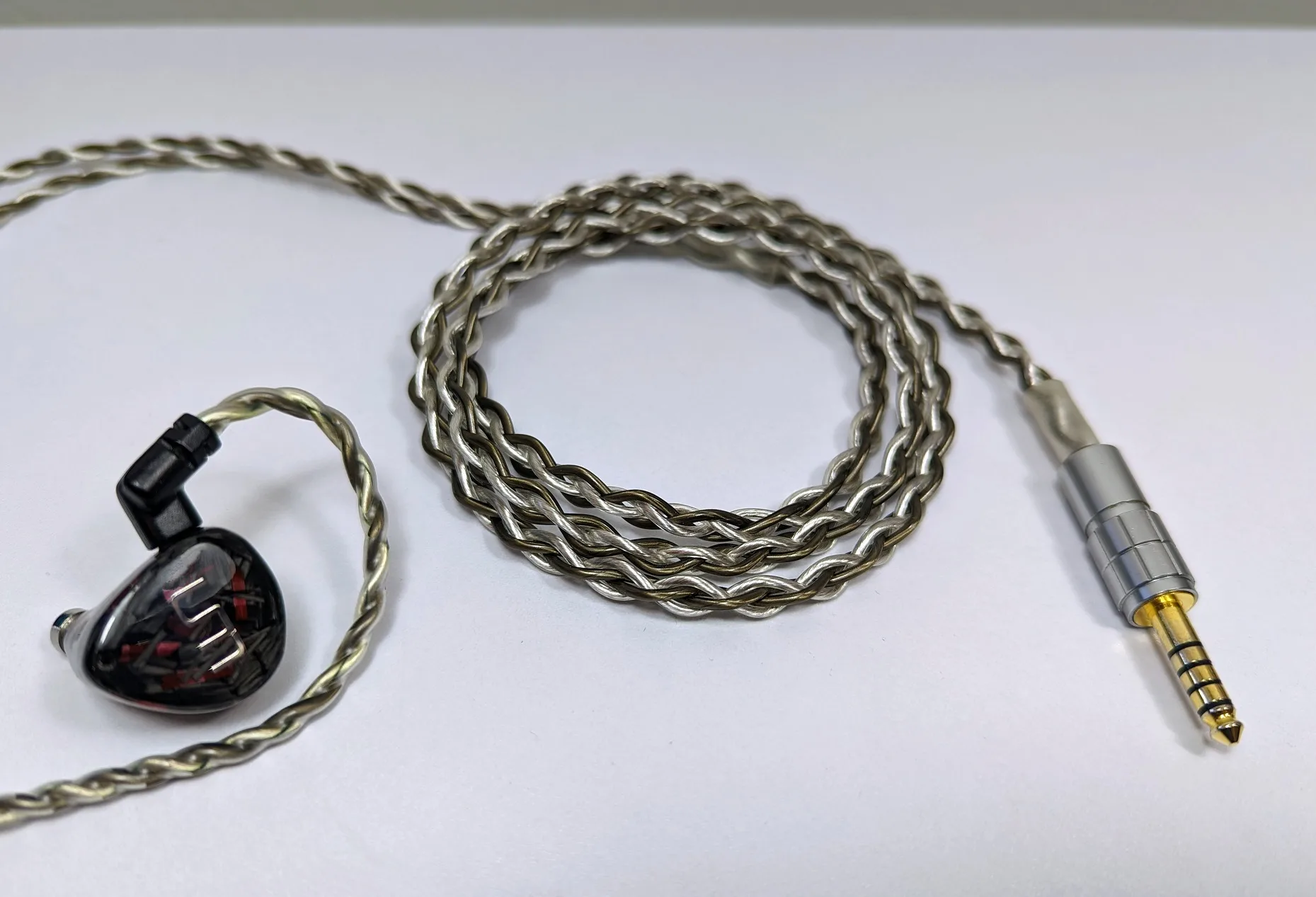
The headphones have a traditional 2-pin connector, so different cables can be used with them. Unique Melody's braided standard cable is pleasantly flexible and stays straight, so I wouldn't feel the need to change it for usability. The cable has a familiar hook-like design that guides it over the ear and behind the ear. The connector attaching to the audio source is a sturdy 4.4 mm balanced connector.
Element solution
Each earphone contains 8 drivers, which are exceptionally of four different types. As its biggest specialty, Mest includes a bone conduction driver, which is used in only a few headphones in a hybrid style alongside other drivers. The considerable mix of drivers in the headphones has been tuned into a functional whole with five crossovers as follows:
- 1 bone conduction driver ”beautifies” mid and high frequencies
- 2 electrostatic drivers reproduce the very highest frequencies
- 2 balanced armature drivers reproduce high frequencies
- 2 balanced armature drivers reproduce mid frequencies and the lower parts of high frequencies
- 1 dynamic driver reproduces low frequencies
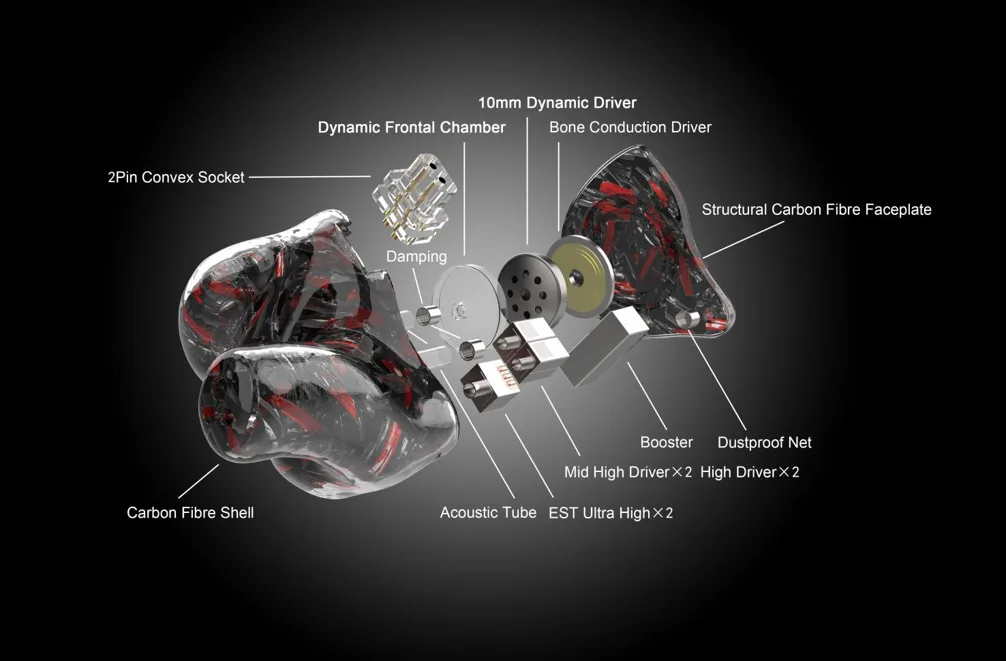
Bone conduction drivers are not a new invention, as they are used, for example, in hearing aids and some sports headphones that rest against the bone structure around the ears. The operating principle in the Mest model is that the vibration produced by the bone conduction driver is transferred to the body of the headphones and through it to the listener's ear, thereby forming audible sound.
Since I cannot feel the vibration caused by the driver when touching the body of the headphones, it is quite difficult to verify its ultimate effect on the sound. However, Mest sounds better to me the deeper it is in the ear, the more its body touches my earlobe. Perhaps this is some indication of the driver's usefulness and functionality?
Sound quality
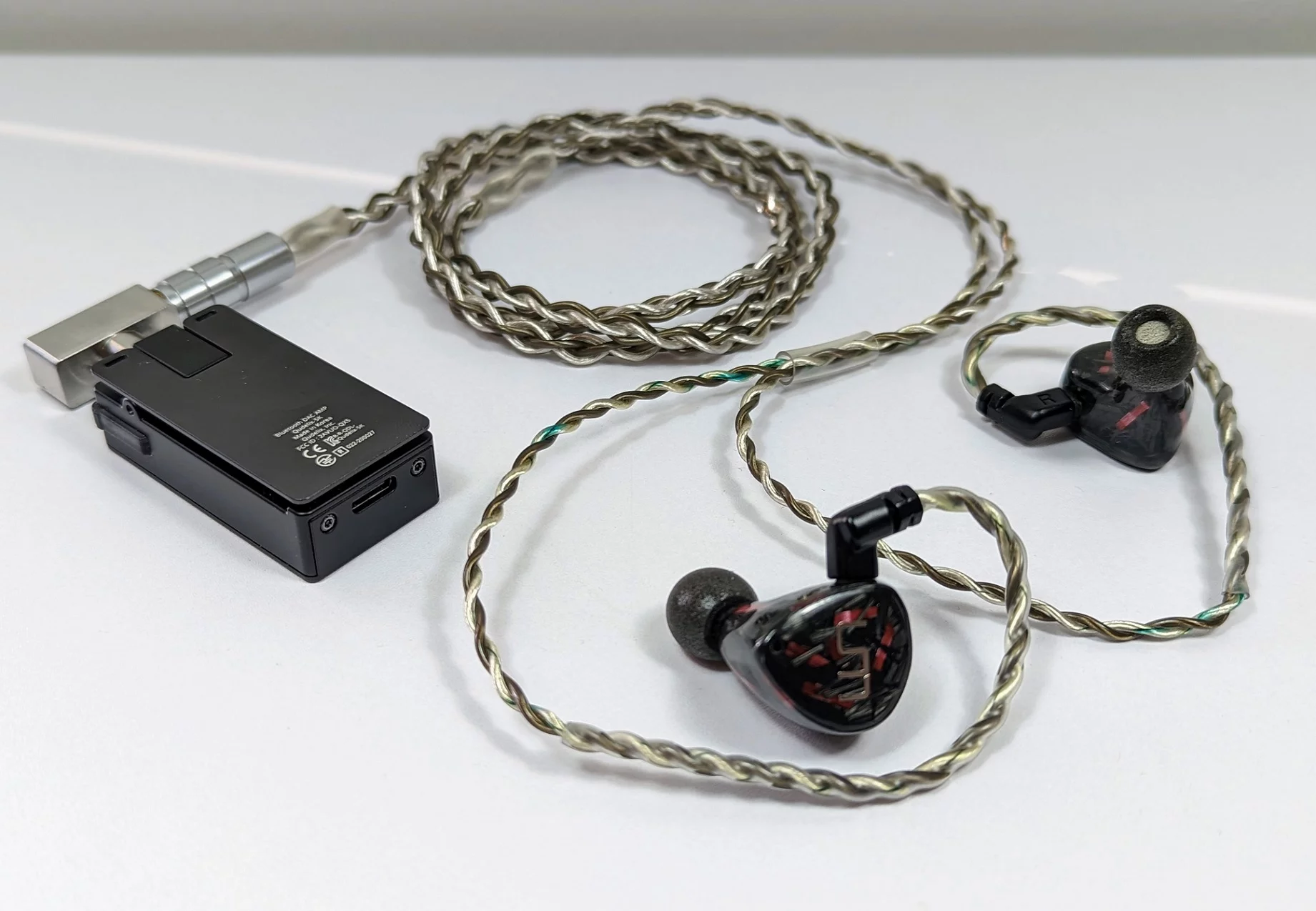
I have listened to the headphones with Comply foam eartips, with which I like the sound the most. I actually couldn't get the headphones to work properly with silicone eartips; the sound was really thin and bright with them. However, the foam eartips work well, and the soundstage is the widest and most interesting with Comply eartips.
As an audio source, I have mainly used the Qudelix 5K combination device with both Bluetooth and USB connections. Thanks to the headphones' high sensitivity (118 dB / mW), they can be played with almost any device, but at the same time, any potential background noise from the device is also easily audible. In addition, the device's output impedance should be close to zero, because otherwise, changes will occur in Mest's frequency response that may not be desirable.
I have measured the headphones' frequency response with a device that meets IEC711 standards and features a structure imitating the human inner ear. The device is accurate up to 10 kHz, but due to its internal resonance, it always measures some degree of treble peak between 7–10 kHz for in-ear headphones. In Mest's case, the treble is somewhat overemphasized around 8 kHz, so the frequency response is not entirely accurate in that respect.
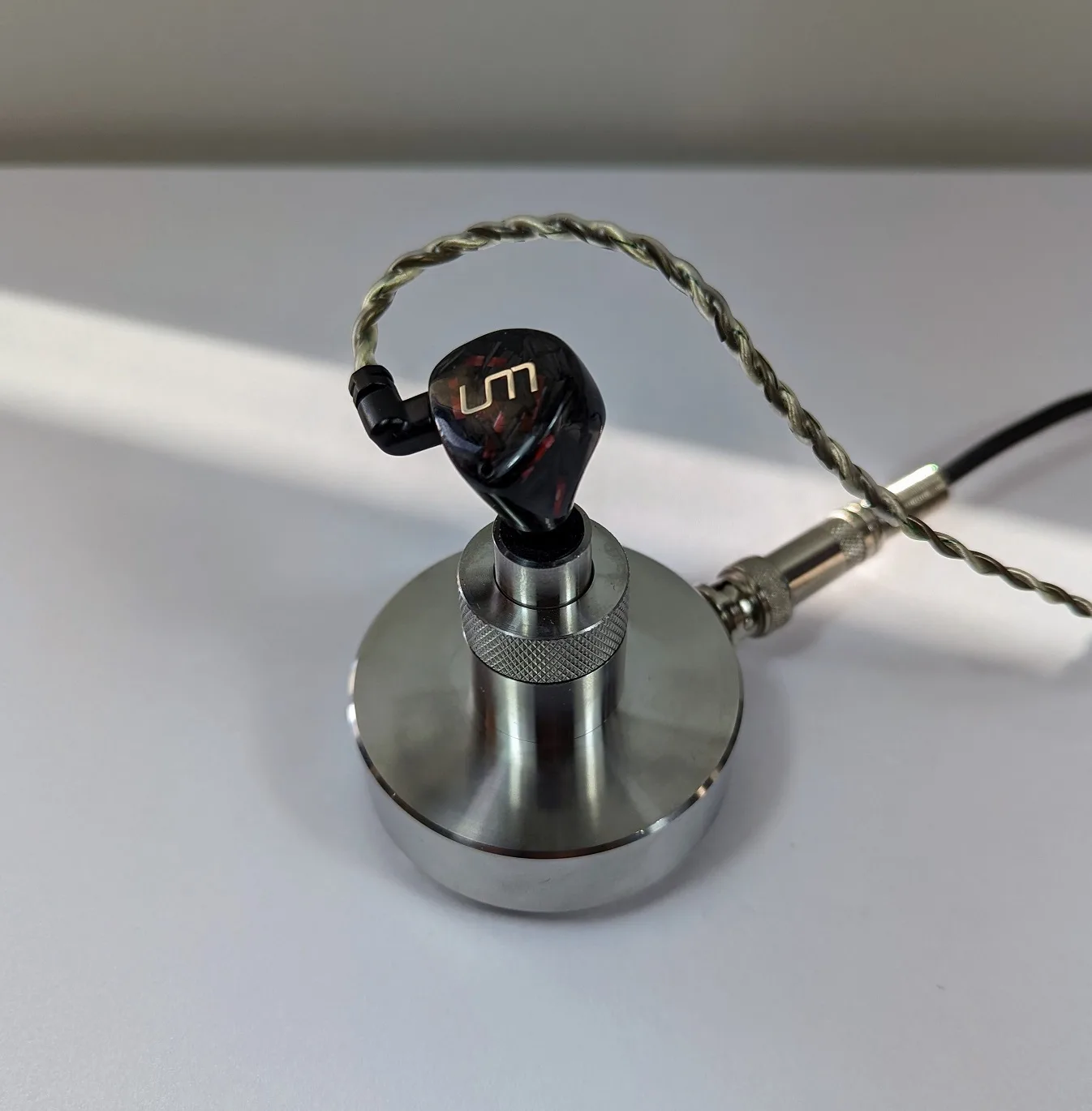
When it comes to in-ear headphones, it's worth noting that, similar to the measuring device, the length and shape of the human ear canal also significantly affect how the headphones actually sound to each individual. Even if the measured frequency response may appear flat and the reviewer calls the headphones balanced-sounding, another person might hear annoying emphases in the sound.
Depending on the characteristics of the ear canal, emphases are formed especially from 3 kHz upwards, and they are located at different frequencies for different people. My own observations about the sound of the Unique Melody Mest are therefore fully valid only for those who have a similar inner ear and hearing to my own. If it's not possible to audition the headphones before purchasing them, learning the relationship between the measured frequency response and one's own sense of hearing can be useful, because without knowing the reviewer's sense of hearing, it is the surest way to predict how certain headphones will suit oneself.
Headphone frequency response:
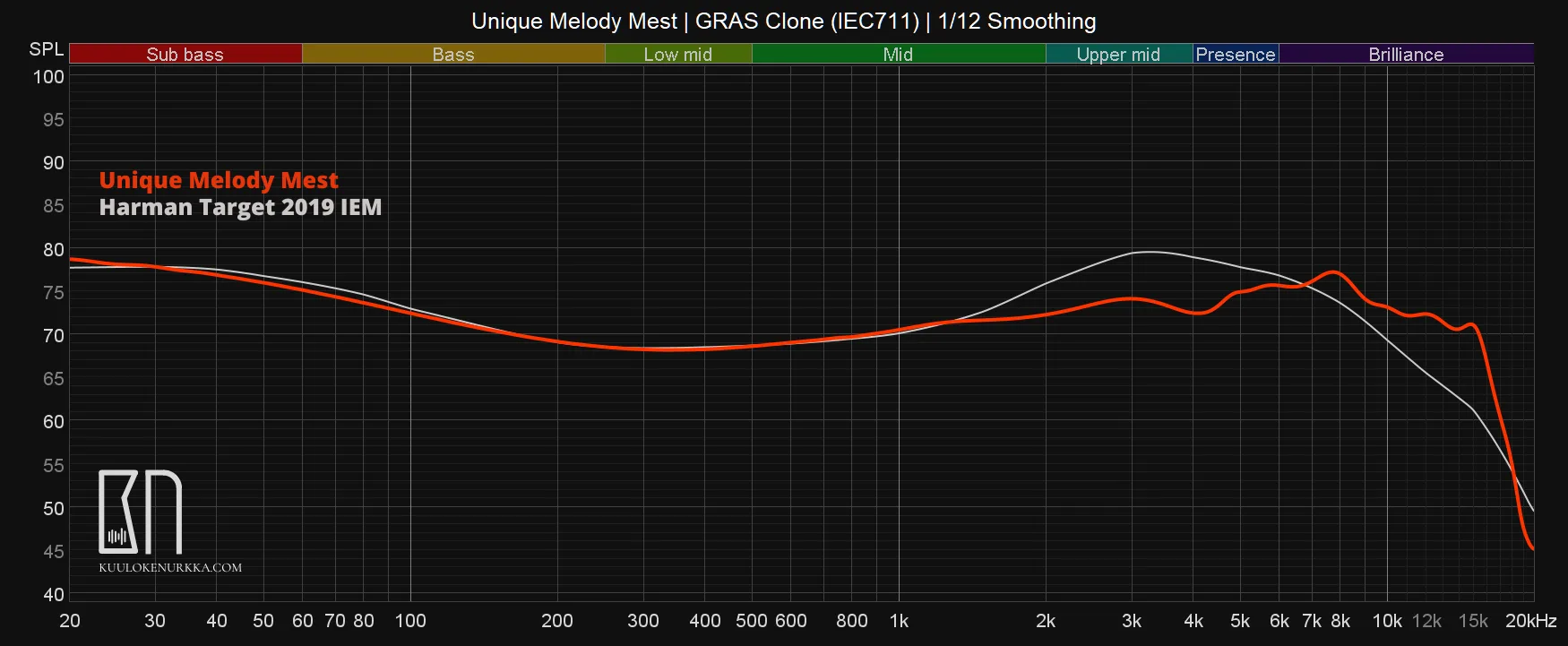
The Unique Melody Mest is interesting to listen to because its sound is a unique blend of different characteristics. The headphones have a slightly V-shaped tuning that emphasizes bass and upper frequencies, yet despite this, the mid-frequencies are very resolving and technically impressive. The reproduction always has a fun energy in addition to detail. When this combines with a spacious soundstage that spreads sounds widely in a 3D-like manner far outside the head, the listening experience is captivating. In my opinion, the Mest is completely worth its hype, but for a pricey product, it is so original that I cannot go around shouting recommendations for it to everyone on the street.
Bass:
The Mest's bass reproduction almost perfectly follows Harman's in-ear target curve in quantity, so there is an emphasized abundance of bass, and it also remains completely separate from the mid-frequencies. There is no muddiness whatsoever in the sound; instead, the bass is clear in all situations. The bass also always has a nice kick and, thanks to the dynamic driver, is natural in style.
In bass music, however, the result is less powerful and less enjoyable compared to 64Audio's more expensive U12t model, nor is the resolution at the U12t's level. On the other hand, the Mest does not emphasize upper bass frequencies at all, unlike the U12t, so I believe many would consider it quite neutral-sounding in a positive sense, despite its powerful bass. The Mest's bass reproduction should therefore please both those who like powerful bass and those who shy away from overly heavy bass. Overall, I am satisfied with the result.
Mid-frequencies:
The headphones' mid-frequencies are interesting in the sense that the measured frequency response gives a completely misleading impression of the result (at least to my own hearing). One might imagine the upper mid-frequency reproduction between 2–4 kHz to be somewhat attenuated and congested, but the presentation is actually lightly energetic and downright supernaturally resolving (more on this in connection with the soundstage). The sound has an effortlessness and a certain captivating sensitivity, which suits female vocals well, for example.
The result has much in common with Sennheiser's HD800 model, as both have a bright-leaning reproduction, and they reproduce small details very briskly and airily. Unlike the HD800, however, the Mest also has good bass reproduction, making it a very versatile headphone in addition to its detail. Those craving a full and warm mid-frequency reproduction might still be slightly disappointed.
Although I myself generally prefer a slightly fuller and more relaxed reproduction, the Mest manages to be sufficiently balanced despite its somewhat aggressive presentation, so that the sound does not feel unrealistically thin to me. Despite the emphasis on upper frequencies, I do not detect any sibilance in the sound, so listening to the headphones is easy in that regard.
Treble:
The Mest's highest frequencies sound so fresh and airy that I perceive the headphones' sound as slightly bright, even though the powerful bass reproduction balances the overall presentation well. Fortunately, the treble that comes to the forefront of the overall sound is not annoyingly sharp in style, but softly smooth. Stylistically, the upper frequencies differ somewhat from the more sharply reproduced mid-frequencies, which is likely due to different drivers. Despite the softness, the separation of individual sounds in the upper frequencies is excellently precise. There is also no graininess or individual jarring irregularities in the treble. In my opinion, it would be hard to find a higher quality implementation of a slightly bright sound.
However, I have noticed that for optimal treble, the headphones need to be pushed as deep as possible into the ear canal. Otherwise, for example, drum cymbals reproduce too shimmery for my taste. I initially wondered about the variation in sound brightness between listening sessions until I realized I had inserted the headphones into my ears differently. From then on, when I noticed a song sounding too treble-heavy, pushing the headphones deeper usually made the sound just right, even when listening to rough heavy metal music. For lovers of calm treble, the sound might still be too bright at times, so in my opinion, the Mest would be somewhat of a risky purchase for such a target audience.
Audio description:
The absolute best individual aspect of these headphones is their unique 3D-style soundstage. The Mest places the vocalist faithfully and clearly defined in the center of the soundstage. There isn't a huge amount of depth in the sound, so most often the vocalist is positioned, in a way, inside my head. At the same time, however, all other instruments and sounds spread out very widely in width, extending outside the head in the style of good over-ear headphones.
The headphones actually overemphasize the movement and separation of sounds, so I often find myself turning my gaze from side to side, following sounds as they travel. I have not encountered a similar soundstage in other in-ear headphones, let alone in many over-ear headphones. Thanks to its unusual soundstage, the Mest is a truly unique headphone, and listening to it is fun and captivating. The result may not necessarily be normal or even realistic, but I don't perceive any downsides to it either.
Unique Melody Mest vs. 64Audio U12t
Prices: approximately 1400 € vs. 2200 €
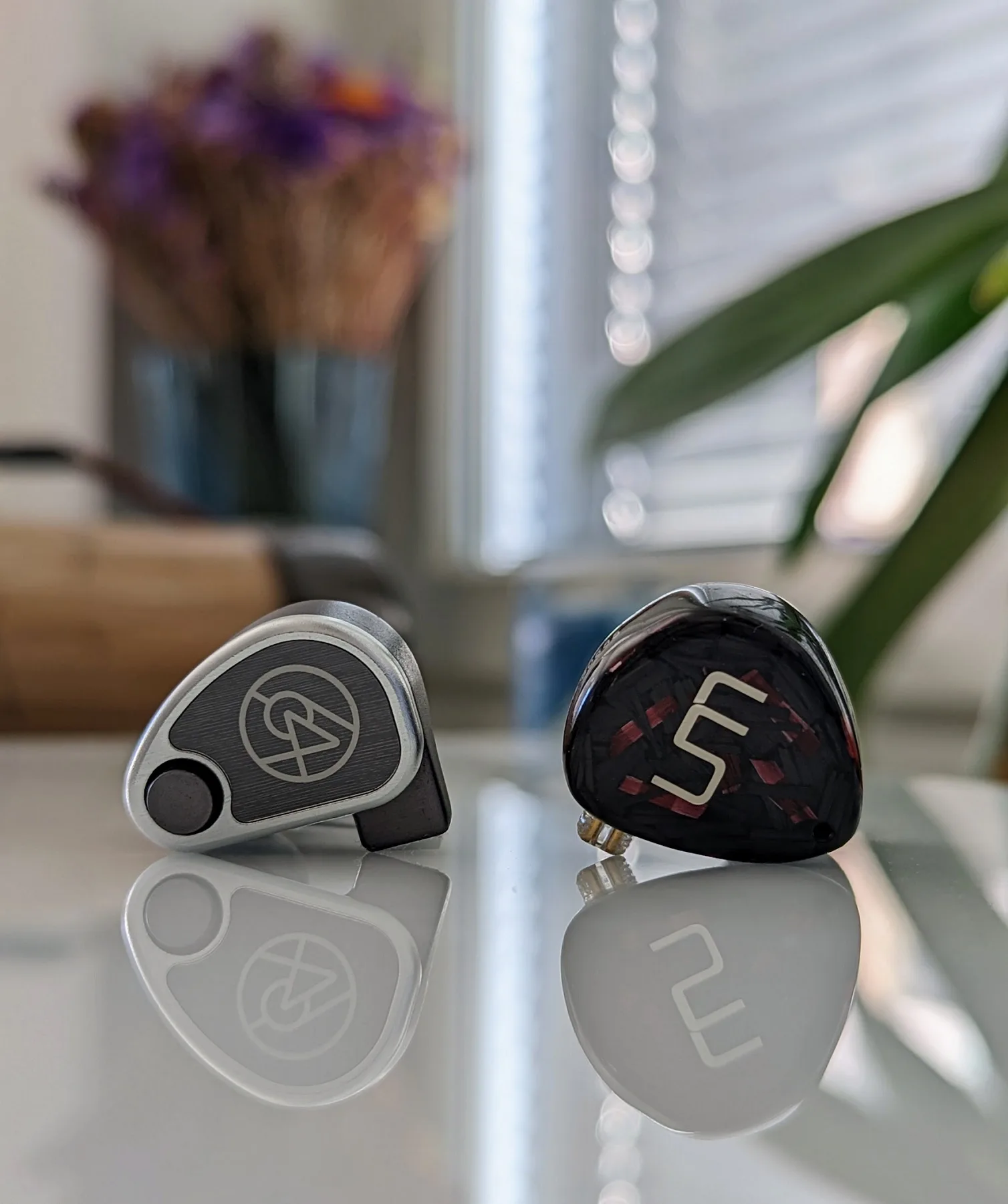
I also had the 64Audio U12t headphones on loan at the same time as the Unique Melody Mest, about which I already published a separate review. Although there is a price difference of 600–800 euros between the two, comparing the headphones is interesting, especially since I haven't heard any other in-ear models available in either price range. Technically, the duo is actually very close to each other, but in terms of tuning, they are not very closely related.
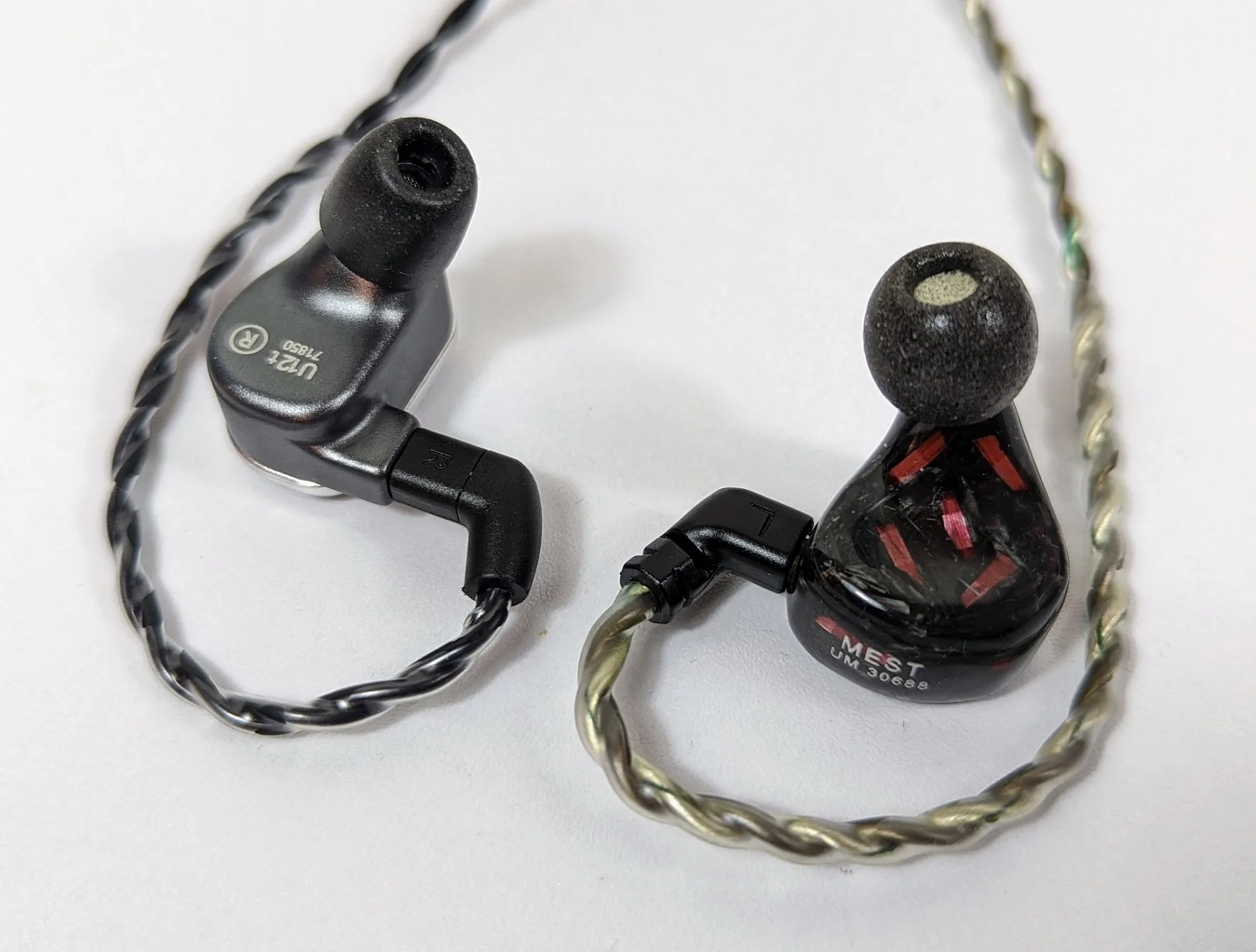
In my opinion, the U12t wins in terms of physical construction, as it is made of sturdy aluminum, and the headphones are smaller and more nimble than the Mest. The U12t also has easily replaceable Apex modules, which can be used to adjust the sound. The Mest does not include such adjustment possibilities.
Headphone frequency responses:
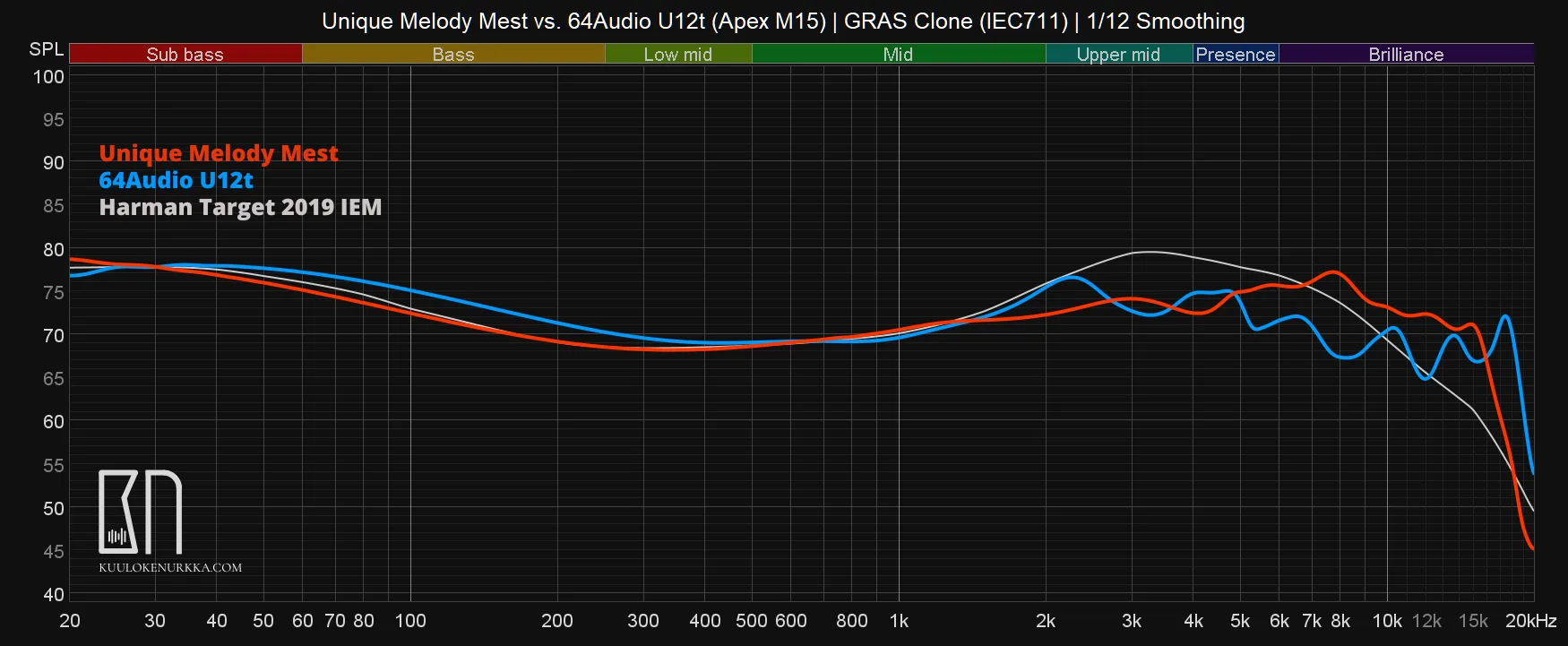
Both the Mest and U12t are fantastically detailed in-ear headphones that compare equally to expensive over-ear models. In terms of tuning, the Mest aims for a more energetic and brighter sound, while the U12t is clearly fuller and calmer sounding. These stylistic differences are clearly evident from my measured frequency responses: the U12t emphasizes lower frequencies more in reproduction, and the Mest emphasizes upper frequencies.
Bass:
The U12t's bass reproduction makes a greater impression on me, as it is more powerful compared to the Mest without clear drawbacks. The U12t's sub-bass creates more sound pressure in reproduction, which is a good thing not only for bass music but also in situations where the music's volume varies in a cinematic, bass-heavy manner. With the Mest, similar explosive volume changes remain somewhat subdued, even though the headphones have a quantitatively large amount of bass. The U12t's fuller upper bass also makes all instruments sound pleasantly weighty, which I personally consider a more realistic outcome than the Mest's lighter sound.
The Mest's bass reproduction still has its own advantages. Thanks to the dynamic driver, the lower frequencies sound more natural in texture and in a way less "dead" than the U12t's bass implemented with balanced armature drivers. Because the Mest's bass also remains more clearly separated from the midrange, less attention is paid to the bass when listening than with the U12t. In my opinion, this is a positive thing for many, as not everyone likes the emphasis on upper bass frequencies.
Mid-frequencies:
The U12t's warmer and calmer presentation of midrange frequencies suits my preferences, but the Mest is in a good way more exciting and sensitive sounding, so I can't ultimately choose my favorite between the two. The midrange of both headphones is clear and detailed. The U12t is more relaxed to listen to, while the Mest, for example, pushes the vocalist more to the foreground in the overall sound.
The U12t has a slight advantage in detail, as it reproduces the 1.5–2.5 kHz frequency range more audibly. Thanks to its more relaxed presentation, the sound is also easier to analyze at leisure. The Mest is at times too energetic, making it feel like a less refined overall package. However, it is entirely a matter of taste whether someone prefers the U12t's fuller and more powerful sound, or the Mest's snappier and lighter style.
Treble:
The Mest's treble comes more brightly to the foreground, while the U12t's upper frequencies blend more calmly and seamlessly with other frequency ranges. Both sounds have airiness and excellent sound separation. The Mest feels less refined of the two, as if it's trying to make a greater impression on the listener with its treble emphasis. However, I like this kind of rebelliousness, because the headphones' treble is still high-quality and easy to listen to. I am even a little surprised by how much the Mest's energy appeals to me. For example, I like the powerful impact sounds of drumsticks and the snappy crack of the snare drum. The U12t reproduces treble more restrainedly and maturely.
I have not encountered situations where the treble of either headphone would grate on my ear. In my opinion, the U12t is better suited for those who do not want the treble to draw too much attention. Similar to the midrange, the relaxed presentation of the treble has positive effects on the detail of the reproduction and the ease of perceiving individual sounds. When listening to the Mest, I often pay more attention to the quantity of treble than its detail. However, considering its more affordable price, the Mest performs very competitively.
Other differences:
The Mest's soundstage is more open and wider, while the U12t's sound has a bit more depth. The U12t's soundstage has clear, relatively close boundaries within which the sound remains. The Mest, on the other hand, allows the sound to spread around me so that I don't feel like I'm listening to headphones. I cannot emphasize enough how much I like the Mest's soundstage, even though the U12t would probably sound more normal and easier to assimilate for many others. The soundstage of both headphones is truly accurate in terms of sound separation and placement.
Concluding remarks:
When listening to the headphones consecutively, the U12t sounds like a more comprehensive and refined product, which I believe is at least partly due to the fact that the headphones are implemented with a single driver type. Although the Mest's several different drivers have been successfully integrated, the frequency ranges differ somewhat stylistically from each other, making the end result inevitably slightly inconsistent. In my opinion, this is not a real problem, but partly for this reason, I consider the U12t model a slightly better and more balanced headphone.
However, the U12t lacks the Mest's magnificent soundstage, which ultimately makes me more enthusiastic about listening. The Mest is an excellent alternative if some of the sound's technicality is to be exchanged for fun and listening interest. The new mk2 version is, according to what I've read, quite similar, so I would probably like it at least as much. The headphones are also significantly more affordable than the U12t. The Mest, therefore, evokes more desire for ownership in me.
Summary
I generally like products that stand out from the crowd, so I'm not greatly surprised that the Unique Melody Mest inexplicably draws me in. Although I would wish its tuning to be slightly fuller and less bright, I could own these headphones purely for their unique soundstage. The Mest is also exceptionally detailed for a slightly V-shaped headphone. Listening to it is always fun and interesting, but of course, I cannot promise that the presentation style I describe in the review will please everyone. Due to the bright treble, there are risks involved in purchasing these headphones. The end result can also vary depending on the ear tips used and the fit in general.
The headphones, however, seem to suit not only my preferences but also those of many others, so they rightfully have their own fanbase, which I think I just joined. For me, 64Audio's U12t is still a better headphone and worth its extra price, but its perfection is sometimes even a bit boring, whereas Mest manages to detach me better from reality. My life situation always reflects in my reviews in one way or another, so the fun offered by Mest interests me more amidst current work pressures compared to U12t's more serious approach – another time the situation might turn the other way around.
Situation update: I ended up buying the borrowed headphones for myself because I couldn't bear to part with them.
Pros and cons:
+ Detail and excellent sound separation
+ Energetic and clear mid-frequencies
+ Clear, powerful, and natural bass reproduction
+ High-quality and lively treble
+ Unique and exceptionally spacious soundstage
+ Comes with a high-quality and user-friendly cable
+ The carrying case is usable
+ Interesting carbon fiber structure
+ Does not require a powerful amplifier
– There are stylistic differences between frequency ranges, so the result is somewhat inconsistent
– Mid-frequencies would need a touch more warmth and body
– Treble might be too much for some tastes, and its amount can vary depending on, among other things, the ear tips used and the fit of the headphones
– Requires a tight fit to sound good
– Physical size is quite large for in-ear headphones
– Despite its young age, only available used anymore and the mk2 model costs more
 EN
EN  FI
FI