Author: Sword of Damocles
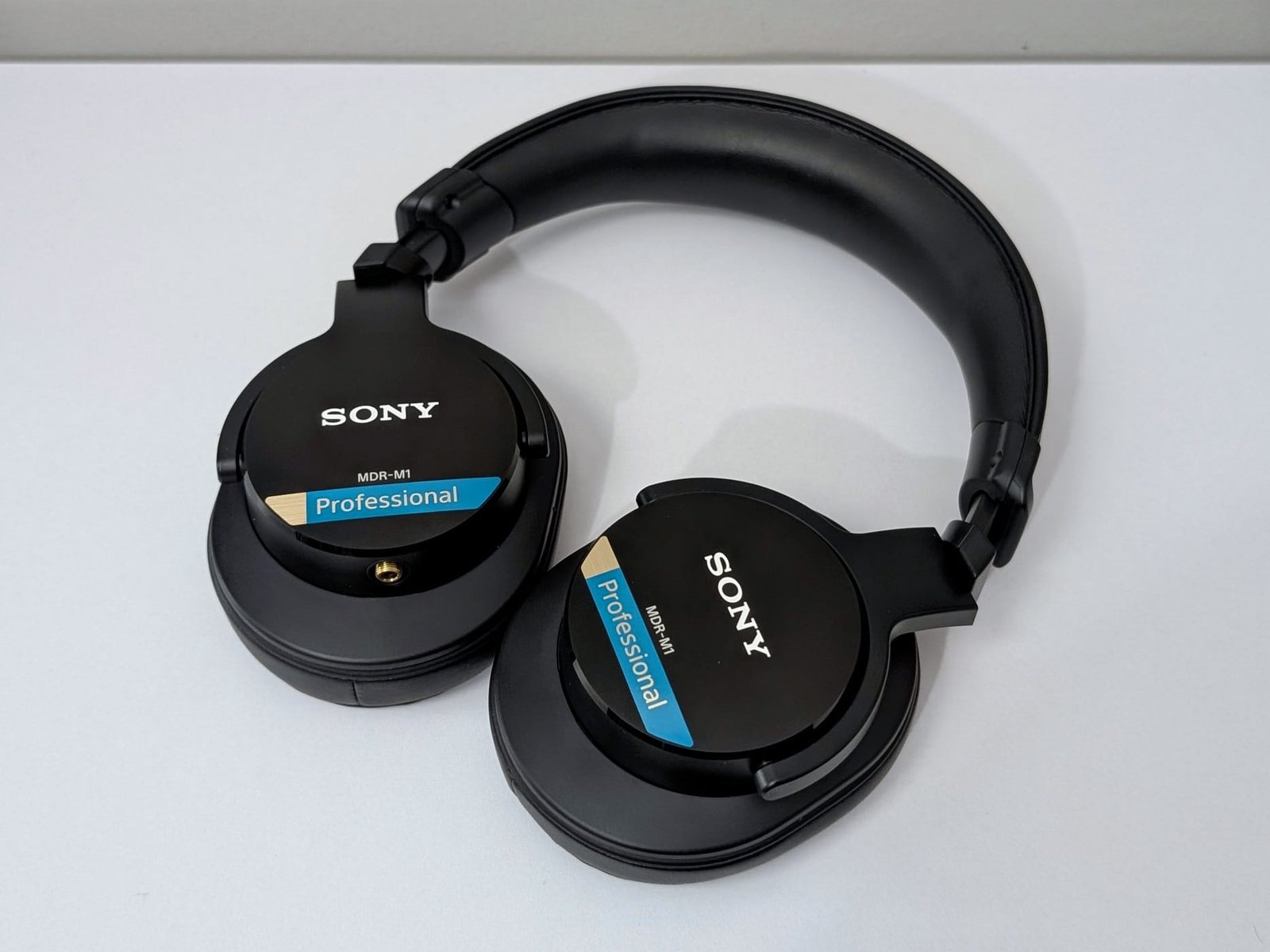
Table of Contents:
Information:
- Release year: 2024
- Country of manufacture: Thailand
- Price: 260 €
- Type: Closed, over-ear
- 40 mm dynamic drivers
- Impedance: 50 Ohm
- Sensitivity: 102 dB/mW
- Weight: 216 g (without cable)
- Connector type: Lockable 3.5 mm
- 2 cables: Lengths 2.5 m and 1.2 m / both with 3.5 mm plug + 6.35 mm adapter
- Accessories: None
Review unit: Loaned by the manufacturer
Sony's MDR-7506 from 1991 is an almost legendary studio headphone, still sold for around 100 euros, unlike the manufacturer's numerous newer headphone models that never managed to displace the old warhorse among music professionals. At least the MDR-7502 (1998), MDR-7505 (1999), MDR-7509 (1999), MDR-7509HD (2006), and MDR-7510 (2011) have largely disappeared from the market in favor of the MDR-7506.
In 2019, however, Sony once again attempted to renew its pro lineup by releasing the MDR-M1ST headphones in Japan as a potential successor to the local CD900ST model (the ”7506” sold in Japan). Now, the one I am reviewing, MDR-M1 (price 260 €) is, in turn, the international successor to the MDR-7506, released in 2024. Since headphone versions aimed at the Japanese market have always differed in sound from international models, the MDR-M1ST and MDR-M1 differ from each other, just like the CD900ST and MDR-7506. The MDR-7506, familiar to us, is known as a rather bright-sounding headphone, so it has been interesting to find out what Sony's vision for studio headphones in the 2020s is like. I received the MDR-M1 for testing directly from the manufacturer without any accompanying message or prior notice, so let's thank Sony for such a surprise.
Packaging and accessories
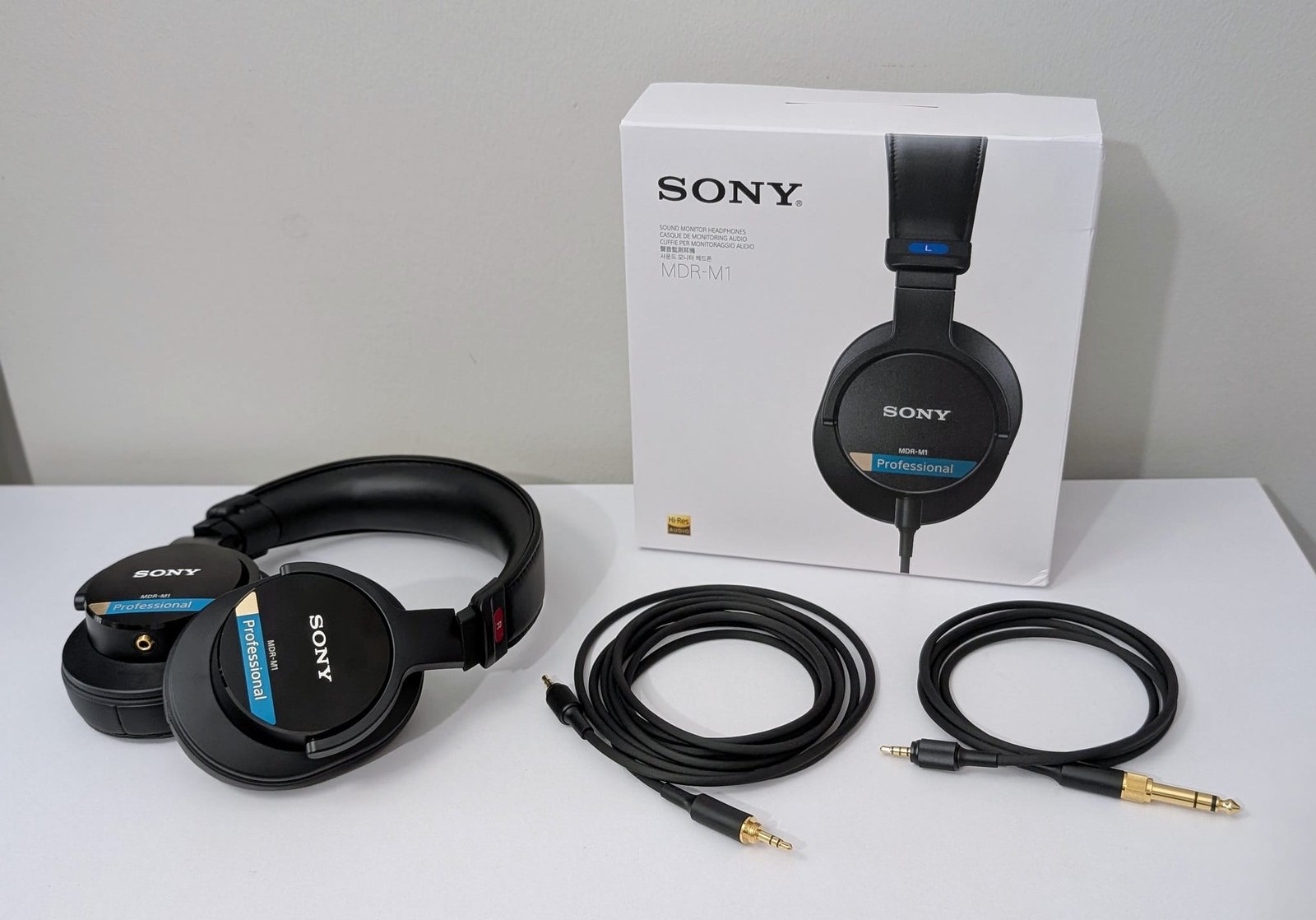
The MDR-M1 arrives in Sony's typical ecologically packaged manner, meaning essentially just slipped into a flat cardboard box without frills. Considering the target audience for these headphones, I don't disapprove of this, even though headphones of a similar price are usually packaged more elaborately.
The buyer receives two cables of different lengths, the shorter one being 1.2 meters long and the longer one 2.5 meters. Both use a 3.5 millimeter connector as the plug, or alternatively a 6.35 mm with an adapter. The cables attach to the headphones with a single 3.5 mm connector (which would also support a balanced cable), whose rotatable body can be locked into the cup. The locking mechanism is good because it also doesn't prevent the use of standard cables. Furthermore, the headphone connector is positioned high enough so that a cable pointing straight downwards does not rub against my shoulder during use.
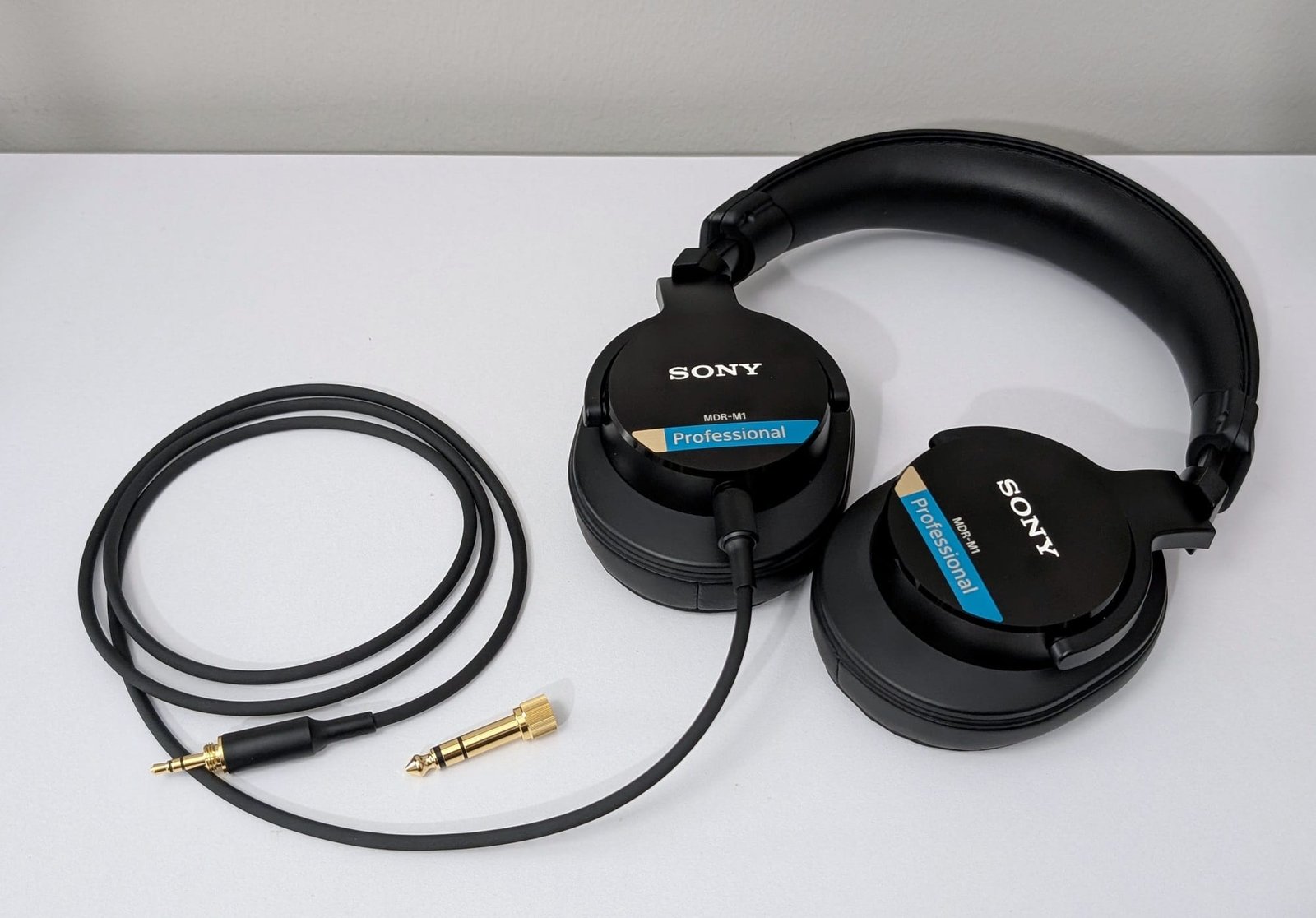
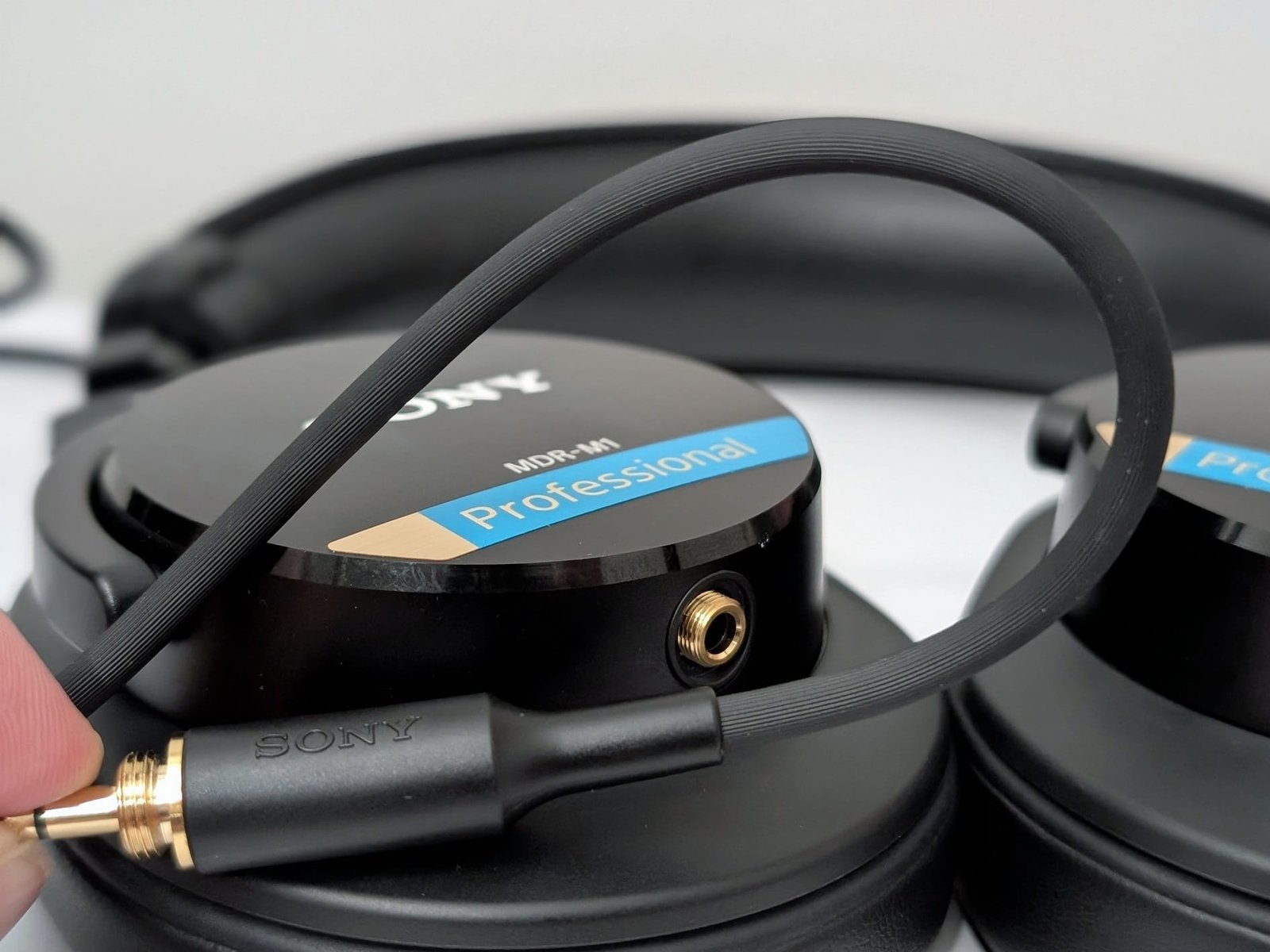
The cables supplied by Sony are simple in structure, but remain straight and tidy. They have also not been factory packed in such a way that steep creases would have formed in them. The surface material is some kind of plastic, along which run small longitudinal grooves. However, microphonics are not avoided, as a fairly strong rustling sound reaches the ears from the cable rubbing against clothes. For some reason, only a few manufacturers realize to take this into account in their cable design.
If there was one thing I would have still hoped to see in the MDR-M1 package, it would be some kind of storage case or pouch. All kinds of accessories are completely absent, unless the second included cable and the 6.35 millimeter adapter are counted as such. Sony's approach is minimalistic, for better or worse.
Build and comfort
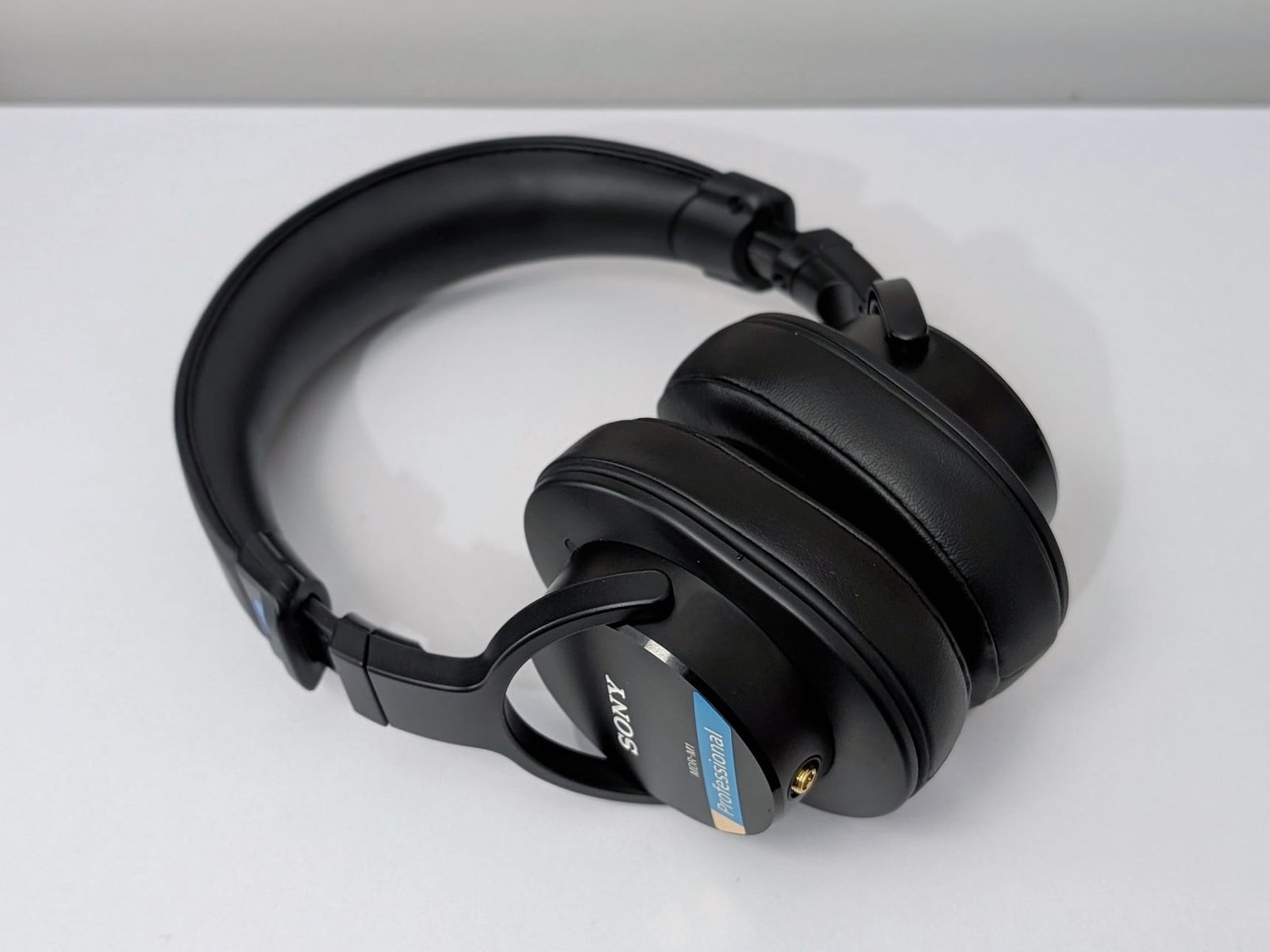
The general design of the MDR-M1 does not differ much from the old MDR-7506, meaning it is a sleek and lightweight headphone, weighing only 216 grams. Although this is explained by the plastic construction, the impression of quality is actually not bad, but even manages to surprise me. The headphones are designed sensibly and the fit of the parts is tight. The cups also swivel smoothly in different directions, and the height adjustment notches click into place exceptionally satisfyingly. Even when stretching the structure, no cheap side noises are heard; instead, the steel headband feels almost perfectly linear in its stiffness. Good job, Sony!
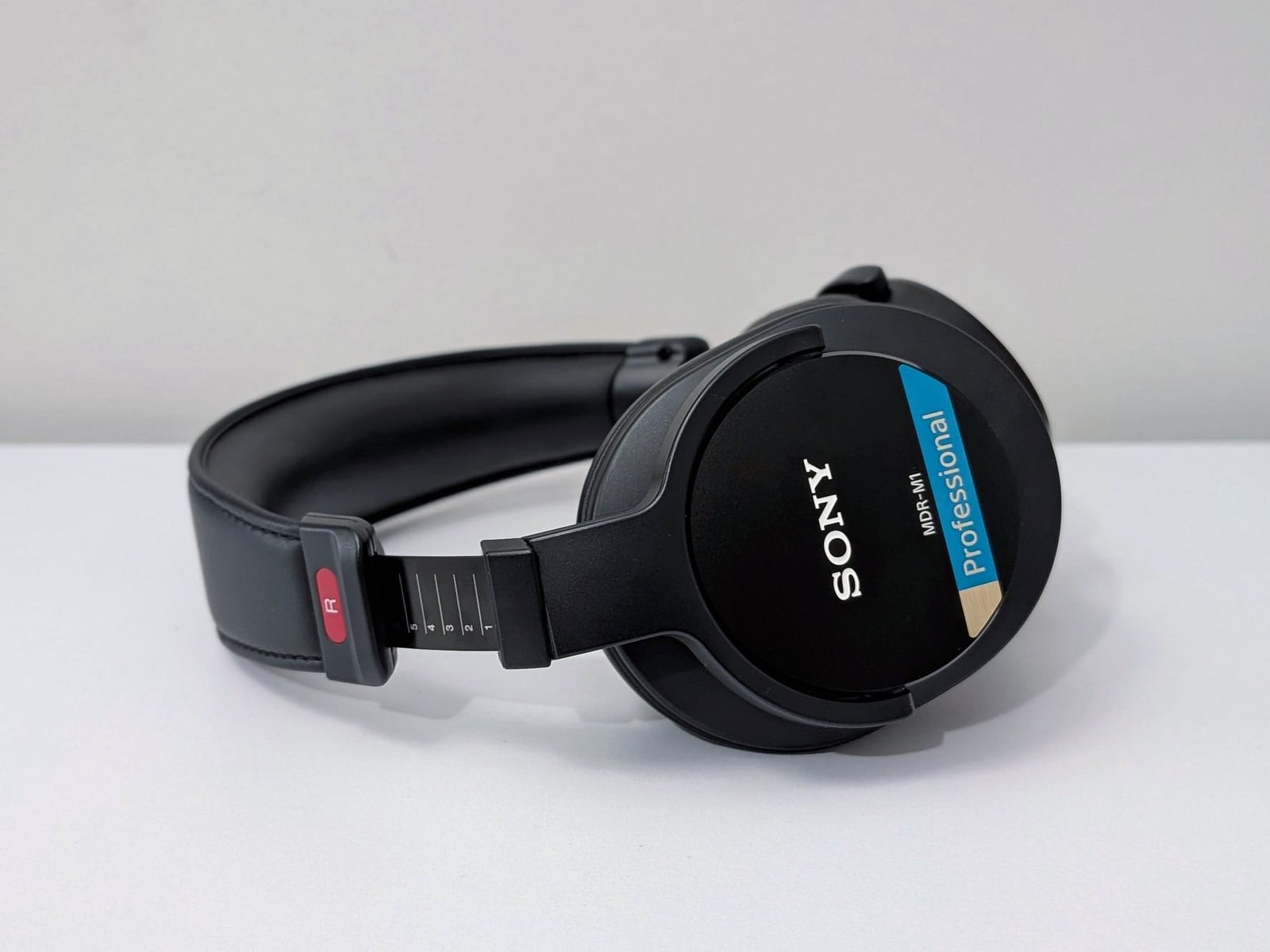
My positive impression continues with comfort, as I could easily wear the MDR-M1 on my head all day. The light weight, extremely gentle clamping force, and sufficiently large ear pads make the headphones truly comfortable and unobtrusive. For a weight of just over 200 grams, an even more modest headband would probably suffice, but Sony has made it wider and better padded than usual. I can't think of any complaints, except that the chosen faux leather material might cause sweating in summer use, and the head pad does not seem to be easily replaceable after wear. The ear pads, however, are easily removable, as their rim is stretched around the driver's frame without much effort.
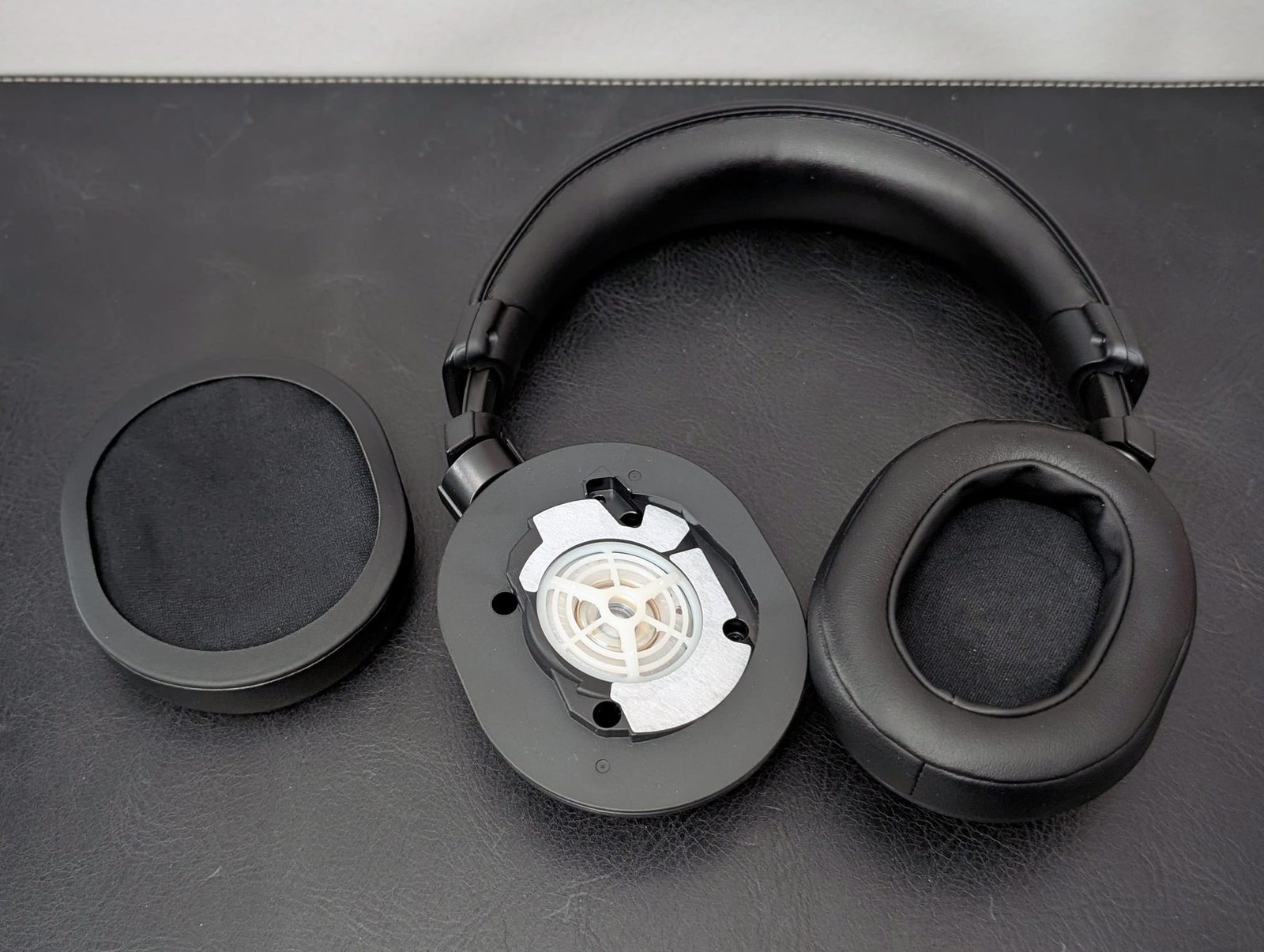
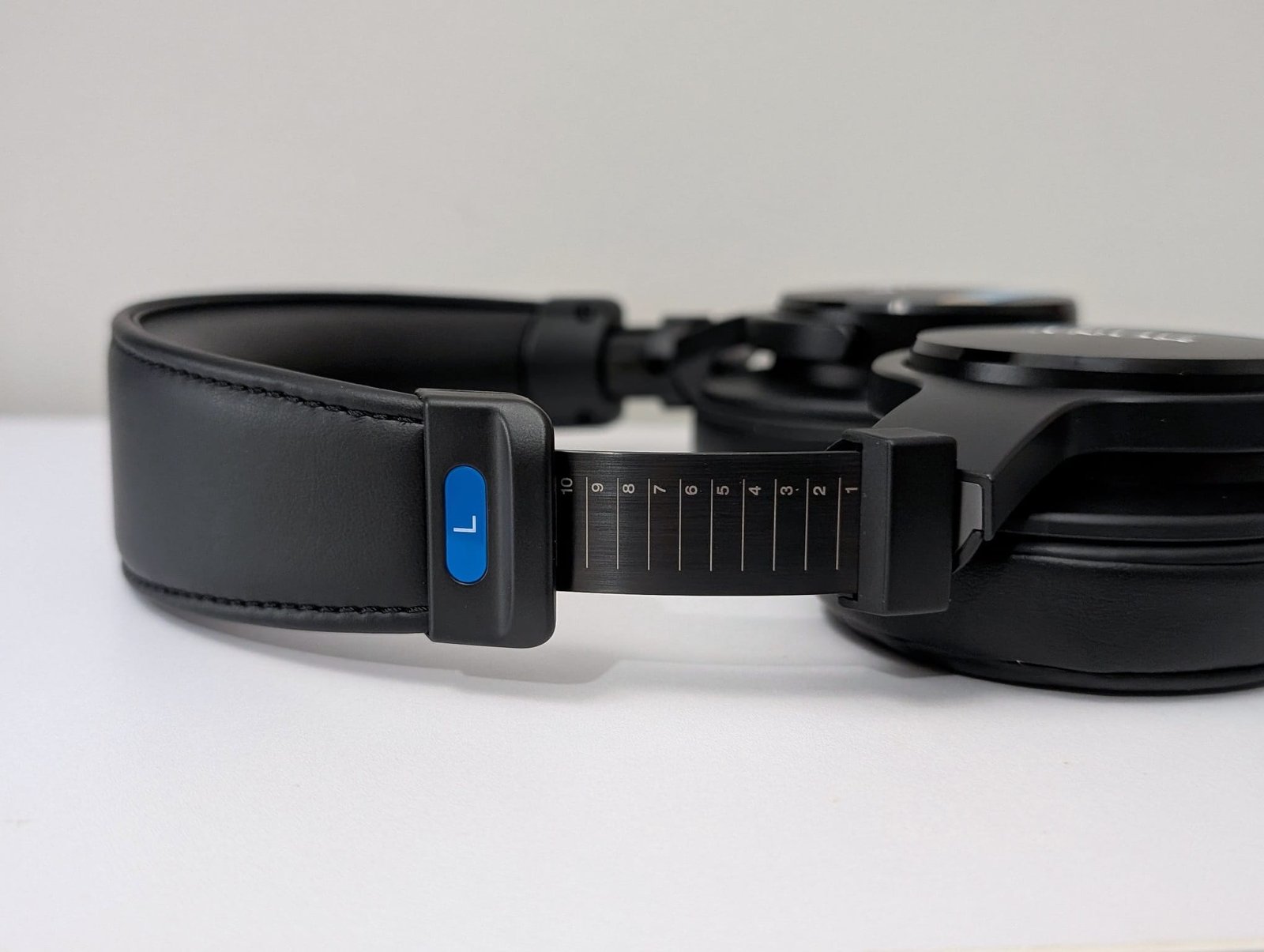
Sony has further facilitated the use of its headphones by adding clear numbering to the height adjustment and visibly marking the right and left cups on the headband with red and blue. The headphone cups also swivel horizontally in the most optimal way when placing the headphones on a table: the ear pads rest against the table. In noise-cancelling headphones designed for mobile use, the situation is usually the opposite, because the pads are desired to rest against the chest when the headphones are lowered around the neck.
Sound quality
Our frequency response measurements have been made with a clone IEC-60318-4 coupler and KB501X pinnae. The Harman target curve from 2018 is used as a reference point and generalization of the headphone response that would sound good to most people. For more information on the measurements and their accuracy, see Headphone Measurements-page. The frequency response of the MDR-M1 is also comparable with other measured headphones Squiglink .
Impedance curve and amplification requirement:
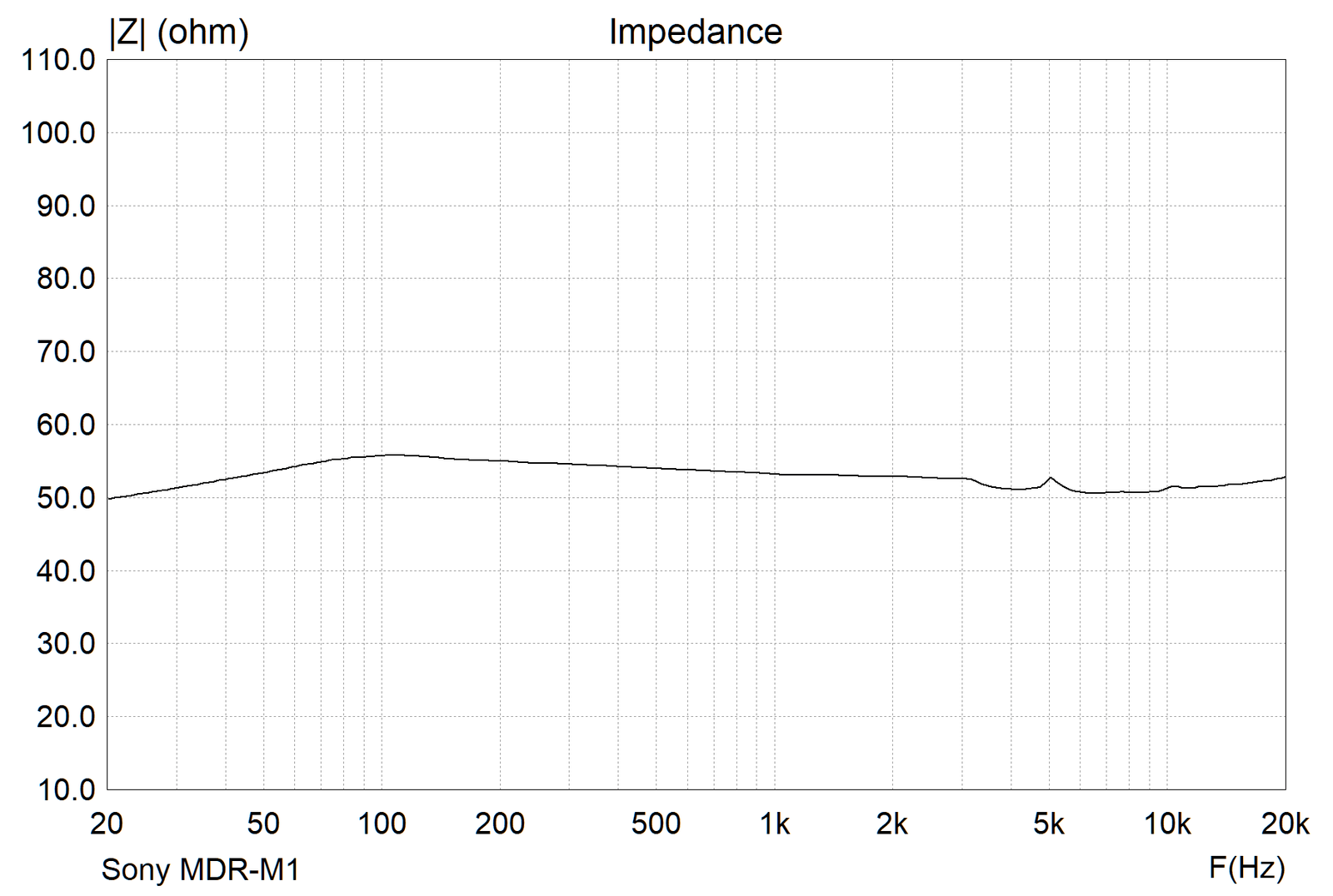
The impedance curve of the MDR-1 is very flat considering dynamic drivers, so the frequency response of the headphones remains practically unchanged even if the output impedance of the amplifier in use is not close to zero. This serves studio use well, as professionals may have very different audio sources at hand. Especially older devices are often implemented with high output impedance, which may change the sound of headphones with an uneven impedance curve because different frequencies are amplified with different intensities. Typically, this would mean an increase in bass reproduction for dynamic headphones, which would hardly be a particularly desired feature in professional use. The impedance curve of the older MDR-7506 has been measured to be clearly more uneven, so the MDR-M1 is a clear improvement in that regard.
The side effects of an uneven impedance curve could be compensated by making the nominal impedance of the headphones high (150–600 ohms), but thanks to the flat impedance curve, Sony has been able to implement the MDR-M1 without worry with a fairly low impedance of about 50 ohms. When this is combined with a relatively high sensitivity (102 dB/mW), reproducing sound with the headphones is easy. The sound of the MDR-M1 does not generally seem to change significantly in style with different amplifiers, which is why I have not tested a large number of different devices in connection with this review. For example, Qudelix 5K and the headphone output of the Macbook Air (M1 version) produce sufficient amplification for my taste. Of course, with the 2000 euro Ferrum Audio OOR amplifier, I have probably at least explored the maximum potential of the headphones.
Frequency response:
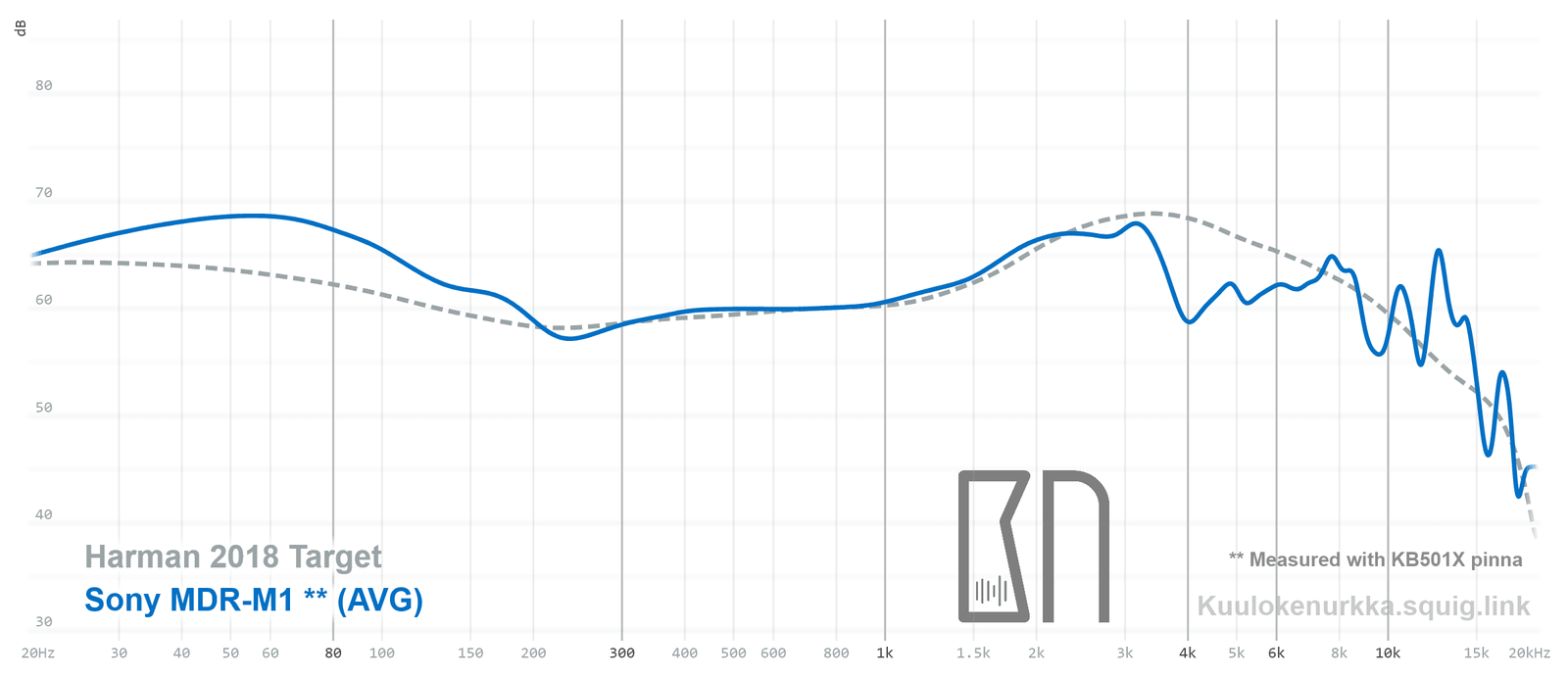
The MDR-M1 is a fairly neutral-sounding headphone, which nevertheless reproduces bass more robustly than usual and the presence region (4–6 kHz) somewhat subdued. These colorations make the presentation robust and slightly restrained, even though there is otherwise just enough energy in the mid-frequencies. My attention is mainly focused on the lower frequency regions due to the lack of sharpness and freshness in the presence region, while the upper frequencies remain partly in a supporting role. On the other hand, the airiness of the highest treble balances the overall sound to such an extent that the end result does not sound actually wrong, but rather more relaxed than usual. Despite its studio nature, the MDR-M1 thus prioritizes a non-fatiguing listening experience over bright treble and searching for musical flaws. Based on my findings, however, the colorations should not prevent studio use, and in some work stages, they might even be beneficial.
One of the most interesting features of the headphones I would highlight is the fun bass reproduction. The MDR-M1 emphasizes the region below 100 Hz rather than the upper bass frequencies (150–300 Hz), so it doesn't sound soft or muddy, but rather robustly punchy. Occasionally, due to the large amount of bass, there is a slight bloat in the sound, but generally, the headphones do not color the music so heavily that I would find it distracting or that it would significantly impair the clarity of the mid-frequencies. When listening to music with more bass, the MDR-M1, in turn, rumbles in a fun, physical way compared to, for example, Sennheiser HD 620S, which reproduces sub-bass significantly more subdued. With a more neutral presentation in mind, I would EQ the MDR-M1's bass down a few decibels at 70 Hz with a small Q-value, but frankly, I really enjoy the robust sound as it is. It's a shame that Sony doesn't tune the low frequencies of its noise-cancelling headphones in a similar way, but instead overemphasizes the upper bass.
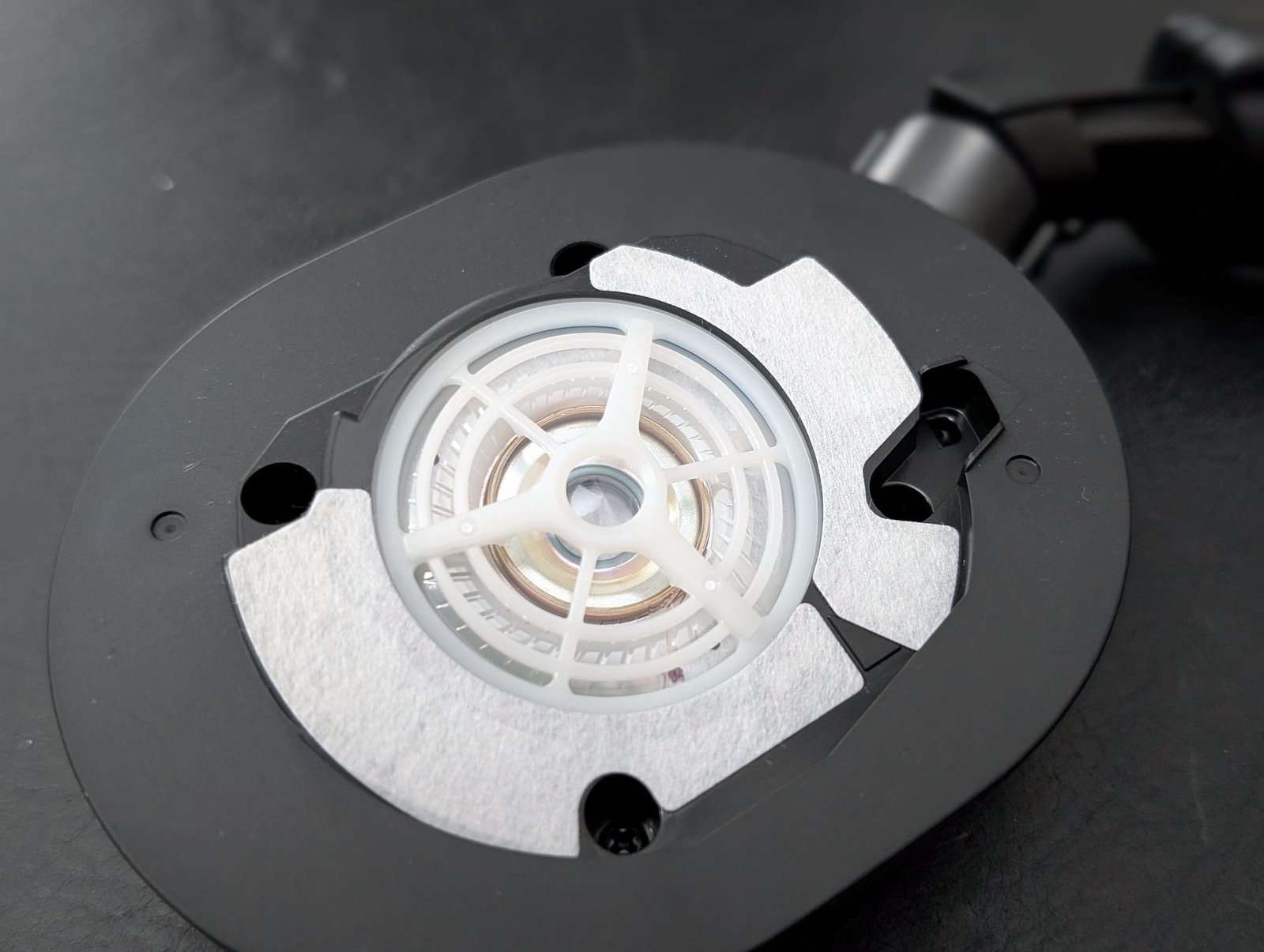
The calmly reproduced 4–6 kilohertz range in the MDR-M1 most affects the liveliness and sharpness of the reproduction, and somewhat the formation of the soundstage. Mid-frequencies and, consequently, most instruments still sound mostly like themselves, and the reproduction is also clear, but for example, vocal performances remain somewhat restrained and soft, and the latter half of the notes is not otherwise completed as energetically as I would expect. As a result, I also perceive the soundstage as quite intimate, especially since the 1–2 kilohertz range, which also affects it, is reproduced slightly in the foreground of the overall sound. The headphones might appeal to those who enjoy intimate and calm vocal performances. For comparison, filling the presence region with equalization makes the soundstage feel more spacious in the traditional sense, as the sound opens up to play better around me.
By default, some of the upper frequencies are reproduced further away, which different people will certainly experience very variably from a soundstage perspective. I personally perceive a kind of spaciousness in the presentation, which allows me to listen to the MDR-M1 completely relaxed. I find myself focusing on the most important aspects of the music, while smaller nuances are reproduced more calmly, requiring a bit of searching for them in the sound field instead of them coming to the forefront of the overall sound. Following these ”further away” reproduced sounds creates an illusion of soundstage depth for me, even though most of the sound still plays close, as if inside the head.
Otherwise, I have relatively little to say about the treble. Thanks to the appropriate amount of highest treble, it is airy, yet relaxed and even soft due to the deficiency in the presence region. Smaller musical details tend to remain somewhat hidden, but they are discernible with slightly more active listening. I do not perceive any harshness or emphasized sibilance in the sound, which is probably a better option for most people in home listening than having strong Beyerdynamic-style emphases in the treble. Professionals can likely adjust the upper frequencies to their liking, as it is relatively easy even by ear.
In my opinion, the MDR-M1 is a surprisingly fun rock headphone because its bass punches pleasantly and there is a suitable amount of energy in the mid-frequencies. Thanks to the relaxed presence region, excessive harshness and sharpness are absent, making it possible to blast music at a slightly higher volume. As a somewhat underrated feature, the airiness of the treble simultaneously makes drum cymbals sound fresh and realistic. On the other hand, traditional pop music also sounds good with the robust sub-bass, and some may appreciate the lack of extra sharpness in female vocalists' voices. Sony's new studio headphones appeal to me primarily with their versatility and easy listenability. When this is combined with a practical design and good wearing comfort, you have an attractive package.
Comparisons to other headphones
Sony MDR-M1 vs. Beyerdynamic DT 700 Pro X
Prices: 260 € vs. 250 €
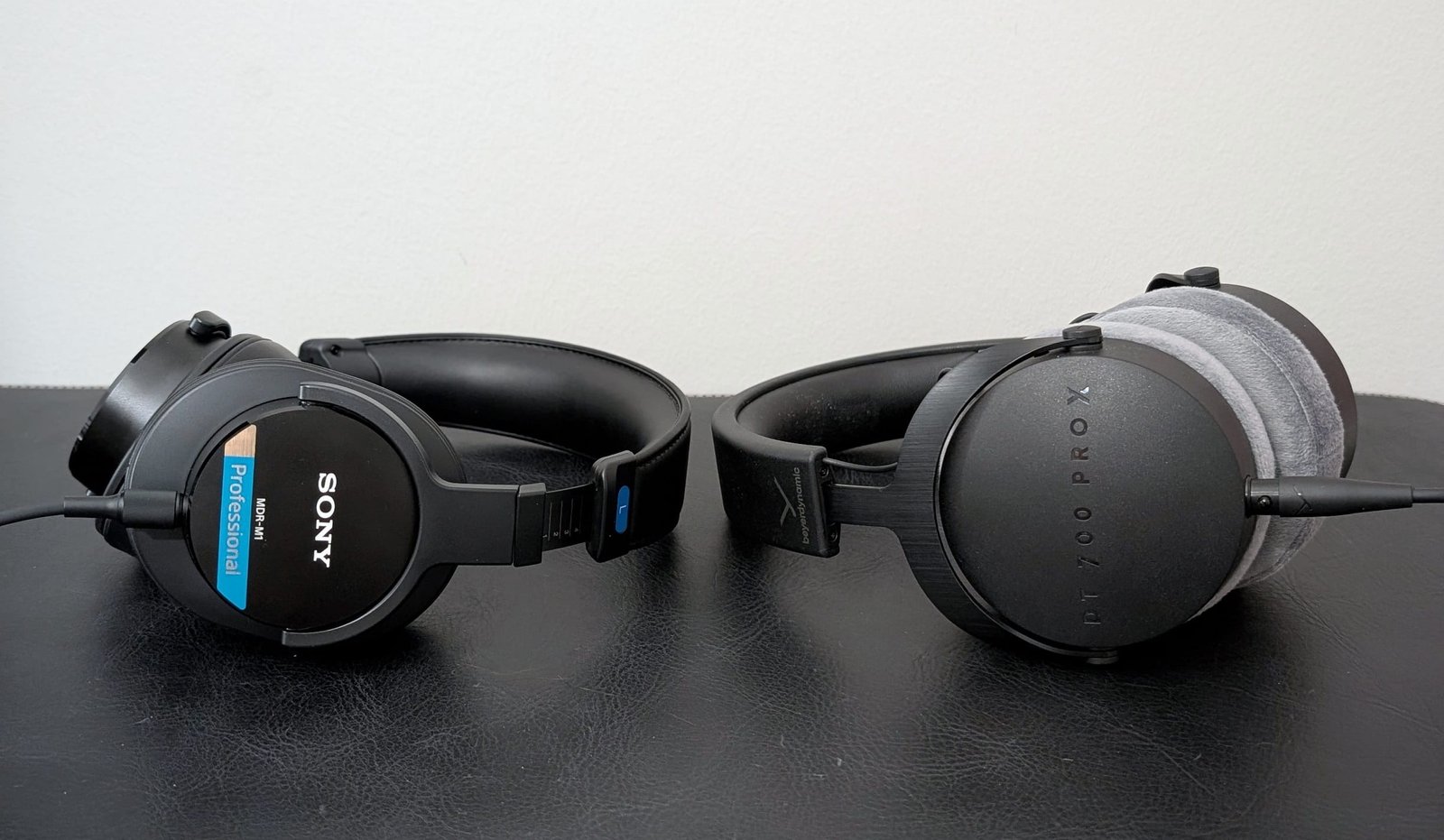
Sony and the German Beyerdynamic can be seen as fairly direct competitors in the field of studio headphones. Both manufacturers offer products in the 100-150 euro range, but also around 250 euros. While Sony relies on the most slender and lightweight design for the MDR-M1, Beyerdynamic has made its DT 700 Pro X headphone model tank-like durable. The materials of the DT 700 Pro X are clearly of higher quality, with the headband being metal instead of plastic. At the same time, however, the headphones weigh 135 grams more than the MDR-M1. The cups of the Beyerdynamic model also do not swivel horizontally, even though the adjustment possibilities and fit are otherwise good.
From the perspective of long-term wearing comfort, I prefer Sony's headphones because they clamp less tightly on the head. The velour earpads of the DT 700 Pro X feel luxuriously soft, but it is not as unnoticeable on the head. The headband also presses more firmly against the top of my head. Perhaps precisely due to the tighter fit, the headphones nevertheless isolate ambient noise more effectively compared to the MDR-M1.
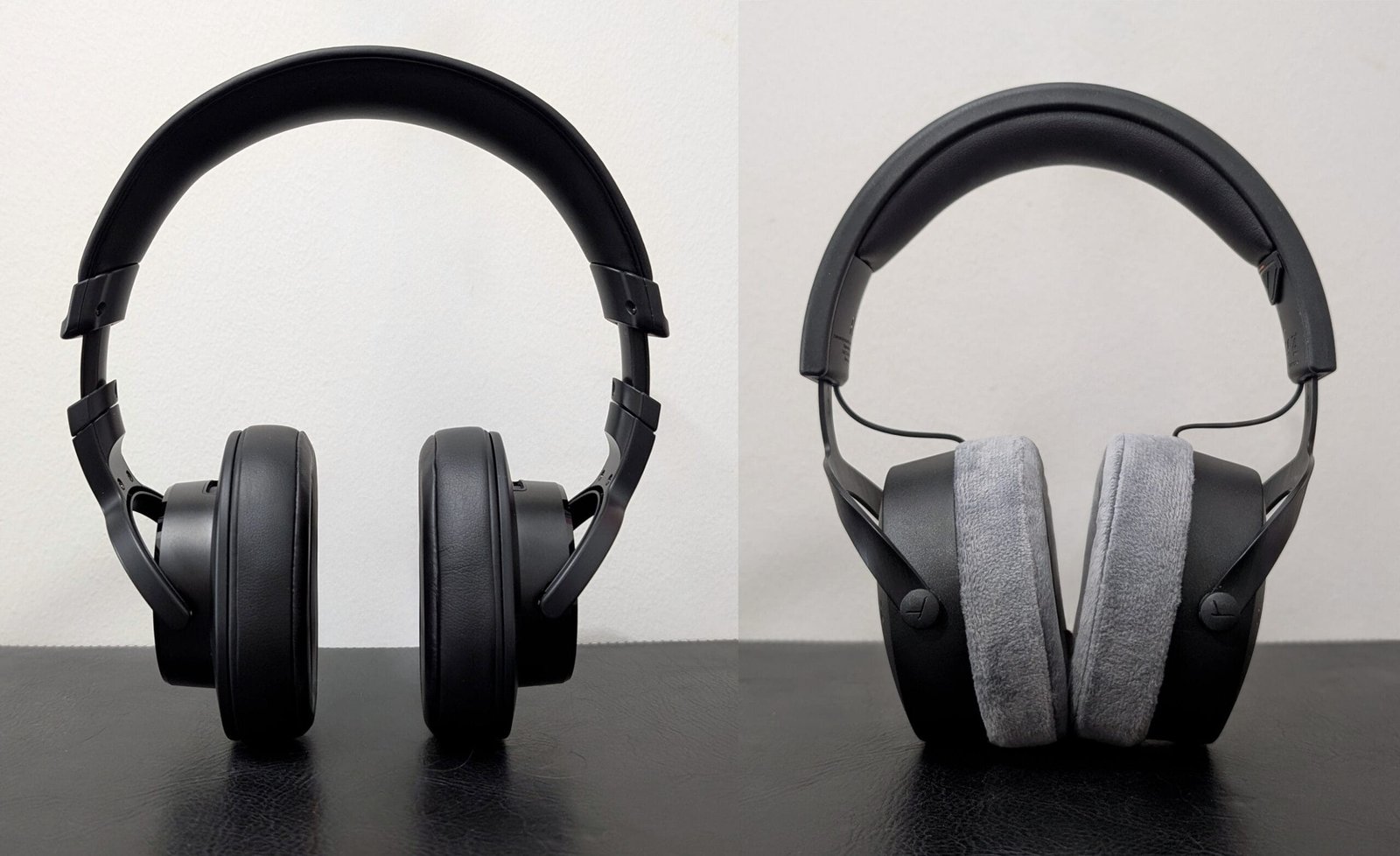
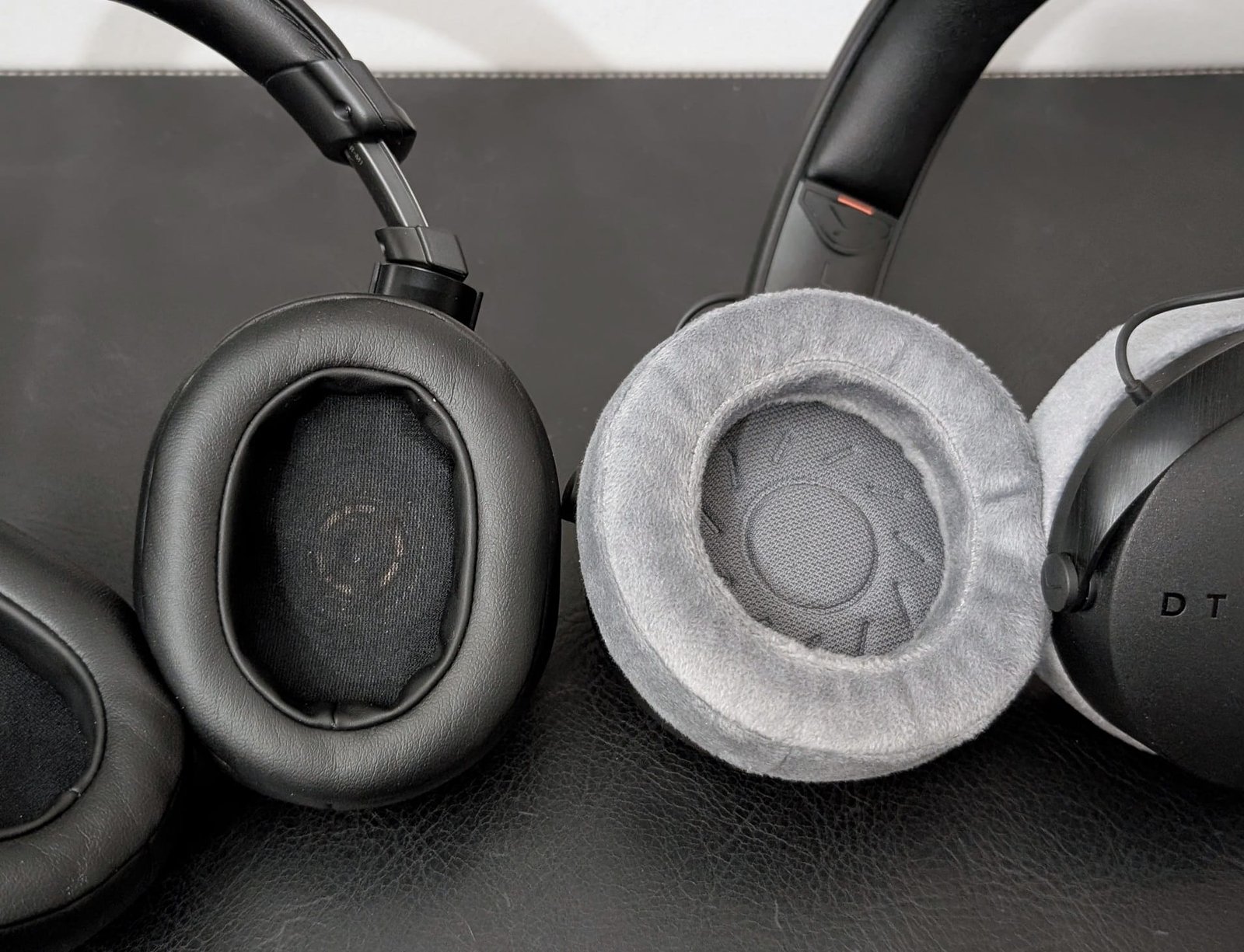
Buyers of both headphones receive two cables. However, a storage pouch only comes with the DT 700 Pro X, so in terms of accessories, Beyerdynamic has managed to include more in the package, even though its headphones cost 10 euros less. Regarding serviceability, the situation also favors the DT 700 Pro X, because in addition to the ear pads, the headband pad can also be easily replaced. As an interesting detail, the drivers themselves could also be quickly replaced, as they are connected to the headphone jack and the intermediate cable running through the headband with contact pins instead of soldering.
The duo does not differ much in terms of amplification requirements; both headphones are designed to be easily driven. One difference is that the MDR-M1 could be used balanced, which is not possible with the DT 700 Pro X because the internal wiring of the headphones does not allow for it.
Frequency responses:
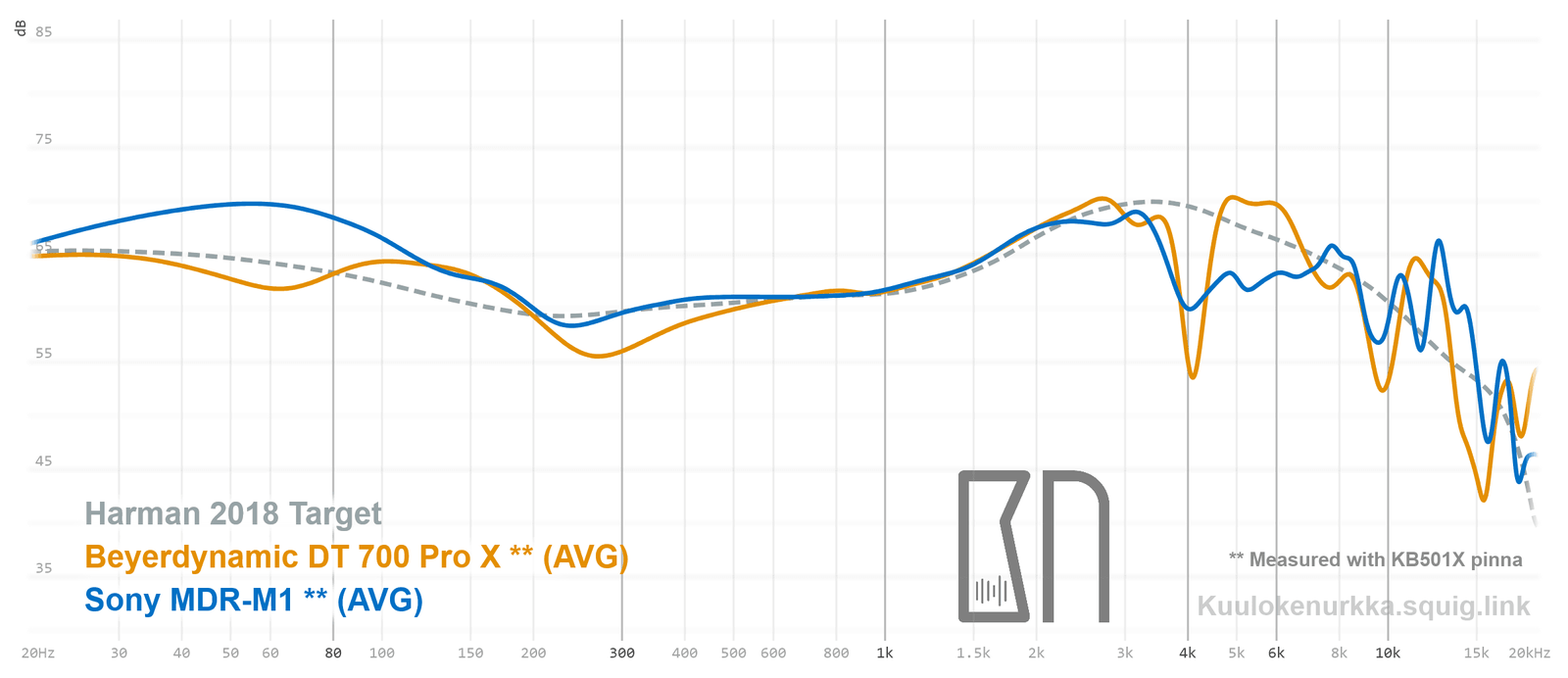
Although the DT 700 Pro X is more balanced in its tuning compared to the DT 770 Pro models, it is still quite typical compared to headphones like the Beyerdynamic MDR-M1. By this, I mean that the brightness of the treble and, to some extent, the hefty bass draw more attention to themselves than the mid-frequencies. With this V-shaped tuning, the reproduction is not the most tonally natural. The MDR-M1, in my opinion, sounds more balanced, even though it still has more bass and a rather relaxed presence region.
When comparing frequency responses, it can be seen that the DT 700 Pro X is missing a fairly large chunk around 300 hertz, and the treble is emphasized between 4.5–6.5 kilohertz. These features, along with a deep dip (phase cancellation) at 4 kilohertz, direct attention towards the sharpness of the treble and the rumble of the upper bass. On the other hand, the vocalist, like with the MDR-M1, is positioned close in the soundstage, which is one feature connecting the headphones. However, due to the coloration of the DT 700 Pro X, I perceive it as sounding less clear and hollow, whereas the MDR-M1's reproduction is more natural despite its relaxed nature. Partially, the slight lack of clarity in the DT 700 Pro X might also be amplified by the thick layer of fabric placed over the driver, which is intended to dampen the emphasized treble.
Regarding bass reproduction, the situation is consistent with my measurements: the MDR-M1 kicks harder and more controllably because its bass is emphasized in the lowest frequencies. The DT 700 Pro X, on the other hand, has an upper-bass emphasis typical of older closed-back headphones, which, when combined with deficient lower-mid frequencies, creates a somewhat boomy and hollow nuance in the sound. The sound is certainly hefty and robust, so the amount of bass is at least sufficient for an enjoyable listening experience, similar to the MDR-M1.
If someone desires brighter and sharper treble, the DT 700 Pro X might be the better option of the two. Otherwise, Sony's MDR-M1, in my opinion, sounds more normal and easier to adapt to, so I would listen to it almost 100 percent of the time from the pair. The MDR-M1's subdued presence region somewhat dampens the liveliness and freshness of the reproduction, but I would be lying if I claimed to find this a disturbing feature compared to the colorations of the Beyerdynamic model.
Sony MDR-M1 vs. Sennheiser HD 620S
Prices: 260 € vs. 360 €
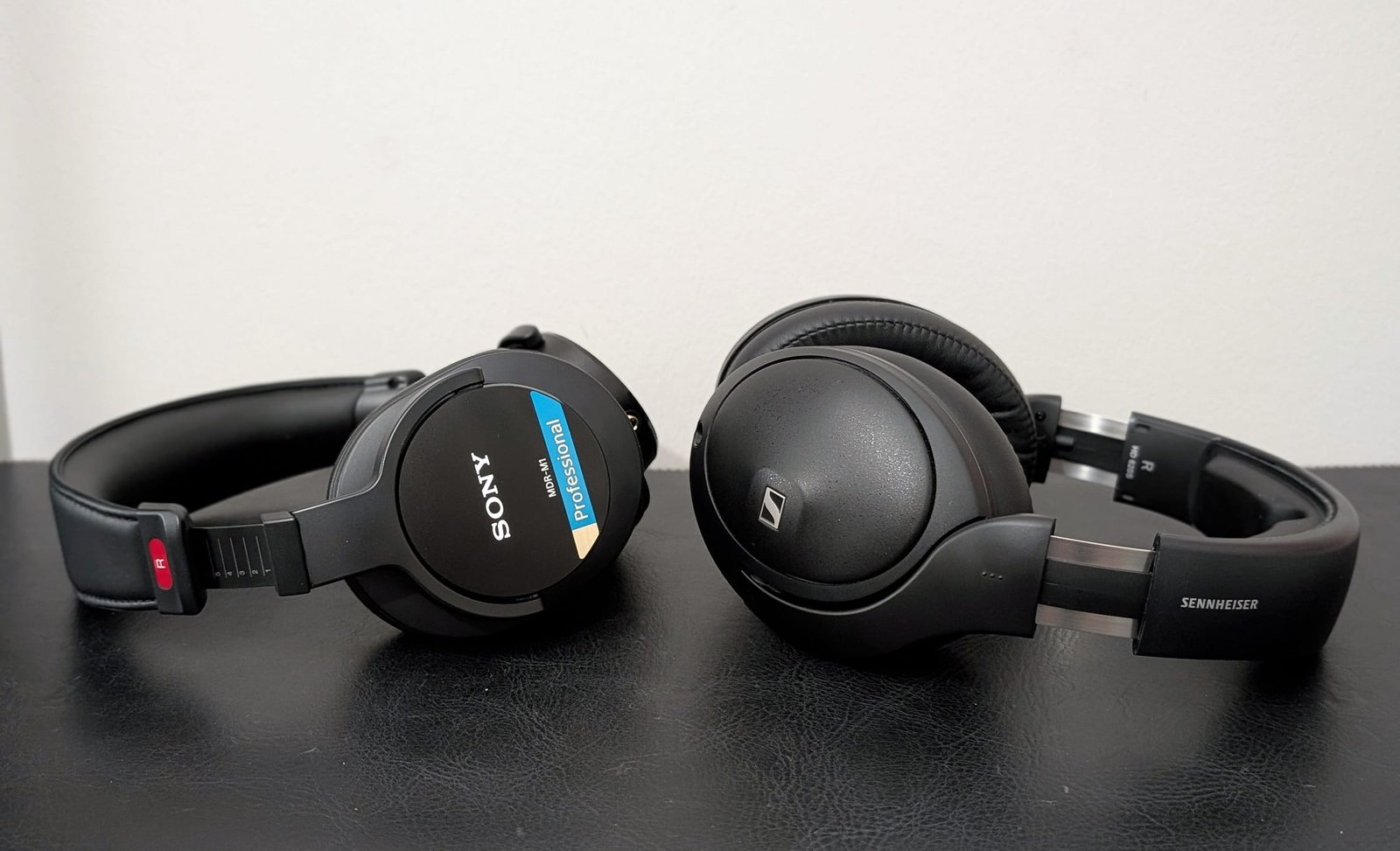
The MDR-M1 and HD 620S are structurally completely different headphones and are probably also intended for different uses. Sennheiser, at least to my knowledge, has not intended the HD 620S for studio use, but then again, nothing would prevent it. However, the headphones weigh 100 grams more, being clearly bulkier and less practical – in this regard, the MDR-M1 is exceptionally nimble. Advantages of the Sennheiser model include more spacious ear pads and better ambient noise attenuation, but in terms of wearing comfort, it falls behind Sony's headphones, especially since issues with fit may arise in my review mentioned challenges, and the headband also presses the head considerably tighter. On the other hand, when fitting well, the HD 620S is also quite comfortable, and the notch made in its head pad effectively prevents the sensation of pressure from forming on the top of the head.
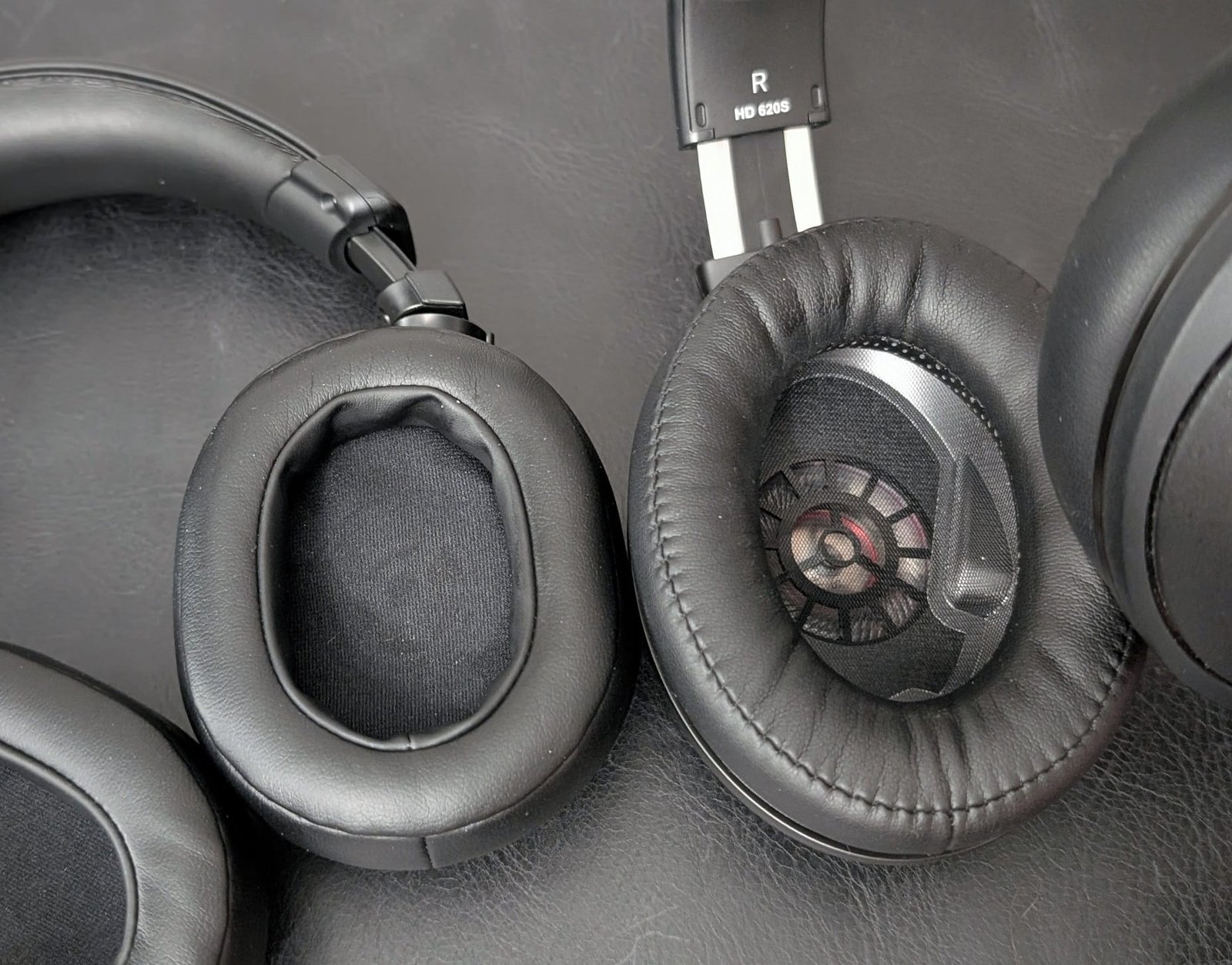
The HD 620S comes with a small fabric pouch, while the MDR-M1 buyer gets two cables. The ear pads of both headphones can be replaced, but only the HD 620S's head pad is easily removable. Regarding amplification, the MDR-M1 owner can get by with almost any equipment, whereas the HD 620S's high impedance of 160–315 ohms can pose challenges for some amplifiers. On the other hand, the Sennheiser model would be well suited for tube amplifiers, in which case its bass reproduction might indeed slightly intensify due to an uneven impedance curve.
Frequency responses:
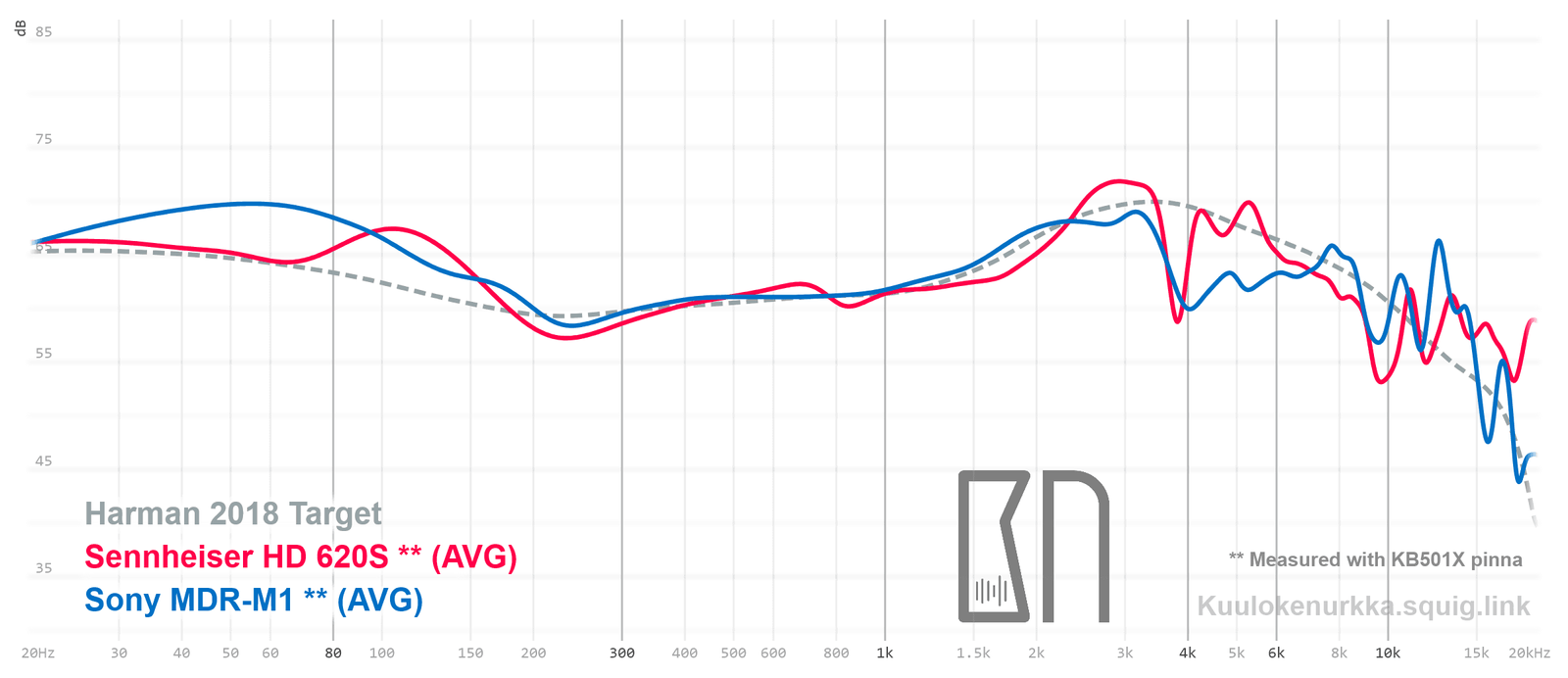
The pair differs most in bass frequencies and in the so-called presence region between 4–6 kilohertz. The HD 620S sounds both more neutral and slightly more unnatural at the same time. This is due, in my case, to a couple of treble emphases that sometimes add hiss and sibilance to the sound – either just a little or even to a disturbing degree. On the other hand, this feature often remains hidden, allowing me to focus on the headphones' clear mid-frequencies. The presentation is clear and fresh.
Sony's MDR-M1, on the other hand, sounds consistently good without treble-related weaknesses, but the presentation is simultaneously calmer and more subdued. This is directly explained by the lower energy amount between 4–6 kilohertz. Otherwise, the mid-frequencies of both headphones are normal and easily adaptable by the standards of closed-back models. In the Sennheiser model, the soundstage feels more spacious to me because, with Sony's headphones, the vocalist is reproduced closer, and the sound does not open up to surround me as successfully. However, even quiet intimacy has its advantages. The MDR-M1 would be better suited for those who desire a relaxed listening experience.
Sony's headphones also reproduce bass more enjoyably, almost wiping the floor with the HD 620S when it comes to the robustness of low frequencies. The MDR-M1's sub-bass kicks properly without the robust bass significantly disturbing the clarity of the mid-frequencies. The HD 620S, on the other hand, brings the upper bass resonantly to the forefront, making the reproduction feel softer overall. The sub-bass also remains quite subdued. Perhaps Sennheiser's approach could be called more neutral, but in any case, it would have room for improvement by current standards.
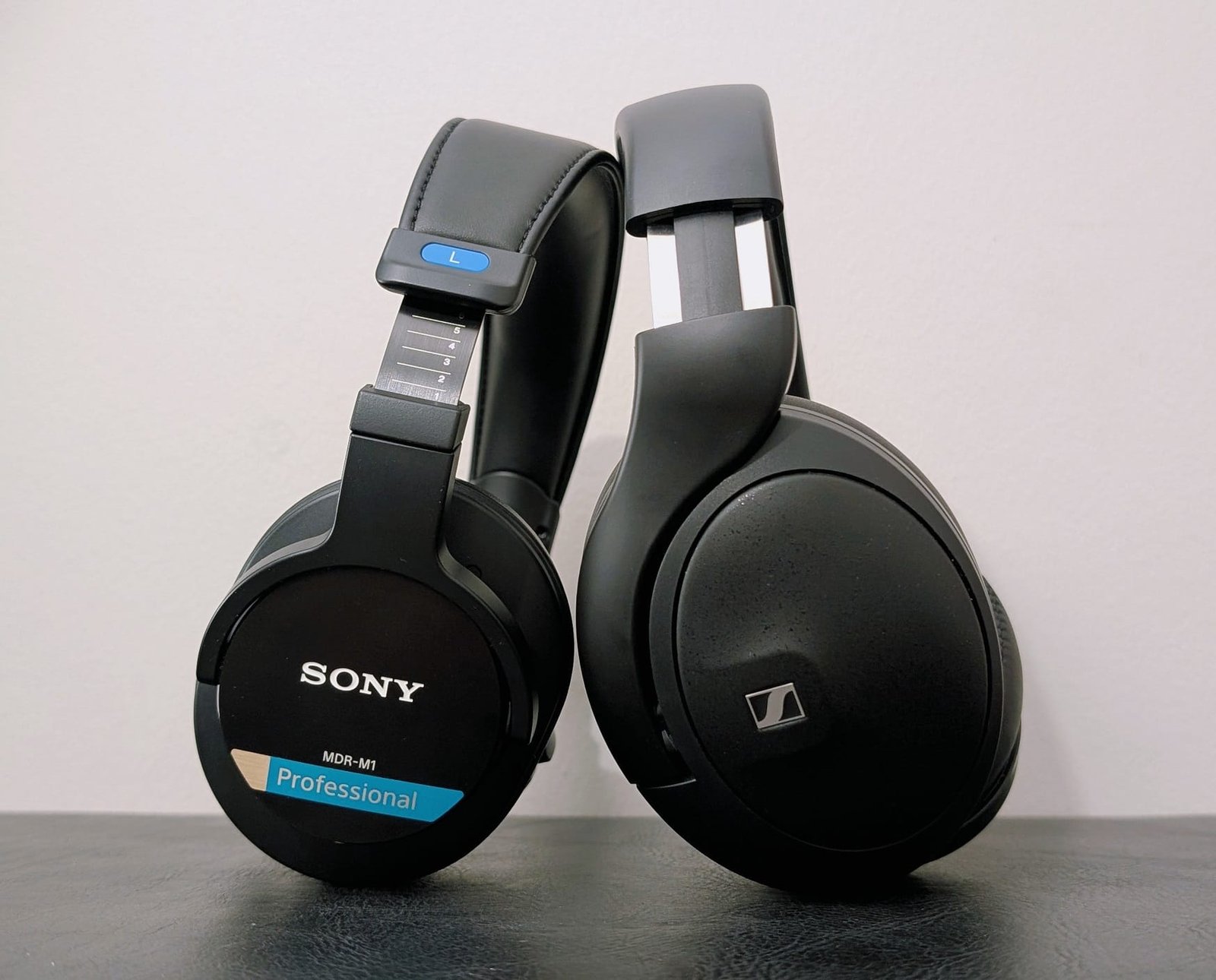
The duo differs quite a lot in their overall sound, but in my opinion, Sony has ultimately succeeded a bit better in its own style. From the sound of Sennheiser's headphones, on the other hand, I more easily find small flaws, which are by no means particularly serious, but also don't feel intentional. Although the HD 620S, when critically evaluated, produces a slightly more "correct" sound, I don't consider it as successful a product. The headphones also cost 100 euros more than the MDR-M1. On the other hand, the price difference could be even greater if Sennheiser had been able to fine-tune the end result a bit more.
Summary
Sony's MDR-M1 turned out to be a positive surprise for me. I would summarize it as a lightweight, practical, and pleasant-sounding headphone for diligent use. Nothing in the MDR-M1 particularly evokes a feeling of luxury, but there is a specific need for such tool-like headphones, which is where Sony directs its product. The headphones don't sound completely neutral, but the relaxed reproduction isn't really a disadvantage either. The bass also stays in control, even though there is a lot of it quantitatively. In my opinion, the MDR-M1 is also well suited for home listening, not just professional use. If I had to choose one headphone from the MDR-M1, DT 700 Pro X, and HD 620S, which I have recently tested diligently, it would be Sony.

Ultimately, only the price of 260 euros remains on my mind, which feels a bit high considering that the older MDR-7506 model can be sold for about 100 euros. For example, 199 euros would feel more reasonable to me. On the other hand, if professionals find the new model better, the price difference is unlikely to become a problem. It may well be that Sony is not actually trying to compete with products aimed at home/hobby use, but rather relies on the reputation it has achieved among professionals with the MDR-7506.
The MDR-M1 restores my faith in Sony as an audio company, as I had already somewhat lost faith in the manufacturer due to its many mediocre-sounding noise-cancelling headphones. Fortunately, the Pro division clearly still knows its stuff and understands what good sound quality means when reproduced through headphones.
The headphone corner's somewhat small-scale review of closed-back headphones will soon culminate in the Audeze Maxwell model, which is one reason why products like the MDR-M1 and HD 620S ultimately don't quite make it onto our wall of fame or, despite their goodness, evoke excessive enthusiasm. So, it's worth staying "on channel," so to speak.
Pros and cons:
+ Neutral sound with a pleasantly relaxed approach
+ Pleasantly powerful bass reproduction
+ Appropriately airy, yet unfatiguing treble
+ Practical and lightweight construction
+ Excellent comfort
+ Flat impedance curve and easy reproducibility
+ Two cables included
– The relaxed presence region may require equalization when a completely uncolored sound is desired
– Bass might be too much for some tastes
– No other accessories besides cables
– Cable microphonics
– Clearly more expensive than its predecessor MDR-7506
 EN
EN  FI
FI
Thanks for the review. The Mdr-m1 are excellent for my taste. My old Beyerdynamic dt1770 pro (mk1) have remained unused for now since these Sonys came into the house. Without this review, I probably wouldn't have bought them.
You're welcome! Great to hear that you also liked the Sony model. I've actually missed them a little myself since I returned the loan headphones to the manufacturer. I'll have to keep my eyes open if they ever come across at a good price on the used market.