Author: Sword of Damocles
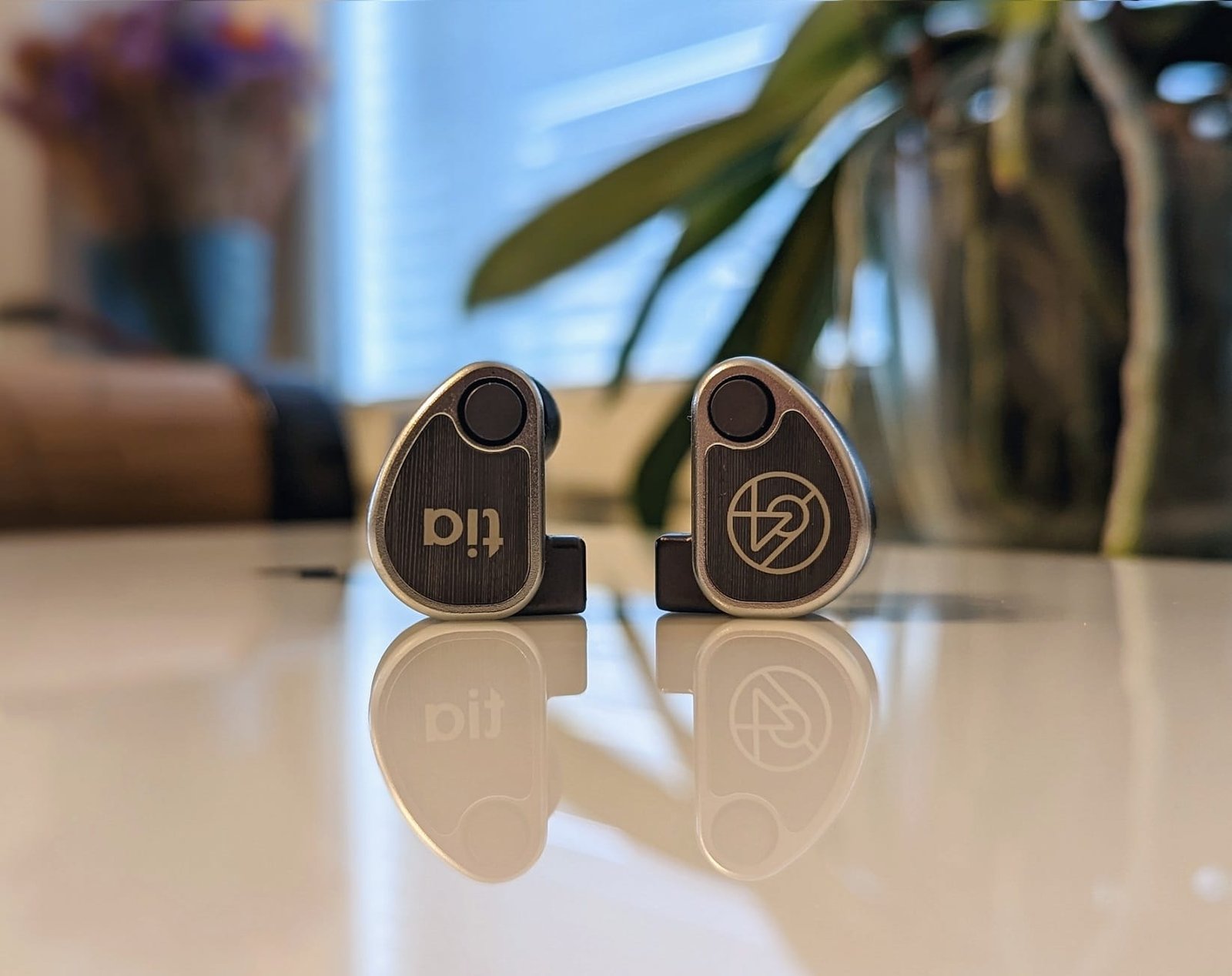
Table of Contents:
Information:
- Release year: 2018
- Price: 2000 USD (2200 €)
- Structure: closed, in-ear
- Driver type: 12 x balanced armature
- Impedance: 10 ohm
- Sensitivity: 108 dB / mW
- Connector type: 2 x 2-pin
- Cable: 1.2 meter cable with 3.5 mm connector
- Included: round leather case, ear tips (S, M, L), three different Apex modules (M20, M15, MX)
Review unit acquisition method: Borrowed from a hobbyist
The headphone corner has not focused on in-ear headphones so far, mainly because the limited time available simply isn't enough for everything – the number of in-ear models on sale is huge and new ones are constantly being released. For this reason, I must honestly admit that I know the earbud market quite poorly. I wouldn't dare to buy more expensive headphone models without trying them beforehand, but I've wanted to start learning about the product category through more affordable models.
However, I haven't had time to do this yet; instead, I got to jump straight into the deep end of the in-ear world after borrowing from a fellow enthusiast 64Audio U12t-headphones. The U12t, costing around 2200 euros, is interestingly found on the ranking list of Crinacle, who has tested over 1000 in-ear headphones, Crinacle's ranking list in second place, which speaks quite clearly for its excellence. I myself have primarily compared the headphones to my own similarly priced over-ear models, but I also borrowed Unique Melody Mest mk1 headphones from the same enthusiast, about which I will write in the very next article.
Packaging and accessories
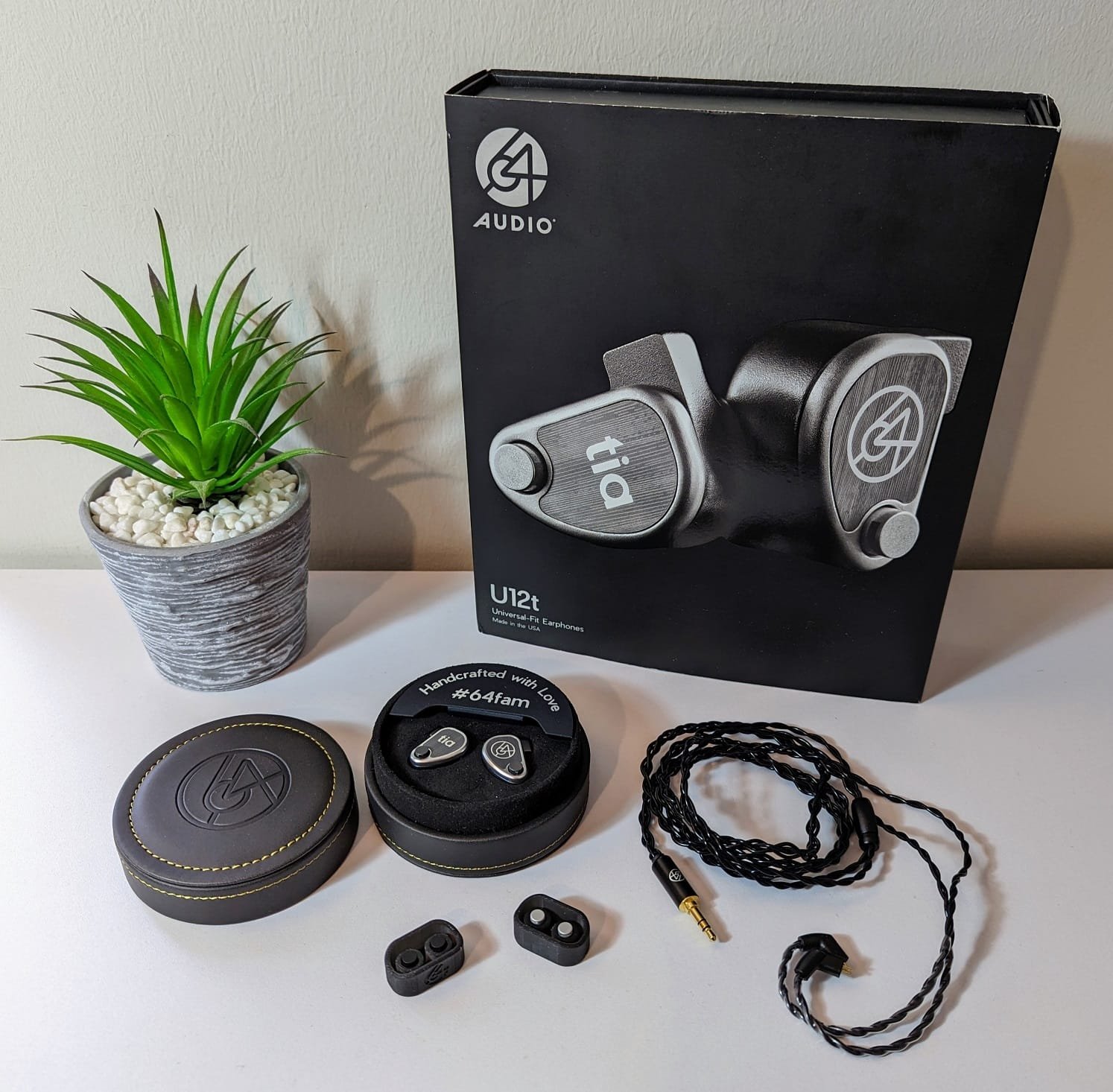
Considering the small size of the headphones, the 64Audio U12t is delivered in a rather large cardboard box, the lid of which is held shut by a strong magnet. Inside the box is a hockey puck-like leather case, which can be used for storing and carrying the headphones. In addition to ear tips of various sizes, accessories include cylindrical Apex modules (Air Pressure Exchange), which can be swapped to affect the tuning of the headphones.
Structure and comfort
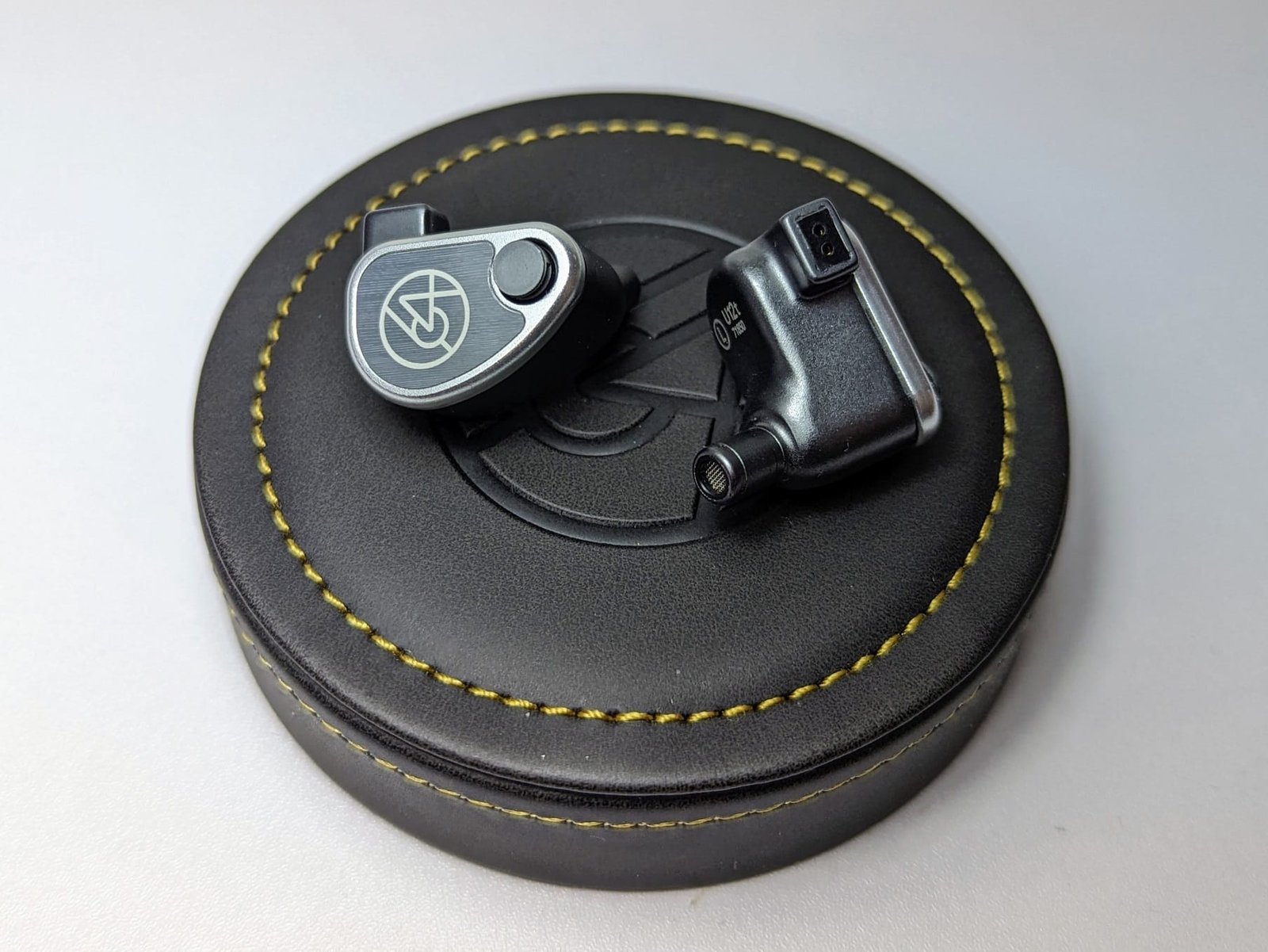
The outer shell of the U12t is sturdy metal, and the headphones are not very large in size or particularly eye-catching in appearance. Most expensive in-ear headphones look ridiculously over-the-top to me, so I prefer 64Audio's more subdued design, which combines different shades of gray.
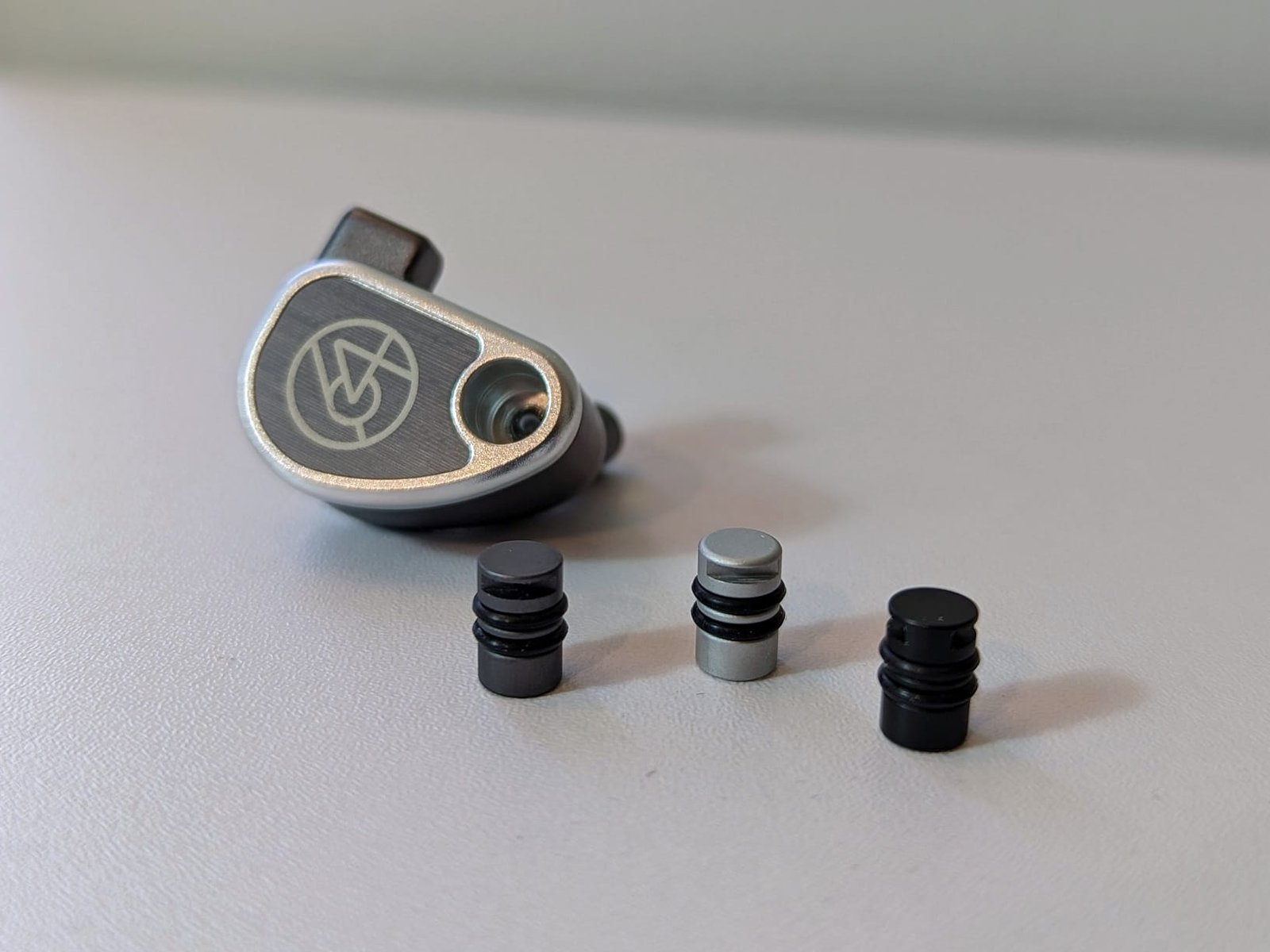
The Apex modules I mentioned attach to the outer edge of the headphones, at the listener's ear canal. The modules are quite easy to remove by pulling them outwards with fingernails, but they don't fall out of the headphones on their own. In addition to fine-tuning, the modules have vents that reduce pressure in the ears. I'm not sure if this is due to this system, but using the U12t is more comfortable than usual, and I can forget their existence in my ears. The headphones also surprisingly effectively dampen ambient sounds, so they would probably be quite suitable for use on a train, for example.
The cable attaches to the headphones with a 2-pin connector, so it is replaceable if needed. 64Audio's braided plastic-coated standard cable is quite usable, but it feels somewhat cheap and generic for expensive headphones. At least the cable's 3.5 mm connector is pleasantly sturdy. Like many other in-ear headphones, the U12t's cable is designed to loop over the ears and behind the ear.
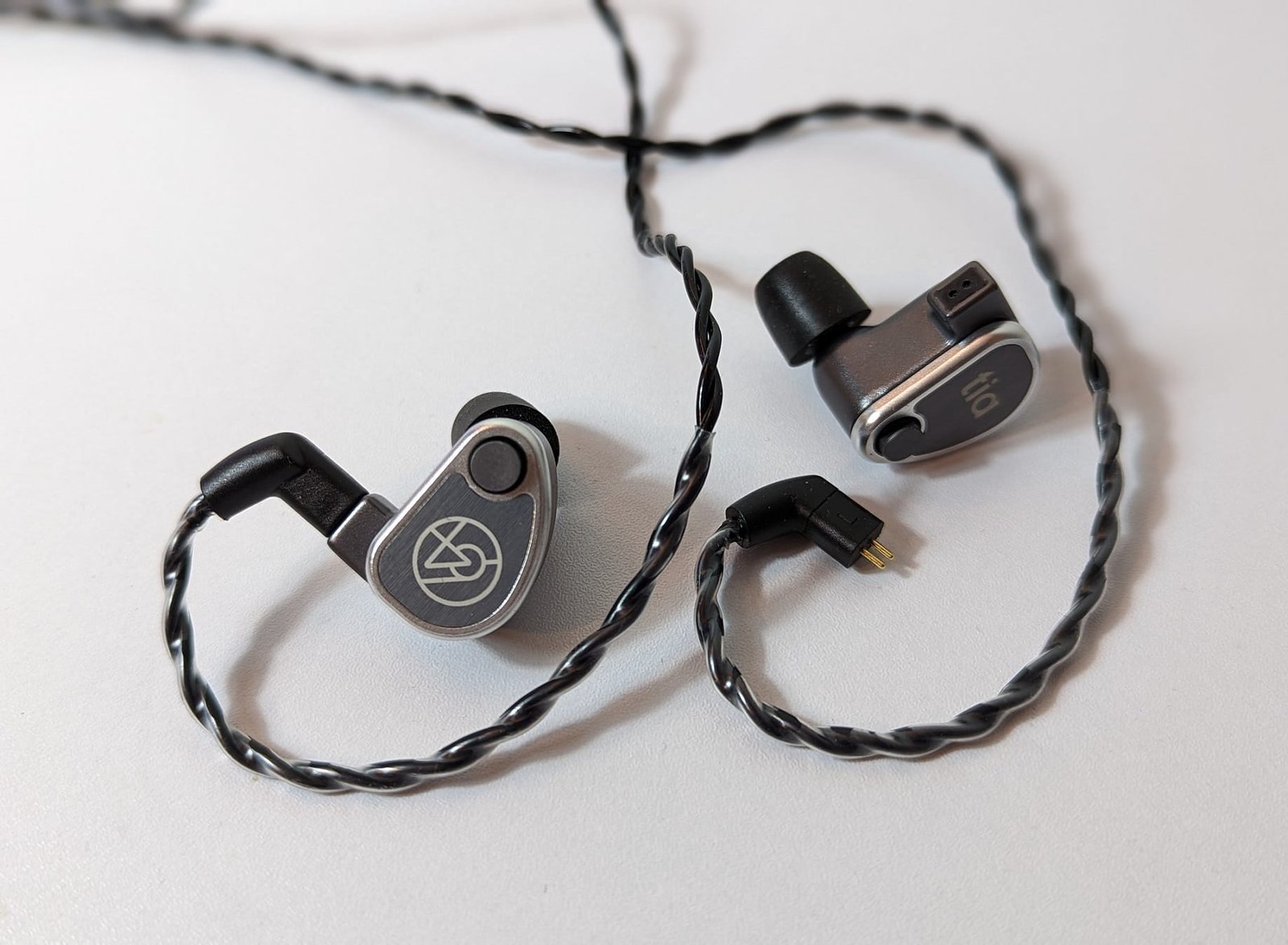
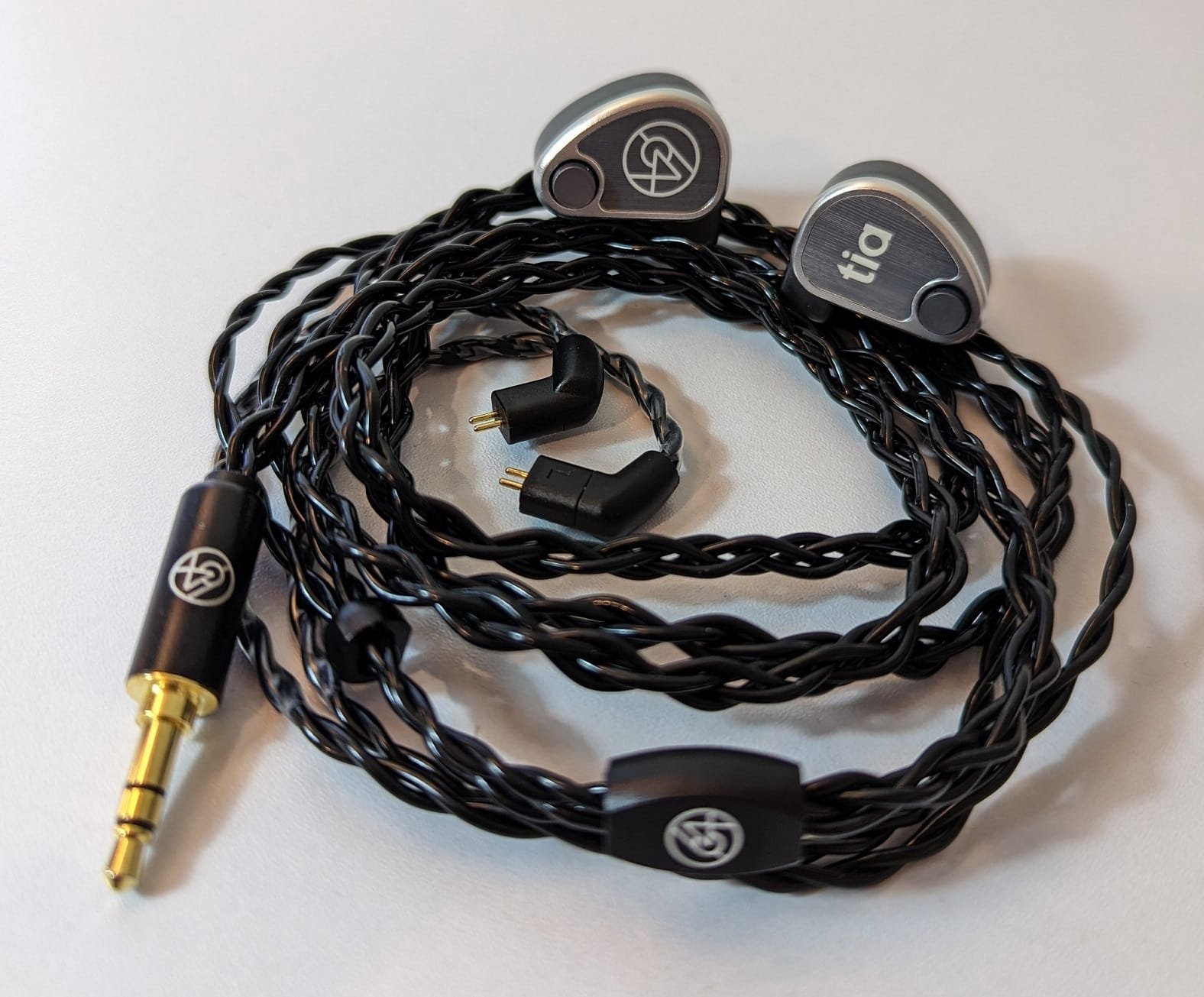
With suitable ear tips, using the headphones is comfortable, and I can't think of anything negative to say about the user experience. The headphones are reasonable in size and shape, so I don't believe anyone would have major problems fitting them into their ears.
Element solution and technology
The diverse driver solutions in in-ear headphones have always amused me. The total number of small drivers is often large, and there can be many different types in individual headphones. Some driver types are also not used in over-ear headphones. This is likely explained by the fact that a single driver in in-ear headphones often reproduces a very limited frequency range, with other drivers handling the rest via crossovers. For example, bass reproduction and treble can be implemented with drivers that perform as well as possible in those specific frequency ranges.
As its name suggests, the U12t features no less than 12 balanced armature drivers, which are tuned with four passive crossovers as follows:
- 1 high frequencies
- 1 area between high and mid frequencies
- 6 mid frequencies
- 4 low frequencies
The manufacturer calls the headphones” patented structure ”tia" (Tubeless In-Ear Audio), and it is described as reducing harmful resonances and distortion. A complete tia system would consist of the manufacturer's drivers, a single-bore design, and acoustic chambers, of which the U12t model includes the first two. The headphones also feature a circuit called LID (Linear Impedance Design), which ensures that the frequency response remains the same regardless of the output impedance of the audio source used with the U12t. Patents and fancy terms don't mean much to me personally, but 64Audio has clearly invested in product development.
Sound quality
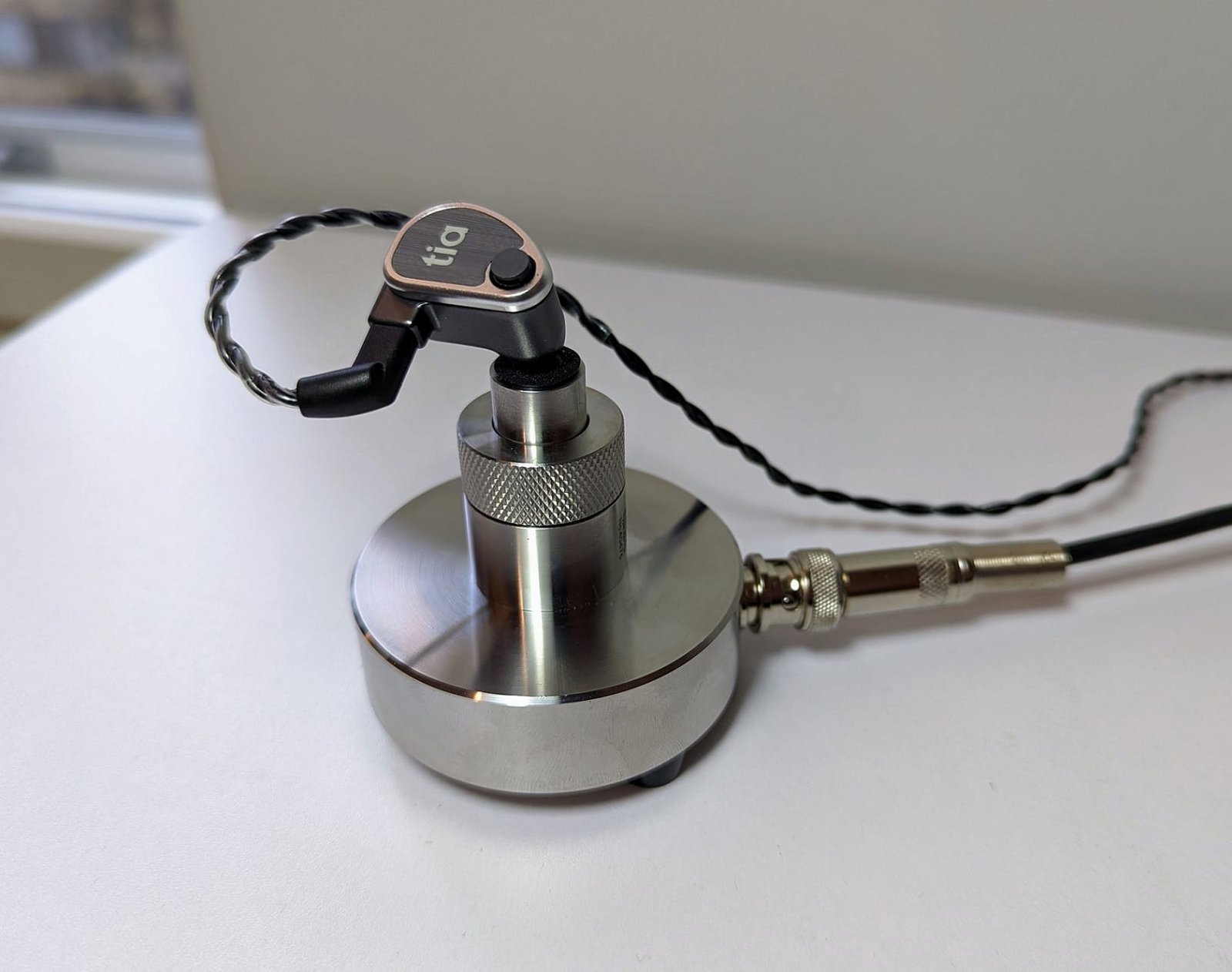
I have listened to the headphones with the included ear tips and the M15 modules that are attached by default. As an audio source, I have mainly used the Qudelix 5K combo device with both Bluetooth and USB connections. I have measured the frequency response of the headphones with a device that meets IEC711 standards, which contains a structure imitating the human inner ear. The device is accurate up to 10 kHz, so there is some deviation in frequencies above that, for example, compared to the more expensive equipment used by Crinacle.
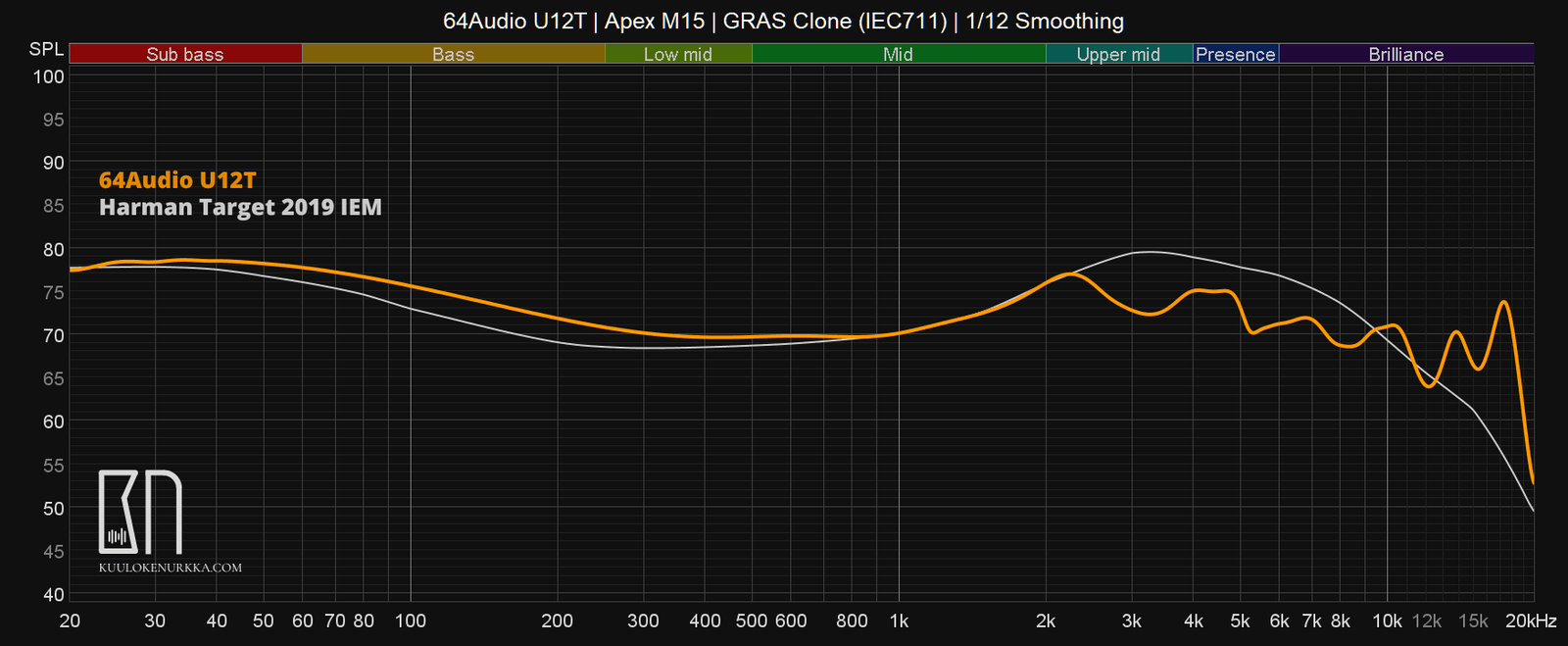
My device also measures, due to its own internal resonance, a certain degree of treble peak for in-ear headphones always between 7–10 kHz, depending on the headphone model and how deep the headphone is inserted into the measuring device's ear canal. More expensive devices also have the same characteristic, but in those, the peak caused by internal resonance has been shifted to higher frequencies, where it interferes less with the interpretation of measurement results. In the case of the U12t, the treble peak settles at 10 kHz on my device, so the frequency response is inaccurate at that point.
Headphone frequency response:
When I first put the headphones in my ears, they made an immediate impression. The U12t is at once pleasantly relaxed to listen to and powerfully revealing of musical details. It also has a really rich and fun bass reproduction. The overall package is so excellent that I reluctantly have to admit most of my over-ear headphones are inferior and more unbalanced.
Bass:
The headphones have powerful bass reproduction, which, however, never feels overdone or overly emphasized. The bass resembles dynamic drivers in its decay, as it forms a pleasantly full and natural texture. The reproduction also remains clear and detailed in all situations, even if the listened track has a lot of bass. Acoustic instruments have a suitably robust body thanks to a slightly emphasized upper bass, and the sub-bass is reproduced excellently in bass music. Although I don't like to call anything perfect, I would be tempted to call the U12t's bass reproduction just that.
Mid-frequencies:
The tuning of the headphones' mid-frequencies is probably the area that divides opinions the most. For my taste, slightly emphasized lower mid-frequencies and calm upper mid-frequencies fit perfectly. The reproduction has natural warmth and fullness, yet just the right amount of energy, so that the presentation is extremely clear. Looking at the headphones' frequency response, I wouldn't actually believe how fresh and detailed they sound.
The U12t never sounds too thick, bland, or aggressive, but rather very smooth and resolving. The sound doesn't grate on the ear even when listening to low-quality music, as it's almost impossible to make anything unpleasant pop out.
I am not intimately familiar with the specific characteristics of balanced armature drivers, but the sound they produce, and above all the timbre, sounds authentic in the U12t. The presentation style has a certain real-life-like softness throughout, which I cannot properly explain, as the details are nevertheless reproduced distinctly. Despite its detail, the end result does not feel too calculated and mechanical, but alive. For example, vocalists' performances evoke strong emotions in me.
However, opinions on the headphones' tuning may be divided by the fact that the upper parts of the mid-frequencies remain slightly in the background overall. I can easily see some preferring a slightly more energetic and forward-sounding reproduction instead of a relaxed listening experience. The U12t always sounds controlled and slightly reserved, and it doesn't go wild even with music that might call for it. In my opinion, listening to these headphones, with the exception of the bass reproduction, is not particularly exciting, but rather a calm enjoyment.
Treble:
If the headphones” bass reproduction borders on perfection, the treble reproduction is also very close to the best I have ever heard. I don't understand how the high frequencies can be simultaneously completely unfatiguing, airy, and fantastically detailed – the tuning probably aligns perfectly with my own hearing. There is no noticeable hiss or sibilance in the reproduction; instead, the treble is balanced and in a way sounds ”full." The detail separation is exceptionally clear – for example, I hear even the smallest nuances in drum cymbals with extreme ease.
Since my measuring device is not promised to be accurate above 10 kHz, I was initially surprised by the strong emphasis visible in my measurements between 13–20 kHz. However, this appears to be one of the headphones' true characteristics, leading to an airy reproduction without significant negative side effects. The result is interesting because I perceive the reproduction as admirably airy, but I don't actually hear anything irritating in the upper treble. For comparison, the Meze Empyrean, which aims for a similar effect, sounds extremely fatiguing to me because its treble emphasis is located at frequencies that my 32-year-old ears still hear strongly.
Audio description:
I have never been particularly impressed by the soundstage of in-ear headphones, which largely places itself inside the listener's head. The U12t also doesn't feel like a particularly impressive listening experience in this regard, but it is still a clear improvement compared to the affordable in-ear models I have heard before. Thanks to well-executed treble, the headphones' soundstage has airiness and openness, which is also supported by the slightly recessed mid-frequency reproduction. The soundstage also has some depth, so the result somewhat resembles over-ear headphones. In my opinion, the best thing about the U12t's soundstage is its precision. Sounds and their movements are placed in the sound field with impressive accuracy, so listening to the headphones is captivating in that respect.
I would probably be even more impressed with the result if the soundstage of the Unique Melody Mest headphones I received on loan at the same time wasn't significantly more spacious and interesting. However, I will elaborate on this in the Mest review.
Different Apex modules:
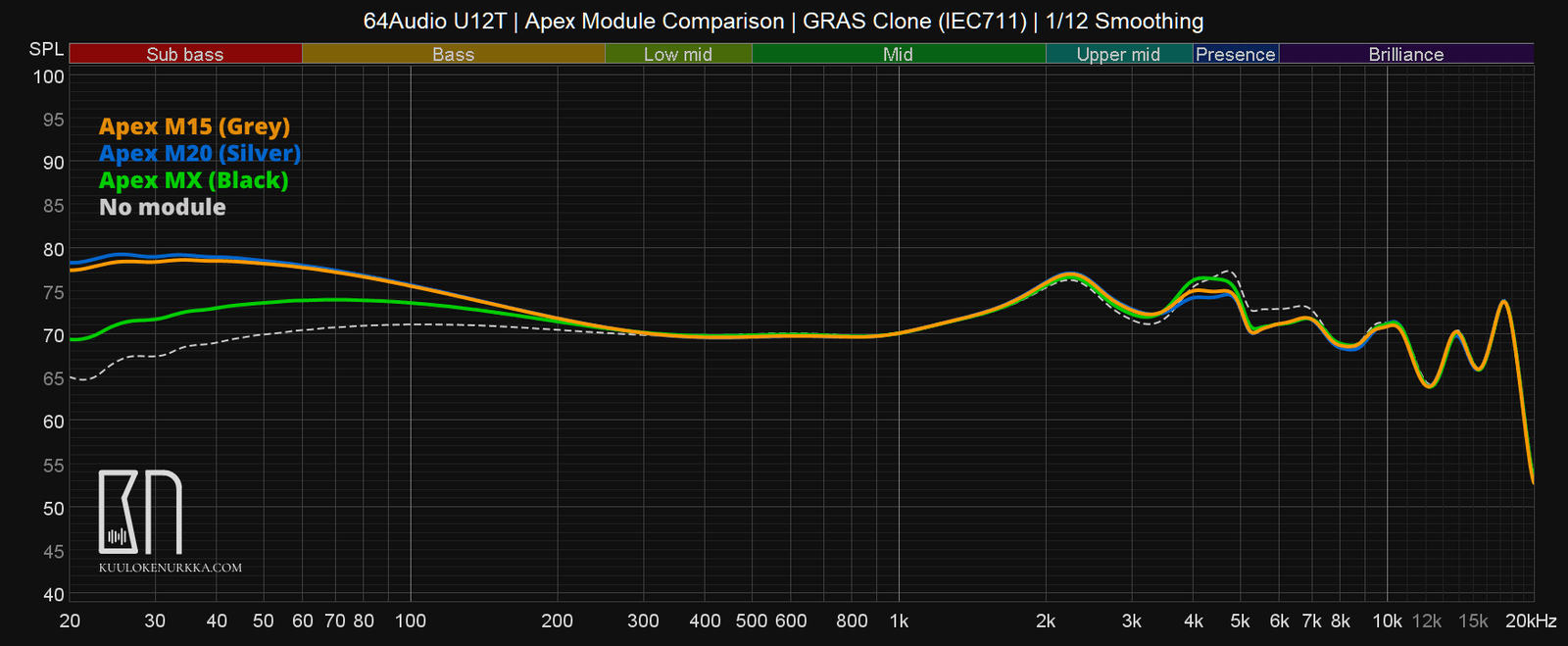
I also quickly tested the different Apex modules supplied with the headphones. The silver M20 modules add a bit of sub-bass compared to the M15 modules that are attached to the headphones by default – the change in the measured frequency response is moderate, but clearly noticeable when listening to bass music. The frequency range between 3.5–5 kHz also changes slightly, but this change is difficult to notice in practice. In my opinion, the M20 modules are the best choice for those who prefer the most powerful and fun bass possible.
The black MX modules change the sound in another direction, as they reduce the amount of bass from 200 hertz downwards by 2–6 decibels. This makes the reproduction even clearer compared to the standard modules, especially since the modules simultaneously slightly boost the upper mid-frequencies and lower treble. The MX modules are the best choice for those who want the U12t to sound as technical and neutral as possible. Reducing the amount of bass also widens the headphones' soundstage.
Each module model has its own advantages, so I could see myself using them all alternately depending on whether I'm listening to bass-heavy music or want a more spacious and as clear reproduction as possible. With MX modules, the result is quite similar to traditional hi-fi headphones, so I might even like them the most for longer use. If someone doesn't like bass at all, listening to the headphones without modules is an interesting option.
Summary
64Audio's U12t gives really tough competition to expensive over-ear headphones. If in-ear headphones are your thing, the U12t is, in my opinion, a fairly safe purchase, as I don't believe it sounds bad or annoying to anyone. Its bass reproduction is fun, and the mid-frequencies have a pleasant authenticity. Because the headphones simultaneously separate details incredibly clearly, they are an excellent product overall. It is difficult to find anything negative to say about the headphones, apart from a slight restraint in the upper mid-frequencies.
For comparison, many expensive over-ear headphones have flaws related to frequency response unevenness and reflections caused by their physical structure, so the U12t sounds more refined compared to them. I haven't previously understood expensive in-ear headphones, but the U12t convinces me that 2200 euros is not too much to ask compared to over-ear models.
As excellent as the U12t is, I still wouldn't necessarily replace my over-ear headphones with it. However, this is more related to my own preferences than to the headphones themselves. I am actually currently more enthusiastic about the more affordable Unique Melody Mest mk1, which has a truly spacious and unique soundstage. Although the U12t is, in my opinion, clearly a better headphone than the Mest, the latter appeals to me more.
I think the soundstage is ultimately the area why I still prefer larger headphones over the U12t. Despite everything, the headphones are such an impressive package that I can recommend them almost unreservedly to those looking for good in-ear headphones. My mind was opened to how excellent in-ear monitors can be.
Pros and cons:
+ Detail retrieval surpasses many similarly priced over-ear headphones
+ Calm and authentic mid-frequencies
+ Full-bodied, almost perfect bass reproduction
+ Easy-to-listen-to, airy, and resolving treble
+ Accurate soundstage
+ Feels comfortable in the ears
+ Attenuates ambient noise quite well
+ Sturdy and high-quality aluminum construction
+ Sound can be adjusted with Apex modules, which are easy to change
+ Does not require a powerful amplifier
– Upper mid-frequency reproduction might be too restrained for some tastes
– The included cable feels cheap
– Expensive price
 EN
EN  FI
FI