Author: Sword of Damocles
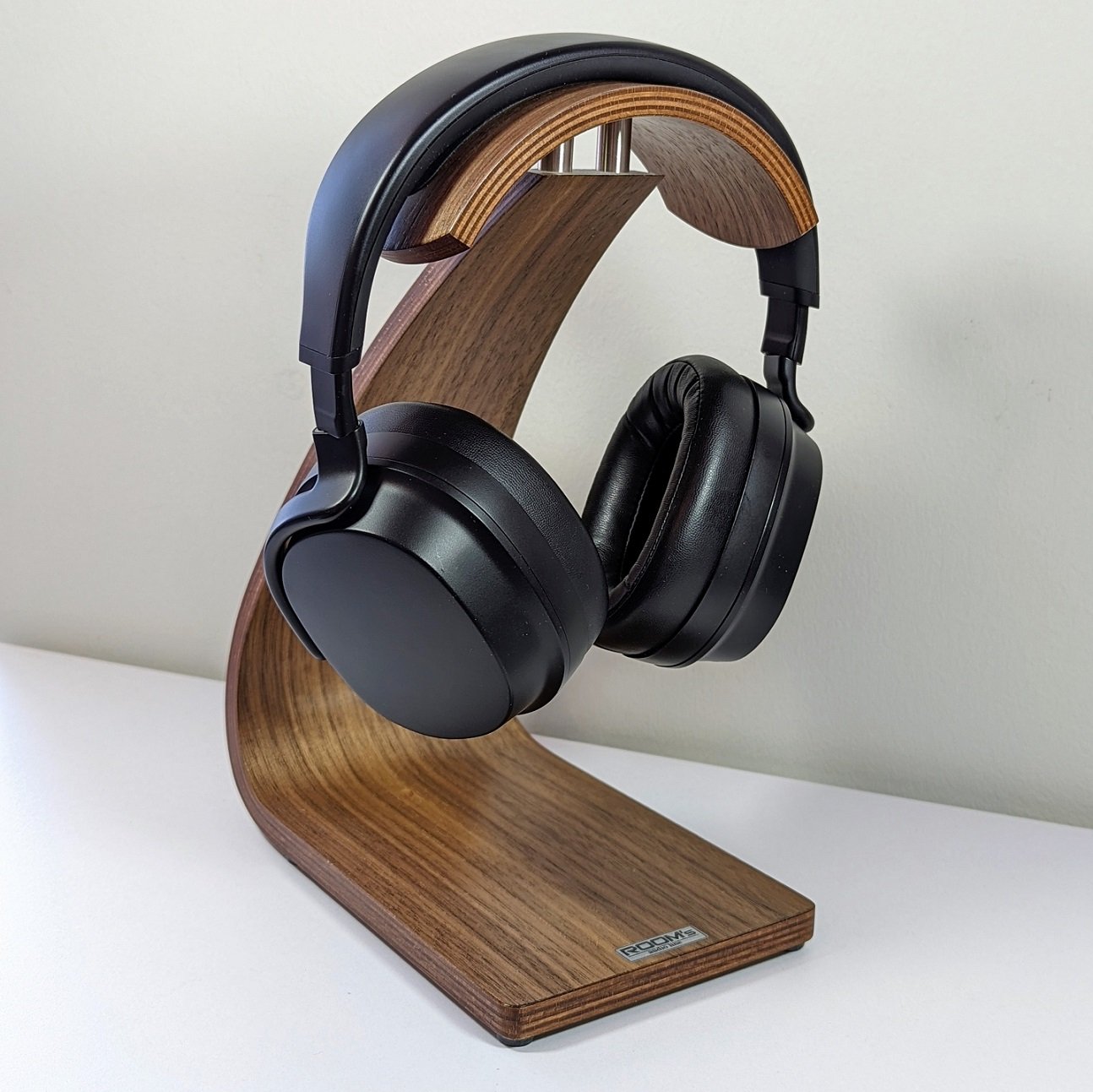
Table of Contents:
Information:
- Release year: 2020 (production possibly discontinued due to quality issues)
- Price: 400 USD (Bluetooth-faulty headphones can be bought used for 50–70 dollars)
- Design: Closed, wireless (Bluetooth)
- Driver: 55 mm round ribbon planar driver
- Impedance: 26 ohm
- Sensitivity: 100 dB/mW
- Weight: 375 g
- Connector type: 3.5 mm connector for use with a cable
- Features: Bluetooth 5.0, THX amplifiers for wireless use, battery life 30+ hours
- Included: 1.4 meter cable with 3.5 mm connector, USB-C charging cable and protective case
Review sample: Self-purchased product
This time I'm quickly testing the 400 dollar priced Drop Panda, which would normally be a wireless planar headphone with Bluetooth connectivity and THX amplifiers. However, the Bluetooth on my pair of headphones is completely broken, which is why the headphones only cost 60 dollars (+ shipping and VAT).
The failure rate of the Panda seems to be really high, so they haven't been seen for sale on the Drop website for a while. Ebay, on the other hand, is full of cheap Bluetooth-faulty headphones, so in my opinion, they are an interesting option for use with a cable – I don't know of any other closed-back planar headphones that can be acquired for under 100 euros. Furthermore, the headphones are tuned entirely mechanically without DSP, so they sound the same whether listened to through their own internal electronics or via a cable.
Structure
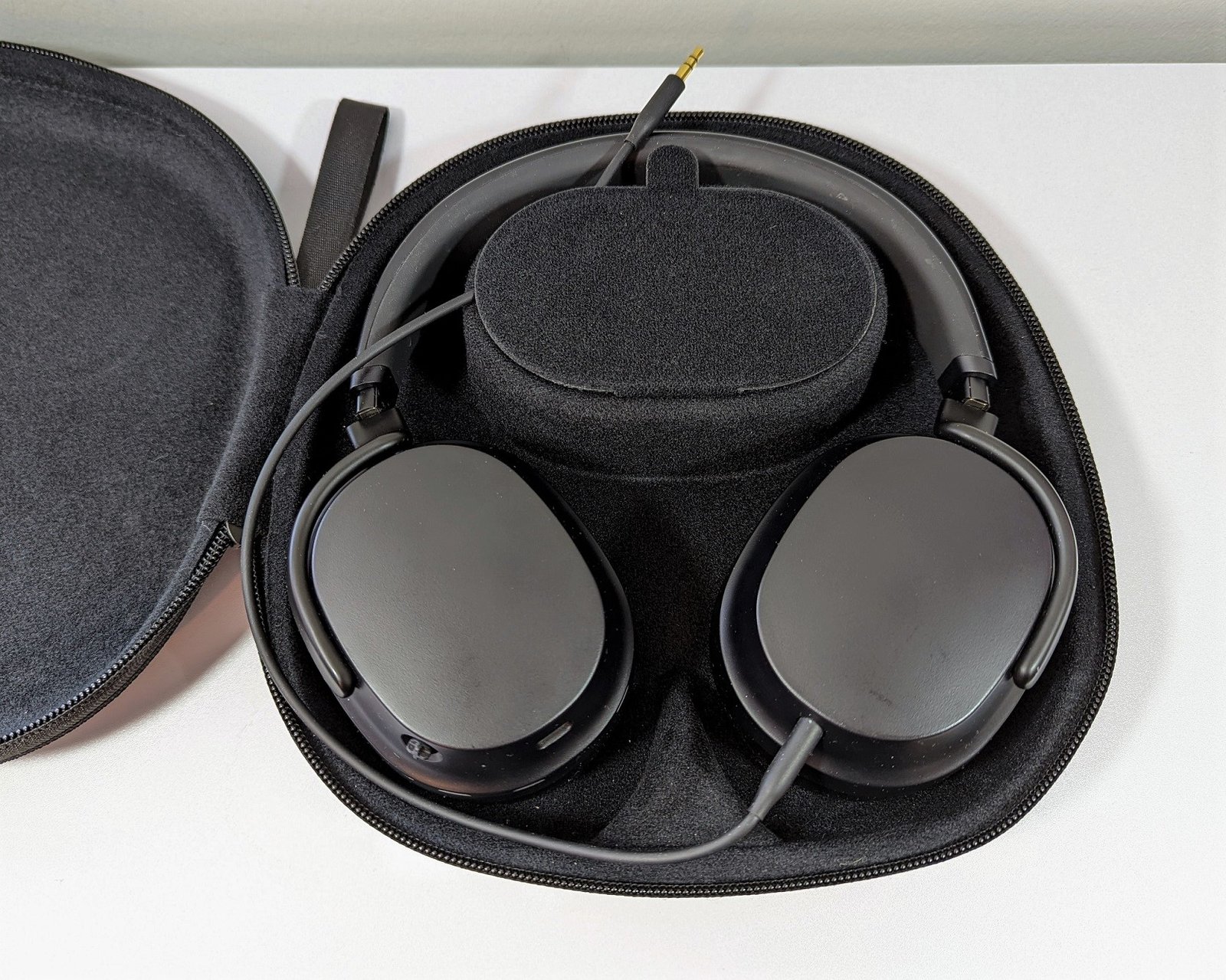
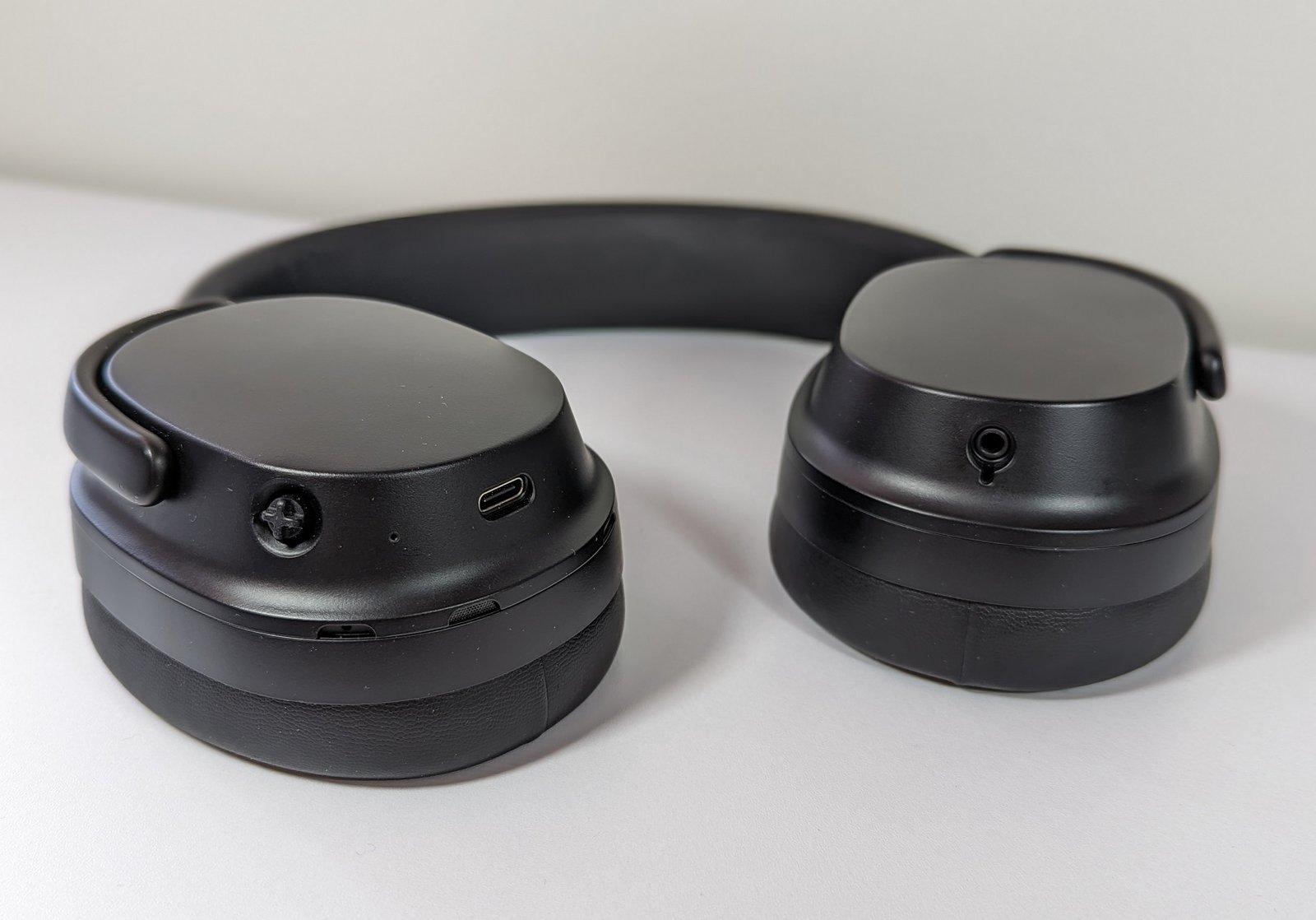
The Panda is made mainly of plastic, but the earcups connect to the headband with metal parts. All moving parts of the headphones creak and rattle cheaply. In addition, the hinge that allows the earcups to swivel sideways feels really weak and loose. Based on what I've read, hinge breakage is quite common, even though it is made of metal. Thanks to the hinge, the earcups turn flat, allowing the headphones to fit into the included storage case. The earcups also turn slightly vertically with a mechanism that has Focal headphone-style springs that push the earcups back to their default position.
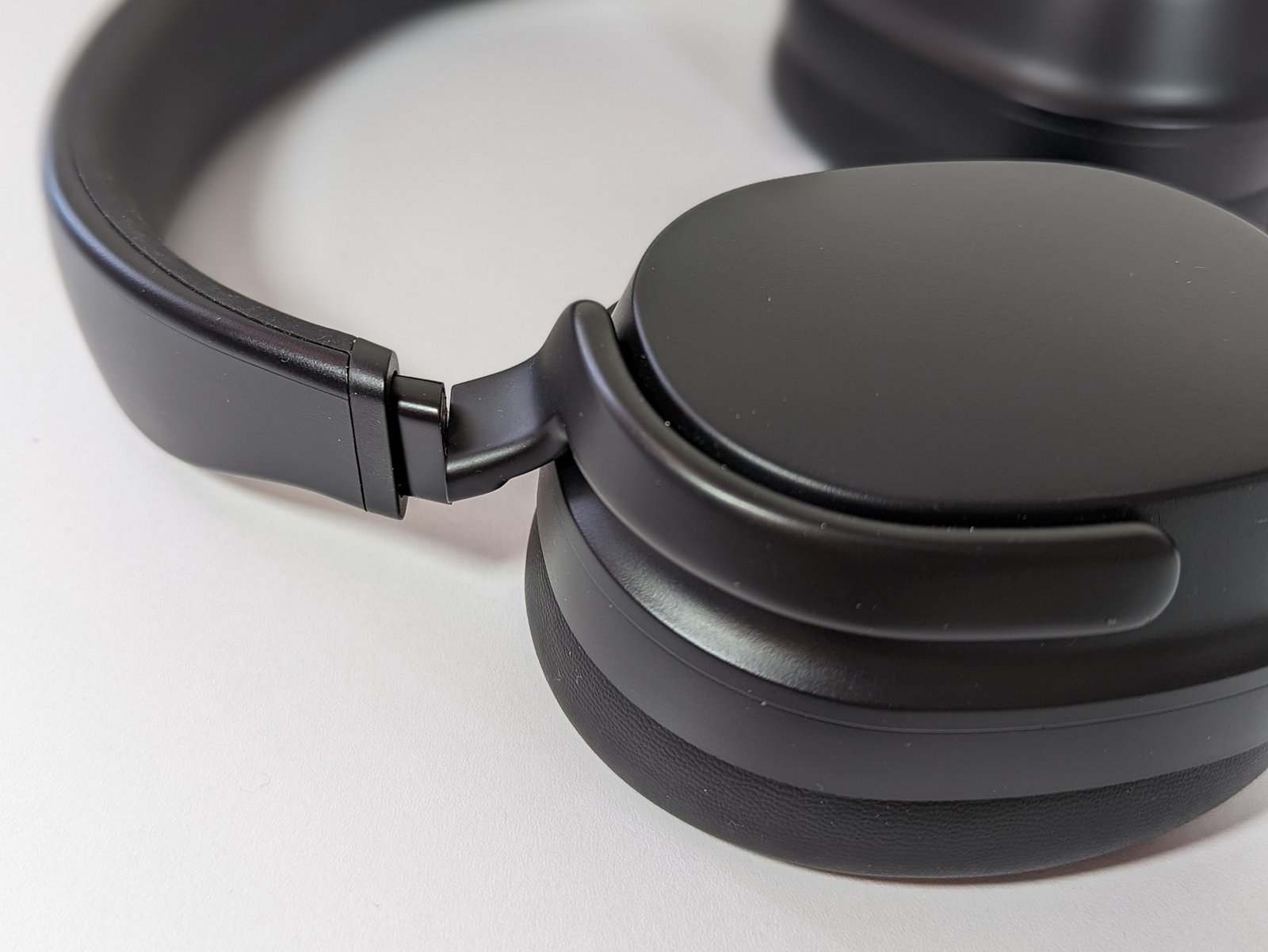
Height adjustment is done in the traditional way with notched moving rods. The padding on the inner surface of the headband is made of silicone-type material, similar to, for example, AKG K371 headphones. In my opinion, the padding is far too thin considering the Panda's quite significant weight – aesthetic reasons often seem to take precedence over user comfort in headphones.
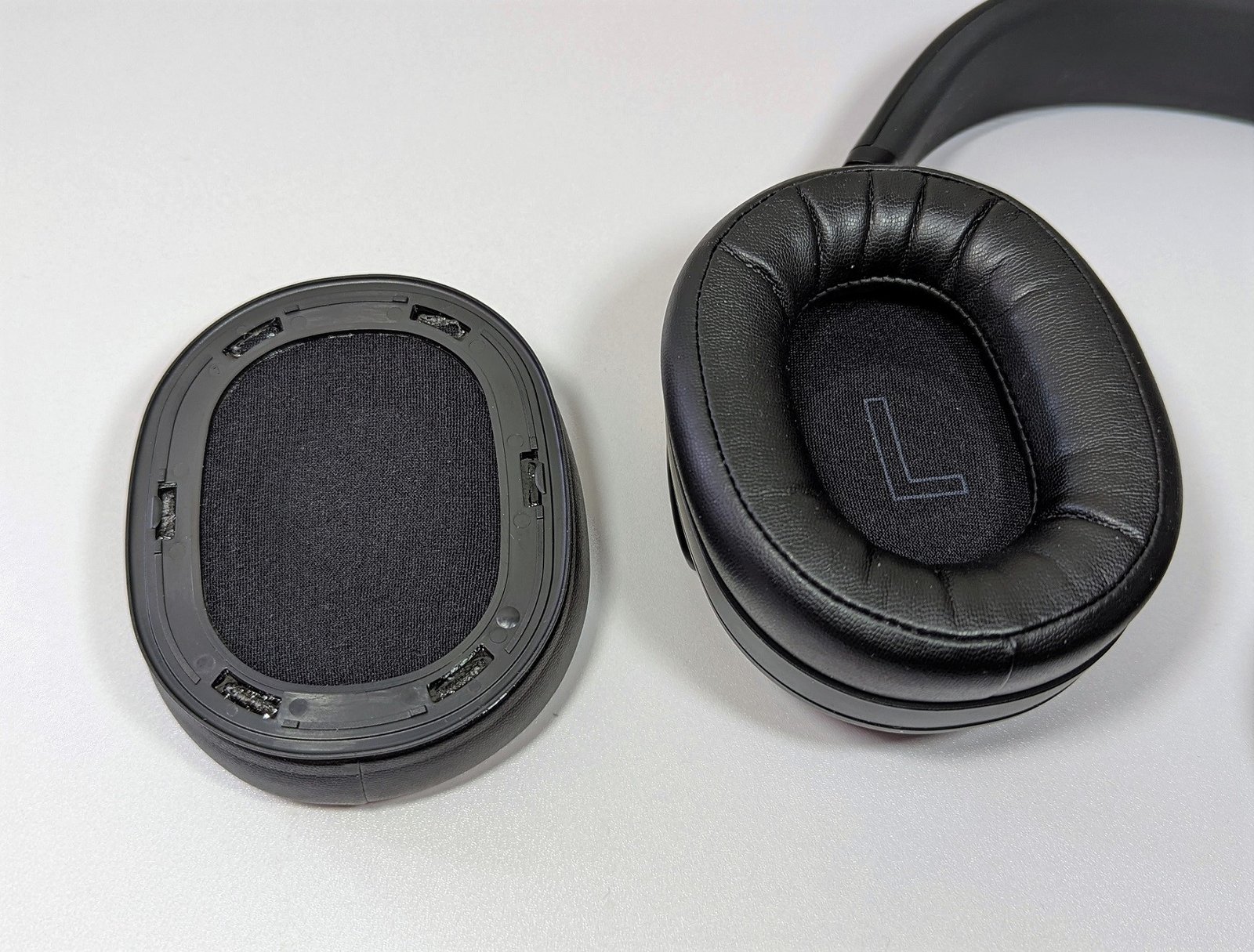
The ear pads are made of soft synthetic leather and attach to the headphones with a plastic mounting ring. The manufacturer offers (or offered) replacement pads made of different materials for the headphones for $30–50.
Ribbon planar driver:
The Panda features an interesting round planar driver, topped with a sound-guiding structure called a "mandarin". The driver is also otherwise compressed between various plastic and foam materials, so it differs significantly from traditional open-back planar drivers.
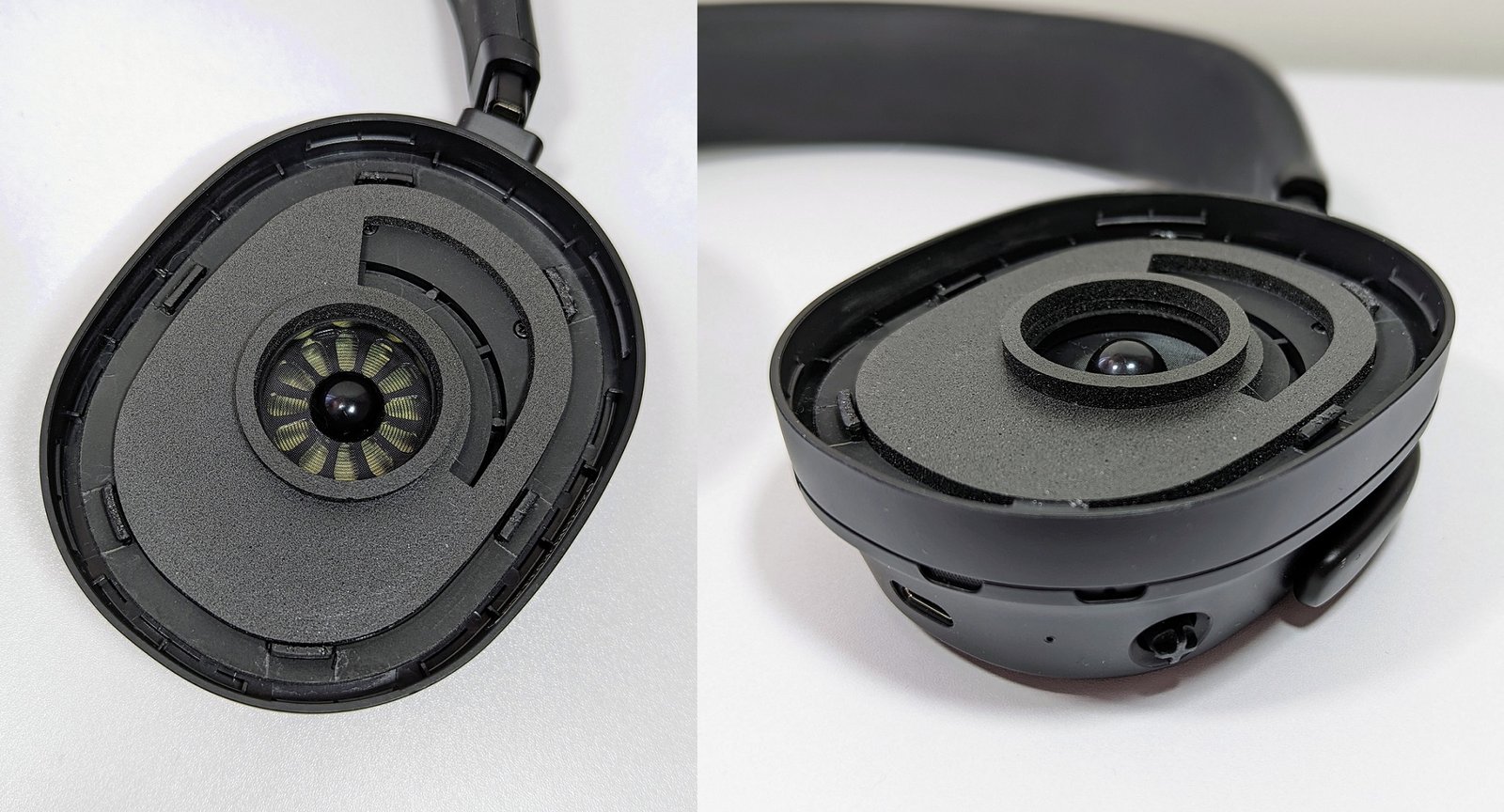
The Panda's driver was previously used in Oppo's PM-series headphones, which are no longer manufactured. Drop bought the right from Oppo to use and modify the driver for its own needs. The Panda indeed resembles the PM-series headphones quite a lot in appearance, but its cups are thicker because they had to accommodate amplifiers, a Bluetooth module, and a battery.

Usability
Due to all its electronics, the Panda is surprisingly heavy, weighing a hefty 375 grams. A very large portion of the weight comes from the cups, so the headphones' weight primarily rests on the sides of the head and ears during use. To keep the headphones securely on the head, the situation has clearly been attempted to be compensated with strong clamping force. Of course, a closed design also requires a tighter-than-usual clamp to maintain proper bass quantity.
On the positive side, the Panda stays very securely on the head, but the strong clamping force and shallow ear pads make it quite uncomfortable for longer use. The pads also warm up considerably during use, so my ears start to sweat even in winter. I also cannot call the headphones' headband comfortable, as it is so straight in the middle that I feel unpleasant pressure on the top of my head. Overall, the comfort is not entirely terrible, but it should be better in headphones intended for active use outside the home.
Speaking of which, the Panda does not have active noise cancellation, but because there is so much material and electronics inside the cups, passive noise cancellation is quite effective. The Panda feels and sounds almost like earmuffs when worn, but higher-frequency ambient sounds are still clearly audible.
Sound quality
Frequency response:
A smaller problem:
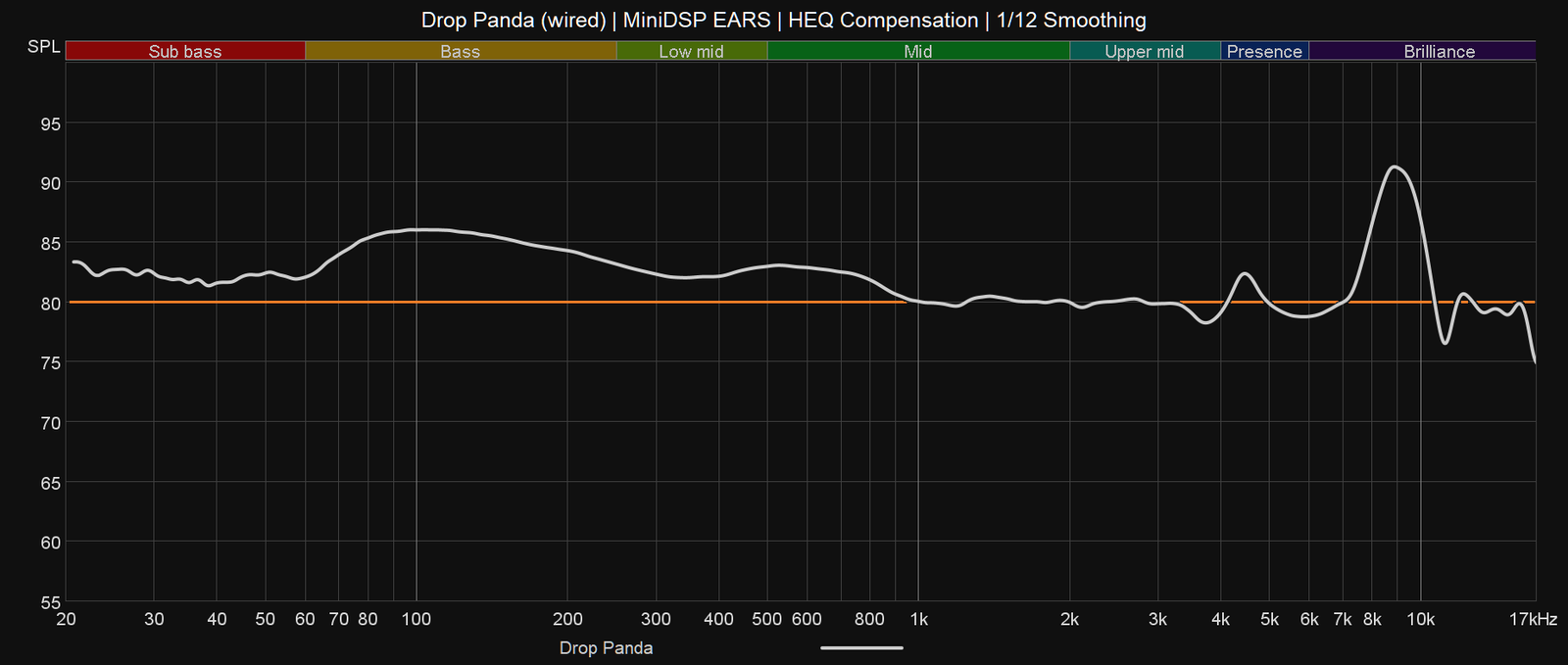
The Panda's frequency response can be considered either bass-heavy (with the intersection of the frequency response and target curve set at 1 kHz, as above) or generally attenuated in the mid-frequencies above 1 kHz (with the intersection set at, for example, 250 Hz). The end result, however, is the same: the headphones have an uninspired, muddy, thick, and hollow sound.
This is largely a result of the frequencies below 1 kHz being overly emphasized in the overall sound, in addition to the upper treble lacking all airiness above 10 kHz. The mid-range tuning is otherwise good, if not excellent, but everything is reproduced annoyingly unclear due to the skewed balance. The Panda sounds truly closed-in and congested. The treble peak visible at 9 kHz in my frequency response measurements is not actually very strong, but it turns the Panda's treble into an indistinct hiss that is not at all clear. The treble would also require energy around the emphasis.
The Panda's tuning is still not among the worst, and like other Bluetooth headphones, it could be improved with an equalizer. Since my own Panda does not have a working Bluetooth connection, I used the automatic EQ setting found in the Qudelix 5K device for equalization, which is based on Crinacle's frequency response measurements. Equalization made the headphones sound significantly better and more energetic, but it also further reinforced my understanding that the Panda's mediocre tuning is, in fact, their smallest problem in terms of sound quality.
Bigger problem:
Despite its interesting planar driver, the Panda is technically downright comically bad. The sound of the headphones literally lacks any detail, and even after equalization, the music sounds incredibly rounded, flat, and one-dimensional. Listening to the headphones feels like the sound has been squeezed between two thick pillows. An exploded view of the headphone cups clearly shows that the drivers are packaged and suppressed very thoroughly. I don't believe Oppo's planar driver would normally be this flat and lifeless in dynamics unless Drop had ruined it with its modifications.
Of the advantages offered by planar technology, only fairly precise sound placement in the soundstage remains in the Panda, but that is small comfort in a situation where the sound lacks detail or layering to even beat the cheapest HyperX Cloud Alpha gaming headphones costing 80 euros. Compared to the Panda, the HyperX model technically sounds like it could be imagined to cost 300 euros, while the Panda is a sub-100 euro headphone.
The Panda makes everything sound compressed and dull because it removes all energy and all smaller details from the sound. There is no grip left to get excited about listening. Even the bass reproduction lacks any power, despite the bass-heavy factory tuning. In this respect, the Panda closely resembles Dan Clark Audio's over-damped planar headphones, such as the one I previously reviewed Aeon 2 Closed -model.
Summary
The Drop Panda is not a completely terrible headphone, but despite its over 400 euro price, its sound rather resembles headphones costing 100 euros. Most of the headphones' price is likely explained by their Bluetooth connectivity and amplifiers featuring THX technology, which was fashionable at the time of release. Drop also certainly had to spend a considerable sum on the Panda's product development, as it acquired a planar driver from Oppo for the headphones, which required further development and mechanical tuning. The headphone's headband structure was also likely designed specifically for the Panda.
I didn't get to try the Panda as Bluetooth headphones, in which capacity they might compete more evenly against many rivals purely because listening would be possible without a cable. However, the Panda is technically such a mediocre headphone that it cannot be saved by equalization to be any better than most 100–200 euro headphones that use ordinary dynamic drivers. What bothers me most is that Oppo's interesting driver is completely wasted in the Panda.
Compared to many other Bluetooth headphones, the Panda lacks active noise cancellation despite its high price. The headphones are also quite heavy and uncomfortable for use outside the home. Drop markets the Panda as Bluetooth headphones for audiophiles interested in good sound quality, but in my opinion, the Panda is anything but. In terms of sound quality, it is definitely not worth paying over 400 euros for, as it would be extremely mediocre even if it cost under 200 euros. It remains to be seen whether the Panda will ever go on sale again due to its serious quality issues.
Pros and cons:
+ Interesting planar driver
+ Fairly precise sound placement in the soundstage
+ Soundstage size is not among the worst for closed-back headphones
+ Good passive noise isolation
+ Pleasant, understated appearance for use in public places
+ Stays securely on the head
+/- The Panda can be relatively easily equalized to sound better, but this should not be necessary for headphones costing over 400 euros, especially when they are marketed primarily for their sound quality
– Sound quality
– And once again, sound quality: the reproduction has almost no detail or dynamics
– Comfort and weight
– The structure feels weak at the hinges
– No active noise cancellation
– General quality issues, such as the Bluetooth feature breaking down
– High price and terrible value for money
 EN
EN  FI
FI