Author: Sword of Damocles
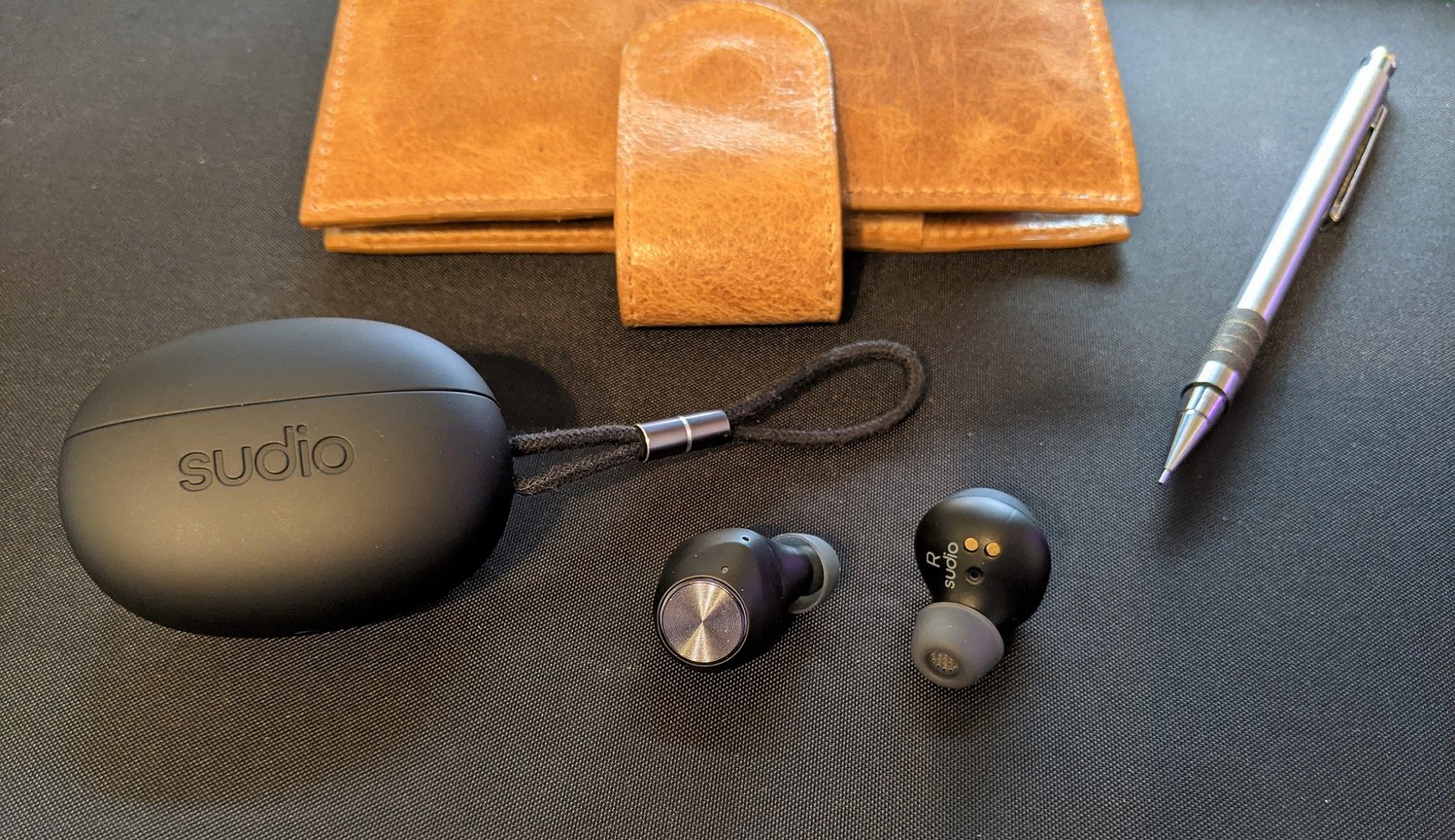
Table of Contents:
This review differs from my previous ones in that I was contacted by a Swedish headphone and speaker manufacturer, Sudio, who offered me their brand new wireless T2 in-ear headphones with active noise cancellation for testing. My interest was piqued because I hadn't heard of the company before. The product category was also completely new to me, as in-ear headphones haven't otherwise been a major part of my headphone hobby so far.
The product category seems to be very popular among larger consumer groups at the moment, so I decided to find out what someone like me, accustomed to full-size headphones, thinks of these headphones. My review will simultaneously cover both the Sudio T2 headphones and the product category in general. Although I received the headphones from the manufacturer, it is in both our interests that my review will be honest and truthful. There is no agreement between us, so my thoughts are, so to speak, my own, and I do not benefit financially from the review. I thank Sudio at this point for the opportunity to test the T2 headphones.
Company and T2 headphone model
Founded in 2012, Sudio has for some reason completely escaped my notice as a company, even though their headphones are also sold in Finland. The company appears to specialize in in-ear headphones, but Sudio also offers a few over-ear headphone models. I think it's very nice that there are companies specializing in headphones in the Nordic countries – Scandinavian practicality would often be beneficial in headphones too.
Recently released on 17.9.2021 T2 is, according to Sudio's own words, the next generation of their previous bestseller, the Tolv model. The T2, which includes active noise cancellation (ANC), costs 129 euros in the Finnish market and is available in four different color options: black, white, jade green, and sand-colored. The headphones are designed in Sweden and manufactured in China.
The T2 has plenty of competitors, as wireless in-ear headphones seem to be available from almost every imaginable manufacturer on the market. However, among models with ANC, the 129 euro price appears competitive, as many other headphones cost a few tens of euros more.
Information:
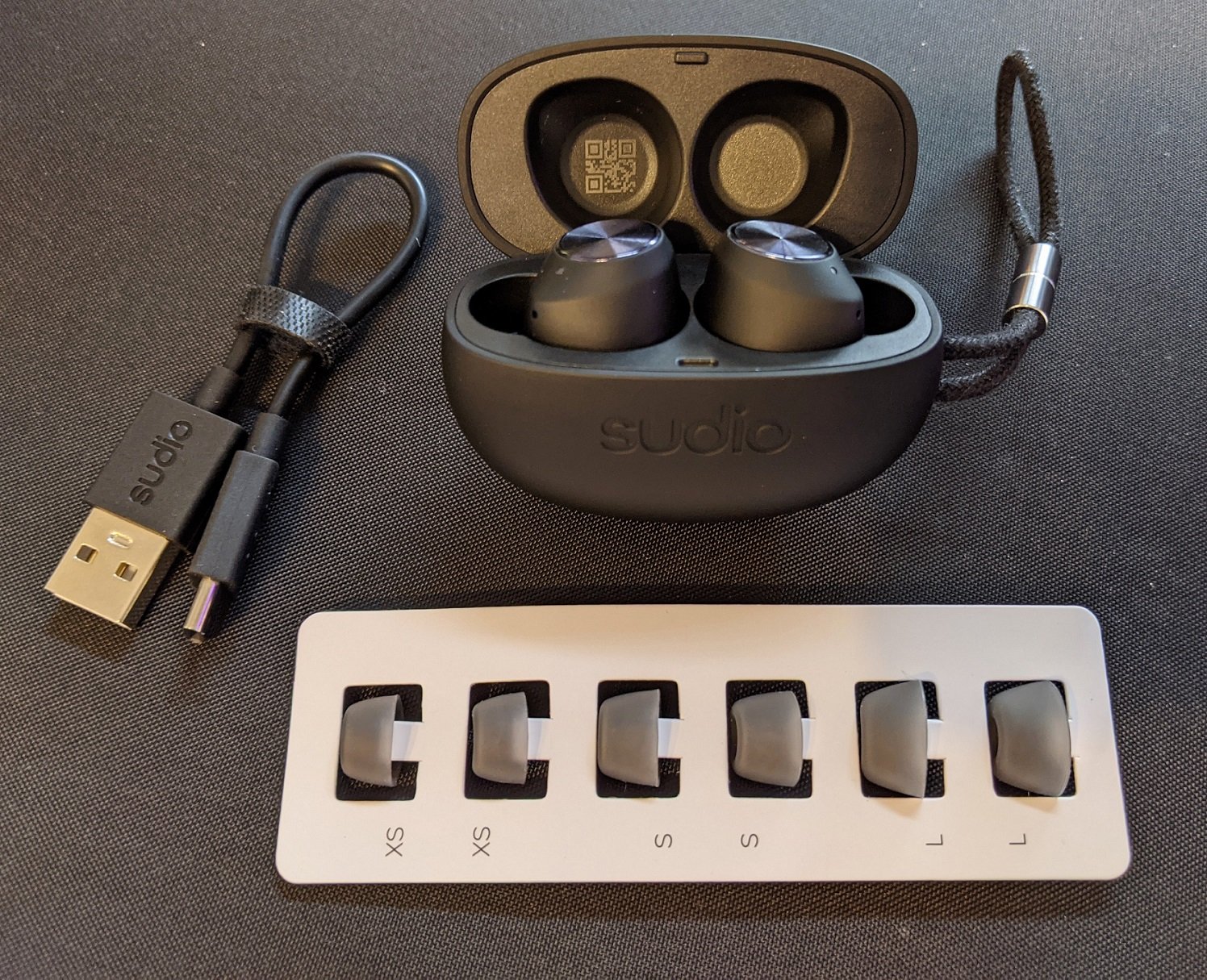
- Headphone model: wireless in-ear
- Driver: dynamic driver 8 mm
- Impedance: 16 ohm
- Sensitivity: 92 dB/mW (1 kHz)
- Weight: 5.3 g per earbud (charging case weighs 35.6 g)
- Bluetooth: version 5.2, range 10 m, only SBC codec available
- Compatibility: Android, iOS, Mac OS, Windows, Linux
- Battery life: 7.5/6.5 h depending on ANC (charging case provides 35 hours of power)
- Charging time: Both headphones and case 60min (10 min charge provides 2 h listening time)
- Other details: active noise cancellation (ANC), splash-resistant, touch controls, fast charging
- Warranty: 3 years
Review sample: Provided by the manufacturer
Structure and properties
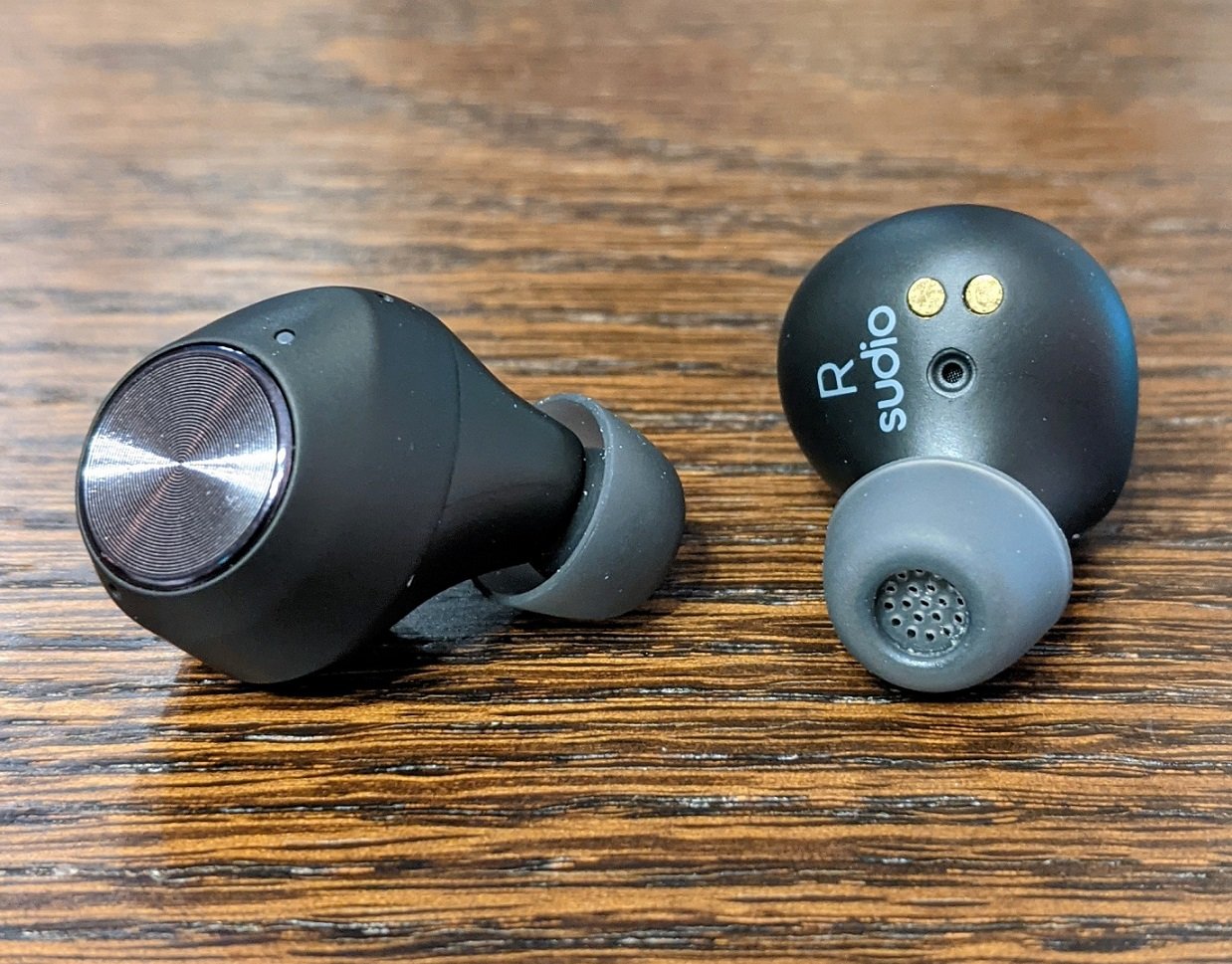
The Sudio T2s are externally high-quality headphones. The T2's plastic construction feels very sturdy, and its shape is such that it cannot be accidentally twisted broken. Both the headphones and their charging case are covered with a smooth and soft rubber-like material – the case feels somewhat like a dry bar of soap. The headphones are promised to be sweat and splash-resistant, but they do not have an official water resistance rating.
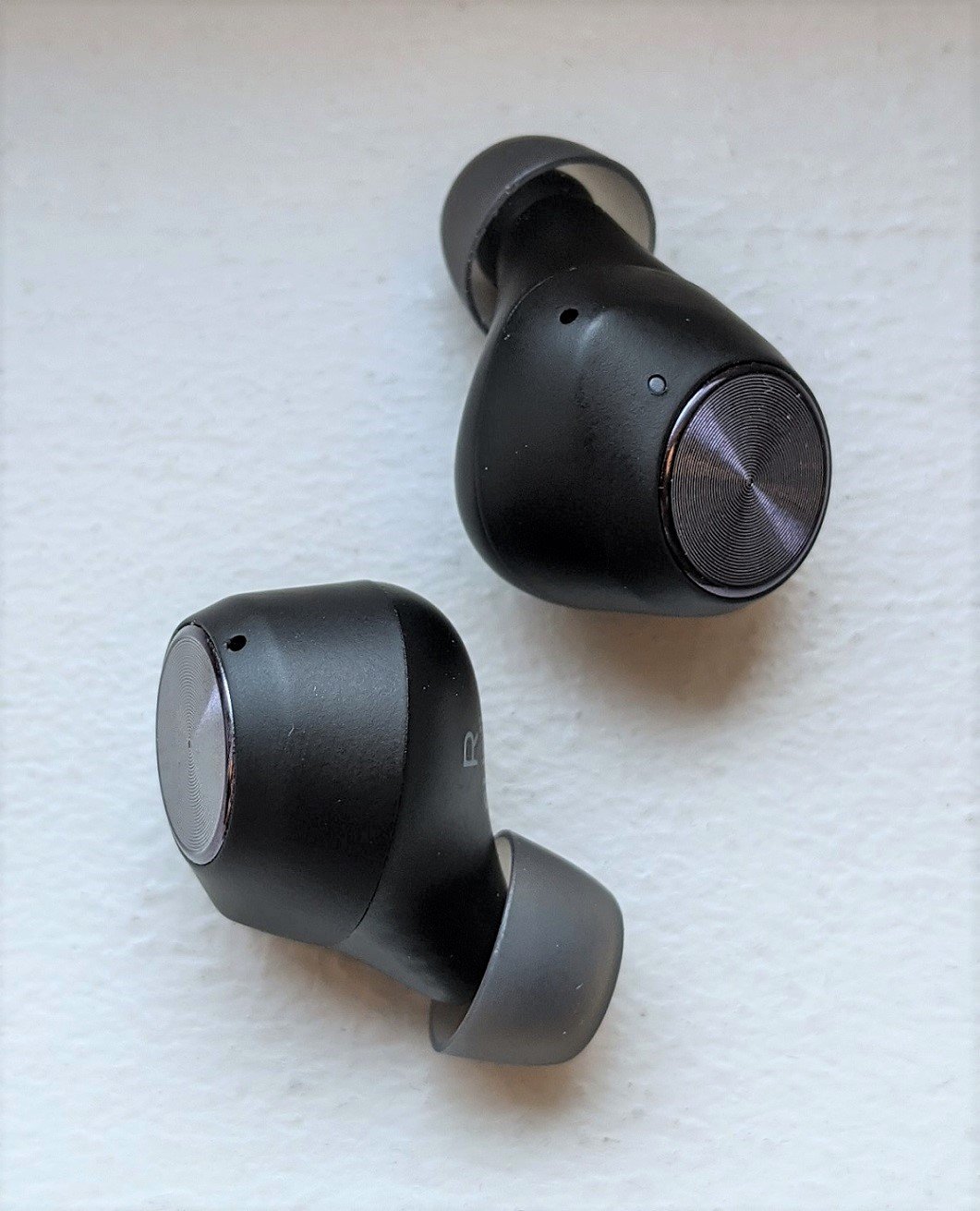
Each earbud has two holes for microphones, which are used for active noise cancellation and calls. The round discs on the outer edges are touch controls, by touching either of which for 2 seconds, you can switch between active noise cancellation, transparency mode (which amplifies ambient sounds), or normal passive mode. The buttons can also be used to answer calls and control music playback.
The buttons react well enough to touches and are easy to hit due to their large size. However, this also has its downsides, as it's difficult not to accidentally touch the buttons when placing the headphones in your ears or generally holding them – at the same time, you have to listen to the beeps caused by accidental touches. Speaking of beeps, each noise cancellation mode has its own sound signal: for ANC mode, a strong ”woosh” is heard, for transparency mode, a low rumble and ”ding dong” are heard, and selecting the off mode is made clear by a ”ring” sound. Using sound signals is a good thing in the sense that one gets tired of them slower than longer spoken announcements.
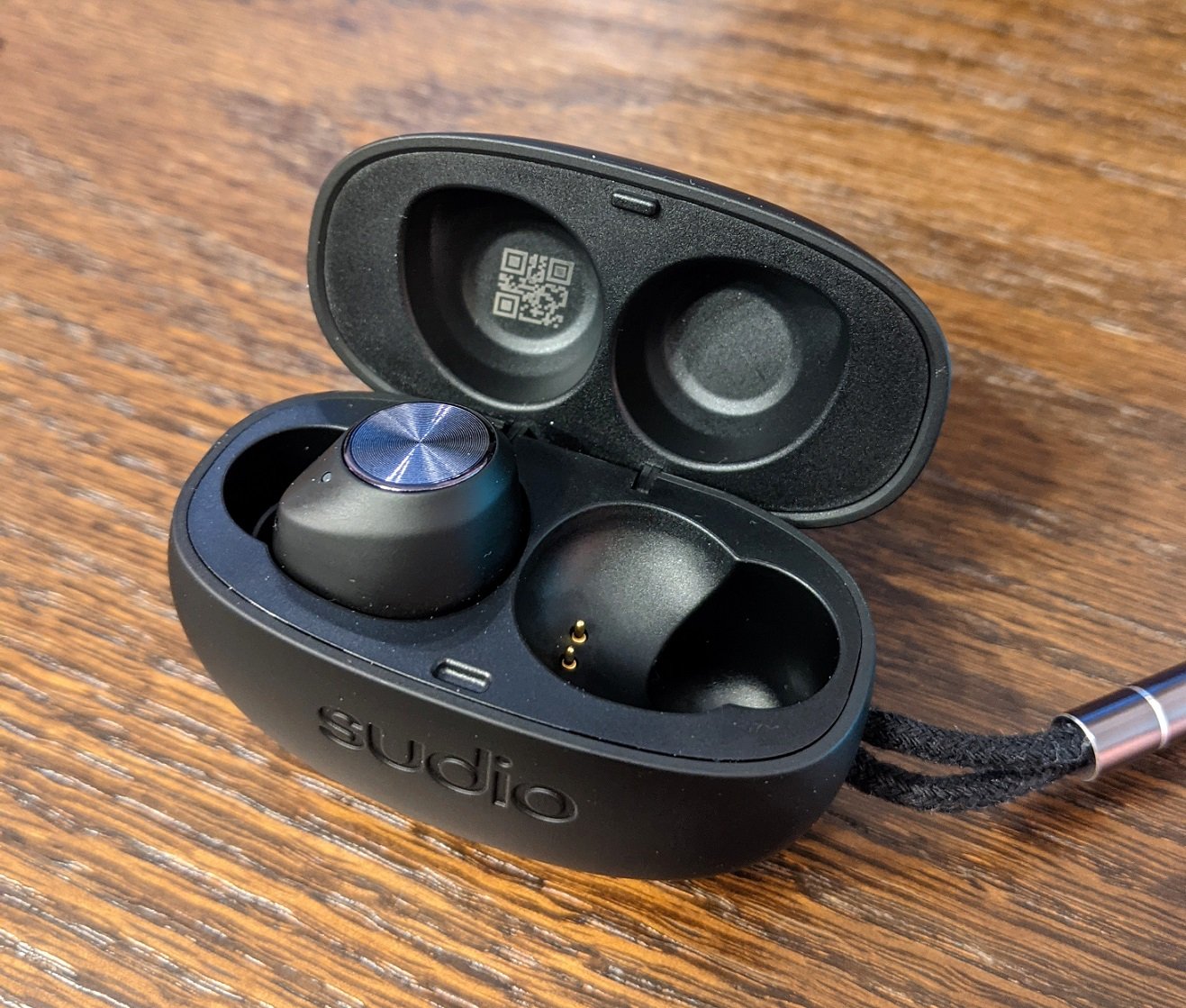
The headphones' compact charging case is well-designed. The headphones attach to their respective slots in the case with magnets and stay securely in place without falling out, even if the case is shaken upside down. The case lid also attaches securely with magnets and does not open on its own.
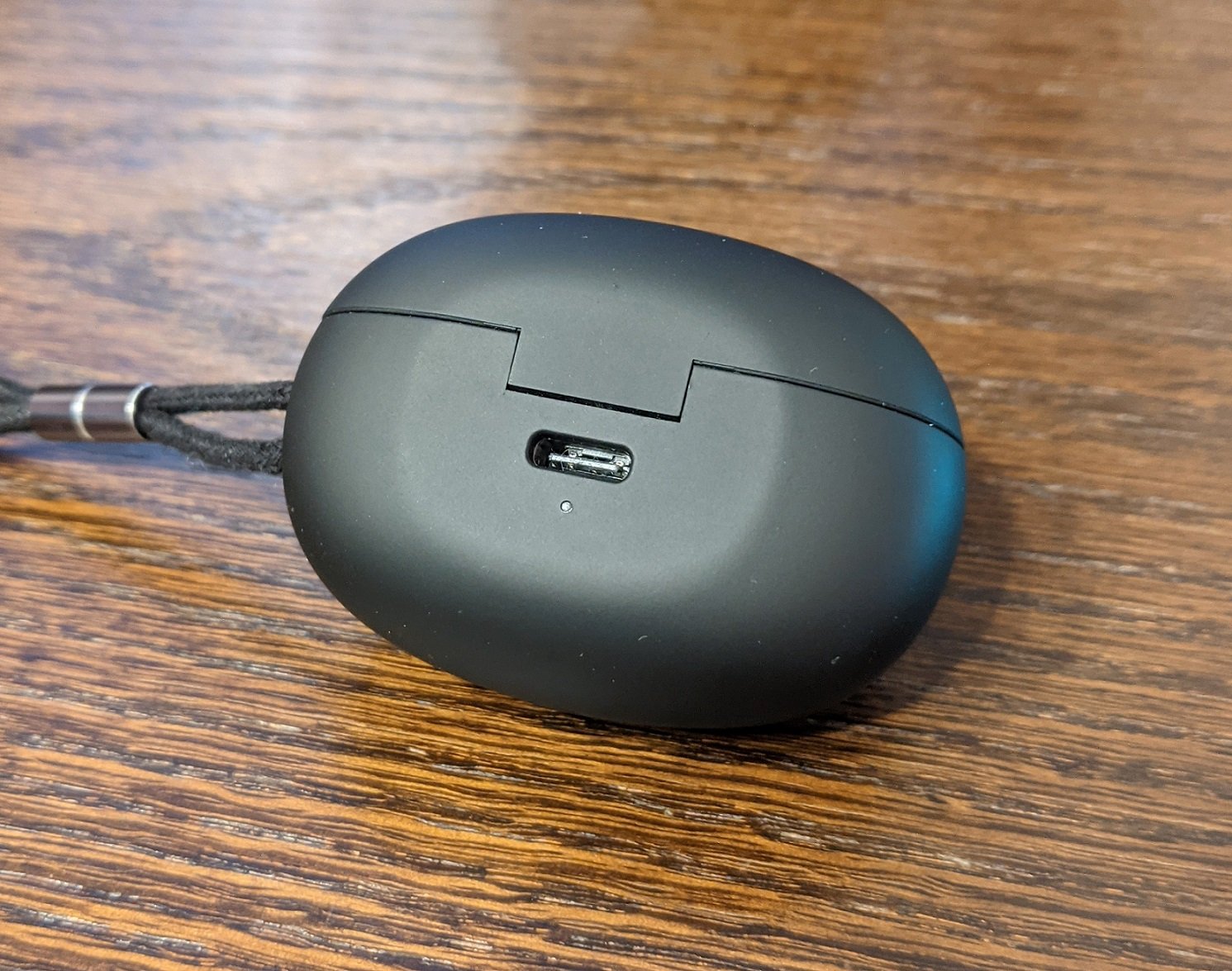
When the headphones are paired via Bluetooth with, for example, a mobile phone, the connection to the phone automatically disconnects when the headphones are placed in the case. Conversely, they automatically connect when taken out of the case. This makes using the headphones extremely easy.
The Sudio T2 features a modern Bluetooth version 5.2, but despite this, only the old and most audio-compressing SBC codec is supported. In my opinion, this is an unusual solution, but it likely has a positive impact on battery life. The headphones are promised a battery life of 7.5 hours without the ANC feature and one hour less with noise cancellation activated.
Battery life has been somewhat difficult to assess, as it would require long-term listening and keeping the headphones outside the case. From a usability perspective, it's always easiest to put the headphones back into the case, which immediately charges them fully. The manufacturer promises that a 10-minute charge provides an additional 2 hours of listening time. Because of this, I find it difficult to envision a situation where listening would be interrupted due to the battery running out.
I have primarily used the T2s with my Google Pixel 3A phone, to which the headphones connect quickly via Bluetooth and without interruptions. I also tried the headphones with a Windows laptop, where they worked flawlessly. The audio delay on both devices when watching videos is so minimal that I haven't paid attention to it.
Comfort
T2s are quite large in size, but look neat because there is no protruding stick-like part in the structure, as in many other headphones I've seen. Sudio has clearly put effort into optimizing the shape, as the headphones fit into the ears very easily and securely. The body of the headphones is rotated towards the upper part of the ear, leaving a large part of it in the ear's recess.
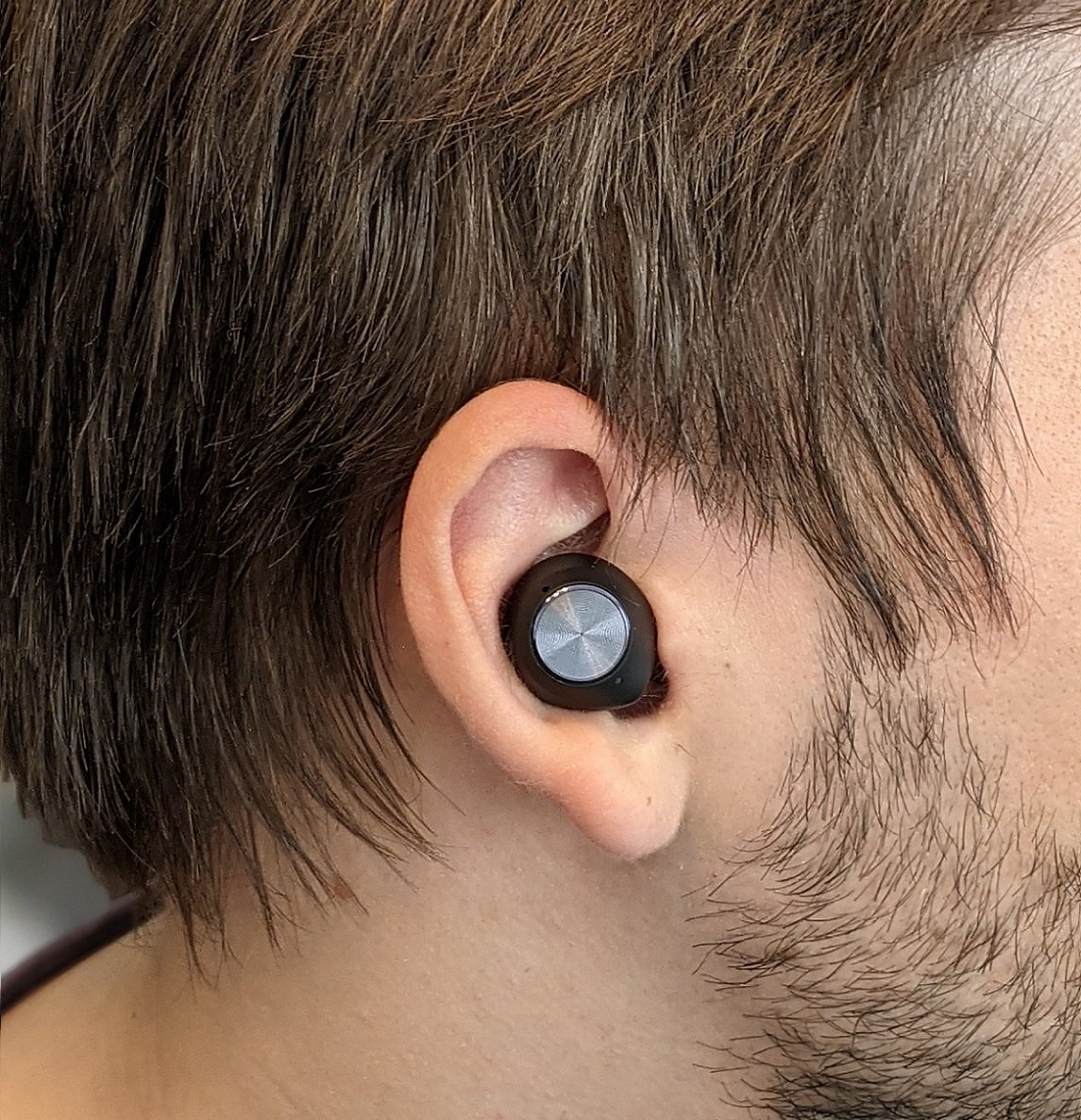
The design fits my ears perfectly, so the headphones are comfortable to use and are almost unnoticeable in the ears. The headphones also stay very securely in place and do not fall out of the ears when shaking your head. I personally don't exercise during which I'd want to listen to music, but the T2s would be well suited for it. In terms of usability and comfort, the headphones are a perfect performance.
Noise cancellation performance and call sound quality
The passive noise cancellation of the headphones is quite good thanks to the fit, so the active mode does not, in my opinion, bring a massive improvement to the situation in all respects (it could, of course, be that I expected more). The ANC feature is most beneficial in suppressing low frequencies and background noise, but even somewhat surprisingly, other frequencies are only slightly attenuated.
For example, the noise caused by car traffic on a city street and the restless background noise in a busy lunch restaurant are well attenuated – yet the sound of a car engine driving 5 meters away is clearly audible, and in a lunch restaurant, the headphones can be used for eavesdropping on neighboring tables, as people's speech from further away is really clear with ANC on after the background noise has been suppressed (cutlery also clinks more distinctly than before). Based on this, the headphones' attenuation capability seems to weaken considerably for mid-range and high frequencies. My own voice also still sounds normal enough with ANC mode on that I can speak to others normally without shouting too loudly.
I also tried the headphones outdoors in windier weather, which was not a pleasant experience. The headphones' microphones turned the wind into a very strong audible disturbance, which made me immediately return to passive mode. The noise cancellation is clearly not optimized well enough for wind.
ANC mode, or rather the headphones' microphones, also seem to be sensitive to some other electronic devices, as my portable work computer causes interference in the headphones. When I look directly at the computer, with the microphones activated (ANC mode or transparency mode), I hear a high-frequency whining that stops completely by turning my head 10 cm to the side or by switching off the microphones. So far, I have not noticed problems with other devices.
ANC mode is followed by a 2-second press to transparency mode, which is useful for distinguishing quieter ambient sounds. In transparency mode, there is a constant hiss, which I sometimes use to block out my tinnitus when I'm not listening to music with the headphones – this, of course, requires me to be in a quiet environment.
Sudio advertises the beamforming microphones in the T2 as excellent for phone calls as well. One of the microphones collects and attenuates ambient sounds, and the other picks up the speaker's voice. The sound quality produced by the T2's microphones during calls is, in my opinion, very good and clear.
Unfortunately, the ambient noise-canceling algorithm seems to be somewhat broken, as it very sensitively and effectively suppresses the speaker's own voice as well – when speaking on a call with a normal voice, the other party only hears individual words from sentences or individual syllables from words. The speaker's voice comes through uninterrupted only by shouting, even if the call is made in a quiet environment. Speaking on a call this way feels silly and disturbs others. Hopefully, the problem only affects my own headphones.
Headphone sound quality
Sudio has not developed a mobile application for its headphones at all, which could be used, for example, for equalization. Otherwise, there would be very little use for an app, but its absence means that the tuning of the headphones is fixed for most users as the manufacturer has chosen it to be – there are no effortless adjustment options.
So what do the Sudio T2s sound like? They have a consumer-type V-shaped tuning, meaning both low and high frequencies are emphasized at the expense of mid-range frequencies. Although the amount of bass remains within good taste, I think it's slightly too much, as it overshadows some of the mid-range frequencies. The mid-range frequencies as a whole are reproduced a bit thinly and more subdued compared to other frequencies. Nevertheless, so far, the tuning is quite successful in what it aims for – the sound of the headphones could be described as robust and energetic.
Unfortunately, problems arise in the high frequencies, which are reproduced too brightly and emphasized. For example, drum cymbals are reproduced so piercingly sharp and hissing that their details are sometimes difficult to distinguish. I would estimate that with these headphones, half of the music produced even slightly brighter than normal is unpleasant to listen to, except at low volume. The emphasis on high frequencies also sometimes makes female vocalists and 's' sounds too sharp. When listening to music, this is less often disturbing, but when listening to speech, 's' sounds could be reproduced more calmly.
Due to the bright reproduction, the headphones are not well suited, especially for more energetic rock and heavy metal music, but pop music and electronic music work quite well. These genres less often utilize and emphasize the frequency ranges that are problematic in these headphones. Nevertheless, due to the bright tuning, there is always a metallic nuance in the reproduction, and some songs still have to be skipped to save one's ears.
I haven't really used in-ear headphones much until now, so the T2s are the most expensive representatives of this product category I've heard. Because of this, I cannot compare them to any similarly priced competitor, especially regarding features outside of frequency response. In my opinion, the headphones perform at least adequately well in all aspects, when moderately evaluated.
Equalization
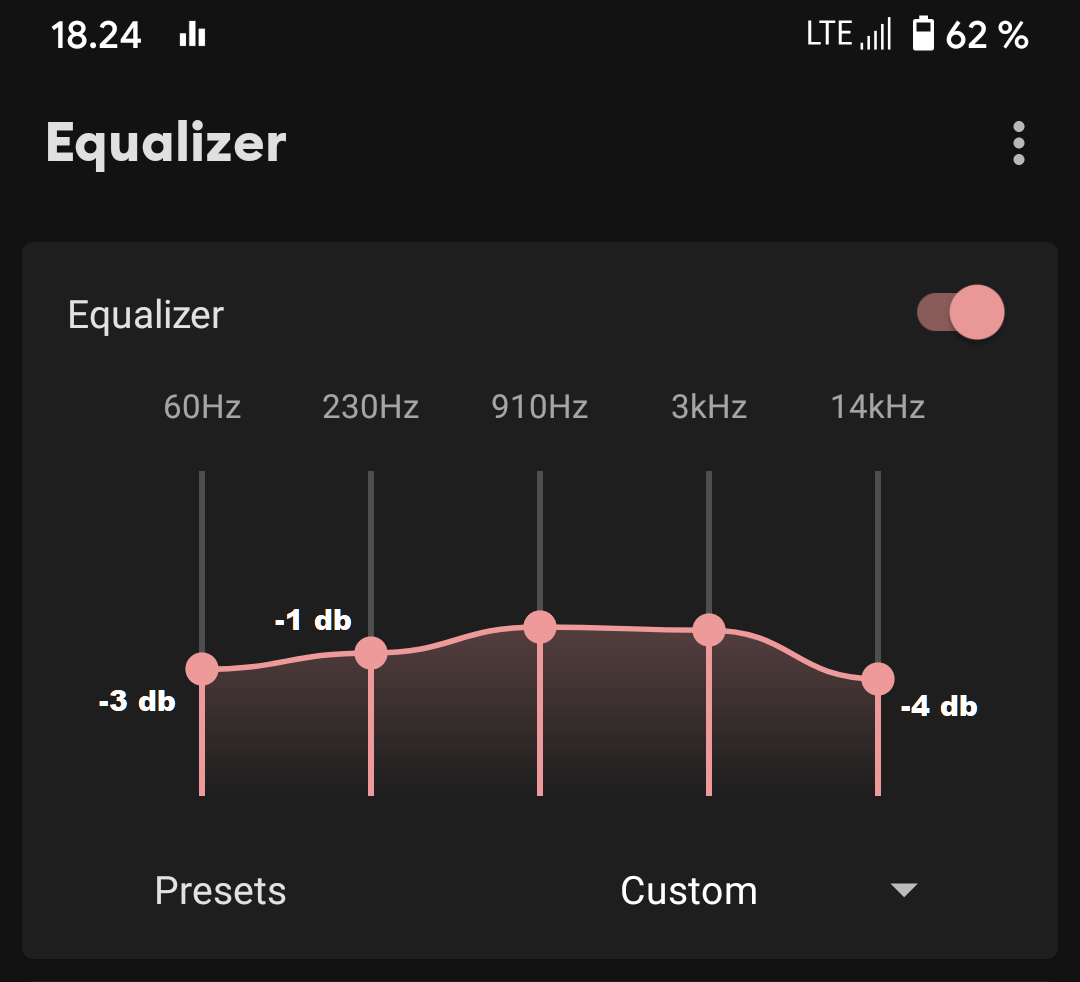
Since headphones are by default poorly suited for listening to music with high frequencies, I decided to look for a mobile application that could equalize them. After browsing the Android Play Store for a while and installing several EQ apps, I found the Flat equalizer app, which also works with the Tidal streaming service. Unfortunately, it seems to be common for all free apps that the number of adjustable frequency ranges is very limited. Fortunately, reducing high frequencies is a relatively simple procedure.
After a quick equalization, the headphones became better suited to my preferences. With the treble sounding more subdued, it's much easier to focus on its details. The headphones sound more balanced in every way, which expands their suitability for different music genres. Lowering the treble also has a positive effect on vocal performances, as they sound more natural and stand out better from the overall sound after the changes.
I also lowered the bass reproduction of the headphones, making it faster and more controlled. This also nicely clarified the reproduction of mid-frequencies. Although I would assume that the standard robust bass reproduction would please many, reducing the amount of bass actually improved its tightness and punch.
T2 vs. T2
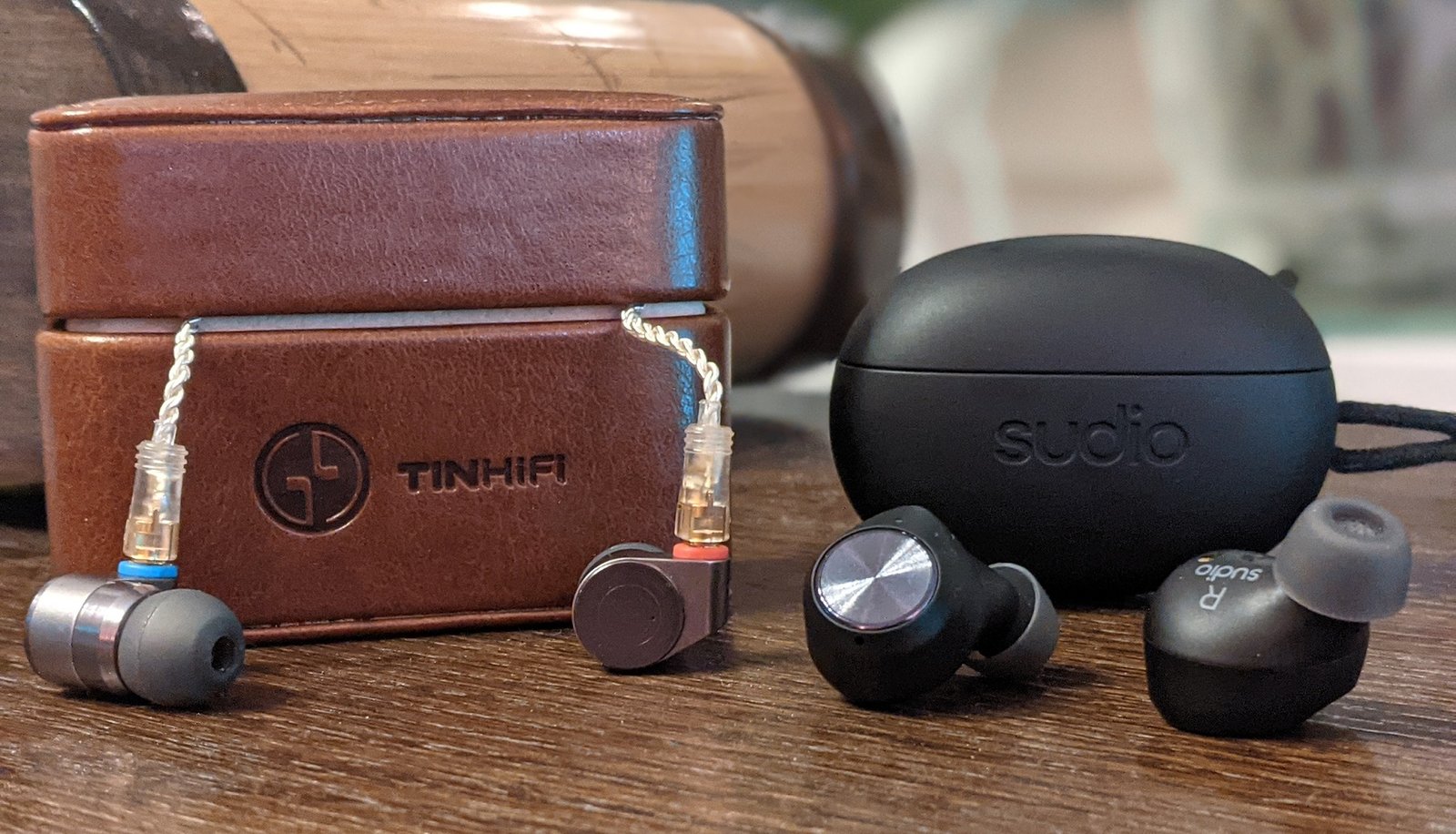
The Sudio T2 headphones are not the first T2-named headphones I've owned, as I also own the TinHifi T2s, priced at €50, which are considered good and quite neutral. These are wired, traditional in-ear headphones, and they have no additional features. The comfort and overall usability of the TinHifis are also weaker than those of the Sudio T2. However, in terms of pure sound quality, the comparison is interesting.
Both headphones are a bit too bright for my taste, as the TinHifi T2 also has a treble peak. It causes more sibilance than the Sudio T2's tuning, but is otherwise more tolerable. The headphones differ in other frequency ranges, as the TinHifis are mid-frequency-focused and limited in bass quantity, while the Sudios emphasize lower frequencies more – the lower frequencies are indeed much more fun in the Sudios, although already slightly overemphasized. The TinHifi's lower frequencies are so subdued that even a small amount of low-frequency ambient noise makes the music sound like it completely lacks lower frequencies. For this reason, the headphones are only suitable for home use, unlike the Sudios, which have more bass and an ANC feature.
Based on the comparison, the Sudio T2 is a better choice for listening to radio pop and electronic music. The TinHifi T2, on the other hand, with its detailed mid-frequencies, is clearly better for mid-frequency-focused listening, such as acoustic music. In headphones of this price, tuning, in my opinion, has the greatest significance for the end result.
Summary
Wireless in-ear headphones were a completely new and unfamiliar product category for me before getting acquainted with the Sudio T2s. Based on the trial, I think the idea is good, and I understand why such headphones have become popular, especially when moving outside the home. Although the headphones do not replace better home devices, they are a useful and life-simplifying purchase for less critical listening on the go. If I had to choose between them and similarly priced wireless over-ear headphones now, I would definitely choose the pocket-sized in-ear headphones based on usability.
My positive impression of the product category certainly arose from the fact that I got to try the Sudio T2s first, where usability and comfort are at an excellent level. One can tell from the headphones that the manufacturer has previous experience with similar products – the high-quality impression of the T2, in my opinion, reflects Swedishness in a good way. The appearance of the headphones is also successful, as it does not attract too much attention, especially in black. Other color options are available for those who prefer a more vibrant look.
After such a strong first impression, it was regrettable to notice that many functions related to the everyday use of the headphones could be improved. The sound quality of the microphones would be well suited for making calls, but the background noise-canceling algorithm also mutes the speaker's own voice, unless calls are made by significantly raising one's voice. I haven't had the chance to test in-ear models from other manufacturers, but I would assume that making calls should also be possible with a more normal speaking style.
In my own use, the ANC feature of the headphones has been an improvement compared to passive noise cancellation when in noisy environments. However, active noise cancellation cannot effectively remove human speech or high-frequency sounds. To give the T2's ANC a clearer rating, I would first need to hear similar implementations from other manufacturers. Due to wind-induced interference, I would say the Sudio T2 is better suited for indoor use – this is also supported by the lack of a water resistance rating.
In terms of sound quality, the headphones are clearly tuned for the largest consumer groups and for music that I personally listen to less. Modern pop-style music and radio music sound good, so considering the target audience of the headphones, the overall package, in my opinion, remains on the plus side. However, the overemphasized treble bothers me a lot. Although it is possible to equalize the headphones to sound really good and balanced with one's own effort, the situation is not ideal.
For the headphones' sound to be more widely suitable for different user groups and music styles, the T2 should have its own mobile application with adjustment possibilities. The lack of such an app is very regrettable, as it would allow the overemphasized treble and bass to be easily and more permanently corrected. I hope that Sudio will offer this possibility in their next products at the latest. At the same time, I would also like to see support for better sound quality Bluetooth codecs.
If the treble hadn't been taken to such extremes, or if the issue were easier for the owner to fix than it currently is, the headphones would be easier to recommend based on sound quality. On the other hand, if one is willing to live with the bright reproduction and other weaknesses I mentioned, the T2s are a perfect performance in terms of usability and comfort. All the problems I observed are largely linked to the noise cancellation algorithm, which would require more precise optimization from Sudio. However, the ANC itself works well enough that the headphones, once equalized, have become a regular part of my use, especially in situations where using larger or wired headphones would be inconvenient. With my own settings, the T2 sounds really good.
Pros and cons:
+ General impression of quality
+ Very easy and comfortable to use
+ Good (although apparently normal by current standards?) battery life and fast charging
+ Functional and well-designed charging case
+ Bluetooth connection works well
+ Active noise cancellation effectively reduces low-frequency ambient noise
+ Rich bass frequencies and a lively tuning for listening to modern music
– Too much treble, so the sound is bright and metallic
– S-sounds are sometimes too sharp and hissing
– Also too much bass for balanced listening
– There is no mobile application for the headphones
– Support only for SBC Bluetooth codec
– Plenty of room for improvement in ANC algorithm optimization (does not properly suppress speech frequencies or higher sounds, wind causes ANC to malfunction and speech cuts out during calls)
 EN
EN  FI
FI