Author: Roderick
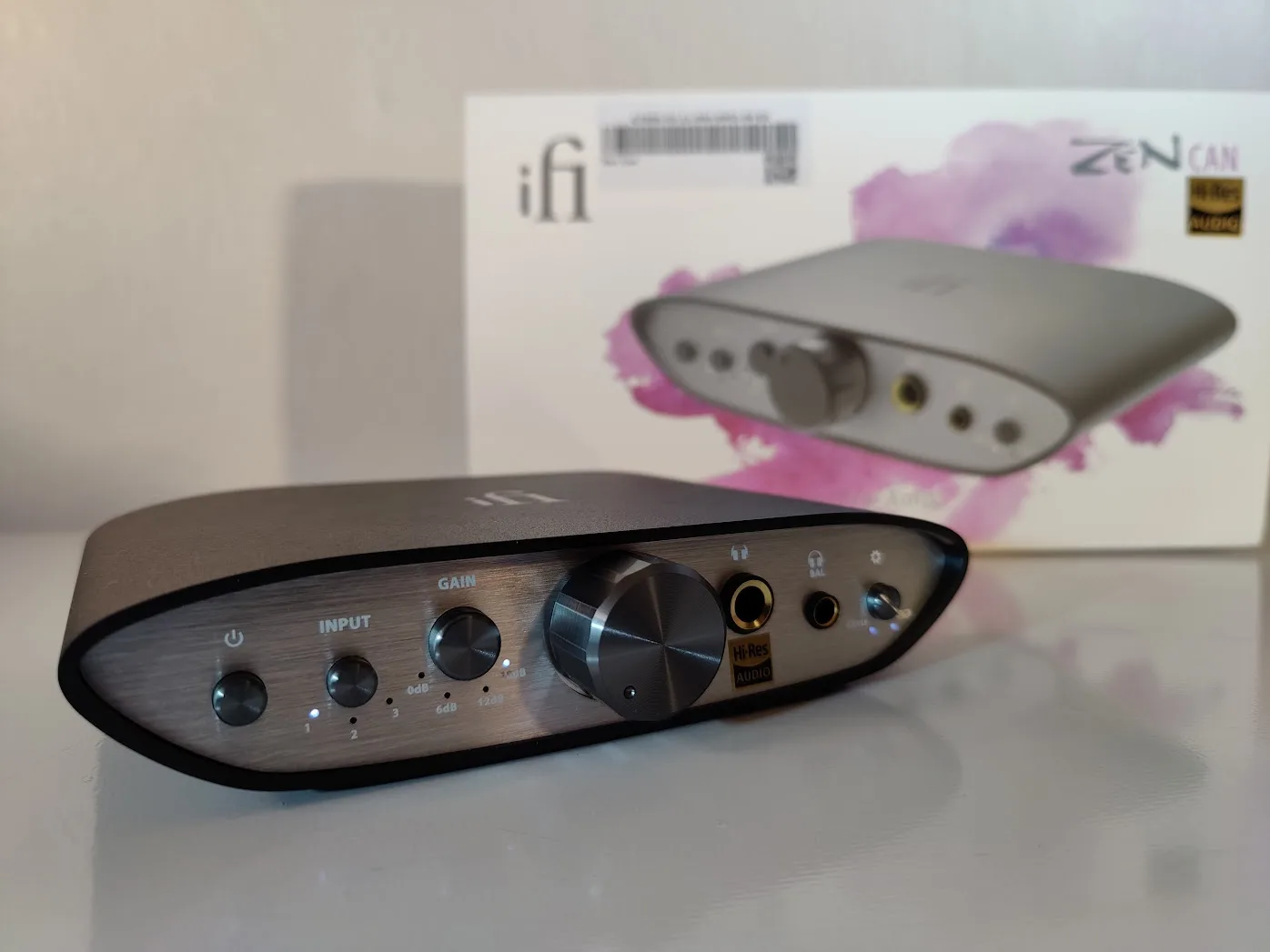
Table of Contents:
Information:
- Release Year: 2020
- Price: 199 €
- Type: Class A transistor headphone amplifier
- Input connections: RCA, 3.5 mm (unbalanced) and 4.4 mm pentaconn (balanced)
- Output connections: 4.4 mm pentaconn (balanced)
- Headphone connectors: 6.35 mm and 4.4 mm pentaconn (balanced)
- Gain settings: 0 dB, 6 dB, 12 dB and 18 dB
- Output impedance: Not specified
- THD: balanced <0.0007% (4V, 600 ohm, 1 kHz) and unbalanced <0.006% (100 mW / 1.27 V @ 16 ohm)
- SNR: balanced >120 dBA (15.2 V) and unbalanced >118 dBA (7.6V)
- Stated output power:
- Balanced:
- >15.1 V / 385 mW @ 600 ohm
- >11.0 V / 1890 mW @ 64 ohm
- Unbalanced:
- >7.6 V / 196 mW @ 300 ohm
- >7.2 V / 1600 mW @ 32 ohm
- Balanced:
- Power consumption: without audio signal approximately 5 W and maximum approximately 13 W
- Power connection: DC 5V/2.5A AC 100-240 V, 50/60 Hz
- Dimensions (W x D x H): 158 x 117 x 35 mm
- Weight: 515 g
- Features: Xbass (analog bass EQ) and 3D setting
- Included: Power supply, short RCA cables, 6.35 mm adapter and user manual
Review unit acquisition method: Loaned from a reseller
The iFi I last reviewed Zen Dac V2 -combo device impressed me with its sound quality. Its headphone amplifier is usable, but the device is at its best when used purely as a D/A converter. iFi also sells a separate Zen CAN headphone amplifier, priced at 200 euros, to pair with the Zen DAC. This article will find out how much this Zen series amplifier can improve the sound quality of the Zen DAC.
Both devices were borrowed for an impartial review from the local Joensuu Kuvalta ja Ääneltä.
Features and device use
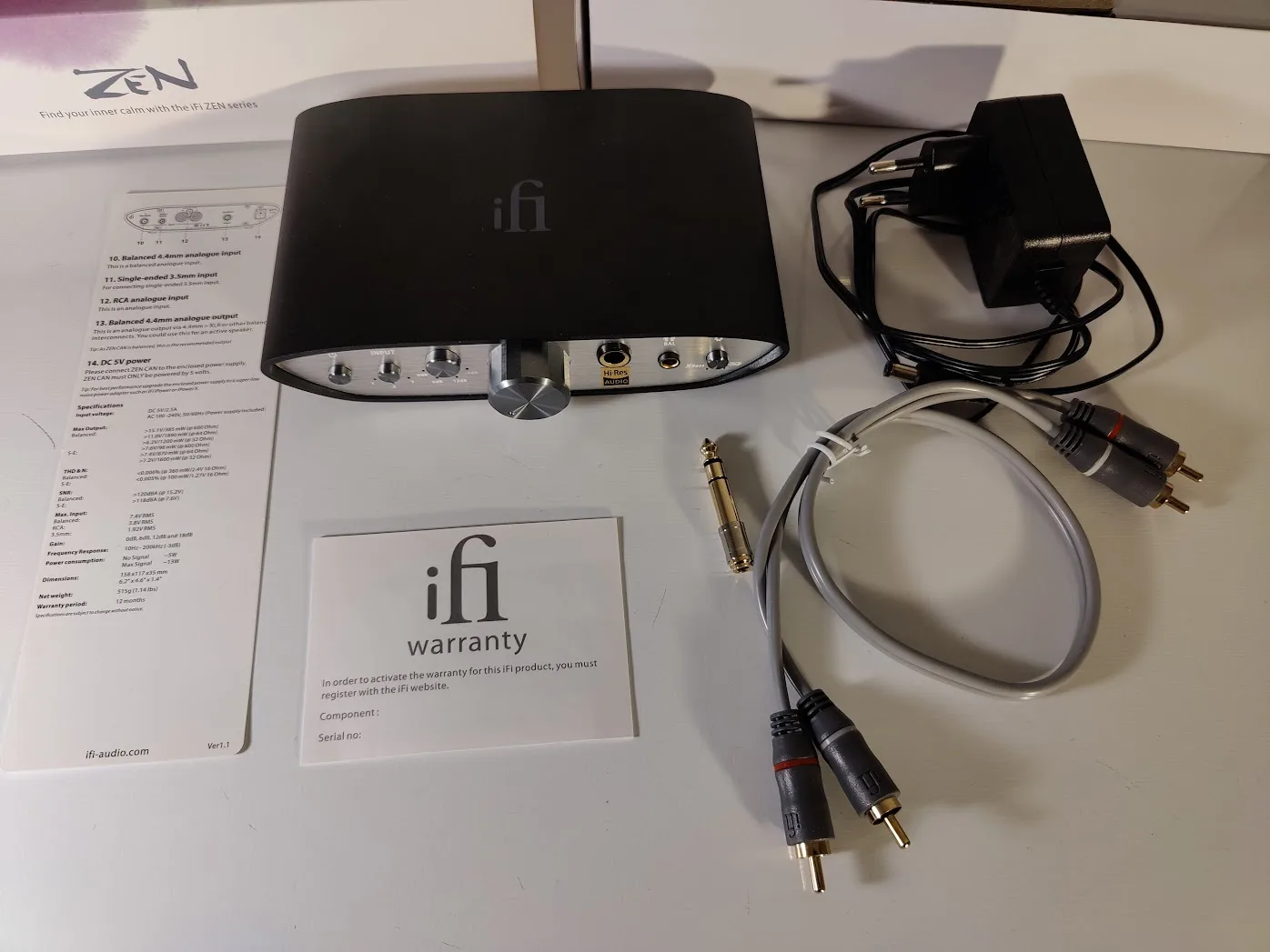
The Zen CAN comes with RCA cables, a 5-volt power supply, and a 6.35 mm headphone adapter. In appearance and construction, the amplifier resembles the Zen DAC, as the Zen series devices are designed to look as uniform as possible when paired and stacked. In my opinion, iFi's Zen devices are good-looking, and there is no complaint about the materials used or the quality of construction.
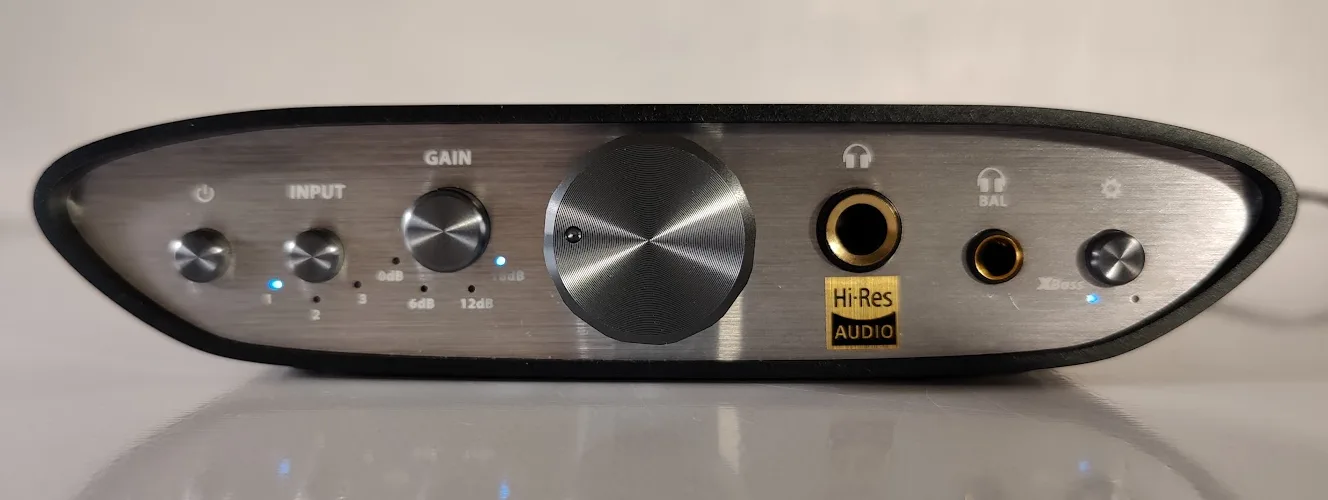
The device's front panel contains all the necessary controls for use. There are as many as four gain levels, and in addition to the XBass feature familiar from the Zen DAC (though named TrueBass in the Zen DAC), there is also a sound setting called 3D. Using the Zen CAN is smooth, but at least my unit has a peculiar bug. The XBass and 3D settings are activated with the same button so that one press activates XBass, a second press activates 3D, and a third press activates both simultaneously. With the fourth press, the settings turn off, but then the volume increases by a few decibels for about a second. No real danger is caused by this, but when listening at higher volumes, a sudden volume jump might startle the listener.
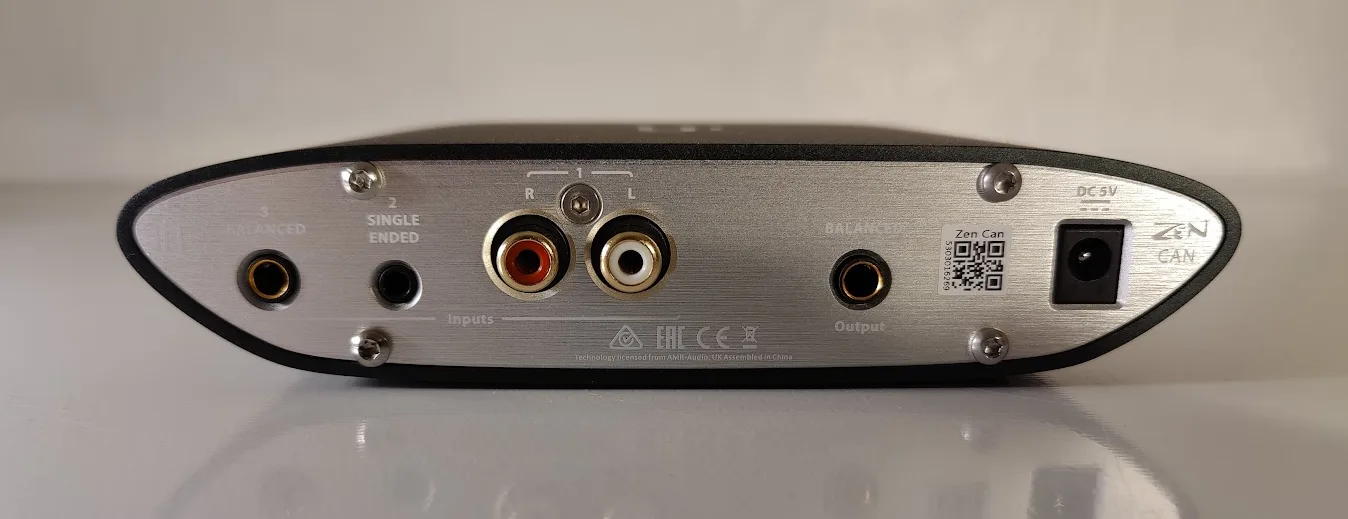
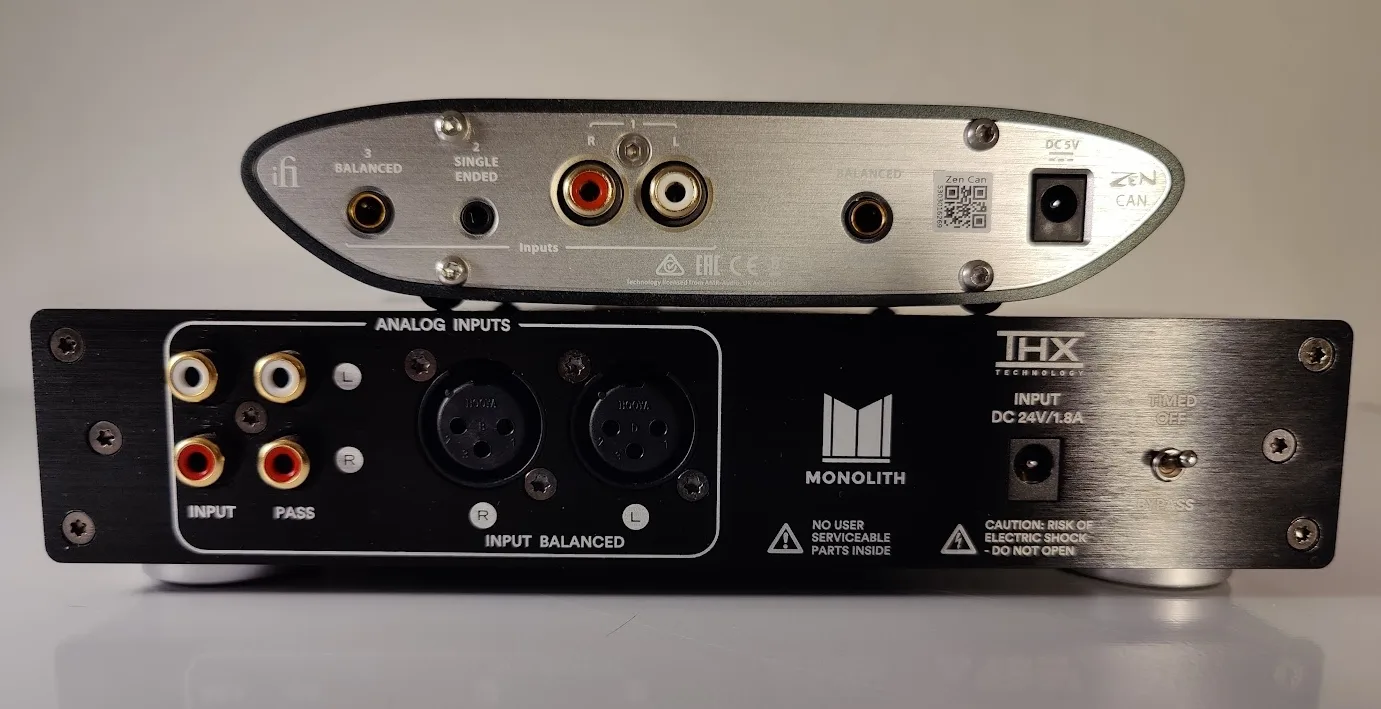
The Zen CAN's rear panel has a 4.4 mm balanced input connection, which would allow the amplifier to be neatly connected to the Zen DAC's corresponding output connector. However, neither device comes with a cable for this purpose; it would have to be purchased separately.
Other inputs on the back of the device naturally include traditional RCA connections and a 3.5 mm AUX input, which is convenient if you want to improve, for example, the sound quality of a computer with the Zen CAN without a separate D/A converter. The amplifier also has a 4.4 mm balanced output, which allows it to be used as a preamplifier. The device is powered by a 5-volt power supply, which connects to a connector located on the edge. Unlike the Zen DAC, the Zen CAN cannot be powered by USB alone.
Sound quality
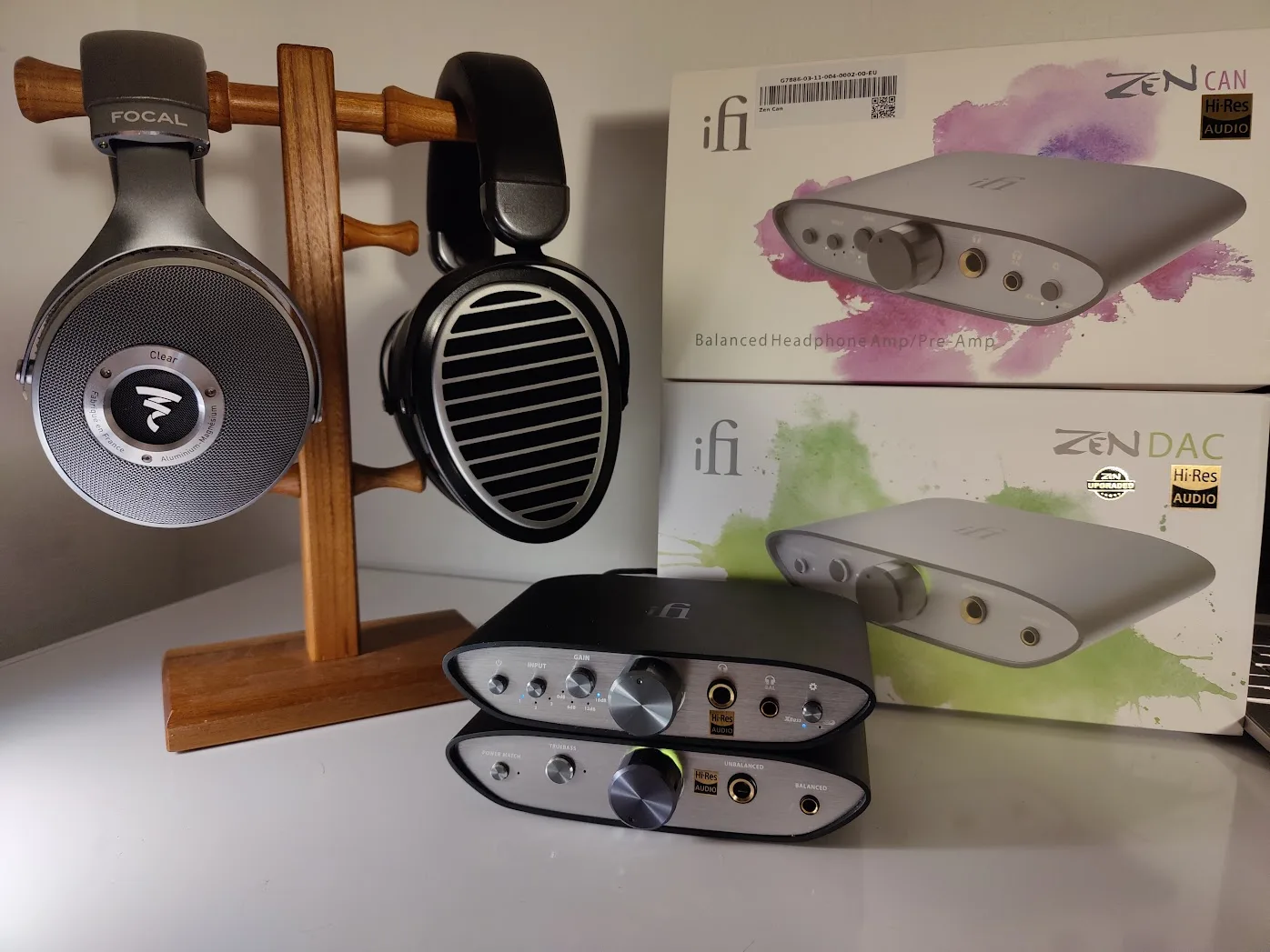
I started my listening tests by connecting the Zen CAN and DAC to each other with RCA cables. The test headphones used were Hifiman Edition XS and Focal Clear.
As an amplifier, the Zen CAN sounds very similar to the Zen DAC when used as a combo device: the sound is dynamic and effortless. The soundstage is large, but the outlines of the sounds are slightly blurry. When I listened alternately to the headphone outputs of both Zen series devices, I was surprised at how similar they sounded. With the volume leveled, I couldn't always distinguish the devices from each other. When a difference was audible, it manifested mainly as the Zen CAN's slightly fuller midrange. Sometimes the soundstage also felt deeper when listening with the CAN. Those prone to listening fatigue might find it less tiring in longer use than the Zen DAC. It's possible that I myself would notice more differences between the two during a longer test period.
Compared to the Zen DAC, the CAN's more versatile gain settings and more powerful amplifier allow most headphones to be listened to in a way that the user can customize how much unused headroom remains in reserve for the amplifier. For some reason, I find it odd to use amplifiers in such a way that the volume control position exceeds 3/4 of the available adjustment range. For this reason, I almost always use the highest gain setting, unless I have noticed that lower gain settings sound clearly better. However, during my short test period, I did not notice that the Zen CAN sounded different with different gain settings.
I hoped that the Zen CAN would bring a clearer improvement compared to the Zen DAC in terms of the darkness of the playback background and the slightly blurry outlines of sounds, but in my opinion, there isn't a very significant difference between the devices in that regard. On some listening occasions, I felt that the Zen CAN improved the soundstage, separation, and treble airiness, but most often, it was quite impossible to pinpoint the differences.
From a purely sound quality perspective, it is therefore somewhat difficult for me to recommend the Zen CAN as an improvement over the Zen DAC, because at the core of my hobby has always been the idea that if one has to struggle hard to perceive differences between devices, then those differences are of little significance. Nevertheless, the Zen CAN is a completely justified purchase when more power is needed from an amplifier, or when access to the 3D feature and more versatile gain settings is desired. For many enthusiasts, the Zen DAC V2 alone is certainly sufficient, especially if the device is used connected to mains power.
XBass and 3Dsettings
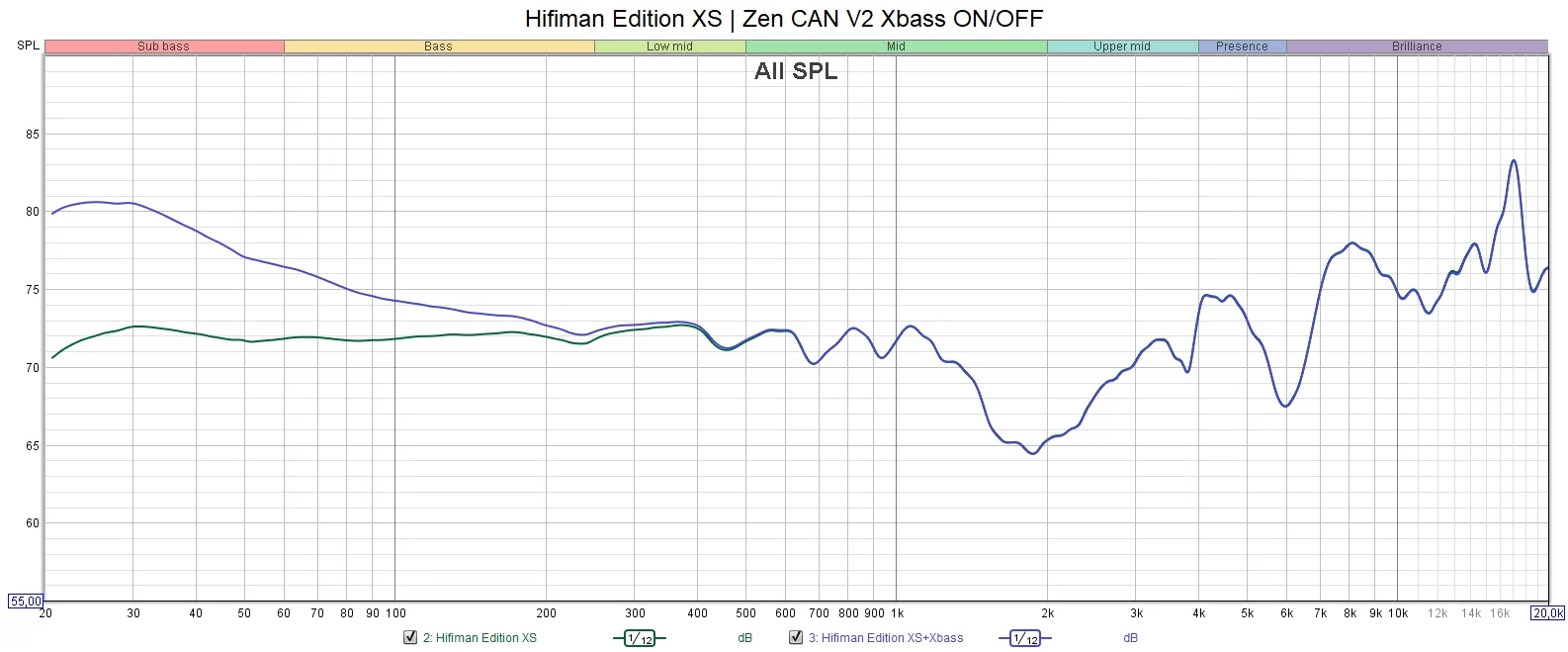
The XBass setting found on the device boosts bass by almost 8 decibels at most, which is far too much for many headphones. The bass boost starts already at the lower midrange boundary, from where it gradually strengthens, reaching its peak around 30 Hz. The feature would be more useful if its effect were limited below 100 Hz, as only a few headphones have problems reproducing mid-bass. Despite everything, using the setting is sometimes fun. In my opinion, XBass as an additional feature is considerably more useful than, for example, the sound filters of many D/A converters, which practically don't change the sound at all.
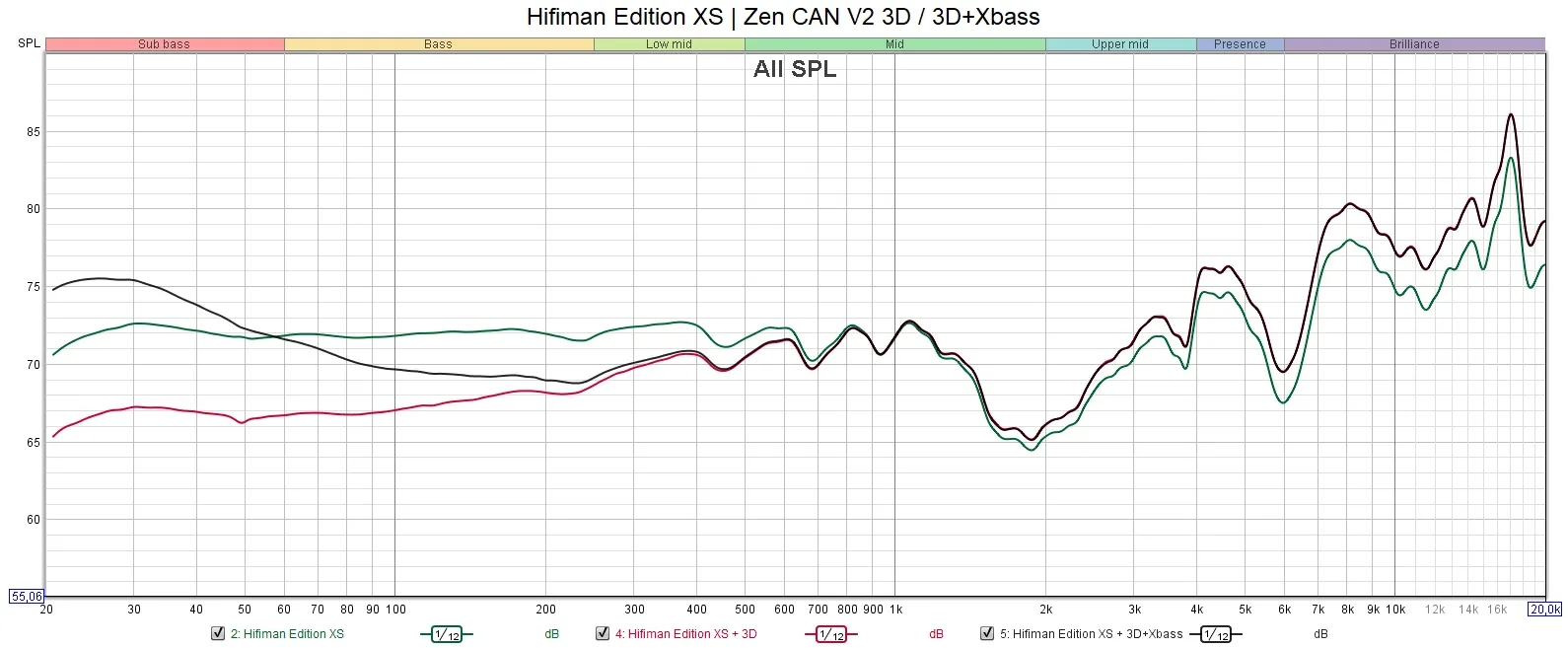
The 3D setting available on the amplifier, however, was a slight disappointment for me. The effect is very mild, and it offers little benefit except for recordings with excessive left-right stereo separation. According to my recollections, the 3D mode is more beneficial on iFi's Micro iDSD Black Label device.
The 3D setting significantly reduces bass and emphasizes higher frequencies:
iFi Zen CAN vs. Monoprice THX 887
Prices: 199 € vs. 250-400 €
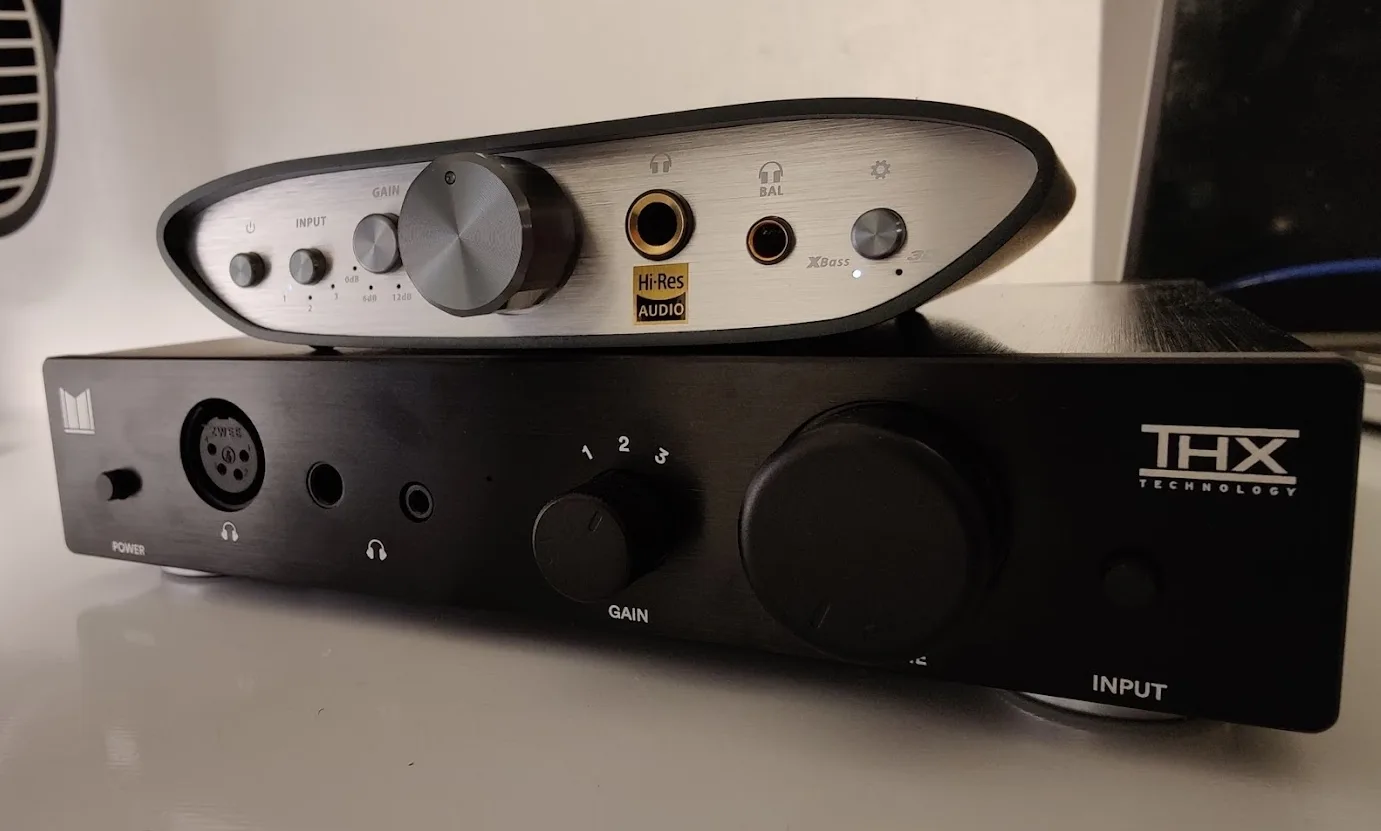
I also compared the Zen CAN to the Monoprice THX 887 amplifier. Its official retail price is 400 euros, but it has often been sold significantly cheaper. The amplifier was very popular a few years ago because it received praise from Audio Science Review:n review on. In addition, the THX 887's immense power figures attracted attention – the device is probably still today the most affordable option for those looking for a truly powerful amplifier (6 W @ 32 ohm).
I acquired the THX 887 for headphone and device comparisons, but I have only listened to it a little so far. In my opinion, the amplifier sounds quite dull, so there is probably something in the THX implementation in general that does not suit my preferences. I have, of course, only heard two THX amplifiers, but my experience with the S.M.S.L SP200 THX device was very similar. In my opinion, the amplifiers sound unnaturally sharp and dynamically flat. I had hoped that the effortless and dynamic-sounding Zen DAC V2, as a D/A converter, would also make the THX 887 sound pleasant in a comparison situation.
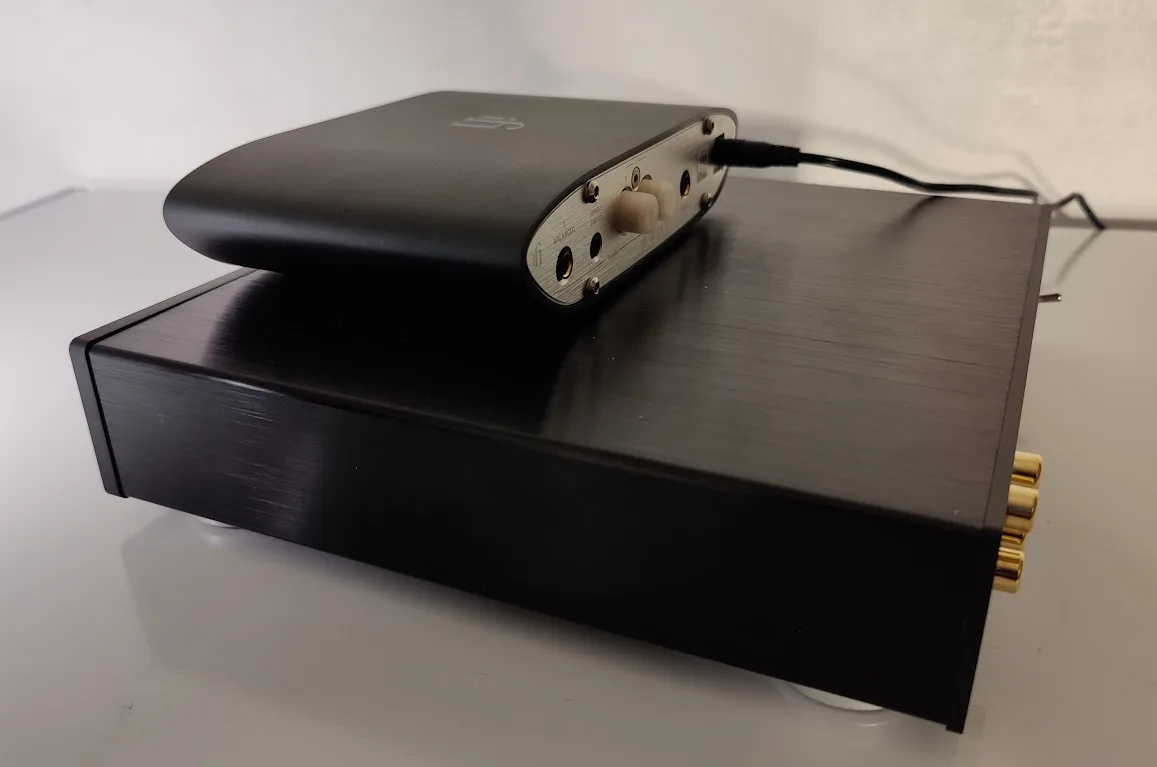
I initially listened to Focal Clear headphones, which themselves sound a bit ”metallic”. Certain equipment configurations further emphasize this characteristic and the headphones' somewhat small soundstage, which applies particularly well to the THX 887 – it is a very poor partner for the Clears. Therefore, I eventually switched to Hifiman Edition XS headphones, which unfortunately did not suit the THX 887 any better as a partner. The headphones' somewhat sluggish reproduction would benefit from an amplifier that provides more punch, but the THX 887 only made the sound too aggressive, causing the variation in music dynamics to shrink away.
With this amplifier, I hardly hear the good qualities that I know the iFi Zen DAC V2 possesses as a D/A converter. The situation is a bit odd in the sense that the THX 887's selling point, in addition to its high output power, is the excellence of its measurement results. So, the amplifier should, at least in theory, be extremely transparent in sound, but I find it frustratingly coloring the sound. Regardless of the D/A converter and headphones used, everything sounds quite similar, as the result is always some variation of the amplifier's characteristic sound.
Switching to the Zen CAN, the difference was significant, as it sounds calmer, more dynamic, and above all, more spacious after the THX 887's monotonous and aggressive presentation. At most, some of the smallest background sounds might be easier to miss with the Zen CAN, but that is a small price to pay for music listening being enjoyable again.
In defense of the THX 887, it should be mentioned that during the comparison, I only used the 6.35 mm headphone jack and RCA input, because the Zen DAC, which served as the D/A converter, does not have XLR outputs. In my experience, the THX 887 sounds very similar even when balanced, but it is certainly possible that the result would be slightly better that way.
It is a pity that a proper comparison between the devices did not materialize, because during my test period, I was unable to compare the Zen CAN to other amplifiers I own. All my devices are either significantly more expensive than the Zen CAN or different tube amplifiers. However, I will return to the CAN again in a later review of the Topping L30 II.
Summary
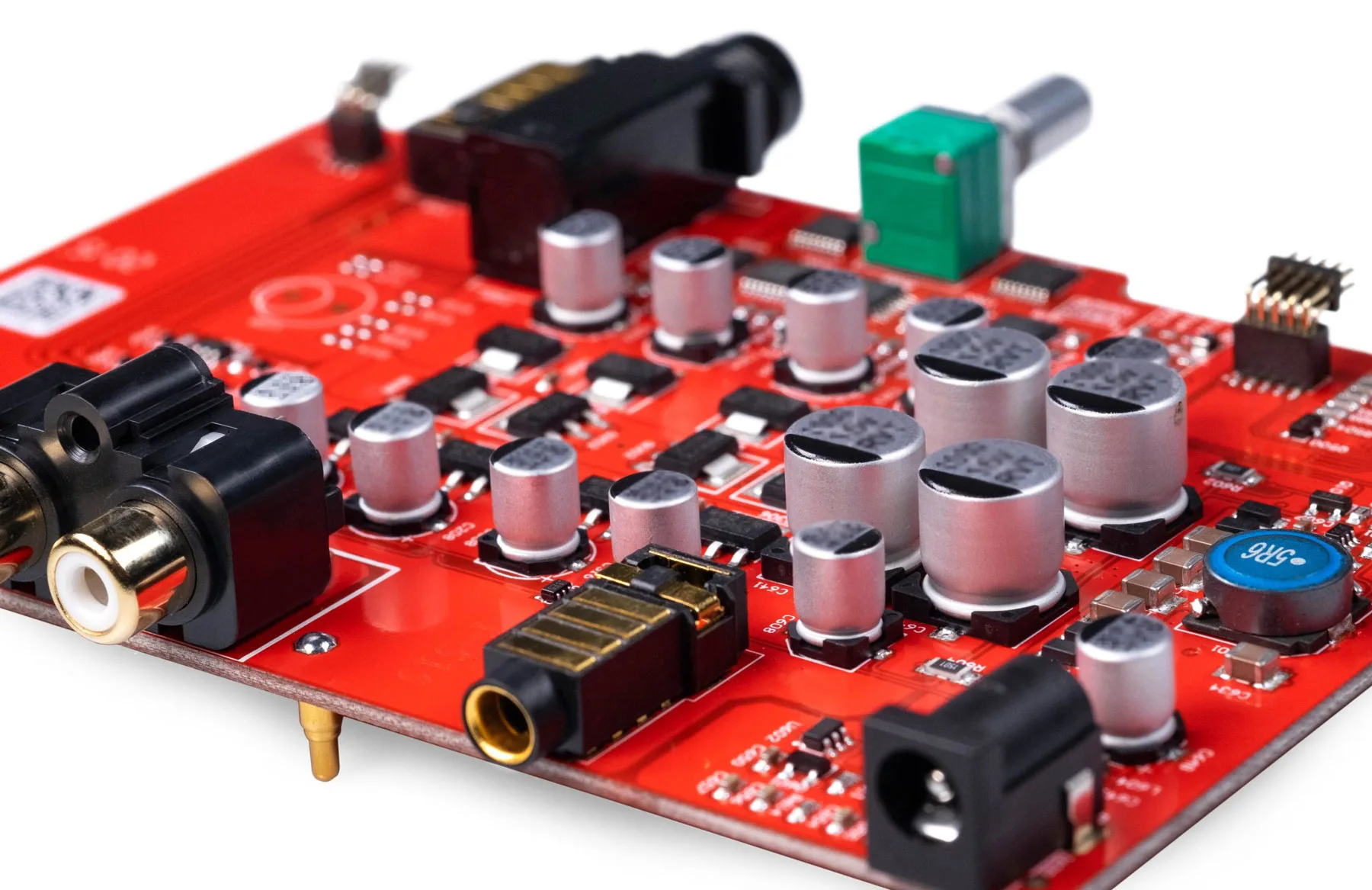
In my opinion, the Zen CAN ranks among the best headphone amplifiers in its price range in terms of sound quality. The amplifier is powerful and has an unfatiguing sound. It works particularly well with high-impedance headphones. The Zen CAN is also assembled in high-quality casings, whose distinctive appearance sets the device apart from its competitors.
The best 200-euro headphone amplifiers are so good nowadays that it can be almost impossible to find a device among them that is clearly better in sound quality than its competitors, or even clearly different. Nor does the Zen CAN possess sound quality characteristics that would make it stand out significantly from other good headphone amplifiers, for better or worse. In my opinion, at the beginning of the headphone hobby, it is unnecessary to dwell too much on amplifier selection. In the approximately 200-euro price range, the sound quality is usually good, so the most important thing is to choose an amplifier that has enough power for your headphones, as well as the connections and features that will be needed from the device. In all these respects, iFi's Zen CAN is an excellent option in its price range.
Pros and cons:
+ Unfatiguing and natural sound
+ Build quality and distinctive appearance
+ XBass is a fun feature
+ Two headphone jacks
+ Versatile gain settings
+ No noise with sensitive in-ear headphones and works exceptionally well with high impedance headphones
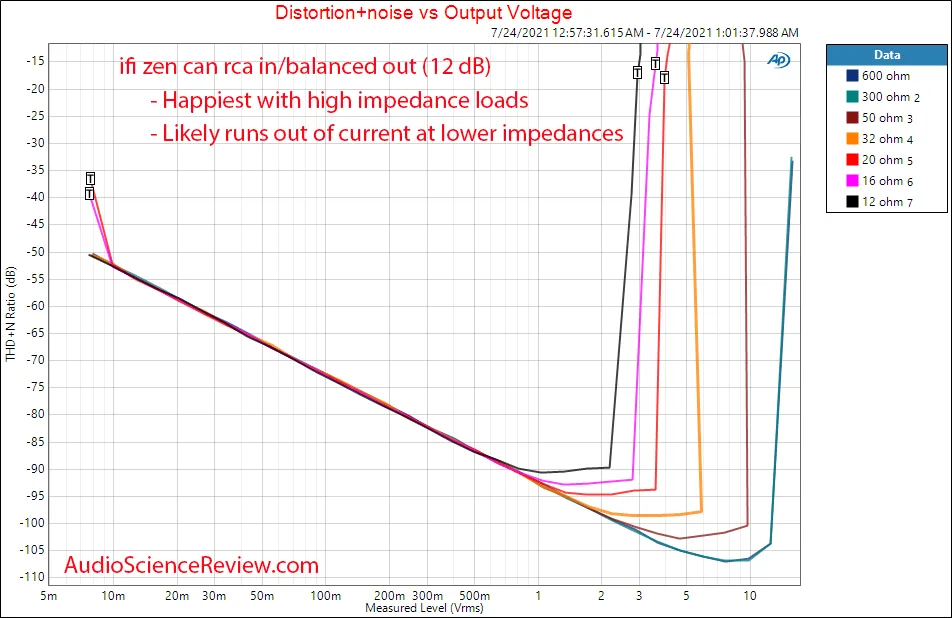
+ Low impedance planar headphones also work well, even though performance is not quite top-notch in light of measurement results
+ The power supply is light and reasonably sized
+ Reasonable price, especially for a balanced amplifier
+/- An excellent alternative among other good amplifiers, but unlike Zen DAC V2, it cannot clearly rise above its competitors
+/- The balanced input is a good thing, but the 4.4 mm connection is very rare, and the device does not come with the necessary cables
– 3D sound was a disappointment
– It does not come with a remote control
 EN
EN  FI
FI