Author: Roderick

Table of Contents:
Information:
- Release Year: 2020
- Price: 499 €
- Structure: Open
- Dynamic driver: 40 mm
- Impedance: 38 ohm
- Sensitivity: 98 dB/mW
- Weight: ~250 g + cable
- Cable: permanently attached cable to the cups with a 3.5 mm connector
- Accessories: No
Review sample: Self-purchased product
Started manufacturing headphones in the United States in 1991 Grado needs no further introduction, as the manufacturer is likely familiar to many headphone enthusiasts, for better or worse. Its headphones strongly divide opinions, and I myself haven't particularly cared for any Grado model I've previously tested. In my opinion, the headphones generally sound thin and bright. They are also significantly overpriced in terms of their construction, comfort, and technical performance, especially in Europe. Furthermore, Grado is stuck in the past, and in my opinion, the manufacturer has not been able to innovate with the evolving industry. The 500-euro priced model released in 2020 Hemp-special edition model is, however, exceptional in that it has won over many who previously did not care for Grado headphones.
Equipment used in the review:
- DAP: Astell & Kern SR15
- DAC: Schiit Yggdrasil A1 gen5 usb
- Headphone amplifier: SPL Phonitor 2
Structure and comfort
The product packaging for headphones is usually the most insignificant aspect, but for 500-euro headphones, one would expect a certain minimum level of quality impression. Grado's packaging is clearly the most dismal I have ever seen for expensive headphones. The cardboard box is almost paper-thin, and no effort has even been made to design it to open effortlessly – the headphones could just as well have been delivered in a cereal box. Perhaps the packaging style could be justified by ecological reasons, but for me, it is important that expensive headphones come with packaging that is sturdy enough to protect them during both transport and storage.

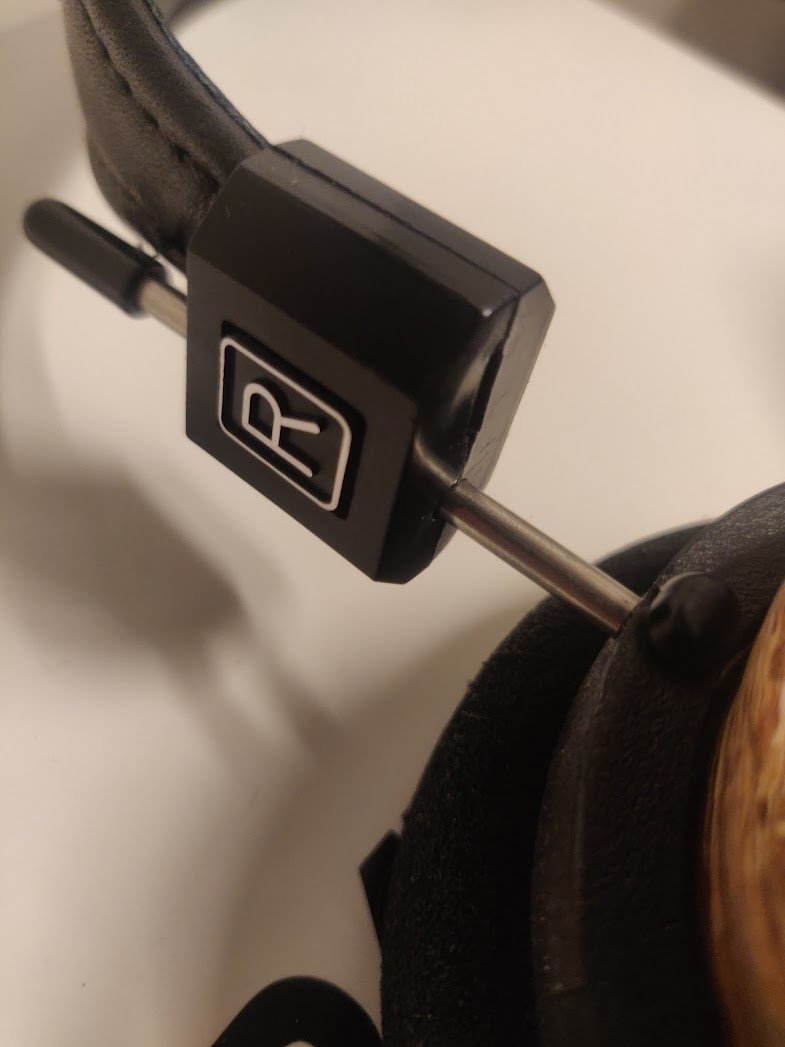
In terms of construction, the Hemp is a typical Grado – the headphones are slender and lightweight. Their leather headband is only lightly padded, but in my opinion, such lightweight headphones do not need thicker padding. The headphone cups rotate freely 360 degrees, and the headband's height adjustment is stepless. This adjustment mechanism is simple and functional, but it tends to loosen on its own over time. Both the yokes and the part that attaches the metal rods used for height adjustment to the headband are made of cheap-feeling plastic. In my opinion, a product of this price should use higher quality materials.
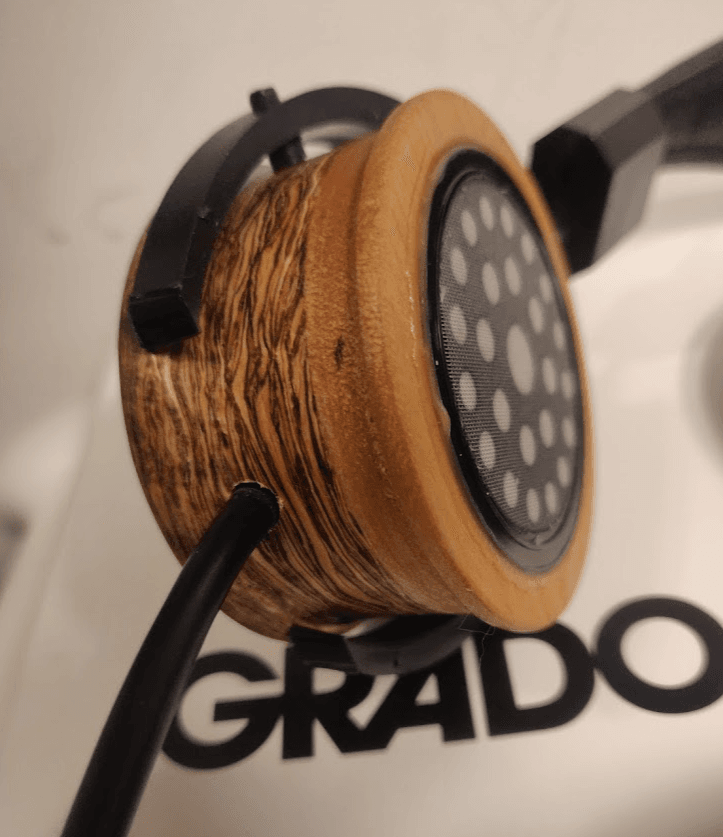
The outwardly visible parts of the headphone cups are made of compressed hemp fiber, and the hidden part surrounding the driver is maple. In my opinion, the hemp cups look really nice, but they would benefit from a protective lacquer coating. As they are, the cups feel a bit rough, and I'm slightly concerned that small crumbs might start to detach from them over time. The 40 mm diameter drivers are tightly glued inside the cups.
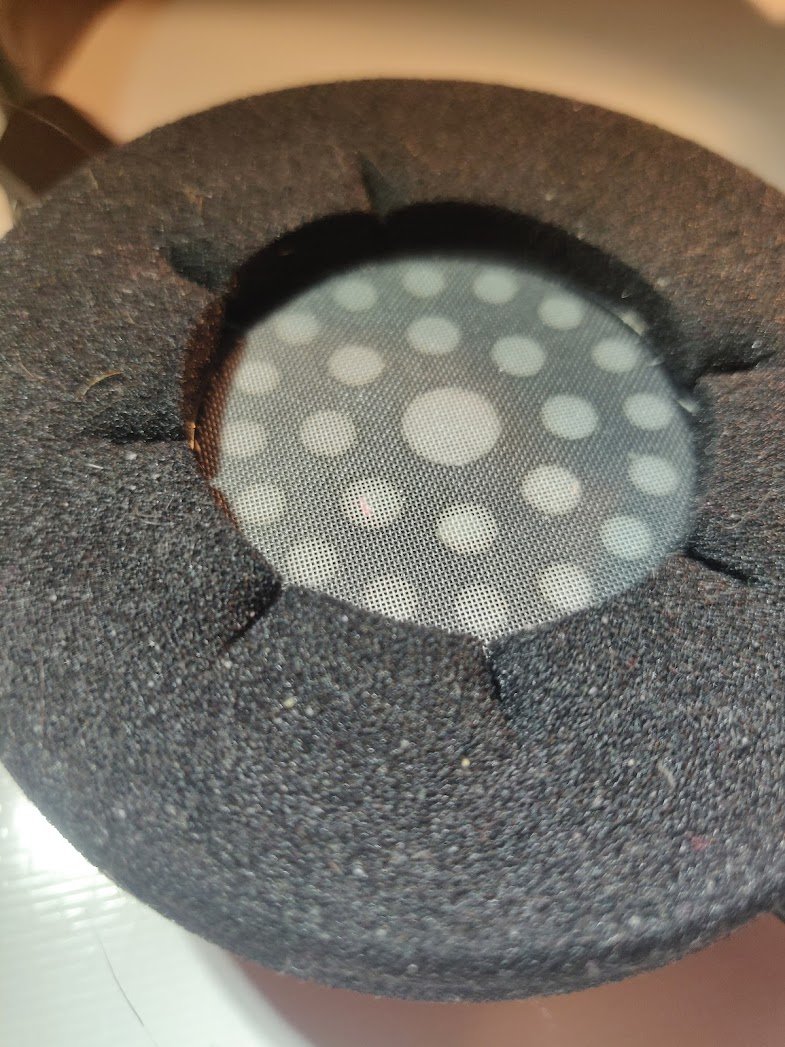
The most significant, and actually the only, structural innovation of the Hemp model are the F-cushion ear pads, which are only about half a centimeter thick foam rings with a hole cut in the middle. For my ears, these worked surprisingly well, but I cannot wear the headphones for very long periods without having to adjust them slightly from time to time – so comfortable pads cannot really be spoken of. I would even say that these pads are very likely the manufacturer's most uncomfortable pads. The same pads are also used in the SR255x and SR325x models released in late 2021.
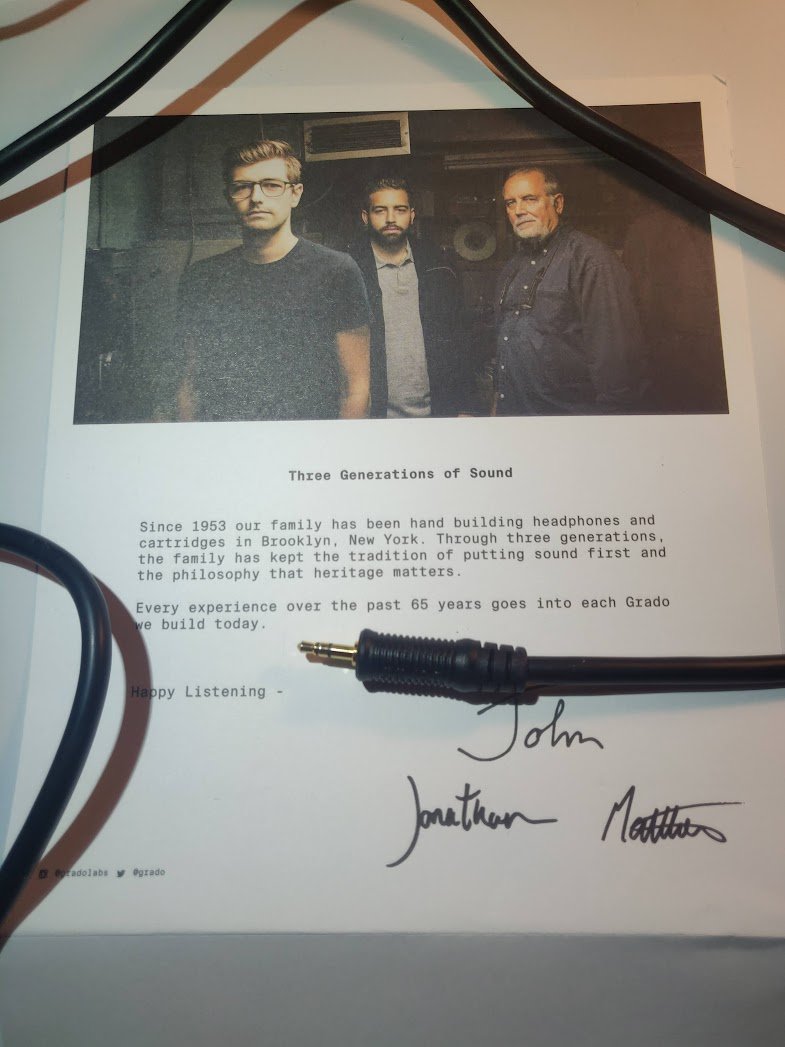
More than the poor pads, usability is hindered by the heavy cable, which, in typical Grado fashion, is of course not detachable or easily replaceable. Since the clamping force of the headphones on the head is very light, they would benefit from a light cable. Grado, however, has chosen a heavy cable that pulls the headphones off the listener's head if left to hang freely. For this reason, mobile use of the headphones is almost impossible. This is a shame, because thanks to their other features, Grados would be excellent portable headphones for situations where sound isolation is not needed.

The headphones' freely 360-degree rotating cups are a problem, as they also cause the cable to twist with them. If the cable gets badly twisted into a corkscrew, the possibility of detaching it would best restore it to its correct shape, while also extending the cable's lifespan. There is also no support structure at the connection point of the cable and the cup to prevent kinks from forming when the cable twists. Thus, the outer sheath of the cable can twist over its inner parts, eventually losing its shape. In more careless use, such a point will collapse over time, exposing the thin copper wires to bending and contact issues.
The use of a fixed cable in Grado headphones is a complete mystery to me. If connectors cause problems for the acoustics of the small cups, it is also possible to place them outside the cups. There is even a ready-made mod for this, if Grado itself is unable to design the change. I also don't understand why the cable has to be a hose covered with the thickest possible rubber – it's hard to imagine a more miserable cable choice.
The Hemp model thus offers no improvement in terms of structure or comfort compared to previous Grado models; it is miserable by both metrics. At this point, only the highly praised excellent sound quality can save the situation, provided the rumors about it are true.
Soundquality
Since the Hemp model does not fit my MiniDSP EARS measurement device's artificial ears at all, I use, like some previous reviews, to support my observations Crinacle's measurements.
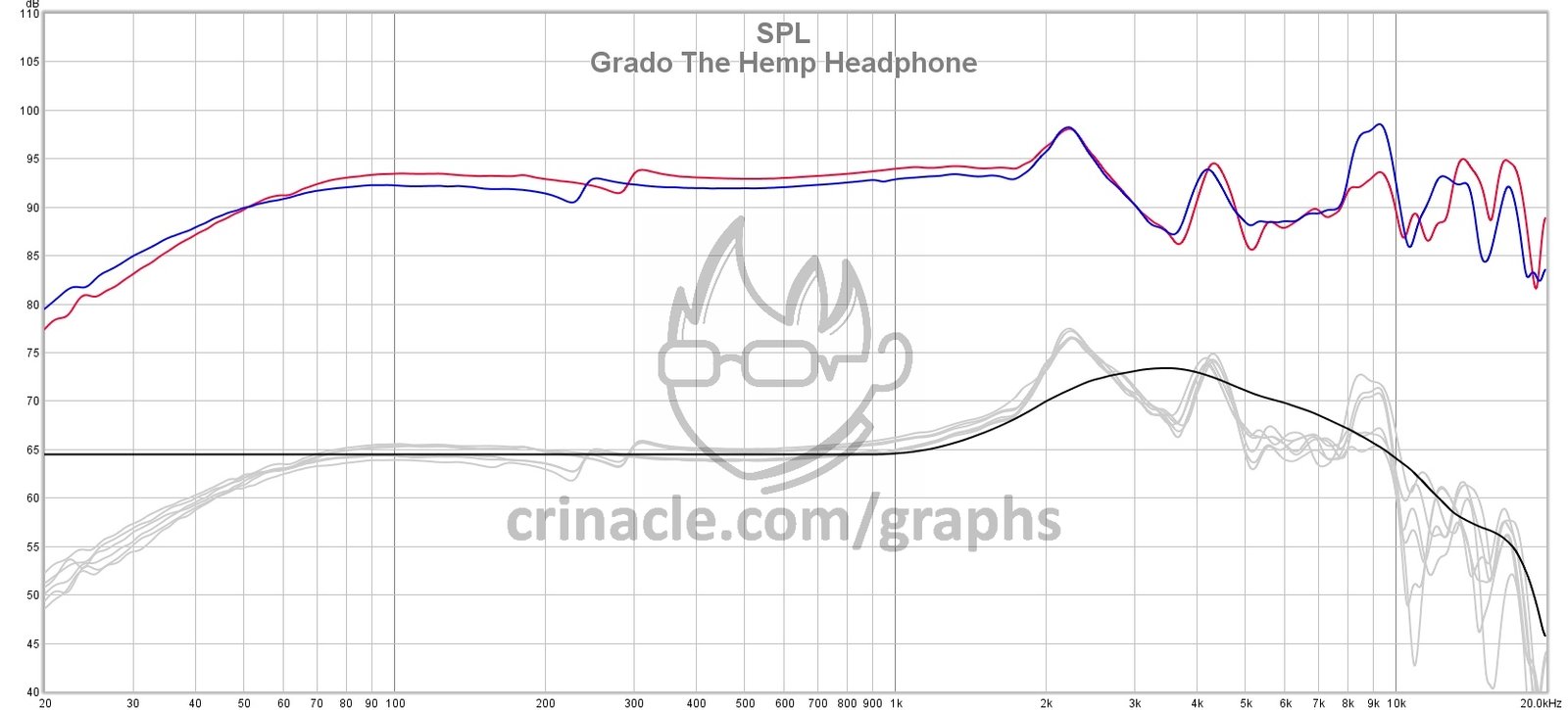
At first glance, the Hemp model's frequency response closely resembles many other Grado models. The headphones' bass reproduction still doesn't extend very low, but the mid-bass emphasis is quite restrained, making the bass reproduction more balanced compared to, for example, the PS500 and GS1000 models. The typical Grado 2 kHz emphasis is still strongly present, while the treble is considerably more moderate than what is accustomed to in Grado headphones.
Bass:
Although the headphones' bass reproduction is lacking in the lowest frequencies, it bothers me surprisingly little. It can be seen as a problem mainly when comparing Grados to other headphones with better bass reproduction. Despite its slight lack of sub-bass, the Hemp model works somewhat even with bass-heavy music. Fortunately, the bass does not distort excessively; its reproduction is quite punchy, even if the Hemp does not qualitatively compete with, for example, the iBasso SR2, which has excellent bass reproduction, or even more affordable planar headphones.
The moderate amount of mid-bass makes the Hemp's sub-bass seem slightly more extended than in Grados generally, but I still admit to missing the bass reproduction of the SR325i model, which, according to my memory, is a bit more impactful due to its mid-bass emphasis.
The Hemp keeps up well with complex bass patterns, which, however, is more of a performance expectation for 500-euro headphones rather than a cause for praise. Overall, the headphones' bass reproduction could be described as merely acceptable. Even slightly worse performance in the lower frequencies would already begin to degrade the overall sound of the headphones too much.
Mid-range:
Mid-range reproduction is usually Grado's best offering, but unfortunately, the mid-range often doesn't get its full due as the overemphasized treble draws too much attention to itself. However, Hemp skillfully manages to avoid this problem.
In typical Grado fashion, the Hemp initially sounds a bit thin and aggressive – for lack of a better term, I would describe the Hemp's mid-range as ”breathy” sounding. Although the reproduction has an aggressive grip, it is not disturbingly shouting, nor too thin to sound unnatural. I got used to the style of the mid-frequencies very quickly, and after that, I only paid attention to it during the initial stages of listening.
The Hemp's mid-range has an addictive musicality that is difficult to explain objectively. I believe that everything we hear can be explained by measurements, if only we knew what and how we should measure sound. For example, simply staring at the frequency response does not reveal the Hemp's musicality. Some of the headphones' secrets could be revealed by examining impulse responses, or perhaps the Hemp reproduces notes slightly distorted and emphatically sharp, creating an artificial Staccato effect that is perceived as a more rhythmic reproduction than usual.
Whatever the explanation for the musical reproduction, the Hemp is, subjectively speaking, extremely pleasant to listen to. If I could play an instrument and wanted to learn the melody of a new song by ear, I would probably choose these headphones to help me, as they have the ability to draw the listener's attention to the most essential parts of the music. The Hemp makes me excited to listen, and I feel like, if not quite singing, then at least humming along to the music.
I consider myself a rather analytical listener, so I often find it difficult to enjoy musically successful and natural-sounding headphones if their technical performance is lacking. Technically, Grado's mid-range is not particularly impressive. The vocalist appears somewhat one-dimensional, and the illusion of a real person's presence does not materialize. In terms of resolution, the Hemp is at most average. Usually, problems like these quickly kill my enthusiasm – this happened, for example, with the ZMF Aeolus. For some reason, however, the Hemp stumbles over its technical problems better than many of its competitors suffering from the same issues.
Treble:
The Hemp's treble is quite balanced, almost too restrained. This can be a disappointment, especially for those accustomed to a more traditional Grado-style reproduction. I find it difficult to assess the treble's resolution or possible graininess because the treble does not draw attention to itself at all.
In my opinion, the mid-range integrates somewhat poorly with the treble, as there is a lack of unifying information between the upper mid-range and the treble. Because of this, when listening to the headphones, attention is sometimes drawn to the fact that the higher frequencies have, as it were, crept into the reproduction unnoticed. I believe this is due to the fact that the 2 kHz emphasis typical for Grados has not been compensated for in the Hemp model with an overemphasized treble that would make the reproduction more cohesive. I myself still prefer the Hemp's less cohesive reproduction, as it gives the brilliant mid-frequencies more room to stand out.
Soundstage, dynamics, and other technicalities:
I would gladly skip evaluating the headphones' technical performance altogether, as the Hemp manages to sound excellent regardless of its technical characteristics. However, since completely ignoring the topic would be poor review work, I will address it briefly.
In terms of soundstage, the Hemp performs reasonably well. The soundstage is not particularly large, but thanks to the open design, the headphones sound airy. In addition, the on-ear design adds to the impression of a natural sound, as it does not enclose the ears or cover the side of the head. The structure of the headphones should be thought of as a kind of connection between the listener and the headphone driver – the smaller its effect, the more natural the headphones generally sound to me.
Unfortunately, the Hemp is not very good at sound placement. Although the soundstage has depth and even three-dimensionality, the sound suffers somewhat from the typical ”three-blob syndrome,” where sounds are reproduced mainly on both sides and in front. There is no precisely defined space between these blobs where sounds could be placed. In this regard, the Hemp takes a step back, at least compared to the RS2e model, which was the last Grado model I owned before acquiring the Hemp.
In terms of macrodynamics, however, the Hemp is quite impressive. Dynamic variations are sufficiently present, but not outstandingly emphasized, like with, for example, the iBasso SR2 or Focal Elex. The reproduction could have a bit more punch, but I don't think anyone would fault the Hemp for a lack of punch.
In terms of microdynamics, however, the headphones are not convincing. If one doesn't pay attention to it, it doesn't bother much. However, when listening more analytically, the resolution is not worth its price. This is even a bit peculiar, as the headphones sometimes sound really fast. Such reactivity in headphones usually leads to better detail compared to slower-sounding headphones. It might be that the Hemp is not great in terms of its distortion values, which could manifest as a slightly muddy sound.
Comparison to other headphones
Grado Hemp vs. Hifiman Sundara
Prices: 500 € vs. 350 €
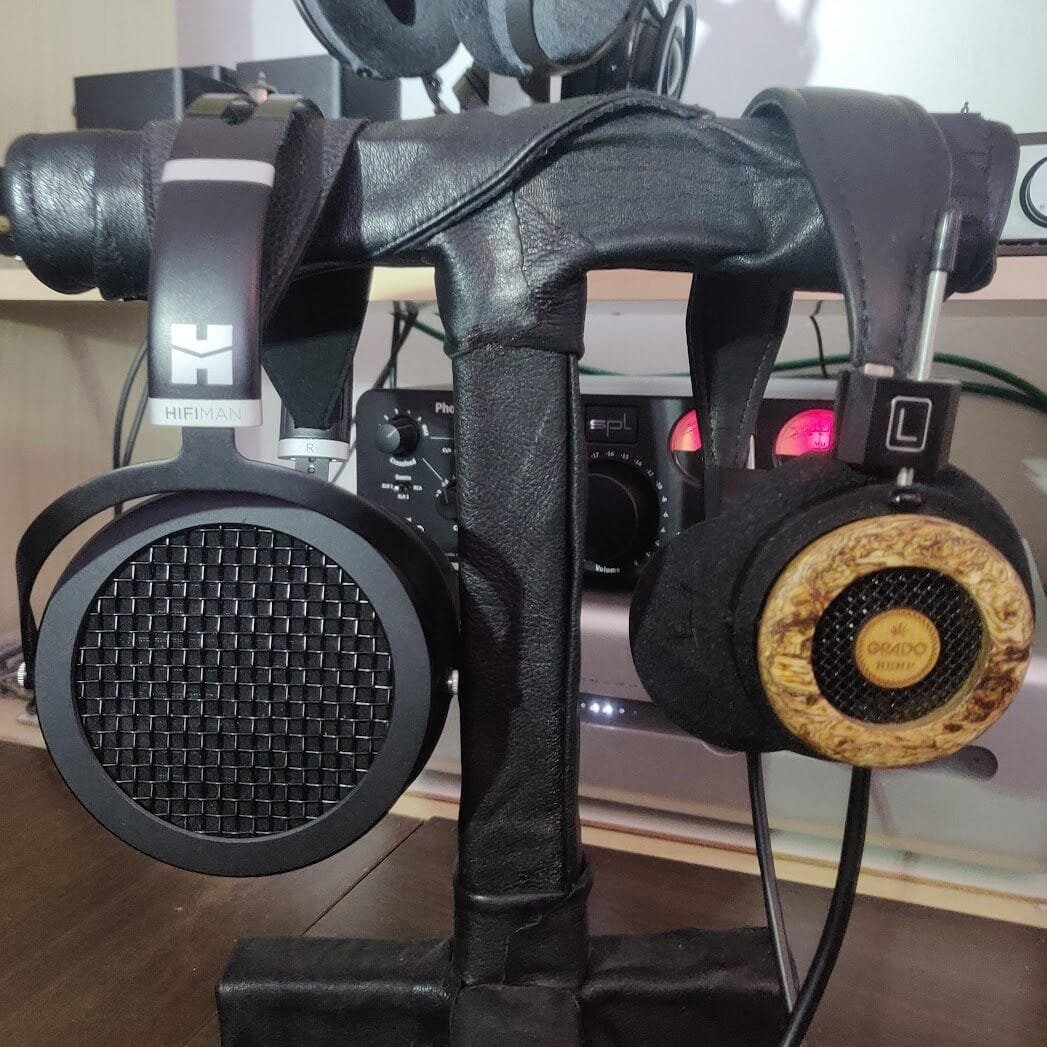
The Hifiman Sundara I previously reviewed (link to review) is overall one of the best, if not the best, headphone in the sub-500 euro price range, so it serves as a reference in this review as well.
The issues with the Grado Hemp's comfort and build are likely already clear. While the Sundara is not generally a masterpiece in terms of its build, it is considerably closer to it compared to the Hemp. Let's move directly to comparing the sound quality differences.
Sound:
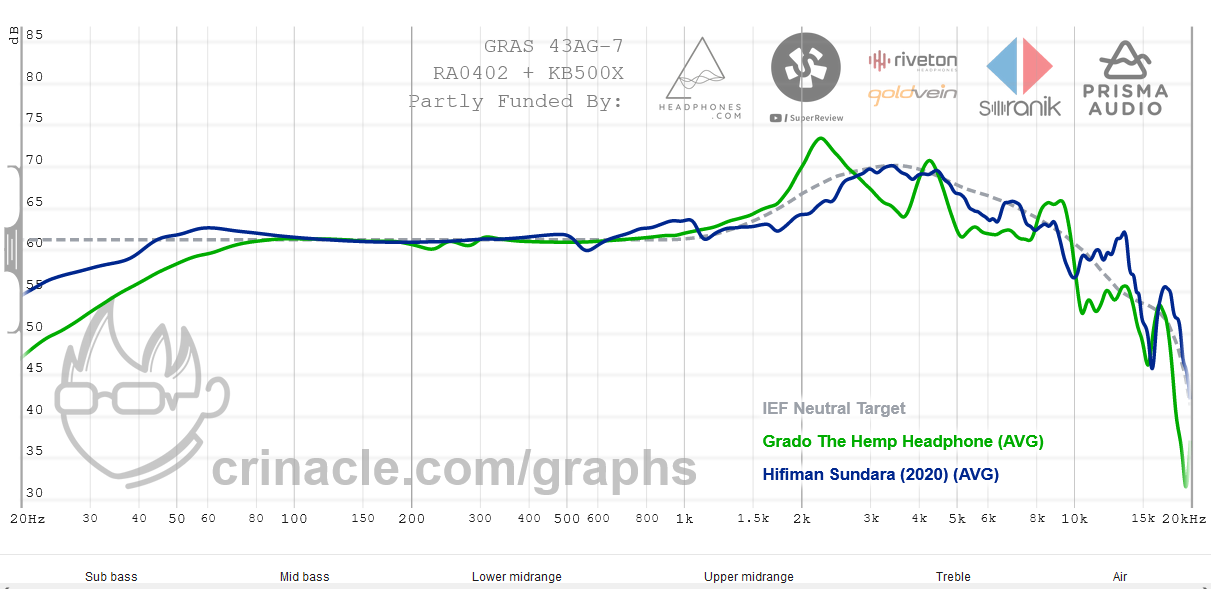
Regarding frequency response, the differences between the Hemp and Sundara are obvious: the Sundara has more extended bass, more balanced mid-range, and brighter treble.
Listening to the headphones also immediately reveals differences that cannot be inferred by comparing frequency responses. The Hemp is more musical, and the Sundara's reproduction is considerably more analytical. The Hemp reproduces music with more impact and a more dynamic sound, whereas the Sundara sounds a bit tight compared to Grado's looser reproduction.
The Hemp draws the listener's attention to the power and role of sounds in music. The Sundara, on the other hand, ”disassembles” music into smaller parts, largely leaving the task of combining these pieces into a musical whole to the listener. Neither style is inherently better than the other. The best headphones are always both musical and capable of breaking down music into small parts, in case the listener wants to focus on analyzing sounds instead of simply enjoying them.
Unfortunately, the Sundara never becomes entertainingly musical, nor is the Hemp, due to its inadequate technical characteristics, able to transform into a high-resolution high-end headphone pleasing to an analytical listener. An equalizer is of no help this time, as it's impossible to ”EQ” better separation or a more precise soundstage into the Grado. Similarly, the Sundara cannot achieve the Hemp's dynamics through equalization, or whatever the secret of Grado's musical mid-range may be.
However, as the technically more capable headphone, the Sundara offers more room for modification than the Hemp, should the listener wish to use an equalizer. The Sundara's resolution is so much better that I could imagine it costing double compared to the Hemp. In terms of soundstage, the headphones are roughly comparable, but the Sundara places sounds in the sound field a bit more precisely. Since the Sundara is also clearly better in usability than the Hemp, it's difficult to justify the latter's 150 euro higher price. However, defending the Hemp is not entirely impossible.
To me, it's more entertaining to listen to than the technically competent but impersonal-sounding Sundara. The Sundara would also be easy to replace with an even more technically capable headphone. If I didn't need the Sundara as a reference for my other headphone reviews, I would have sold them long ago. For example, after upgrading to a Focal Clear, there would simply be no use for the Sundara anymore. The Hemp, on the other hand, is harder to replace because its musicality is unique. Of course, there are other fun and musical headphones, but the Grado Hemp's musicality is very different from, say, the entertaining ZMF Atticus. Both the Hemp and the Atticus offer the listener a unique experience in their own way, even though neither is objectively worth its price.
Grado Hemp vs. Sennheiser HD6XX
Prices: 500 € vs. 240 € (based on the HD650 model, which costs 350 €)
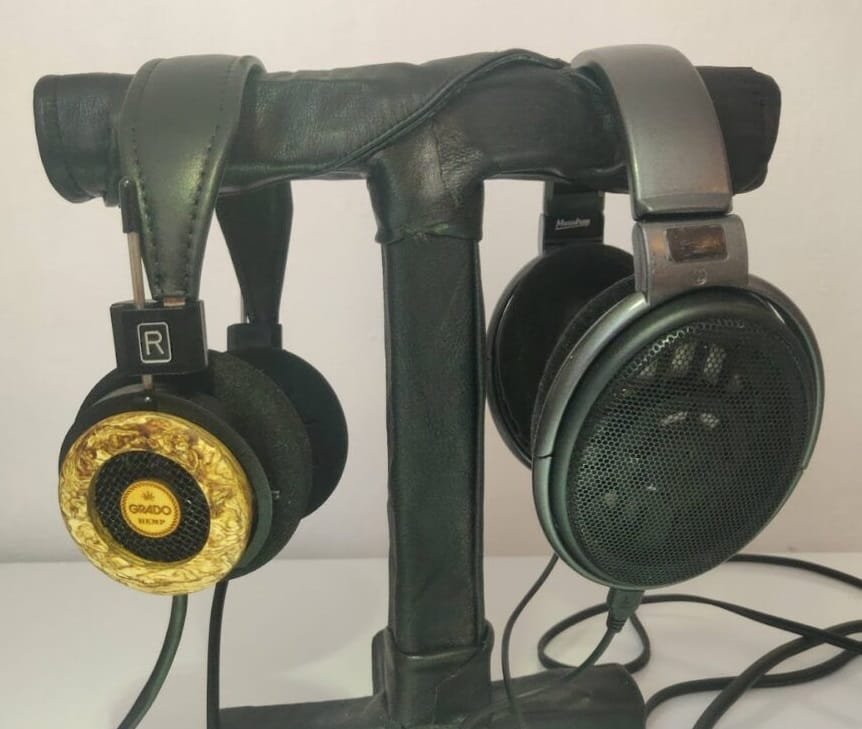
In my opinion, there's no great need to delve into the structural differences between the two compared headphones when it comes to the Sennheiser HD6XX either. The HD6XX is not particularly fancy in terms of build, but it is very functional and durable, and additionally, the headphones are excellently comfortable. As the only drawback, I could mention that new headphones clamp quite tightly, although this has never been an issue for me.
Sound:
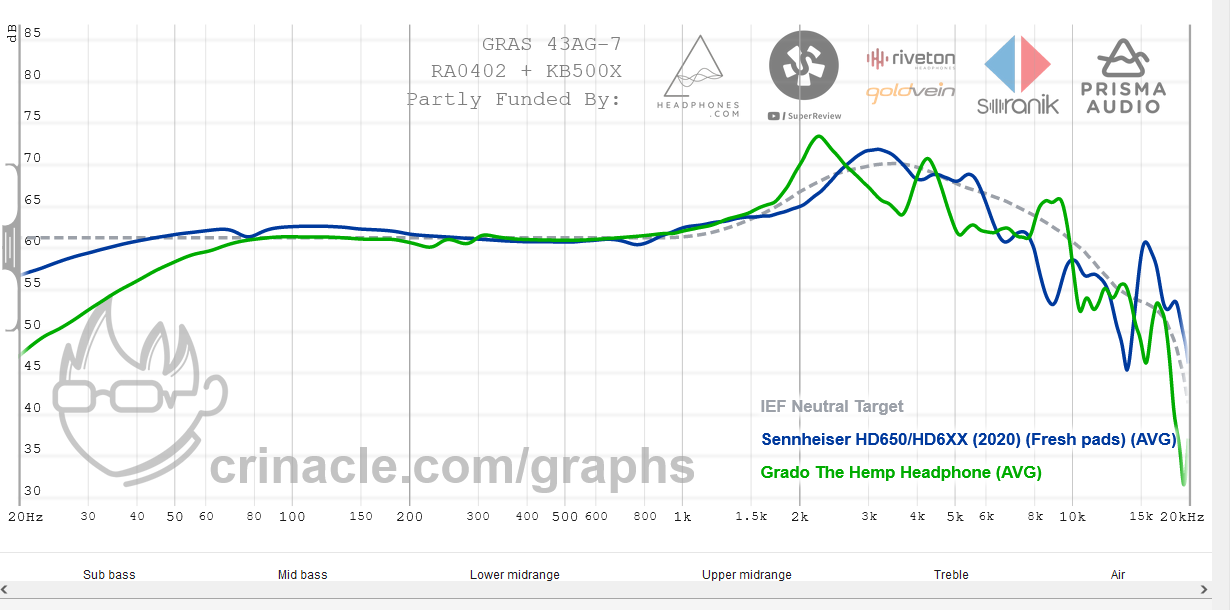
The sound of the Sennheiser HD6XX (HD650) model is likely already familiar to many readers. Apart from a slight mid-bass emphasis, the headphones' sound could be described as neutral, but the overall presentation leans more towards musicality than analytical precision. The Crinacle frequency response measurement shown above does not fully match what I hear myself. In my opinion, the emphasis in the mid-bass is greater, and the headphones' bass reproduction does not extend to the lowest frequencies as well as one might infer from the image. I hear the bass reproduction starting to weaken already around 100 Hz, and not only at 50 Hz, as Crinacle has measured. The most probable explanation for the difference is that Crinacle's target response/curve is very bass-light, meaning a neutral level can be achieved with even less sub-bass.
Regarding frequency response, the biggest differences between the Hemp and HD6XX are Grado's clearly more emphasized upper-mid frequencies and Sennheiser's stronger bass reproduction. The Hemp sounds more aggressive and intense, while the HD6XX's expansive and softer character is further highlighted when compared to Grado-like headphones. The HD6XX is a peculiar headphone in that its sound has a strong warmth, even though its measured frequency response doesn't really suggest it.
Bass:
Bass reproduction is not a strength of either headphone; rather, it sounds rounded. The Hemp's reproduction has more punch than the HD6XX's rather loose-sounding presentation. In terms of lower bass, the HD6XX is better, but still deficient. The HD650 model, originally released in 2003, is a child of its time: back then, it was common for headphones not to reproduce sub-bass very convincingly, and perhaps it wasn't pursued in the same way as it is today. What I cannot say, however, is how Grado dared to release headphones in 2020 with such weak sub-bass reproduction.
Mid-range:
The superiority of the duo's midrange presentation is entirely dependent on each listener's preferences. The Hemp sounds quite aggressive, energetic, and rhythmic, whereas the HD6XX is better suited for more relaxed listening. The presentations are very different, but in their own way, the balance of both mid-ranges borders on perfection. This balance is likely the most significant reason why the HD650 is still a relevant headphone model, and why it is still sold 19 years after its release. The Hemp, on the other hand, represents the midrange style that Grado has refined for 31 years.
Treble:
In the upper frequencies, the presentation of both headphones is quite balanced, with the HD6XX sounding more natural in its transition between upper-mids and treble than the Hemp. The treble of both might sound veiled compared to brighter-sounding headphones, but despite its ”haze,” the HD6XX's treble is exceptionally natural and clean-sounding, and surprisingly resolving. In this regard, the HD6XX easily outperforms many more expensive and modern headphones, with the Hemp clearly falling short of the aged Sennheiser in this case too.
Technicalities:
Neither headphone model performs particularly well in soundstage creation. The Hemp sounds more open and airy, but its soundstage is not actually larger than that of the HD6XX. The Hemp's presentation has a slightly cleaner background, and instruments are better defined in their positions than with the HD6XX. However, neither model should be acquired expecting an excellent soundstage.
One of the 6XX's biggest weaknesses is its mediocre dynamics. In a way, however, the restrained dynamics suit the 6XX's relaxed reproduction style very well, and I don't find the headphones as lacking in dynamics as, for example, Hifiman Ananda or Gold Planar GL2000 model. Although the Grado Hemp is not the pinnacle of macrodynamics, it is clearly better than the aforementioned headphone models.
When evaluating general resolution, it's somewhat difficult to say to what extent the Grado headphones' 2 kHz emphasis buries other frequencies. However, the HD6XX is slightly more resolving than the Hemp. Since the HD6XX isn't even excellent in terms of resolution, there's not much to praise in the Hemp's performance.
The comparison with the HD6XX further reinforced my experience that the Hemp is not very good in terms of technical performance. Although it is better than the HD6XX in a few areas, I believe it should perform even better given that it costs double (or alternatively, 150 euros more than the HD650).
Summary
The Grado Hemp is the most contradictory of the headphone models I have reviewed so far, as it has many problems, yet it is still one of the most enjoyable headphones I have heard. Among the problems are its flimsy construction, poor comfort, impracticality, deficient sub-bass reproduction, and poor technical performance for its price.
For those who value technical performance or a balanced frequency response, these headphones cannot be recommended under any circumstances. In the opinion of those who consider Harman's target curve as the only correct tuning style, the Grado Hemp is likely a strongly failed product. I myself generally prefer frequency responses without sudden emphases, such as Grado's typical peak at 2 kHz – however, in the case of the Hemp model, the result is very functional!
The headphones would have gone completely untested by me, if I had only stared at the measurement results found online. This serves as a valuable reminder to me that even after testing over 300 different headphone models and carefully scrutinizing frequency responses, I still cannot reliably predict based solely on measurement results whether I will like the sound of a particular headphone.
Objectively evaluated, Grados cannot be recommended, and the Hemp model does not rise to the best of its price class due to its flaws. In my opinion, Hemp is best suited as a complementary headphone alongside other technically more capable headphones – for such use, I might even consider it myself. The sound of the Hemp is so entertaining that I would be willing to forgive almost all its flaws. However, I cannot live with the garden hose-like cable, because I want to use the headphones mobile as well.
Pros and cons:
+ Truly musical and lively sound that makes you excited about music
+ Hemp-made cups look great
+ Macrodynamics are quite good
+/- Softer treble than many other Grado models might deter some Grado fans
+/- The upper midrange has a strong emphasis typical of Grados, which will surely divide opinions
– The headphones are not worth their price in terms of soundstage and resolution
– Reproduction of lower frequencies is inadequate
– Stiff and heavy cable is not detachable
– The cable pulls the headphones off the head and makes mobile use impossible
– Uncomfortable ear pads
– The headphone structure uses a lot of flimsy-feeling plastic
– Miserable packaging
– No accessories

 EN
EN  FI
FI
You mentioned owning the RS2e model, how does the Hemp compare to it in your opinion?
I own the Hemps and I am very satisfied with them, yet for example, the RS2x would be interesting to acquire alongside them due to its larger soundstage (so I assume the soundstage is larger).
The problem is that the Hemp's excellent musicality should also be present in this potentially second upcoming Grado. I'm not looking for resolution monsters.
Actually, just that wider soundstage.
As I recall, the RS2E is a fairly typical Grado: bright and thin in bass reproduction. Not so long ago I also owned the RS1 (vintage) and SR325i models, and they didn't have the same musicality as the Hemp. The soundstage was larger in all of them than the Hemp, partly due to the brighter sound but also due to different earpads. When the ear sits further from the driver, the soundstage usually also grows.
The RS2X, on the other hand, might be a good upgrade from the Hemp. Although the effect of wood type on sound is small, it is nevertheless a very real phenomenon. The RS2X also uses hemp fiber. Furthermore, I believe that the Hemp has drivers designed for the X series, so perhaps there is something similar in the sound through that as well.
If you end up getting the RS2X, it's worth trying the Hemp's earpads on the RS2X before selling the Hemp. I believe that the Hemp's really thin earpads play a big role in why the Hemp sounds so different compared to many other Grados. If you want to experiment more with the earpads, you can turn the RS2X's earpads inside out. Some people like to listen that way too. Bass reproduction can be modified with the so-called tape mod, which improves the sealing of the foam earpad by applying tape to the edges of the earpad. If you want a neater result, a hair bun, wrist rest, binding gauze, and almost anything that can stay on the edge of the earpad will modify the sound.
Thanks for the very insightful information. 🙂
So the Hemps will stay with me, the intention is perhaps to acquire the RS2x alongside them.
There's something about the Hemp that I don't dare, let alone want, to give up at all. A delightful headphone all in all.