Author: Roderick
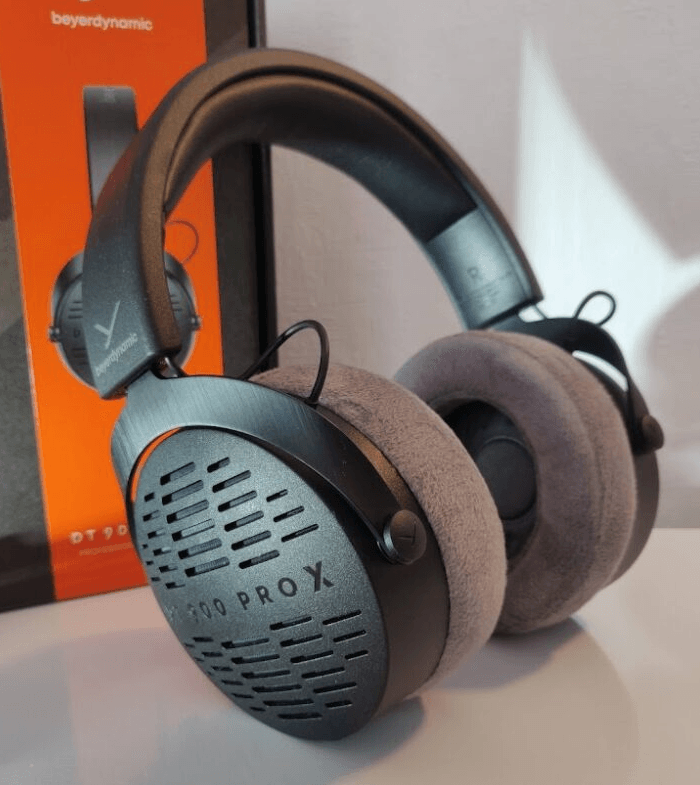
Table of Contents:
Information:
- Publication year: 2021
- Price: 249 €
- Structure: Semi-open
- Dynamic driver: 45 mm
- Impedance: 48 ohm
- Sensitivity: 114 dB SPL (1V/500Hz)
- Weight: 345 g without cable
- Connector type: 3-pin mini-XLR in the left cup
- Two cables: 3-meter and 1.8-meter cable with 3.5 mm connector
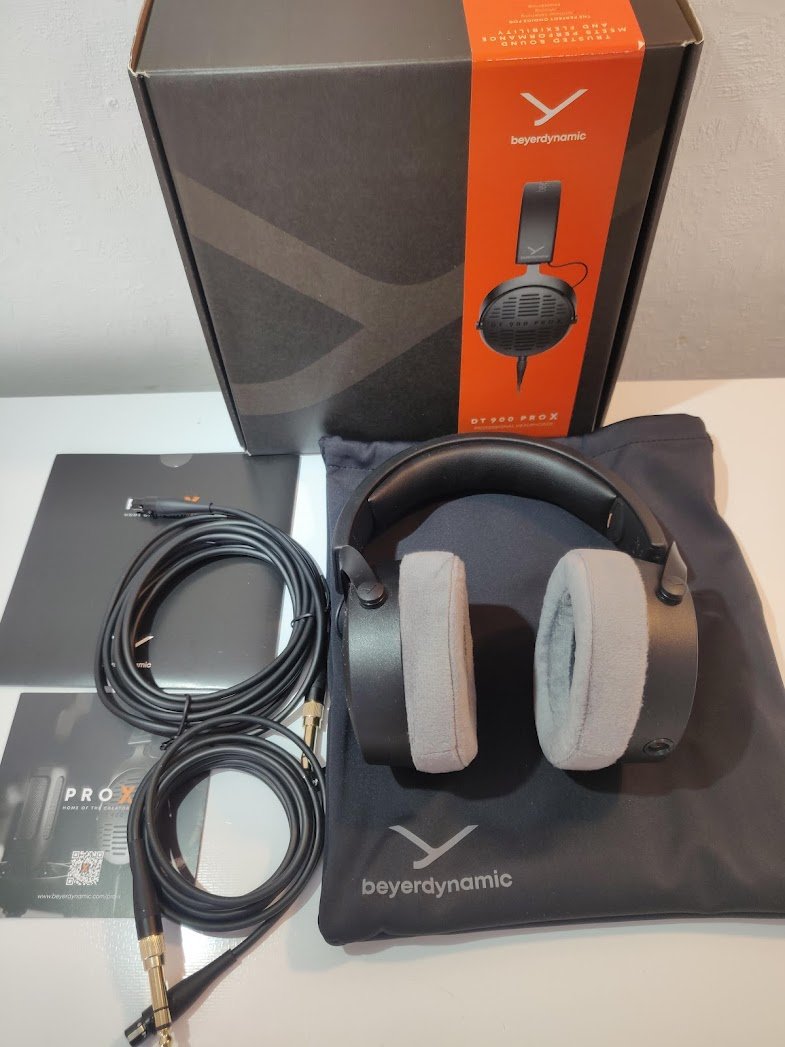
- Accessories: Protective pouch and 6.35 mm adapter
Review unit acquisition method: Loaned from a reseller
Starting cooperation
The new model, DT 900 Pro X, released by German Beyerdynamic in 2021, was borrowed for this review from a Joensuu-based Kuva ja Ääni -hifi store. In exchange for borrowing products, we will continue to offer them our unbiased reviews and insights on various headphones and devices in Kuulokenurkka. We are excited about the collaboration, as Kuva ja Ääni is our local hifi store, living in North Karelia. We have also received excellent service from them in our previous dealings.
Beyerdynamic's new models
The DT 900 Pro X is a new headphone model from Beyerdynamic after a long time in the traditional studio headphone product category, which previously included models such as DT990 Pro, DT880 Pro, and DT770 Pro. Alongside the new semi-open DT 900 model, a closed DT 700 Pro X model was also released. Both new models cost around 250 euros, meaning they are slightly more expensive than the manufacturer's aforementioned popular headphone models.
Structure and comfort
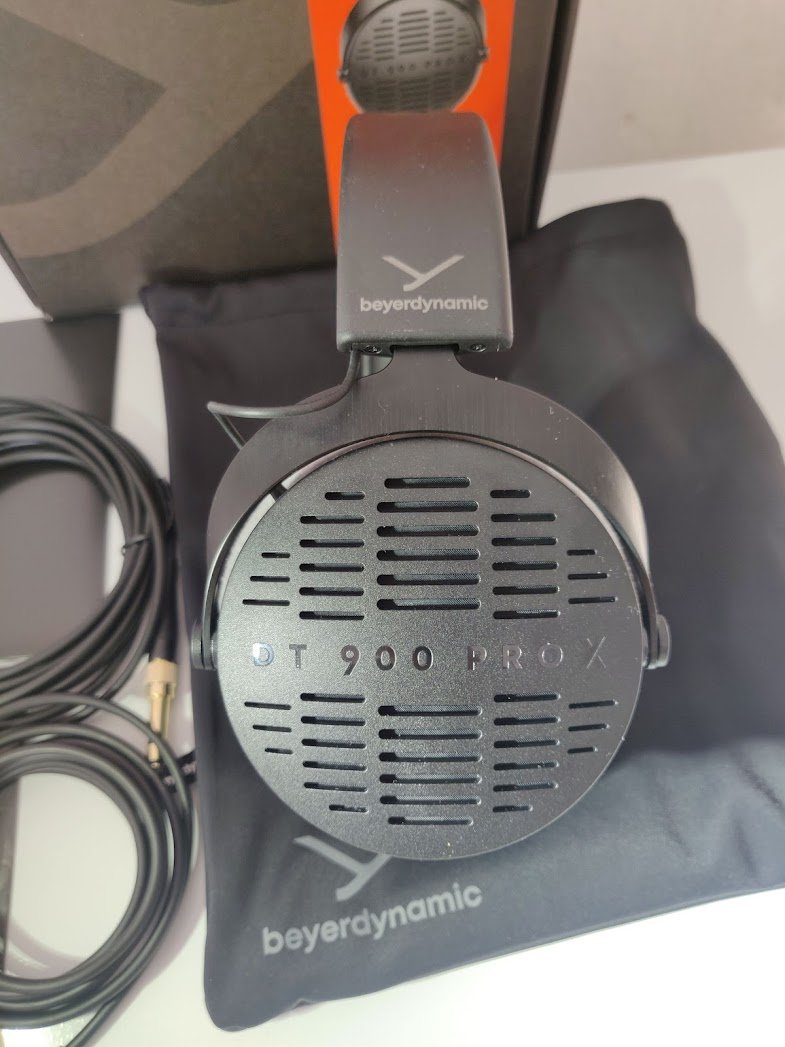
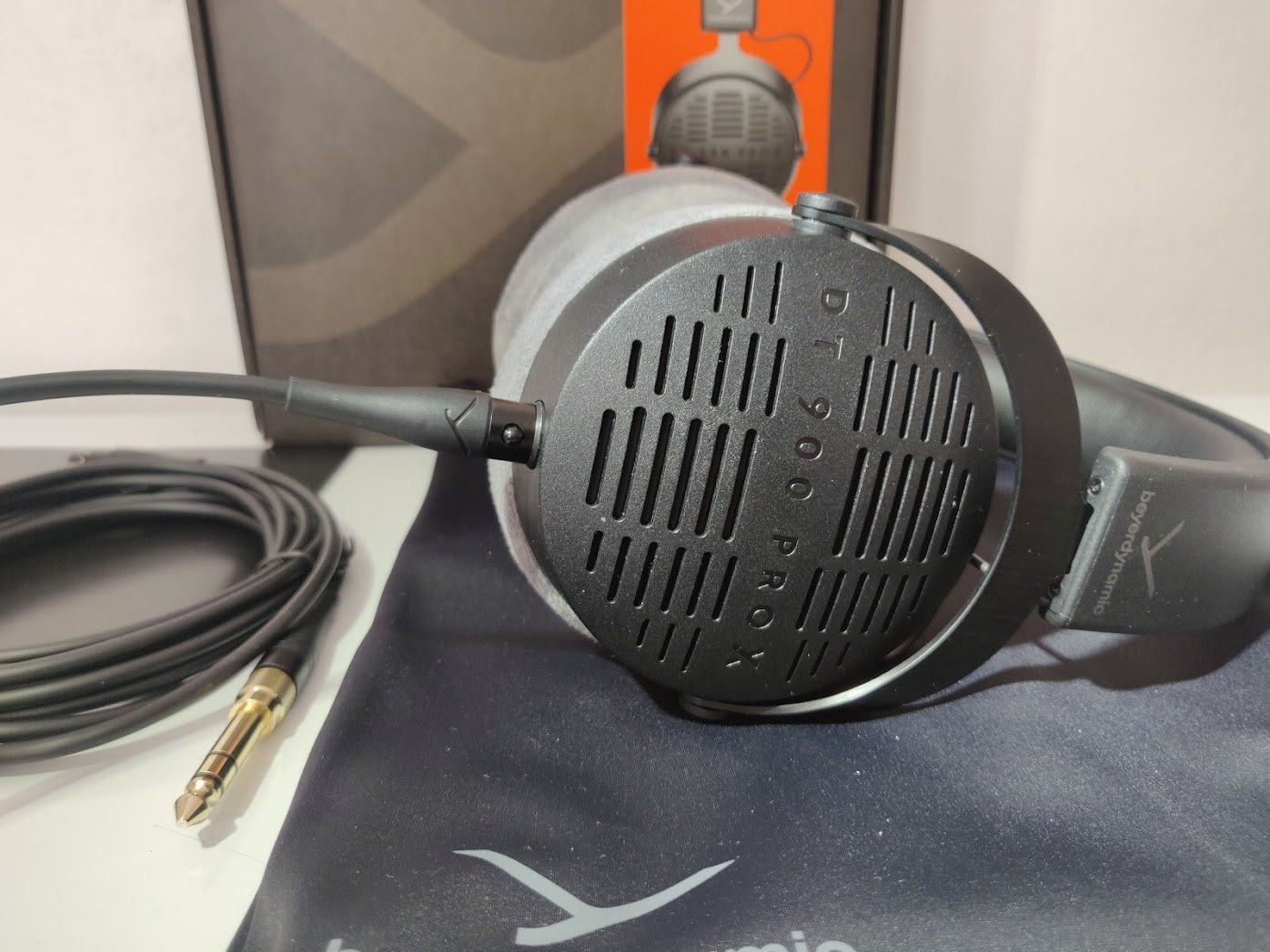
The DT 900 Pro X is immediately recognizable as a Beyerdynamic headphone by its appearance. The overall design brings to mind the old DT990 Pro model, whose ascetic appearance would have been modernized by drawing inspiration from the more expensive DT1990 model. However, the changes compared to previous Beyerdynamic models are not merely cosmetic.
Cable:
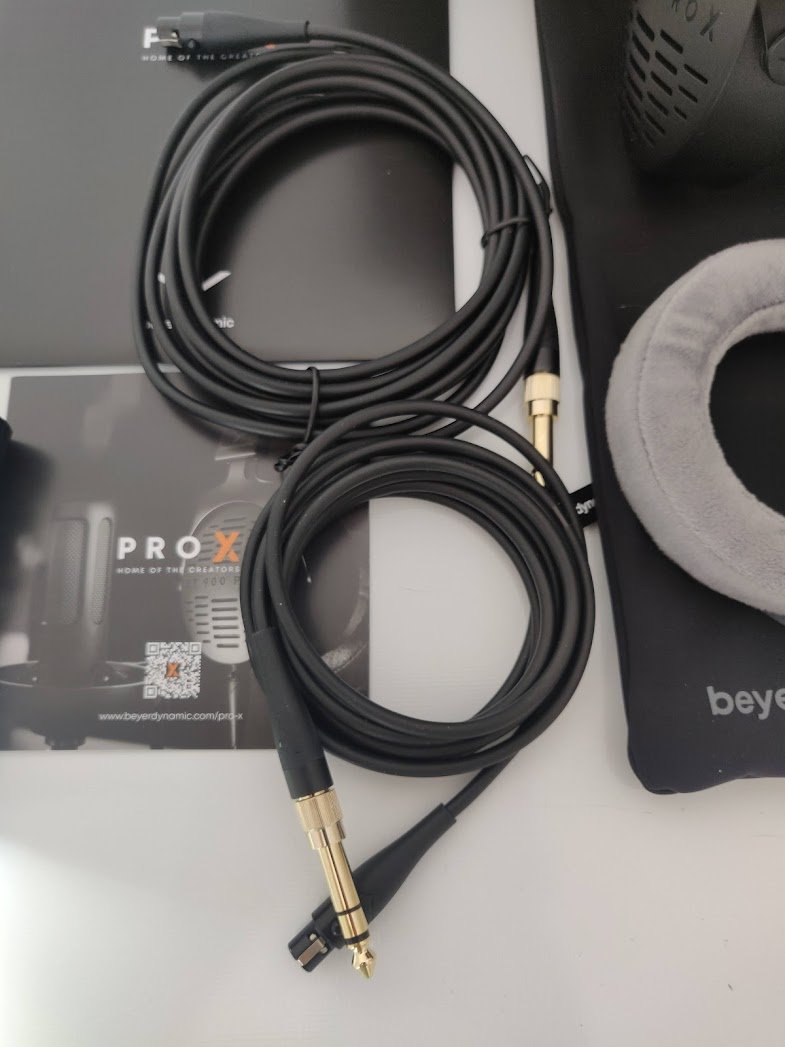
A welcome update compared to the DT770, DT880, and DT990 models is the detachable cable. It attaches to the left cup of the DT 900 Pro X with a 3-pin mini-XLR connector, meaning the headphones cannot be played in a balanced configuration – this might actually be a safe solution, as the stated maximum power handling is quite low at 100 mW (continuous power handling 30 mW).
The headphones come with two cables, the shorter of which is 1.8 meters long and the longer one is 3 meters long. Considering the affordable price of the headphones, the inclusion of two cables in the product package was a pleasant surprise for me.
The rubber-coated cables are not particularly fancy, but they are good in terms of usability. The cables do not rustle against clothes when rubbing, nor do they easily get tangled. On the other hand, the sheath material is a bit stiff, so Beyerdynamic's cables do not fold as easily as the cables of some more expensive headphones.
My biggest criticism of the headphone design relates to the 3-pin mini-XLR connector and its placement. Because the connector is really long and points straight downwards, it easily hits the shoulder when tilting the head. In my opinion, the connector should have been installed slightly forward and diagonally to prevent this from happening. Alternatively, a more conventional and smaller 3.5 mm connector could have been used in the cable.
Earpads:
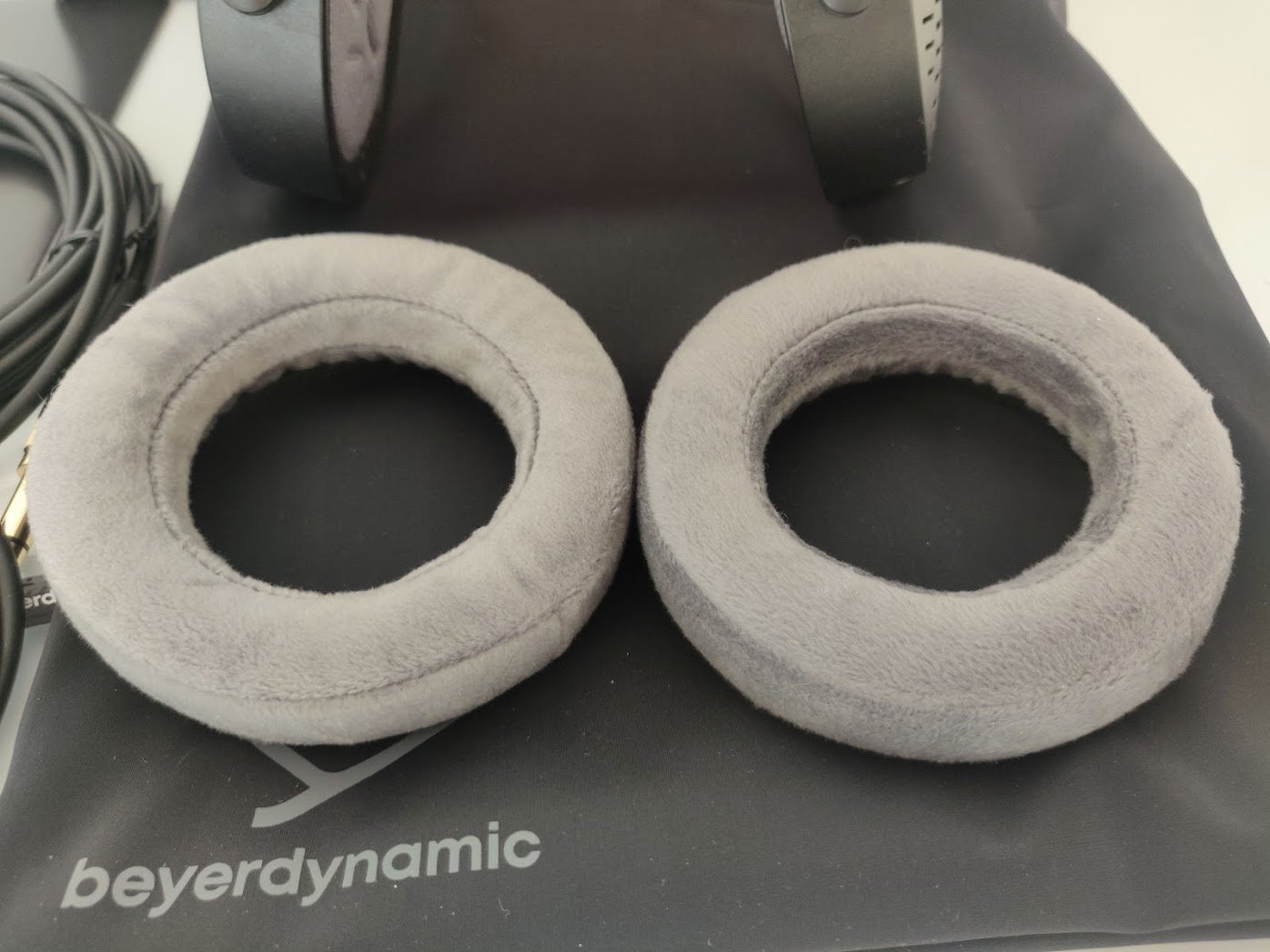
The ear pads of the DT 900 Pro X are new and different compared to many other Beyerdynamic headphones I have tested. The pads are a few millimeters narrower in diameter, so the ear opening is also slightly smaller than before. The thickness of the pads, however, has increased slightly compared to, for example, the pads of the DT880 model. The foam used in the pads also feels softer compared to the manufacturer's previous pad models. In my opinion, the comfort of the new pads is at least as good, if not better than before.

Changing the pads is easy, as they attach to indentations in the cups – the pads come off by pulling and attach by pressing. The attachment mechanism is somewhat similar to that of many Sennheiser headphones, but in my opinion, Beyerdynamic's mechanism is easier to use. Beyerdynamic's new method also clearly surpasses the pad attachment methods used by Hifiman and Focal.
Although the pads have been completely redesigned, Beyerdynamic has fortunately not significantly increased the price of replacement pads. New pads for the DT 900 Pro X headphones cost less than 30 euros. All other parts should also be available as spare parts directly from the manufacturer.
Headband structure:
The headband structure of the headphones is similar to many other Beyerdynamic DT series headphones. However, the metal forks of the cups have been slightly bent, which makes the headphones look pleasantly streamlined. The cups tilt more than in other headphones from the manufacturer, so the DT 900 Pro X adapts excellently to different head sizes and shapes.
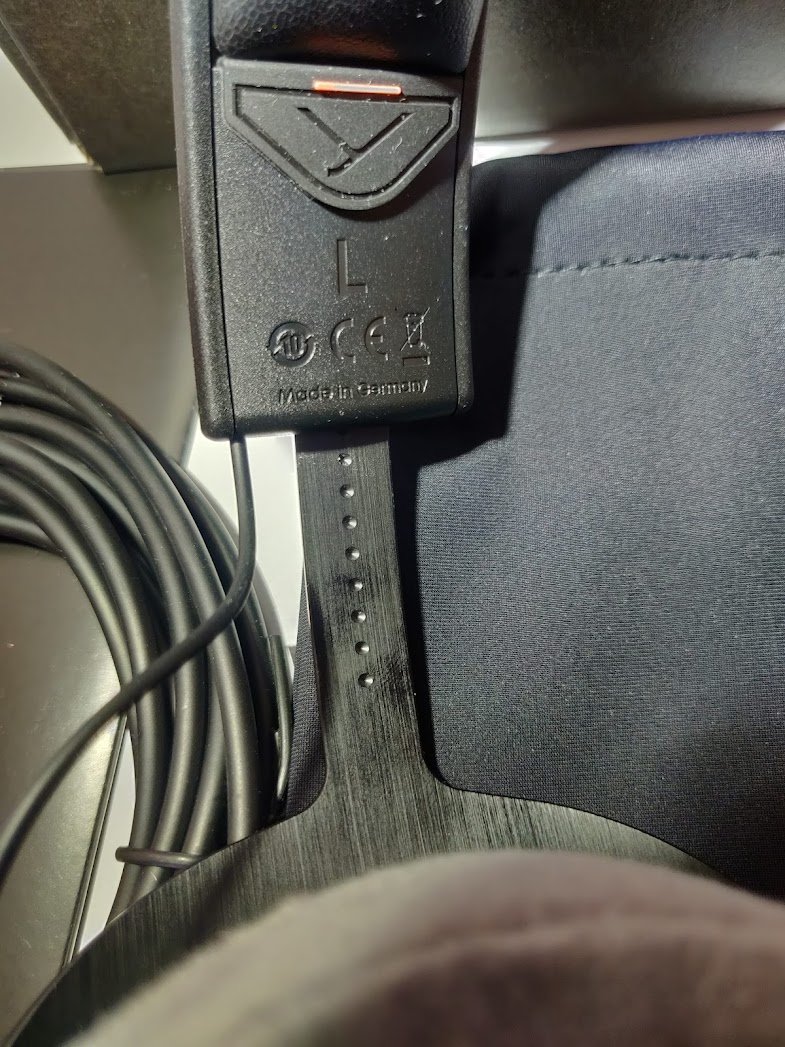
The clamping force of the headphones on the ears is quite strong, reminiscent of Sennheiser's HD600 series headphones. I personally like that the headphones sit securely on the head, but for some users who find the clamping uncomfortable, the DT 900 Pro X might feel uncomfortable. For me, most of the headphone's weight rests on the sides of the head, but the headband is well-padded, should the weight rest more on the top of someone else's head.
The 345-gram weight of the headphones is not among the lightest, as for example, the manufacturer's own DT990 model, Sennheiser HD600, and AKG K702 weigh about 100 grams less. The weight of the DT 900 Pro X is closer to more robust dynamic headphones, such as the Beyerdynamic DT1990, and planar headphones like the Hifiman Sundara, which have heavy magnets. However, about 350 grams is not too much in my opinion, as headphones weighing less than half a kilogram generally do not cause comfort issues for me.
It is difficult to find fault with the construction of the DT 900 Pro X. The headphones appear durable in every respect, and their comfort is also in order. Indeed, relatively few manufacturers can compete with Beyerdynamic in terms of structural quality of headphones. I think it's great that the new model, despite its affordable price, is manufactured in Germany.
Soundquality
Bass:
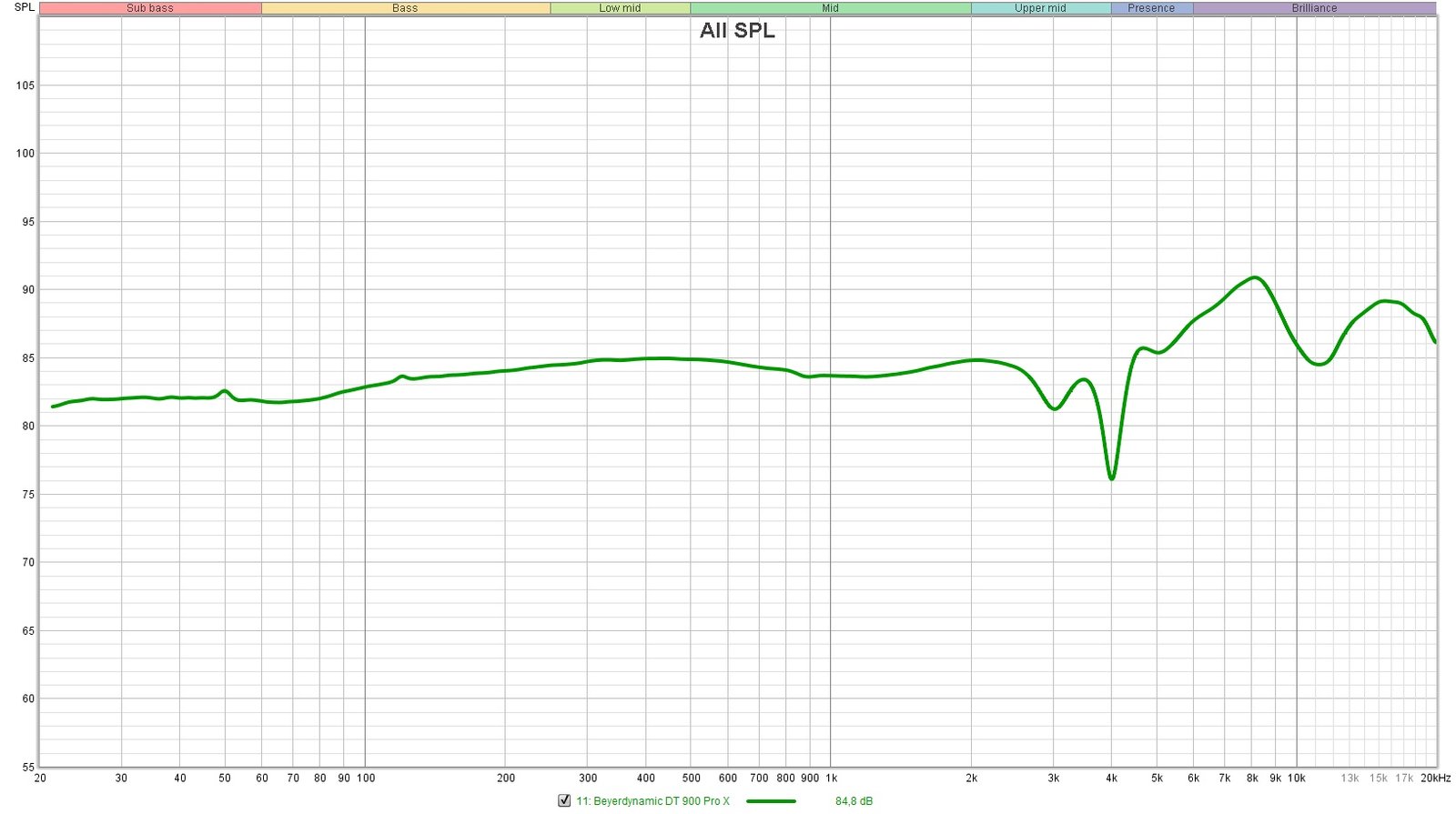
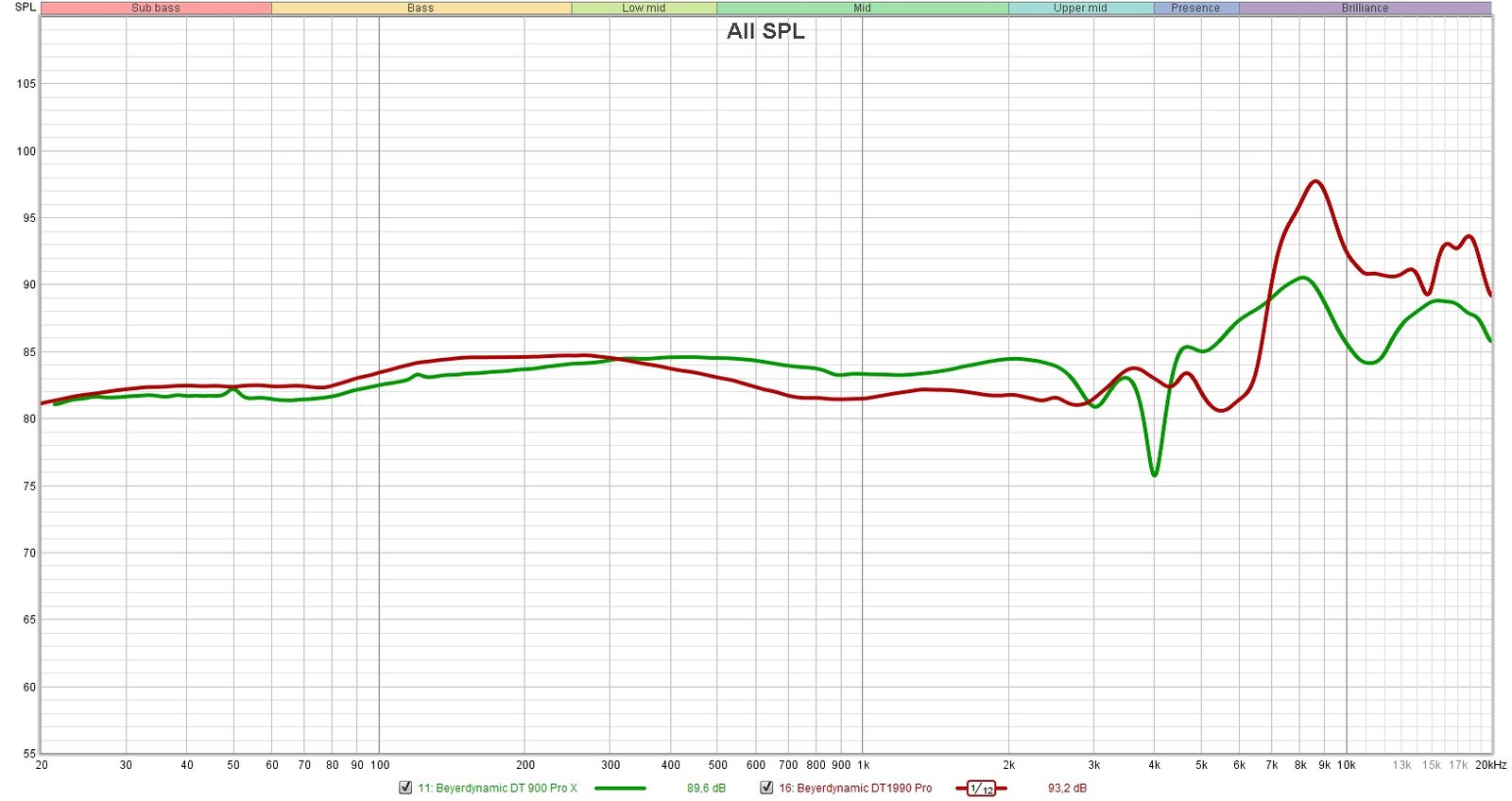
A quick glance at my frequency response measurement above might incorrectly give the impression that there is a slight deficiency in the headphones' bass reproduction. This is because a perfectly straight line with my HEQ target response would require a really strong bass from the headphones. In reality, the bass reproduction balance of the DT 900 Pro X is excellent.
The bass extends to the lowest frequencies without attenuation, and the ”deficiency” visible in the frequency response measured with the MiniDSP EARS device mainly indicates that the headphones lack the mid-bass emphasis characteristic of most dynamic headphones. The reproduction of the lowest frequencies is even exceptionally good. In my opinion, the headphones reproduce bass exactly as a ”neutrally” designed headphone should.
I also have no complaints about the quality of the bass reproduction. Technically, the reproduction is as good as one can expect from a dynamic headphone in this price range at its best. Tighter and more transient-sharp bass reproduction is available in planar headphones of the same price category, but none of them are as satisfying in terms of bass quantity as the DT 900 Pro X. For those accustomed to the overemphasized bass of many popular noise-cancelling headphones, Beyerdynamic's new model might, however, sound lacking in bass.
Central votes:
The DT 900 Pro X also deserves praise for the balance of its mid-range. In my opinion, the headphones successfully balance on the edge where the reproduction is as clear and present as possible without the overall sound starting to sound thin or too aggressive. However, this type of reproduction is not for everyone, as Beyerdynamic's new model might sound overly aggressive if the listener prefers calm and warm-sounding headphones with a more robust lower mid-range and less emphasized upper mid-frequencies. For example, for those who like Beyerdynamic DT880, Sennheiser HD600, or AKG K701 headphones, the mid-range reproduction of the DT 900 Pro X is unlikely to offer unpleasant surprises.
Treble:
The manufacturer's new model does not have a prominent treble peak, which is often considered a characteristic feature of Beyerdynamic headphones. The treble is still slightly bright, but for my taste, the amount of upper frequencies is very close to optimal. I have tested at least 10 different headphone models from the manufacturer, and the DT 900 Pro X is clearly the most successful in terms of tonal balance so far.
The headphones' treble never unpleasantly grates on the ear, nor does it hiss too much at the highest frequencies. Critically evaluated, drum cymbals sound somewhat vaguely dulled and rustling, and not all the smallest details come through clearly. On the other hand, considering the price range of the headphones, a more realistic and resolving treble reproduction might already be too much to ask for.
Soundstage, dynamics, and other technicalities:
In terms of soundstage, the headphones are reasonably impressive. According to my memory, the more affordable DT880 model sounds larger, but not quite as precise in sound placement. However, in the soundstage articulation of the DT 900 Pro X, a clear ”bubbling” effect is noticeable, meaning sounds are as if clearly compartmentalized to the left, center, and right. Not enough empty space is created between sound sources, so sounds are reproduced on top of each other in a somewhat flattened manner.
In my opinion, those who consider large and precise reproduction of space as one of the most important features of headphones should confirm by auditioning whether the DT 900 Pro X is suitable, or if, for example, AKG headphones, known for their large soundstage, would be a more pleasant alternative.
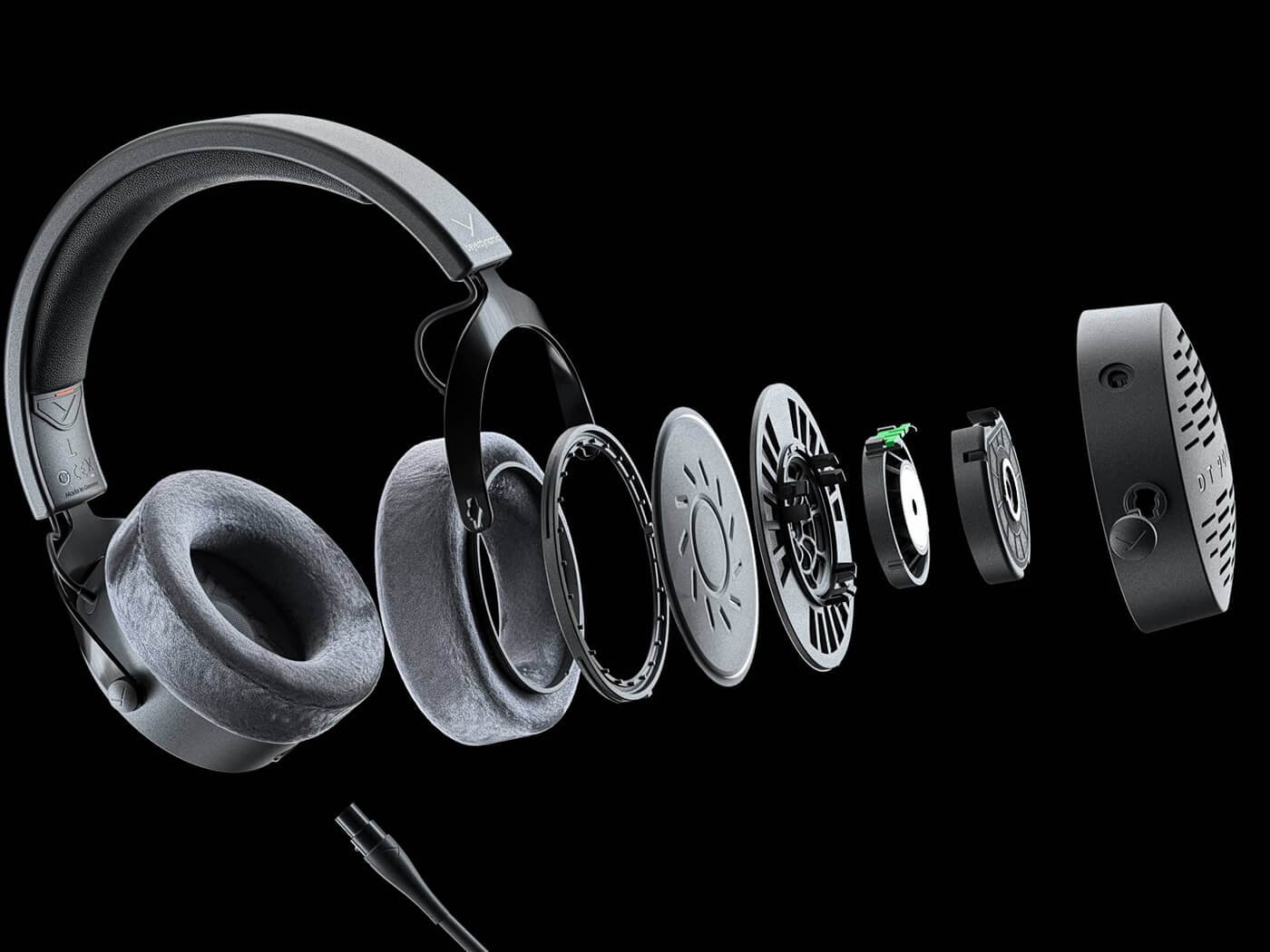
In terms of macrodynamics, the headphones are definitely among the best in their price range. Impact sounds and changes in music volume and tempo are reproduced credibly in a way that many even more expensive headphones cannot achieve.
The detail resolution is also reasonably good. Transients are reproduced somewhat rounded, which creates the impression that the headphones cannot fully extract everything from the recording. This type of rounded and smoothed reproduction is quite common in other headphones as well, which have a thick damping material in front of the driver, similar to Beyerdynamic's new model.
In the DT 900 Pro X, however, it is not an actual problem, but rather a stylistic choice that has softened the slightly analytical nature of the headphones. Thanks to this, despite a slight brightness, the headphones' reproduction has a pleasant softness. However, if you are looking for slightly higher-resolution headphones, I think it's worth considering the Hifiman Sundara, which is 100 euros more expensive, if your financial situation allows (link to previous review).
Do headphones need an amplifier?
In my opinion, the headphones need at least a high-quality sound card to truly shine. Since the 48-ohm impedance is quite low and the headphones are also relatively sensitive, it is possible to get them to play loudly from almost any sound source – listening volume is usually sufficient even when listening directly from a phone's headphone jack. Despite this, the DT 900 Pro X is a surprisingly demanding headphone when it comes to optimal device pairing.
When listened to through a phone, the mid-frequencies sound thinner, the soundstage is smaller, and there is more sibilance in the treble. The IFI Micro IDSD Black Label, on the other hand, makes the headphones' mid-frequencies sound a bit tight and occasionally almost shouting. The Shanling M8, however, overemphasizes the headphones' rounded transients, while the Astell & Kern SR15 is the complete opposite of the Shanling, making the headphones' sound almost too aggressive.
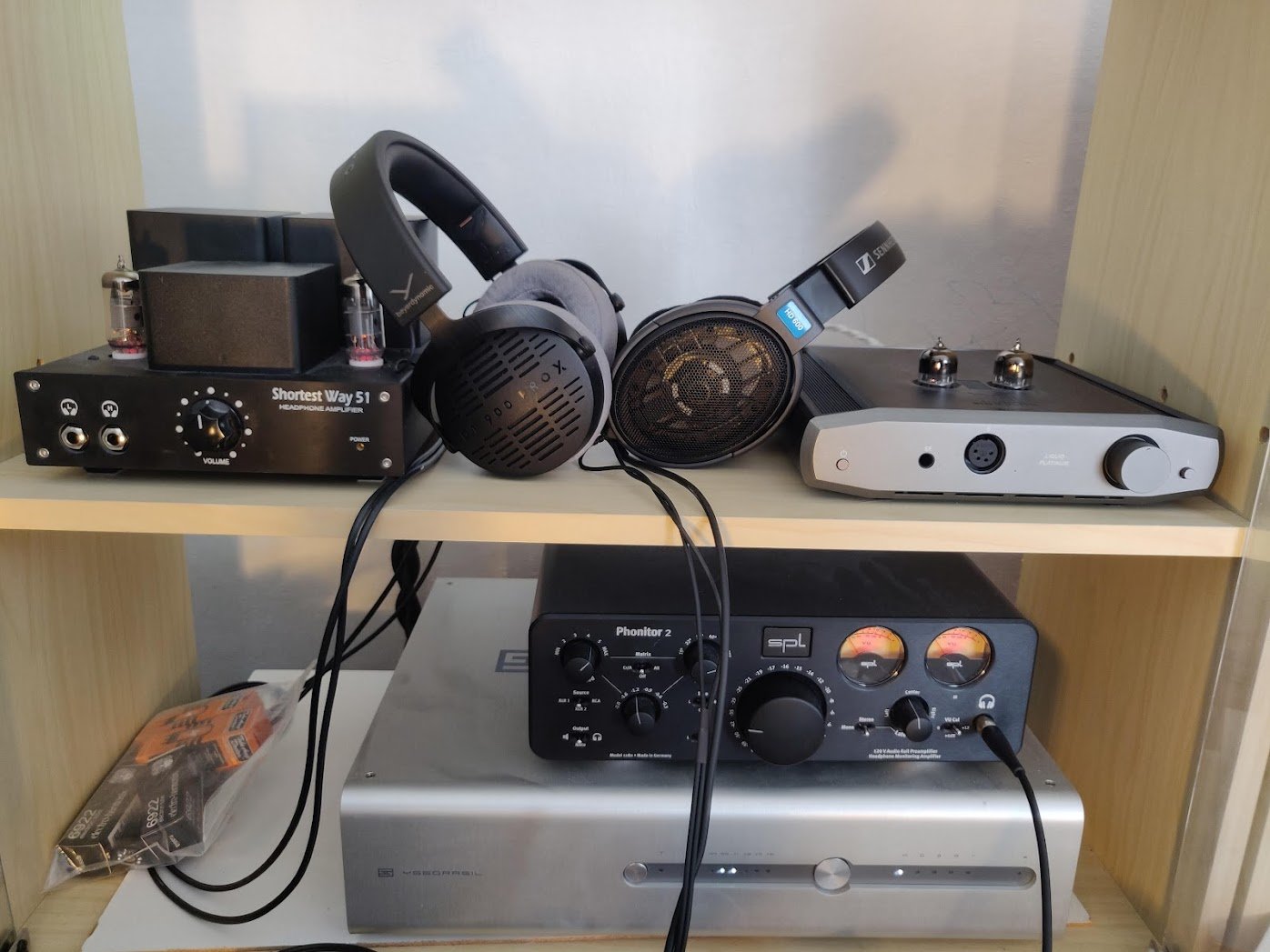
I achieved the best result with the Schiit Yggdrasil & SPL Phonitor 2 combination, with which the headphones sounded truly clean. The balance is almost perfect, so I could probably raise the headphones' volume to the point of deafness without any frequency range becoming too bothersome before that.
The DT 900 Pro X sounded worst with the Shortest Way SW51 tube amplifier, which significantly thickened the reproduction while simultaneously attenuating the treble by several decibels – this made the headphones sound quite congested. The change was also clearly visible in my frequency response measurements made through the tube amplifier.
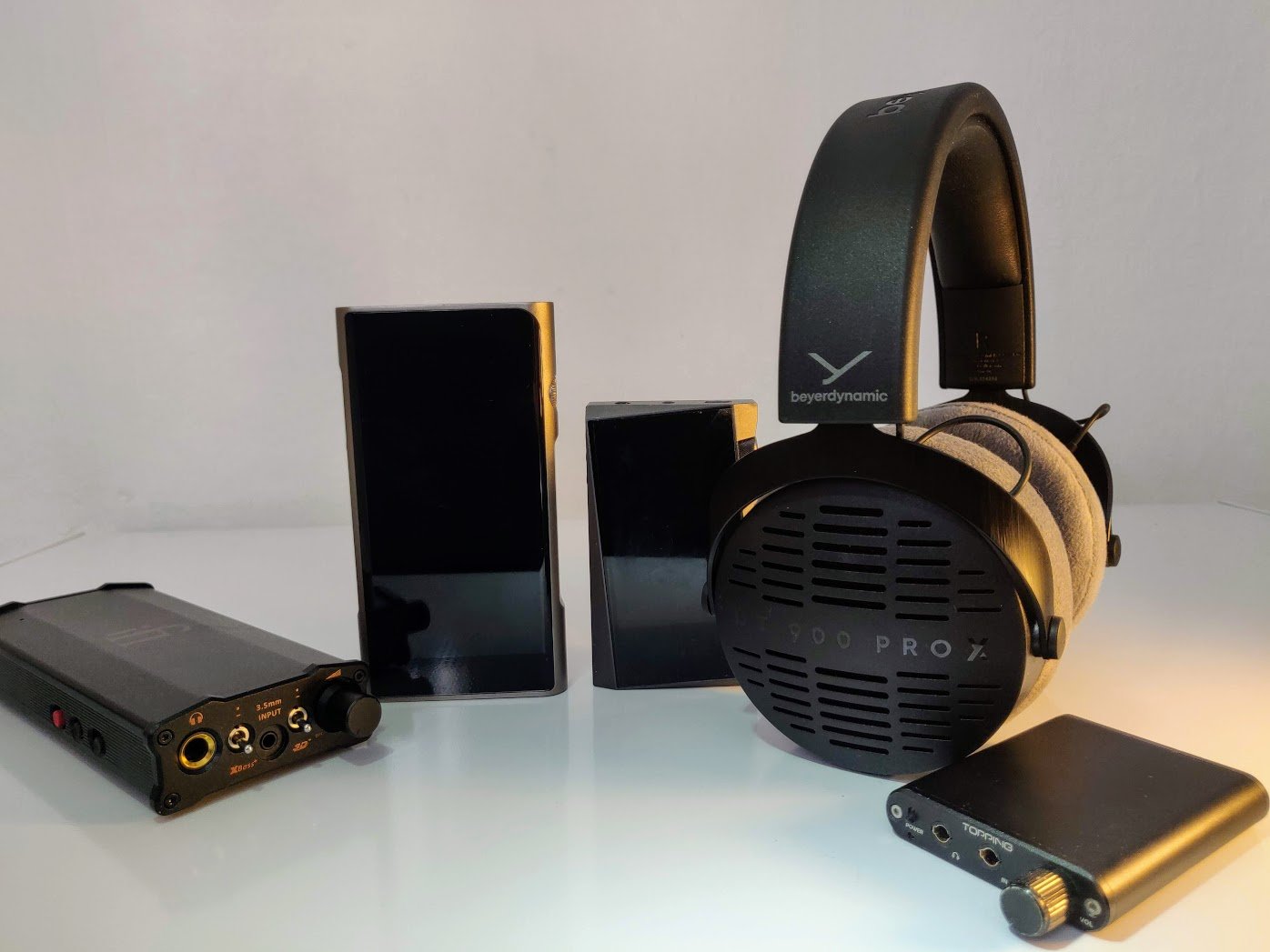
The DT 900 Pro X is exceptionally good at revealing differences between devices, which speaks volumes about the headphones' technical capability. When upgrading listening equipment, the headphones also sound better, provided the synergy is right. With the exception of the SW51, the headphones did not sound bad with any device I tried. It is also worth remembering that all the differences I mentioned are my subjective experiences, so the significance of the differences is quite small in the overall context. In my opinion, it is not very sensible to build expensive equipment around headphones costing 250 euros. Acquiring more expensive headphones will likely bring a greater improvement to the sound than acquiring an expensive amplifier for affordable headphones.
Beyerdynamic DT 900 Pro X vs. Sennheiser HD600
Prices: 250 € vs. 300 €
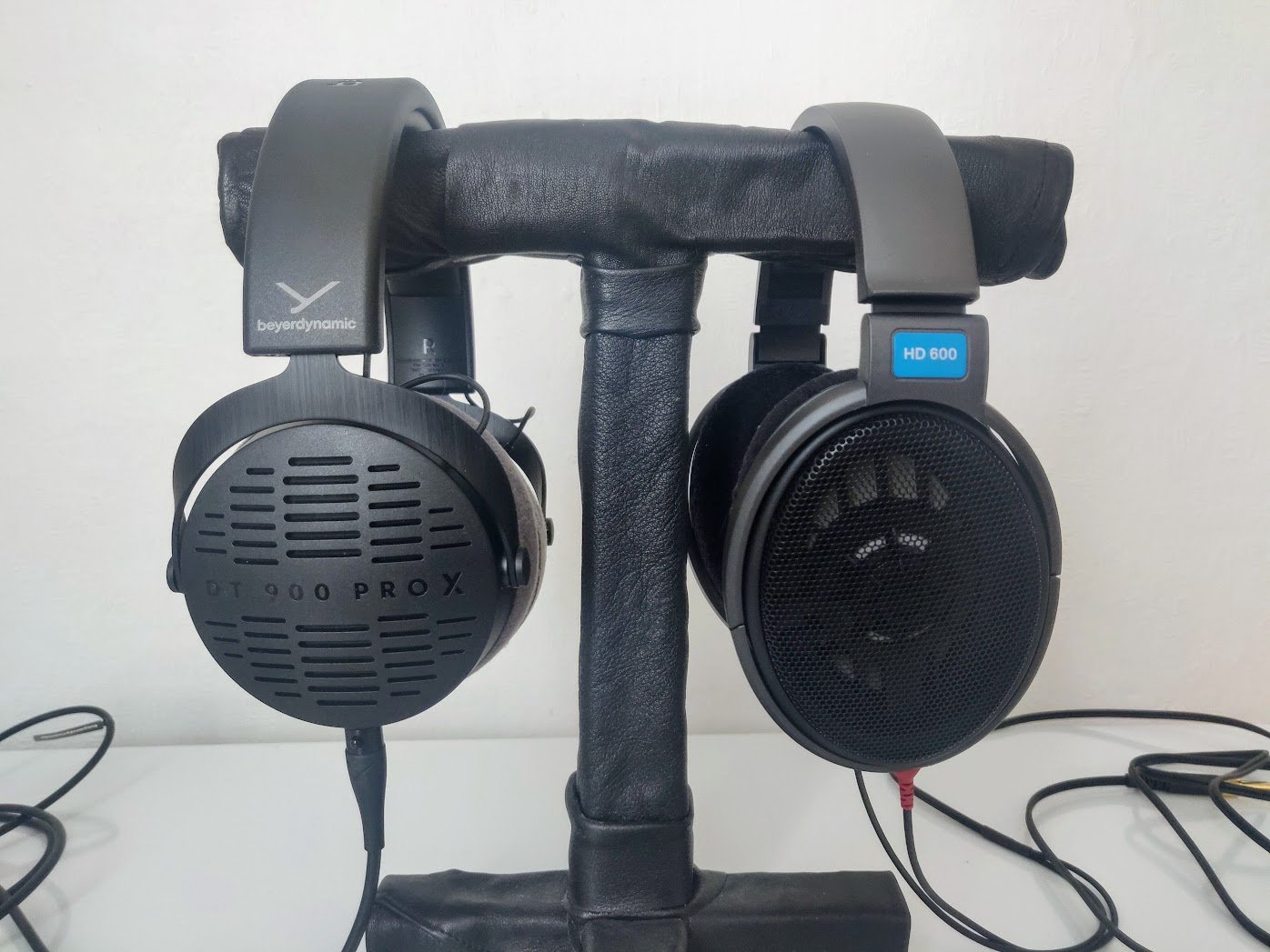
In addition to their German origin and price, the Beyerdynamics and Sennheisers I compared share a similar sound balance. Because of this similarity, the HD600 is an excellent comparison for the DT 900 Pro X. Released in 1997, the HD600 is also a headphone model already familiar to many, so it is still used as a general reference for other headphones.
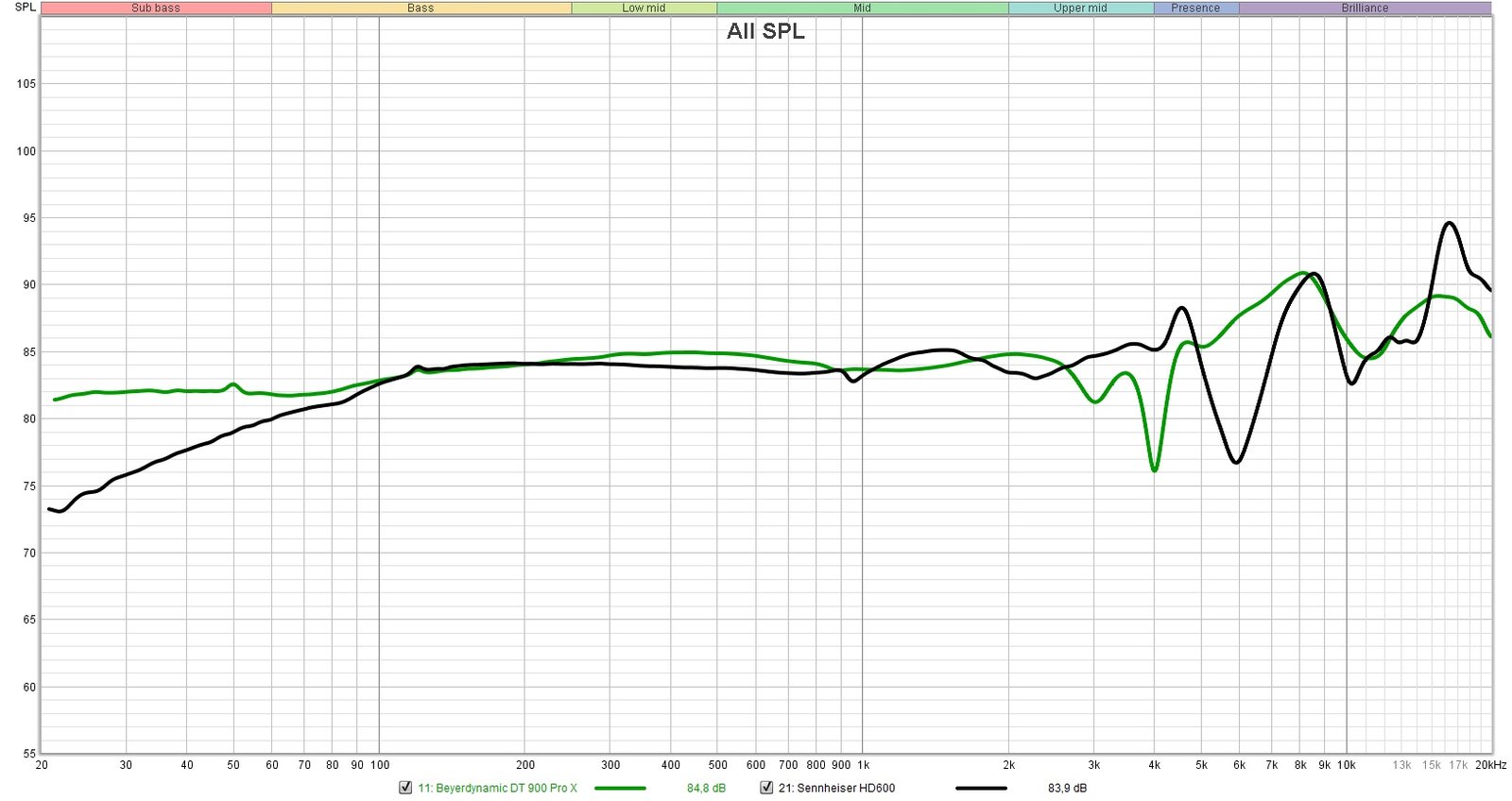
Since the pair I compared are very similar to each other, I will focus only on how the headphone models differ. The most significant difference is the DT 900 Pro X's clearly better low-frequency reproduction, as the HD600's bass reproduction is undeniably lacking. Although the amount of bass might feel sufficient for someone accustomed to the HD600, I don't believe the headphones are capable of performing according to current standards.
The amount of treble is very similar in both headphones, with the exception of the highest ”air frequencies,” which are both measured and heard more strongly on the HD600. In my opinion, the HD600's upper frequencies sound more natural overall. In this regard, the HD600 is still excellent, even though the headphones are already old (the pair I used for comparison, however, is brand new). The DT 900 Pro X reproduces cymbals, in particular, sounding a bit papery, and it cannot convey high-frequency shimmer in a completely convincing way.
When comparing these two headphone models, it is also essential to consider the amplifier used. The DT 900 Pro X is a safer choice if only a low-power amplifier is available. The HD600, on the other hand, sounds impure and even a bit ”muffled” with an unsuitable amplifier. The headphones' dynamics are also subdued, and the soundstage is collapsed.
However, the purity of reproduction and dynamics significantly improve when the HD600 is paired with a suitable amplifier. In this case, the Beyerdynamic model's only strengths remain its higher quality bass reproduction and more convincing stereo image compared to the HD600. The HD600 is still an excellent choice if the enthusiast is willing to invest in peripheral equipment and the listener's musical taste does not require first-class bass reproduction from the headphones. The DT 900 Pro X, on the other hand, is better suited for a beginner enthusiast who is not yet ready to invest in a more expensive amplifier.
Summary
The Beyerdynamic DT 900 Pro X is a basic headphone with excellent value for money, having no significant weaknesses for its 250 euro price. The headphones' balanced sound, good wearing comfort, and durable-feeling construction make recommending the new model easy. Thanks to their balanced frequency response, the headphones are suitable for all types of music. The soft transient reproduction, convincing bass, and impactful dynamics pleasantly enhance the headphones' neutral character and slightly bright treble.
The headphones do not need a powerful amplifier or an expensive DAC, but they scale up with better equipment. In my opinion, those seeking more detailed resolution should consider, for example, the Hifiman Sundara, which costs 100 euros more. However, it or other planar headphones costing less than 500 euros are not as dynamically convincing as the DT 900 Pro X. The Sennheiser HD600 still holds its place as an excellent alternative if it is possible to acquire a sufficiently capable amplifier for it.
Pros and cons:
+ Balanced sound
+ Playback dynamism
+ Bass extends exceptionally well to the lowest frequencies
+ Sturdy construction
+ Comfort
+ Spare parts are available for the headphones, so they don't need to be thrown away if they break after the warranty expires
+ The headphones are made in Germany: it's great that affordable headphones are still manufactured in Europe
+ Two cables included
+ Reasonable price
+/- The headphones do not require a powerful amplifier, but attention should be paid to hardware synergy
+/- The headphones' resolution is reasonably good, butnot among the best in its price range
+/- Beyerdynamic finally released headphones that do not have shockingly overemphasized treble. In my opinion, this is exclusively a good thing, but the change may not please the most devoted Beyerdynamic fans.
– There would be some room for improvement in the soundstage width and instrument placement
– The cable connector may easily hit some users' shoulders when turning their head
 EN
EN  FI
FI
What a very pleasant review, plus points for your own headphone measurements! The Dt 900 Pro X is going to be purchased by me.
Thanks for the feedback! Hopefully, the Beyers are the right headphones for you 🙂
Thanks for the review. Your way of using somewhat similar headphones as a reference in reviews side-by-side. I believe it significantly makes it easier for the reader to make assessments.
Anyway, text that uses, for example, the expression ”in my opinion” regarding very difficult-to-define audio characteristics, is a pleasant deviation in this field full of superlatives and (commercial) hype.
As someone who has been into audio since the 80s, it's great to get quality Finnish content production in this field. Keep up the good work!
JT Helsinki
Thanks for the comment! The cultivation of the word ”in my opinion” has indeed caused wonder in some readers. The purpose is indeed to emphasize that it is only the reviewer's own experience and not a measurable fact. It is also true that when one starts praising a product too much, the review can quickly start to resemble an advertisement. We definitely do not want that. Nice to hear that we have managed to stand out from the crowd in such a positive way.
Hi,
Out of curiosity, could you swap dt 900/700 pads someday and take measurements? I simply wonder if this could improve any one of their tunings. Thank you.
As an old Beyerdynamic fanboy, I got these encouraged by this review. I have been happy with the solution. The mid-range is, in my opinion, really forward, but with Oratory1990's parametric EQ settings, it sounds really balanced.
Could you test the DT 900 Pro X with Beyerdynamic Headphone Lab plugin?
PS: Great Sites!
👍
Thanks for the suggestion! I will keep this in mind, if I am able to get DT 900 Pro X on my hands with reasonable hassle. Cannot promise anything yet, but let’s see. 🙂
👍👍👍