Author: Sword of Damocles
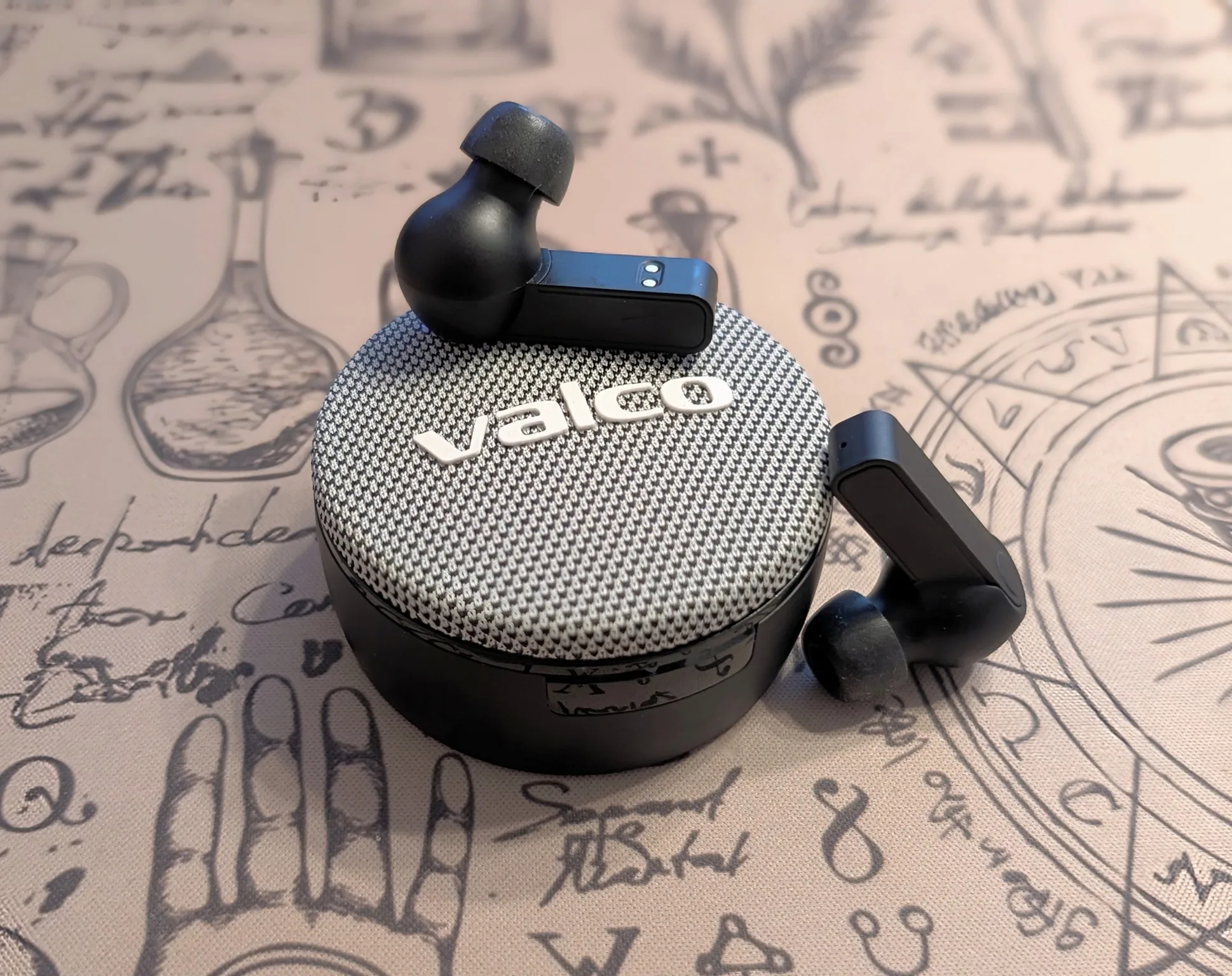
Table of Contents:
Information:
- Release year: 2023 (available for sale 2025)
- Country of manufacture: Finland (design work) and China (manufacturing)
- Price: 169 €
- Structure: Wireless in-ear
- Drivers: 10 mm dynamic + Balanced Armature
- Bluetooth 5.4
- Bluetooth codecs: AptX Adaptive, AptX, AAC and SBC
- Battery capacity: 35 mAh (earbuds) / 300 mAh (case)
- Battery life (ANC ON/OFF): 4.5 h / 6 h
- Total usage time with case: 17 h
- Noise cancellation function: ON/OFF/Transparency mode
- Features: Multipoint, IPX4 splash protection and voice assistant
- Weight: earbuds 5 g/pc and with case 50 g
- Accessories: USB charging cable and 6 pairs of different sized ear tips (silicone/foam)
- 2-year full warranty + reasonably priced repair service
Review sample: Provided by the manufacturer
”The best earbuds you can afford” – that's quite a concise sales pitch. We Finns tend to be modest and downplay our achievements, so the shameless marketing seen in recent years from our domestic headphone manufacturer Valco is guaranteed to evoke feelings for and against it. However, one must stand out from competitors, so what better combination than to make good products and market them boldly and memorably. Sometimes it might go a bit overboard, but probably entirely on purpose.
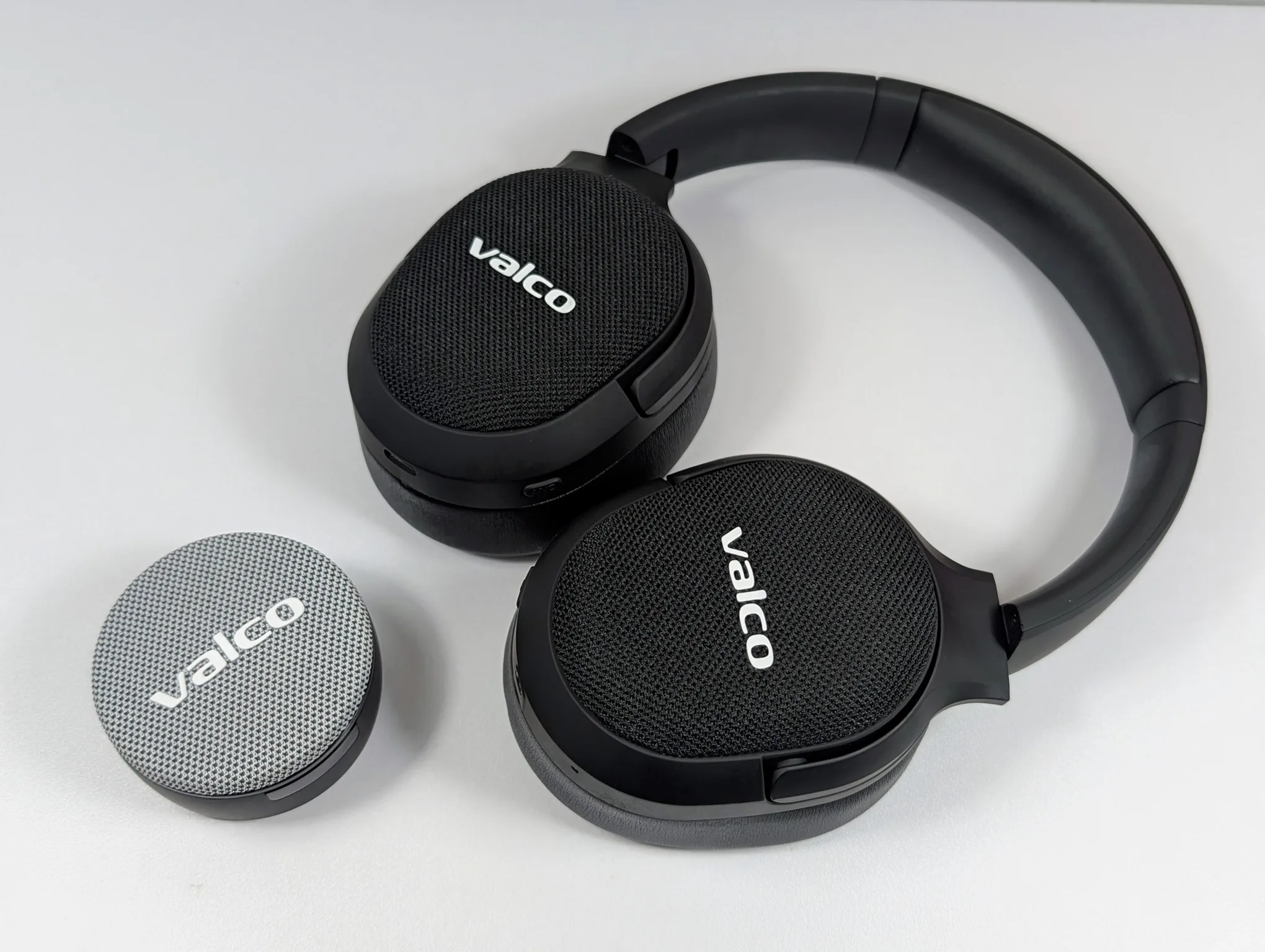
We have previously tested Valco's in Kuulokenurkka VMK20and VMK25-over-ear noise-cancelling headphones, whose sound quality stands out in the market, if preferences lean more towards neutral reproduction than heavily thumping bass. On the other hand, the wireless NL21 in-ear headphones were not tested at the time, so with the new NL25 model, we are starting with a clean slate. We haven't reviewed any other in-ear headphones for a while either, because there simply isn't enough time for everything. In a way, however, this is a good thing in the case of the NL25, as its presumed target audience has certainly not tried all the noise-cancelling in-ear headphone options on the market.
Valco has thus released new wireless headphones priced at 169 euros NL25 in-ear headphones, which were first reported on already at the end of 2023. Reading old news reveals that the headphones were not originally supposed to include a noise-cancelling function, until one was ambitiously added to the feature list at the last minute. This ultimately delayed the product's completion to such an extent that the first headphones arrived in the hands of consumers and pre-orderers only in the summer of 2025. Although the wait may have understandably tested some people's nerves, perhaps it was worth waiting for something good after all?
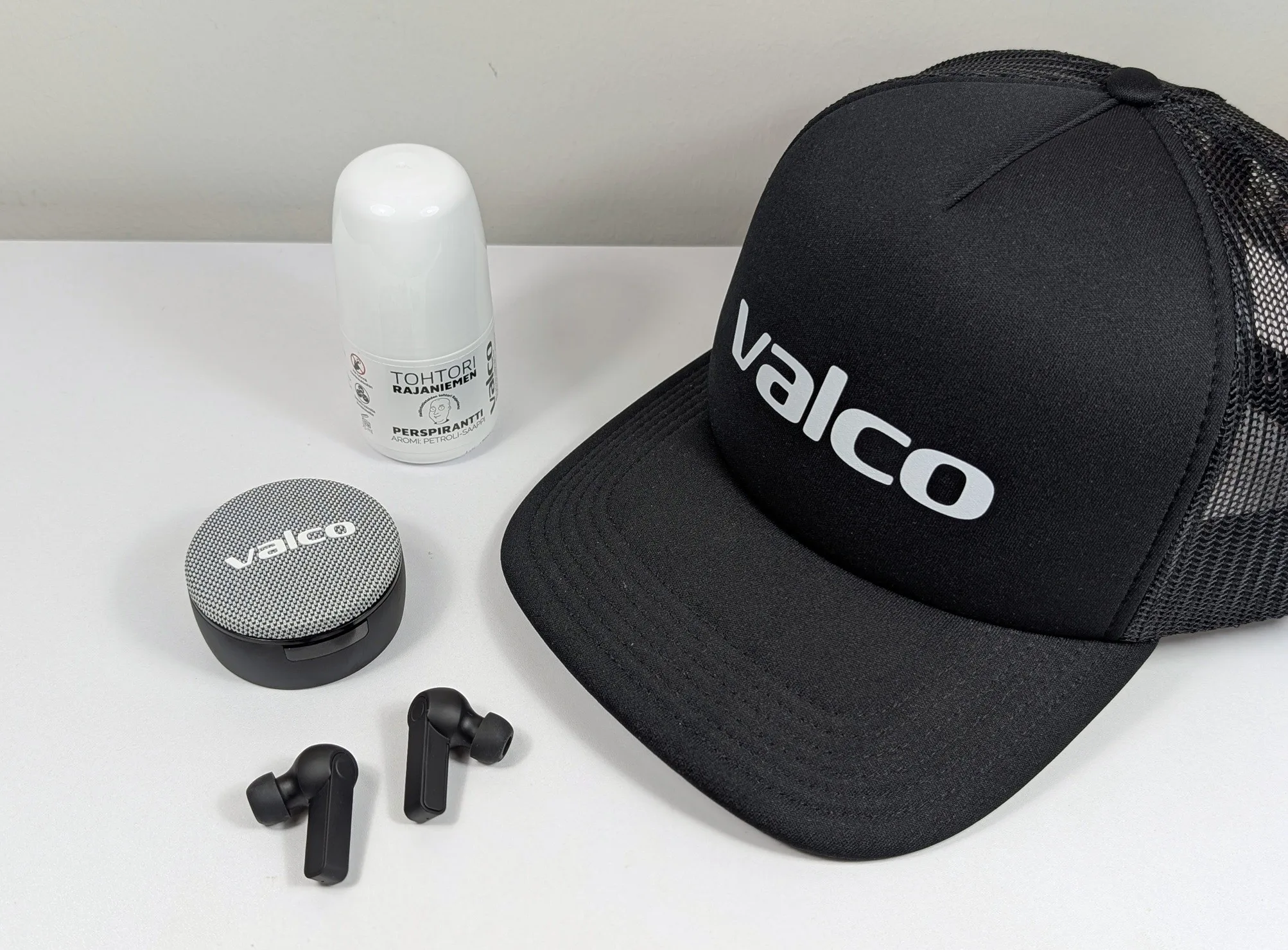
I received the in-ear headphones for testing from Valco themselves, along with a nice cap and a Petroli-Saab scented antiperspirant. So I'm not saying I'm completely incorruptible as a reviewer; after a good laugh, I probably wouldn't be able to form gloomy thoughts about Valco anymore. Let's hope, then, that the NL25 isn't a complete dud, because trying to criticize it might make me sweat despite the antiperspirant.
Unboxing
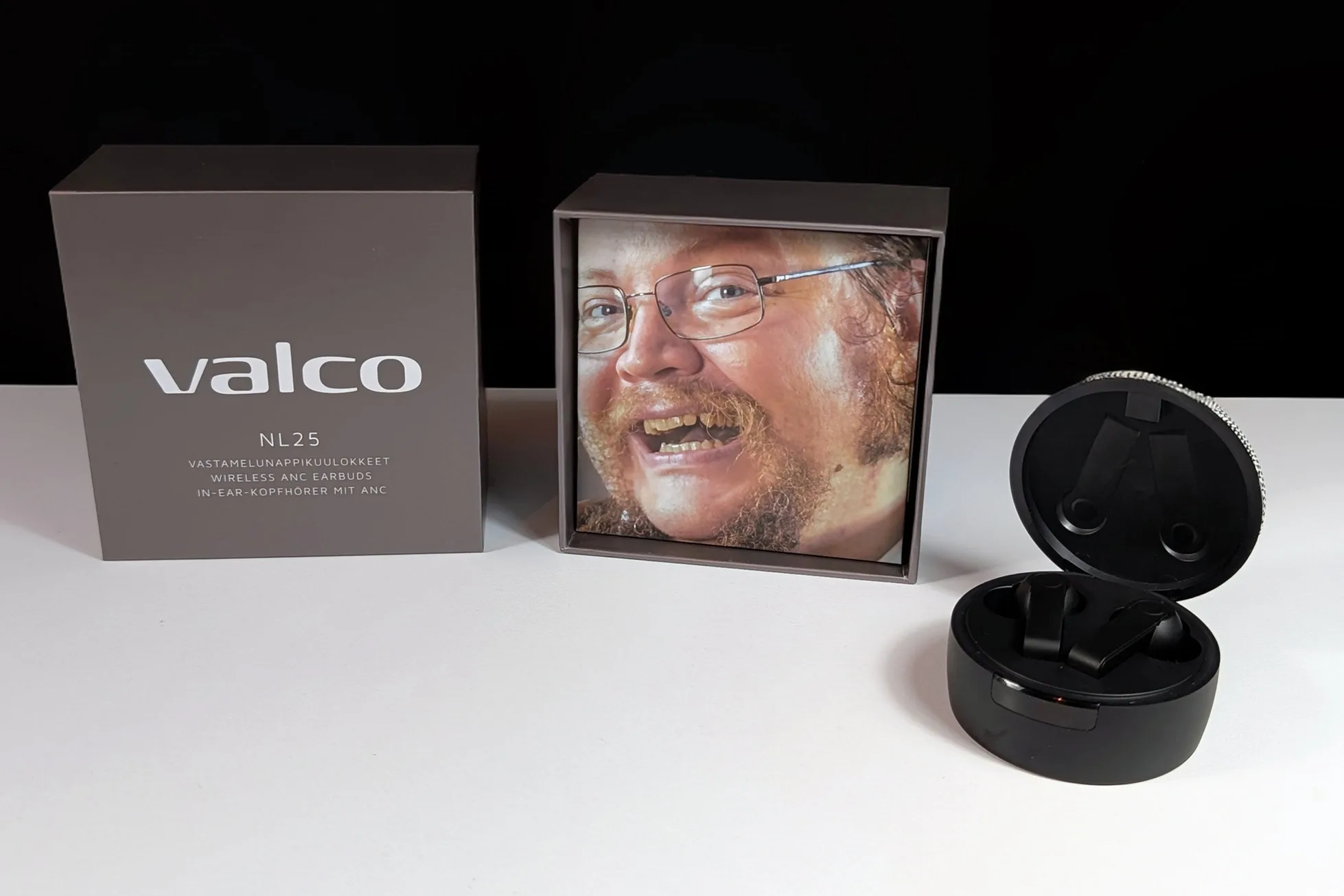
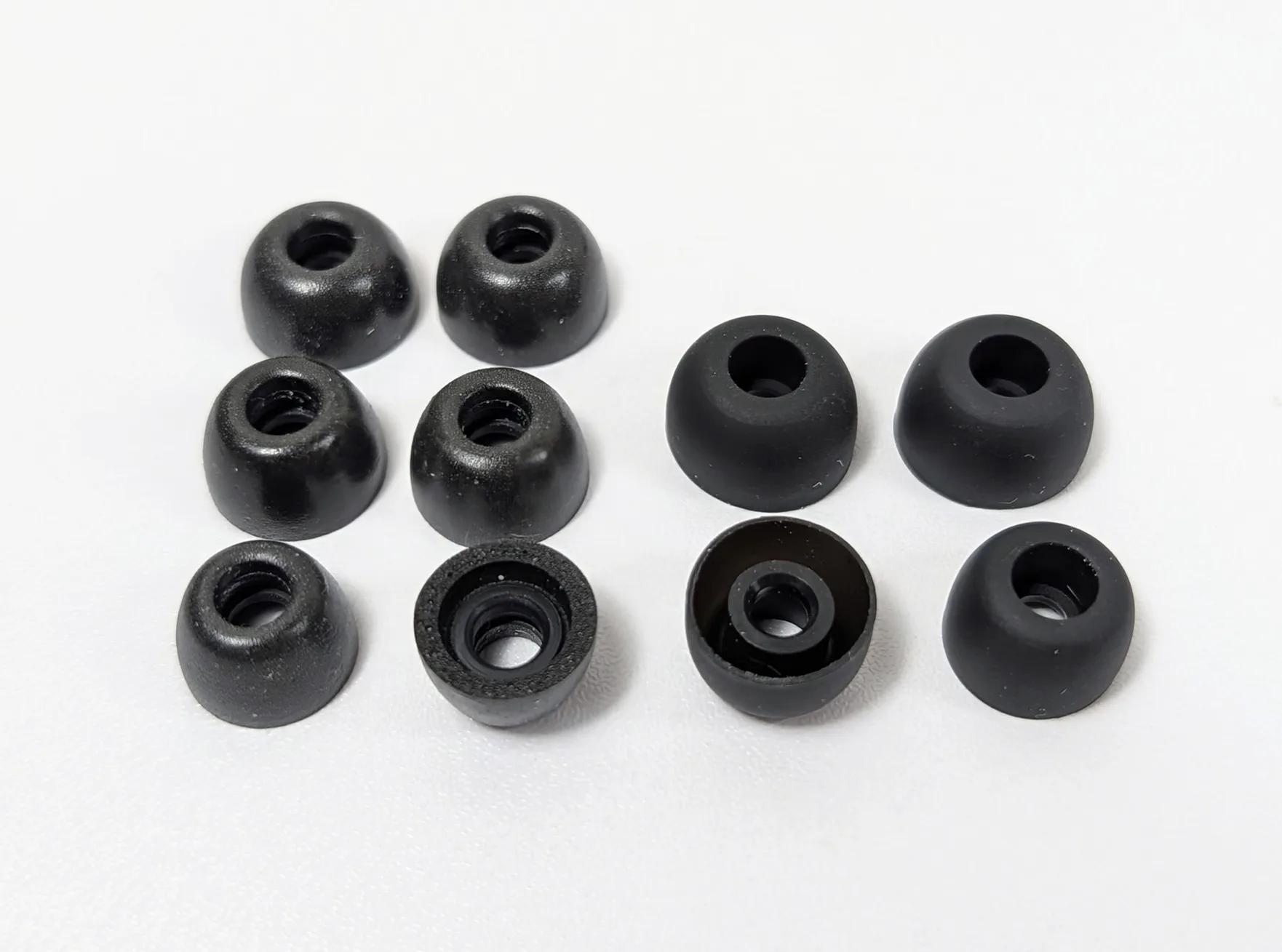
The product packaging for in-ear headphones doesn't usually stick in one's mind particularly, but Valco has ensured that at least Raimo, who acts as a kind of figurehead, is permanently etched onto the retina. And yes, the package also naturally contains the necessary USB charging cable and six pairs of ear tips of different sizes (one pair already attached to the headphones). Half of these are made of silicone and the others of foam material. The user manual, on the other hand, is worth reading purely for the humorous content it contains.
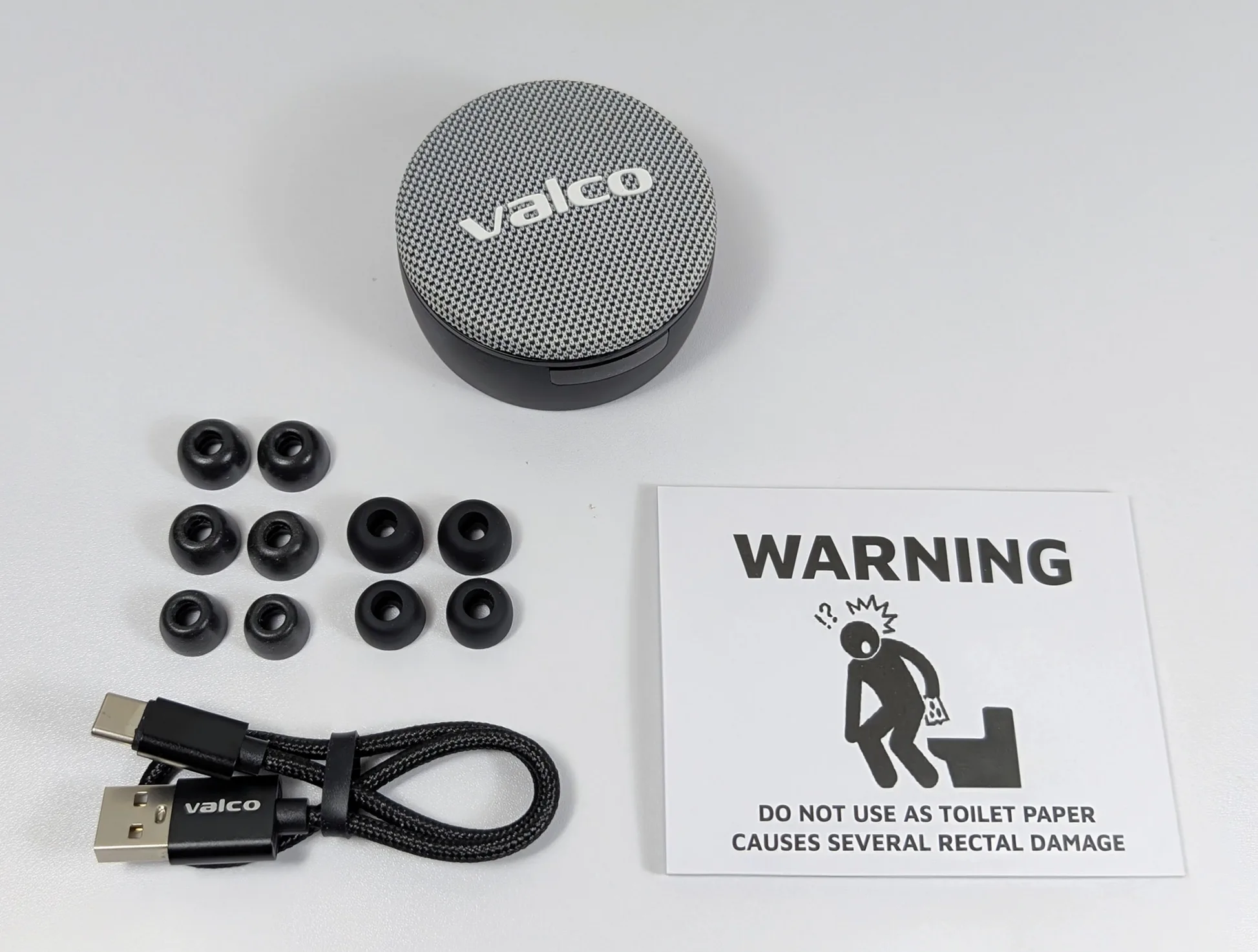
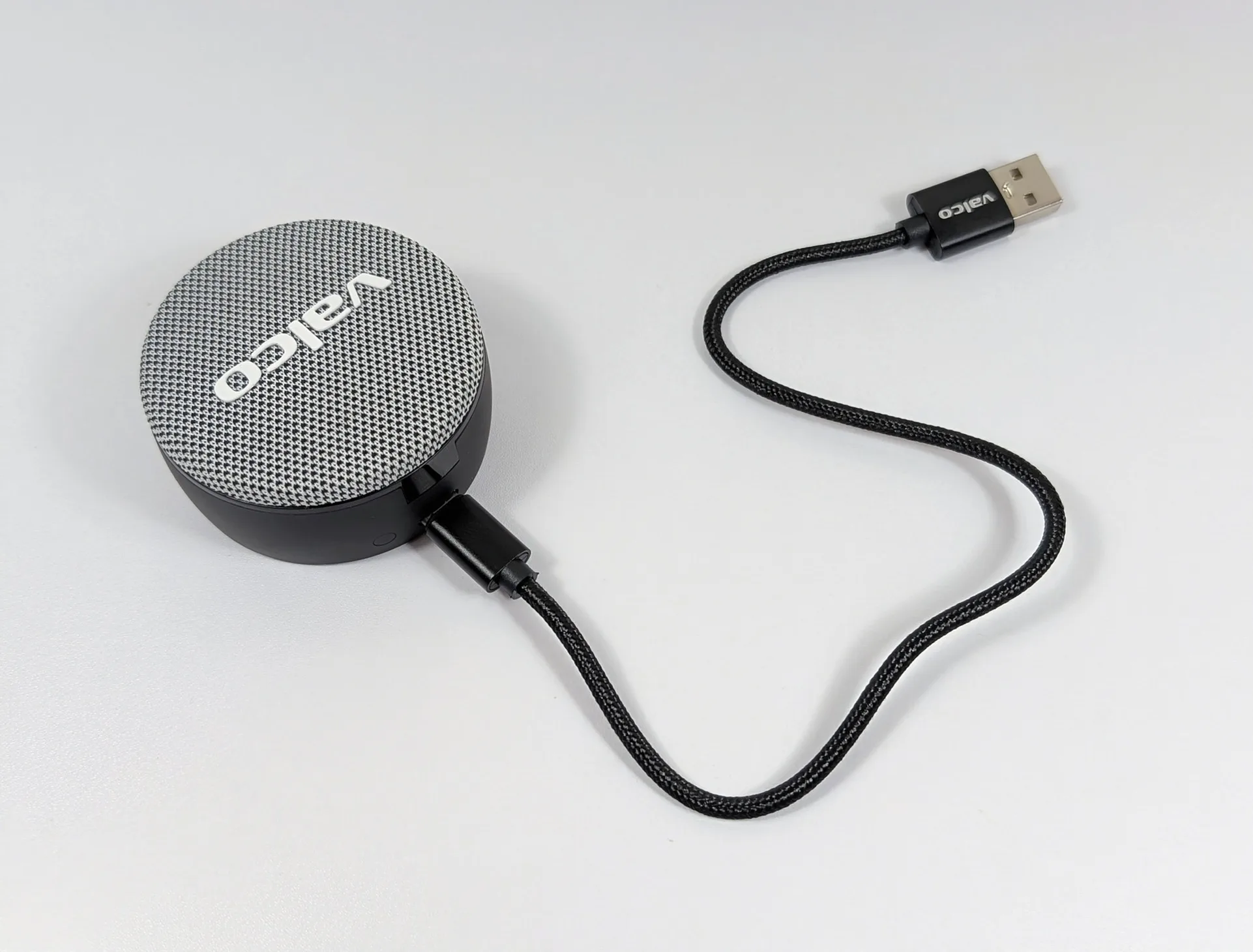
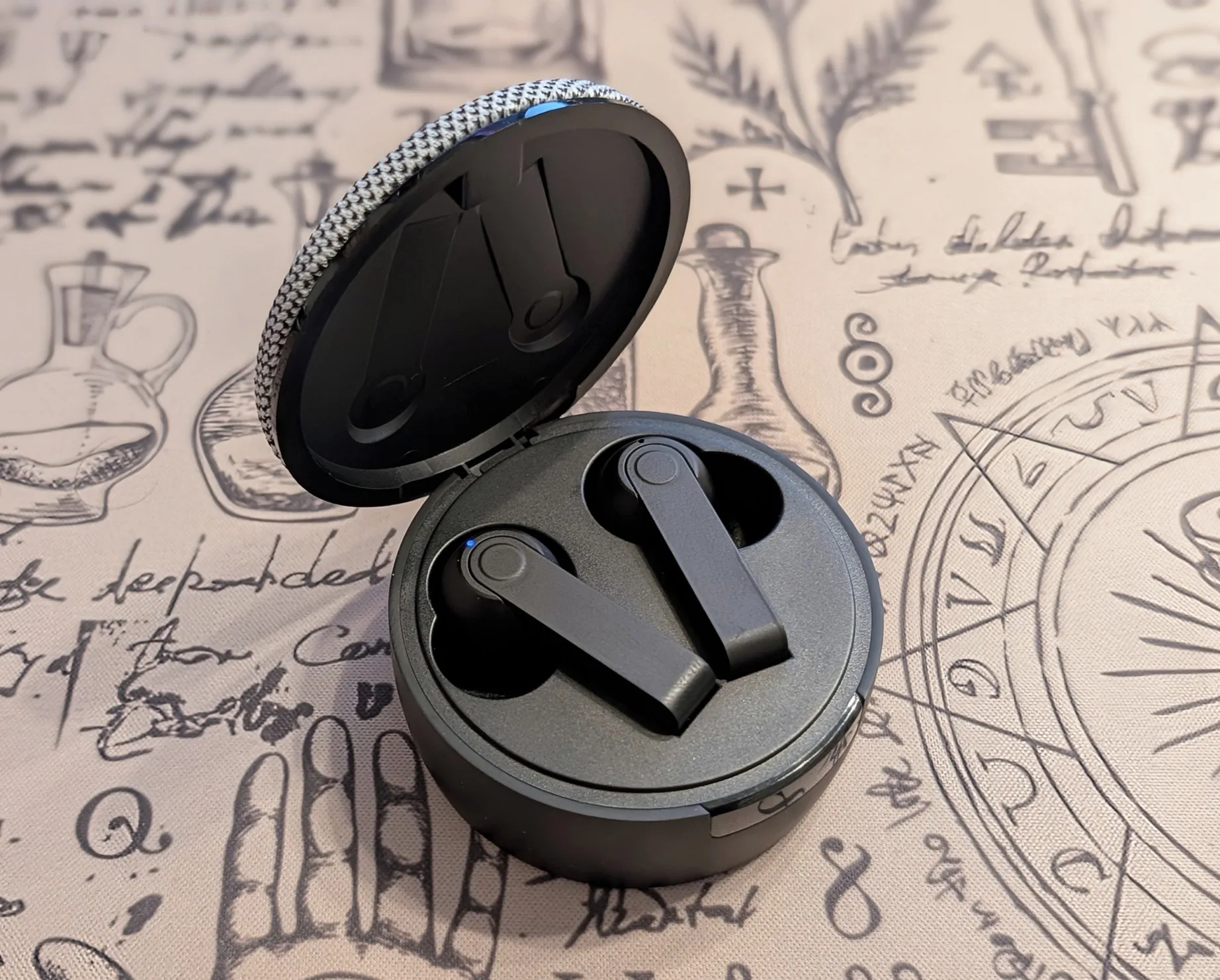
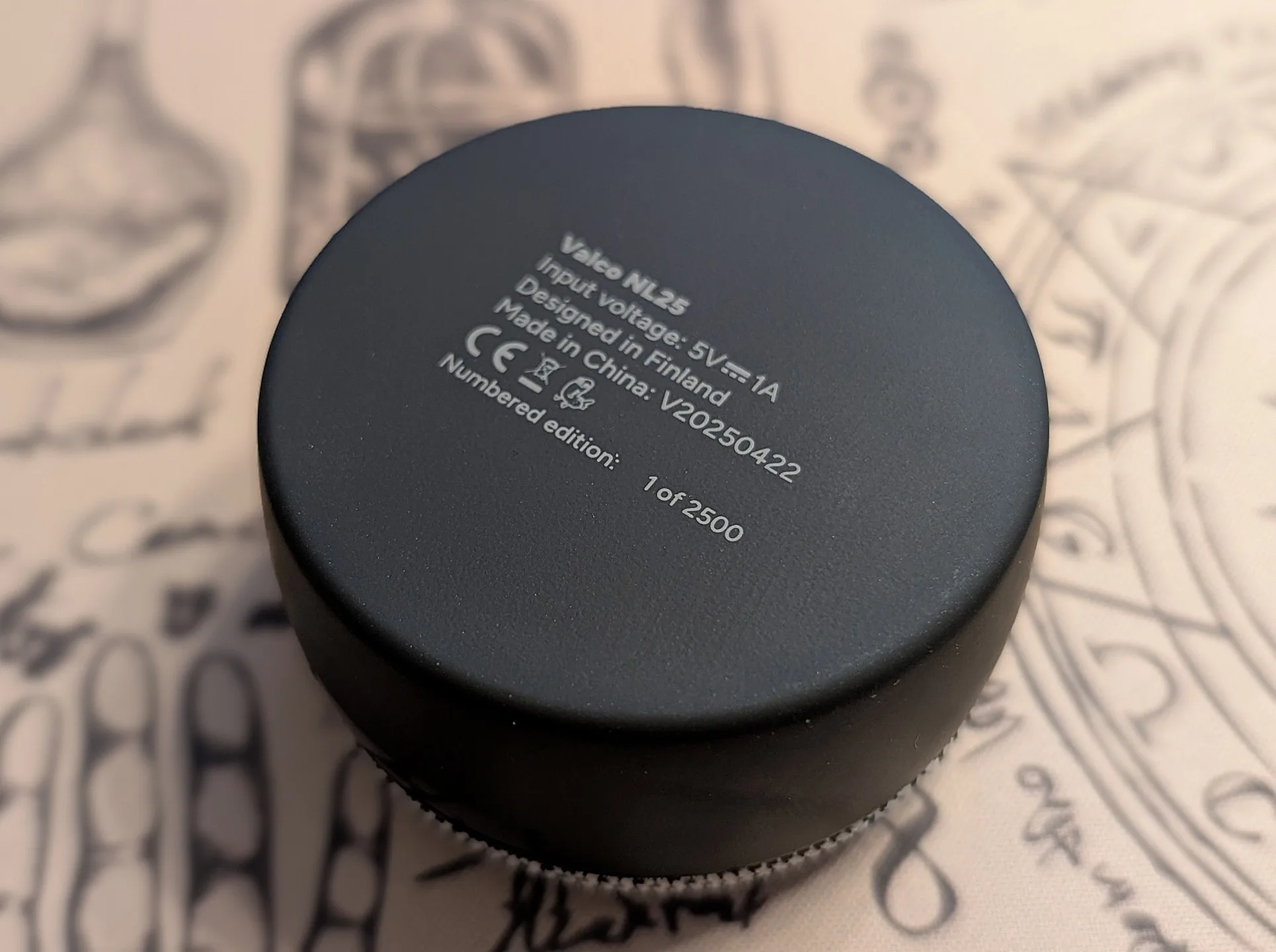
The manufacturer has made the headphone charging case disc-shaped, so it resembles, for example, a snus can or all kinds of nicotine products. Since I don't use such things myself, the corresponding bulge of the case in my trouser pocket feels a bit wrong for some reason. However, despite its slight thickness, the case is sufficiently handy for carrying around. I also like its fabric-covered lid, even though it will probably get a bit dirty over time due to its light grey color. The row of LEDs on the front edge indicates the remaining charge level of the case's battery, provided a small button on the back is pressed first or the case is put to charge. The USB-C charging connector is also located on the back edge of the case. I found the earbuds to stay firmly in the case, even if I shook it vigorously upside down with the lid open.
Instinctive feel and an ear for it
One of Valco's spearheads has always been the simplicity and straightforward user experience of its headphones. Since apps and difficult-to-understand extra features are absent, getting started is easy: headphones on your ears, or in this case, in your ears, and then just listen.
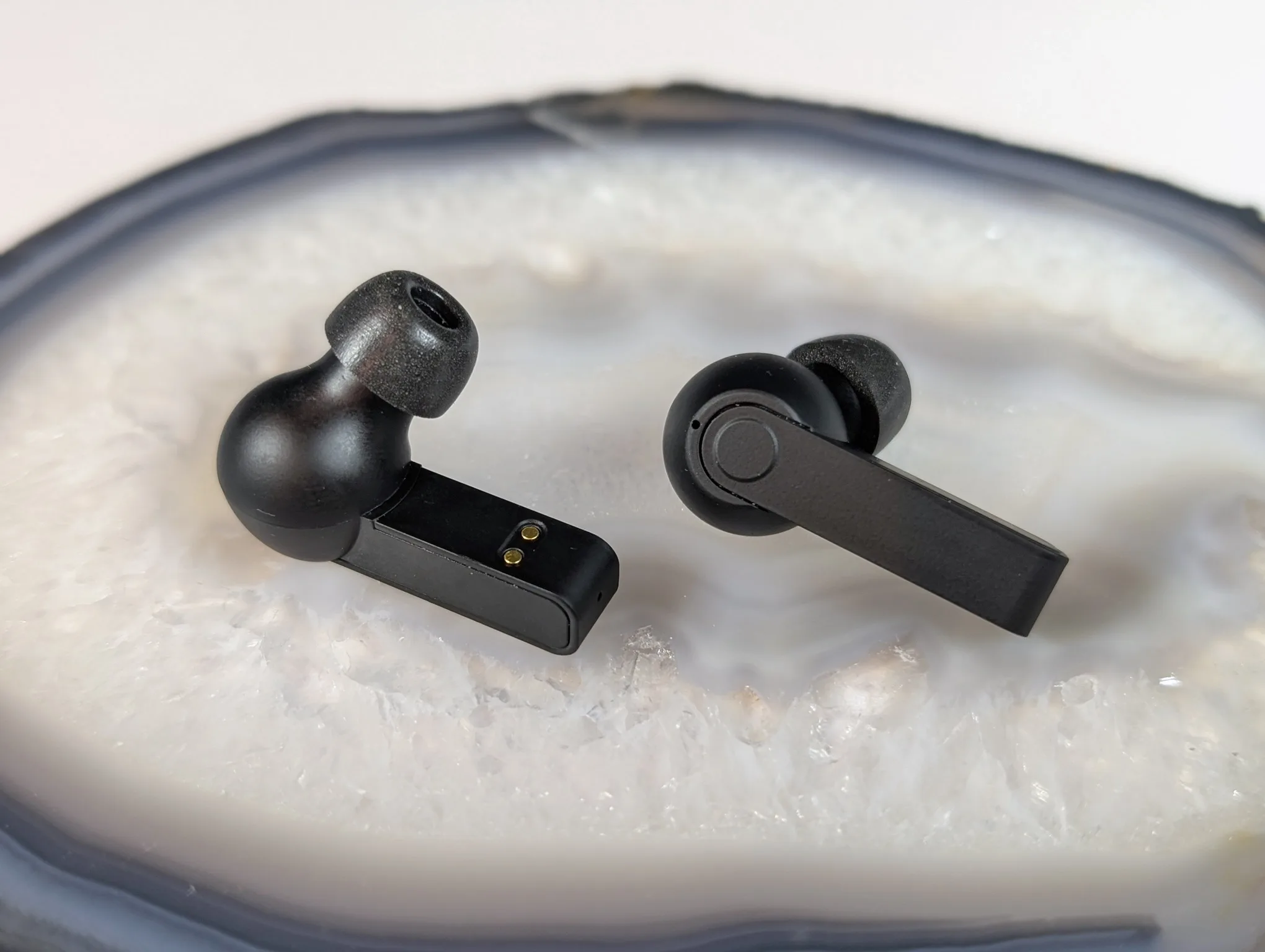
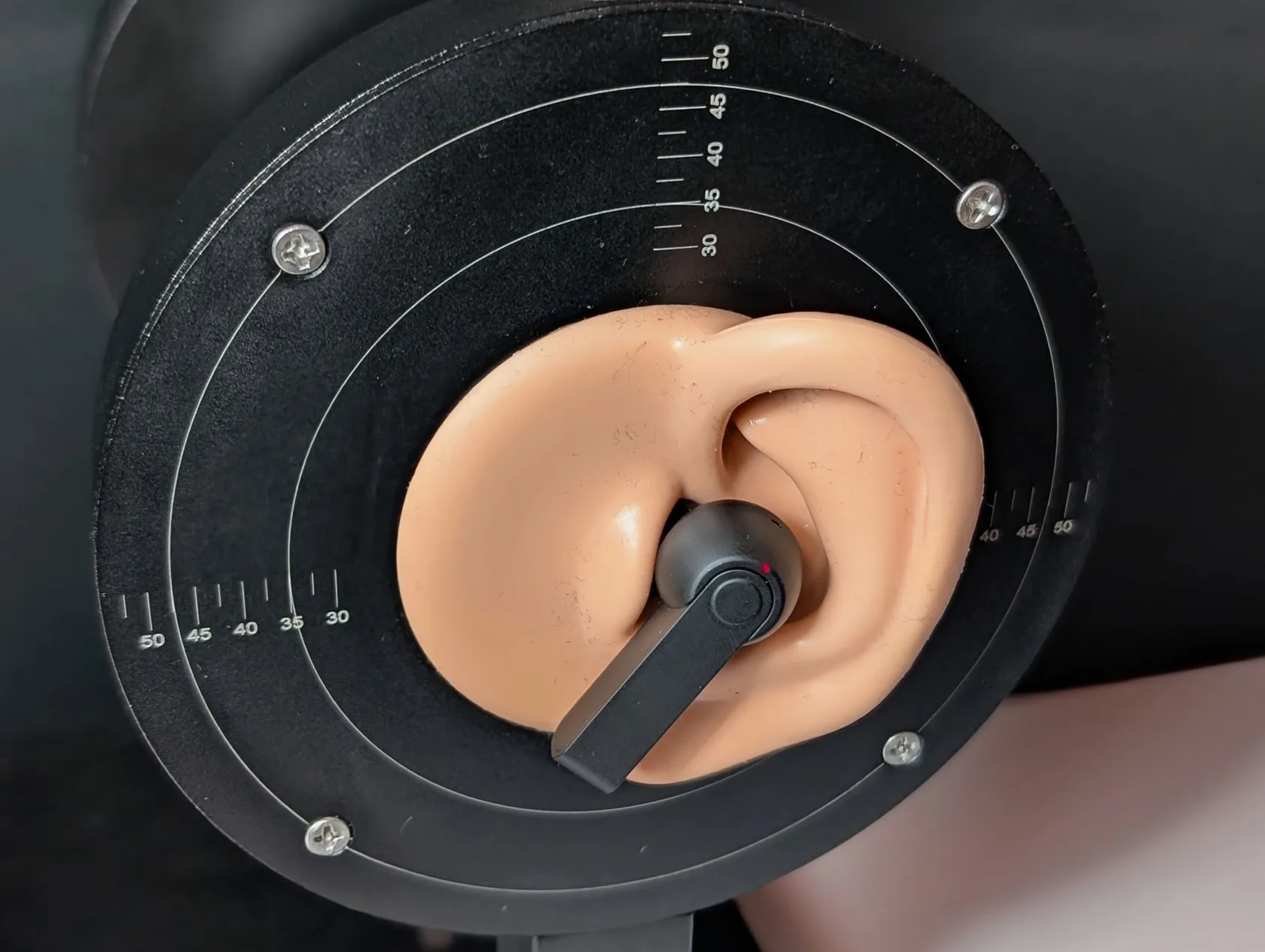
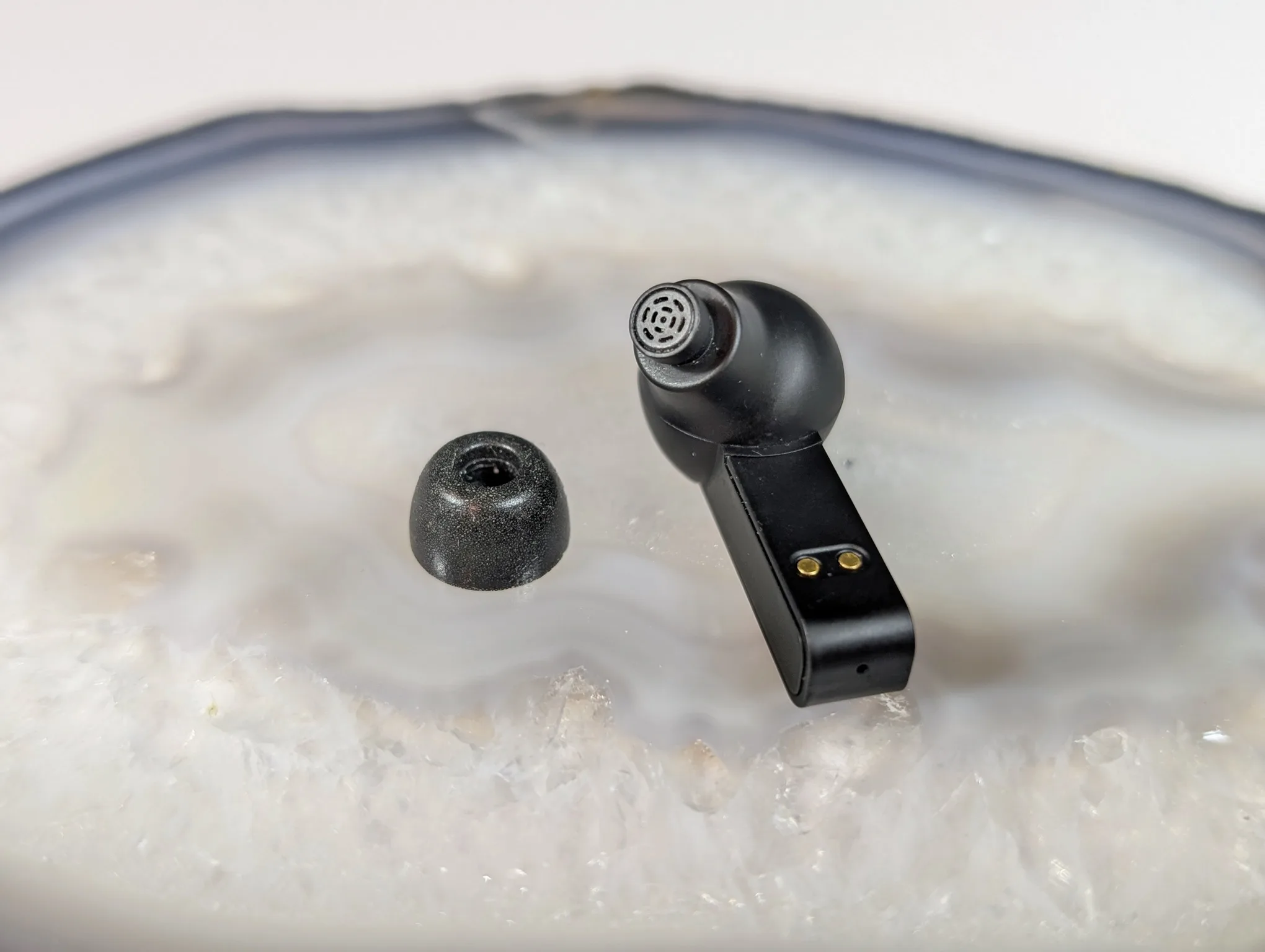
The all-black NL25 looks like a fairly conventional wireless in-ear headphone, although Valco has made the stick-like stem part thicker and more angular than usual. The earbuds are thus not the most slender, but on the other hand, thanks to their successful design, they don't feel uncomfortable, at least for me. The NL25 is only in contact with my ear canal, so when properly positioned, I believe the wearing comfort should be good for most. On the other hand, the body does not hold the earbuds in place in the ears, so choosing the right size tips/plugs is important.
I have found the rather robust size and square shape to facilitate handling of the earbuds, as they are easy to grip and do not roll from side to side on the table. Placing the NL25 in the ears is also pleasant because no touch functions have been built into the side of the stem part, which are usually almost impossible to avoid activating accidentally. Valco has instead placed a physical button on the top edge of each earbud. The division of functions between the two buttons works logically in my opinion, but the press feel is quite stiff, at least when new. When using the buttons, I always end up pushing the earbud deeper into my ear canal at the same time, which doesn't feel particularly comfortable. I hope the buttons will loosen up with use.
Some NL25 owners seem to have had challenges in choosing suitable ear tips, which may result in inadequate fit, noise cancellation functionality, and sound quality. Unfortunately, the silicone tips included in the sales package do not fit me properly either; the earbuds stay in place poorly, and the treble also sounds quite uneven. Additionally, a strong crackling sound can be heard either from the tips or the driver membranes when pressing the earbuds into the ear canal. In contrast, with the included foam tips, the fit is reasonably snug without extraneous noises, and the high frequencies also sound more natural. I recommend trying these if the user experience with silicone tips remains unsatisfactory. Of course, ear tips from other manufacturers could also be purchased for the headphones, but their suitability is also a bit of a gamble. It remains to be seen whether Valco can expand the range of tips included with the NL25 or sell slightly different options separately in the future.
Technology
The NL25 features modern electronics in the form of Bluetooth 5.4 and Qualcomm's programmable chipset. Codec support, on the other hand, is slightly limited, as AptX HD is missing between AptX Adaptive and AptX. Thus, most users will have to settle for basic AptX, which is only a small improvement over AAC and SBC. These acronyms may not mean anything to everyone, but in summary, the audio signal quality in the NL25 could be slightly higher by current standards. On the other hand, this should have little impact on the final sound quality; the headphones' frequency response still matters most.
The battery in the NL25 lasts 4.5 hours with noise cancellation on and about 6 hours without noise cancellation. With the charging case, the usage time increases to 17 hours according to Valco, which I consider sufficient, as I don't know much better.
Valco has not developed a mobile app for its headphones, but I can't really think of a greater need for one, apart from an equalizer. Other apps are available for sound adjustment if needed, although unfortunately, I couldn't get the free Wavelet app to work with the Tidal & NL25 combination. Equalization with USB Audio Player Pro, however, was successful, but the app costs about 9 euros.
Less traffic noise
The NL25”s noise cancellation function is based on technology included in Qualcomm's chipset, which is probably why noise cancellation was included in the product at all towards the end of its development cycle. The headphones support both noise reduction and ”hearing" it, more commonly known as transparency mode. Since wind causes some rustling and gurgling when hitting the microphones, it's advisable to switch off noise cancellation in stronger gusts and especially when cycling.
My experience with the noise cancellation capabilities of in-ear headphones is mainly limited to Moondrop's two affordable Space Travel headphone models, so I cannot say in this context how the NL25 would compare to, for example, Sony and Apple headphones. Compared to Moondrop's headphones, however, the attenuation performance is quite similar, meaning the NL25 primarily attenuates low frequencies. Thus, for example, the low-frequency rumble of a train, bus, and airplane calms down, whereas the headphones do not attenuate restless cafe-type noise or human speech very much, which I did not expect anyway. Even on the train, I noticed listening to the NL25 quite loudly because the attenuation performance is not top-notch.
I also compared the NL25 to Valco's own VMK25, finding the over-ear model to be a better noise canceller, albeit accompanied by stronger background hiss, as the NL25 hardly hisses at all. Not everyone wants to use larger headphones, of course, so noise-cancelling earbuds are a good alternative for them. The transparency mode in the NL25 works well without significant hissing, but I wouldn't call the result the clearest, as certain frequencies are still attenuated.
The situation for small headphone manufacturers is somewhat harsh, as noise cancellation should be offered, but then it is easily criticized for being ineffective. I would not want to do this with the NL25; instead, I consider it important that the noise cancellation function is included in the product at all. Without a development budget of millions of euros, it is completely natural for Valco to invest more in other areas.
Tool for speaking
I tested the microphone sound quality quite quickly and found it to be very good in a quiet environment. My speech sounded clear and natural. On the other hand, when adding a small airflow and background noise to the equation, I could no longer make myself properly understood and would have had to raise my voice more. This situation is hardly exceptional, as, for example, the Moondrop Space Travel 2 behaves quite similarly.
Towards the sound
This time too, Jasse Kesti is responsible for tuning the sound quality of Valco's headphones, favoring a rather neutral and studio-like sound profile. Therefore, it is likely that the NL25 aims for a fairly similar presentation to the VMK25. In Valco's own words, the earbuds should offer ”absolutely Jesus-good sound quality.” On a more technical level, both headphones feature two sound-producing drivers: a dynamic driver is responsible for low frequencies, while a balanced armature driver reproduces high frequencies. Such small drivers alone often would not be able to reproduce the entire frequency range optimally, so there are clear reasons for a hybrid solution when the goal is to make the headphones as good as possible.
Measurements
The headphones' frequency response has been measured with equipment compliant with the IEC711 standard (inner ear + microphone). In the case of in-ear headphones, Harman's scientific research remained partly incomplete, so the 2019 in-ear target curve has not achieved as established a position as the 2018 over-ear target curve due to its rather aggressive high frequencies. Despite this, I use it as a reference in the graphs, because otherwise, I would have to choose another target curve based on entirely subjective premises. So, let's keep the reference as objective as possible, but remember that in-ear headphones are not necessarily desirable to sound quite as bass-heavy and energetic as the Harman 2019 curve suggests.
Measured with my own equipment, the results for in-ear headphones are no longer completely accurate after 7 kilohertz; instead, a natural resonance forms around 8-9 kilohertz, flanked by dips in the frequency response on both sides. Thus, the headphones do not actually reproduce sound in this way, but the steepness of these features can still indicate whether there are more or fewer high frequencies compared to other headphone models.
Frequency Response (ANC ON & ANC OFF):
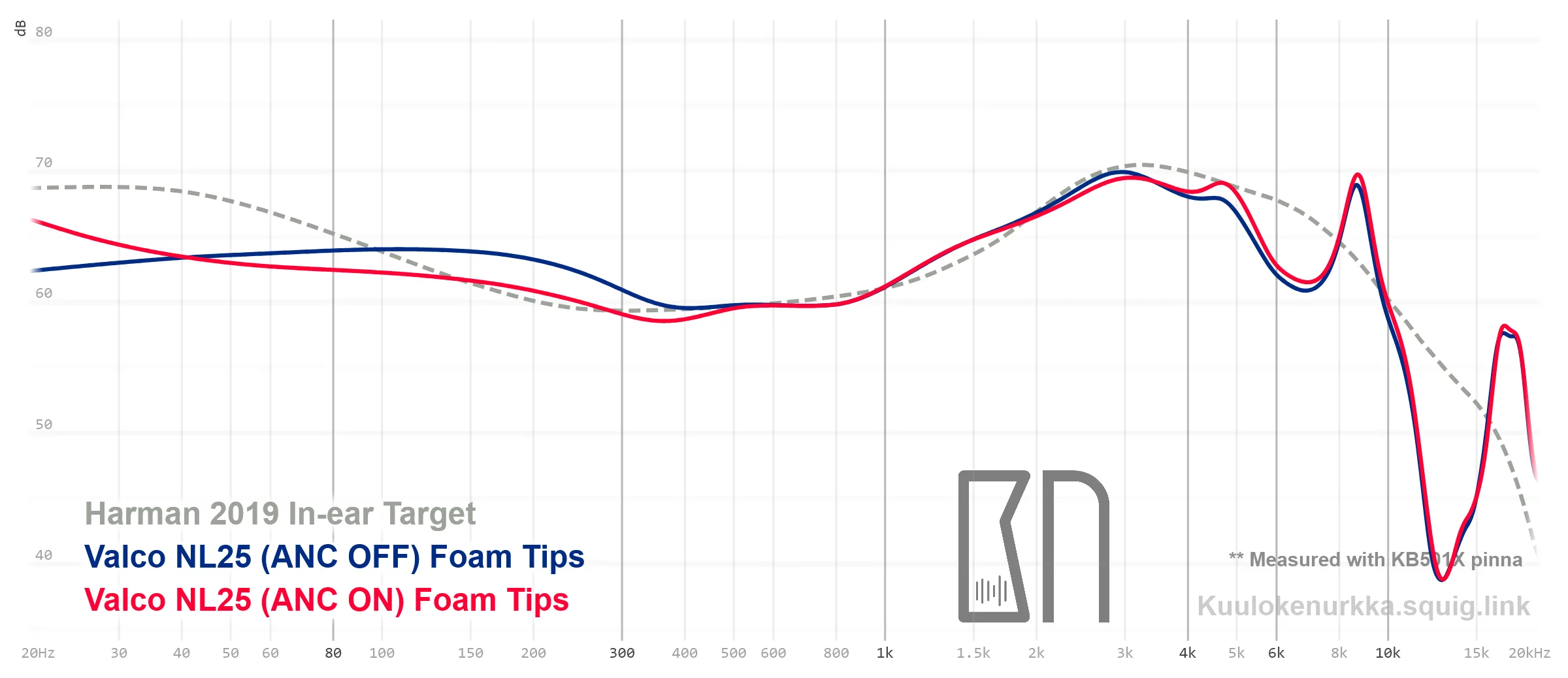
The NL25's frequency response changes slightly when noise cancellation is switched off, but mainly below 400 hertz. Without noise cancellation, the reproduction is fuller at the expense of clarity. With noise cancellation on, a relatively neutral bass combines with high frequencies that follow the Harman 2019 curve. With a slightly rising sub-bass, it is in a way a gentle V-curve, but the emphasis is between 3–8 kilohertz rather than on the bass. The highest treble (10 kHz+), in turn, is reproduced more subdued than usual, based on the fact that a dip of this magnitude does not usually form around 13 kilohertz.
More airy treble with Comply STX-500 tips:
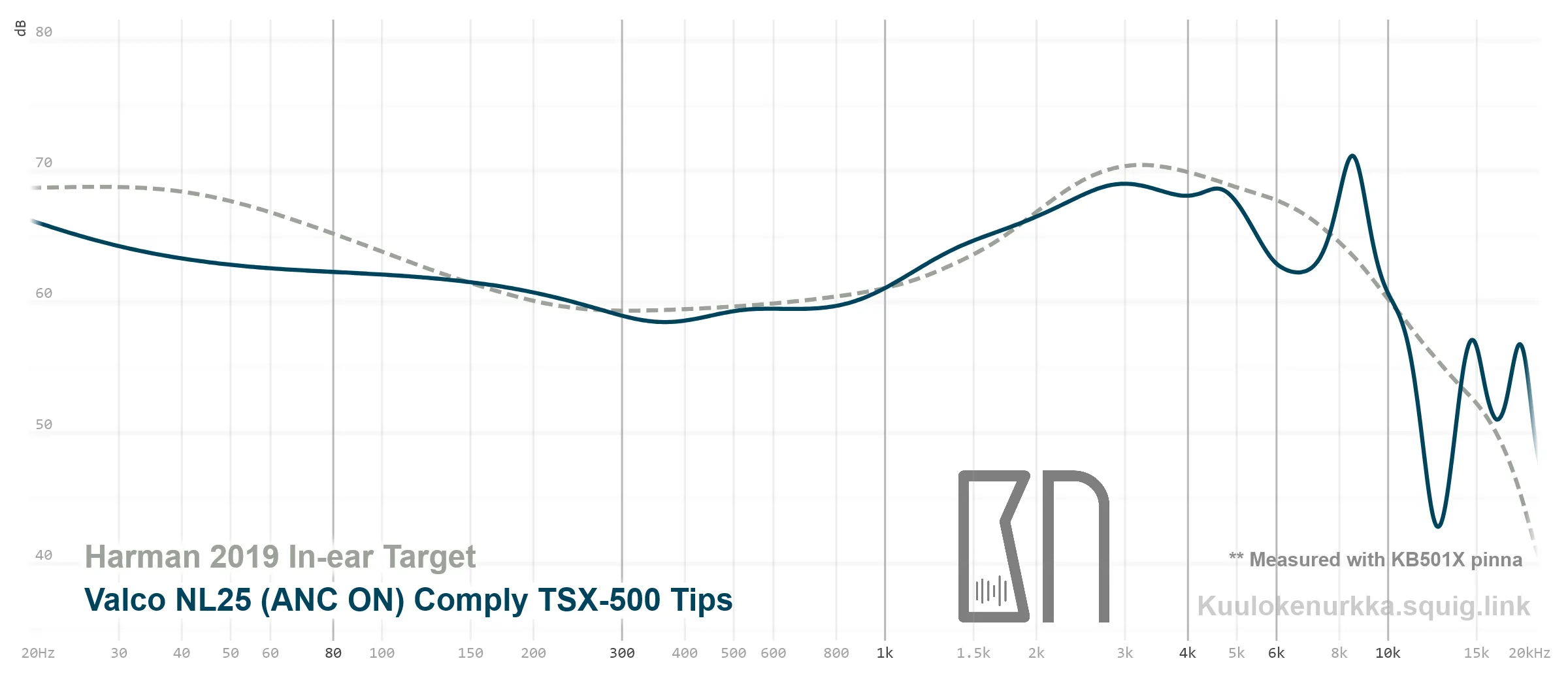
The Comply TSX-500 foam tips I found in my box fit the NL25 well, as they reproduce the 10–20 kilohertz range more evenly than Valco's own tips. On the other hand, the treble also intensifies between 7–10 kilohertz, which may not be desirable. When using these tips, the earbuds also no longer fit properly into their case, so I cannot recommend them for permanent use. Perhaps someone can find similar tips that are a bit flatter?
Repetition not far from neutral
The NL25's "jesus good" sound quality translates to clear and relatively neutral reproduction, where the vocalist and the energy of most instruments come to the forefront. Bass has not been forgotten either, but it is not really boosted at all compared to how music would likely sound when leaving the studio for the world. The matter is thus kept clearly better under control than in many consumer-type headphones, whose bass always rumbles with pompous bloat. However, those who like such a bass-heavy presentation might not necessarily like the NL25, at least not without a little getting used to it. Turning off the noise cancellation slightly solidifies the reproduction, but the difference is not ultimately huge.
I personally like the tightness and clarity of the headphones' low frequencies and, overall, the fact that instead of soft upper bass, there is so-called real bass, i.e., sub-bass. At the same time, however, I have to slightly criticize the NL25 for sounding, for example, on a train, a bit too light and treble-heavy for my taste to be enjoyable to listen to. In my opinion, the tuning should rise a couple of decibels more from 100 hertz towards 20 hertz, or the treble should be slightly calmer, so that the reproduction would be more balanced than it currently is in a noisy environment. On the other hand, when listening in peace, I understand why the NL25 is exactly as it is.
It reproduces sound energetically, clearly bringing out the details of different instruments and soundstage localization cues. Music thus plays realistically, and the NL25 does not take anything important away from it. The bass also kicks sufficiently when ambient noise does not ”lighten” it. I also consider the headphones' high frequencies quite successful, considering Valco's chosen style, because the sound is fresh but not fatiguing. Achieving such a good result naturally required suitable ear tips, as for me, the treble sounded more uneven with silicone tips. The sound of in-ear headphones generally varies from user to user based on the shape and depth of the ear canal, so unfortunately, I cannot know how the NL25 performs in someone else's ears.
Critically speaking, there could still be a little room for improvement in the relationship between bass and high frequencies. Since the latter reproduce almost according to the Harman 2019 curve, the situation is usually balanced with a more robust sub-bass than in the NL25. Its high frequencies even sound unnecessarily strongly emphasized to me between 3–8 kilohertz. Vocal performances occasionally feel slightly aggressive, and additionally, for example, electric guitars and the attack sounds of percussion instruments have an artificial harshness. The end result, in terms of energy charge, is somewhat harder and more forced compared to what I would consider completely natural. However, I noticed this resolved by equalizing the aforementioned 3–8 kilohertz range down by about 1.5 decibels. On the other hand, for some, the energy is certainly just right, and the NL25 is not far from optimal reproduction overall, so with its default settings, it still sounds very good to me.
Often, such a quite energetic treble could be somewhat fatiguing to listen to, but fortunately, I don't perceive excessive aggressiveness in the NL25. Rather, its high frequencies reproduce relatively relaxed, which I believe is due to attenuated airiness and brightness above 10 kilohertz. Because of this, the sound tends to feel slightly compressed, but since this characteristic is, to my knowledge, quite common in wireless earbuds, I cannot criticize the NL25 too much for it. I ultimately prefer the ”easy” treble of Valco's headphones over a glaringly bright reproduction. If someone desires more airiness in the sound, I accidentally noticed that Comply TSX-500 tips boost the highest treble. This made the sound somewhat more spacious and even more detailed.
I did manage to find some critical things to say about the headphones, but it's easy to pick on a few small nuances precisely because the NL25 sounds good in principle, and there would be no need to criticize it for the same things as many manufacturers larger than Valco. If someone is tired of overemphasized bass, the NL25 offers an escape. It sounds excellently ”flat” without coloring the music much in one direction or another. If this feels like your thing, in my opinion, you can't go far wrong with the NL25. On the other hand, the headphones are not optimally suited for the noisiest environments, as such neutral tuning could benefit from a slightly more effective noise cancellation function.
Comparison: Valco NL25 vs. Moondrop Space Travel 2
Prices: 169 € vs. 20–30 €
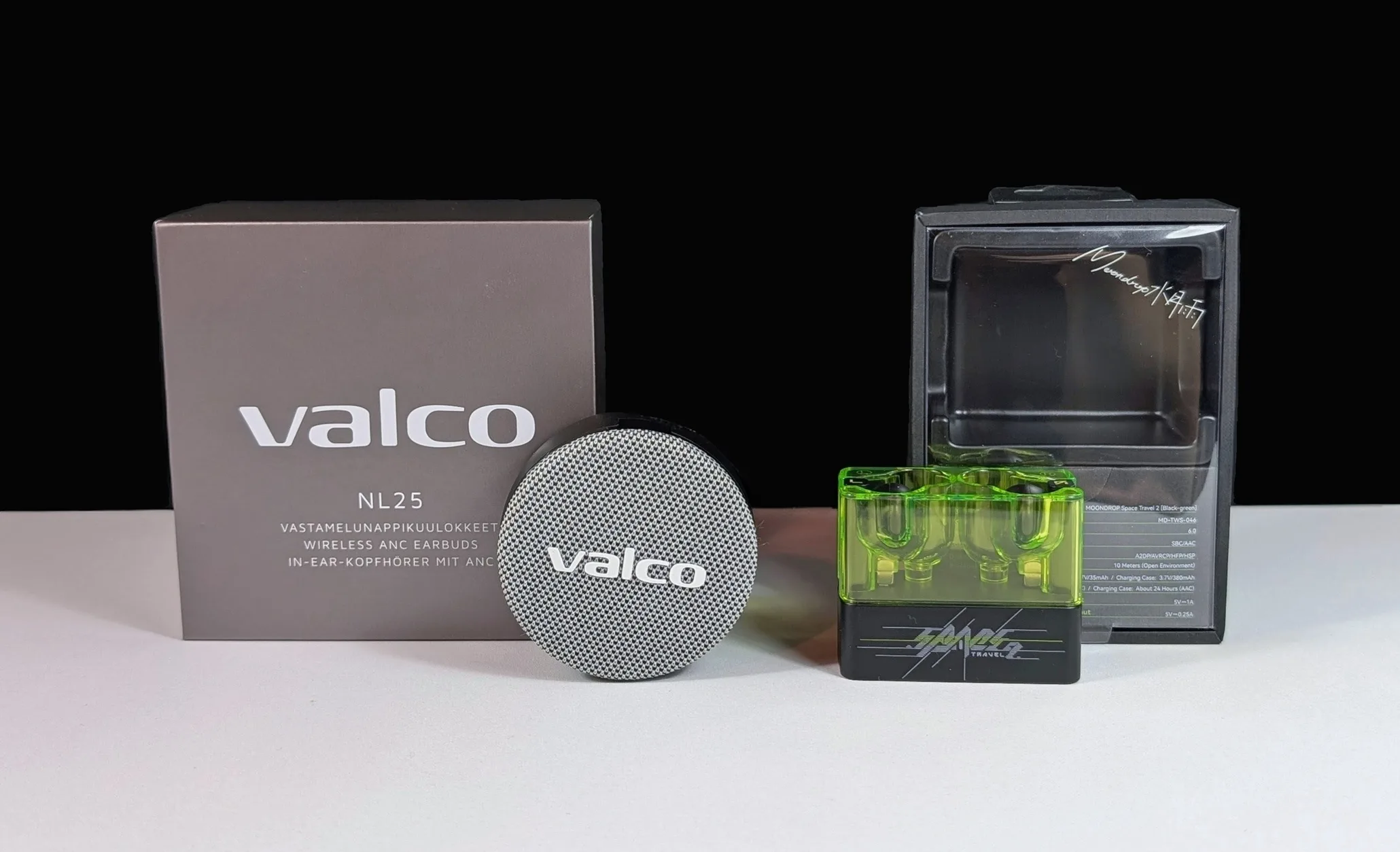
To ensure my review doesn't remain completely detached from other manufacturers” products, I chose a kind of market disruptor as a comparison. While Valco offers ”The best headphones you can afford" for 169 euros, the Chinese Moondrop sells more versatile in features Space Travel 2 -noise-cancelling earbuds for under 30 euros. At this price, they are likely designed to be sold in huge quantities, so the margin on a single sold product can be very small, especially as part of a wider headphone selection. I also recommend considering the similarly priced Space Travel 1 and the approximately 10 euros more expensive Space Travel 2 Ultra, which includes planar drivers and LDAC support.
As for its case, the Space Travel 2 is quite silly, because the earbuds remain half exposed and are held in place only by magnets. Shaking the case upside down might cause the earbuds to fall out, and even if not, the case will at least fill with dust and dirt. Moondrop does, of course, sell a separate cover for its case, but the package is a bit clumsy in terms of usability. Still, there isn't a huge size difference compared to Valco's puck-like case, so both would fit in a pocket in much the same way, for example.
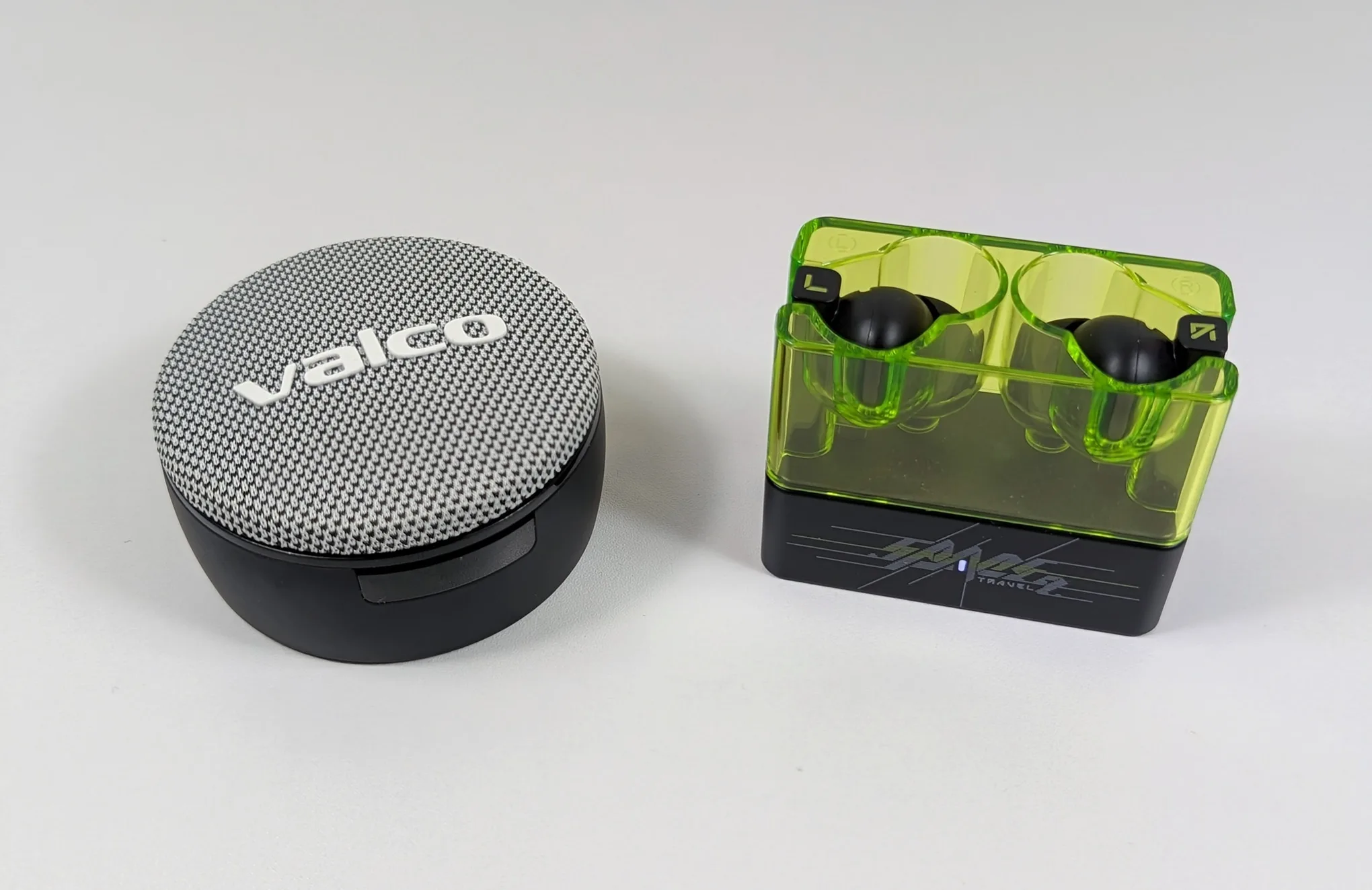
In terms of design, both headphones are quite similar with their square stem, although Moondrop's earbuds are more slender. I find the Space Travel 2 to fit my ears faster and more effortlessly than the NL25, so Moondrop's longer experience in earbud design stands out to its advantage in my case. On the other hand, the Space Travel 2 is controlled by touch gestures (half the time accidentally), so the NL25's physical buttons bring a clear improvement in usability. Regarding voice notifications, Moondrop's cute little girl-imitating anime voice is a perfect contrast to Valco's deep male voice – whichever of these is the better option.
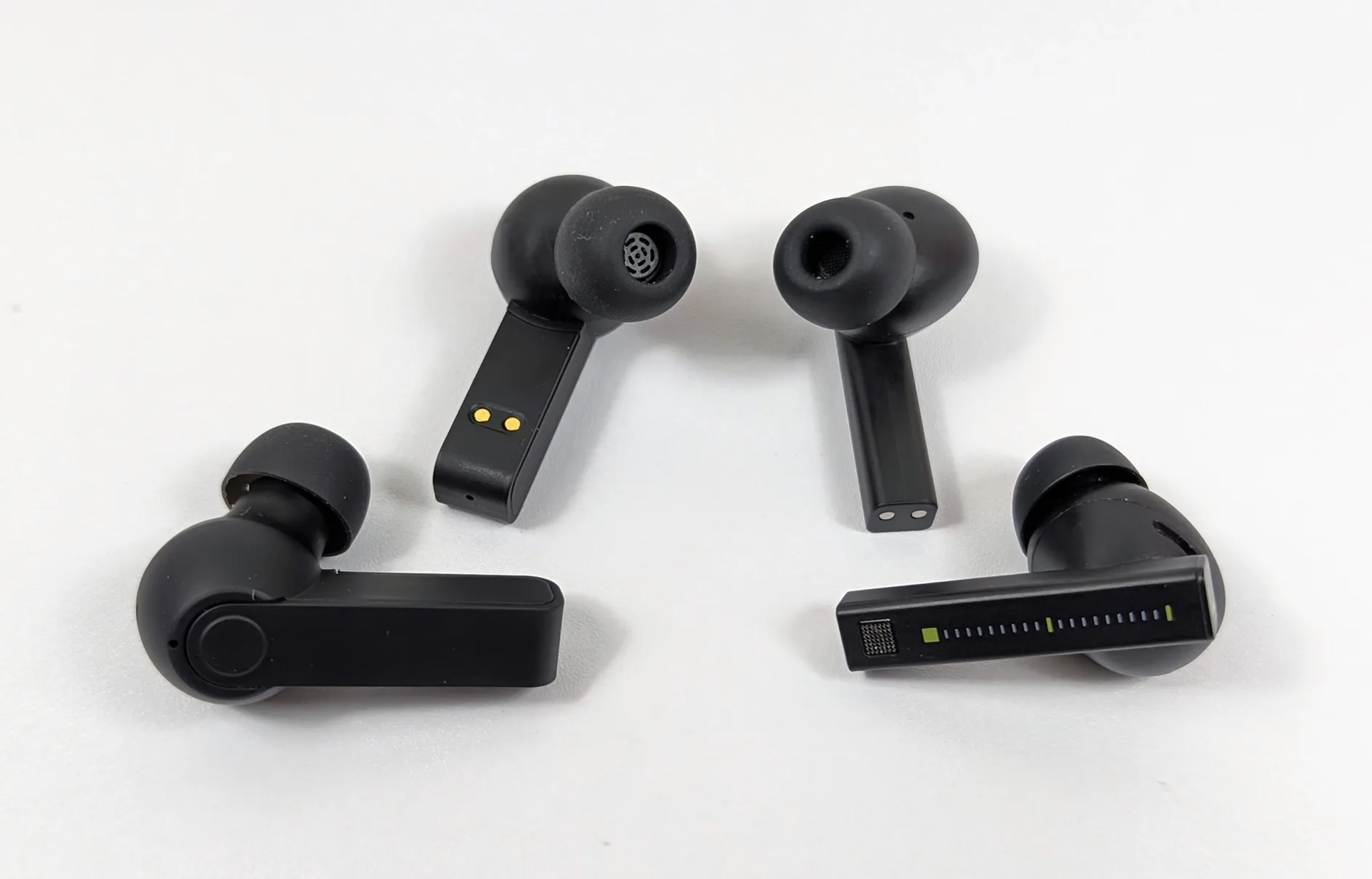
Moondrop's headphones support the latest Bluetooth 6.0, but Valco's headphones surpass them in codec support with their AptX options. Space Travel only supports AAC and SBC, unless a slightly more expensive Ultra version with LDAC support is purchased. In terms of advertised battery life, Moondrop has a slight edge, as its earbuds promise 7 hours of use (Valco 4.5 h) and 24 hours with the charging case (Valco 17 h). Although the former figure might be achieved with noise cancellation off, the usage time would still seem somewhat longer than the NL25. Valco's case also needs to be charged a couple of days earlier with regular use, which, of course, is not of major significance.
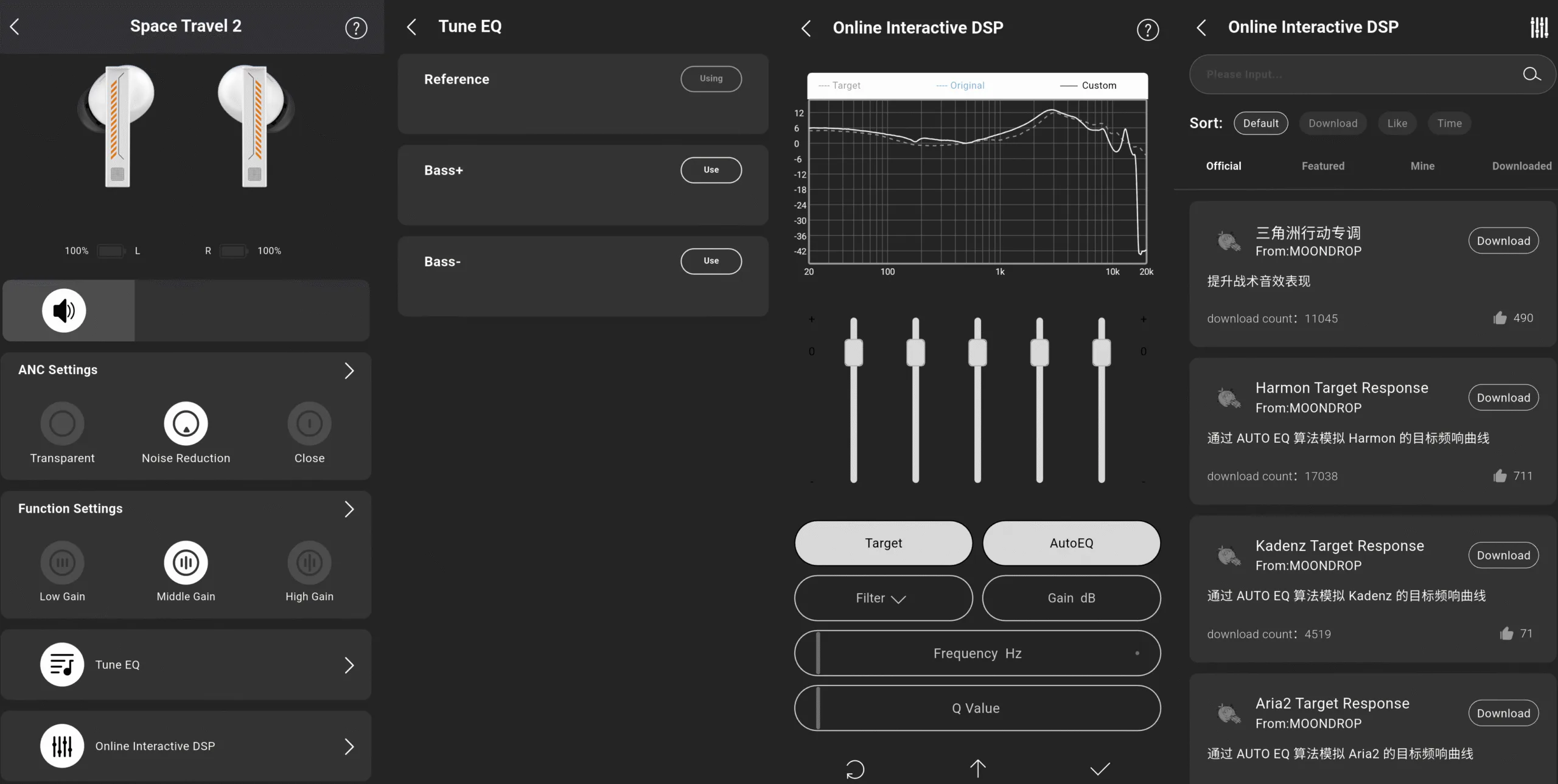
Despite its significantly more affordable price, the Space Travel 2 has a mobile application that includes, in addition to a few adjustments, a couple of sound profiles that change the amount of bass (Bass+ and Bass-) as well as a handy parametric equalizer. The sound can be adjusted automatically by selecting a target curve or another headphone model from the list. The application also displays the changes in the form of a frequency response and allows sharing profiles among users. Alternatively, the equalizer can also be used manually, allowing the Space Travel 2 to transform into almost anything in skilled hands. Considering Valco's target audience, such a tool might be partly wasted on the NL25, but the Space Travel 2 certainly feels like a more versatile product with its application.
Regarding the noise cancellation function, Moondrop's earbuds hiss a bit more with both noise cancellation and transparency mode on, but they attenuate noise comparably to the NL25. However, due to the different character of the remaining noise, one or the other might be better depending on the situation; for example, a desk fan: the whoosh of the airflow is more prominent with the Space Travel 2, while with the NL25, the motor's hum and rattle remain more audible. A similar difference is also observed when listening to noise imitating airplane travel. However, when playing music, the duo no longer differs significantly from each other.
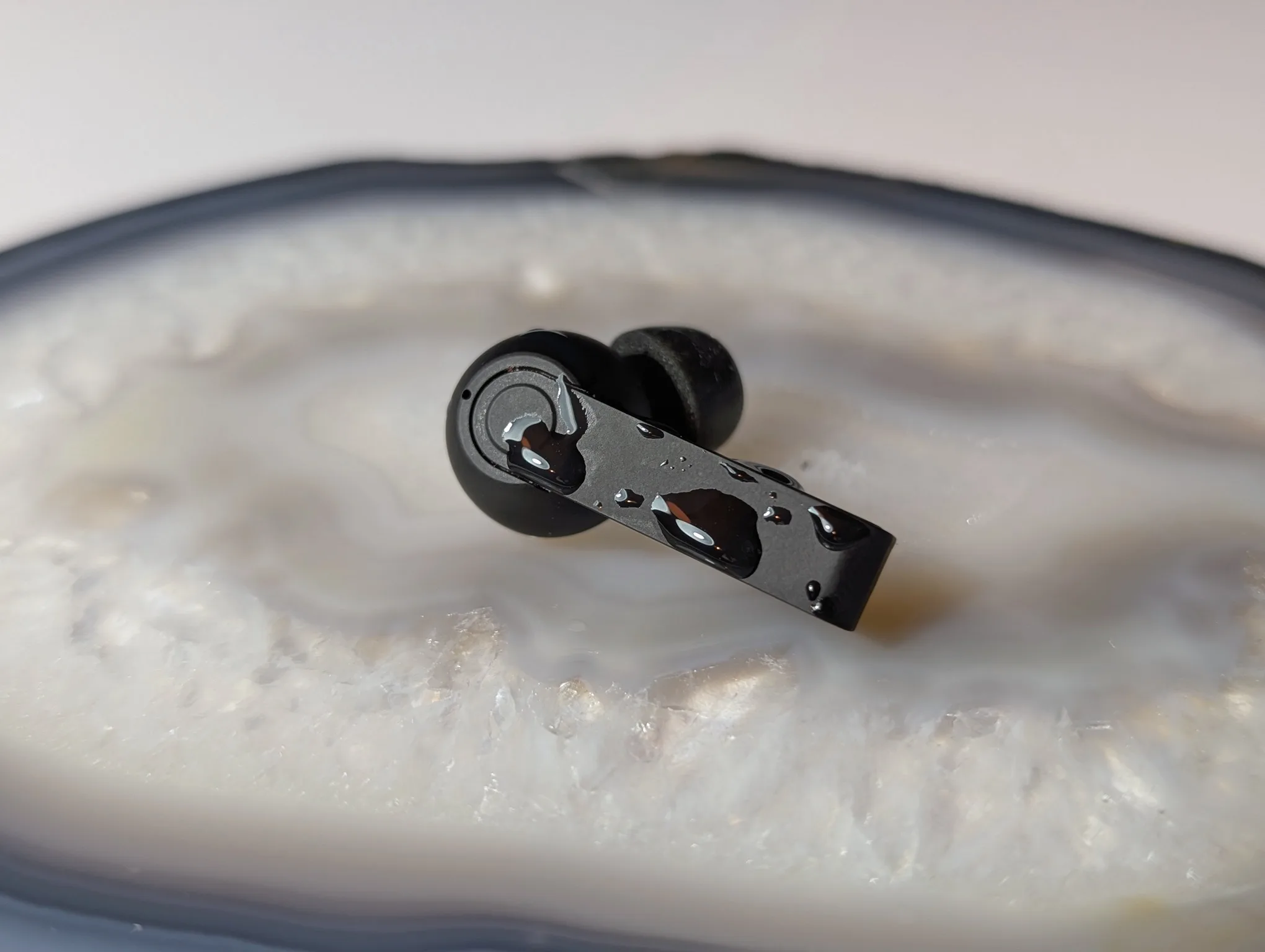
I also did not observe a significant difference in transparency modes, but wind causes more prominent interference sounds with the Space Travel 2. Thus, Valco's headphones would be better of the two for outdoor use, which is also supported by their IPX4 splash protection. As for microphone sound quality, the NL25 produces clearer and more natural sound when speaking in a quiet environment, whereas in the midst of noise, both headphones leave something to be desired.
Frequency responses:
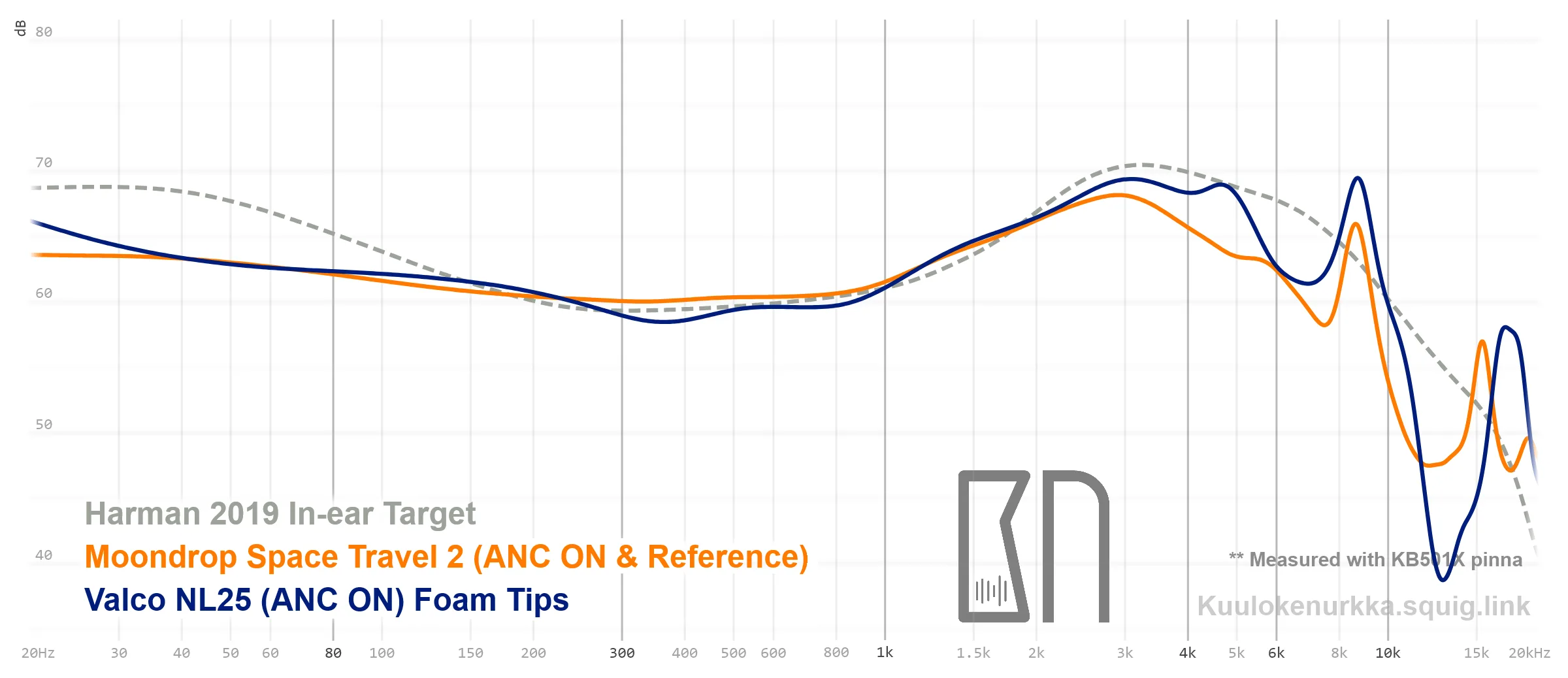
NL25 and Space Travel 2 are quite similar headphones, apart from the energy level of their high frequencies, in their pursuit of a neutral listening experience instead of the Harman in-ear curve. Neither offers an excessive amount of bass; instead, their low frequencies are tuned almost identically, with the exception of Space Travel 2's slightly fuller mid-frequencies (300–1000 Hz). Of the two, the NL25 sounds brighter and more energetic, while the Space Travel 2 reproduces the 3–10 kilohertz range more calmly throughout, making its overall sound more relaxed and robust. I perceive more warmth, and the Space Travel 2 also does not exhibit the same high-frequency harshness as Valco's headphones. Since the upper half above 10 kilohertz also reproduces a bit more airily with the Space Travel 2, the end result is also more cohesive in that regard and closer to the over-ear headphones I perceive as natural.
I find the sound of Moondrop's headphones slightly more pleasant, whereas the NL25's added energy enhances the detail of the reproduction and a certain bite to instruments, making music analysis easier. Perhaps for this very reason, Valco's headphones feel quite studio-like compared to the softer Space Travel 2. Due to the different approaches, I cannot say which headphone model consumers will ultimately prefer more, but neither of them actively courts large masses of people whose expectations might include more bass. For the same reason, the duo I compared is also not optimally suited for noisy environments, although the Space Travel 2's Bass+ setting and equalizer would allow for fine-tuning the sound. I was finally able to adjust the NL25 with the USB Audio Player Pro application.
From Valco's perspective, it is not ideal that a competitor priced under 30 euros can be very comparable or even better in many aspects. On the other hand, not all affordable noise-cancelling earbuds are as good as the Moondrop Space Travel 2. Thus, Valco does not need to be overly concerned, as its target audience will likely still appreciate a more straightforward user experience, such as physical buttons and a better case. Moondrop's headphones are also not currently sold in Finland, so many may not necessarily order them from abroad.
Critically evaluated, the best affordable earbuds have become so good in recent years that it is difficult to beat them other than by investing more in construction, software, and noise cancellation. This, in turn, is not possible for many smaller manufacturers, so the competitive landscape is, in my opinion, tighter than with over-ear headphones, where the good sound quality of Valco's VMK25 model is still a stronger asset.
Summary
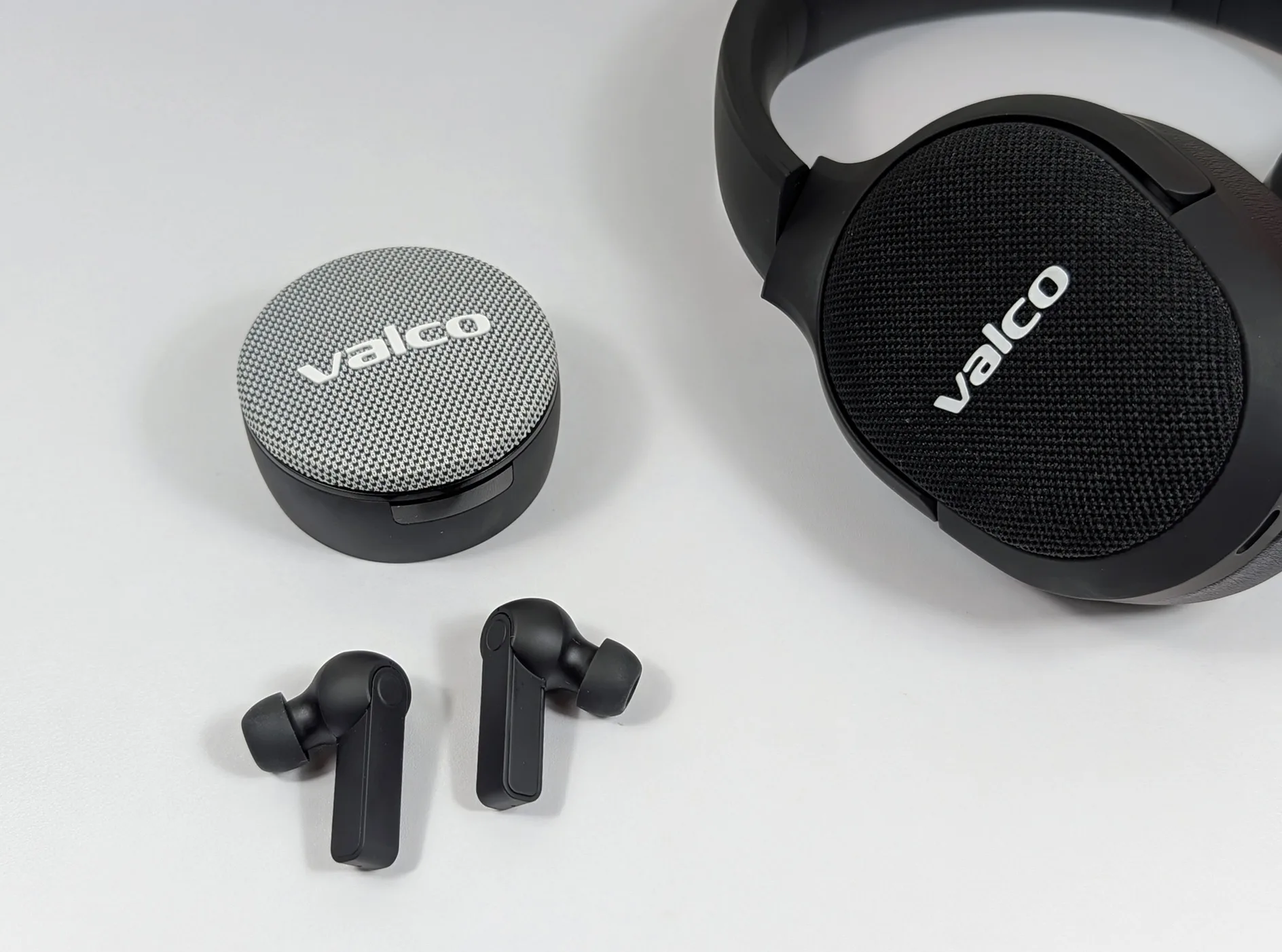
Although the Moondrop Space Travel 2 is hard to beat in terms of price-quality ratio, Valco's NL25 is also, in my opinion, a good noise-cancelling earbud. It is especially suitable for people who appreciate straightforwardness and neutral sound. The absence of a mobile application is not just a weakness, as it has motivated Valco to create a good product right away, instead of outsourcing the fine-tuning of sound quality to the end-user, as tends to happen with so many other manufacturers. I also give the NL25 points for usability, as it lacks annoying touch controls, and there is nothing to complain about with the charging case either. The earbuds are generally robustly built, and the buyer is rewarded with fair warranty terms.
I am, however, a bit more critical of the included ear tips, which may not be the best possible for the NL25 from a fit perspective. I cannot overly criticize a company the size of Valco for the slightly less effective noise cancellation function, but considering a noisier listening environment, I do not think the frequency balance is optimal. If the headphones are intended for regular use in various modes of transport and the desire is to hear robust bass, I do not think the NL25 is the best option for that. Instead, for those who appreciate neutral sound and musical detail, the headphones would be very good, provided listening takes place in a relatively quiet environment.
Although I have not tested noise-cancelling earbuds from major brands in the 100-300 euro price range, I dare say the NL25 performs favorably when clarity and balance of reproduction are set as the metric, i.e., when speaking of objective sound QUALITY. If, however, subjective experience is more important, Valco may still have to persuade consumers towards such a slightly tamer bass.
I myself belong to the NL25's target audience in terms of my preferences, especially since I wouldn't often need headphones for travel. On the other hand, if I had to choose between the NL25 and the VMK25 (new VMK25.2 instead a quite different headphone) between, I would favor the latter with a 30 euro price difference due to a slightly more effective noise cancellation function and sound that I experienced as more natural. I also recommend keeping Valco's other products in mind if the headphones don't necessarily have to be in-ear models. The main thing is probably that the manufacturer gets more money for building a death star and conquering galaxies. Good luck with this project!
Commercial cooperation
Explore Valco's selection and support Kuulokenurkka at the same time
What does this mean?
If you are planning to acquire Valco headphones and decide to place your order by proceeding to the manufacturer's website via the link above, Kuulokenurkka will receive a small commission from this. You are thus simultaneously supporting the construction of both Valco's death star and our headphone empire. Which one will be completed first?
NL25's pros and cons:
+ Clear and relatively neutral earbud playback
+ No annoying touch controls
+ Straightforward user experience
+ Sturdy headphone body
+ IPX4 splash protection
+ Fair warranty terms
+/- No mobile app or adjustment options
+/- Modern Bluetooth implementation, but slightly limited codec support
+/- Microphone sound quality is good in a quiet environment, but quite poor amidst noise and wind
– Bass could be a bit more for a noisy listening environment
– For me, a bit too much energy between 3-8 kilohertz
– The noise cancelling function is not very effective
– Small fitting challenges regarding the ear tips
– The price is challenging positioned between premium alternatives and clearly cheaper earbuds
 EN
EN  FI
FI