Author: Sword of Damocles
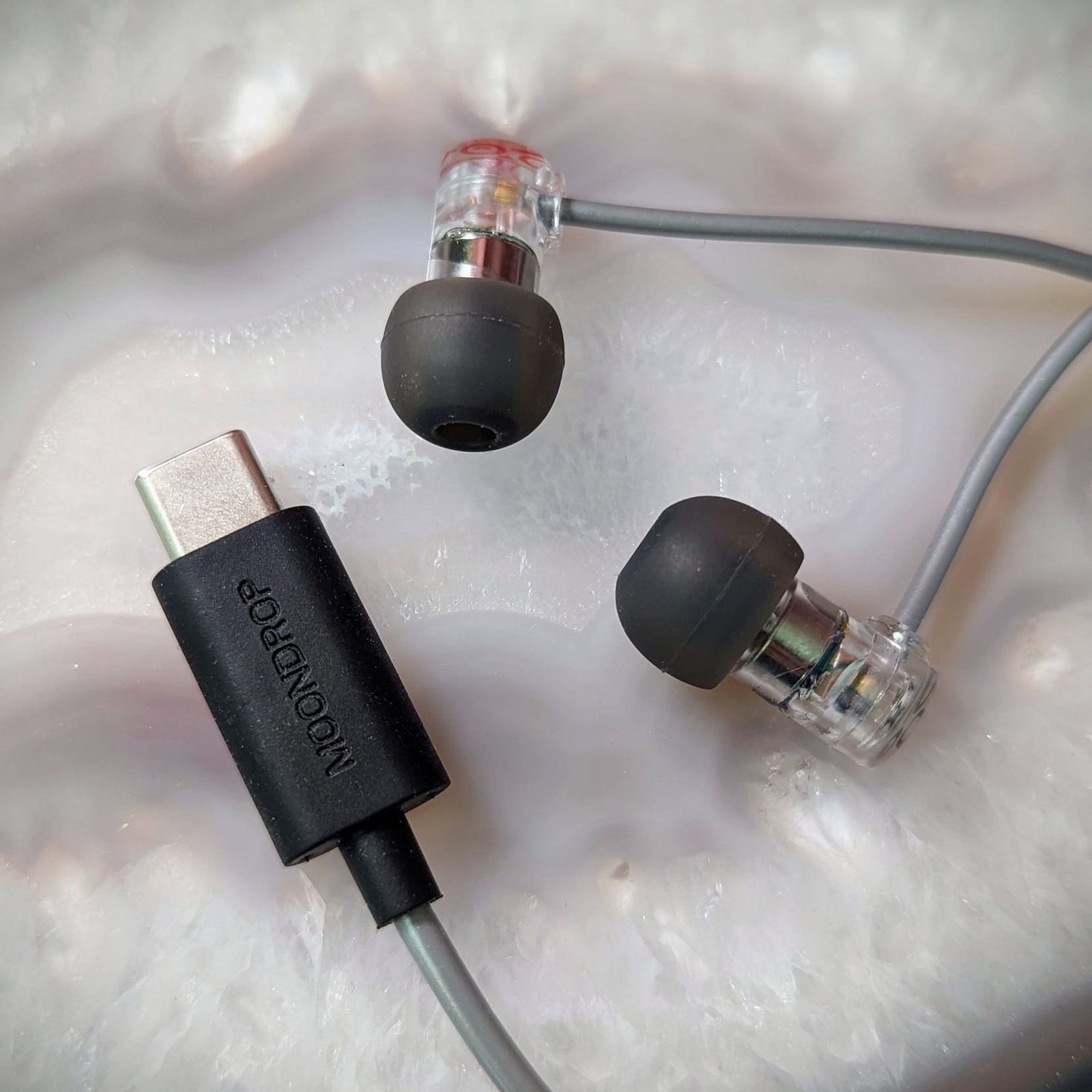
Table of Contents:
Information:
- Country of Origin: China
- Release year: 2022
- Price: 15 €
- Driver type: Dynamic 6 mm
- Impedance: 16 ohm
- Sensitivity: 113 dB/mW
- Fixed cable with USB-C connector (length 1.2 m)
- DSP correction
- Accessories: storage pouch and ear tips
Review sample: Self-purchased product
Moondrop is a widely known Chinese manufacturer of in-ear headphones, with many products in its range considered excellent in their price category. The manufacturer's headphones are regularly recommended and are constantly part of discussions, much like Hifiman's products in the case of over-ear headphones. Moondrop actually recently expanded its product range to include over-ear headphones with the release of the Void and Venus models (our review) release.
This time, however, we will stick to the manufacturer's in-ear headphones. My previously written comparison of three affordable headphone models included the 20-euro Chu model, but I want to introduce another affordable, quite unique, product from Moondrop. This is the 15-euro Quarks DSP, which has a fixed cable extended with a USB-C connector containing a D/A converter and amplifier. The headphones are designed to be easily used, for example, with a mobile phone.
The frequency response of the Quarks DSP has also been subjected to DSP correction (Digital Signal Processing) using internal electronics, which This is very exceptional in wired in-ear headphones, let alone an affordable product. However, it may hold the future of in-ear headphones, as digitally fine-tuning the sound offers new possibilities, especially in small-sized headphone models equipped with a single driver, which would otherwise be difficult to make reproduce the entire frequency range correctly.
Moondrop has already released the 25-euro Jiu model and the 50-euro The Droplet alongside the Quarks DSP, so I am quite sure that similar headphones will be seen from many other manufacturers in the future. The most important task of the Quarks DSP may therefore be to serve as an affordable opportunity to get acquainted with DSP technology and its functionality.
Product packaging
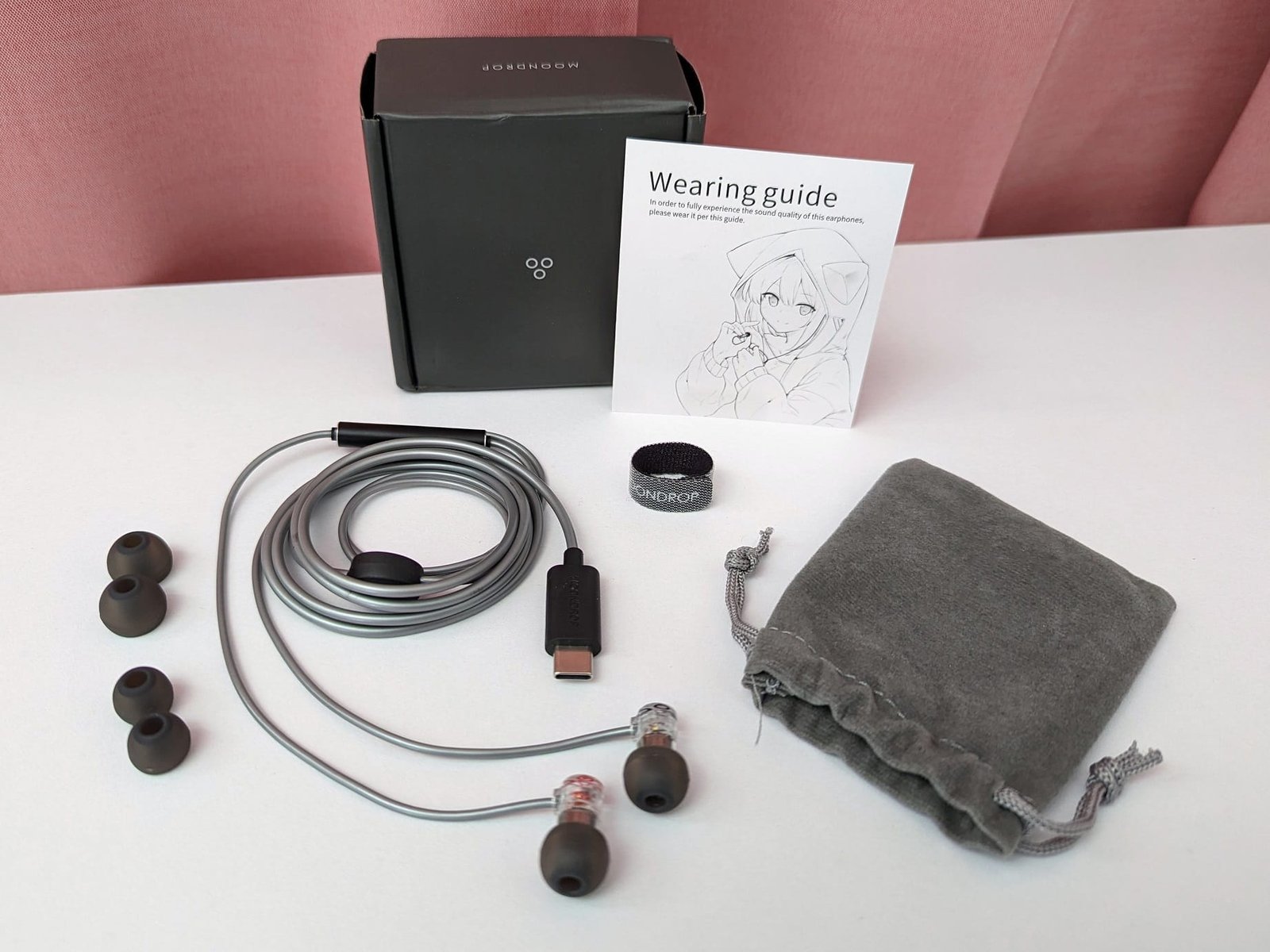
The headphones are delivered in a small grey box, which also contains a storage pouch, instruction sheets, and three different sizes of silicone ear tips. The presentation is acceptable for a 15-euro product, but there isn't much to say about it.
Physical structure
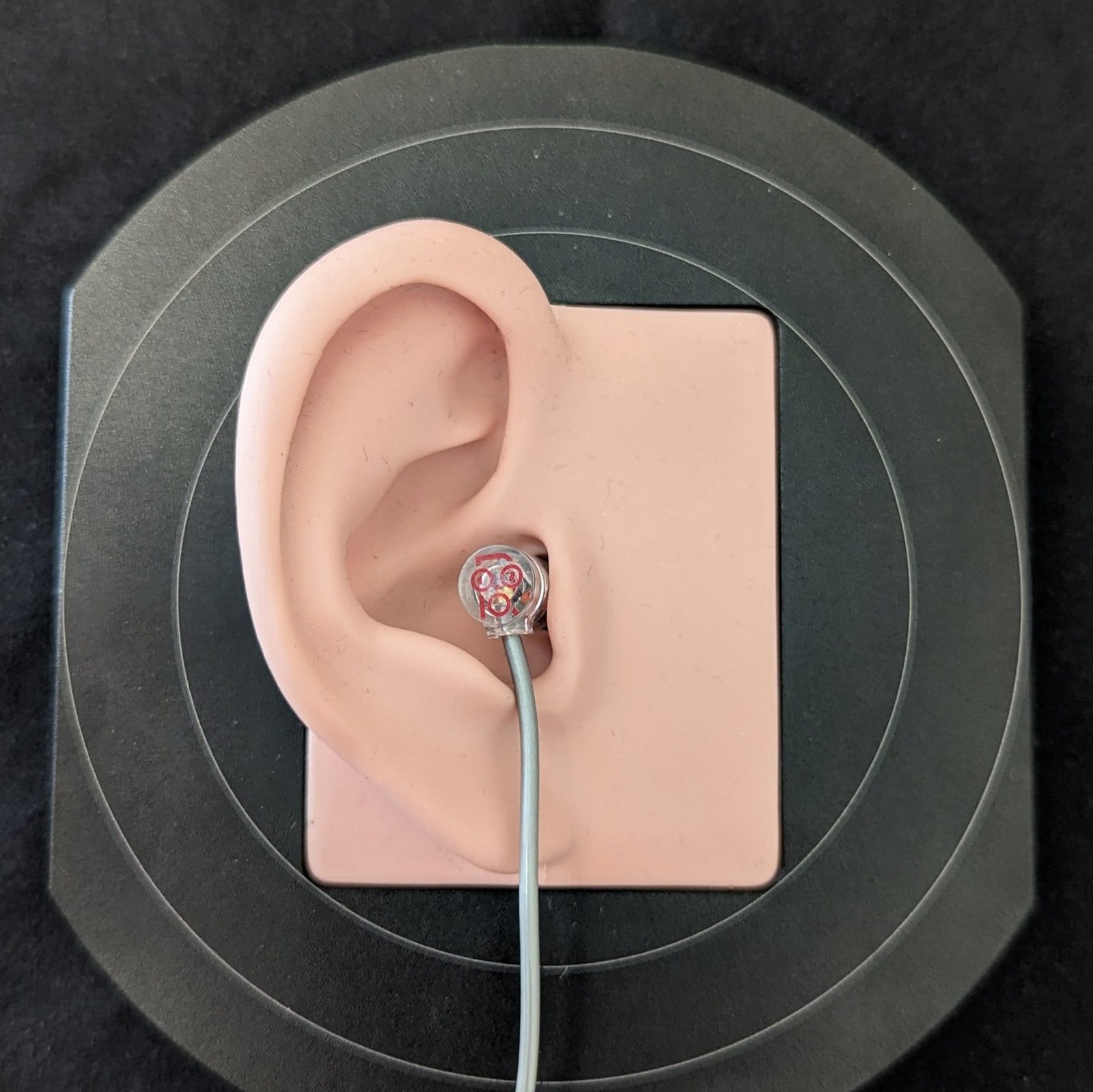
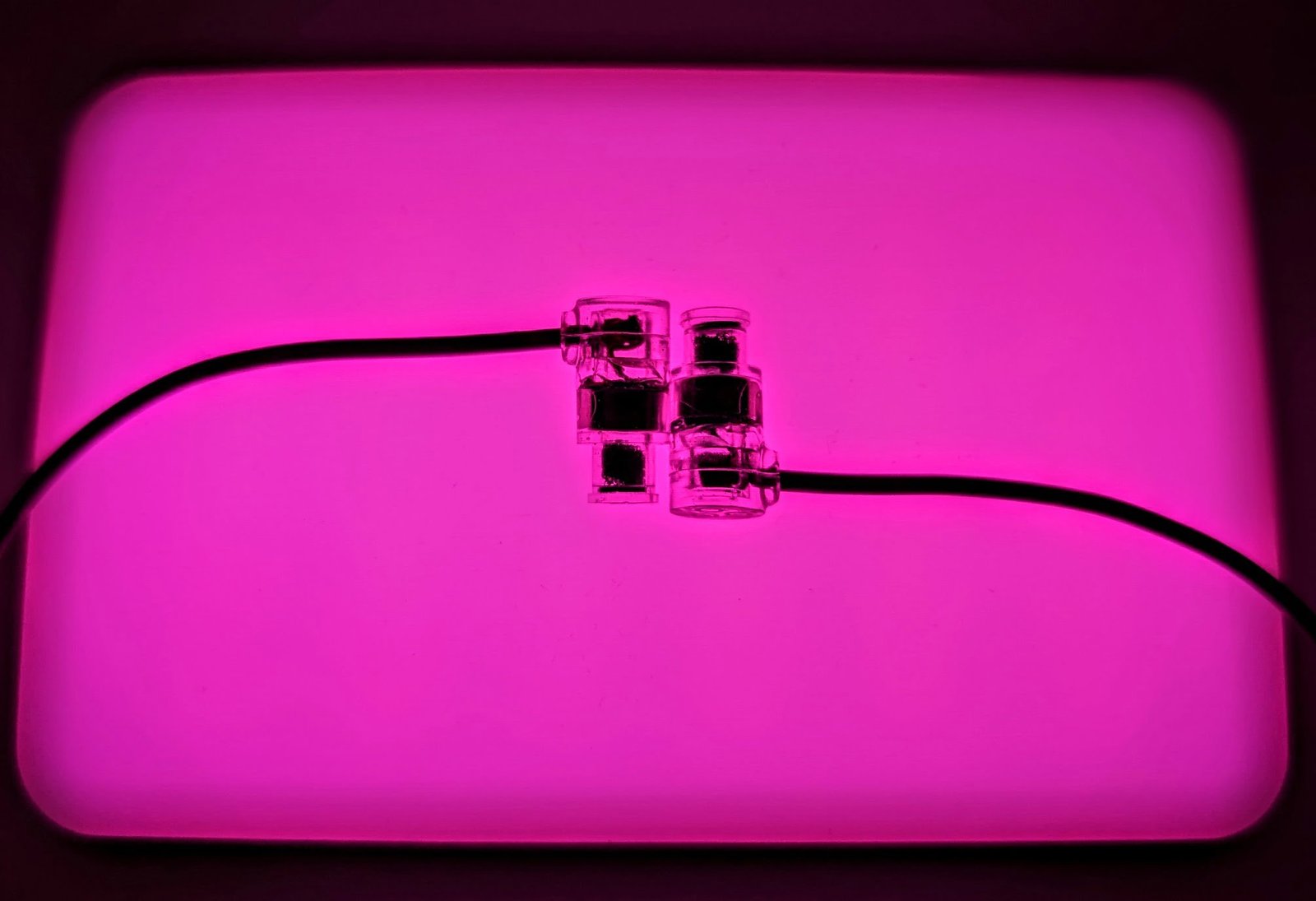
The headphones are very small in size, and their shape resembles earplugs. The tight fit deep in the ear canal also provides earplug-like passive sound isolation, which I have found useful, for example, in an office environment.
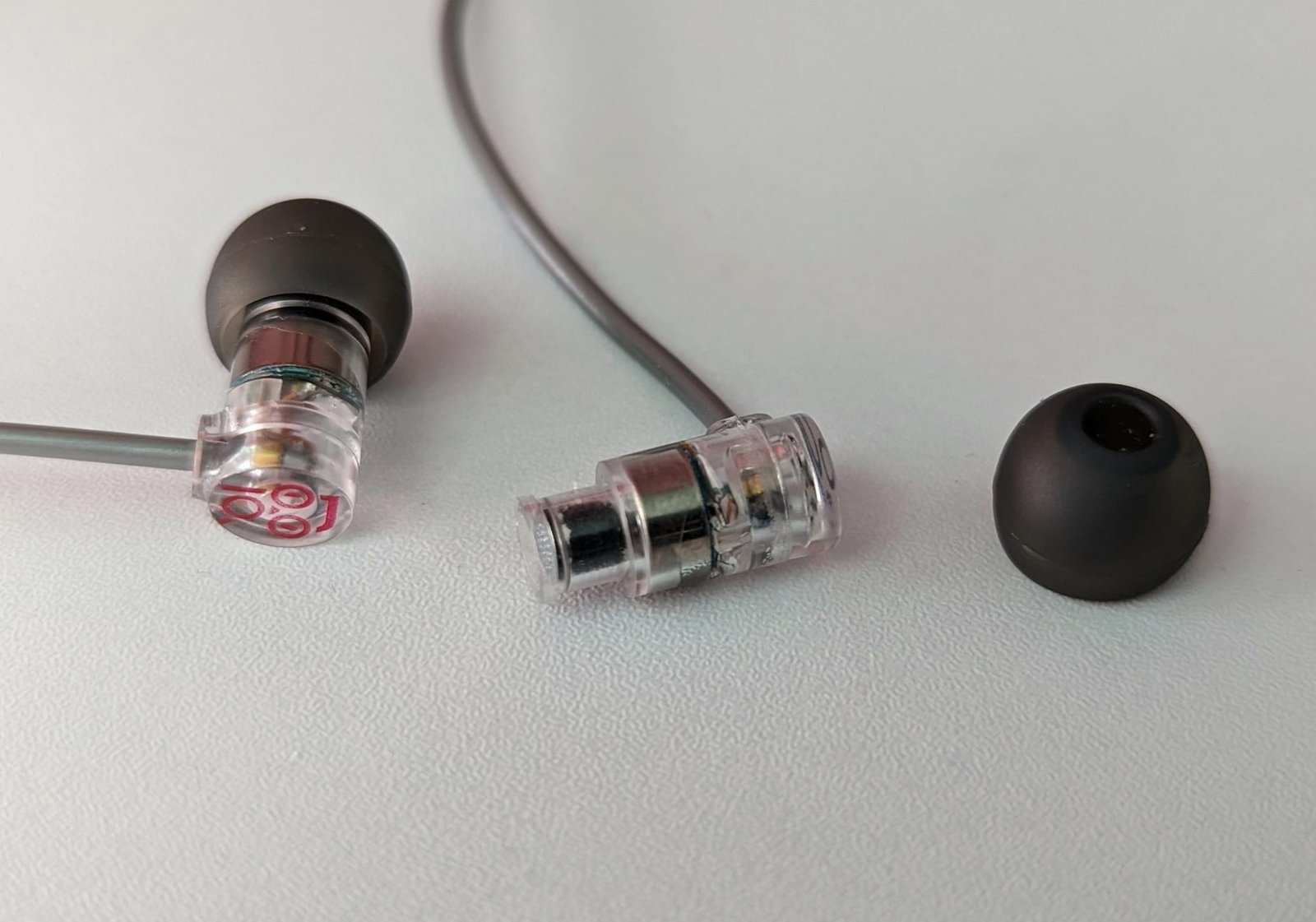
The outer shell of the Quarks DSP is made of transparent plastic. The right and left earpieces differ based on the coloring at the end: the red earpiece goes into the right ear and the black one into the left. Due to the minimal 6-millimeter driver, this is a technically very simple product. The sound quality is likely largely based on the manufacturer's DSP correction.
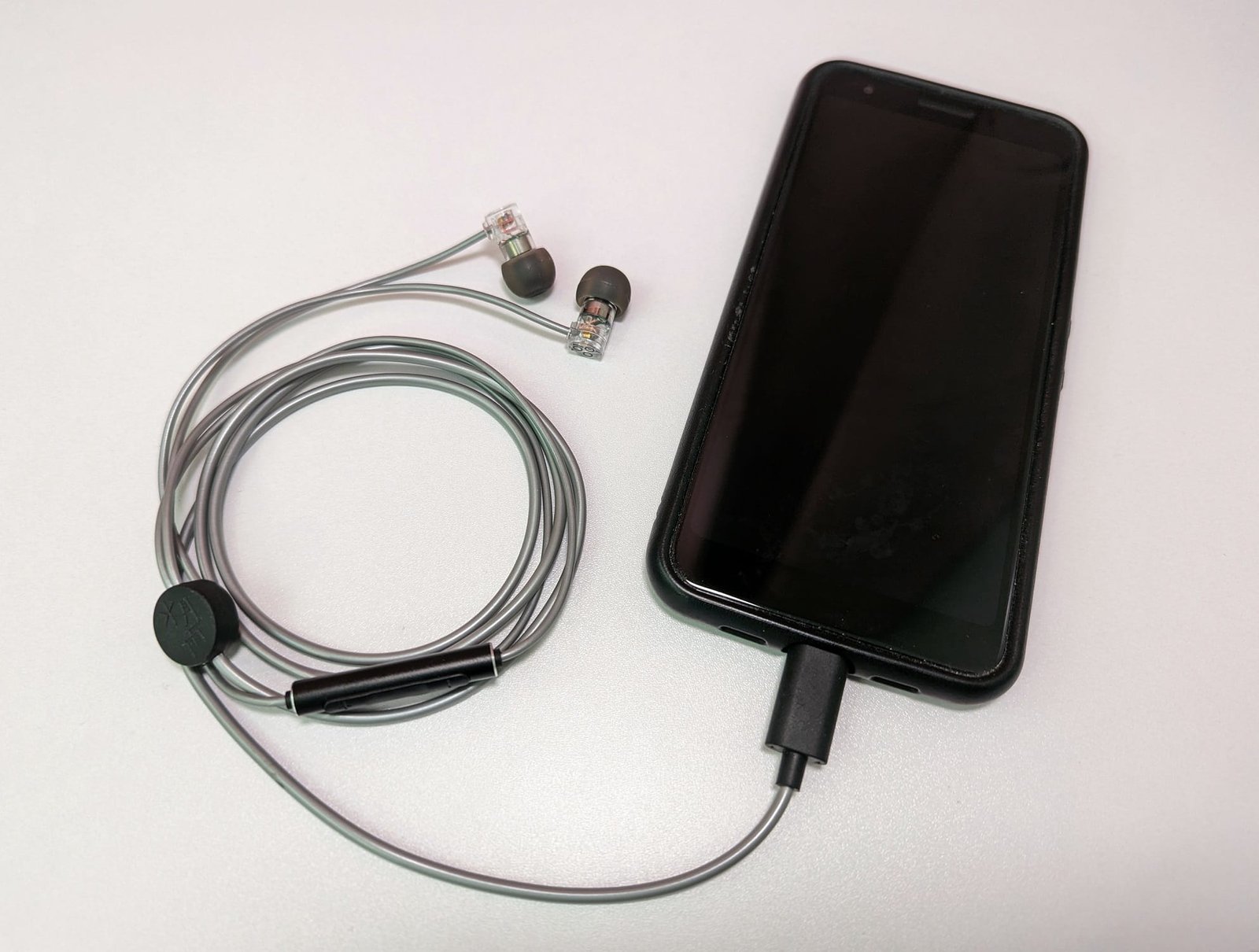
The headphones' fixed cable is surprisingly decent in terms of usability, as it stays relatively straight and doesn't tangle easily – for example, the cable of the manufacturer's Chu model is considerably more annoying. The USB-C connector of the Quarks DSP is also not particularly large despite the electronics it contains, so I believe it will fit most phones even when using protective cases. Since the headphones are designed for mobile use, the cable features a microphone and volume control buttons encased in metal shells.
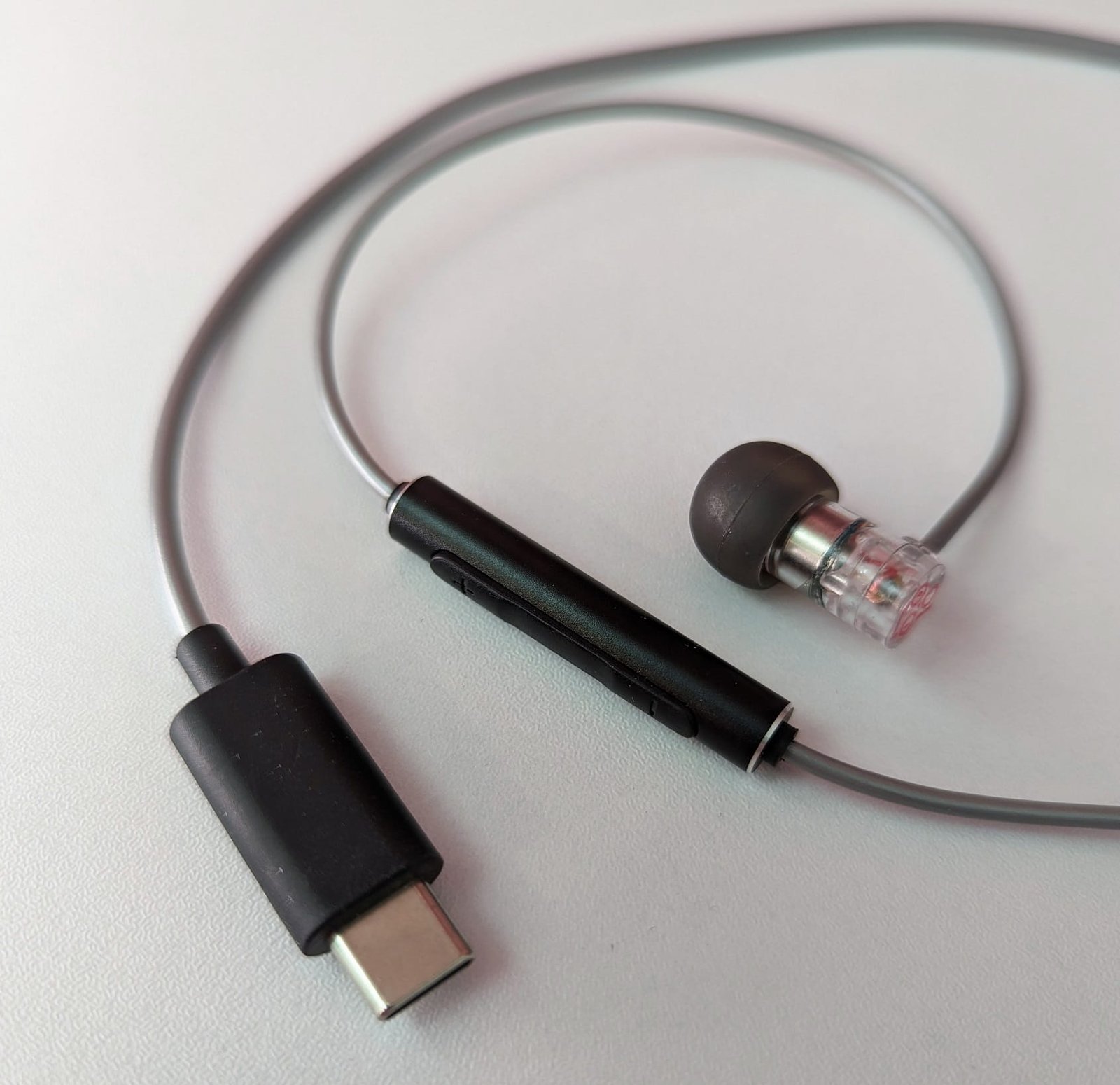
The Quarks DSP is a simple product with absolutely nothing to complain about considering its overall price of 15 euros. Due to its small size, only the connection point between the cable and the earpieces raises some questions regarding its durability. Wearing comfort depends directly on the size of the chosen ear tips, as the headphones are otherwise not in contact with the ears.
Notes on usage
Using the headphones is straightforward, as they can be quickly plugged into, for example, a phone, and a suitable fit in the ears is found almost immediately. The Quarks DSP also travels in a small space, and there's no need to worry about the battery running out, unlike with wireless headphones. For some reason, my phone recognizes the headphones as a Bluetooth keyboard, but they still function completely normally. On my computer, however, the Quarks DSP appears correctly as an audio device.
Due to the internal electronics, there is some background hiss from the headphones if no sound is being played simultaneously. The hiss is easily noticeable but not overly disturbing. In an optimal situation, however, there should be no hiss, so I hope the manufacturer has eliminated it in their similar, more expensive headphone models.
In my opinion, the Quarks DSP plays at a sufficiently loud volume when listened to with both a phone and a computer. In terms of usability, the only major disappointment is the poor sound quality of the microphone. On the other hand, you can't get everything for cheap.
Sound quality
Headphone frequency response measurements have been performed with equipment compliant with the IEC711 standard. The graphs use the Harman target curve for in-ear headphones (2019 version), based on scientific research, as a reference. This curve is a generalization of what kind of frequency response sound would sound good to most people.
However, Harman's research for in-ear headphones is still somewhat incomplete, as test subjects have not been given enough influence over the amount of treble in addition to the amount of bass. Many therefore find in-ear headphones that follow the Harman target curve to sound overly aggressive, so most headphone manufacturers still tune their products more moderately. Moondrop tunes its headphones according to its own VDSF target curve. This is a conscious choice, so the Harman target curve serves mainly as a guiding reference in my article.
In frequency responses measured with an IEC711-based device, it's important to note the automatically formed emphasis between 8–10 kHz, which is purely due to the characteristics of the device itself, and not entirely the headphones. The emphasis shifts depending on how deep the earpiece is inserted into the measurement device's ear canal. However, this emphasis also interferes with the measurement accuracy of the very highest frequencies from 10 kHz onwards, so the amount of treble should be compared to other headphone models instead of being taken as an absolute truth.
Frequency response:
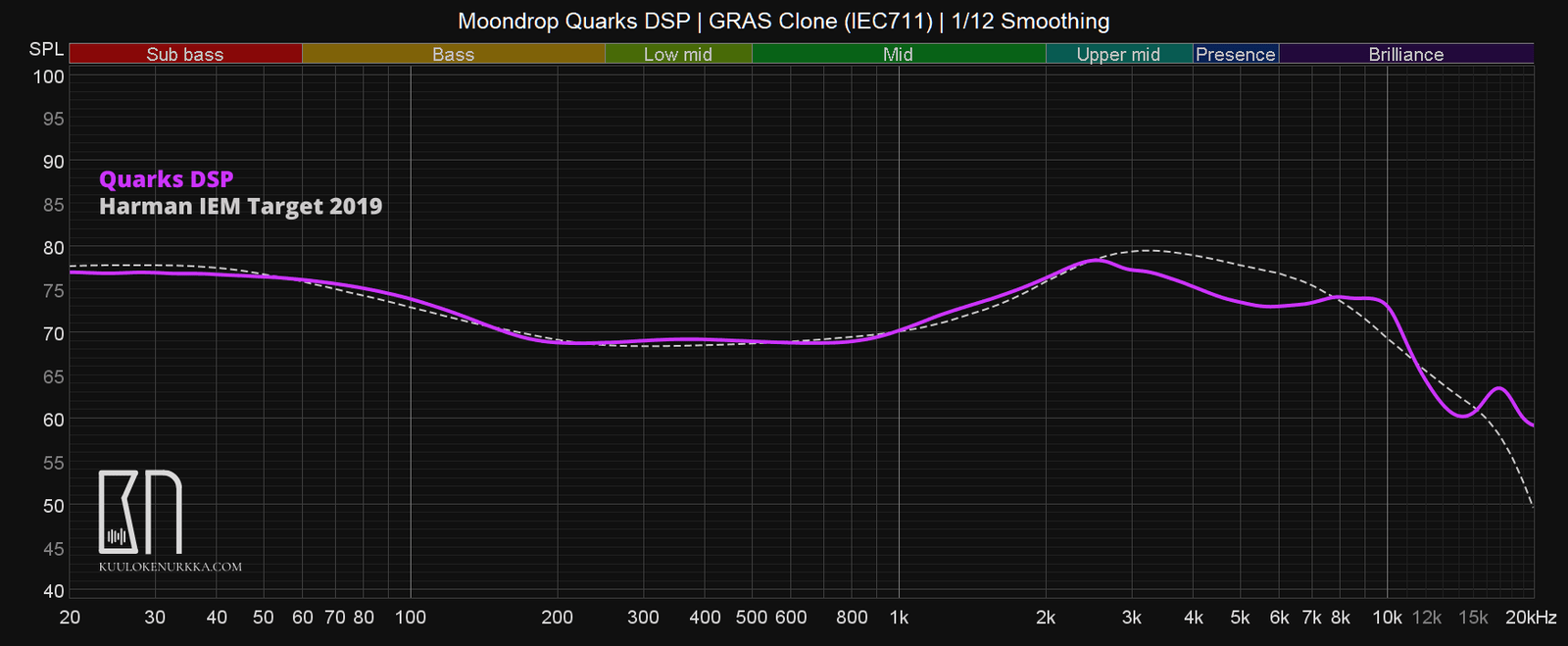
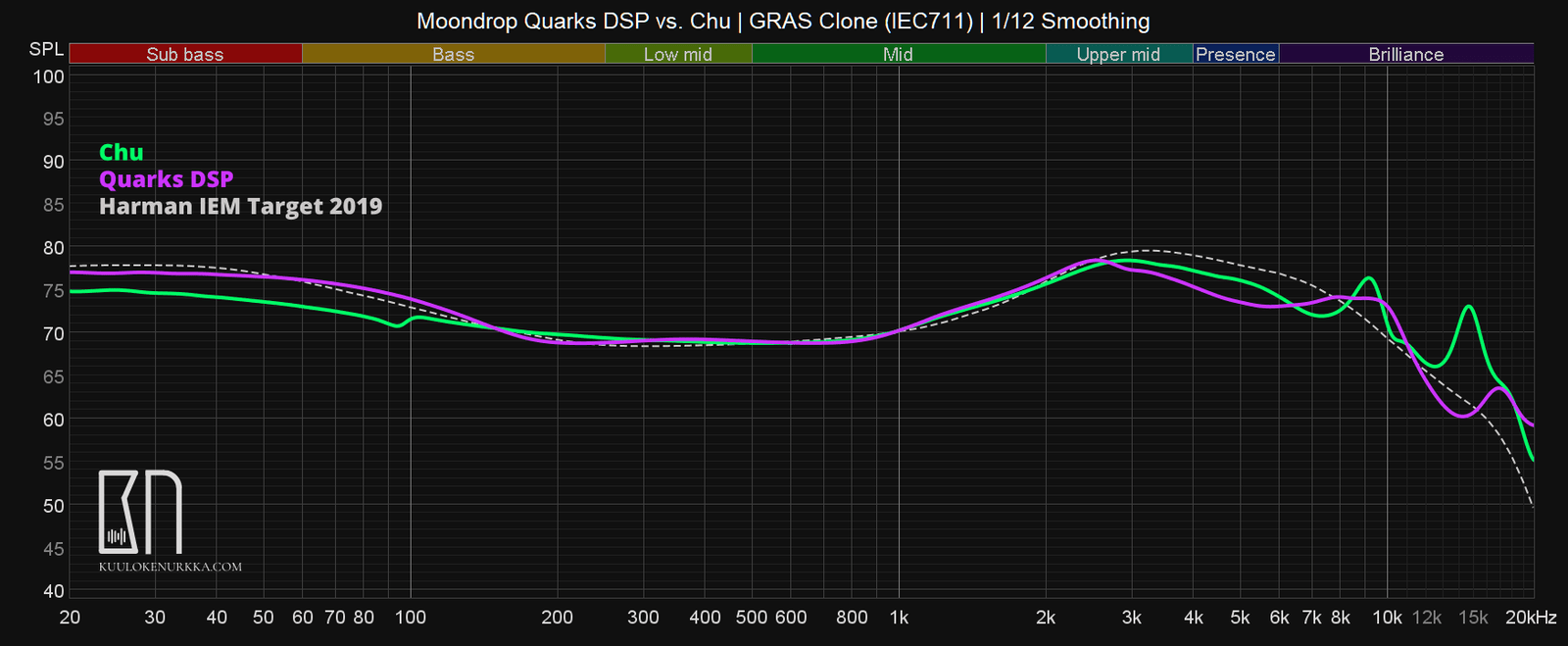
The Quarks DSP's frequency response follows the Harman target curve, with the exception of slightly calmer treble reproduction. I believe the result will be optimal for most, as the headphones are effortless to listen to and feature powerful bass reproduction and clear mid-frequencies. The Quarks DSP offers downright criminally good sound for its price. I don't believe anything as balanced can be bought for 15 euros from a frequency response perspective. On the other hand, the sound is somewhat soft and rounded throughout, so in my opinion, the headphones do not challenge traditional in-ear alternatives costing, for example, 20 euros. The soundstage also remains almost monophonic (mono) inside the head. However, these are weaknesses that are easy to forgive thanks to their ease of use and affordable price.
Bass:
The headphones' small drivers are not capable of providing particularly high-quality or dynamic bass reproduction, but the tuning of the low frequencies according to the Harman target curve ensures that the bass is enjoyably powerful and does not detract from the clarity of other frequency ranges. On the other hand, the upper bass frequencies are reproduced a bit thinner, so sometimes the bass feels like it lacks a bit of body and punch, for example, with a bass guitar. However, considering the small drivers, a heavier bass would likely have caused problems, so emphasizing clarity is a sensible solution from Moondrop.
Mid-frequencies:
The Quarks DSP's mid-frequencies are clear and correct in terms of energy level. The overall presentation leans more towards energy than fullness, but I never find the reproduction too aggressive or fatiguing. The presentation feels rather normally good and faithful to recordings, and thanks to the forgiving treble, it's not fatiguing. I would even count the naturalness of the reproduction as one of the headphones' strengths, especially compared to brighter and more aggressive-sounding alternatives, such as the Moondrop Chu.
Treble:
Moondrop has made the headphones easy to listen to in terms of high frequencies. The amount of treble below 10 kHz is almost ideal for my taste, as the high frequencies do not draw more attention to themselves than other frequency ranges, nor are they in any way too much in a supporting role.
Correspondingly, the so-called air frequencies above 10 kHz are reproduced too faintly for my taste, which is the biggest weakness of the Quarks DSP compared to slightly more expensive headphone models. The headphones are a safe purchase in terms of treble clarity, but they lack freshness and detail. The problem is not dramatic, but the sound does not sound particularly effortless, but rather a bit congested. Although there is not much musical information in the highest frequencies, their importance in the overall sound should not be underestimated.
Other subjective observations:
Overall, the Quarks DSP has good sound quality, and nothing causes major annoyance when listening to it. This is an excellent achievement in the 15-euro price range, in my opinion. At the same time, however, even better products are available by paying a little more, so the Quarks DSP is ultimately not as impressive as it would have been a couple of years ago.
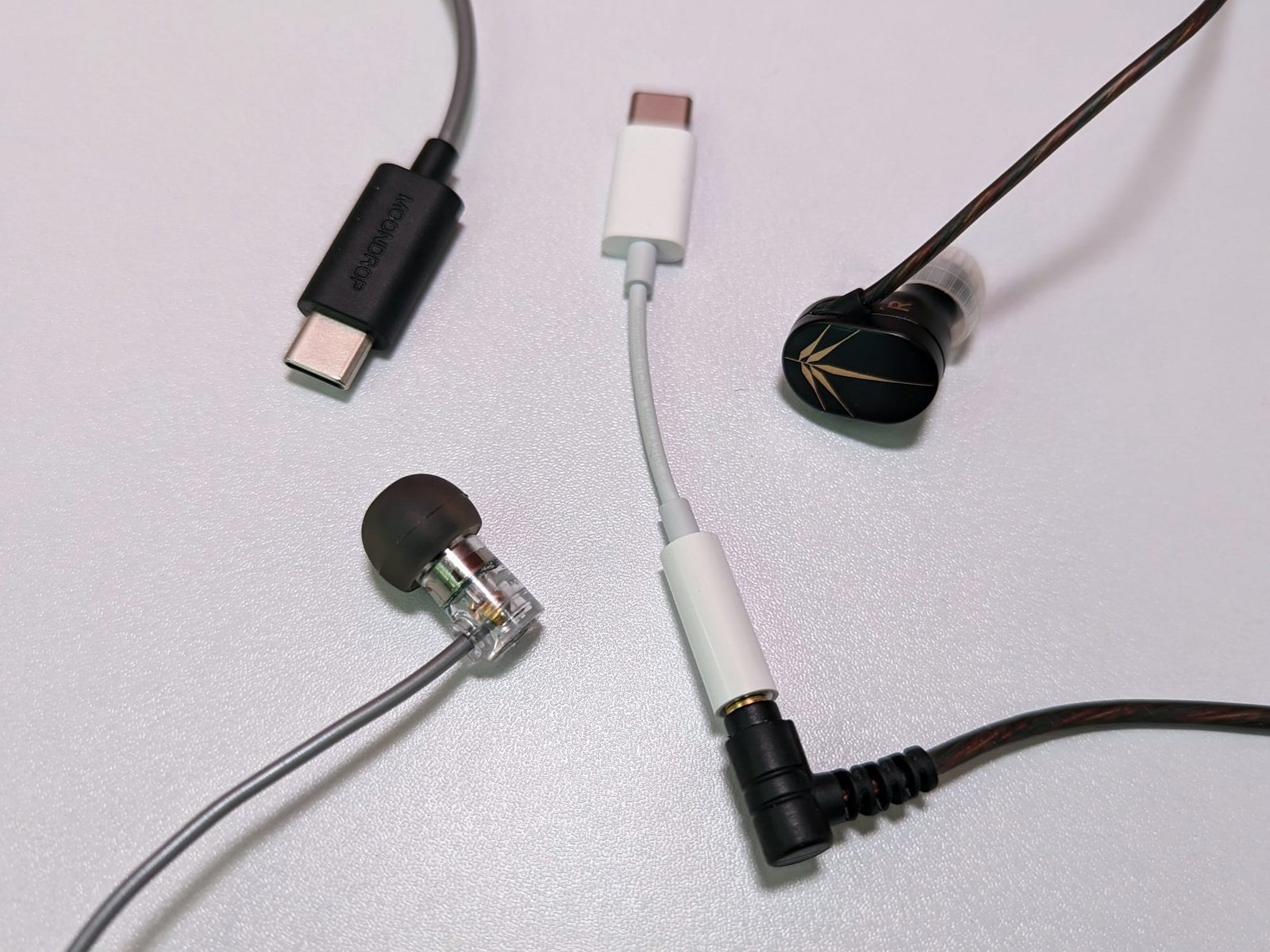
For example, compared to Moondrop's 20-euro Chu model, the sound and detail separation are somewhat blurry despite the orthodox frequency response. In addition, the soundstage largely remains inside the head, whereas in the Chu and other models equipped with a traditional headphone cable, it is reasonably spacious and accurate.
There is nothing inherently wrong with the Quarks DSP, but despite its DSP correction, it is not better than many slightly more expensive, fully mechanically tuned headphones. On the other hand, I still prefer its frequency response to Moondrop's brighter and bass-lighter Chu. Of these two, I might actually choose the Quarks DSP, especially since its usability is better than the Chu. The approximately 29-euro 7hz Salnotes Zero, however, is in all respects a better purchase than the Quarks DSP, even though it costs almost double.
Group delay variation
Since the headphones are cheap, it is somewhat expected that the included electronics or their implementation are not necessarily top-notch. In the Quarks DSP (and also in more expensive DSP models), a greater than usual variation in group delay has been observed for in-ear headphones, meaning certain frequency ranges shift forward or backward in time compared to other frequencies. The magnitude of group delay variation negatively affecting sound quality is not, to my understanding, entirely certain, but in the case of Quarks DSP, it could very well partly explain the softness of the sound and the blurriness of the separation.
However, I do not detect anything in the sound of the headphones that should be a concern in a 15-euro product. For example, with the manufacturer's 50-euro The Droplet, I would instead think twice about whether it's worth paying so much for a technically semi-finished product. The product category is still new, so Moondrop will likely be able to develop it further over time, unless other manufacturers get there first. The approximately 25-euro Jiu model seems to have received a positive reception, as its potential weaknesses have been compensated with sufficiently bright treble, which enhances the impression of detailed reproduction.
Summary
Moondrop's Quarks DSP is a convenient product for modern needs, as it eliminates the need for a traditional headphone jack, which many device manufacturers have abandoned. The headphones are also so affordable that recommending them is easy, even if their use remains only occasional. For example, compared to the mediocre headphones supplied with mobile phones, the Quarks DSP offers significantly better sound quality. It would be an affordable way for many to experience what a truly orthodox frequency response sounds like. Similarly, for those who already own better headphones, the Quarks DSP could still be a noteworthy addition to their collection thanks to its easy-to-use USB-C connector.
The headphones also have their weaknesses compared to slightly more expensive products, but for the 15-euro price, I do not consider slight background noise, sound softness, or the ”problems” potentially caused by group delay variation to be particularly serious issues. Thanks to the successful frequency response and excellent usability, the overall package is clearly a plus in my opinion – sometimes you can get good things cheaply. The Quarks DSP demonstrates that you practically don't have to pay anything for a precisely tuned frequency response anymore.
Pros and cons:
+ The frequency response is excellent thanks to DSP correction
+ Balanced sound, difficult to find fault with
+ Can be connected directly to mobile devices' USB-C connector
+ Small size and good fit
+ Usability-wise ok cable
+ Passively attenuates some ambient noise
+ Almost free price
– Sound is soft and rounded compared to in-ear models costing 20 euros
– The highest treble sounds subdued, so the reproduction lacks freshness and effortlessness
– Flimsy-feeling structure
– Background noise caused by electronics
– The technology would still require an exceptional amount of further development due to the varying group delay
 EN
EN  FI
FI