Author: Sword of Damocles
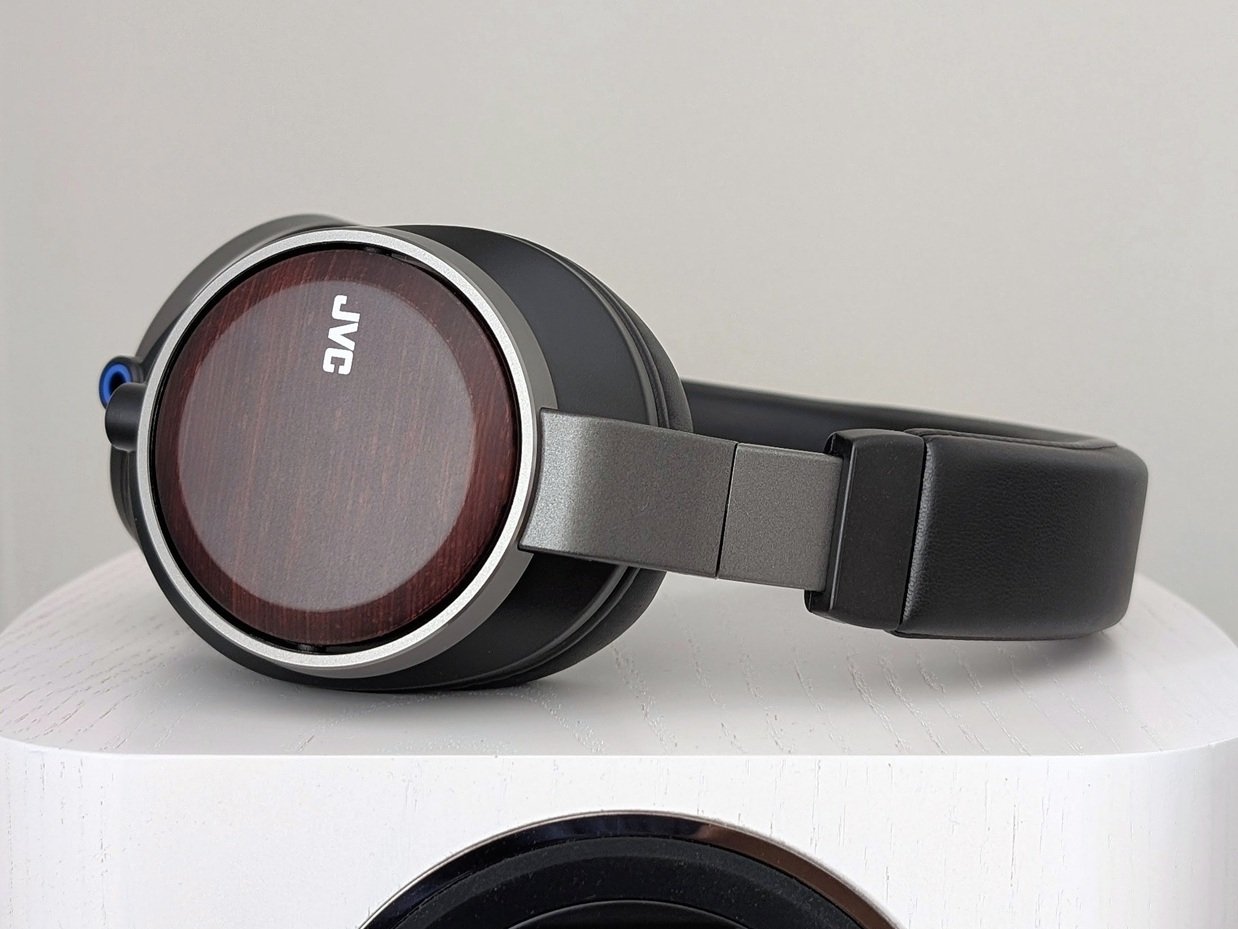
Table of Contents:
Information:
- Release year: 2015
- Country of manufacture: Designed in Japan and assembled in China
- Price: 50,000 yen (~400 € in 2015 money) | Nowadays, cheapest around 120 €
- Available in Finland: No
- Type: Closed, over-ear
- 40 mm dynamic drivers (Wood Dome diaphragm: birch veneer 50 microns)
- Impedance: 56 Ohm
- Sensitivity: 105 dB/mW
- Weight: 320 g
- Connection type: 2x 3,5 mm
- Cable: Length 1.2 m | Connector 3.5 mm (+ 6.35 mm adapter)
- Accessories: Storage pouch
- Warranty: 1 year
Review sample: Self-purchased product
As a counterbalance to newer products, one must sometimes take a trip back in time to gain perspective on whether headphones are better now than before. A case in point in this context is the Japanese manufacturer JVC's HA-SW02 headphone model (manufacturer's Japanese product pages) from 2015, over a decade ago. In some places, the headphones are also known as Wood 02.
Many may no longer recognize JVC as a headphone manufacturer, as it has largely abandoned passive over-ear models, focusing instead on in-ear headphones and wireless products. However, in its time, the manufacturer was known for its experimental spirit and courage to design headphones with completely exceptional acoustic structures. These did not always lead to success, but the headphones were at least interesting and unique.
The HA-SW series, specifically the slightly more expensive HA-SW01 and the ”light version” HA-SW02 that I am discussing, were practically JVC's last high-end hi-fi headphones, representing a kind of premium class (CLASS-S) in the manufacturer's lineup. The greatest peculiarity of these two models are the dynamic drivers (Wood dome) made from thin birch veneer. These are not biosellulose or wood fibers attached to other materials, but an extremely thin slice of wood, first softened in sake wine and then molded into a diaphragm. No other manufacturer has since embarked on such a folly.
The acoustic design of JVC's headphones also includes various small wooden parts, the number of which distinguishes the HA-SW01 and -SW02 from each other. The latter lacks some acoustic-enhancing parts, so it was priced about a third cheaper (50,000 vs. 75,000 yen, or roughly €400 vs. €600 in 2015 money). Other differences are that the duo is reportedly tuned slightly differently, and the wooden outer surface of the cups differs in color, with the HA-SW01 being slightly darker.
I assumed the production of the headphones had ended a long time ago, but the new HA-SW02 could still be bought from Amazon Japan quite cheaply for about 120 euros some time ago. This prompted me to find out, on behalf of all of us, if there was still some kind of idea in these JVC headphones.
Packaging and accessories
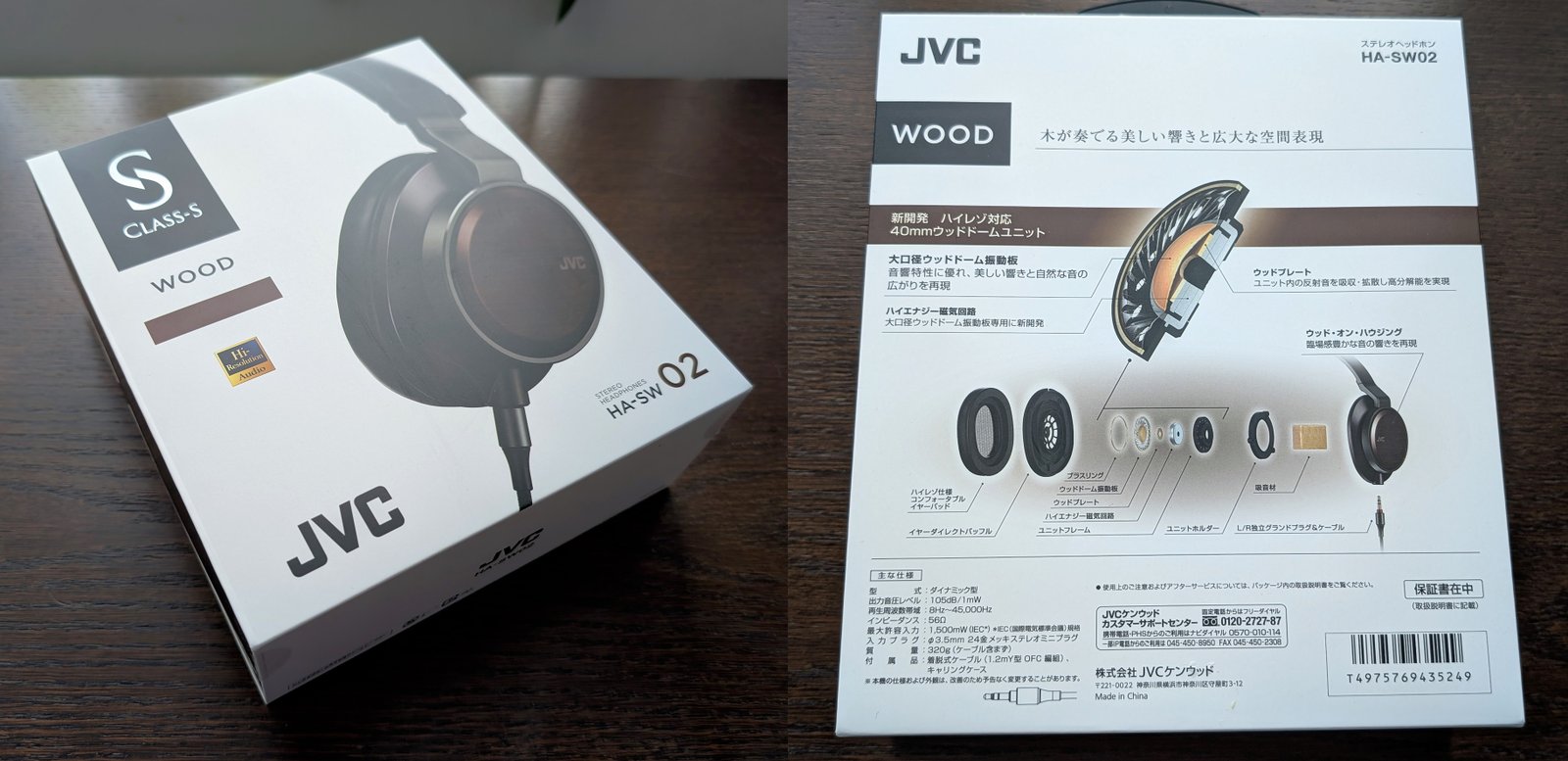
The headphones are delivered in an externally neat package, which states that the HA-SW02 belongs to the S-class. The Hi-Resolution Audio designation has also been placed in an exceptionally prominent position, as the Japan Audio Society (JAS) grants the certification. Since this headphone model is specifically aimed at the Japanese market in this package, the texts on the back cover are, as expected, in Japanese. Despite this, the HA-SW02 is manufactured in China – or was, if the headphones currently sold are old stock.
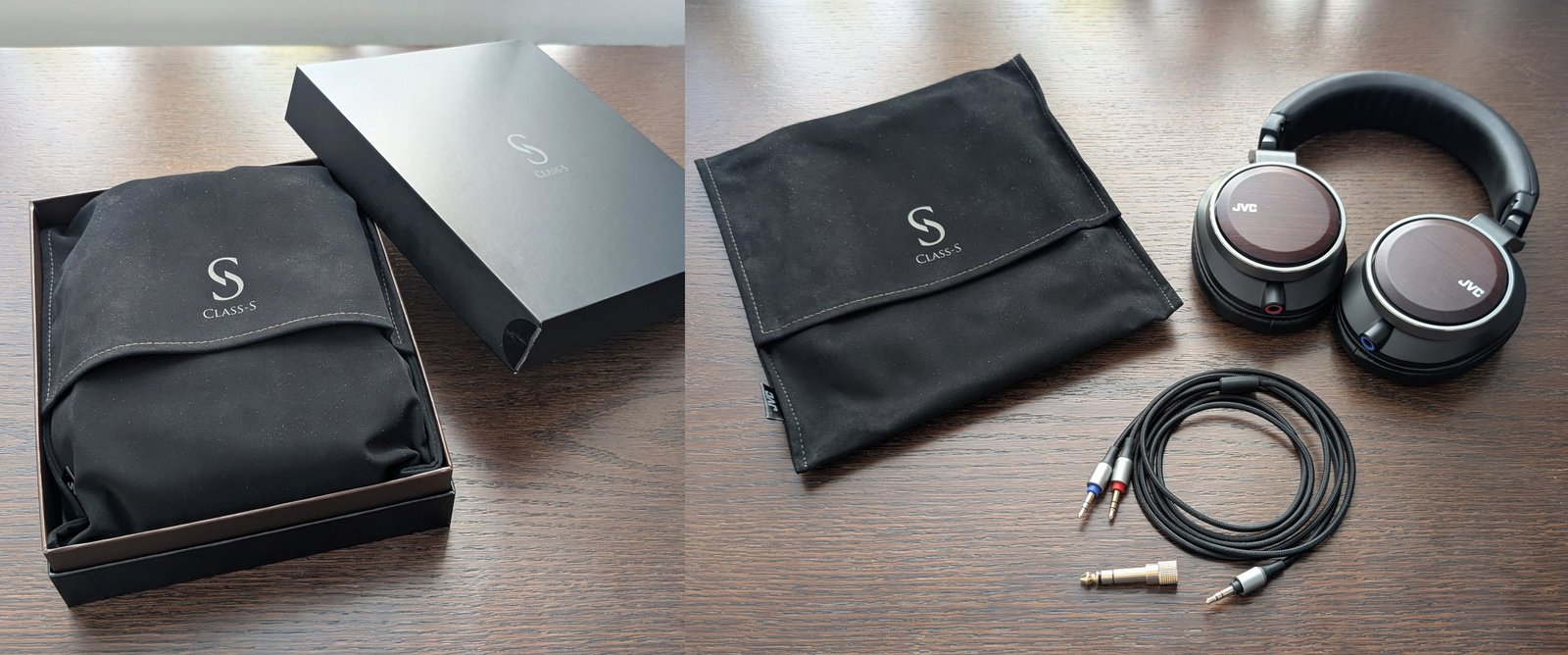
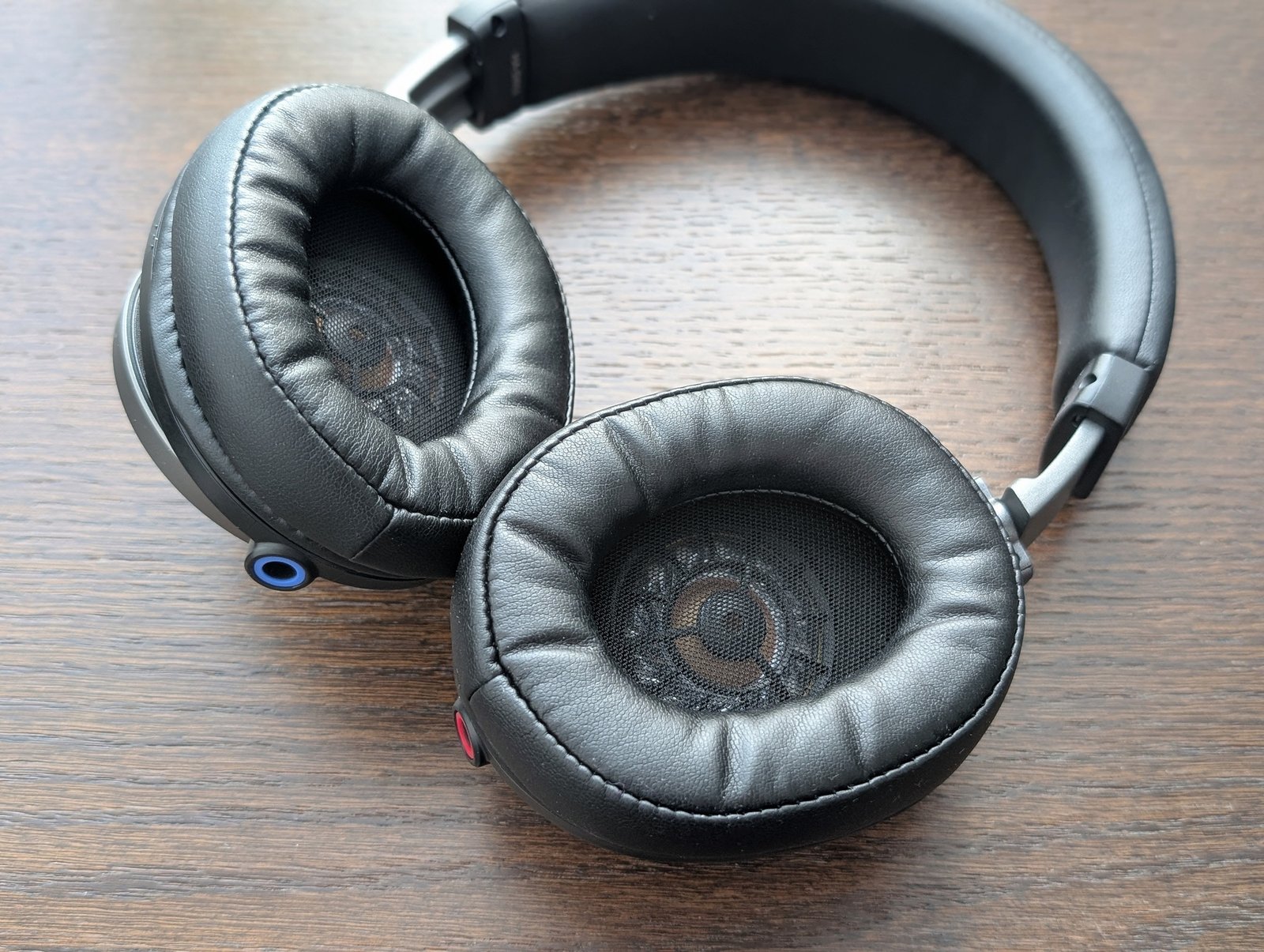
The equipment includes only a fabric pouch that feels plastic-like and a short 1.2-meter cable (connector 3.5 / 6.35 mm). The cable attaches to the headphones with two 3.5-millimeter connectors, which are easy to connect correctly thanks to red and blue color coding. However, the female connectors are slightly recessed into the body, so unfortunately, not all cables I already own fit the HA-SW02. Fortunately, JVC's own cable also works well due to its flexibility, even though the fabric sleeving makes it quite microphonic when rubbing against clothes.

Build and comfort
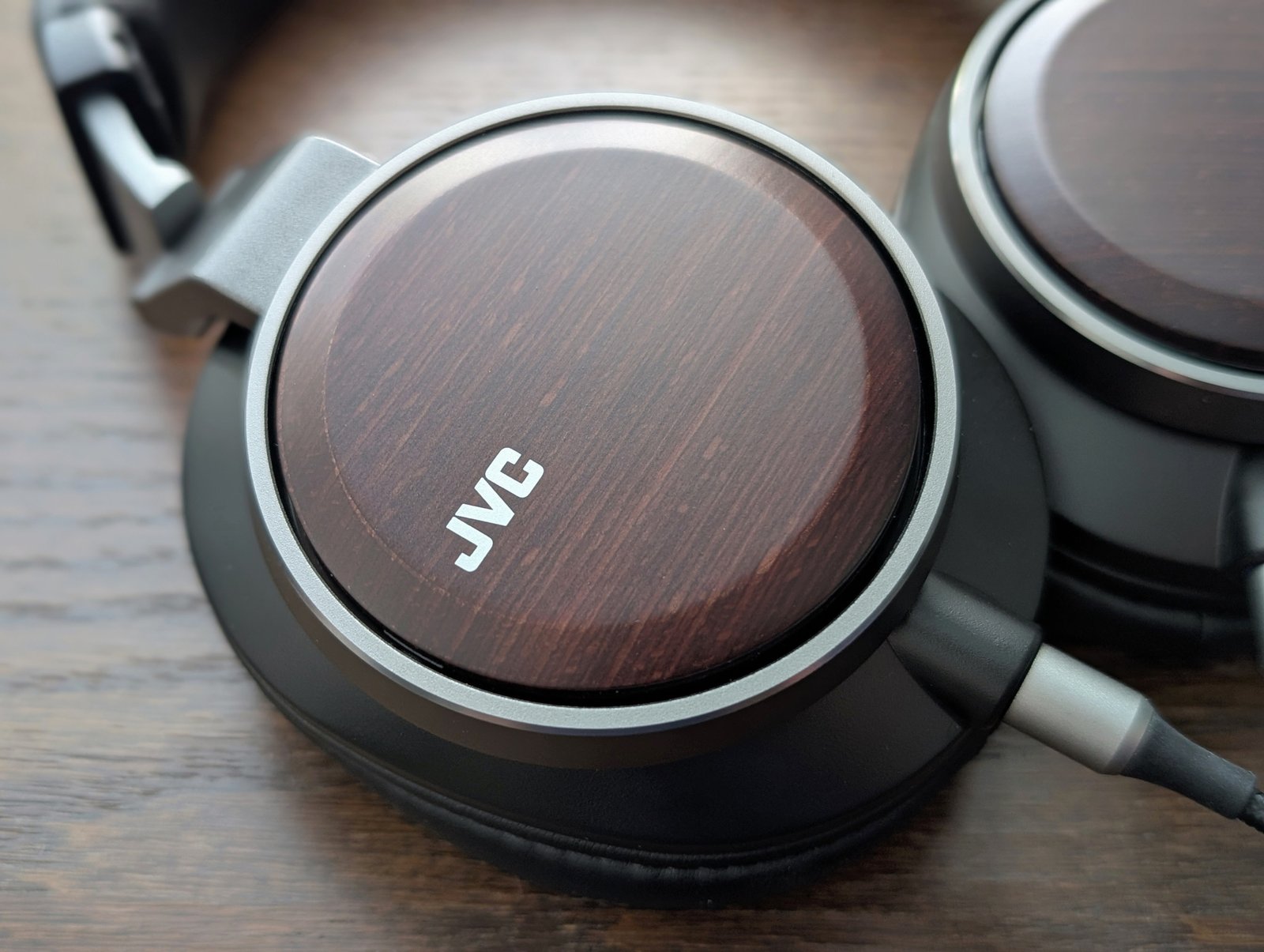
The design of the HA-SW02 does not attract much attention; many studio headphones from the same era could serve as its model. The black and dark gray color scheme is also subdued, although the brown wooden cups add a touch of elegance to the overall look. In Japanese style, on the other hand, wood has not been overly emphasized; instead, it subtly blends into other materials, which in this case are a mix of metal and plastic.
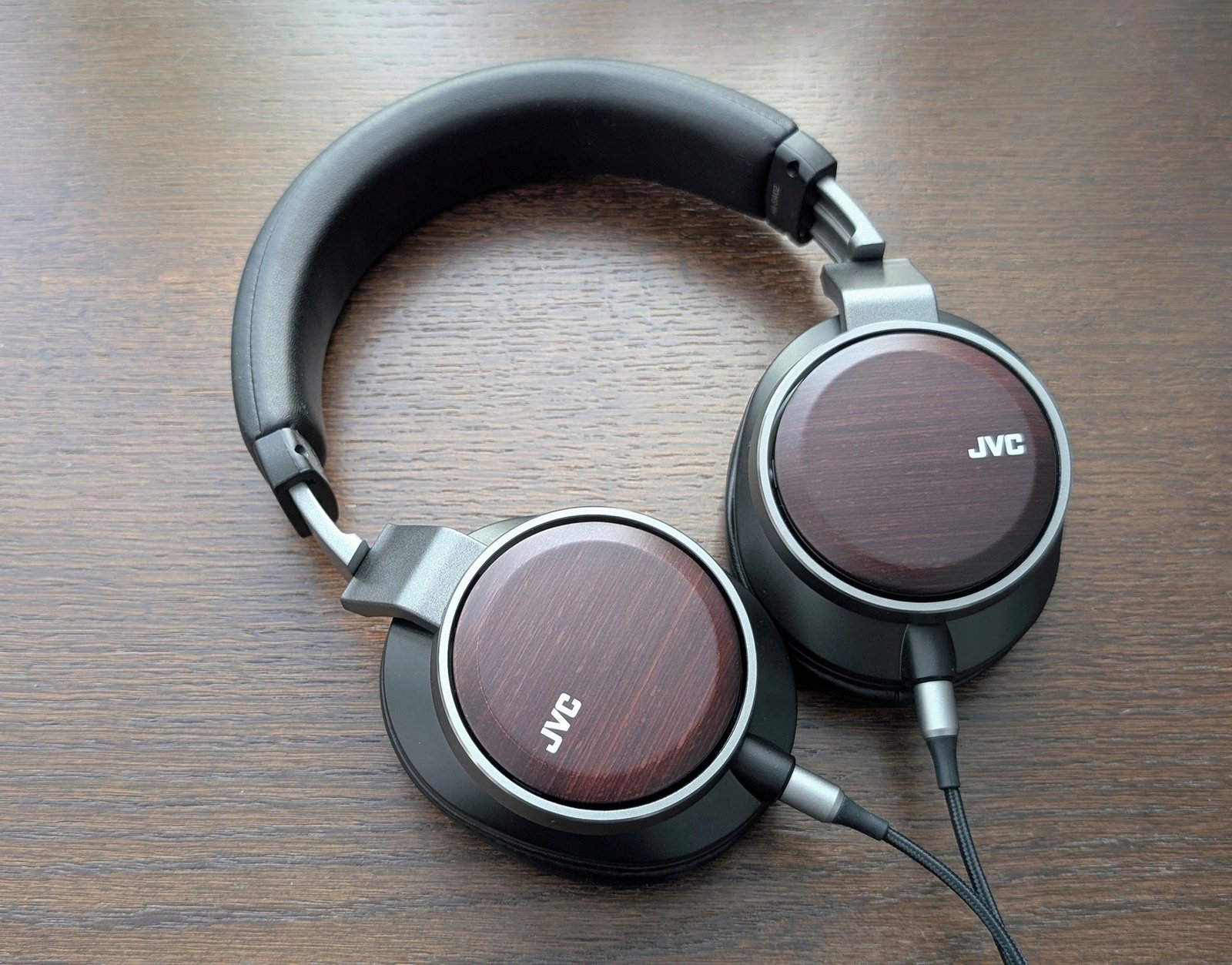
The gray extension parts of the headband and the round rim around the wooden cups are made of metal, while the connecting middle part is plastic in its shell. However, the parts are excellent in color and texture, and the headphones also feel sturdy in hand. No side noises are heard when stretching and turning the cups, and nothing in the mechanical design raises suspicions thanks to the thickness of the parts. It is definitely a product that feels higher quality than its current price, and it has proven durable over 10 years. With the cups being fully closed, the HA-SW02 adequately isolates ambient noise and leaks very little sound outwards.
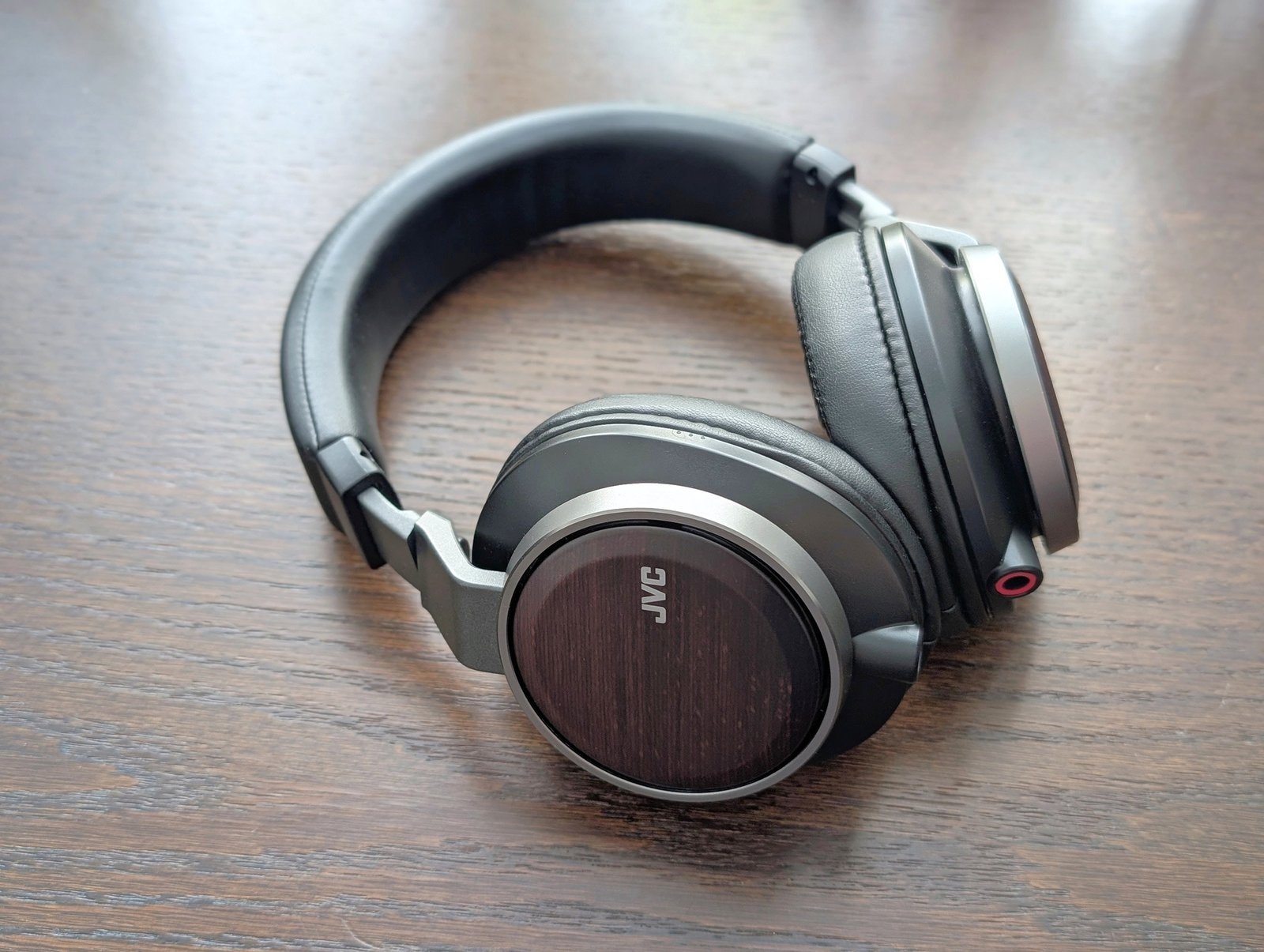
Regarding comfort, I find both good and bad in the headphones. First, the 320-gram weight is not too much, and the adjustments work well. The headphones also sit evenly on my head and feel good at first. However, because JVC has skimped on the padding, the headband quickly starts to feel somewhat hard on the top of my head, and the depth of the shallow ear pads is not quite enough for me. Some of the pressure is transmitted directly to my earlobes through the hard frame of the driver, so the experience somewhat resembles on-ear headphones, and thus the HA-SW02 is not very comfortable in the long run. At least slightly thicker ear pads should be replaced on the headphones, which fortunately would be easy to do. When buying used headphones, it quickly becomes apparent how unsightly the artificial leather-covered headband has worn out in most cases after a few years of use.
Sound quality
Birch veneer drivers bathed in sake
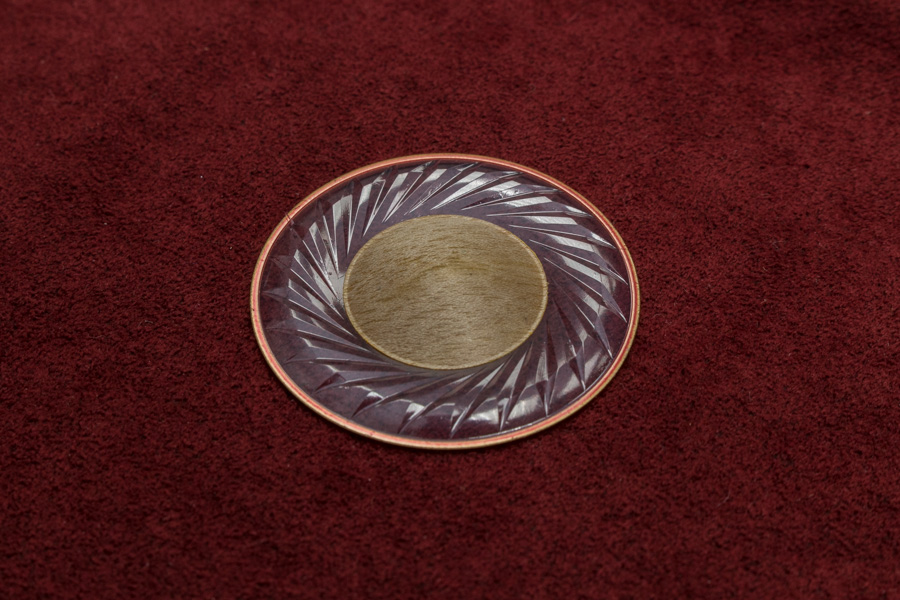
The 50-micron thick wood veneer drivers of the HA-SW series are quite a rarity, stemming from JVC's and its parent company JVCKENWOOD's long development work. The company stubbornly wanted to keep wood together as a speaker driver, which was not easy, as a thin slice of wood easily broke during shaping. However, JVC engineer Toshikatsu Kuwahata and his team solved the problem by soaking birch veneers overnight in sake, making them flexible enough for pressing. The idea for sake baths came from a traditional Japanese restaurant (izakaya), or more precisely, from softening dried octopus into an edible form.
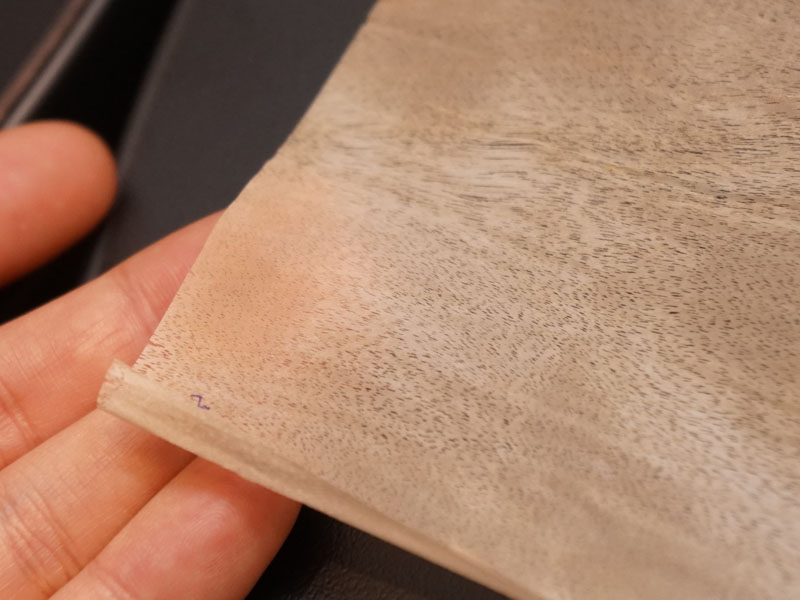
JVC eventually developed a precise industrial process from this and simultaneously noticed that it was specifically the ingredients in sake that softened the wood's cellular structure in a way that water or ordinary alcohol did not. This technology was first seen in JVC's Wood Cone speakers, where even the driver's cone was made of wood. Later, the technique was successfully miniaturized under the name Wood Dome for headphones, such as the HA-SW series and even some in-ear models.
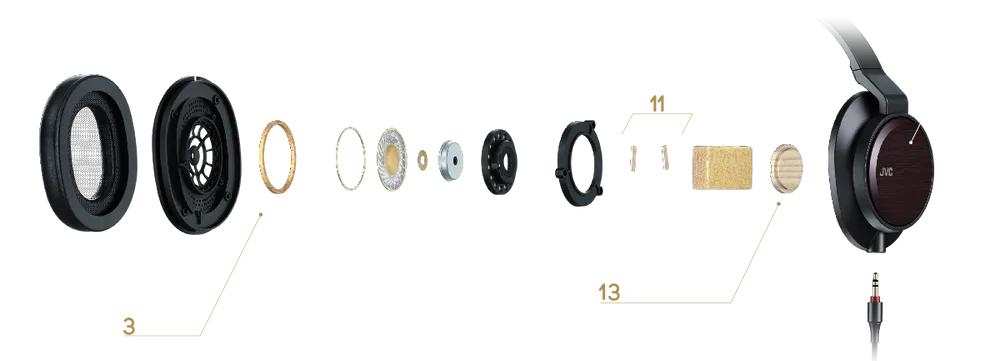
Despite everything, the diaphragms of the HA-SW02's drivers are not entirely wooden; the edge parts are made of transparent PEN plastic. However, a little more wood can be found on the inside, as a wooden disc has been installed between the diaphragm and the magnetic structure, intended to absorb backward-facing reflections. Similarly, a birch plate has been added to the inner bottom of the cups to improve acoustics, or whatever it actually does. In the more expensive HA-SW01, additional various wooden parts have been layered onto the inner surface of the cups, and a brass stabilizer has been added around the driver. Usually, such tweaking is only encountered in expensive high-end headphones, not in the sub-500 euro price range.
Impedance measurements and amping requirements
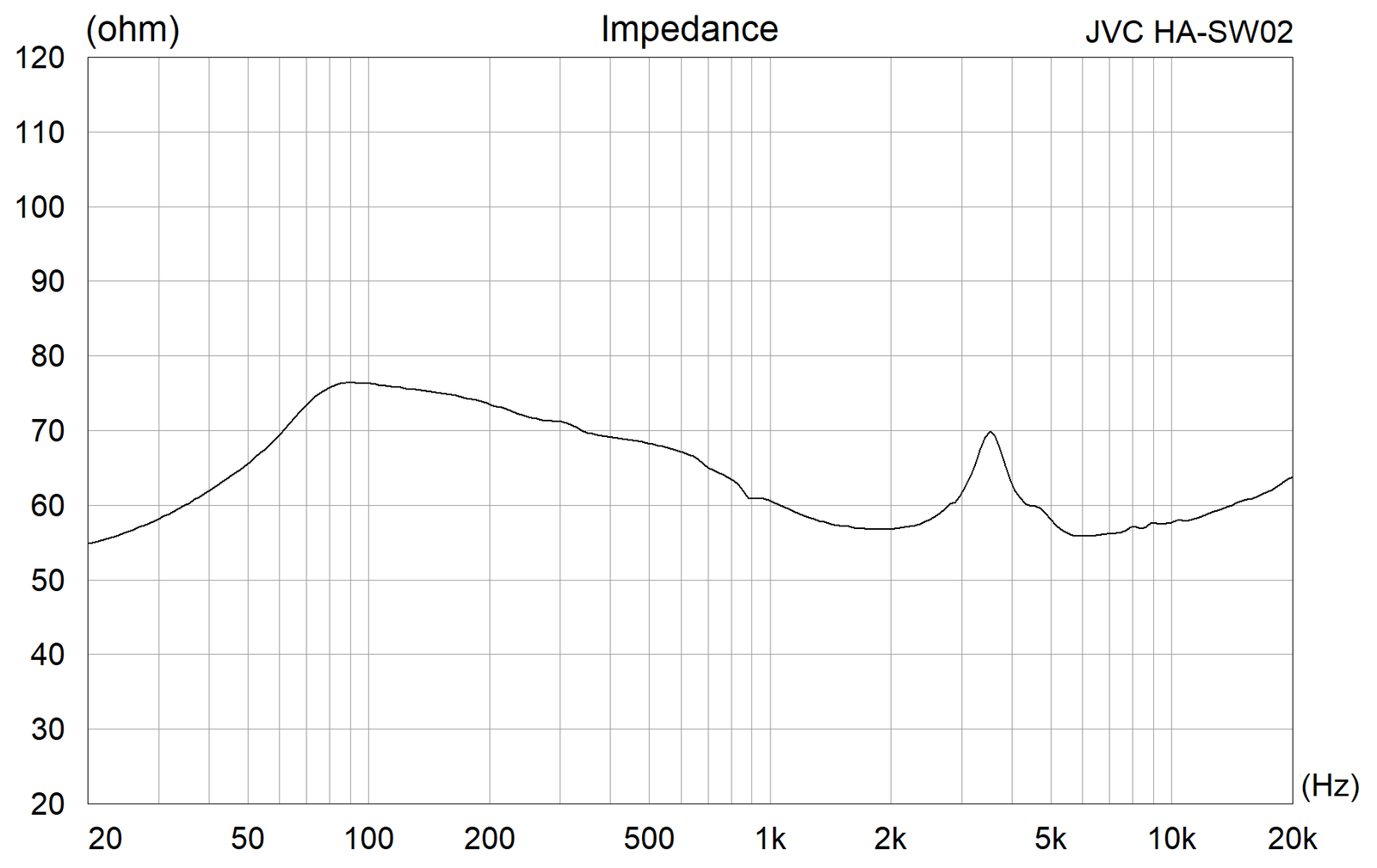
As a product of its era, the HA-SW02's impedance curve is not the most linear, varying between approximately 55 and 75 ohms. From a usage perspective, this means that an amplifier with a high output impedance (>10 ohm) would boost frequencies that appear elevated in the headphones' impedance curve. In the case of the HA-SW02, the low frequencies would become somewhat fuller, and 3.5 kilohertz would also sound louder. With an amplifier having a low output impedance (<1 ohm), however, there is no need to worry about such frequency response changes.
JVC states the nominal impedance for its headphones as 56 ohms, which is likely taken at 20 hertz, as the traditional 1 kilohertz value would be closer to 60 ohms. However, this has no practical significance, as amplification requirements are low in any case due to the high sensitivity (105 dB/mW).
Headphone Measurements
The headphone frequency response measurements were performed with equipment compliant with the IEC711 standard and KB501X model silicone ears. The graphs use the Harman target curve (2018 version), optimized for this equipment, as a reference. This curve is a generalization, based on scientific research, of what kind of frequency response would sound good to most people and correspond to balanced loudspeakers in a well-acoustically treated room.
The Harman research was conducted with silicone ears that ”hear” sound slightly differently than the ear types sold today. For this reason, the target curve used by Kuulokenurkka is based on the diffuse field response according to the KB501X ears” own HRTF transfer function, to which, however, the core findings of the Harman research have been adapted using filters. In practice, the result still corresponds to the ideal frequency balance indicated by the Harman research, but as the equipment used by Kuulokenurkka would ”hear" it based on its characteristic acoustics. Thus, it is possible to make more precise observations of the headphones' frequency response between 2–20 kilohertz than when using the pure Harman 2018 curve as a reference.
More information about the measurement equipment can be found on the Headphone Measurements-page. The HA-SW02's frequency response can also be compared with other measured headphones. Squiglink .
Frequency response:
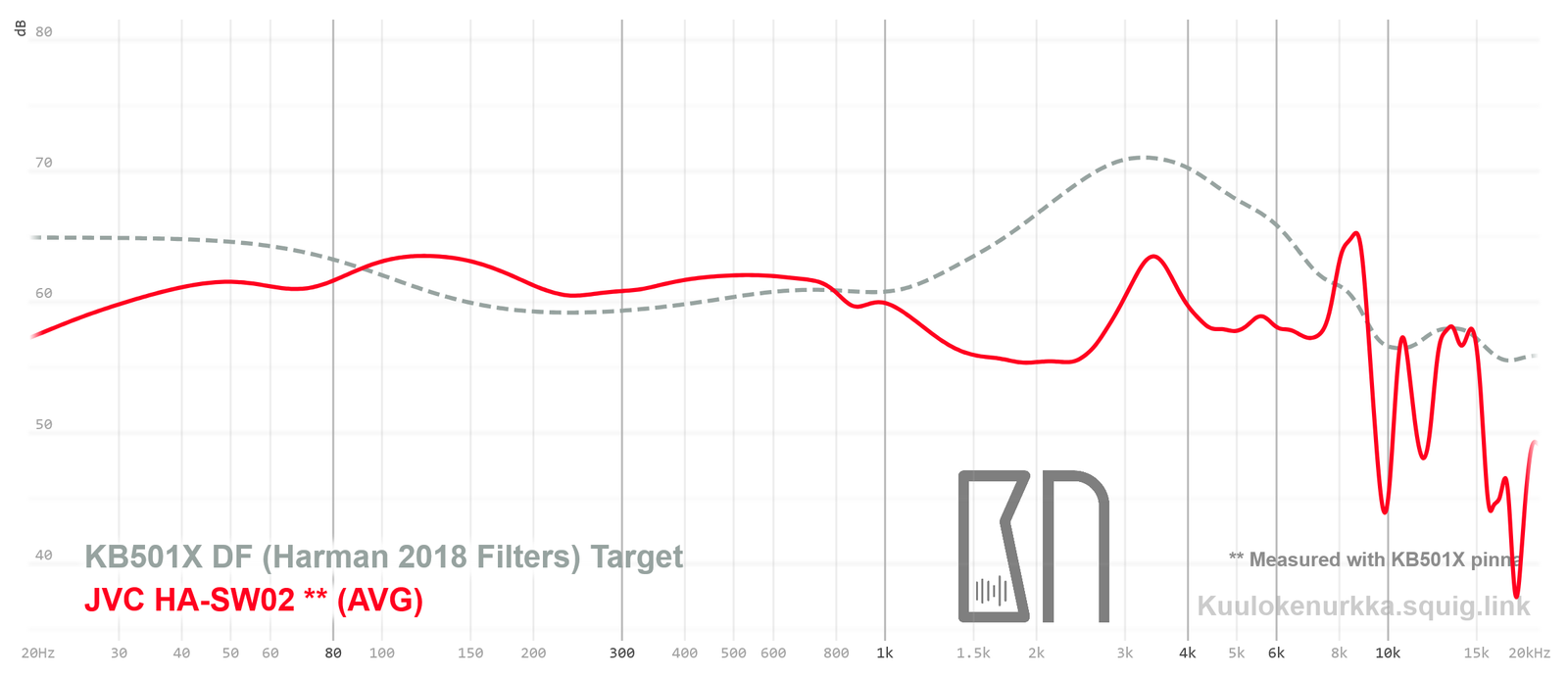
Without beating around the bush, the HA-SW02”s frequency response is so colored and distorted that nowadays hardly anyone would dare to sell anything similar. However, in 2015, headphones could still sound almost anything, as the Harman curve or other targets describing good sound quality had not yet established their position. JVC might well have intentionally made the sound warm and soft to reinforce the story of wooden drivers and their ”organicity.".
The HA-SW02 practically completely lacks ear-gain, i.e., the rising energy level expected by the human ear from 1 kilohertz onwards. Hopefully, the engineers have not mistakenly assumed that the frequency response must be a straight line, which it should not be, unless a response perfectly aligned with the target curve is compensated for as such afterwards. Since low frequencies are reproduced between 100–800 hertz up to 12 decibels louder compared to the normal level of upper mid-frequencies, such a sound inevitably sounds stuffy, soft, and lifeless. How is the 2 kilohertz region even made to reproduce so faintly and unnaturally?
Such a sound could even be relaxed and unstressful, for example, as ”background music,” if it weren't for a strong 7-decibel treble emphasis forming between 8–9 kilohertz relative to the surrounding frequencies. From there onwards, the very high treble remains well under control. At the other extreme, a rather subdued sub-bass is noted, from which I would have expected more, considering the closed-cup design. At least the HA-SW02 is not a traditional bass-heavy closed headphone, but it must still be classified by current standards as a completely unsuccessful product that the buyer would have to equalize into shape. Of course, changing the ear pads might already help.
Sound observations
Although it is sometimes difficult to deduce from frequency response measurements, which represent some kind of population averages and are partly inaccurate, how headphones sound specifically on one's own ears, the HA-SW02 is unfortunately a clear case. The lower midrange does reproduce relatively very loudly, but the reproduction lacks all clarity. The listening experience is reminiscent of my ears being blocked or having suffered severe hearing damage. On the other hand, at the same time, a single treble emphasis manages to sound surprisingly harsh and irritating, or at least unnatural.
Due to the softness of the reproduction, there is hardly any power in the bass either; instead, it sounds mostly monotonously stuffy. Instruments, in turn, are very difficult to even identify, as they lack any energy beyond their body. Vocal performances are comically veiled, as if the sound were playing somewhere far behind a thick wall. The soundstage understandably remains tightly inside the head, as the positional cues expected by the human ear are missing due to the subdued ear-gain region.
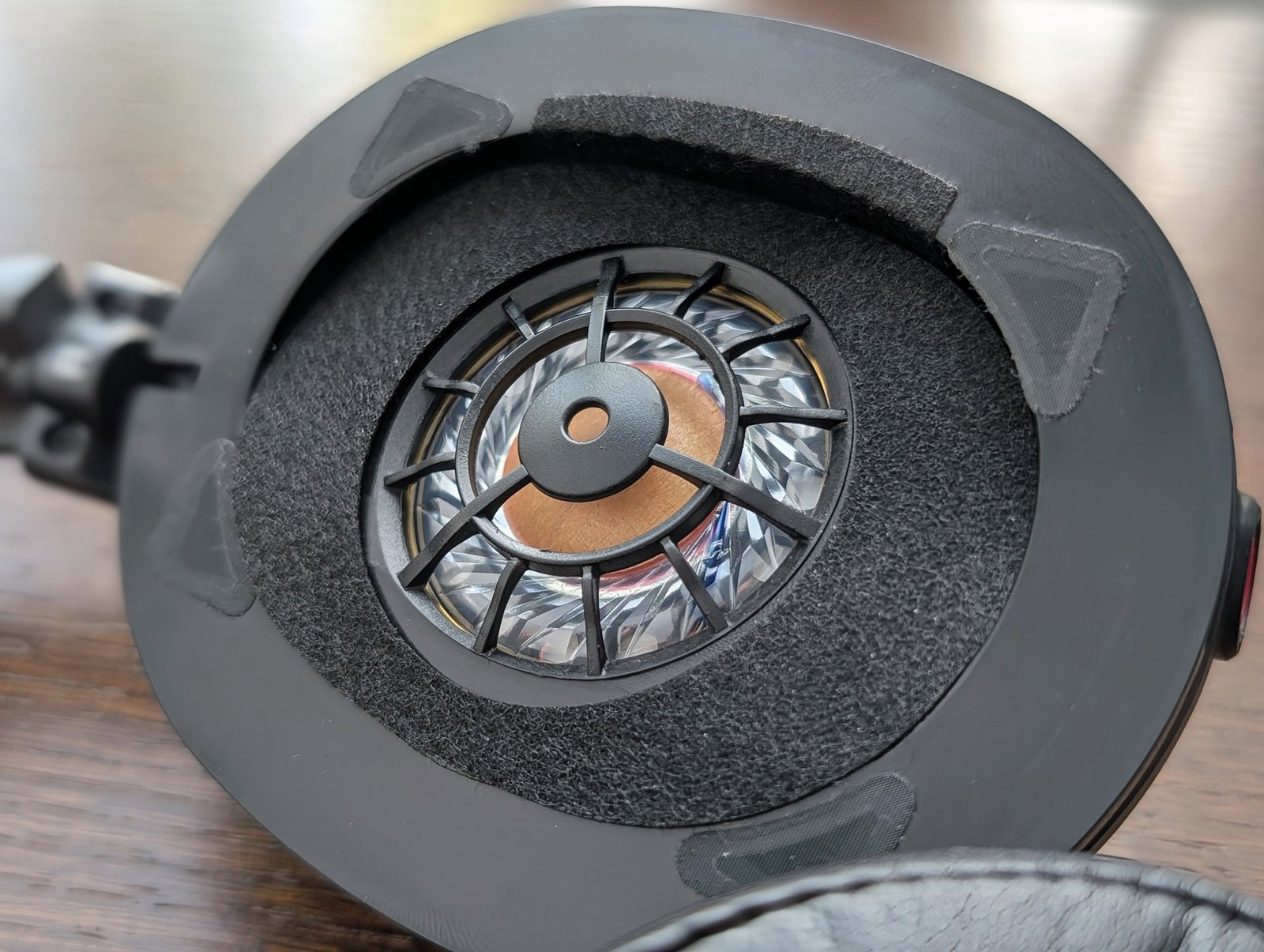
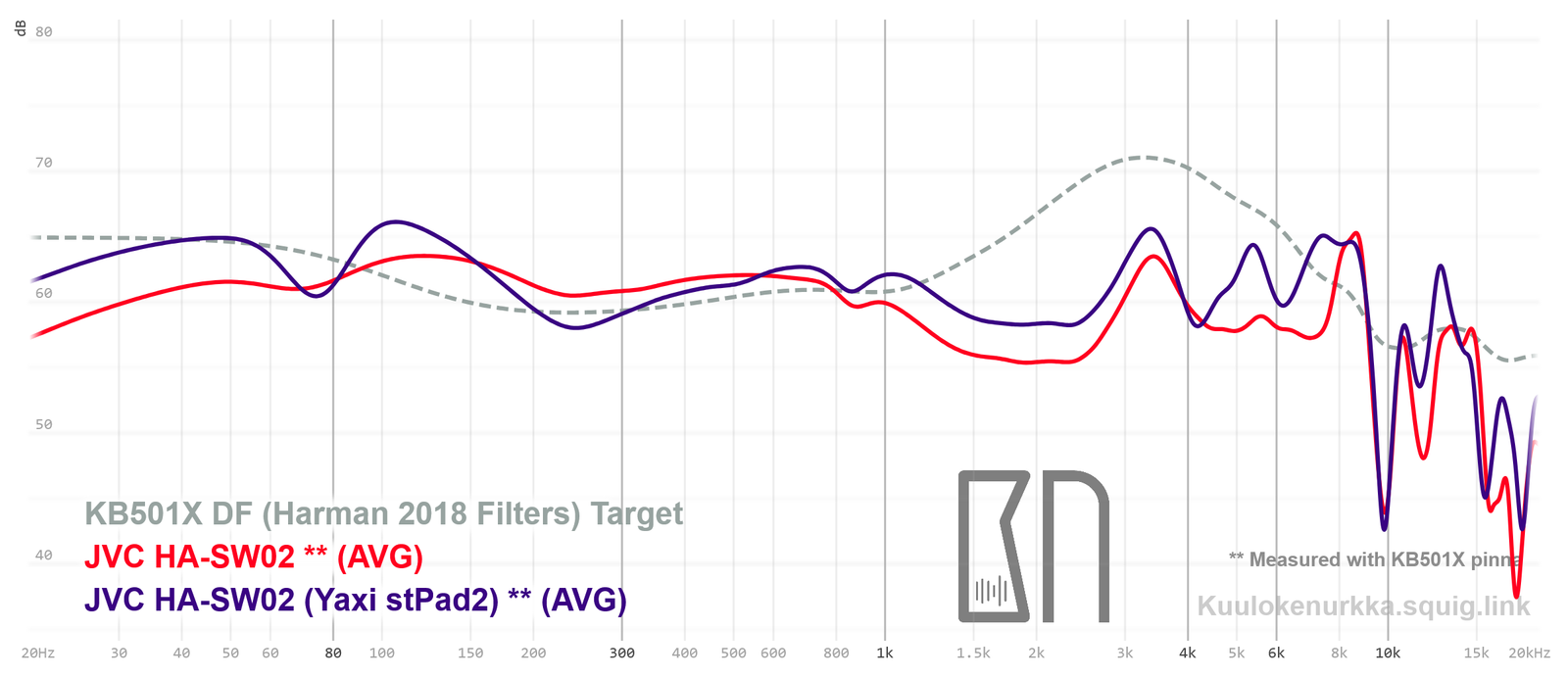
The HA-SW02 primarily demonstrates how good headphones sold today are, because nothing this peculiar is encountered even by accident – at least not from well-known manufacturers. JVC's headphones can only be saved by equalization. With the Yaxi pads I tried, I could use the HA-SW02 as a background music player, for example, while working, but even in this case, the stuffy and uneven sound would quickly become distracting. When things are not clear, listening constantly requires effort.
Fixing with equalization
I perhaps don't mention often enough that even very mediocre headphones could be equalized to the level of products many times more expensive than themselves. This also applies to the HA-SW02, which, when corrected, competes quite evenly against newer headphone models.
The advantage of JVC's headphones is excellent channel balance and relatively linear treble. When the high frequencies are raised to a more normal level, the HA-SW02 responds to changes predictably without narrow peaks or resonances forming in the treble. For me, the Harman curve derived from the DF response already served as a good basis, as long as I fine-tuned the individual treble emphasis to my liking.
Due to the exceptionally large positive adjustments, the amount of amplification power required increased significantly, as the digital pre-gain level must be lowered proportionally to avoid distortion. However, thanks to the HA-SW02's high sensitivity, it did not yet become particularly power-hungry, but rather played well with conventional amplifier equipment.
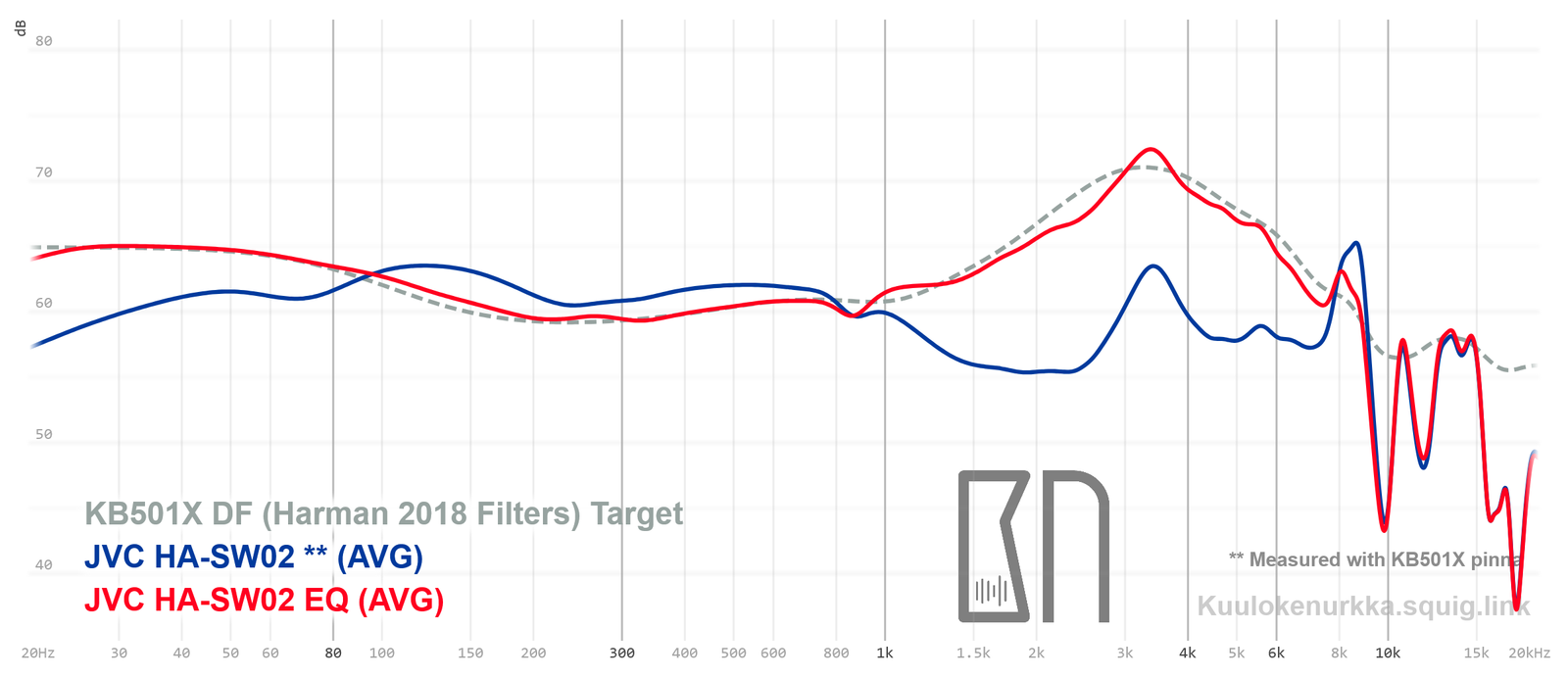
EQ filters:
- Low Shelf: 90 Hz | 3.8 dB | Q 0.4
- Peak: 130 Hz | -2.8 dB | Q 1.2
- Peak: 250 Hz | 2 dB | Q 1.9
- Peak: 260 Hz | -4.6 dB | Q 0.5
- Peak: 860 Hz | -3.4 dB | Q 1.2
- Peak: 2700 Hz | 11.5 dB | 0.6
- Peak: 3500 Hz | -4.1 dB | Q 2.0
- Peak: 4500 Hz | 3.2 dB | Q 2.0
- Peak: 8000 Hz | -8 dB | Q 4.0
- High Shelf: 10 000 Hz | -2 dB | Q 0.7
With my adjustments, the JVC model finally sounds good and natural. The bass also kicks nicely, and the treble no longer strains or irritates. I also imagine the cups' better-than-usual acoustics to be beneficial, as the sound feels clean and precise. On the other hand, few closed-back headphones sound this refined in their natural (factory-tuned) state, so everything could also be attributed to a proper frequency response. I myself very rarely equalize passive headphone models, but I must state that the benefits are obvious. I got the HA-SW02 to sound so good that it could very well replace many more expensive headphone models on my shelf – especially if the wearing comfort were still slightly better.
Summary
At the time of the HA-SW02”s (and HA-SW01”s) release (2015), headphone hifi was still mostly based on subjective feeling, so JVC primarily sold an interesting story about the wooden parts contained in their headphones. The thin, sake-soaked, birch veneer drivers are undeniably fascinating, so many surely perceived the warm and soft sound as their creation. Compared to brighter-sounding headphone models, there might have been demand for such an "analog" reproduction in general, but by current standards, the HA-SW02 feels like quite an audio quality suicide.
JVC's headphones are thus high-quality in construction and comfortable enough to listen to, but the factory tuning is sadly lifeless and distorted. However, if someone ends up buying the HA-SW02 cheaply, it is possible to make it a playable device by equalizing it. In a way, it also feels like a piece of headphone history, because since then, JVC has not released passive hifi headphones, nor have any other manufacturer's drivers featured wood veneer diaphragms.
Pros and cons:
+ Sounds good when equalized, just like other headphones
+ Interesting birch veneer drivers
+ Sturdy and high-quality feeling construction with wooden cups
+ Easy reproducibility supports equalization
+/- Even fit and relatively light weight, but mediocre wearing comfort in the long run due to thin pads
– Terribly lifeless and unnatural sound
– Requires expertise to save the sound quality
– Sparse accessories
– Original spare parts likely no longer available
 EN
EN  FI
FI
Could you tell me your equalizer settings?
Hey, I added the settings directly to the EQ section of the review. I previously had 12 filters (because JDS Labs Element IV allows that many), but I modified the equalizer so that 10 filters produce almost the same result. However, this number of adjustments is more common and the maximum in many software programs.