Hifiman-October 2/10
Author: Roderick
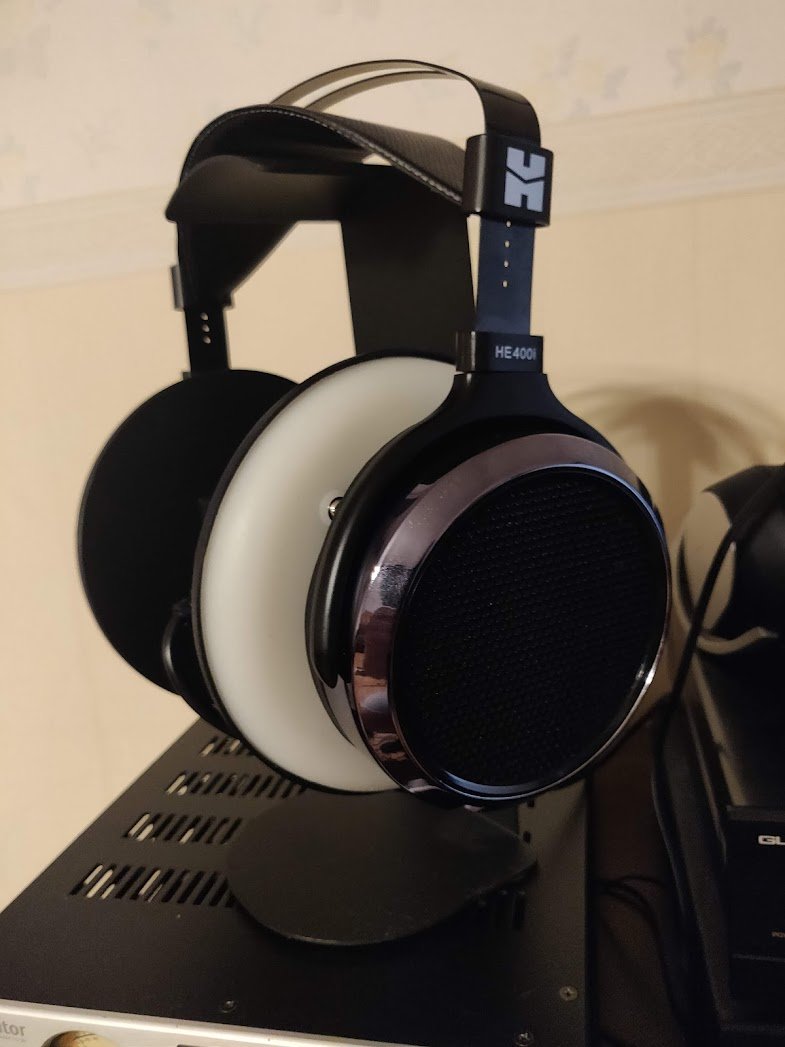
Table of Contents:
Information:
- Price: 499 € (2014), 199€ (2020)
- Sensitivity: 93 dB/mW
- Impedance: 35 ohms
- Weight: 370 g
- Connector type: 2 x SMC/2.5 mm/3.5 mm depending on headphone version
- Cable: 1.5 meters long cable with a 90-degree 3.5 mm connector and a 6.35 mm adapter
Review sample: Self-purchased product
The Hifiman HE400i is the successor to the HE400 model, released in 2014 (previous review). The HE400i has changed several times over the years, as the SMC connectors familiar from the original HE400 model first changed to 2.5 mm connectors and then to 3.5 mm connectors. In 2020, the appearance of the headphones changed completely, until in 2021 the i-series was finally discontinued with the release of the HE400se model.
This review is based on my experiences with HE400i models equipped with 2.5 mm and 3.5 mm connectors. Although physical changes have been made to the headphones, to my understanding, only the 2020 version differs sonically from other models.

Structure and comfort
In terms of comfort, the HE400i is a significant improvement compared to the previous HE400 model. It weighs almost 100 grams less and distributes better on the head thanks to the redesigned headband structure. In my opinion, this headband solution is the most comfortable Hifiman has developed to date. A similar style of construction with better manufacturing materials is now used in the 1799 euro Hifiman Arya. A more refined version of a similar headband solution can also be found in the HE1000se (≈3700 €) and Susvara (≈6000 €) models.
Unfortunately, the redesigned headband used in the HE400i has had durability issues, as the plastic arch of the headband has not been very durable. For many headphone owners, the plastic headband broke within just a few weeks of use. This justifiably caused considerable annoyance, as the headphones originally cost as much as 499 euros. Hifiman's reputation was not improved by the fact that the HE560, released around the same time and costing over 1000 euros, suffered from the same problem, and additionally, the wooden cups of those headphones were prone to cracking.
Since then, Hifiman has been almost synonymous with headphones of poor build quality. Unfortunately, the manufacturer has also not done its best to rectify the situation. Because of this, even today, Hifiman headphones still have many durability-related issues.
The HE400i's ear pads are so-called hybrid pads, with faux leather on the edges, and the part that comes into contact with the skin is made of some kind of fabric fiber. The part that comes into contact with the skin is slightly rough and does not compare in comfort to, for example, Beyerdynamic's velour pads. However, the new pads are significantly more comfortable than the original HE400's vinyl-like faux leather pads. The first HE400i version was released with SMC connectors, but fortunately, these were phased out with updates.

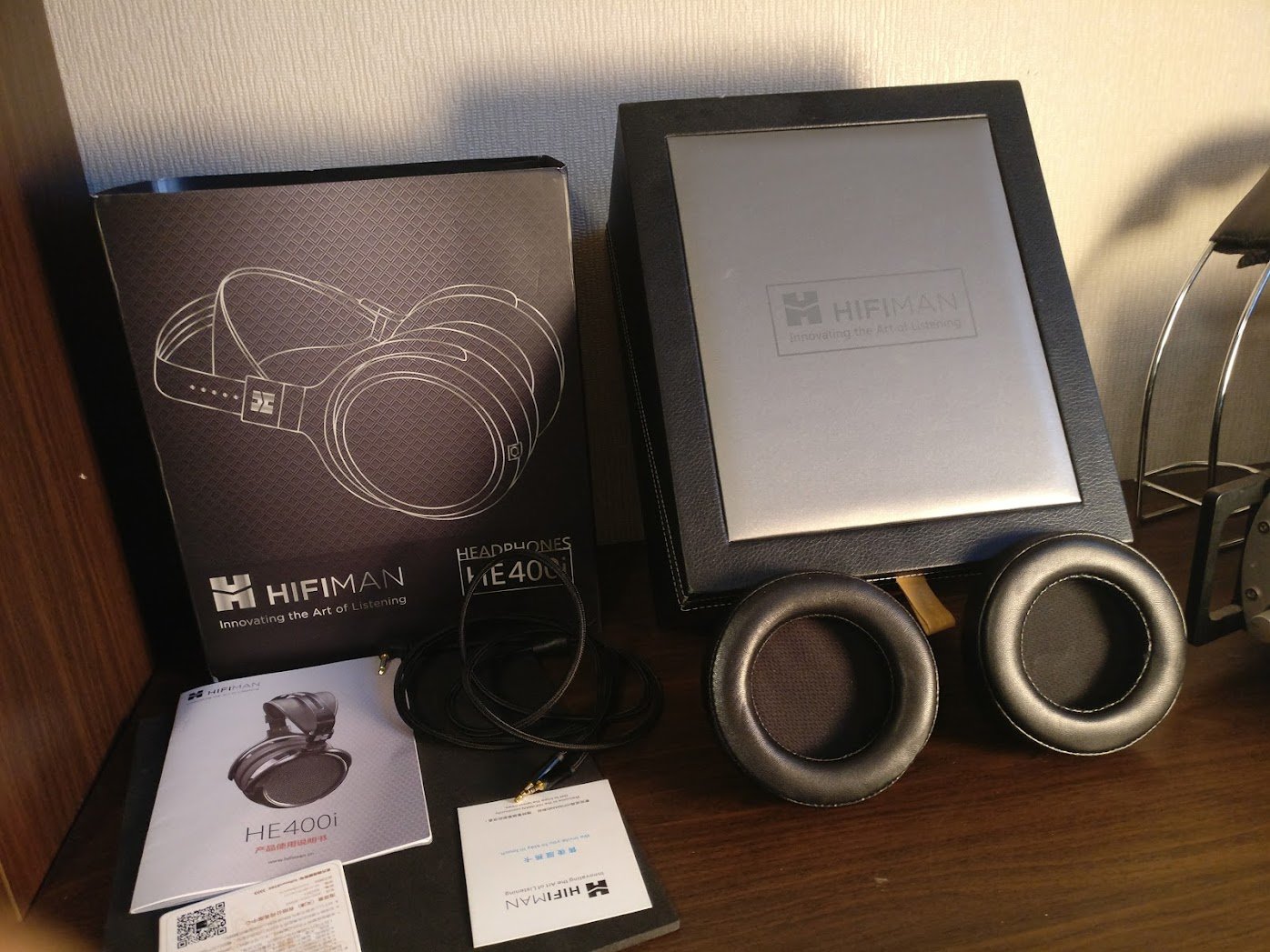
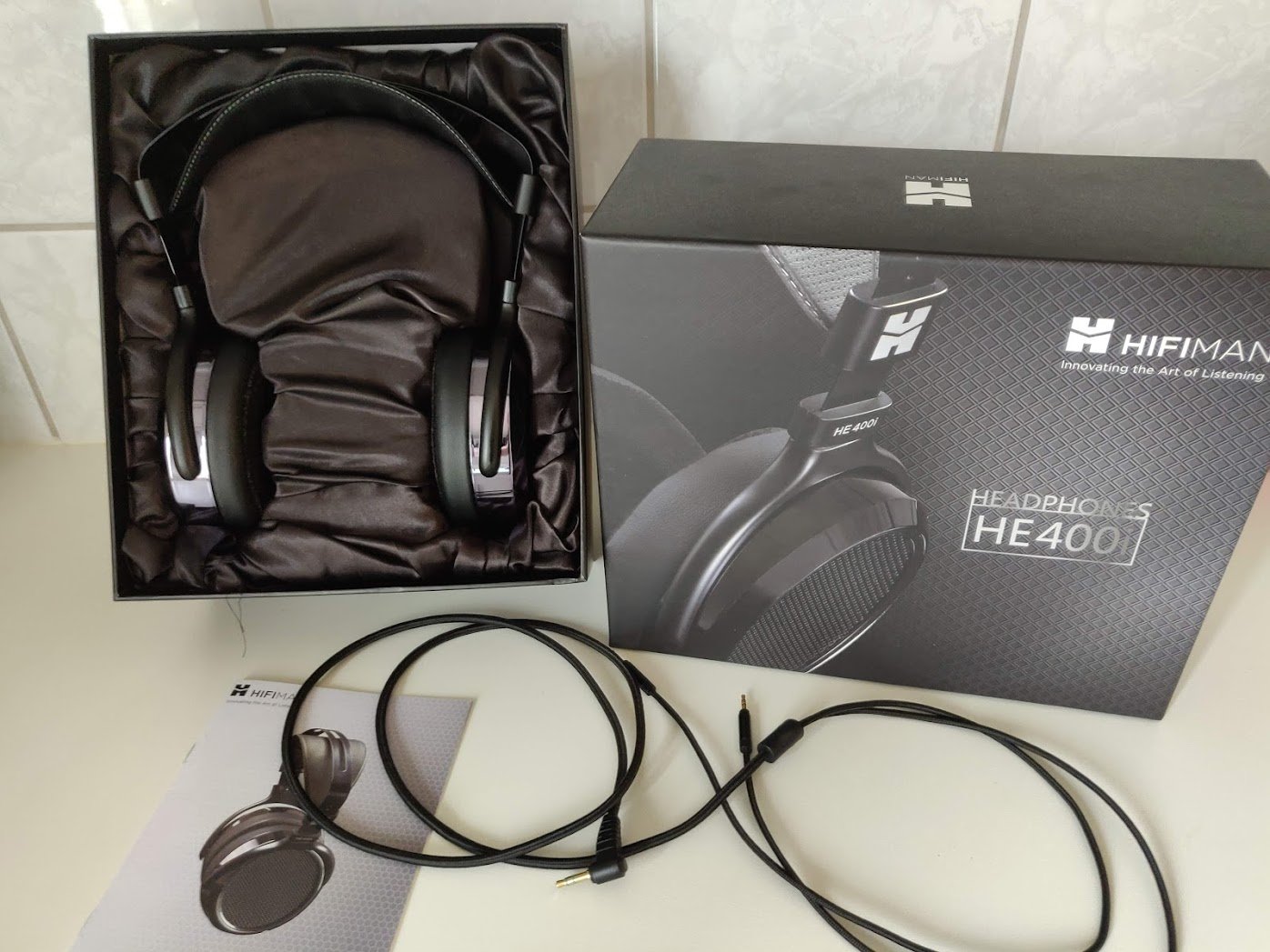
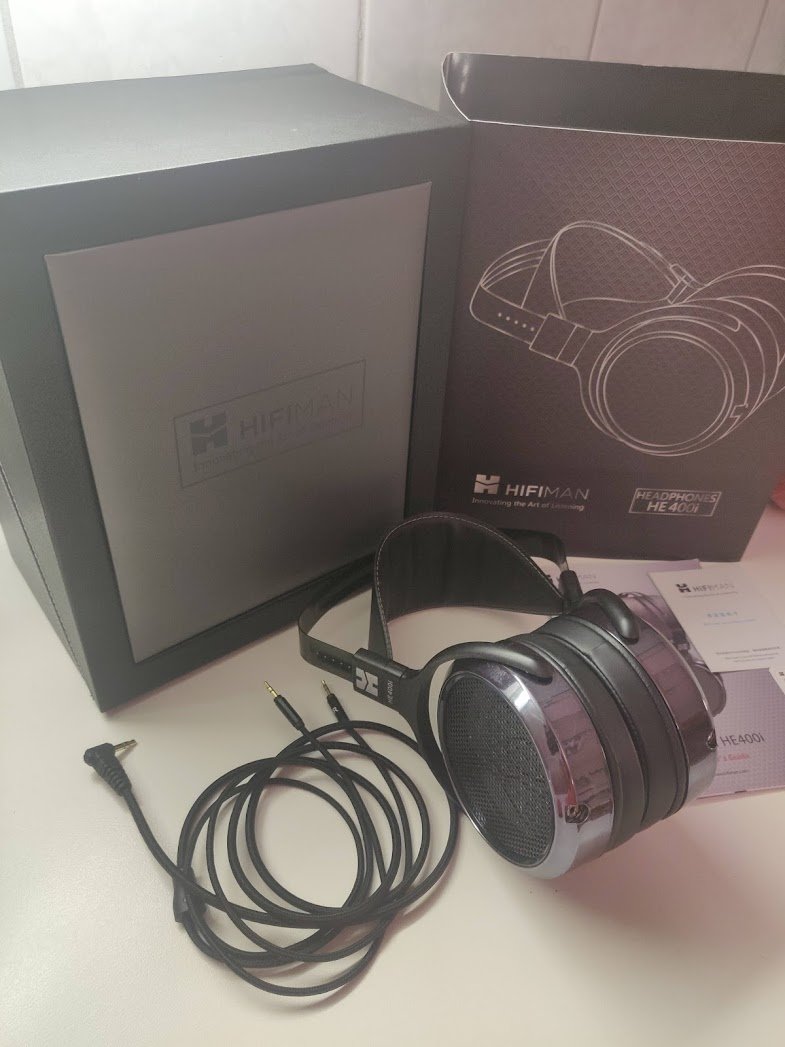
In the first years of sales, the headphones were delivered in a fine storage box imitating a leather finish. Newer versions use a less fancy cardboard box. Hifiman claimed that the box was changed for environmental reasons, and that customers should rejoice in this solution. Everyone can judge for themselves how credible Hifiman's explanation sounds.
In my opinion, it is quite understandable that the quality of the packaging was also compromised, as the price of the headphones decreased to less than half of the original over the years. However, Hifiman now uses a cheap cardboard box even for its significantly more expensive Arya model. When headphones cost almost 2000 euros, the packaging should also stand out from cheaper models.
Sound quality
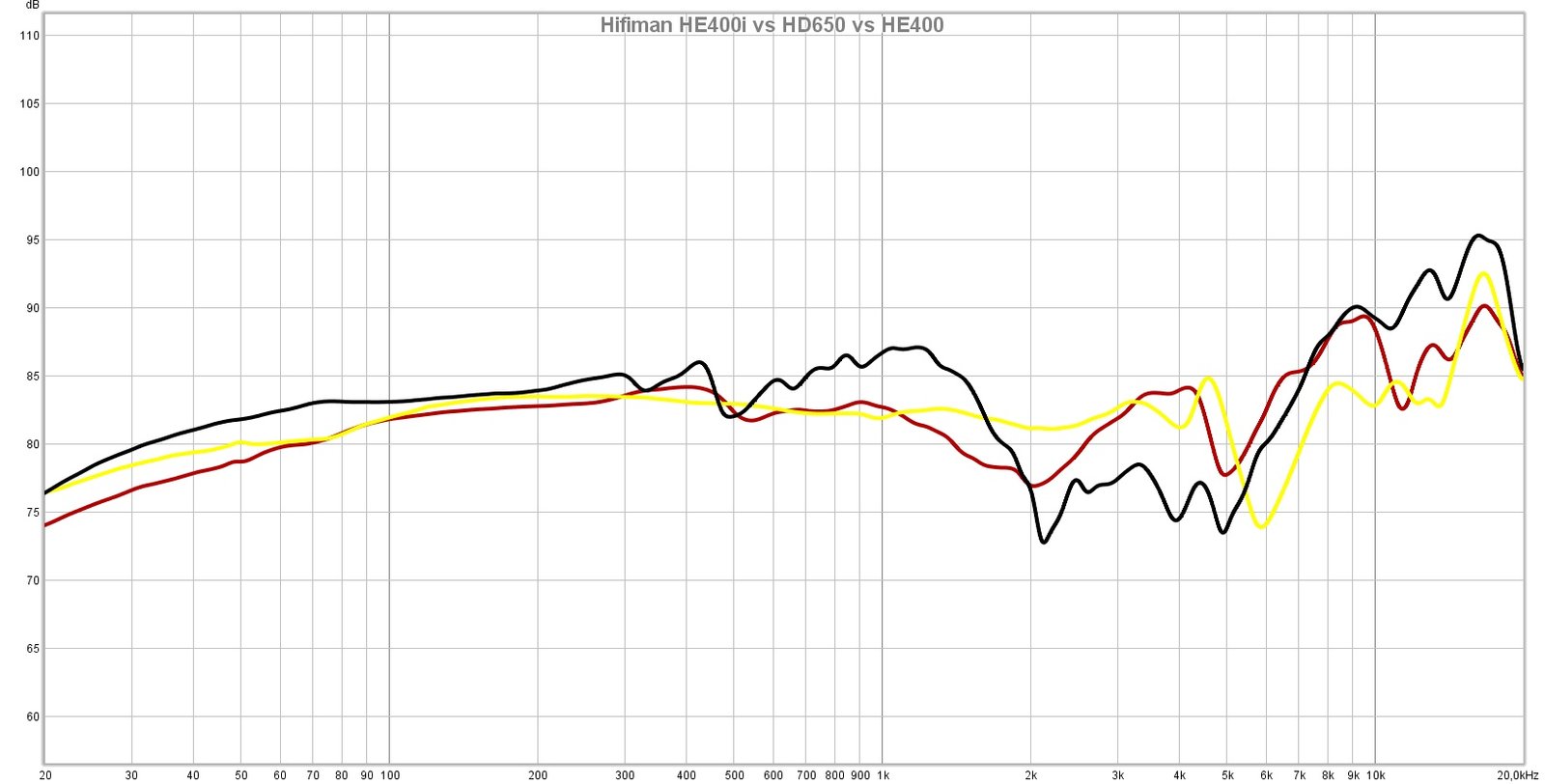
The sound of the HE400i is characterized by lightness – the headphones have scarce bass and emphasized high frequencies. According to my measurements, the HE400i plays at approximately 3 dB lower volume from 100 Hz downwards compared to the HE400 model. The difference is not significant, but it is audible.
An interesting difference between the HE400i and HE400 is the dip centered around the 2 kHz region in the i-model, followed by a hump between 3–4 kHz. This kind of tuning is now found in almost all Hifiman headphones, and according to some theories, it expands the soundstage of the headphones.
The mid-frequencies of the HE400i do not have the same pleasant fullness as the older HE400. The delicacy and slight sterility of the sound are, in my opinion, the greatest sonic weakness of the headphones. The best aspects of the HE400i, however, are its sound purity and better-than-its-price resolution – even the treble does not sound piercing, although there is plenty of brightness in the headphones. Excessive brightness has been a common complaint regarding the HE400i model, but neither of the headphones I tested, in my opinion, matches those complaints in terms of brightness.
In terms of soundstage, the HE400i is quite large – I would say comparable to Beyerdynamic DT880 headphones, but not quite on the level of AKG K701. Sennheiser HD600 and HD650 clearly fall behind in soundstage size.
The headphones are not particularly demanding in terms of amplification, but the owner should ideally have some kind of amplifier or a powerful sound card. If there is no amplifier and no desire to acquire one, it is better to consider low-impedance Beyerdynamic headphones or Grados.
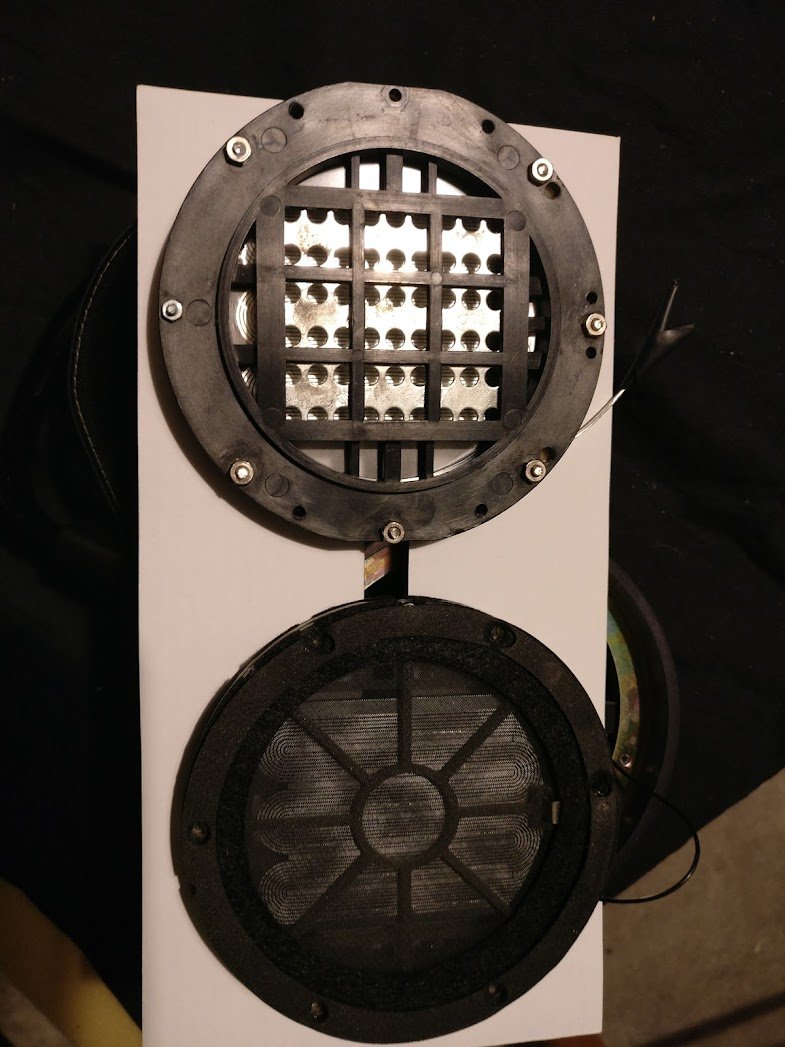
Summary
Although the HE400i is a slight disappointment for me compared to the HE400 model, the headphones are by no means bad. The original price of 499 euros was high, but at that time, there were hardly any competitors in their price range that were as technically impressive. Better headphones, such as Sennheiser HD800, Hifiman HE560, or Audeze LCD-2, cost at least a thousand euros.
In terms of sound, the HE400i is, in my opinion, more balanced and almost in all respects better than its competitors at the time of release, such as the Sennheiser HD700 and Grado RS2e. As the price dropped, the HE400i became an increasingly recommendable purchase over the years for those who like a somewhat bright sound – even today, the headphones are excellent.
Hifiman's reproduction sounds cleaner (less veiled) than the Sennheiser HD650. Despite its brightness, the HE400i's treble is more balanced than in the Beyerdynamic DT880 and DT990 models, and the Hifiman does not sound as lifeless as the AKG K701. If used HE400i's are available for, say, 125 euros, it is definitely worth testing if the headphones' tuning pleases your ear. However, in my opinion, it's not worth paying more than that for them, because the slightly better-sounding and more durable HE400se costs only 200 euros new.
Pros and cons:
+ Detailed and unveiled sound
+ Quite large soundstage
+ Very good comfort
+ Price
– Weak bass reproduction
– The reproduction is thin in style, if not even sterile
– Plastic headbands break easily
 EN
EN  FI
FI