Author: Sword of Damocles
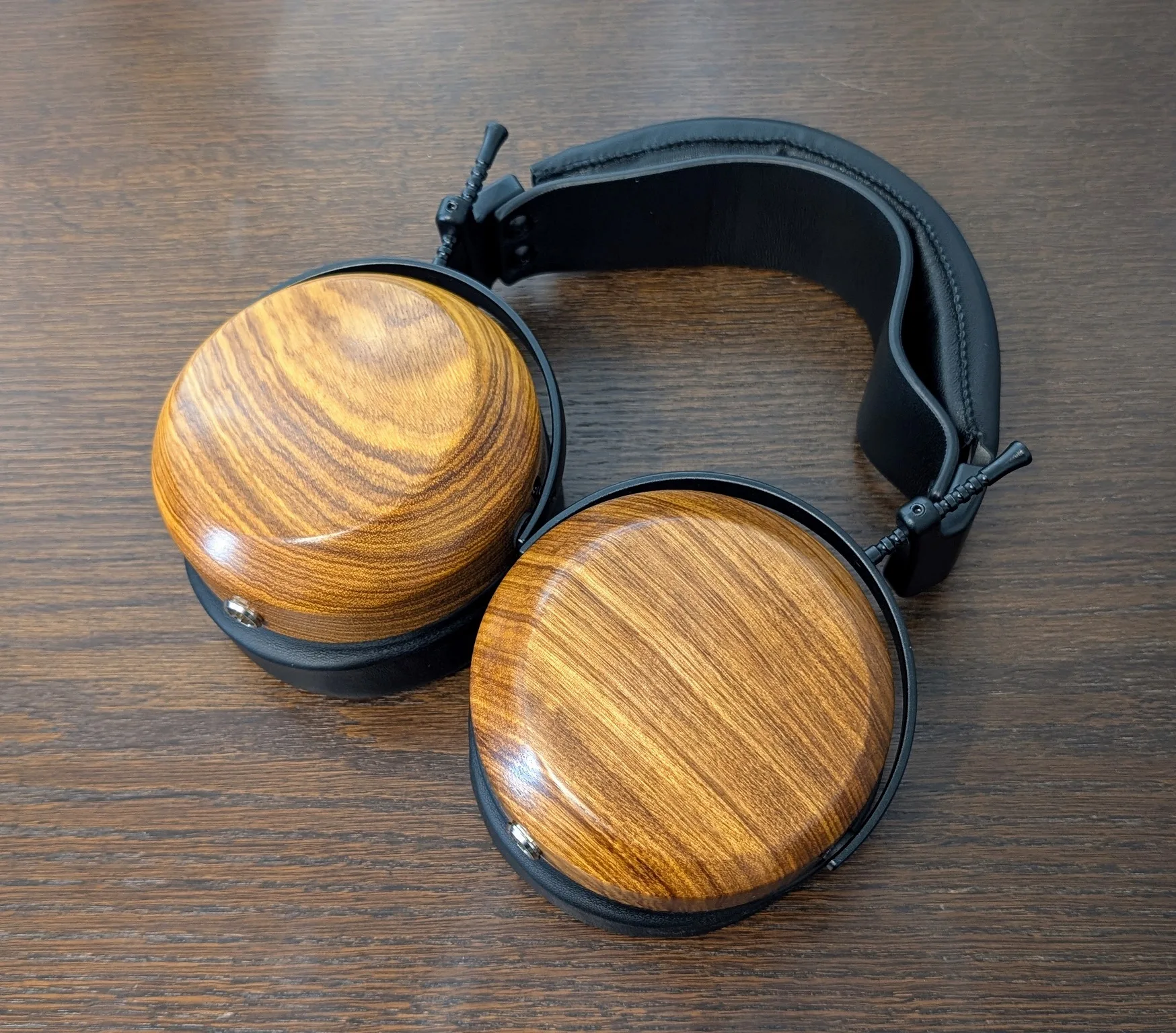
Table of Contents:
Information:
- Release year: 2024
- Country of Origin: China
- Price: 330$ on Taobao / 500–600€ on Aliexpress (includes VAT)
- Type: Closed, over-ear
- Dynamic 50 millimeter drivers (PEN + Vapor Deposed Beryllium)
- Impedance: 300 Ohm
- Sensitivity: 99 dB/mW
- Weight: 588 g (likely depends on wood type)
- Connector type: 2x 4-pin-mini-XLR
- Cable: Length 2 m / connector 6.35 mm (probably other options by asking)
- Accessories: None
Review sample: Self-purchased product
In recent years, Chinese headphone workshops have excelled in copying other headphone manufacturers and in so-called reverse engineering. We are now at the point where the market is flooded with almost identical replicas of headphones from ZMF, ABYSS, and T+A, among others. Although Chinese counterparts are not claimed to be genuine in, for example, Taobao and Aliexpress listings, the activity operates in a very gray area. In Western countries, similar copies would probably not be allowed to be sold, but different rules apply in China. This time, however, I will not dwell on the legality of the activity, but instead, through one example, find out how good the Chinese are at copying others.
I ordered a copy from Taobao costing about 310 euros (+ 50€ shipping costs) ZMF Verite Closed -headphones, whose real price is almost tenfold. The manufacturer of the copy states its name as Sweet Audio, but the headphone model name varies depending on the listing. Often, however, the abbreviation VC, meaning Verite Closed, has been included. It is therefore clear that the manufacturer aims to sell its headphones under ZMF's reputation. Currently, the Verite Closed copy can also be purchased from the Aliexpress website for 500–600 euros, although it would appear that some of them imitate the closed Atrium model instead of Verite. In this case, the drivers and ear pads are slightly different, although this may not be apparent at the time of purchase. The headphones I am reviewing have Beryllium-containing drivers and similar pads, like the Verite model.
Several different Chinese copies have already caused ZMF trouble, so my own review might also slightly harm the company. I am not proud of this, but the existence of copies does not depend on whether I write about them or not. There is already discussion about copies, even though, for example, Head-FI tries to censor it on its own platform. I even received a private message from Zach of ZMF, asking me to remove my Head-FI posts. Interestingly, the same forum thread already contained pictures and discussion about the Verite Closed copy, but the moderators only removed my own messages. So, we are treading on thin ice. I certainly understand the situation from the manufacturer's perspective, but at the same time, it would surely be useful for consumers to know how, for example, to distinguish a Verite Closed copy from genuine headphones. Otherwise, people can be scammed in the used headphone market. ZMF ultimately cannot prevent copy headphones from ending up in Western countries through Chinese online stores.
I chose the Verite Closed copy from the different options because I also own its genuine counterpart for comparison. The Verite Closed is actually the only headphone in my collection that I owned even before founding Kuulokenurkka. Writing this article also provided an excellent opportunity to revisit it.
Packaging and accessories
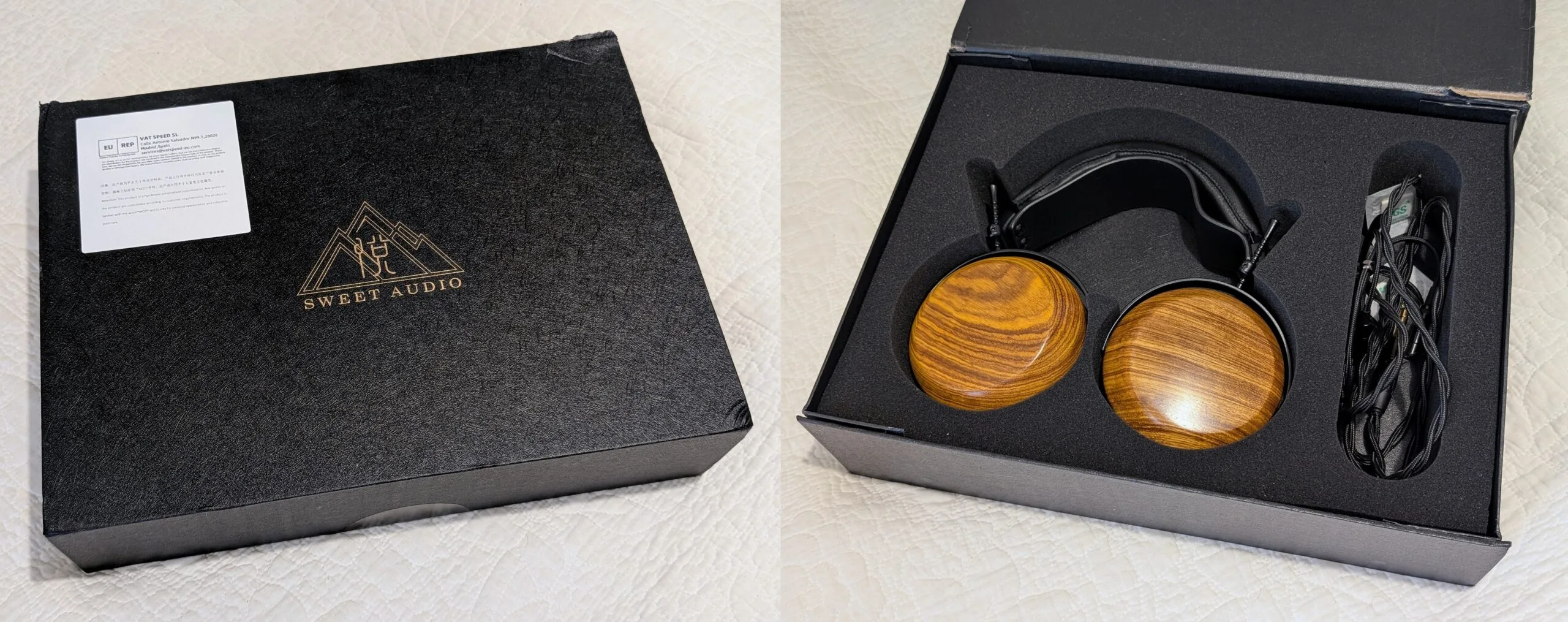
Considering the more affordable price of its product, Sweet Audio has understandably not tried to imitate ZMF in the product packaging; instead, the Verite Closed copy arrives in a black cardboard box instead of a plastic case. However, the Sweet Audio logo has been added to it, and interestingly, the contact information of some kind of Spanish mailbox company assisting with customs matters.
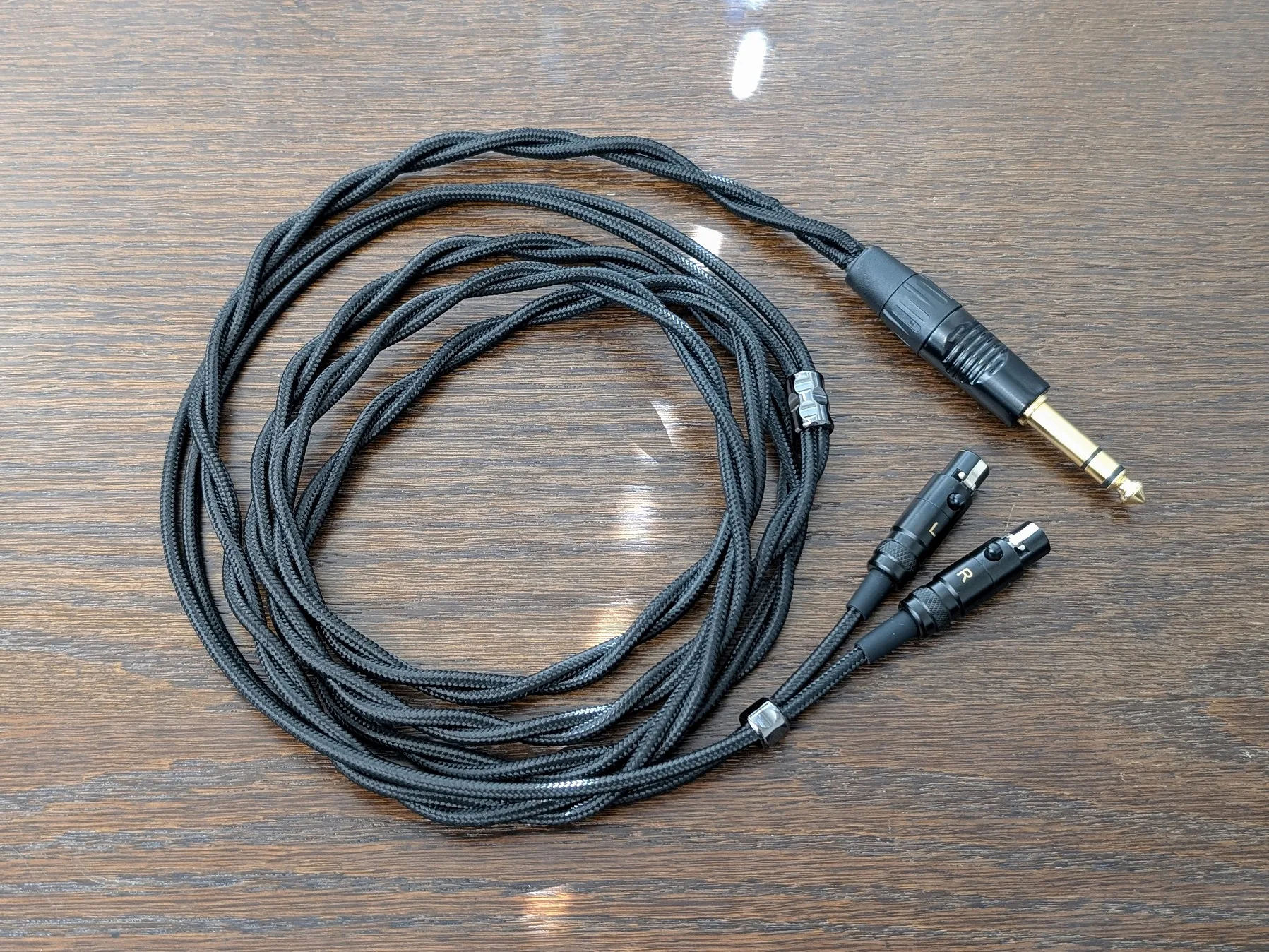
Regarding accessories, the Verite Closed copy only comes with a 2-meter braided cable with a 6.35 millimeter connector. With its pleasantly smooth and flexible fabric sleeving and finer-than-usual connectors, the impression of quality matches ZMF's standard cable. My only complaint about Sweet Audio's cable concerns the ”slider” that squeezes the parts branching to the cups together, which is very microphonic when it knocks against the Y-splitter. Unfortunately, this piece cannot be removed from the cable as it is made of metal instead of soft plastic.
Structural differences compared to the original
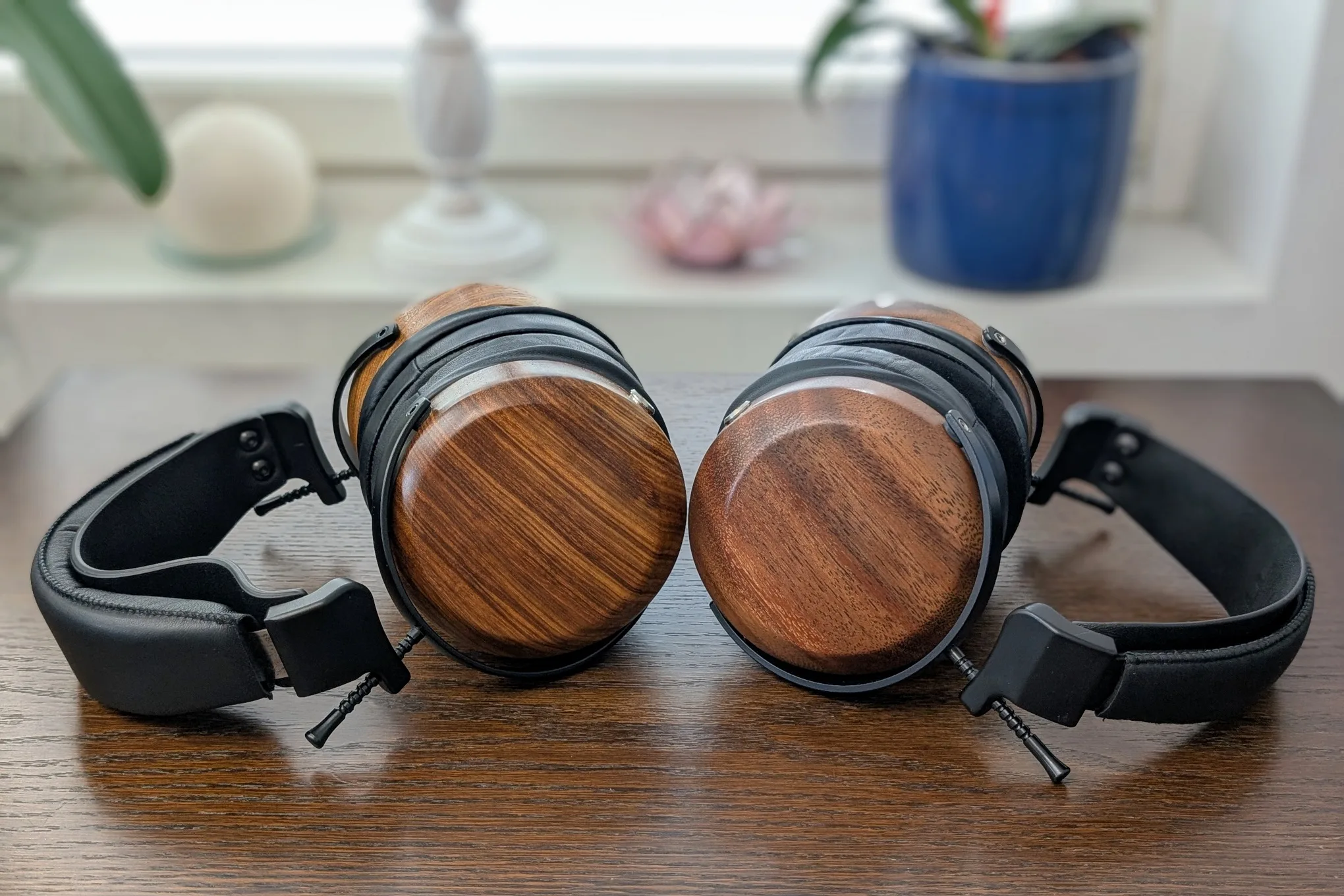
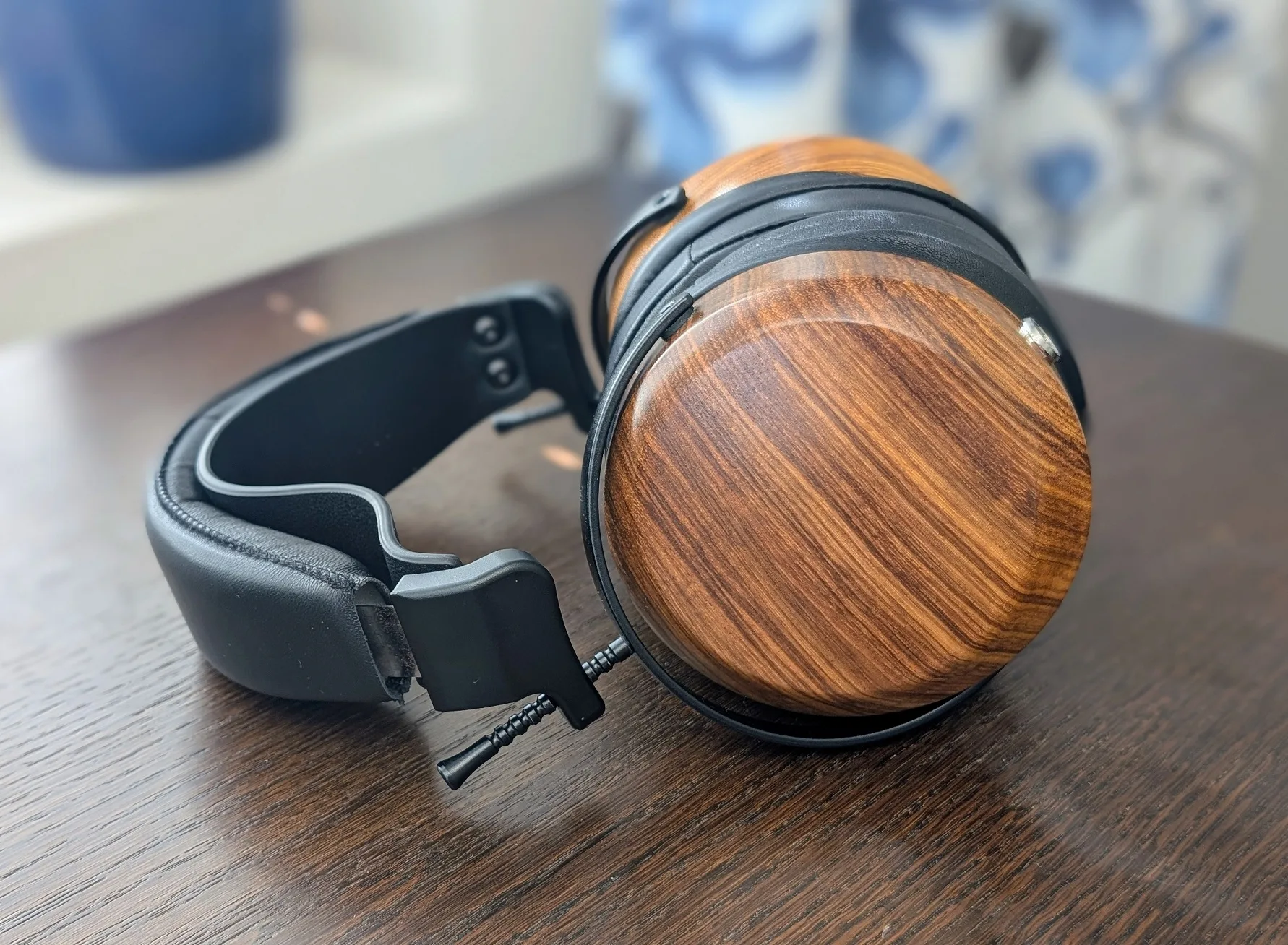
Without having seen ZMF's Verite Closed headphones, Sweet Audio's copy could easily be mistaken for the genuine article. Both the shape of the wooden cups and the headband structure have been meticulously copied, down to the bolts and screws. The headphone connectors are also mini-XLR type, mimicking ZMF, and genuine leather is used as the padding material, which, however, smelled really bad for a few weeks – although it could also have been foam.
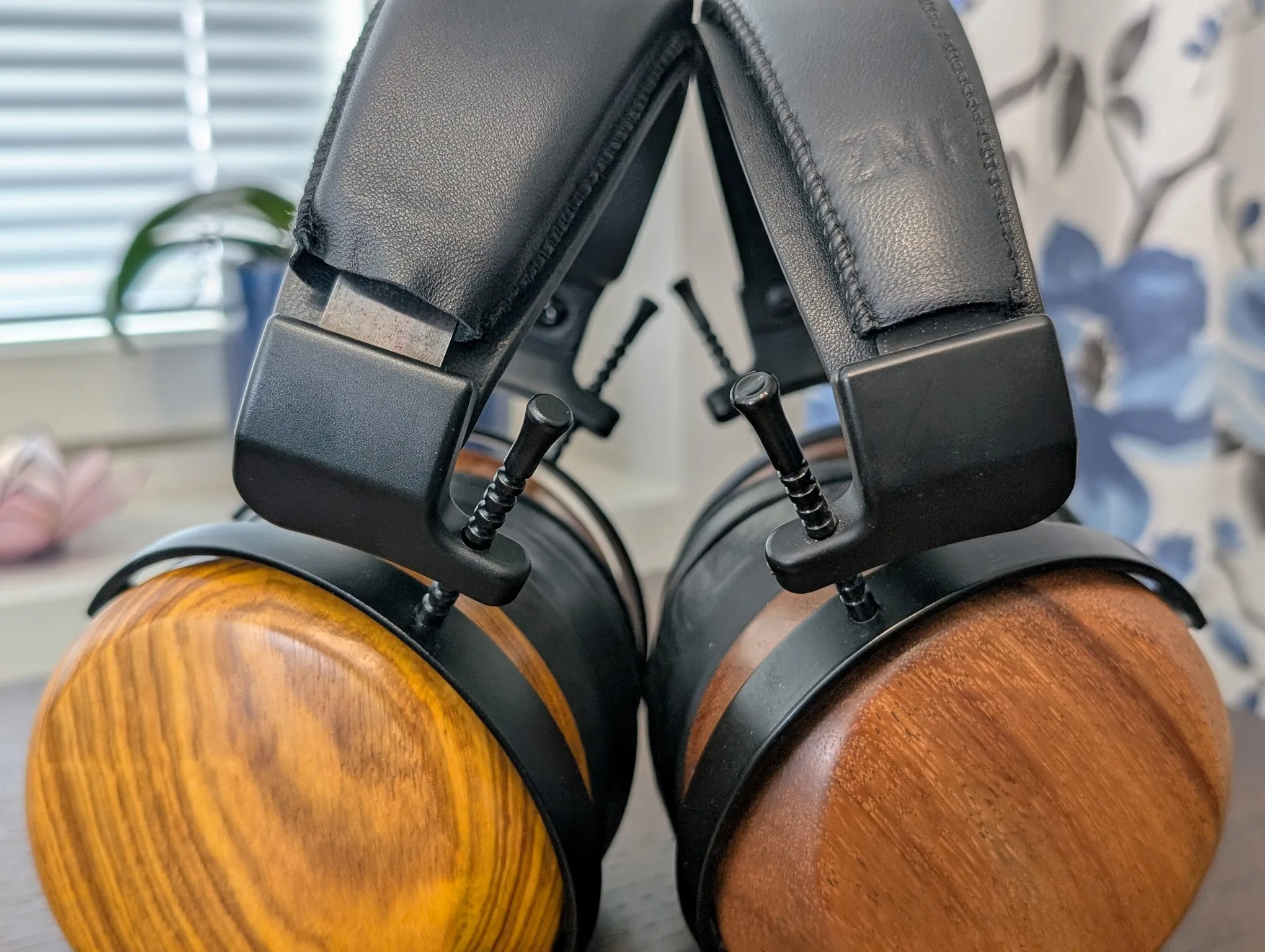
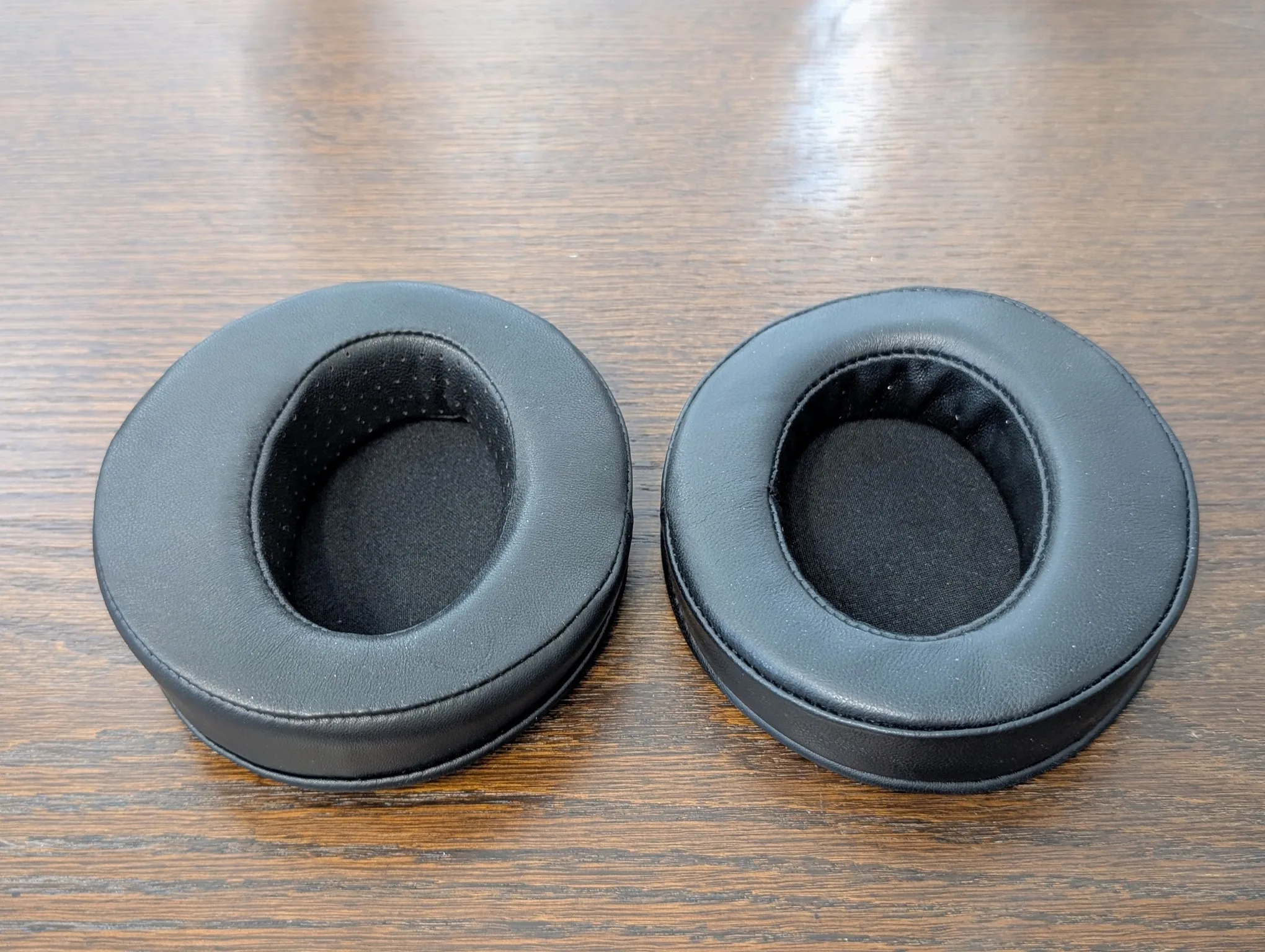
Only a closer inspection reveals small differences between the headphones. The inner part of the earpads in the Verite Closed copy is perforated, and the foam material is also more porous and thus softer. Additionally, around the steel arch of the headband, there is thicker padding that is smoother than ZMF's Crescent headband (lacking the different sized padding nubs). However, these differences do not matter for comfort, as the copy is at least as comfortable, or even excellent considering the large size of the headphones. Aesthetically, the Verite Closed copy, however, slightly pales in comparison to its original, as it is not quite as well finished. For example, a small ”smudge” is found on the back edge of one wooden cup, and there is a small crack in the frame of the other driver. The headband padding is also slightly too short, so the edges of the steel arch are visible beneath it. The same issue often affects ZMF headphones as well, but not nearly as badly.
.
I'm not sure what wood the copy's cups are made from, but the headphones weigh about 135 grams more than the Verite Closed made from monkeypod wood. Part of the weight difference can be explained by the different metal alloy of the headband (Verite Closed uses light magnesium), but I also noticed that the wooden cups are not exactly the same size. In Sweet Audio's copy, the cup is slightly thicker, making, for example, the back edge slightly steeper in shape. The additional material certainly adds some weight. In terms of craftsmanship and lacquering, the Chinese copy could still easily cost 1000–2000 euros instead of 310 euros, meaning it would still pass for the real thing. The metal parts of the copy also roughly match the quality of ZMF's aluminum headband. The height adjustment on the copy, however, literally sticks, because the tightening screws are too tight, preventing the headband from moving smoothly from one notch of the adjustment rod to another. The higher price of ZMF headphones is partly due to better quality control.
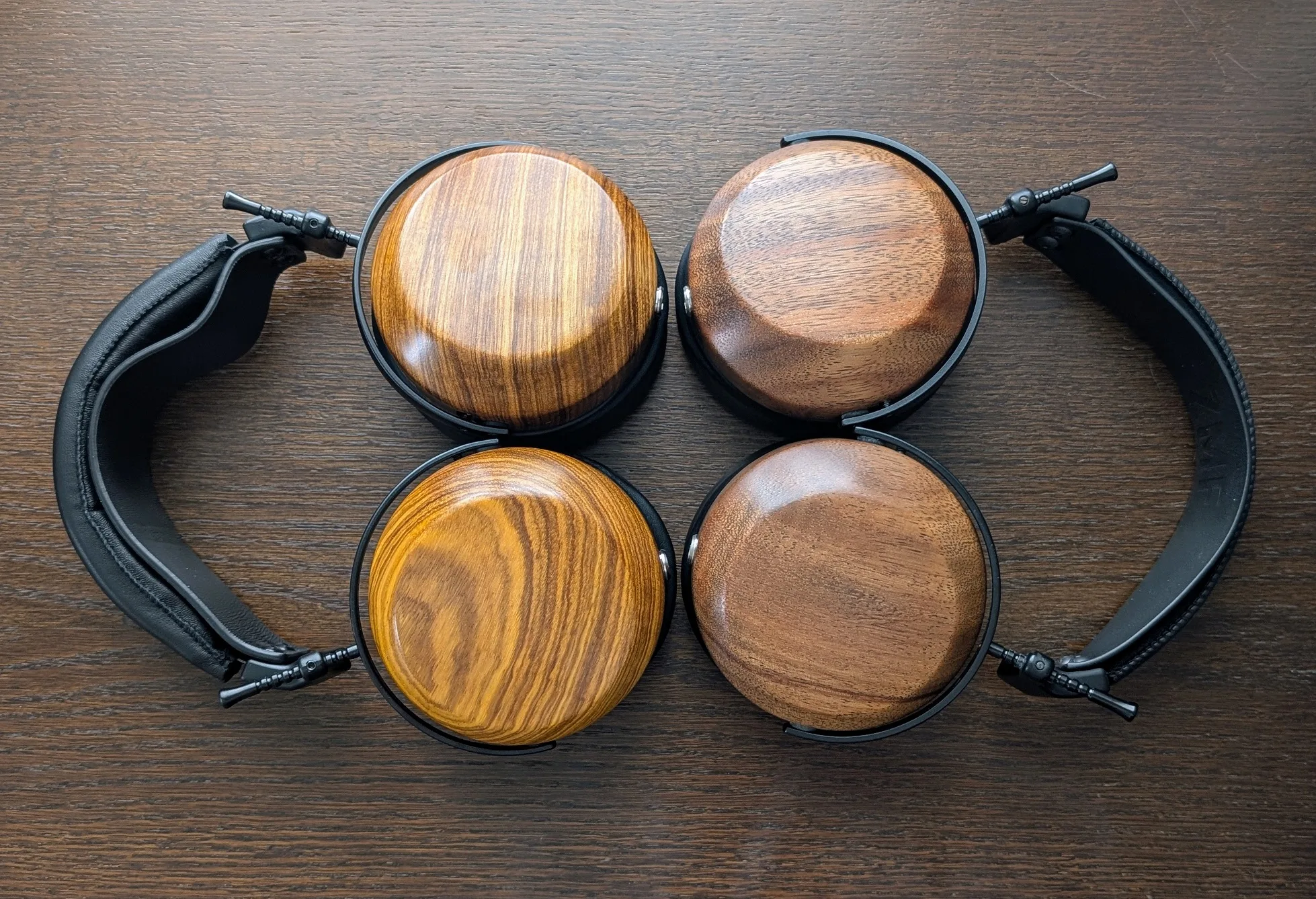
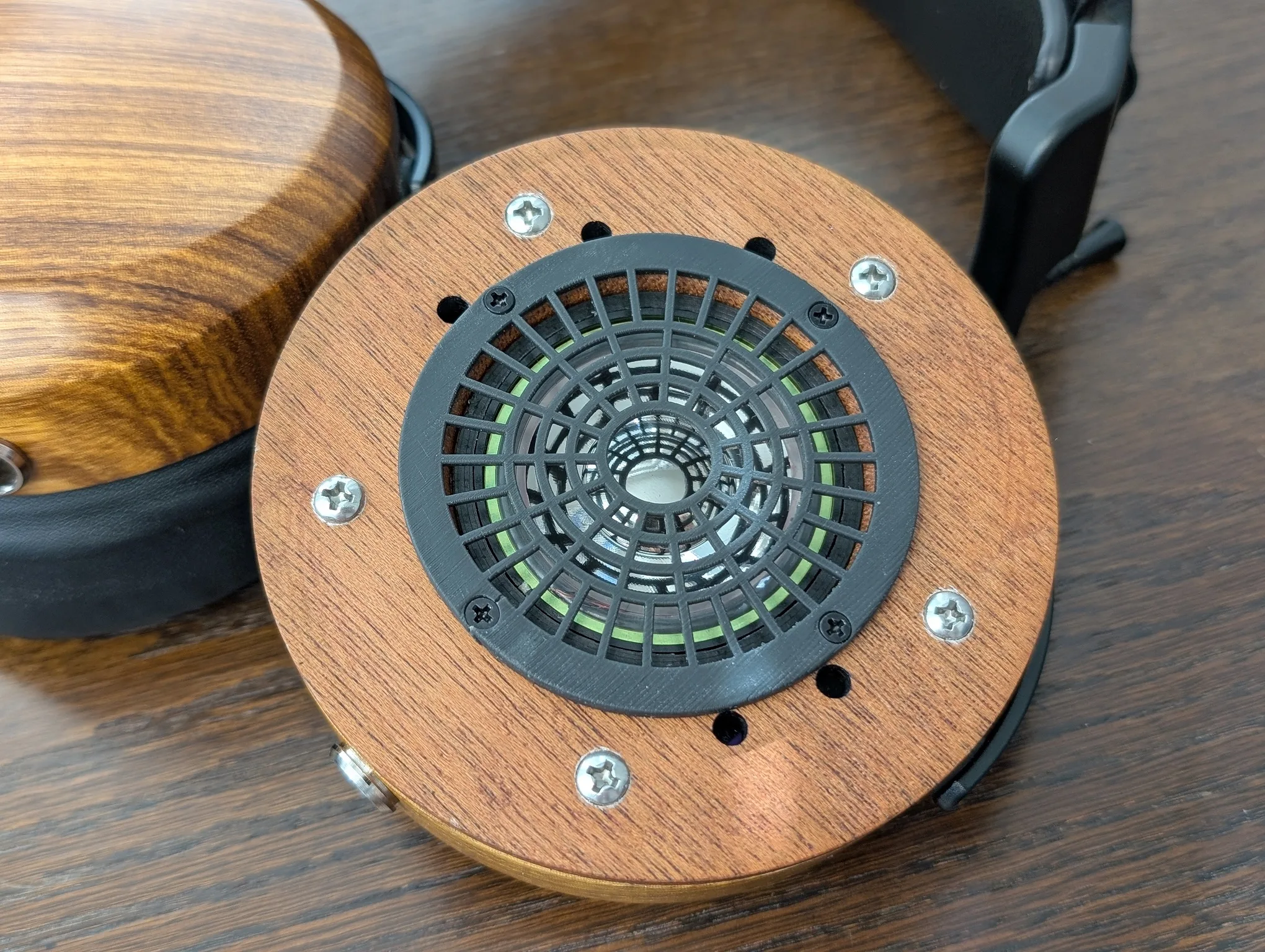
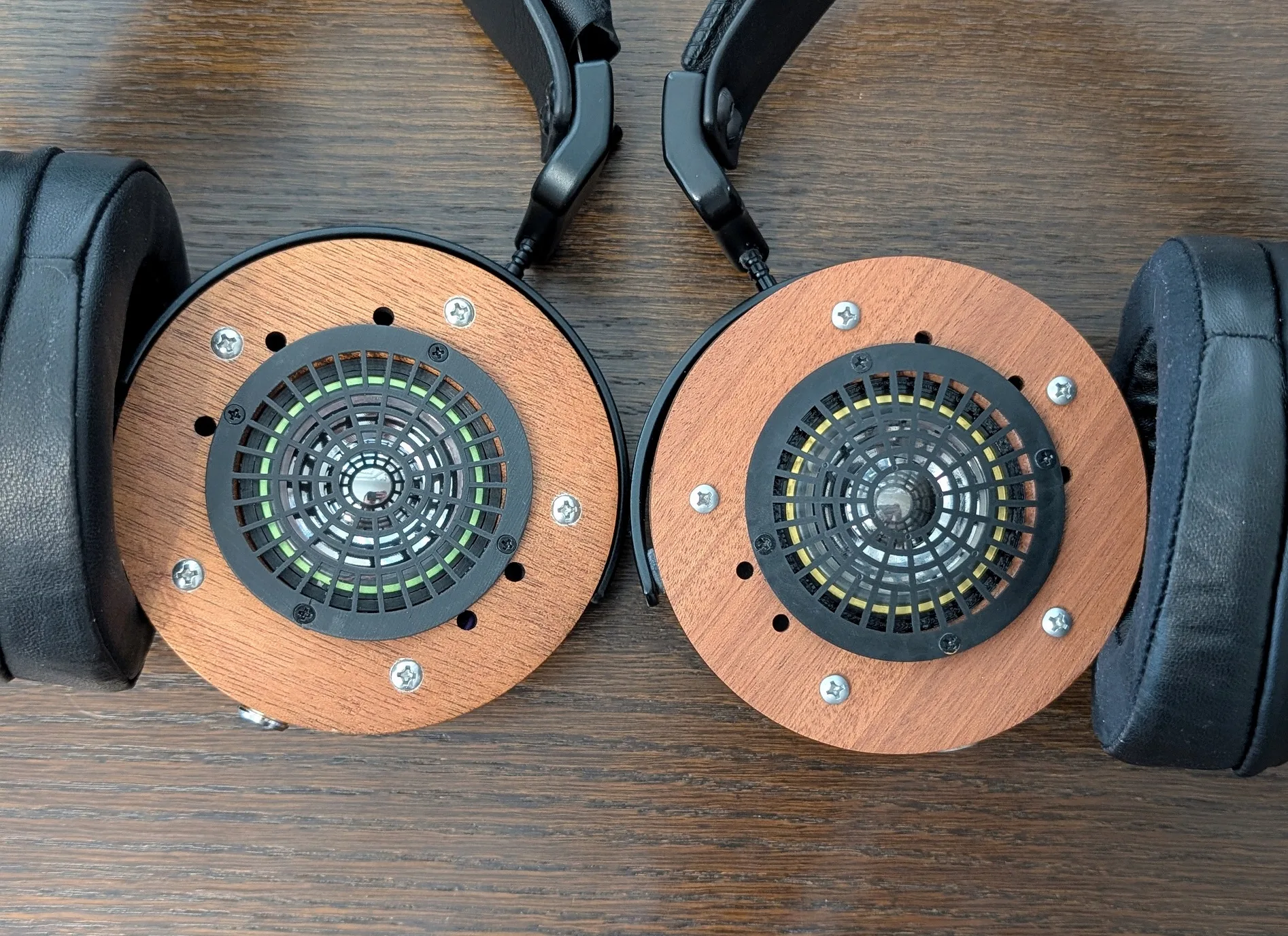
Despite the small differences, I would say Sweet Audio has succeeded in copying the Verite Closed headphones externally with over 90 percent accuracy. The copy also isolates sound very effectively, just like its original. For comparison, XK-Audio's copies named Sinae have a quite different headband, head strap, and driver frame structure, so they would be more easily identified as ”fakes” from photos. Sweet Audio, on the other hand, has meticulously copied the environment of the Verite Closed model's drivers, even down to the 3D-printed protective grille. The frame also has the same number of identically placed air vents, although they are slightly larger in size. However, the drivers themselves are not exactly the same, as ZMF owns the mold for the originals. Although the Chinese have made very similar reproductions of the drivers, their edge is green in color, not yellow, as in ZMF's headphones. This is unlikely to matter from a sound quality perspective, but at least for now, Verite Closed copies can be identified precisely by their green edge.
Sound quality
Impedance measurements
For the impedance measurements of the headphones, a device designed for this purpose, sold on Aliexpress for about 15 euros, has been used. The measurements were performed with ARTA LIMP software, through which I have also made fine adjustments of a few ohms to ensure the results are as accurate as possible. As a basis for calibration, I have used planar headphones with a completely flat impedance that match the manufacturers' specifications. During the measurement, the headphones were placed on the silicone ears of the measuring device, which slightly alters the result compared to measurements taken on a table. As the measurement method for the LIMP software, I have used the Stepped Sine option.
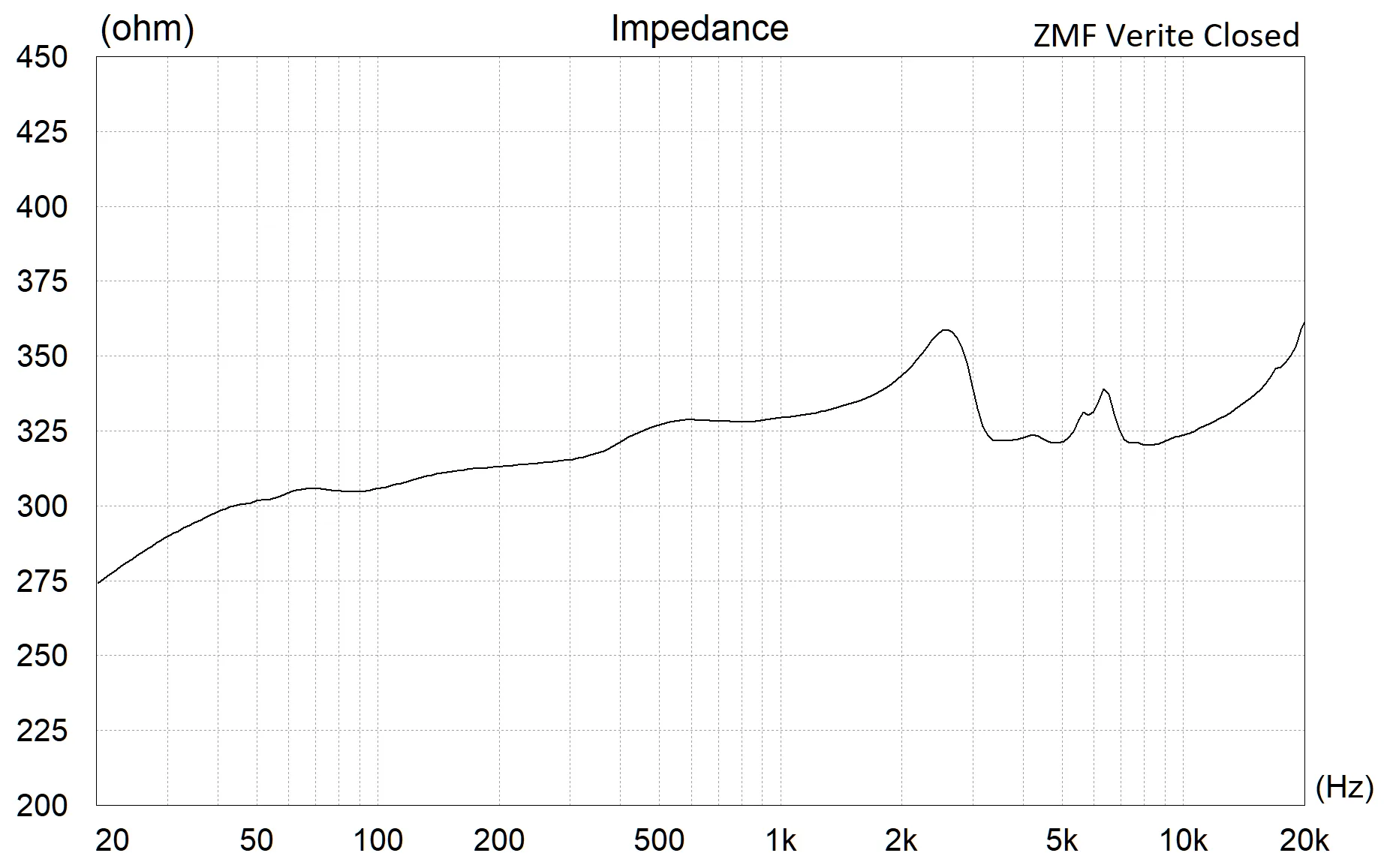
ZMF Verite Closed:
Sweet Audio copy:
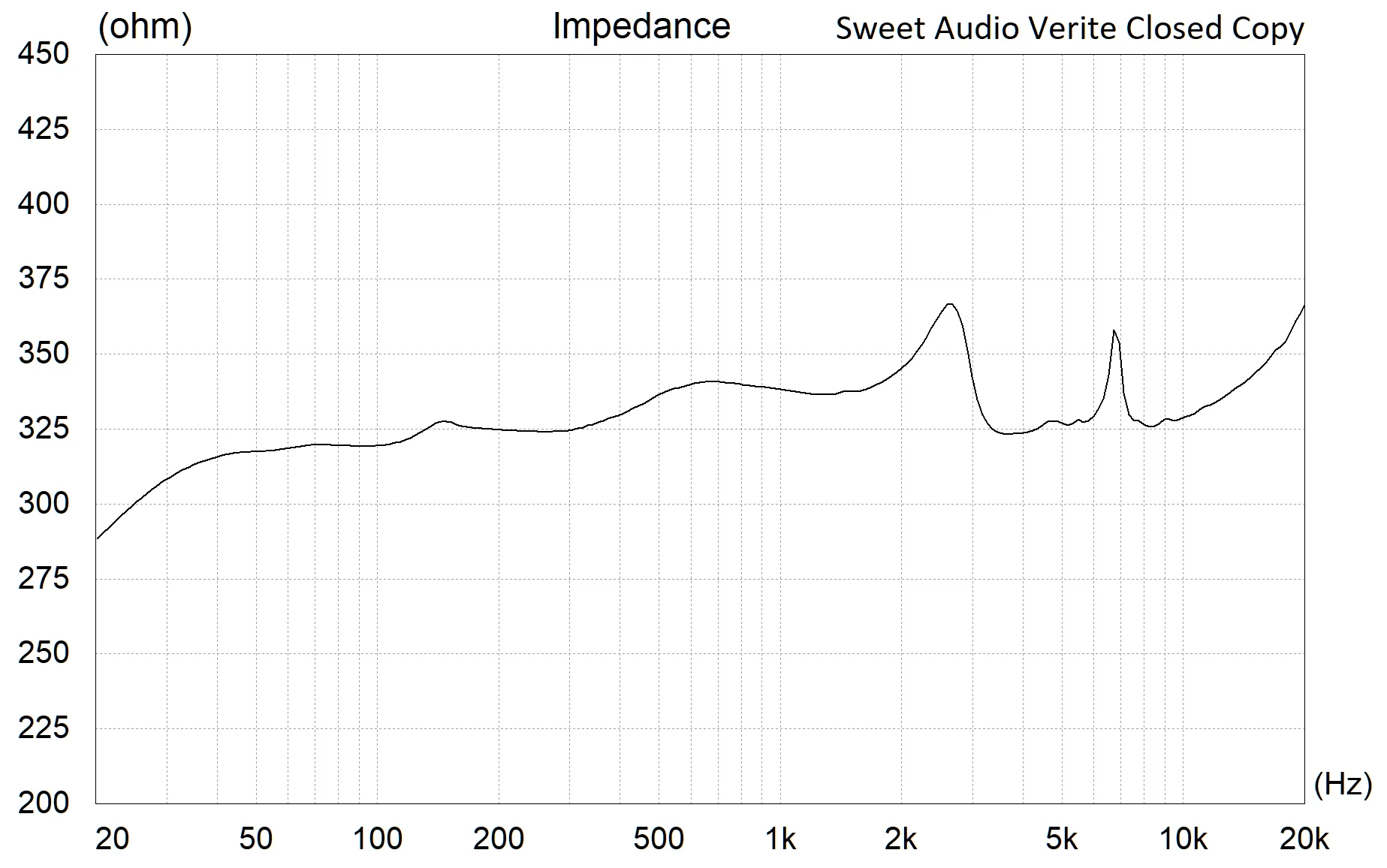
The similarity of the drivers is also evident from their impedance curves, whose shape is almost identical and, above all, similarly original. However, the nominal impedance of ZMF's drivers is closer to the stated 300 ohms, and there is no equally large peak at 6 kilohertz. The impedance of the copy drivers, on the other hand, is higher below 1 kilohertz and especially at bass frequencies. However, in the absence of greater variation, the unevenness of the impedance curve does not affect the frequency response in the case of either headphone, even if the headphone amplifier's output impedance is somewhat high (>10 ohm). This, on the other hand, is equally due to the high nominal impedance. The sensitivity of both headphones is stated as 99 dB/mW, so they do not require a particularly powerful amplifier.
Headphone Measurements
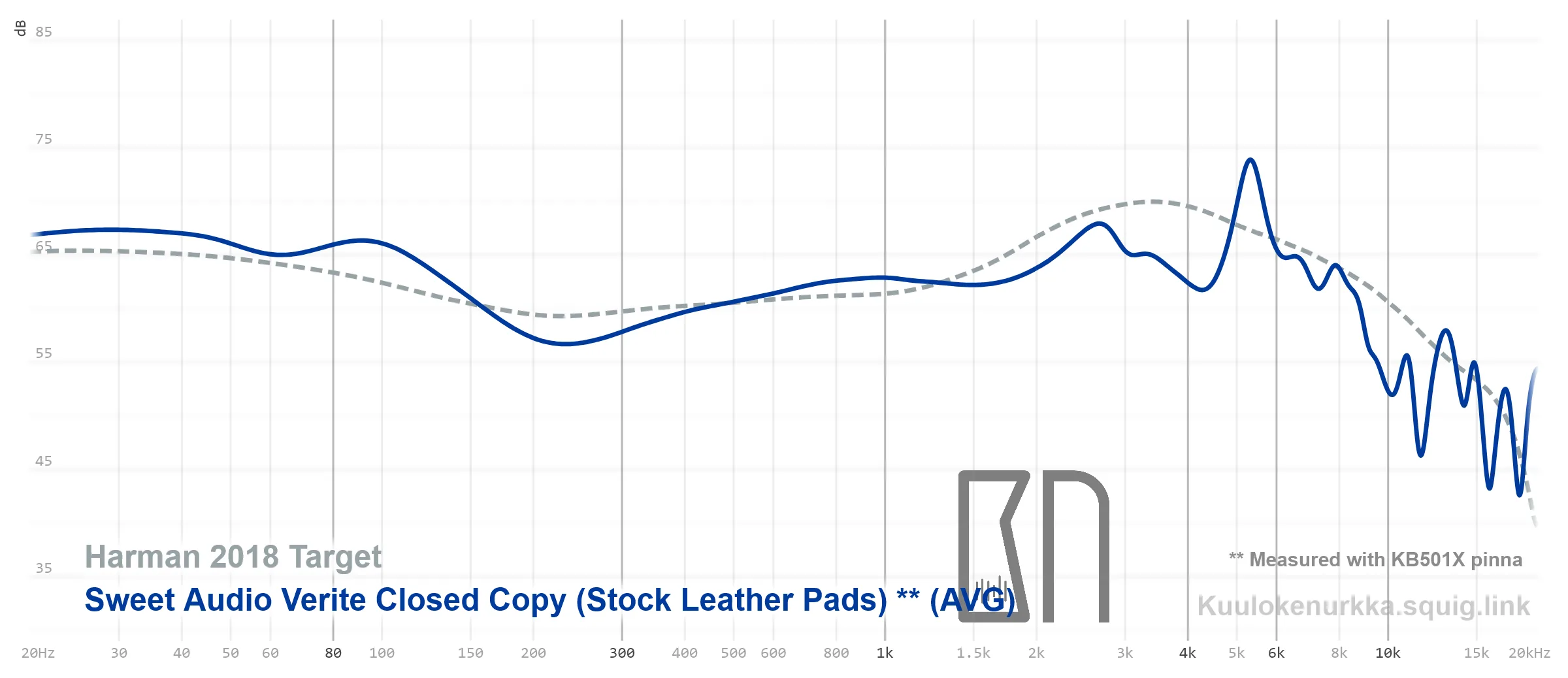
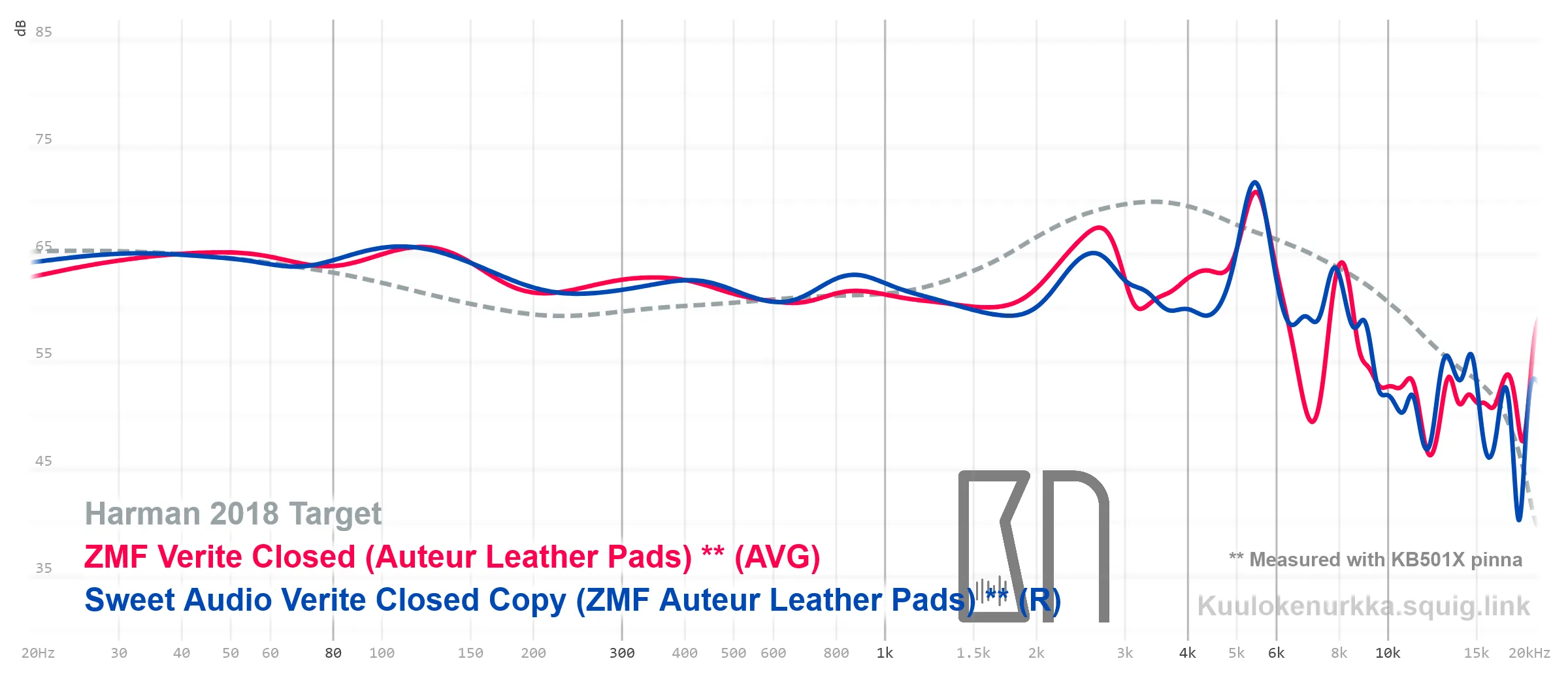
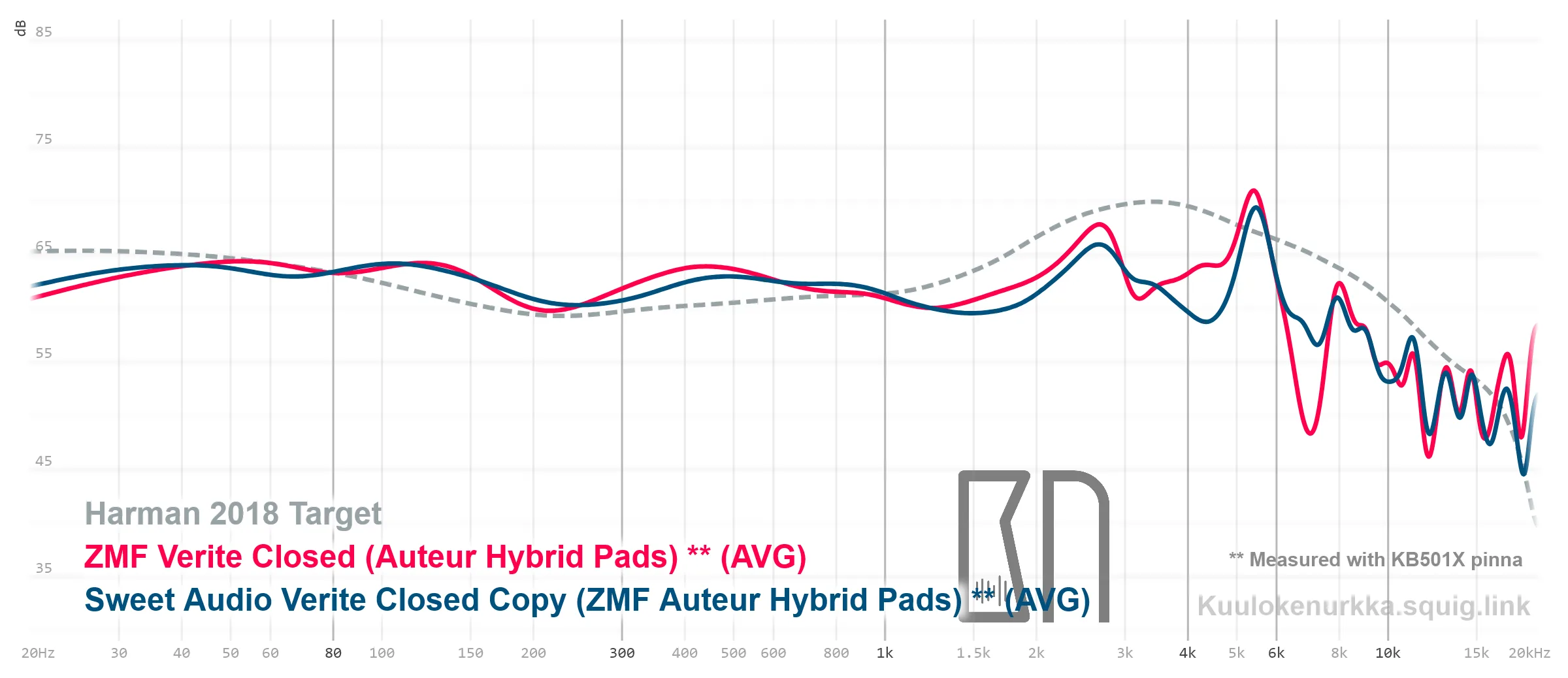
Our frequency response measurements have been made with a clone IEC-60318-4 coupler and KB501X pinnae. The Harman target curve from 2018 is used as a reference point and generalization of the headphone response that would sound good to most people. For more information on the measurements and their accuracy, see Headphone Measurements-page. The frequency response of the Verite Closed copy is also comparable with other measured headphones Squiglink .
Sweet Audio's own leather earpads:
ZMF Auteur earpads (Verite Closed's stock earpads):
Does the copy sound authentic?
Although Sweet Audio has copied ZMF's drivers, and the interior of the cups doesn't look very different based on photographs, the frequency response ultimately deviates from the genuine Verite Closed model due to different earpads. By default, the copy actually sounds more balanced and clearer compared to ZMF's headphones, because its lower frequencies are reproduced in a Harman-style manner, and do not rise between 100–400 hertz. The sound of the Verite Closed is thus warmer and fuller, while Sweet Audio's copy more successfully keeps the bass separate from the mid-frequencies thanks to a small dip between 200–300 hertz. The sub-bass kicks in a fun, physical way, as if in its own compartment. In this respect, I consider the copy an improvement over its archetype, but on the other hand, it doesn't sound exactly the same if someone primarily desires that.
The mid-frequencies and treble most resemble ZMF's headphones, as the copy features the same characteristics, such as a calmly reproduced 3–5 kilohertz range, a small emphasis at 5.5 kilohertz, and an almost identical amount of treble, suitable for my taste. On the other hand, the area around 1 kilohertz is reproduced slightly boosted in Sweet Audio's headphones, generally making the presentation more energetic and edgy than ZMF's headphones. In other words, the Verite Closed copy does not sound as soft, even though its reproduction is similarly relaxed and pleasant even after a longer listening session.
Considering the calm upper mid-frequencies, the sound is actually clearer and more transparent than I would expect based on the frequency response. I particularly like the contrast formed by the spacious-feeling soundstage and the reproduction's tightly gripping presence. The presentation draws you in in the same way as listening to the genuine Verite Closed model, so the core idea is preserved in the copy despite a slightly different tuning. This is a headphone whose colorations feel purposeful to me. I also barely notice the small emphasis between 5–6 kilohertz, even though it appears in measurements for both ZMF's headphones and their copy. On the contrary, the treble of the Verite Closed copy sounds admirably smooth despite its slight darkness. I have not observed any unpleasant harshness or sibilance in any situation, so let's call the treble above all safe.
Sweet Audio's Verite Closed copy thus sounds excellent overall and possesses many of ZMF's headphones' strengths. The most impactful aspects for me are the articulate and immersive 3D-style soundstage, as well as precise separation despite the relaxed sound. Music generally sounds natural, and the bass also stays slightly better controlled than in ZMF's headphones. Sweet Audio's chosen earpads are indeed functional, so they surely could have made good headphones without imitating ZMF in terms of appearance and construction. Taking inspiration would have been okay in my opinion, because the Verite Closed copy does not sound exactly the same as its archetype anyway. No other closed-back headphone under 1000 euros offers a similar sound either, so there would have been room in the market for Sweet Audio without having to take the copying of ZMF this far.
Do ZMF's ear pads make a copy like the original?
I also tried how Sweet Audio's headphones sound with the same earpads that ZMF uses in their own headphones. This way, the duo should have an identical frequency response if the Chinese have succeeded in copying the drivers and the acoustic structure of the cups. Both my measurement results and listening observations revealed the situation to be concerning for ZMF: the copy very closely matches the original Verite Closed model while costing about 90 percent less. For a similar end result, one would, of course, have to buy ZMF's earpads for about 100 euros, and small differences in sound can still be found.
In any case, the Verite Closed copy differs from the genuine headphones mainly in its upper mid-frequencies, as ZMF's headphones are slightly more energetic between 2–5 kilohertz, while Sweet Audio's copy remains a tad more attenuated. It actually sounds clearer, if not better, with its own earpads, but with ZMF's earpads, the result is closest to the Verite Closed model that served as the object of copying. Amazingly, the duo reproduces an almost identical response between 20–1500 hertz and 5–20 kilohertz. The difference at 7 kilohertz is due to a phase cancellation formed by ZMF's headphones in the measurement device (not necessarily a problem on a human head), which for some reason does not occur in Sweet Audio's copy.
Considering the small variation between individual headphone units and differences in channel balance, ZMF's and Sweet Audio's headphones could even pass for the same model. On the other hand, ZMF takes pains to ensure its headphones are of consistent quality, so Sweet Audio's headphones might not quite fall within the allowed tolerances. Therefore, I wouldn't call the copy absolutely perfect; ZMF's headphones are still a better rendition of the Verite Closed model, as one might expect. However, Sweet Audio's headphones generally offer a quite similar listening experience, as the sound possesses a similar magic. The robust, relaxed, and spacious sound immediately brings a smile to my face. On the other hand, the feeling is also very contradictory, so if I owned genuine Verite Closed headphones, I would prefer to use the stock earpads on the Sweet Audio copy, with which the sound does not aim to be identical.
Summary
Sweet Audio has successfully copied the structure and appearance of the Verite Closed headphones, but achieving a similar sound requires ZMF's ear pads. I'm not sure if the Chinese haven't been able to copy the pads or if they were intentionally made different. Be that as it may, the copy sounds really good as it is, and I can't really think of any clearly better closed headphone model in the under 1000 euro price range. It also feels more valuable than its price. Although I am excited about the situation as a headphone enthusiast, I also feel guilty enjoying Sweet Audio's headphones. Copying the basic acoustics of ZMF's headphone drivers and cups would, in my opinion, still be somewhat acceptable if the product looked externally different and was not sold under ZMF's reputation.
Even if manufacturers of replica headphones do not necessarily claim their products to be genuine, they are made to look so similar and resemble their prototypes in features that there is no doubt about the intentionality of the operation. For example, ZMF has gone through all the trouble related to development work, and the resulting costs are also borne by them. The Chinese, on the other hand, make outrageous profits from the work done by others, as local legislation does not seem to prevent it. In Western countries, selling similar copies would likely quickly lead to court, depending on how the situation would be interpreted and to what extent the original manufacturers have patented their products. Most of us certainly consider ”stealing” the work of others to be at least morally wrong. On the other hand, there are also those who gladly buy a cheap copy if it matches the original product. ZMF and Sweet Audio headphones do not even truly compete for the same customers, as ZMF's Verite Closed is likely too expensive for many to begin with, while the copy made of it falls into an accessible price range.
Despite their attractiveness, the existence of copies is ultimately harmful to all of us. So far, a case has already emerged where someone was sold a Chinese ZMF copy on the used headphone market, claiming it to be genuine. The headphones then required servicing, so they were sent to ZMF, who then had to inform the customer that they had purchased counterfeit headphones. Soon, ZMF headphones may no longer be dared to be bought used without a certificate of authenticity, which, fortunately, does not come with Chinese copies. I am also a little concerned about hi-fi sellers, who may be offered Chinese replica headphones as trade-ins during transactions. How would a seller, previously unfamiliar with, for example, ZMF, T+A, or ABYSS headphones, guess that accurate counterfeits are also made of them? Even worse would be if the same headphones were then sold on as ”genuine”.
The best way to fight against Chinese copycats is not to buy their products. However, I will not criticize anyone for this, as I myself acquired a Sweet Audio copy for closer examination. Finally, I apologize to ZMF. It remains to be seen how this story will affect my standing in headphone communities and among relatively fanatic ZMF fans.
Pros and cons:
+ Sweet Audio's ear pads work in their own way
+ Well-crafted wooden cups
+ High-quality cable
+ Affordable price
– The structure and appearance are copied directly from ZMF
– Minor cosmetic flaws
– The pads smelled really bad at first
– Buying the headphones means supporting dishonest and possibly illegal activity
 EN
EN  FI
FI
I made a fee custom headphones, with lesser ZMF like shells and good beryllium drivers and they sounded great.
These ones you reviewed are a tier higher and look almost the same.
Good job on covering it and Zach would probably not like coverage of these at all. Which I also get, but not everyone has $1000-$2000 to spend on a headphone.
You do get what you pay for with the cheaper ones, but these are a good option if you don’t want to break the bank.
I wanted to follow up and say, you get what you pay for with ZMF. Years of RnD, refined manufacturing process, teamwork and originality.
Take a Rolex for example, some will argue a Seiko costing 1/10th is technically a better watch. Maybe less intricate but it tells them the time.
Not everyone has the money for the more expensive watch, its more a choice to get it.
I’m not saying ZMF is a status thing, but you do buy into the heritage Zach has built and there is something about how beautiful the headphones are.
Now for the Seiko here, the headphones probably sound good and might be better value, but and this is a big but…results could be mixed or inconsistent. We don’t know the maker, his processes or if all the headphones will be on point.
Again you get what you pay for, and a reassurance comes with the higher price, original item. Get what you think will make your audio hobby enjoyable.